
Boston Terrier
The Boston Terrier is an energetic, good-natured, highly intelligent, and loyal dog breed, making a wonderful companion. It's hard to believe they were once bred for dog fighting. However, the modern terrier bears no resemblance to its fighting ancestors.
Content
History of origin
The history of this breed began in 1861 in America, when an English terrier and an English bulldog were crossed. The older type of bulldog differed from today's bulldogs, being more massive, shorter-legged, and at the same time more agile. The now-extinct English terriers were dogs with a deep chest, strong neck, and muscular limbs, used for hunting and ratting.
In 1878, a new breed, then known as the "Bull Terrier," was first exhibited at the Boston Dog Show. Ten years later, it had a special category: "Bull Terriers of any color with a round head." Breeders of English Bulldogs and White Bull Terriers fought tooth and nail against these round-headed dogs, so fanciers from the Boston area had to overcome strong resistance.
In 1889, they established their own breed club, which was the first step toward official recognition. Bostonians were then known variously as Bullheads, Bull and Terriers, and American Bull Terriers. Soon, under the leadership of Charles Leland, breed enthusiasts developed a standard and defined the name "Boston Terrier" to eliminate confusion between it and the English White Bull Terrier. That same year, an application for breed recognition was submitted to the American Kennel Club, but it was rejected due to the wide variety of breed types. In 1891, the breed was officially recognized.
Americans are very fond of and proud of their Boston Terriers. The breed is among the top 20 most popular breeds in America. Boston Terriers arrived in England in 1901, but a breed club wasn't established until 30 years later. In Continental Europe, these American-bred dogs didn't become particularly popular, as the niche had already been filled by French Bulldogs.
Appearance and standards
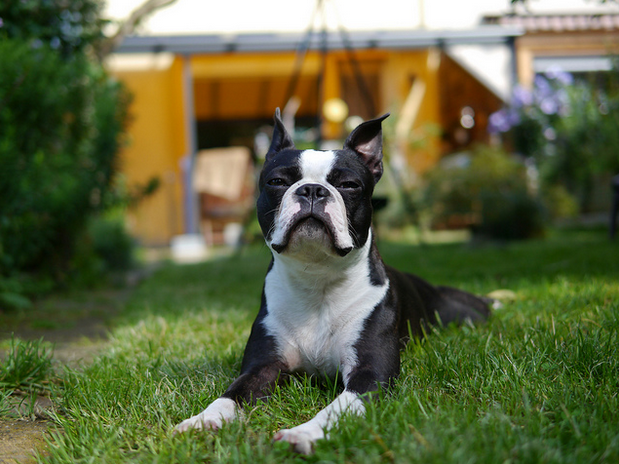
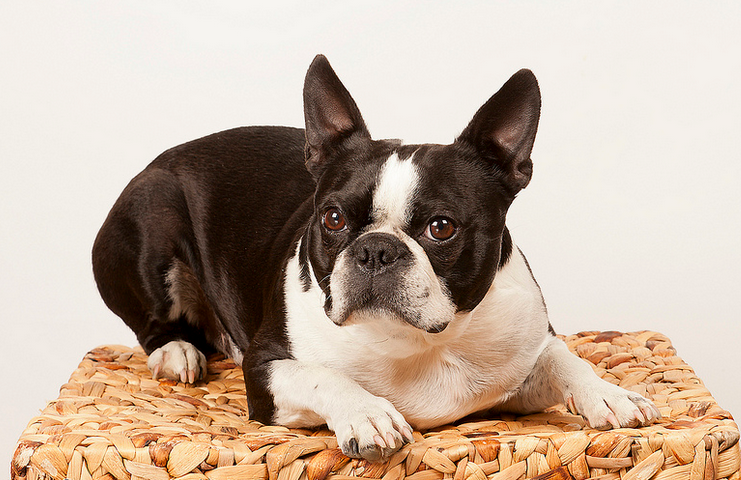
The Boston Terrier is a small, compact dog with a well-proportioned build. The main general characteristics are expressiveness, balance, and a clear combination of white and colored markings. Sexual type is moderately expressed, with females being more refined. Height at the withers is 38-43 cm. Height is proportional to body length, giving them a square appearance. Based on weight, dogs are divided into three groups:
- Up to 6.8 kg;
- from 6.9 to 9.1 kg;
- from 9.2 to 11.4 kg.
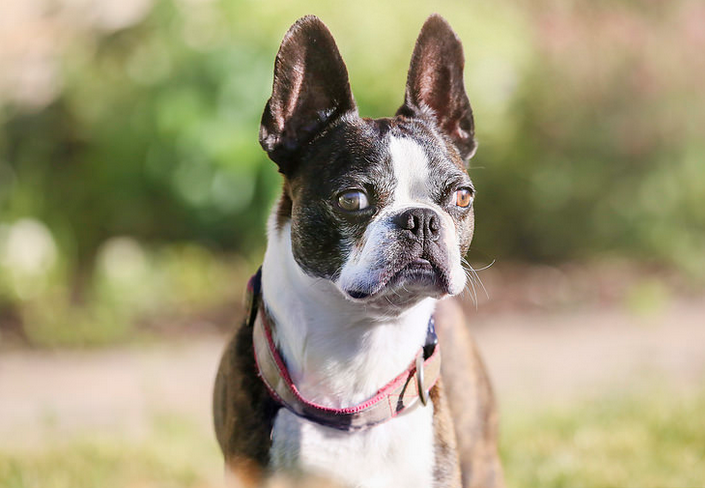
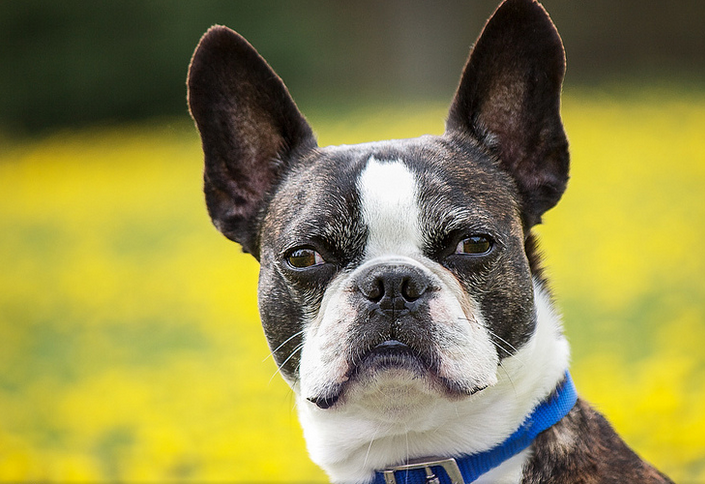
The skull is square, flat between the ears, and free of wrinkles. The stop is well defined, with prominent superciliary ridges. Large, round eyes are set straight, fairly wide apart, and are always dark in color. The ears are large, erect, and may be cropped. The muzzle is broad and short. The wide nose has a well-defined furrow and is always black. The jaws are square and wide. The bite is level, although an undershot bite is possible. The neck is proportionate to the overall build, slightly arched, and blends smoothly into the withers. The back is short and straight. The croup is slightly sloping. The tail is straight or corkscrew-shaped, set low, tapering toward the tip, and should not rise above the line of the back. The limbs are muscular, parallel, and angulated correctly. The movements are smooth and free, with the paws moving in a straight, rhythmic manner.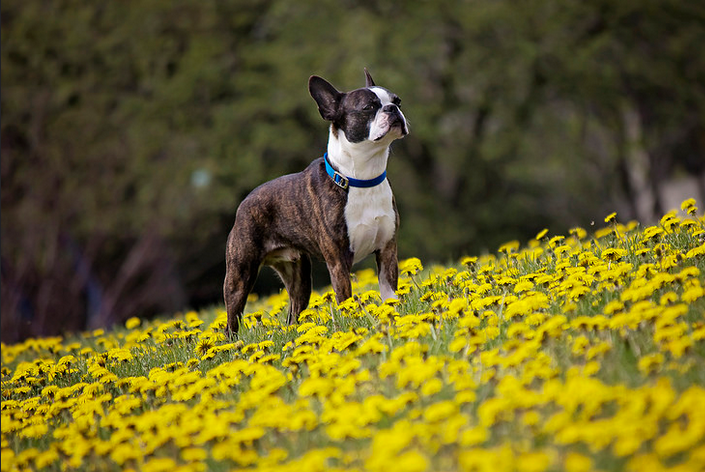
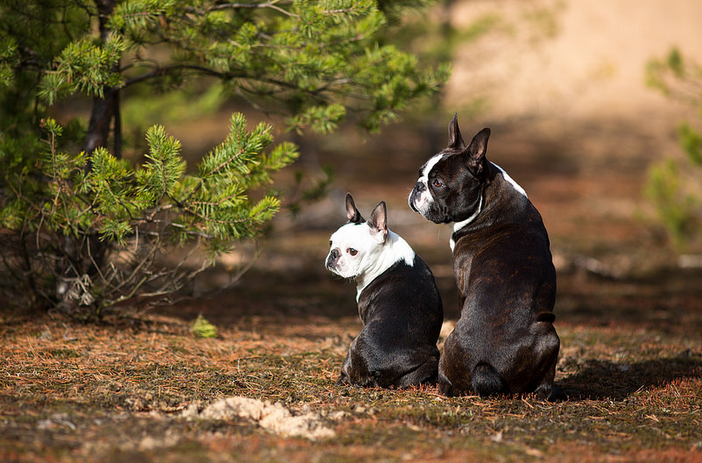
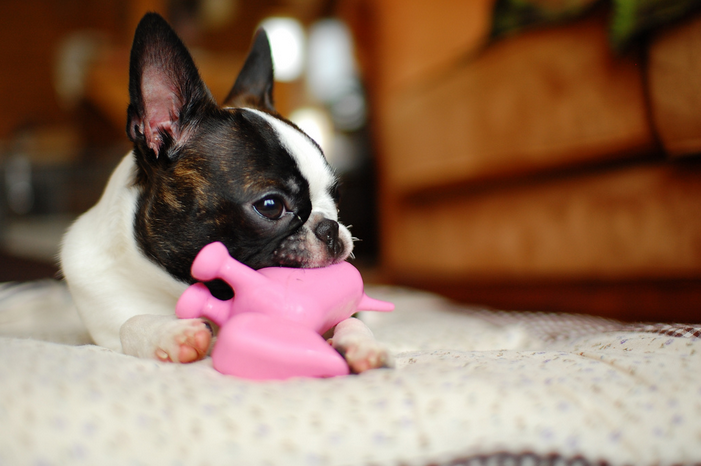
The coat consists of a shiny, smooth topcoat; there is no undercoat. Colors: white markings on black, brindled, or sealskin (black with a reddish tint). A muzzle outline, a blaze, and a chest patch are required, and a collar may be present.
Training and education
When a puppy arrives in a new home, far from its mother and siblings, it feels lonely and uncomfortable. It's during this period that it needs to be surrounded with care and its trust earned, but at the same time, avoiding the most important mistakes—not allowing the puppy to do things it will later be forbidden to do. Punishments should be strict but fair.
Boston Terriers are highly intelligent, easy to train, and quick to learn. They readily obey commands and learn a variety of tricks. Boston Terriers are incredibly active and energetic, requiring daily exercise. Walks should ideally include playtime.
Character and psychological portrait
The Boston Terrier combines an energetic, lively temperament with boundless trust in their owner, whom they strive to please in every way. They have no desire to be dominant. They simply don't bark or bite, but they can be very inventive in their mischief. Boston Terriers require constant attention and companionship. Young dogs can be very jealous and stubborn. It's not advisable to leave this dog alone for long periods of time.
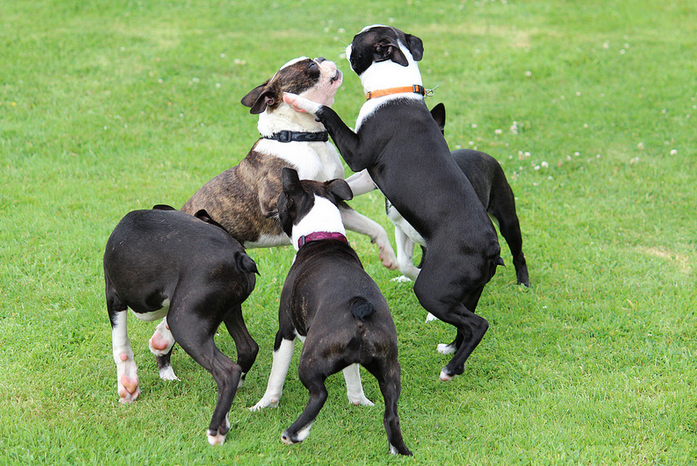
Terriers will always warn strangers about intruders on their territory with a loud bark, but that's about it. These good-natured, trusting dogs will easily leave with a stranger if they're kind. The only time Boston Terriers may show aggression is when defending their family or when faced with a real threat. They get along well with other animals, but rarely develop a strong bond. They make excellent companions and protectors for children.
Maintenance and care
Boston Terriers are simply made for house or apartment living. They are clean, tidy, and unobtrusive, requiring only a small personal space with a bed and plenty of toys. Leaving them outside for long periods of time is not recommended. Boston Terriers do not tolerate cold or heat well. During cold weather, choose appropriate clothing for walks.
The Boston Terrier is very easy to care for and requires minimal grooming. Wipe the dog's face daily with a damp cloth to remove debris from the folds, and wipe its eyes. Clean its ears and trim its nails as needed. Brush its coat once a week with a special mitten or a brush for short-haired dogs.
Diet and health
Boston Terriers can be fed either commercial or natural food, but some breed-specific characteristics are worth considering. They have a small stomach, so they should be fed at least twice a day, with the morning portion being smaller than the evening one. Alternatively, they should be fed three times a day, with the main midday meal being higher. A Boston Terrier's diet should be high in protein—around 70% of the diet. Vegetables and greens should ideally be stewed, making up 20-25% of the diet, with the remainder coming from cereals. They should be fed ocean fish and eggs once a week.
Boston Terriers are predisposed to a number of health conditions, including brachycephalic syndrome, atopy, cataracts, and a tendency toward demodicosis and tumors. Congenital deafness and congenital elbow dislocation are also common. Hydrocephalus is sometimes reported.
Life expectancy is 10-13 years.
Choosing a Boston Terrier Puppy and Price
If the dog is going to be a friend and companion, appearance and pedigree aren't crucial, but buying a puppy from dubious breeders is not recommended, as breed also affects character and genetic defects. At best, such a "pig in a poke" will truly be a Boston Terrier, albeit not perfectly compliant; at worst, it will be a mixed breed with a host of hereditary problems. If you plan to participate in shows, win, and breed, consider only the best kennels and responsible breeders. Before purchasing a puppy, determine the dog's type, color, and gender.
A Boston Terrier puppy from a reputable breeder will cost an average of $800. Pet-quality puppies start at $150, and promising puppies will start at $1,500.
Photos
Boston Terrier Pictures:
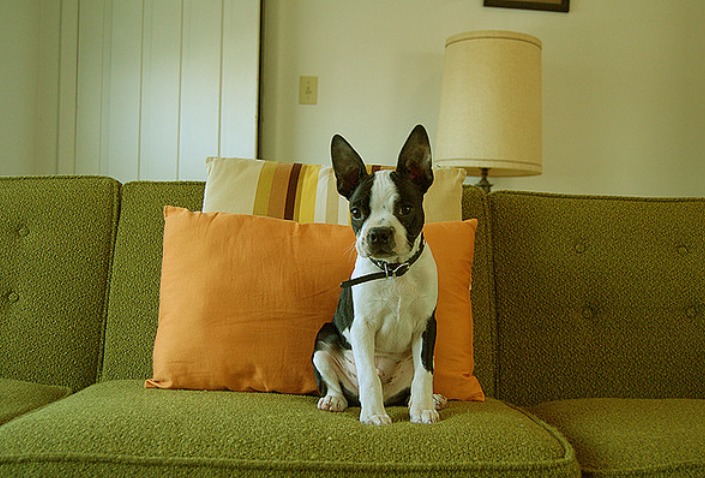
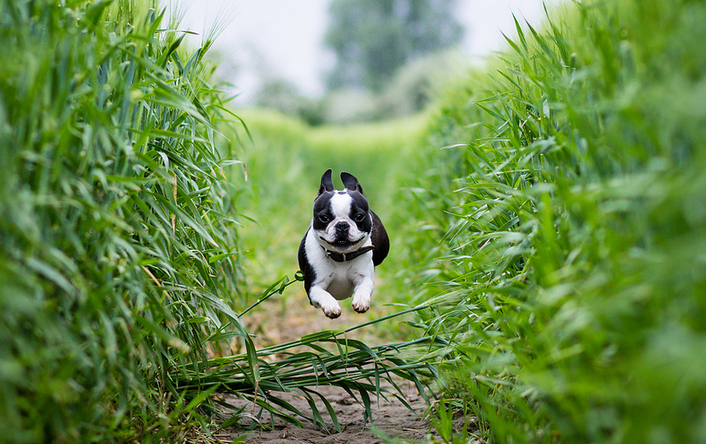
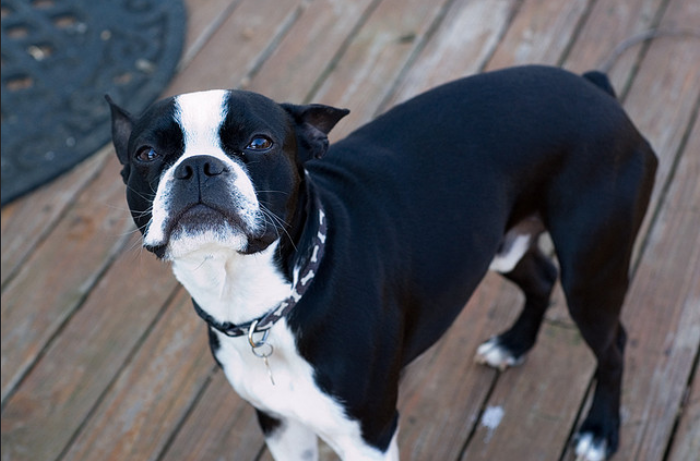
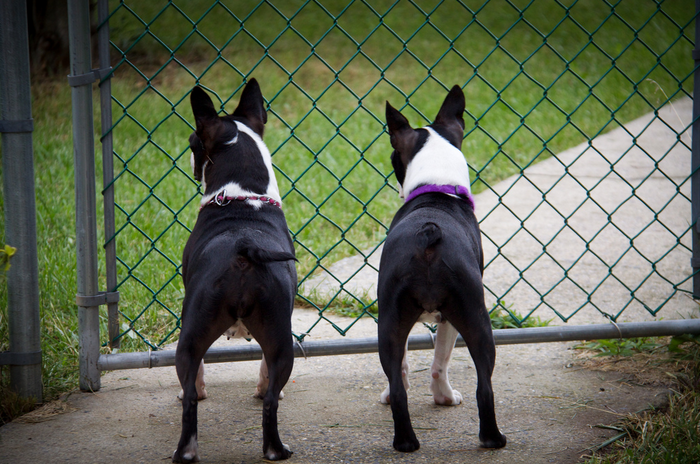
Read also:


Add a comment