
Bearded Collie (Birdie, Bearded Collie)
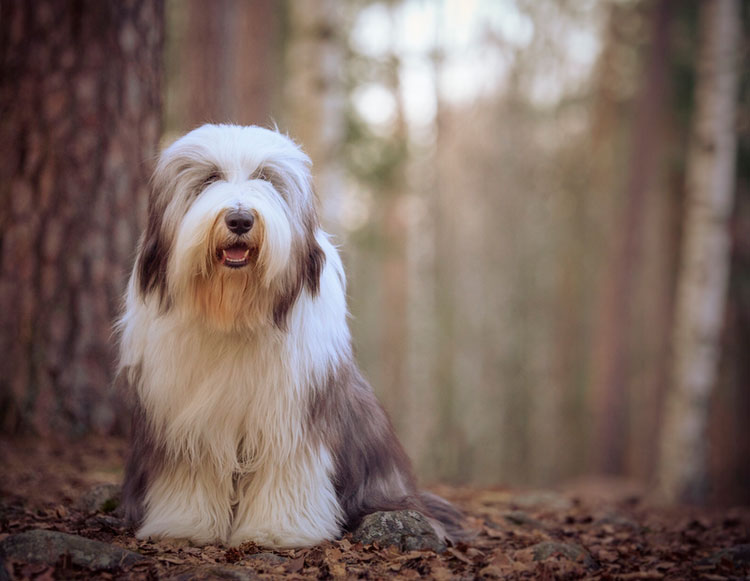
The Bearded Collie (Birdie, Beardie, or simply Bearded) is an ancient herding dog breed native to Scotland. It has been used for herding sheep for over three centuries. It has also proven itself as a family dog, companion, and athlete. It requires a lot of attention and regular grooming from its owner. Due to its personality, it is not suitable for everyone.
Content
History of origin
The Bearded Collie is one of the oldest breeds developed in Great Britain. However, the dog's exclusive use as a working dog and the lack of breeding records make it difficult to reliably trace its origins. The first Bearded Collies appeared in the 17th and 18th centuries, possibly earlier, but it was only in the early 20th century that an attempt was made to standardize the breed.
The word "collie" in the name doesn't indicate a relationship with other herding breeds, such as the Rough Collie or Border Collie. Rather, it describes the dog's function as a "sheepdog." The term likely derives from the word "coaley," a breed of dark-colored sheep bred in Scotland, or has Celtic roots, derived from the word "collie," meaning "useful."
The origins of the bearded coli are a mixture of fact and conjecture. Anecdotal reports and records indicate that active trade took place between Scotland and Poland in the late 15th and early 16th centuries. Polish Shepherds were brought to Great Britain at that time. They mixed with local breeds, thus forming a new type of dog, which are the ancestors of modern bearded menAccording to another version, it was not the PNO, but Kuvasz or commandersSince the early 19th century, images of dogs resembling the Berdie have appeared in paintings and engravings. The first written description of Scottish dogs was by Thompson Gray (1880s). In 1912, a preliminary working standard was developed and a breed club was founded in Edinburgh.
In the past, the Bearded Collie had many different names: the Highland Collie, the Old Welsh Grey Sheepdog, the Mountain Collie, and others. Today, it is often simply called Beardie.World War I caused significant damage to the breed. In the 1930s, Cameron Miller took up the Bearded Collie revival. Without her work, the breed might have disappeared entirely. During World War II, Bearded Collie numbers dwindled again. The loss of interest can also be attributed to the death of Mrs. Miller. Another significant role in the breed's history belongs to a woman – Mrs. Wilson. In 1944, by a stroke of luck, she received a Bearded Collie puppy instead of a Shetland Shepherd. It was a female named Jenny, who captivated Mrs. Wilson with her personality and appearance. A mate was soon found for her – a male named Bailey Botkenner. It can be said that almost all modern Bearded Collies descend from this pair. The breed was recognized by the Fédération Cynologique Internationale in 1967.
Bearded Collies have appeared in several films: Agent Cody Banks (2003), The Shaggy Dog (2006), and Hotel for Dogs (2009).
Purpose
The Bearded Collie is a hardy and reliable working dog that is easy to keep. It can live and work even in harsh climates. Valued by shepherds for its loyalty and intelligence, it is primarily used for herding cattle and sheep. In its homeland, the bearded collie was nicknamed the "jumping bear." Working in the dense undergrowth on hillsides, these dogs leap out of the undergrowth to spot their charges. When confronted by a stubborn sheep, they bark and jump up on their front paws.
Modern dogs are more often used as pets or athletes. They are suited to various canine sports disciplines: herding trials, agility, dog dancing, obedience, and treble.
Appearance
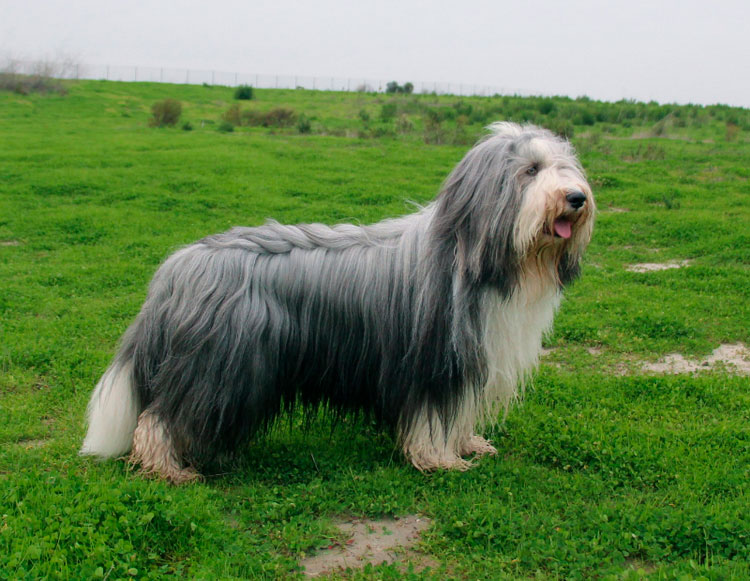
The Bearded Collie is a medium-sized, long-haired dog with a lean, slightly elongated body, strong build, fairly long legs, and not too heavy. Sexual dimorphism is pronounced. The height at the withers for males is 53-56 cm, and for females, 51-53 cm. An adult dog weighs 20-25 kg.
The head is proportional. The skull is square, broad, and flat. The muzzle is long and voluminous. The stop is smooth. The nose is square, large, and usually black, but may also be blue or brown depending on the coat color. The pigmentation of the lips and eyelids is the same as that of the nose. The eyes are wide-set and large. The ears are drooping and medium in size. The teeth are large and white, with a scissor bite; a level bite is acceptable.
The neck is slightly arched and of medium length. The shank is strong, slightly longer than tall. The back is broad. The loin is strong. The chest is deep with well-sprung ribs. The back is broad. The limbs are straight, with well-developed bone, and vertical. The paws are oval. The pads are strong and convex. The toes are compact and tight. The tail is set low, reaching to the hock, and hangs down when at rest.
Show line dogs, as a rule, differ from working dogs in that they have a richer coat.
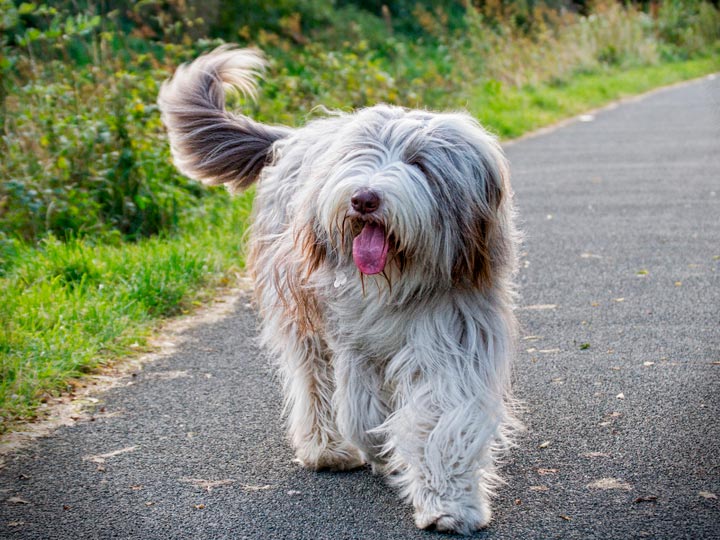
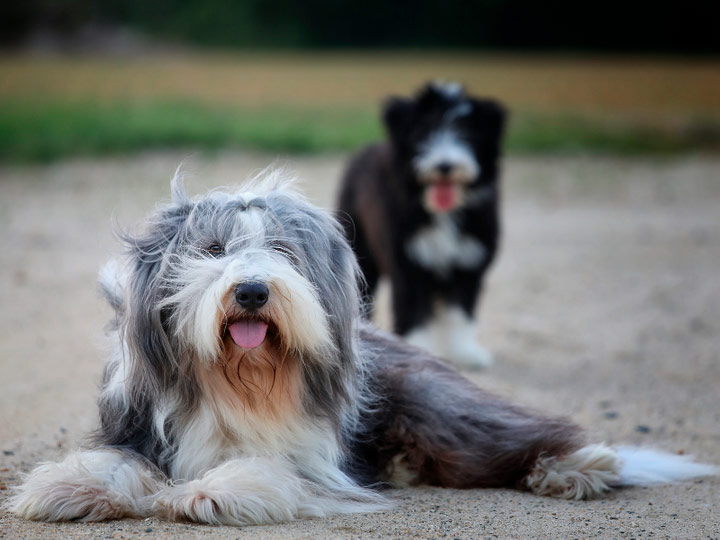
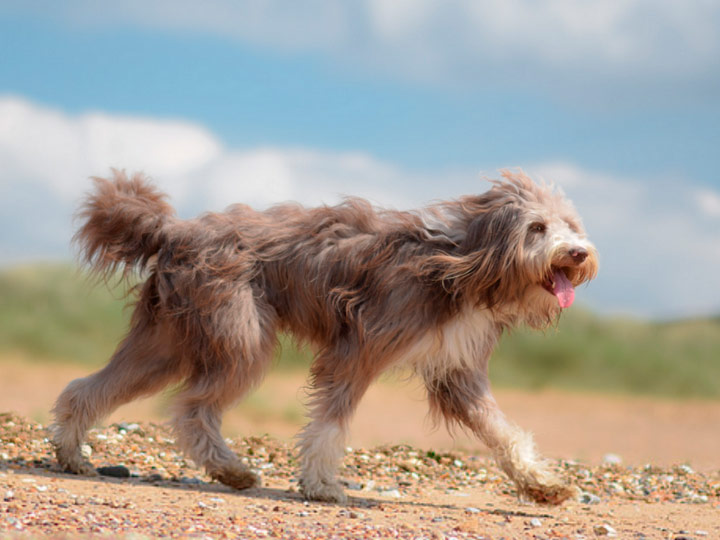
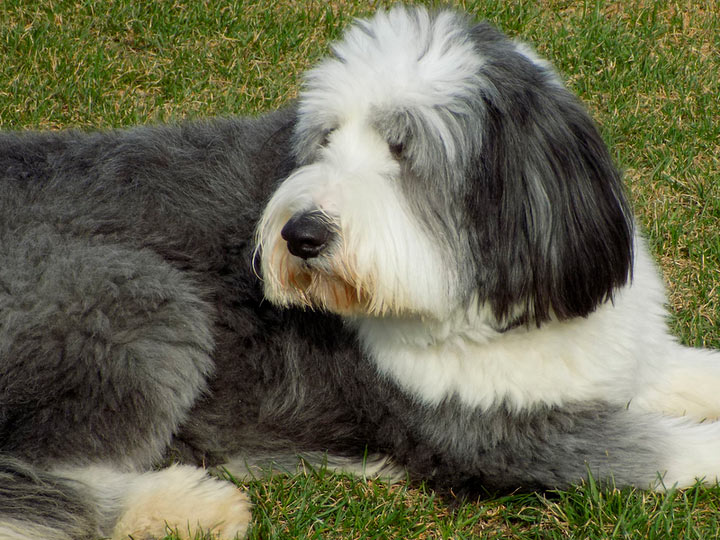
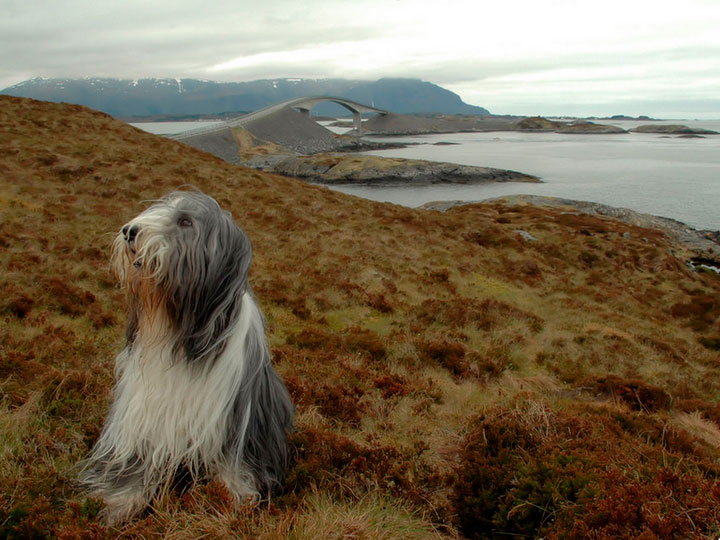
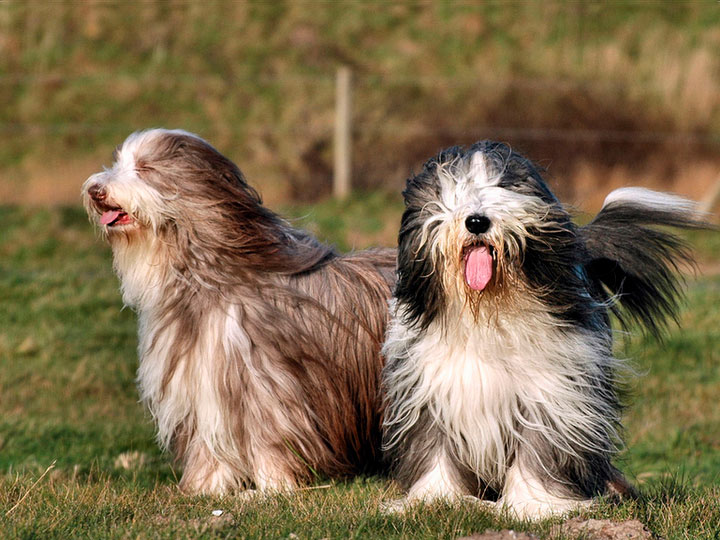
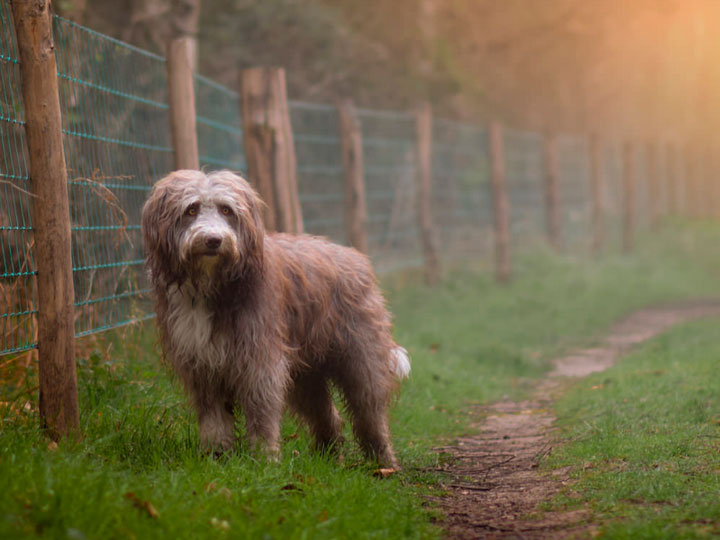
The coat is double. It consists of a straight, long guard hair, somewhat coarse to the touch, and a soft, dense undercoat. Due to the thick coat, the dog will appear somewhat larger than it actually is. Furthermore, the hair obscures its outline. On the head, eyebrows form, revealing the eyes, beard, and long mustache. The breed comes in four colors:
- Brown;
- Black;
- Blue;
- Pale yellow.
Each color can be a different shade. All colors can have white markings on the muzzle and forehead, neck, chest, tip of the tail, and paws. Tan markings on the inside of the ears, cheeks, eyebrows, under the root of the tail, and paws are also permitted.
Growth and development characteristics of bearded collies
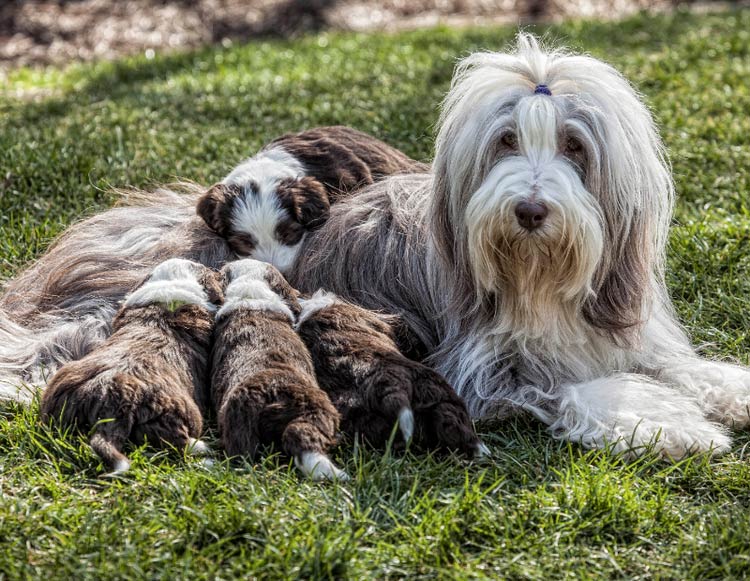
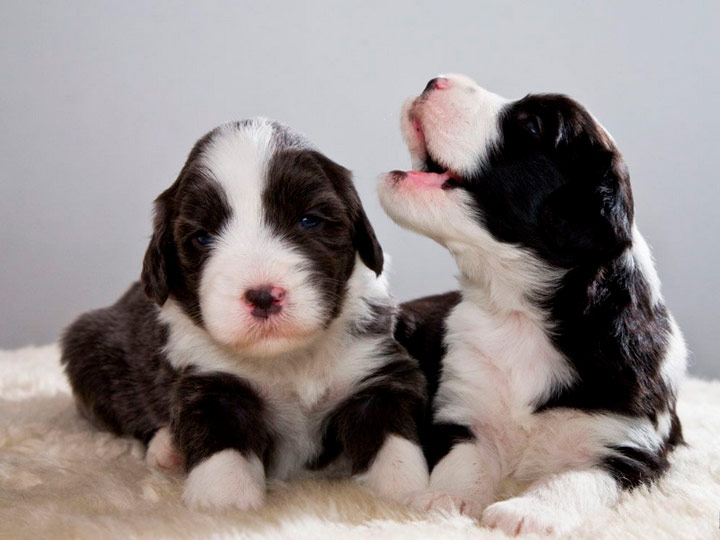
Purebred dog puppies typically look like miniature versions of adults. This isn't the case with the Bearded Collie. These puppies go through many stages before growing into the beautiful adult dogs you can see in the gallery. Each bloodline has its own unique characteristics, but in general, a purebred puppy goes through several stages of development.
- It's best to evaluate a puppy at 6-8 weeks of age. What they have at this age will also be present in maturity: a broad, flat skull, a pronounced stop, a short muzzle that's almost as wide as the skull, and a correct bite. The body isn't as elongated as an adult's, but its length exceeds its height. The gait is correct: with good reach in the front legs and drive and extension in the hind legs. The topline is straight and strong. The coat is straight and harsh (even with a babyish "plushness").
- At 10 weeks, assessing a dog is much more difficult. The puppy begins to grow in spurts, and individual body parts often don't align with the rest.
- At around a year old, the dog sheds its puppy coat. It looks as if an amateur groomer has been practicing on it. The hair grows and fades unevenly across the body. As a teenager, a bearded dog can be completely unidentifiable or possess a delightful appearance.
- By the age of two, dogs begin to mature, gaining muscle and fur, and acquiring depth of color.
- Bearded Collies develop very late. Most dogs reach physical and psychological maturity between 4 and 7 years of age! Very few by age 3.
Character and behavior
The Bearded Collie is an energetic, even-tempered, and friendly dog with a strong herding instinct. They are highly intelligent, quick-witted, easily trained, and loyal. They form strong bonds with their owners and require a lot of attention. They get along well with children and other pets. They do not exhibit any signs of shyness or aggression. They are wary, aloof, or friendly toward strangers, depending on their upbringing and environment. They will bark to warn of guests or suspicious noises. Some dogs are particularly talkative. Bearded Collies are always cheerful and enthusiastic, making them a good choice for active people and families who are not homebodies.
Bearded Collies are often sensitive to loud noises: vacuum cleaners, kitchen appliances, thunder, motorcycles, and the like. They have exceptionally good hearing. Proper socialization is crucial during puppy training, as it will help the dog learn to behave appropriately in a variety of situations.
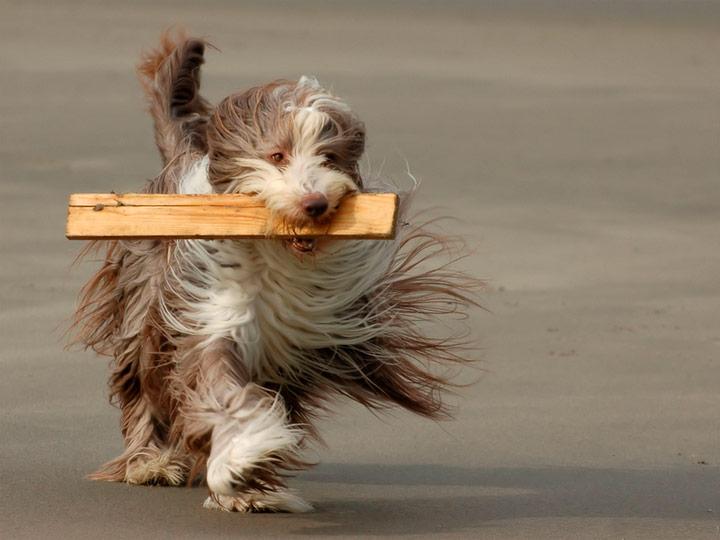
Bearded men love to play, often with a ball or Frisbee. They're not suitable for people who won't be able to spend a lot of time with them and won't be left alone for days on end.
Education and training
In experienced and loving hands, training a Bearded Collie is usually straightforward. The dog is a quick learner, eager to please and be helpful, and even to earn treats. Training a Bearded Collie puppy begins as early as possible. The puppy is taught obedience and house rules, and is weaned off bad habits (jumping on everyone, whining, barking without reason, and so on).
Bearded puppies are stubborn and independent to varying degrees. They definitely require training. General obedience classes are recommended, allowing the dog to release energy, practice commands, and socialize with other dogs.
Bearded Collies respond only to positive training methods. The worst punishment they can receive is a disapproving look from their owner. People who yell or physically abuse the dog are likely to end up with an unruly, neurotic dog with a host of behavioral problems. Training and nurturing this energetic and curious dog can take a considerable amount of time, but the results are well worth it.
Content Features
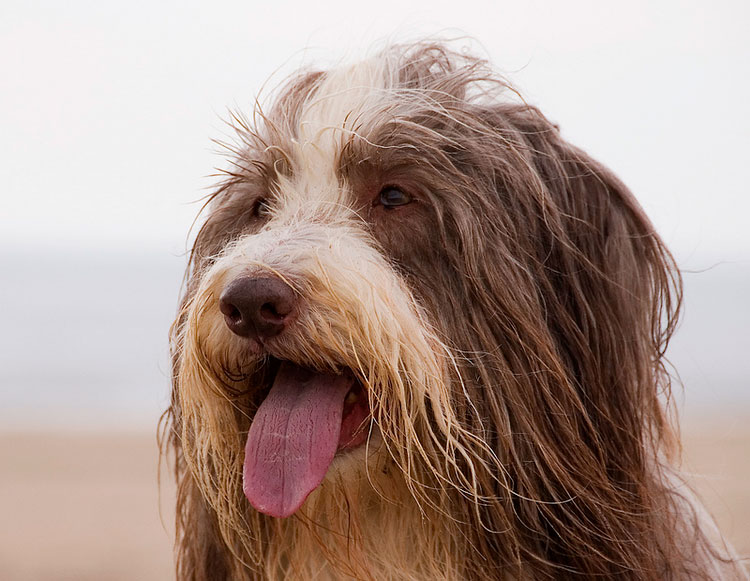
Bearded Collies are best suited for life on a farm or in a private yard. However, experience shows that the dog easily adapts to apartment life, provided it gets plenty of exercise and isn't left alone for days on end. Bearded Collies are relatively calm indoors, though their long coat can be a bit of a nuisance. Most Bearded Collies become very attached to their home and are reluctant to leave the premises. However, there are exceptions. If they want to, a Bearded Collie can climb a 1.5-meter fence. They are agile and agile, and also very curious. A dog doesn't need a run outside; a comfortable, insulated, raised kennel is sufficient.
Bearded Collies require a great deal of physical and mental exercise. The minimum requirement is vigorous walks 3-4 times a day for 30-40 minutes.
Some bearded collies suffer from allergies and digestive sensitivities. This breed requires a high-quality, balanced diet with a normal protein content (18-22%).
Care
The Bearded Collie does not require complex grooming, but it must be regular and will take a lot of time.
- Thoroughly brushing your dog's coat once or twice a week will help maintain its condition, prevent tangles, and reduce hair loss. It's recommended to brush your dog with conditioner or simply by lightly dampening the coat with a spray bottle. Until the age of two, a bearded dog will need to be brushed more frequently: once or twice a week. For an adult dog, brushing should be done every two or even three weeks. This procedure takes about two hours.
- Ears need to be cleaned regularly. Plucking the hair inside the ears is also recommended.
- The eyes are examined daily. If necessary, they are cleaned and any hairs clinging to the cornea are removed.
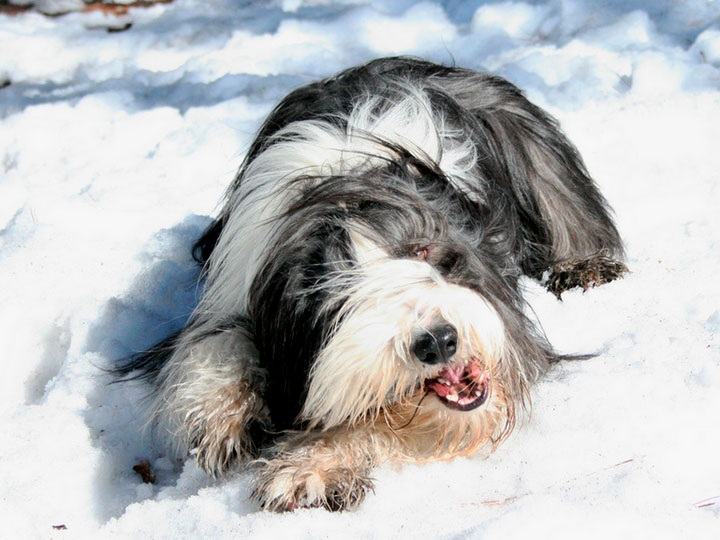
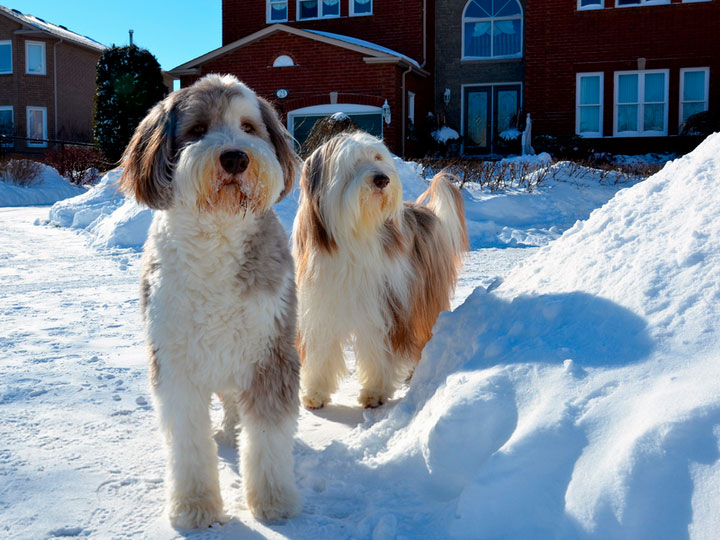
- In winter, snow can accumulate between the toes and pads, turning into ice chips and injuring the paw. To prevent this, the "brushes" on the paws are trimmed.
- They monitor the length and condition of the claws, trimming them as they grow.
- After walks, the bearded vulture's coat is inspected for dirt, leaves, twigs, prick marks under the tail, and other debris. Any excess should be removed or combed out.
- Bathing a Bearded Collie is often not recommended. Outdoor dogs should be washed 2-3 times a year or less frequently. Indoor dogs require more frequent bathing. In this case, it's important to choose the right shampoo.
- Many Bearded Collie owners prefer to clip their pets. This significantly simplifies grooming, but doesn't eliminate it. It's worth noting that cutting the coat too short isn't recommended, as it won't protect the dog from frost in winter or overheating in summer.
Health and life expectancy
The average lifespan of a Bearded Collie is 12.8 years. According to a survey of owners in the British Isles, Bearded Collies live an average of 13.4 years, compared to 12 years for their Canadian and American counterparts. The oldest dog on record, according to the British Kennel Club, was 19.5 years old.
The most common causes of death in UK Bearded Collies were: old age, cancer, cerebrovascular disease, chronic renal failure, and hypoadrenocorticism.
The most common hereditary diseases in the breed are:
- Problems with the musculoskeletal system (arthritis, cruciate ligament rupture, elbow dislocation);
- Problems with the gastrointestinal tract (colitis, diarrhea);
- Urological diseases;
- Diseases of the endocrine system (hypothyroidism; Addison's disease);
- Skin problems (pemphigus, alopecia, follicular dysplasia);
- Ophthalmological diseases (corneal dystrophy, cataracts, progressive retinal atrophy).
Where to buy a Bearded Collie puppy
There are several kennels in Russia that professionally breed bearded vultures. Ads for puppies on sites like Avito are rare. The breed is not commercially produced. Litters are rare. Often, puppies must be reserved in advance. Dogs for shows and breeding are most often acquired from foreign kennels. A fairly large and high-quality population can be found in Scotland, Hungary, Slovakia, and Poland. There are also several representatives of the breed and breeders in Belarus and Ukraine.
It's important to remember that it's very difficult to recognize a show-quality purebred dog in a bearded puppy (and especially in a young adult). When choosing a puppy, you should trust an expert or breeder. Genetic testing for common breed-specific diseases in the litter's parents is recommended.
Price
In Europe, the average price of a Bearded Collie puppy is 1,000 euros. In Russia, the price of puppies of this rare breed typically ranges from 40,000 to 70,000 rubles.
Photos and videos
You can see photos of Bearded Collie dogs in the gallery.
Video about the Bearded Collie dog breed
Read also:


Add a comment