
Large Munsterlander
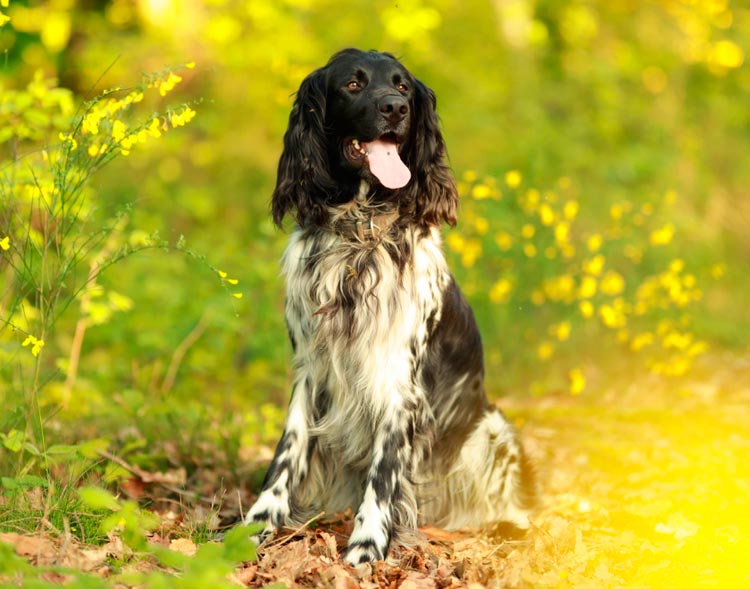
The Large Munsterlander is a versatile hunting dog of fairly large size with a long, black and white coat. The breed was developed in Germany in the early 20th century, but was only recognized by the FCI in 2013. It belongs to the large family of continental pointers.
Content
History of origin
The Large Münsterlander descended from large hunting dogs that were common in the Münster region of northwestern Germany. Essentially, it is a classic German pointer (its type developed as early as the 18th century).
Pointers are a group of hunting dog breeds used for hunting game birds with a gun, but can also work on small game. Their main characteristic is a genetically determined ability to freeze in place when prey is spotted.
At the beginning of the 19th century, targeted breeding work began to form the phenotype of the German pointer LanghaarUntil recently, black-and-white dogs weren't used in breeding. Warmer colors were preferred. However, they possessed good working qualities, and a group of breeders began to develop a separate breed using discarded specimens. Black-and-white was recognized as their primary color. In 1919, enthusiasts founded the Münsterländer Club, after which the breed was recognized by the German Kennel Club. The current FCI standard was recognized in 2013.
Purpose
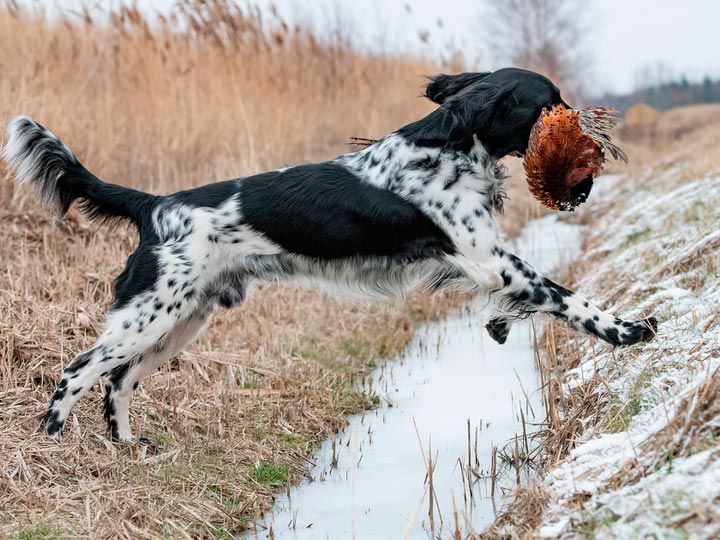
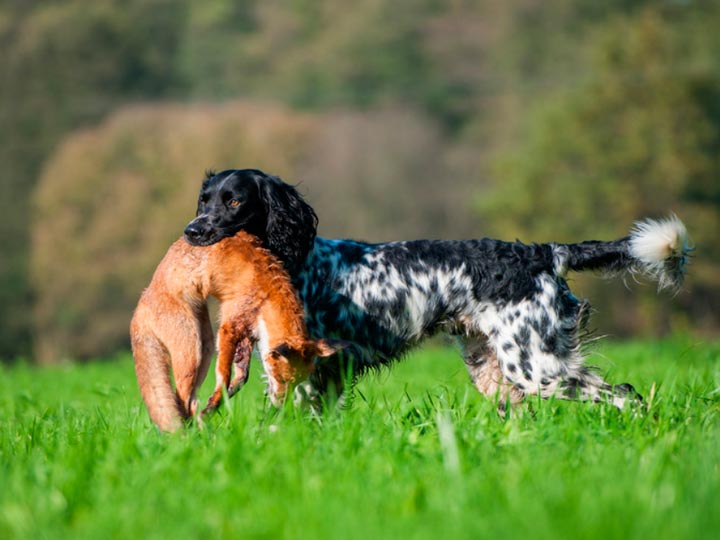
The Great Munsterlander is a versatile hunting dog, belonging to the continental pointing group in terms of its working style and established skills. It is distinguished by its fast, passionate search and excellent upper scent. Upon picking up the scent of a bird, it performs a "stretch." Sensing that it is about to flush its prey, it freezes in a graceful stance and awaits the hunter. On the command "Forward," it takes flight. After firing, it locates the shot within a range of 45 to 135 meters and brings the trophy to its owner.
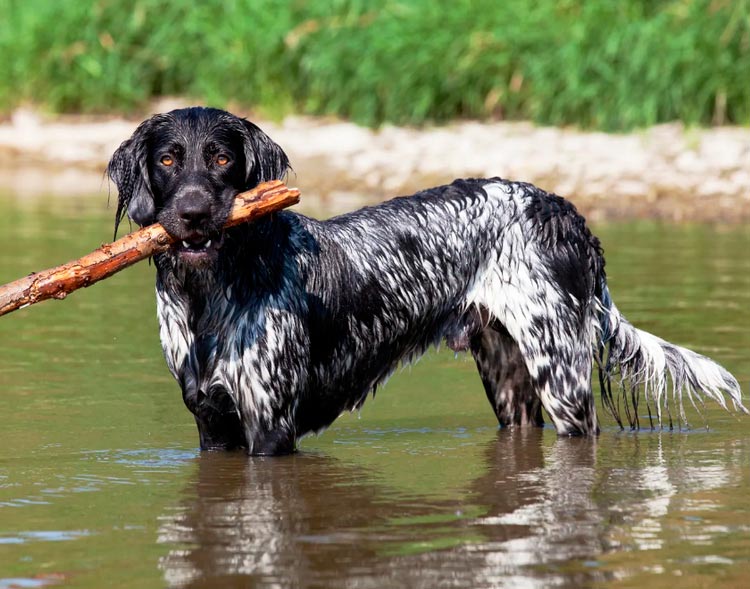
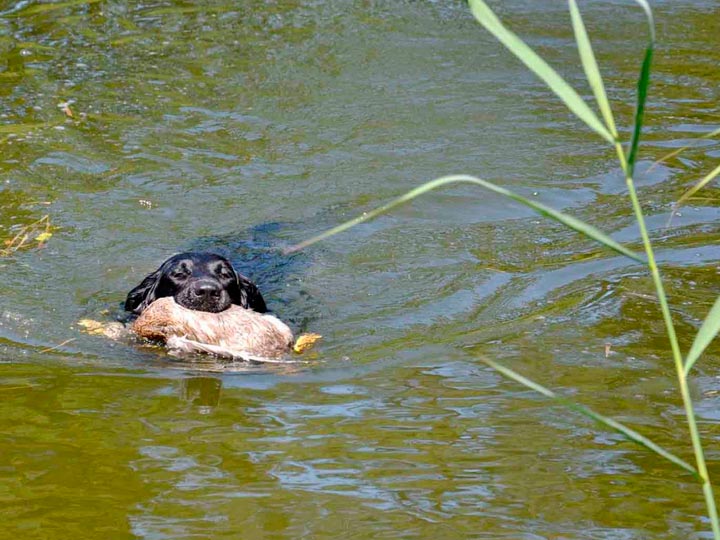
Thanks to its thick coat, the Munsterlander is largely protected from external influences: cold, moisture, branches, and sharp grass. It works well in fields, forests, and on water. It can also locate game by following a blood trail. It usually works close to people and is sensitive to its handler.
Appearance
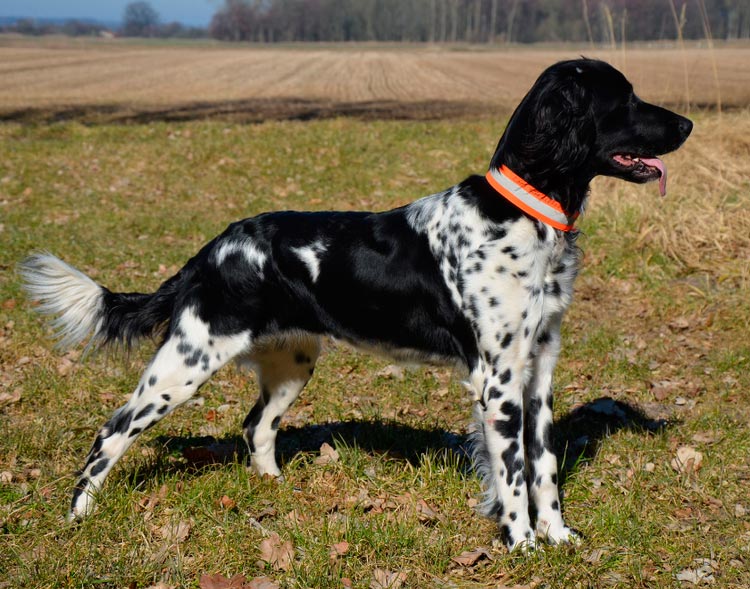
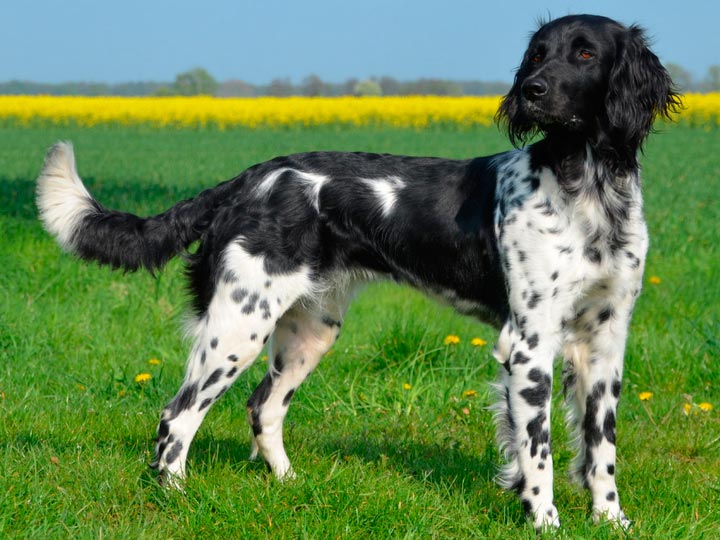
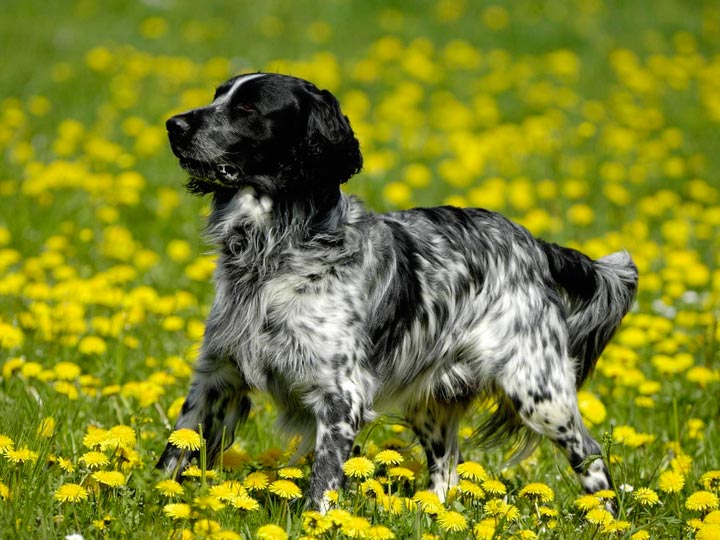
The Large Munsterlander is a strong, robust dog with clean lines. Everything about it speaks of intelligence and nobility. The height at the withers and the length of the body are approximately equal. Sexual dimorphism is pronounced.
- Height at withers: 58 – 65 cm.
- Weight: about 30 kg.
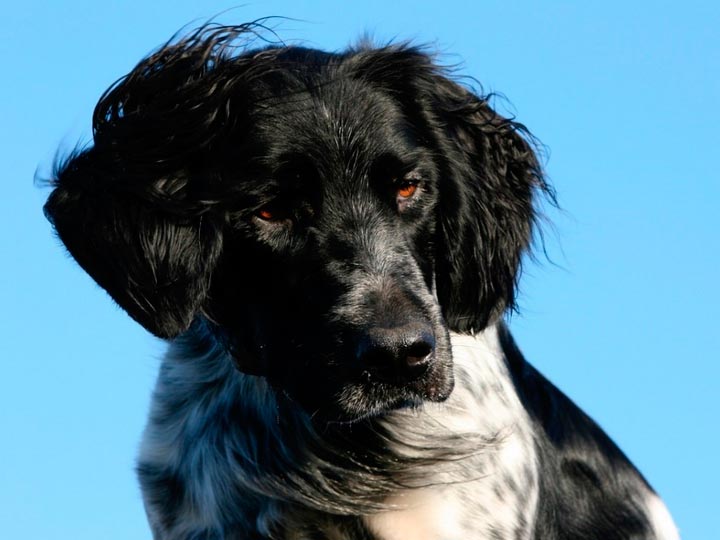
The head is elongated, with strong jaws and a straight nasal bridge. The nose lobe is well developed and black. The bite is scissor-like. The lips and eyelids are tight. The ears are wide, set fairly high, and lie close to the head. The neck is muscular and gracefully arched.
The body is strong. The back is short and straight. The loin is pronounced. The croup is long, wide, and slightly sloping. The chest is broad and deep with a pronounced forechest. The belly is slightly tucked up. The tail is carried horizontally or slightly higher. The forelegs are straight, strong, and muscular. The paws are of moderate length and rounded. The hind legs are taut, vertical, and strong.
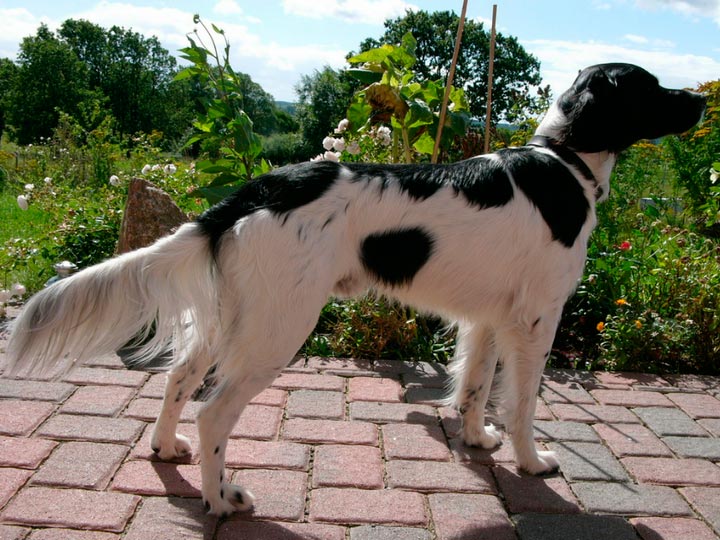
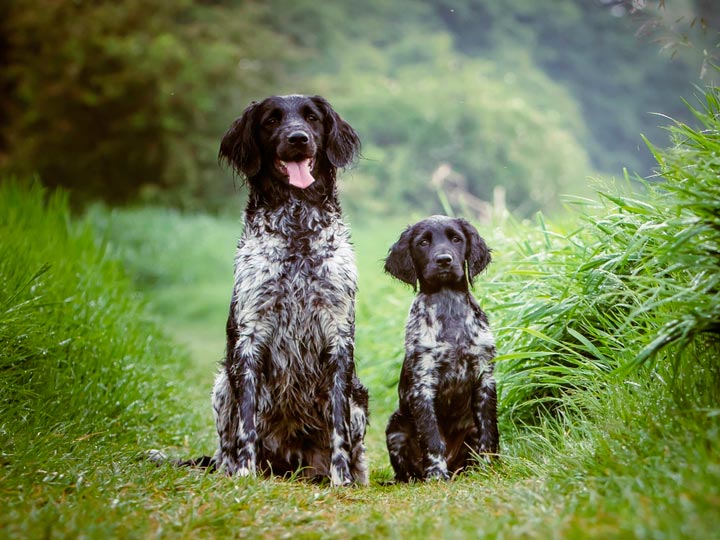
The coat is long, thick, and smooth. It is longer on the back, back of the legs, tail, and ears. It is short on the head. The coat is black and white. Various color combinations are allowed, often with speckles.
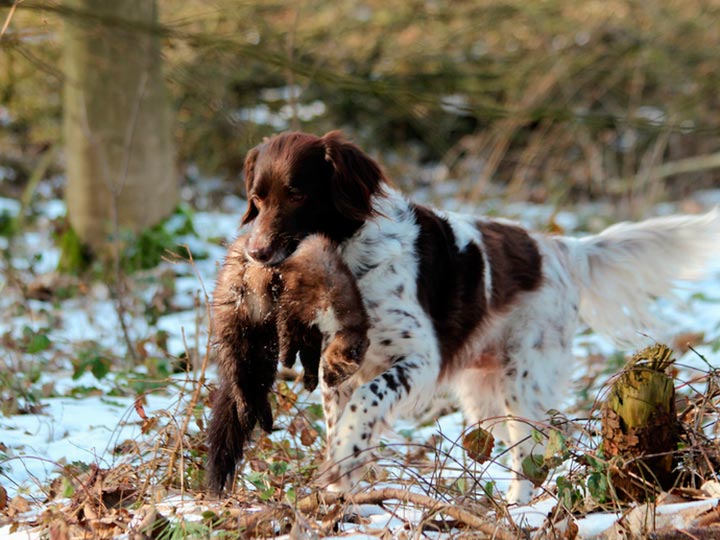
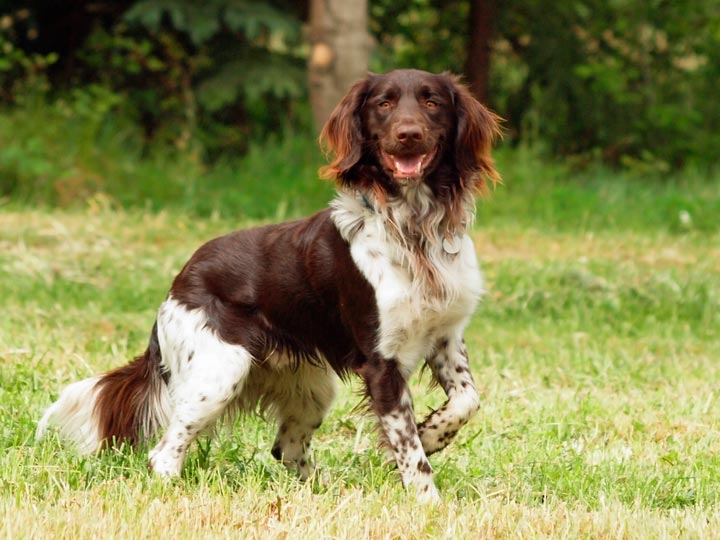
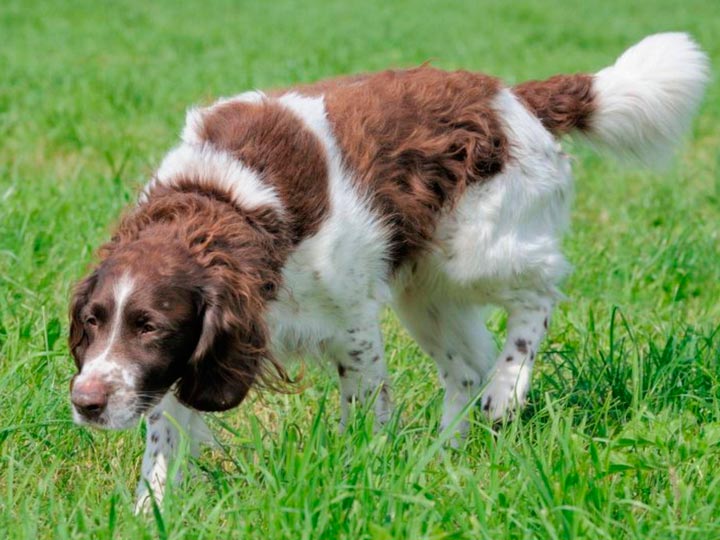
Large Munsterlanders are also available, with or without a crab coat. These do not meet the standard, and are therefore considered defective and excluded from breeding. They are considerably less expensive, but their working qualities are comparable to black and white dogs.
Character and behavior
The most important qualities of the Large Monsterlander are its docility and ease of training. It is a reliable and talented dog with a lively temperament and is not nervous. It is calm and even-tempered. It makes a good watchdog, but is unlikely to be used as a bodyguard. It gets along well with dogs and other animals. With proper socialization, it gets along well with children.
The Large Munsterlander is very sociable and affectionate. Not prone to aggression, it is energetic and curious.
Content Features
Suitable for both indoor and outdoor living. It's important to note that the Munsterlander does not tolerate prolonged periods of loneliness well. It needs to be constantly occupied and requires increased physical activity: long walks, training, and opportunities to spend plenty of time outdoors.
Large Munsterlanders have recently gained popularity as companion dogs. They are suitable for agility, frisbee, and other types of sport training.
Grooming is simple. The coat needs to be brushed occasionally and after walks in tall grass. Bathe as needed. Keep an eye on the eyes, ears, teeth, and nails.
Health and life expectancy
There is little data on any hereditary diseases. The breed is considered healthy and prosperous. These dogs most often suffer from hunting injuries and infectious diseases. Like other large breeds, large Munsterlanders are predisposed to hip and elbow dysplasia. Life expectancy is 10-12 years.
Buying a puppy, price
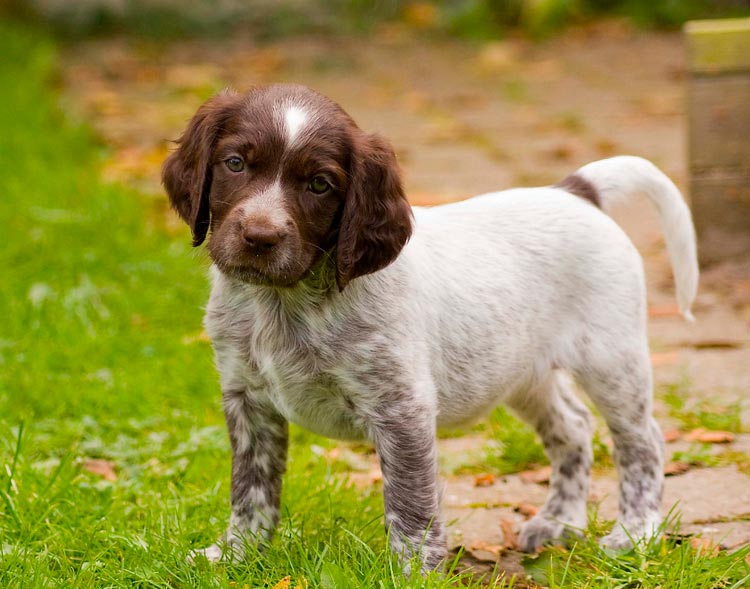
There are already several kennels in Russia breeding Greater Munsterlanders, often alongside other breeds. These dogs are highly prized in Germany, Canada, and England. In general, the breed is... There is no price data in Russia. In Germany, a good puppy from working parents costs an average of 800 euros.
Photos and videos
The gallery contains more photos of the Great Munsterlander breed of dogs.
Video about the Great Munsterlander dog breed.


Add a comment