
Bolognese (Italian lapdog)
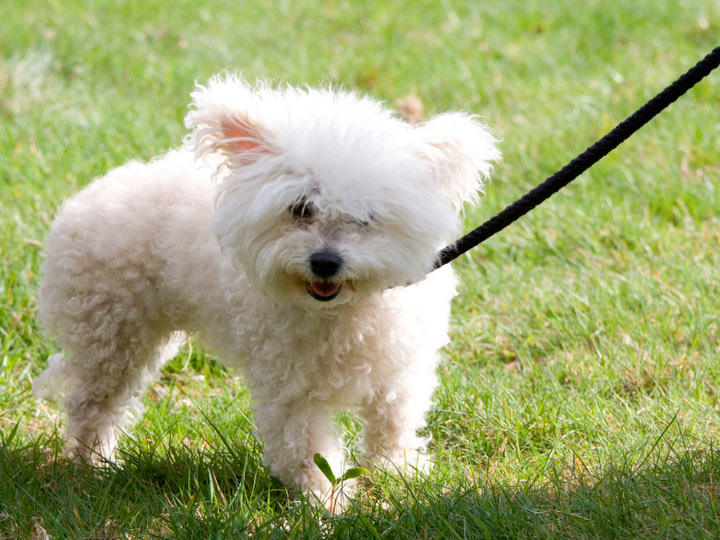
The Bolognese is not only a delicious Italian sauce; it's also a miniature toy dog breed with a calm, affectionate nature and soft, slightly curly, snow-white fur. Other names for the breed include the Italian Bolognese and the Bolognese Bichon.
Content
History of origin
The Bolognese belongs to the Bichon family, which includes the Maltese, Bichon Frise, Havanese And coton de tulearAll these breeds have similar appearance and temperament, but some breeders believe that Italian lap dogs are the most intelligent and resourceful. They are also, of course, the rarest.
The history of the Bolognese is often confused with the origins of the Maltese, as their distant ancestors were the same small white dogs, known collectively as Canis melitenses. They originated in the Mediterranean around 2,000 years ago and gave rise to all modern lap dogs. For centuries, they were popular items of trade, companions for noblewomen, and prized gifts for kings. During the Middle Ages and the Renaissance, they were particularly popular in Bolognese, hence the name.
As the number of kings in Europe dwindled, so did the number of Bolognese. Only thanks to true enthusiasts of the breed, one of whom was Gianfranco Gianelli, were they saved. Bologneses were imported to England in 1990 and shown in the ring of unrecognized breeds. They were soon recognized by the English Kennel Club, and then by the Fédération Cynologique Internationale under the name Bolognese.
Appearance
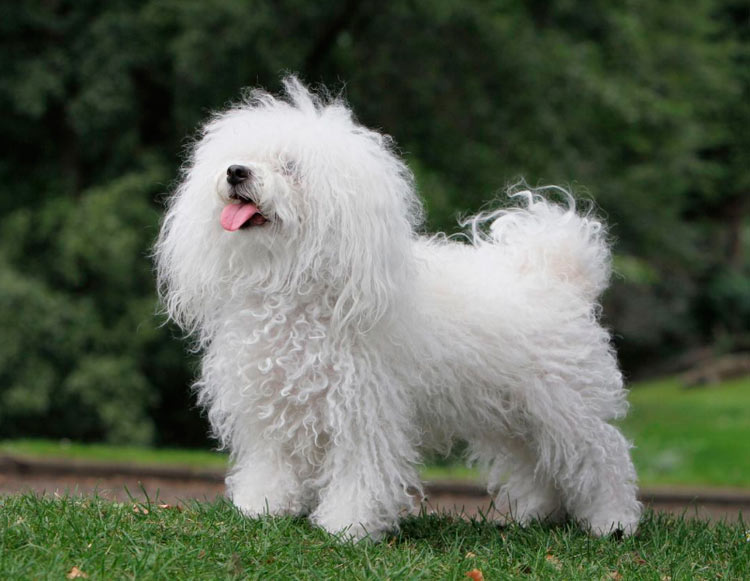
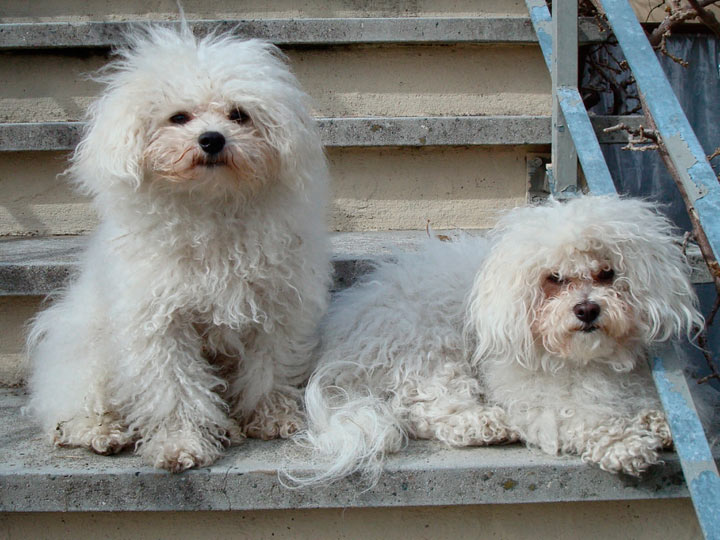
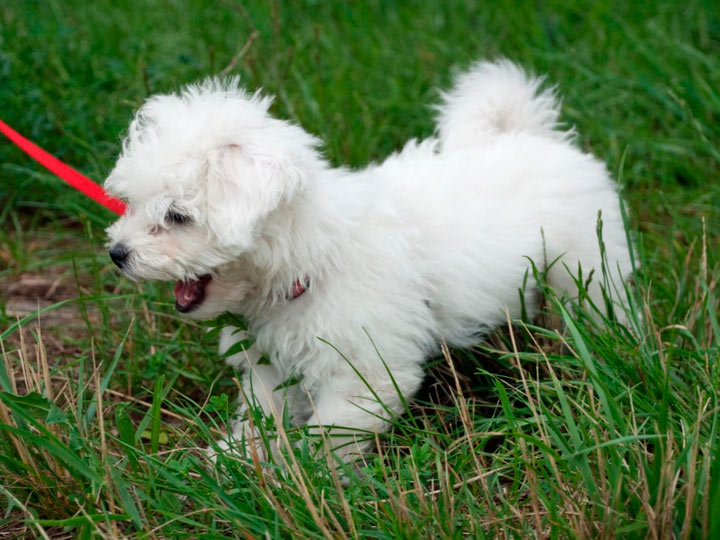
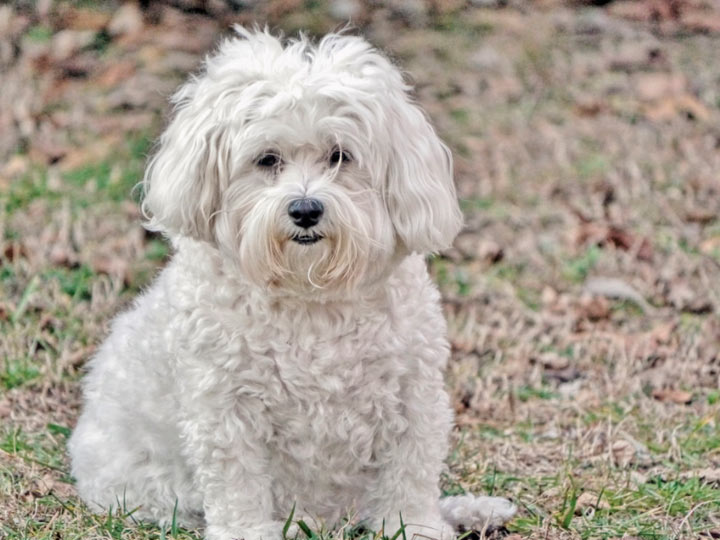
The Bolognese is a small, stocky, and compact dog with long, fluffy white fur. Its body is square. Sexual dimorphism is pronounced.
- Height at withers: 25-30 cm.
- Weight 2.5-4 kg.
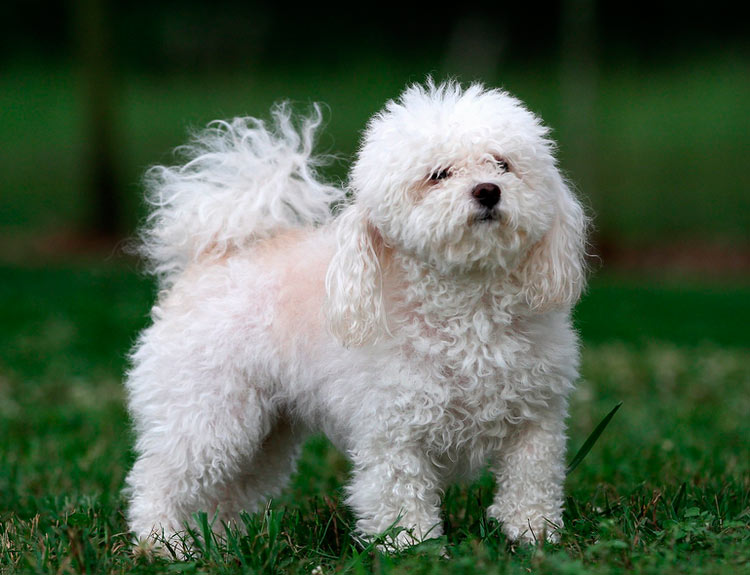
The head is of medium length. The skull is oval. The stop is fairly pronounced. The length of the muzzle is 2/5 of the total head length. The bridge of the nose is straight. The nose leather is black and large, and the lips are black. The jaws are normally developed. A scissor bite is acceptable, a level bite is acceptable. The eyes are set almost frontally, round, and fairly large. The whites of the eyes should not be visible. The iris is dark brown. The ears are set high, long, and hanging, raised at the base, which makes the head appear larger. The neck is equal in length to the head, without dewlap.
The body is square. The back is straight. The loin is slightly arched. The croup is wide and slightly sloping. The chest is full and well rounded. The tail is carried over the back. The forearms are straight and parallel. The paws are oval with strong black nails and dense pads. The hind legs, when viewed from the rear, are vertical and parallel. The stifles and hocks are moderately bent.
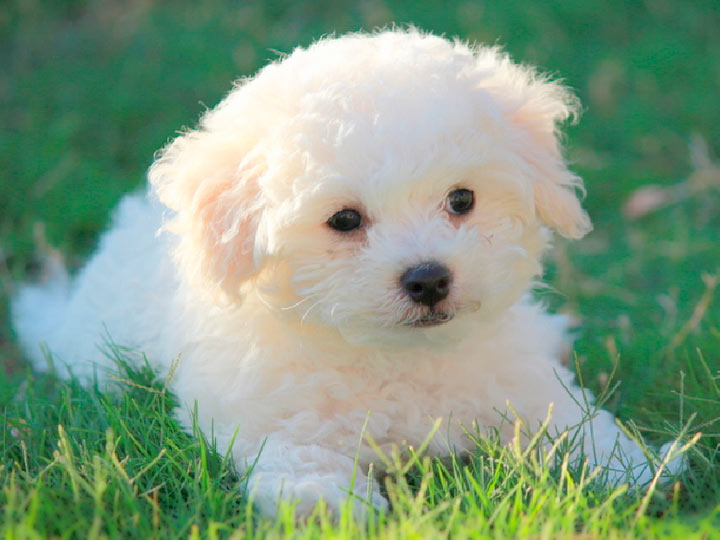
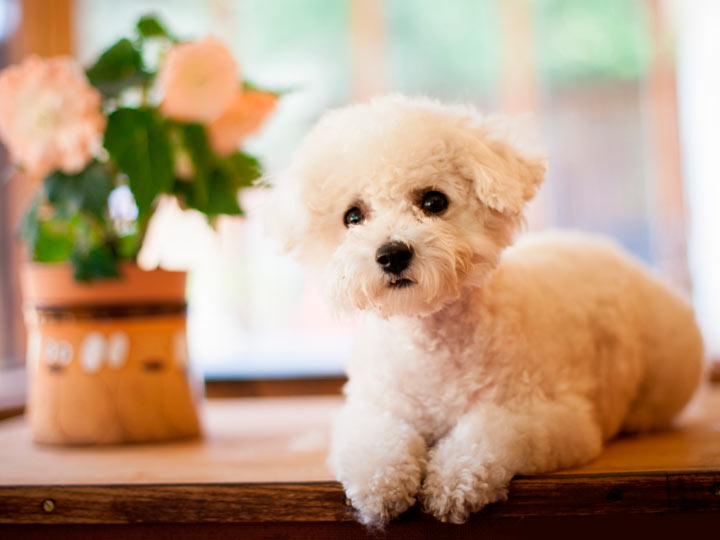
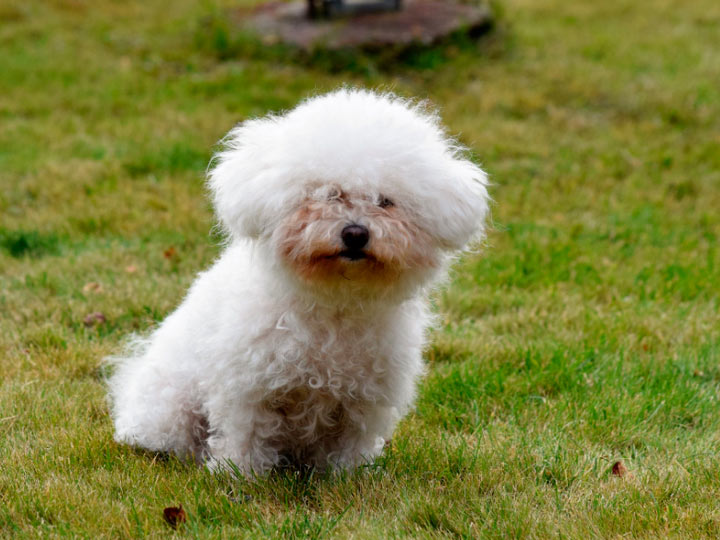
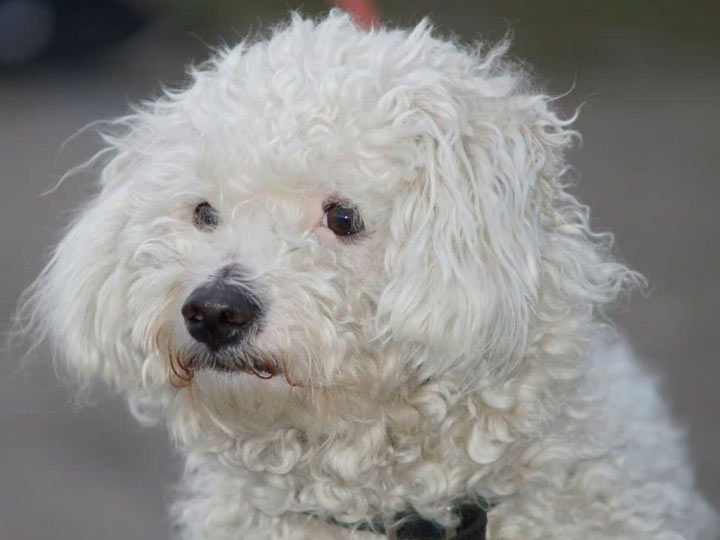
The coat is long all over the body, slightly shorter on the muzzle, and quite fluffy. It never forms fringes. The coat is white. A shade of ivory is acceptable.
Character and behavior
The Bolognese is calm, strong-willed, highly intelligent, loyal, and playful. Among all family members, it chooses one owner to whom it is completely devoted. It is sensitive to moods and easily adapts to its owner's rhythm. It absolutely cannot stand loneliness. If left alone for long periods, it can bark excessively, ruin things, and even make a mess. The Bolognese is curious, attentive, and so adept at reading human body language that it seems telepathic. It is good with children if properly socialized.
The Bolognese is a one-owner dog.
The Italian Bichon is responsive and eager to please its owner. It is easy to train and quickly learns simple commands. The Bolognese benefits from extensive socialization, including exposure to a variety of people, animals, and sounds. Without this, its natural caution can develop into shyness and suspicion.
The Bolognese is naturally reserved. It won't be overly familiar with strangers. It has a strong guarding instinct and will bark to alert you to any sounds. It's not aggressive and generally gets along well with other animals.
The Bolognese is calm, moderately active, inquisitive and docile, very devoted to its owner.
Content Features
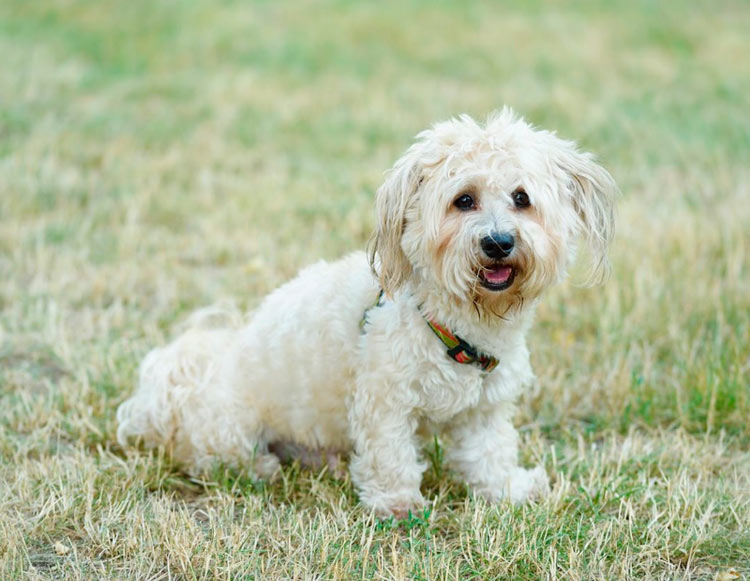
The Bolognese is suitable even for small apartments. It doesn't require much space and thrives on minimal exercise. In bad weather, it'll happily stay indoors and expend its energy chasing a ball. It sheds very little.
The Bolognese is considered an ideal companion for seniors. Calm, intelligent, and sensitive, they enjoy being around others, enjoy leisurely walks, and are easily potty trained.
Care
If a Bolognese isn't brushed daily, it quickly becomes matted. Owners who can't devote time to this routine trim their dog regularly to reduce tangling of the short coat. Bathe it once a month or slightly more frequently. Shampoo for soft coats is essential. Whitening products, conditioners, and detangling sprays are also used. The condition of the eyes, ears, teeth, and nails is monitored. Excess hair in the ear canal is recommended to be carefully trimmed. Nails are trimmed as they grow.
Health and life expectancy
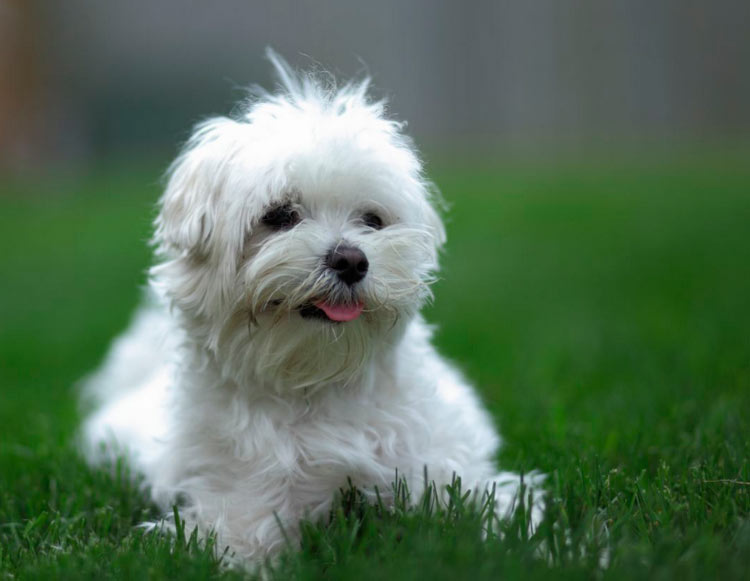
The Bolognese is considered a healthy breed, but some hereditary diseases still occur: hip dysplasia, luxating patella, Legg-Calve-Perthes disease, and eye problems. Life expectancy is 12-15 years.
Bolognese puppies
The Bolognese is the rarest breed in the Bichon family. It is quite popular in Italy, the UK, and some other European countries. In Russia, it is rare, with only a few breeders breeding Italian Bichons. Puppies are very rare and expensive.
Price
The price of a Bolognese puppy in Europe and the United States ranges from $800 to $1,500. There is no price data available in Russia.
Photos and videos
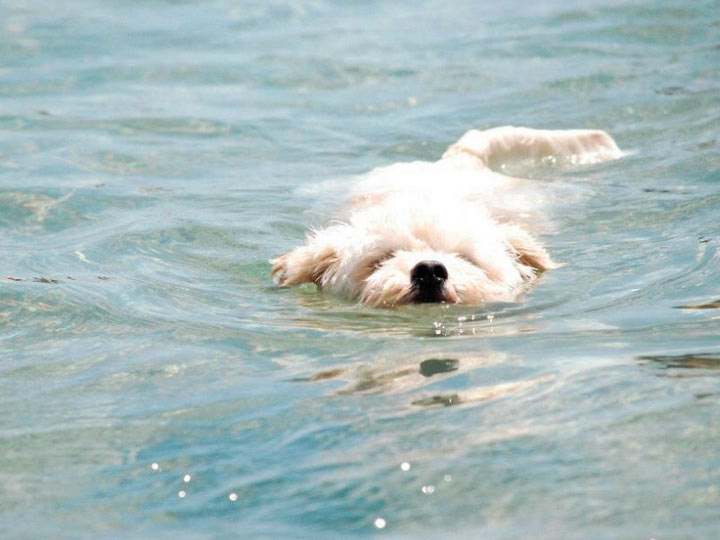
You can see more photos of Bolognese dogs in the gallery. The photos feature white Italian lapdogs of different genders and ages.

Video about the Bolognese dog breed
Read also:
- The Bracco Italiano is a dog breed.
- Italian Wolf - Lupo Italiano
- Dachshund Mix: Popular Mixed Breeds


Add a comment