
Diseases of old dogs
Older dogs' illnesses sooner or later become apparent—after all, nothing lasts forever, and our pet's body is no exception. It's common knowledge that each successive life stage of our four-legged friends has its own unique characteristics, including a proper walking and feeding schedule, appropriate exercise and active play, and regular veterinary visits. As dogs age, various health conditions begin to manifest, significantly complicating the care they need in old age. Today, we'll discuss the most common illnesses affecting older dogs, their symptoms, and treatments.
Content
Preventing Aging in Dogs
It's wrong to assume that there's no point in paying attention to the condition of older dogs and ignoring the symptoms of various illnesses, believing that age-related diseases are a natural phenomenon. This approach shortens a dog's life, and yet, as Antoine de Saint-Exupéry once said, "We are responsible for those we have trained."
Remember that an older dog especially needs proper care and love from its owners. What advice can we offer to those pet owners who are especially concerned about the health of their senior dog, trying to prolong its active life as long as possible?
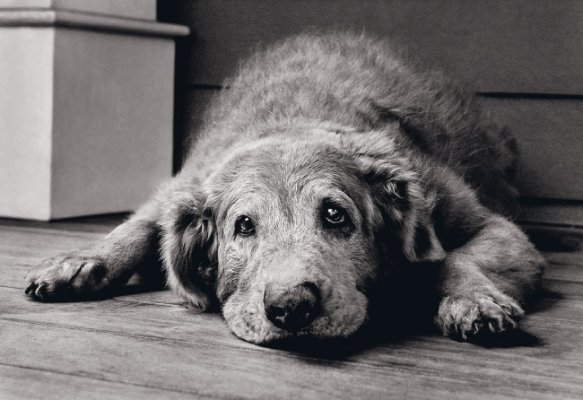
Veterinary professionals strongly recommend a preventive examination at least every six months. Regular checkups will help you detect any age-related illnesses early and provide appropriate treatment. The most common conditions in older dogs include various types of cancer, cardiovascular disease, reproductive system disease, and musculoskeletal disorders.
However, any disease has quite pronounced symptoms, so monitor your dog’s personality for any changes on a daily basis.
Diseases of old dogs and their symptoms
What are the most common illnesses seen in older dogs? Below, we've compiled a list of the most common illnesses and symptoms seen in older dogs.
Cardiovascular system
If after a long walk you notice that your dog is very tired, has a slight cough, and has a blue tint to its tongue, you should immediately consult a cardiologist.
As you can imagine, the above symptoms may indicate cardiovascular issues in dogs. These symptoms most likely indicate a cardiovascular disorder—changes in heart muscle function (cardiomyopathy) or valvular endocarditis. At first glance, seemingly irreversible processes can be successfully managed if you consult with a veterinary clinic in a timely manner, where they can prescribe medications to regulate your dog's heart function. In any case, you will be able to halt the progression of the disease.
Articular apparatus
Another symptom of illness in an older dog that should be noted is lameness, weak limbs, and even an unusual gait with a peculiar "twisting" of the animal's legs. Take your dog to a surgeon to determine the cause of these symptoms. Most likely, the problem is related to the nervous system or joints. In the early stages, this pathology can be successfully corrected.
Endometritis
A disease such as endometritis (inflammation of the uterus) is common in older, unspayed female dogs. Unfortunately, this problem does not resolve on its own and often progresses to a septic form called pyometra. In this case, your dog will require urgent surgery. Otherwise, her life will be measured in months, if not days.
If you notice your dog frequently demanding fluids, urinating frequently and profusely, or refusing to eat, this indicates a large amount of pus in the uterus. In this situation, her life may be measured in hours.
Reproductive system
Reproductive system disorders are common not only in female dogs but also in male dogs. These typically include prostate cysts, prostate adenoma, and other enlarged prostates. In male dogs, painful urination with brown blood may be observed. Since these conditions are hormone-dependent, treatment in most cases involves castration.
Teeth
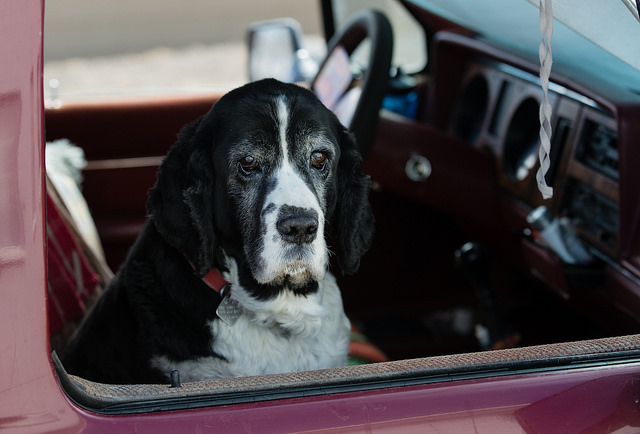
Keep an eye on your pet's oral health. If you notice an unpleasant odor coming from their mouth and they're having trouble chewing dry food, it could be due to tartar buildup. Tartar removal is performed at the clinic using a special ultrasound scanner.
The sooner you address this problem, the sooner you can treat your dog's gum disease. Otherwise, your furry friend's teeth will become loose, leading to root and nerve death, which will require extraction.
Oncological diseases
Modern veterinary medicine increasingly registers oncological diseases in elderly dogs.
Owners of older dogs most often seek veterinary care for various skin tumors, lumps in various locations, and mammary tumors in female dogs. Remember, the sooner you seek professional help, the better your chances of recovery. If the tumor is growing slowly, it likely hasn't yet metastasized. With timely surgery to remove these types of tumors, your pet's life can be saved, and they'll be able to continue to delight you with their presence for a long time to come.
Tumors that develop in dogs' internal organs often present with non-specific symptoms. Your dog may experience constipation or diarrhea, and vomiting may occur periodically. If you notice these symptoms, be sure to take your pet to a specialist and never attempt to treat it yourself.
None of the above-mentioned illnesses affecting older dogs can resolve on their own, so promptly noticing any adverse symptoms and seeking veterinary attention will alleviate your pet's distress and potentially prolong its life. Every dog owner wants their dog to bring them joy for as long as possible, to remain playful, healthy, and cheerful. Therefore, the specialists at the Zovet Veterinary Center tirelessly emphasize that each of you has every opportunity to maintain the health of your four-legged friend by regularly taking them to the veterinarian for preventive examinations.
Video How to tell if your dog is sick:
Any questions? You can ask our website's staff veterinarian in the comments below, who will answer them as quickly as possible.


16 comments
Tatiana
The dog is almost 15 years old, a female pinscher, has diarrhea, vomiting, bloody discharge from the uterus, and all in one day.
Daria is a veterinarian
Hello! Is your bitch spayed (hysterectomy), neutered (tubes tied, or just ovaries removed), or have her reproductive organs been preserved? Has she had any previous matings or whelpings? Has she developed increased thirst or urination? What's her temperature? If you see blood leaking from any orifice, rush to the vet! Especially in a geriatric animal. Rule out pyoderma and other tumors first.
Maria
Hello. We have a miniature dachshund. She's almost 12 years old. A month and a half ago, she had a mammary tumor removed. The surgery lasted three hours, and afterward, they told her to give her Vasotop for a month. Then we went to an appointment and stopped her from taking the pills. She was running around, eating, and doing well. Then four days ago, we went for a walk, and while going down the stairs, she fell and hit her head. It felt like a stroke. One side of her head is crooked, and her pupils are unresponsive. We took her to the vet, and they prescribed Vasotop again and x-rays. They didn't give her any clear advice. She's only gotten worse. Please advise what to do.
Daria is a veterinarian
Hello! You really need to take your dog for an X-ray to rule out a concussion and hematomas (which can compress nerve endings in the brain). A secondary complication, cerebral edema, cannot be ruled out either. Without a full neurological examination to determine the cause of the pupils' lack of response to light, making a diagnosis and prescribing treatment "by eye" is dangerous. Neurology is a very narrow specialty, so ideally you should seek a specialist. It's possible that your dog's legs simply buckled or became tangled, or that he stumbled, and the eyes and the distorted side of his eyes are not a stroke, but the result of an injury.
Tatiana
Hello. My German Shepherd is 10 years old. We've never had any problems. Last year, she had her first false pregnancy. It passed without consequences. About two months ago, she was in heat (our male Pekingese kept chasing her). About two weeks ago, she started refusing food and building a nest in her kennel. Everything is the same as last year: her nipples are swollen, her vagina is enlarged, etc. Three days ago, she completely refused food, hunched over, I can see cramps in her stomach, she allows palpation, her nipples are not swollen, she has no fever, there is no discharge or odor from the vagina, from time to time she has something similar to a gag reflex, and sometimes a slight tremor in her hind legs. How can I help her? We live on a farm, the vets won't come to us, and we have nothing to transport her 80 km ourselves. Can you tell me what's wrong with her?
Daria is a veterinarian
Hello! I should have spayed my cat after the first false pregnancy, as it would recur. Tremors indicate pain. Sometimes false pregnancy progresses so much that the animal vomits and has weak paws. But I'm confused by the fact that you first write that the nipples were swollen, then later that they are no longer swollen. What was the injection for the false pregnancy last year? I can't prescribe medications without consulting a doctor, as an ultrasound is necessary! And "treatment" without consulting a doctor could cost the animal its life, as there is no diagnosis, only a guess.
Tatiana
Good afternoon. Last year, I didn't have any injections; I massaged my nipples twice with Vishnevsky ointment, and that was it. My nipples were still swollen this year, but it's all gone now. My stomach is retracted, so I don't think I have uterine inflammation. I've started eating. I'm giving her Spazmalgon.
Daria is a veterinarian
Hello! Would endometritis cause a sagging or distended belly? She doesn't have subinvolution, so the uterus wouldn't be large (it doesn't shrink after pregnancy and childbirth). Since her nipples were swollen, it was a hormonal imbalance. It's a mystery to me how the animal wasn't given any injections during the false pregnancy? Or was the animal never taken to the vet? Neuter the male dog, remove soft toys, don't let him build nests, take him for walks more, and find something to do with the dog. False pregnancy is a psychological phenomenon, caused by "lack of time," a desire to have offspring, to at least occupy oneself with caring for the puppies. An ultrasound should be performed to rule out pathologies. I won't prescribe medications without a definitive diagnosis.
Julia
Good afternoon. My dog is 17 years old. I thought her heat cycles were over, but the last one was very heavy. The blood ranges from almost black to scarlet, with some blood in the first week. The discharge continues, gray-brown. Her tail is often drooping, and her sides are drawn in. She has a very unpleasant putrid odor. Two years ago, she had vaginal prolapse. She also has a lump on her mammary glands. Is treatment possible at this age, or is euthanasia the only option?
Dasha is a veterinarian
Hello! Are you sure this is a heat cycle? This is starting to look like a serious reproductive system problem! Unfortunately, it's unlikely anyone would perform surgery at such an advanced age. However, without an examination and testing, it's extremely difficult to say what's wrong with your pet or make a prognosis. Antibiotic therapy and symptomatic treatment may be necessary. However, cancer may have developed, and your pet won't survive the surgery.
Anna
Good afternoon. My dog is 8 years old, a female mix. Three days ago, we noticed changes in her behavior. Twice a day, she starts pacing around the apartment, as if looking for something or someone, breathing heavily, as if she's hot. When we leave the house, she's afraid to leave the apartment, but otherwise, she behaves quite normally, eats well, drinks, and is happy. But now she's having these tantrums a couple of times a day. She's up to date on all her vaccinations. How dangerous is this? What could it be?
Dasha is a veterinarian
Hello! Has the animal had any injuries? Perhaps it hit its head somewhere? Has it been sick recently? Has it had a high fever or other health issues? Some infectious and parasitic diseases can trigger nervous reactions in the future. It would be a good idea to find a veterinarian who specializes in neurology, but at least make an in-person appointment with a veterinarian. Check the pupils (they should be the same size and reactive to light; it would also be a good idea to examine the eyes during the seizure). You might notice something else.
Zara
Hello. I have a 10-year-old female Pekingese who hasn't given birth yet. She's bleeding from her uterus. She's very agitated, excited, and aggressive. She's apparently in pain, but she keeps trying to be petted. It's not during her heat cycle, but more often. I used to never notice her heat cycle, she groomed herself well, but now she's leaking urine on the floor. Her genitals aren't inflamed, as they usually are. Our veterinary services are very limited, so there's no one to turn to. Please respond. Thank you.
Dasha is a veterinarian
Hello! Perhaps your dog isn't climbing for affection, but is simply trying to draw your attention to the fact that she's unwell. Have you given her anything during her heat cycle before? Perhaps some medication to suppress her heat? Your dog clearly needs to be taken to a clinic for an ultrasound. And preferably spayed. If you weren't planning on having offspring, why didn't you have her spayed sooner? Spaying can solve a ton of problems down the road (pets live longer and are less likely to develop cancer and inflammatory conditions in the reproductive system). If your city doesn't have good veterinary care, consider going to a neighboring town. We don't have an X-ray machine in our town, but we give everyone the location of a clinic in the neighboring town (only 15 km away) that has one. Owners often go because it's essential for an accurate diagnosis. Ultrasound machines are now available in almost every clinic.
Olga
Hello. I have a 12-year-old Pekingese. Lately, he's started to lie on me. About two years ago, he had his testicles removed.
Dasha is a veterinarian
Hello! Why did you castrate your dog so late? Was it based on medical advice? To understand what's wrong, you should have blood and urine tests and a pelvic ultrasound. Rule out any inflammatory processes in the dog's genitourinary system. It's possible he caught a chill somewhere (lying on a cold floor, being in a draft, or getting chilled during a walk). If no abnormalities are found, the cause may be age (such as inability to control the sphincter). The solution to the problem will depend on the specific causes identified. Without a thorough examination and in-person examination of the animal, it's impossible to make a diagnosis.
Add a comment