
Puppy diseases
Puppies, like adult dogs, get sick, and they tend to get sick more often. Moreover, illnesses in puppies cause much more harm to their small, fragile bodies, and it's often difficult to predict the consequences of each illness. We've prepared a list of the most common illnesses in puppies, along with descriptions of symptoms and treatment recommendations, dividing them into three types: infectious, parasitic, and non-infectious.
If the mother is vaccinated, then while she feeds her puppies, they are protected by their mother's immune system, as antibodies are found in the milk. As soon as the puppies are separated from their mother, they become susceptible to a variety of infectious diseases. However, puppies don't always become ill due to a virus or bacteria. Parasitic diseases are also common. And there are many non-contagious illnesses that cause significant problems for pets and their owners.
Content
Infectious diseases of puppies
The most dangerous are infectious diseases in puppies. Mortality in such cases is extremely high, especially when the owner is late in identifying the cause.
Parvovirus enteritis
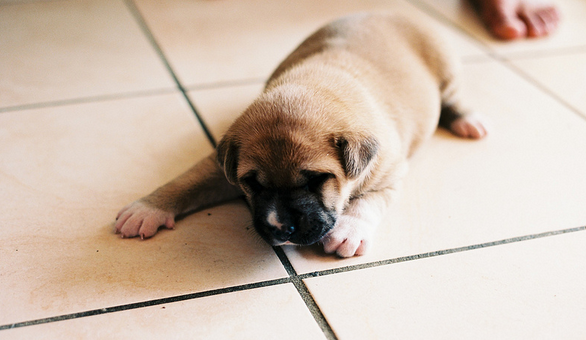
Death from parvovirus enteritis in dogsSymptoms may occur within the first 24 hours, but more often, a sick puppy dies without treatment within 3 days. Many owners confuse viral enteritis with poisoning, as with this disease, the temperature almost never rises; in fact, it can drop to 37.5°C.
However, vomiting and bloody diarrhea should be a warning sign for any owner. Enteritis also has many other symptoms. Treatment is specific: a serum with a high concentration of antibodies against the pathogen.
Distemper or plague of carnivores
Babies between 3 months and 1 year of age are most often affected, but later infection is also possible if the immune system is very weak. This viral disease has many forms: cutaneous, nervous, intestinal, pulmonary, and mixed. It is important to begin treating your baby for distemper as soon as possible to ensure survival and avoid serious complications. German Shepherd puppies are more susceptible to this disease, but that doesn't mean you shouldn't vaccinate your dog if you have a different breed. Vaccination alone will reduce the risk of infection to just 1%. Recovery is then very rapid.
Infectious hepatitis
The virus primarily affects the liver, but other organs are also affected. The main symptoms of the disease in puppies include fever (up to almost 107 degrees Fahrenheit), vomiting bile, and a near-complete loss of appetite. The mucous membranes first turn pale, then yellow. The whites of the eyes also take on an unhealthy hue due to the bile. This is because the liver releases large amounts of bilirubin into the blood, which is not broken down (as it should be in a healthy animal). This damages the brain, and the urine becomes dark brown. Another clear symptom of an infectious disease hepatitis – a sick puppy spreads its front paws wide when standing or lying down.
Parasitic diseases of puppies
Parasitic diseases in puppies can also be described as diseases caused by parasites. Parasites can be:
- external (fleas, ticks, lice) - skin parasites in dogs;
- internal - types of worms;
- Subcutaneous mites are also mites that operate in the layers of the puppy's skin. The most common ones here are demodicosis in dogs.
In this article we will briefly discuss worms.
Cestodoses
A group of helminthiasis caused by tapeworms (also known as tapeworms). This group includes diphyllobothriasis, dipylidiasis, echinococcosis, taeniasis, and many others. Pets can become infected by eating raw fish or offal from infected animals. Even ingesting skin parasites (fleas or lice) can lead to cestodiasis.
Trematodoses
This group of diseases is caused by flukes. The most common is opisthorchiasis. It affects the pancreas, bile ducts, and the liver itself. Pets can become infected by eating raw fish containing fluke larvae.
Nematodosis
They are most commonly seen in young puppies. These babies often suffer from toxocariasis or toxoascariasis (roundworms, simply put). The baby's tummy becomes large, distended, and tight. In cases of severe infestation, a cough is observed (since one stage of the parasite's development occurs in the lungs). The animal coughs up the larvae, which migrate to the small intestine, where they grow and reproduce as adults.
Intrauterine infection is often recorded (unborn puppies become infected from an infected mother). Roundworms greatly weaken the immune system. Any "infection" can affect puppies. This is why deworming is so important before vaccination. Deworming is also necessary regularly! Even if you think your little one is completely healthy, you may not even realize you have an infestation.
Non-communicable diseases of puppies
The section title makes it clear that these diseases are the least dangerous, but that doesn't mean they can be ignored. In advanced stages, such a disease can cause severe suffering for a puppy.
Rickets
Rickets is a common disease in puppies of all breeds. It develops because growing puppies lack vitamin D. Due to its deficiency, the young body cannot fully absorb calcium. Essentially, it "transits" through the intestines without being absorbed. Consequently, calcium levels in the blood decrease. But the body is such a creature that if something is missing somewhere, it will find a way to get it.
Where is there a lot of calcium? That's right, in the bones and teeth. The bones become porous and brittle. And under the weight of the body, they become curved. This results in crooked legs and a bowed chest, and you can feel something like balls on the ribs – the so-called rachitic beads. There may be cramps, but in any case, the animal is in pain. More about rickets in dogs.
Hernia
In some animals, the umbilical cord does not completely close. Loops of intestine or other internal organs located in the abdominal cavity can protrude through it. This is very dangerous, as the intestines can become trapped, preventing food from passing through. First, the food will begin to rot, causing severe intoxication in the puppy. Then, the intestines will become blocked, causing the pet to experience excruciating pain.
If left untreated, the animal's intestines may become damaged, and their contents may leak into the abdominal cavity. This will lead to peritonitis. A puppy's hernia should not be repaired by the owner! This is a surgical procedure, so it should only be performed by a veterinarian!
Obesity
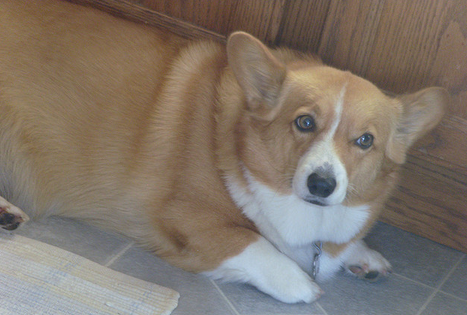
Obesity This is a disease of large-breed puppies, but small breeds can also sometimes suffer. In small breeds, fat accumulates first in the abdomen, and then on the legs. Large breeds, on the other hand, gain weight more evenly. However, excess weight only puts stress on the joints. Also, remember that fat is not only subcutaneous tissue but also visceral deposits—around the internal organs. And this fat is much more dangerous than fat deposited under the skin. A puppy should be active and healthy.
Don't overfeed or give in to those puppy-dog eyes begging for more. Don't spoil your pet with sweets. Remember that an unbalanced diet will lead not only to hypo- or hypervitaminosis, but also to obesity and other metabolic disorders. And then comes the domino effect. Improper metabolism can lead to serious health problems, such as kidney stones and diabetes.
Osteochondrosis (joint disease)
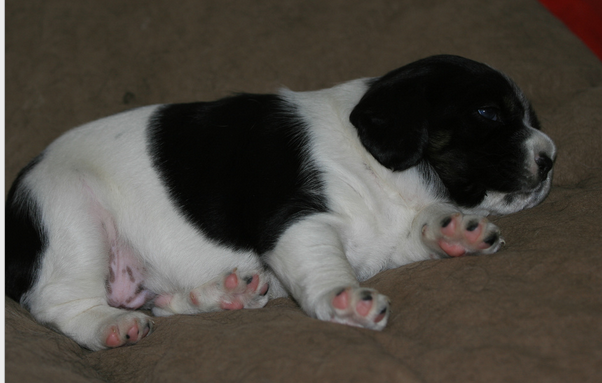
It's more common in large breeds. The joints become enlarged and thickened. Lameness develops, and the joints themselves become deformed. If you look closely, you'll notice the radius (one of the bones running from the wrist to the elbow) is crooked. This not only creates a defect in appearance but also causes discomfort to the growing puppy.
This condition (in Alabai, German Shepherd, and other large breed puppies) develops due to overfeeding with foods high in calcium. As you can see, an excess of this element is just as harmful as a deficiency. If a puppy gains excess weight, the joints become severely deformed under the weight, as if they were being crushed. Don't overfeed your puppy, even if they beg for more.
Vitamin deficiency (hypovitaminosis)
As your puppy grows, his body needs nutrients for bone and tooth growth and the development of his internal organs. Your puppy should eat a wide variety of foods: meat (not raw or fatty), vegetables (don't overdo it with potatoes, or your pet will become obese), dairy products (but don't overfeed them, or they'll develop osteochondrosis), hard-boiled eggs, and grains and cereals. Vitamin supplements for growing puppies can be given.
Excess of vitamins (hypervitaminosis)
Many owners mistakenly believe that giving their puppies more vitamins and minerals will only make them healthier and stronger. This isn't true. Excess vitamins can also cause hair loss (just like vitamin deficiencies), and deformed bones and teeth. Puppies often become seriously ill. This is because the symptoms, to inexperienced owners, often resemble hypovitaminosis. Therefore, owners often try to give even more vitamins, which actually causes further harm.
That's why it's so important not to start treatment on your own, but to first visit a veterinarian and have a blood test to find out whether there really is a vitamin deficiency or if there are too many and the diet needs to be revised.
Any questions? You can ask our website's staff veterinarian in the comments below, who will answer them as quickly as possible.
Read also:


32 comments
Marina
The puppy is two days old, and his mother refused to feed him. He spent half the day in the rain. How do you treat him?
Daria is a veterinarian
Hello! Unfortunately, neonates (newborns) at this age have impaired thermoregulation, so hypothermia is very dangerous for them. Furthermore, if the puppy hasn't been fed, there simply isn't enough energy to support vital processes. If the mother doesn't start feeding it, or if the human doesn't provide milk replacer, and the puppy isn't kept warm, the risk of death is enormous.
Aina
Two puppies were left without a mother, and I'm raising them myself. One is healthy, but the other started to collapse. He's been eating and drinking well for three days now. It's like he's paralyzed.
Daria is a veterinarian
Hello! What exactly are you feeding? How often? How old are the puppies? Are they urinating and bowel movements? Gentle tummy massage is needed to stimulate peristalsis and bowel movements. Rickets and vitamin deficiencies should also be ruled out. The puppies should be examined.
Alla
Hello. Tsutsik 2 m. Having started to waddle, it’s bad to stand on your paws, dry up on your back, lie on your hip, lie down more and more, and continue to vomit with blood and worms, I give the vitamin “brush”
Daria is a veterinarian
Are you talking about vitamins? Why hasn't the puppy been dewormed at 2 months? Where are the age-appropriate vaccinations? The poor thing has been lying around for a week, barely walking due to weakness, and still hasn't been to the vet? First of all, when a puppy is born, they deworm it, even if the person who gave it to you claims to have done so. 90% of babies (puppies and kittens) have parasites. In this case, you weren't feeding the puppy vitamins, but the parasites! They were just growing and multiplying in ideal conditions. And the more there are, the more severe the intoxication, the more blood they suck, the worse it is for the puppy. Get to the vet immediately! Get a consultation on the correct preventative treatments for your puppy. And I still have a ton of questions about feeding.
Alena
Hello, I have a 3-month-old Laika puppy who hasn't been vaccinated. He was active and playful, but suddenly he fell ill and is lying there breathing heavily. I can't take him to the vet. Can you tell me what I can do?
Daria is a veterinarian
Hello! How can you tell me what to do in this situation without knowing what to do? It could be pulmonary edema, pneumonia, or even a bacterial or viral infection. You need to take the animal's temperature, examine it, and listen to its breathing. Simply administering antibiotics is also wrong. It could make the situation worse.
Anonymous
Hello. A common mongrel gave birth to kittens. They're currently in their second month. Some of them can't hold their paws up, their heads up, and they're whining. What's wrong with them?
Daria is a veterinarian
Hello! It's not normal for puppies this age to be unable to hold their heads up! By 2 months, puppies should be able to eat, run, play, and move around fully on their own. At 2 months, puppies are weaned and vaccinated. Yours can't even hold their heads up. You should take them to a vet for an examination. Neurological problems (possibly injuries sustained during birth) must be ruled out. Alternatively, the puppies may be underfed, not receiving the necessary vitamins, macro- and micronutrients, and therefore are not growing well and their muscles are weak.
Anonymous
Hello, my puppy is 3 days old and he has lost his voice. I thought he was cold. When I feed him, his tummy hurts and he lies there and doesn't get up. How can I help him? The dog was constantly licking the puppy. He was wet and cold. I think he was cold.
Daria is a veterinarian
Hello! If a puppy has become chilled and ill, it will require professional PERSONAL veterinary attention, as such small puppies have poor thermoregulation and are at high risk of developing pneumonia. Why are you touching a small 3-day-old puppy? It's too fragile and you could accidentally injure it. Leave the care of the puppies to their mother. Or is the mother unable to cope with motherhood on her own, so you've taken on the role of nurse? If the puppy is bottle-fed, abdominal pain may be due to the formula being inappropriate. How is the puppy's bowel movement?
Andrey
The puppy is 3 months old, drinks a lot and often and often pees
Daria is a veterinarian
Hello! What does he eat? Perhaps he's been eating a lot of meat or dry food? In that case, increased thirst is often registered (proteins "draw out" moisture). Does he pee as much as he drinks? Are there any unusual odors coming from his skin or mouth? Were his parents healthy? Have his blood and urine been tested for sugar? Has diabetes been ruled out? What does his urine look like: normal color and odor, or is it clearer? Are there any coat problems? A kidney examination would also be a good idea. At what time of day does he urinate a lot? Is the problem multiple times or a large volume of urine at one time?
Vlad
My puppy died a day ago, everything was fine, but then he suddenly became a wimp, walked from corner to corner, the next day he just lay there and died, what happened?
Daria is a veterinarian
Hello! I understand that no one took the puppy's temperature? There was no vomiting or stool changes either (which is unlikely, as these are the clinical signs that most often bring puppies to appointments). Most likely, the puppy isn't vaccinated and was taken outside for walks (or the animal had access to your shoes). It's possible that the cause was a highly acute infectious disease. A definitive diagnosis can only be made based on a postmortem examination (as terrifying as it may sound) and laboratory tests.
Daria
Hello!
The puppy (Jack Russell Terrier) will be three months old tomorrow. Today he refused food. We gave him cottage cheese in the morning after his walk, and he always ate it happily. At 10, he refused to eat porridge with pureed meat (baby food). We tried porridge with boiled sausage, and he ate it all. At lunch, after his walk, we gave him porridge with fish, and he ate half of it. He's been sleeping all day, playing for a bit, and then back to sleep. This has never happened before. Could it be related to the weather? It's been pouring rain all day!
His stomach isn't painful, he growls and barks in his sleep, his nose isn't cracked, it's wet and cold, he coughs a little, the whites of his eyes seem normal, please help!
Daria is a veterinarian
Hello! How are things going with deworming and vaccinations? Are you keeping your puppy's diet the same? Try something different. Perhaps he's tired of the monotony of the menu. Has the puppy been caught in a downpour? Maybe he got wet and has a slight cold? You need to keep an eye on him. And take his temperature, not just pinch his nose. It's unusual for dogs to sleep a lot; they're not cats. Apathy, sadness, and prolonged sleep are cause for concern. Feed him something warm, add vitamins, and if it's chilly in the house, warm him up. Don't rush him into antibiotics. A young body can handle a simple cold without medication. But if the puppy isn't vaccinated, you need to be on guard.
Olga
Hello! My 16-day-old puppy has an acetone smell coming from his mouth! Can you tell me what it could be?
Daria is a veterinarian
Hello! Get to the vet immediately! An acetone smell from the dog's mouth can indicate diabetes (a simple fasting blood sample, at least from the edge of the ear, can be taken and checked with a glucometer), chronic kidney disease (although it's too early for chronic kidney disease, unless the pregnant cat was on antibiotics or other medications, or the cat was treated after giving birth and the kitten was exposed to toxins through the milk), ketosis, or acidosis. In any case, get to the vet immediately! Otherwise, the puppy will die! A blood test (glucose, urea, creatinine, and total protein are mandatory) will be done.
Elena
Need some advice? My Rottweiler puppy is 6 days old. He was born 5th of 7, the smallest. He eats actively, and his tail and dewclaws were docked on the 3rd day. The next day (the 4th day after birth), his left hind leg began to swell. We took him to the vet for an X-ray, and the diagnosis was a soft tissue contusion. They prescribed a compress with Dimethyl sulfoxide. On the 5th day after birth, his left front paw began to swell. What should I do? The vet recommends euthanasia. Is there really no treatment? What is this disease?
Daria is a veterinarian
Hello! Forgive me for asking a rather indiscreet question, but where could a week-old puppy have sustained a soft tissue contusion, considering it can't walk yet, can't crawl far from its mother, and hasn't even opened its eyes? Have you ruled out the possibility that the doctor didn't follow proper aseptic and antiseptic precautions during the surgery? Perhaps it got infected or tugged its paw too hard during the surgery? Could that be the source of the contusion? The puppy needs a thorough examination. It might even be sent to a different clinic. I'm all for fighting to the bitter end. If there's even the slightest chance of saving an animal, it's worth fighting for.
Anton
Good afternoon! Could you please tell me if there's any reason to panic? My husky puppy is 3 months old. He suffered a 300-km car journey and then developed diarrhea. Then, 14 hours later, he went on another 600-km journey and became lethargic and had no appetite. Could he be overtired? Or should I see a doctor?
Daria is a veterinarian
Hello! First of all, check if your pet has received all age-appropriate vaccinations, whether they've been dewormed, and what they were fed before and after the trip. Monitor their general condition, behavior, and appetite for 24 hours (don't forget about their temperature; remember, the nose isn't an indicator). Remove food for 12-18 hours, leave water freely available, let them rest, and don't disturb them. Severe stress may have triggered the upset stomach. However, serious health issues (poisoning, infectious diseases, or parasitic diseases) shouldn't be ruled out outright.
Tamara
Hello. Our puppy is two weeks old and has started having trouble peeing. After peeing, he starts having panting fits, making noises or moans, raising his head upward, and it seems like he's suffocating. Any advice on what to do? Thank you very much.
Daria is a veterinarian
Hello! You need to have your puppy's mouth examined for any abnormalities. Was the reflex there before, or is it just poor from the start? Have you considered the possibility that the mother has a lot of milk and he's choking on it (especially if he's sucking near the pelvic limbs, where the milk sacs are most productive). Alternatively, perhaps the mother's milk supply isn't flowing well, and he's getting tired of sucking. Have you tried bottle-feeding him? Your veterinarian may have a special milk replacer for dogs (a kind of baby food, like formula for puppies). Try bottle-feeding him and keep an eye on him.
Anna
Hello, my female dog is three months old, hasn't received any vaccinations, and is a mongrel. Her head is crooked to the right, her whole body is lame, and she acts as if she's drunk, throwing her head back and moaning. What is this and can anything be done?
Daria is a veterinarian
Hello! You can't do anything on your own. During an in-person examination, the doctor will decide whether the neurological symptoms are caused by an infectious disease or by non-infectious neurological issues (neck muscle spasm/hypertonicity, pinched nerve, spinal problems, etc.). You should get an X-ray and blood tests. It won't go away on its own, and the neurological issues are very complex. A diagnosis isn't easy.
Vladimir
Hello, after my puppy vomited, I discovered a white worm the thickness of a matchstick, 15 cm long. He has no appetite at all, and his temperature is 38.7 C. Please help with some advice.
Dasha is a veterinarian
Hello! Her temperature is within normal limits. The vomiting is most likely due to a severe worm infestation. What should I do? Deworm her regularly (every three months)! Go to the veterinarian and buy a dewormer for puppies; fortunately, the shelves are always well-stocked and the selection is vast. Drontal, milbemax, dirofen, caniquantel, praziquantel, praziquantel—whatever you choose. Administer according to the instructions (strictly by weight), and MUST repeat the deworming with the same medication after 10-14 days! There's no benefit without a repeat deworming.
Tatiana
Hello! I can't seem to train my 10-month-old puppy to only go potty outside. If we go for walks four times a day, everything is fine, but if we go three times, there's always a puddle. Can you tell me if this is a condition, and at what age should a puppy only go potty outside? How can I train my puppy to hold his stool? Thank you!
Dasha is a veterinarian
Hello! Puppies are like children. Some start potty training on their own at one year old, others at two, and still others only learn it in kindergarten. Therefore, the time it takes for puppies to grasp this concept varies from person to person. Some quickly get used to just being outside and ask to go. Others continue to pee well into adulthood.
Here are the questions: breed? Male or female? Is the pet neutered or not? Does it ask to go outside, or do you decide when it should go? What is the feeding and housing like? How long is the interval between walks? What is your process for cleaning up puddles at home? Be honest: do you scold the animal or just quietly clean it up? Does it happen that the animal pees while you're late? What is your walking schedule?
I trained mine: morning right after waking up, right after work (5-5:30), and before bed (8-9 pm). When I was training my puppy to three walks a day, I increased the time of the morning walk and tried to avoid large amounts of liquid in the food (but I didn't exclude water; a bowl was always available). Try to stick to the same walking schedule on weekends, too. Be patient. Don't yell at the puppy or hit him; they understand perfectly well when their owner is unhappy. If you start yelling, they'll make puddles out of fear. And stick to one pattern: three times means three times. The animal sees that you can get four, and it doesn't try to endure it. Don't break the routine. It's impossible to tell if it's sick or not without an examination.
Add a comment