
Eye diseases in dogs
Dogs can suffer from a wide variety of eye diseases. These include conjunctivitis (the most common ailment in pets), and keratitis, and glaucoma, and cataract, And blepharitis, and much, much more. We'll discuss all of this in more detail in this article.
Content
Classification
Of course, eye diseases in dogs are divided into primary (the "primary" disease) and secondary (symptoms of other diseases, most often infectious). There are many causes of eye problems. And there are many eye diseases in dogs themselves. The most common ones are:
Conjunctivitis
It is an inflammation of the membrane that covers the eye. It can be infectious or non-infectious. conjunctivitisIn the first case, the inflammation is caused by a virus, bacteria, or fungus. And conjunctivitis in dogs is just a symptom, one of several that can "hint" to the owner that something is wrong with their pet.
Non-infectious conjunctivitis develops due to allergies, a foreign solid object (wool, stick, dust, sand) or chemicals (the animal may then have an eye burn) getting into the eye, conjunctival trauma, hypothermia, or the animal being in a draft/strong wind.
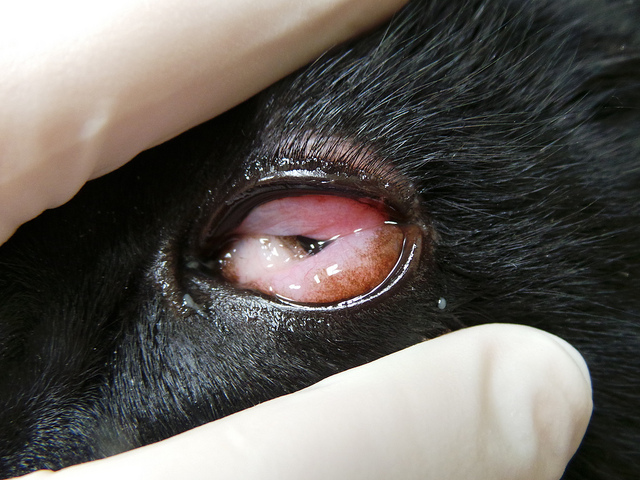
Keratitis
This is an inflammation of the cornea. It causes the eye to lose its luster. If you look at your pet, you'll see that the eye is cloudy. It's not the lens, but the entire eye (the cornea). The dog is sensitive to light.
Keratitis usually develops due to conjunctivitis or blepharitis. These conditions are often interrelated, forming a trio.
Due to the inflammatory process, the cornea loses its protective properties and its permeability increases. This allows bacteria (of which there are plenty in the air, and if the pet already has conjunctivitis or blepharitis, the inflamed tissues are in close contact) to penetrate the eye itself, which can cause serious complications.
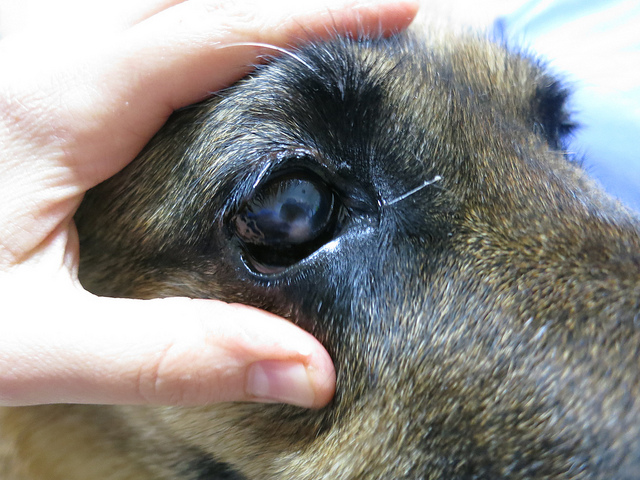
Blepharitis
This is an inflammation of the skin of the eyelids. It can also occur for a variety of reasons. These include infection, injury (for example, a scratch from a dog's paw, a branch, or bumping into a hard object), insect bites, burns (chemical, thermal, and, in some breeds, sunburn), and even parasites (demodicosis).
If the disease is not diagnosed and treated promptly, the inflammatory process will spread to the cornea and conjunctiva, and eventually the entire eye may become involved.
The eyelids may develop crusts, ulcers, and pustules. Hair loss occurs. The animal becomes restless and scratches its eyelid. If severe swelling occurs, the eyelid may turn outward or, conversely, inward. The eyelashes may rub against the cornea and conjunctiva when blinking, which can lead to keratitis and conjunctivitis.
Glaucoma
Almost everyone has heard of this condition. But few pet owners suspect that their four-legged friend could also suffer from high intraocular pressure. Elevated pressure can be either constant or intermittent, making diagnosis and treatment difficult.
Due to increased intraocular pressure, the eye expands and puts pressure on the nerves. This causes the dog to experience vision loss (either complete or partial).
The dog is in pain, but he can't complain about it. One can only guess that the pet is unwell. But if you look closely, you'll notice that both eyes (or one) are enlarged, dense, and watery. The pupil is changing shape.
Adenoma of the third eyelid
This eye disease in dogs is also called third eyelid prolapse, or cherry eye. Essentially, a third eyelid adenoma in dogs is an enlarged lacrimal gland. The development of this pathology is due to structural differences in the subcutaneous tissue and connective tissue. Breeds most susceptible to this condition include:
- dogs;
- Chow Chow;
- Neapolitan Mastiff;
- English bulldogs.
Removal of a third eyelid adenoma in dogs is often the only way to restore normal gland function. The surgery is performed under general anesthesia, making this eye condition suitable for any dog, regardless of age.
Blepharospasm in dogs
Unfortunately, blepharospasm is an unpleasant and common eye condition in dogs. Success and speed of treatment largely depend on the owner. The sooner the owner detects the symptoms of blepharospasm and takes their pet to the vet, the better. The main signs indicating this eye condition in dogs are:
- pain when touched;
- frequent blinking;
- inflammation of the eyelids;
- photophobia.
Among other things, the inflammatory process may be accompanied by the release of purulent exudate from the eye and hair loss in the affected area.
Cataract
Many believe this is a disease of older animals. However, young whiskers also suffer from lens opacity. It can be complete or partial. Sometimes it can be treated with medication.drops improve transparency), the dog sees better.
If the cataract is intumescent (toxic in origin), not only does the lens become cloudy, but the tissue also expands, leading to increased intraocular pressure. If treatment is not initiated and the animal is not helped, the eyeball may rupture.
Inversion of the eyelid
The eyelid can turn inward or outward. Inversion of the third eyelid (the pinkish tissue in the inner corner of the eye) is also common.
Eversion is less dangerous than inversion. Inversion, the eyelashes rub against the cornea and conjunctiva, leading to inflammation in the eye. No medication will help. Only surgery!
There are breed predispositions: dachshunds, basset hounds, some spaniels, St. Bernards, Great Danes, Newfies, and others. These beautiful dogs are more likely than other dogs to suffer from inversion or entropion of the eyelid.
Panophthalmitis
Inflammation of the entire eyeball. It is enlarged and protrudes beyond the orbit. It is extremely painful. It can be confused with glaucoma, so you need to seek help from a veterinarian as soon as possible.
Symptoms
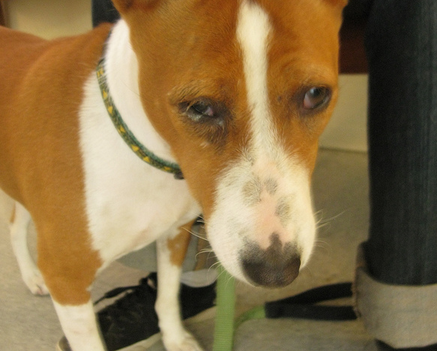
Although there are many diseases, there are common symptoms that will not go unnoticed.
- Tearing. Not always from both eyes, but may flow from just one.
- Eye discharge. This may include opaque discharge, possibly pus (which may ooze), or dried crusts that prevent the eyes from opening.
- Redness. The conjunctiva may become red, and blood vessels may burst.
- Swelling. The eyelids may become swollen.
- Cloudy cornea. Feels rough.
- Photophobia.
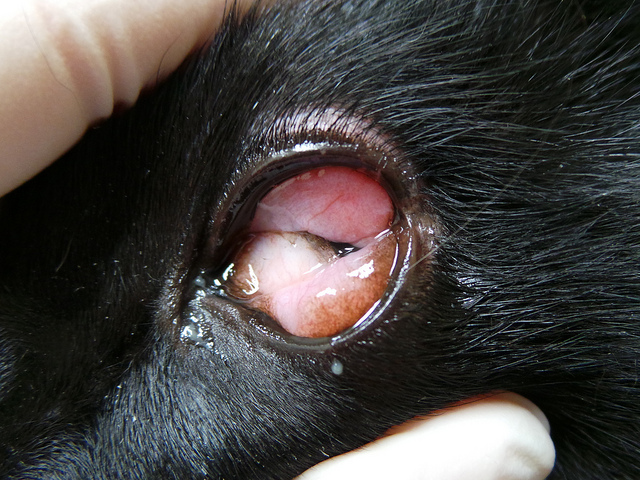
Treatment
There's no single treatment plan. Each eye condition in dogs requires its own specific treatment. For one, irrigation and eye drops will help, while for another, intramuscular injections of antibiotics and vitamins are essential. Still others require surgery.
Don't try to diagnose the disease yourself. Proper treatment requires identifying the underlying causes of the dog's eye disease. Only by identifying the cause and eliminating it completely can you hope for a favorable outcome.
Remember that every day (and sometimes even every hour) counts. Delaying a visit can result in permanent vision loss.
Any questions? You can ask our website's staff veterinarian in the comments below, who will answer them as quickly as possible.
Read also:


4 comments
Olga
Shih Tzu. One eye is normal, the other is blue-ash, the eyeball is red, there is scabbing when touched, and tears are running. Otherwise, the dog is happy and eats normally.
Daria is a veterinarian
Hello! Your pet clearly has an inflammatory process. It looks very much like keratitis (possibly keratoconjunctivitis). But you need to get to the clinic immediately for an examination and diagnosis. If you wait, panophthalmitis (inflammation of the entire eyeball and surrounding tissue) could develop, which is a clear indication for eye removal. Before it gets too far, get to the clinic immediately and have the severity of the disease assessed! I won't recommend medications because I know how it will end: you'll be treating it at home without seeing a doctor in person. And I don't see how severe the disease is.
Olya
Hello, my 8-year-old German Shepherd has symptoms similar to pannus. We're flushing her eyes with Furacilin drops and ointment, plus she has conjunctivitis. Her eyes are getting better and worse. How can this condition be treated?
Dasha is a veterinarian
Hello! Did you diagnose yourself based on online articles and prescribe the treatment yourself (except for furacilin, they didn't list a single drug name)? Run to the clinic for an examination. German shepherds are predisposed to pannus (even if it's autoimmune in nature, when the immune system perceives corneal cells as foreign and rejects them). The treatment plan must be followed to the letter. If it's autoimmune, then lifelong immunosuppressants will be required (they suppress the immune system to stop corneal destruction), but then the dog will be susceptible to any infection. So how can I prescribe treatment without seeing the animal and without a definitive diagnosis? Recommending medications simply because the symptoms are similar is too risky, and veterinary follow-up will still be necessary (in case the treatment plan needs adjusting).
Add a comment