
Eye diseases in cats
Eye diseases in cats are just as common as in other animals and even humans. Pets get sick just like their owners. And if they're not cared for properly, health problems only increase. It might seem like a simple draft, just to quickly air out the room. And then bam! The cat is teary-eyed, has a runny nose, and is sneezing and snorting. Wait! Let's figure out what eye diseases cats can have, how to identify their symptoms, and treat your pet properly.
Content
Classification
- Inflammatory
- Non-inflammatory
Inflammatory eye diseases in cats include conjunctivitis, keratitis, keratoconjunctivitis, iritis, inflammation of the nasolacrimal canal (yes, we must not forget that eye diseases in cats also include problems with the canal, orbit and other tissues surrounding the eye), blepharitis, panophthalmitis and others.
Non-inflammatory ones include bruises (and other injuries), a foreign body in the eye, inversion of the eyelid, prolapse of the eyeball, cataracts, glaucoma and others.
The course of the disease can be subacute, acute, or chronic. The symptoms of eye disease in cats do not disappear over time, but only subside slightly. However, this only increases the risk of vision loss or other health problems (especially if the cause of the eye disease is an infection).
Eye diseases in cats can be primary or secondary. Primary eye diseases are when the changes to the eyes are the underlying cause. Secondary eye diseases are when problems with the eyes are caused by a more serious health issue (for example, an infectious disease). In this case, conjunctivitis can be considered a symptom. To treat your pet, it's important to address the underlying condition, not the clinical signs. In any case, consulting a veterinarian is essential.
Now let's briefly go over the main eye diseases in cats.
Types, symptoms and treatment
Below is a classification of eye diseases in cats, symptoms characteristic of each disease, and an approximate treatment plan.
Conjunctivitis
Conjunctivitis in cats - is perhaps the most common eye disease.
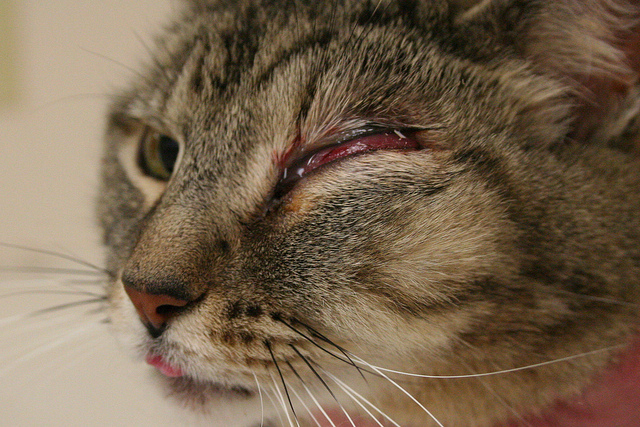
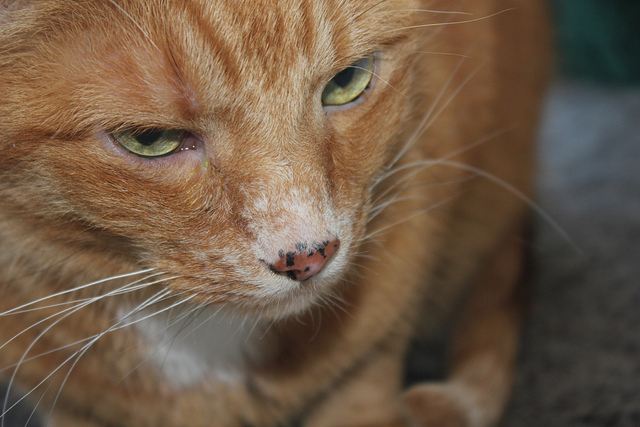
Inflammation of the mucous membrane of the eyelids is called conjunctivitis. There are many types:
- Catarrhal;
- Purulent;
- Ulcerative;
- Follicular.
There are numerous causes for this inflammation. The most common are a foreign body (a grain of sand or a hair, for example) getting into the eye, vitamin deficiency, trauma, and infection. In young children (especially kittens), inflammation from the nasal cavity (a seemingly harmless runny nose) quickly spreads to the eyes. Therefore, they are diagnosed not only with rhinitis, but also with inflammation of the nasolacrimal duct and purulent conjunctivitis.
With conjunctivitis, the mucous membrane of the eyelids becomes red, swollen, and watery. Pus may also appear (though not immediately; initially, it's catarrhal conjunctivitis, which, depending on the cause, gradually or very quickly "transforms" into purulent conjunctivitis).
The first step is to determine what is causing the inflammation. If it's a foreign body, all you need to do is rinse the eye and, to prevent complications, apply tetracycline ophthalmic ointment (always 1% ophthalmic ointment!) to the lower eyelid a couple of times a day. It can be purchased at both veterinary and human pharmacies. It's not a scarce medication and costs next to nothing. It's best to keep it in your medicine cabinet at all times.
Just don't apply it to your finger and then to your eye. This increases the risk of infection (your hands aren't sterile, no matter how much you wash them with laundry soap at home). And don't touch the tip of the tube to your lower eyelid to avoid introducing pathogens into the ointment tube.
So, the next time you apply the product (even if it's not tomorrow), you'll introduce pathogens directly to the inflamed area. And instead of treating your cat or dog's conjunctivitis, you'll just end up reinfecting it.
However, you shouldn't self-medicate as soon as you notice tears in your cat or whitish crusts in the inner corner of the eye. Firstly, this may only mask the symptom while the underlying disease rages on. Secondly, you may misjudge the dosage or even the medication, which could lead to the transition from acute catarrhal inflammation of the eyelid mucosa to chronic, purulent or follicular inflammation. The clinical signs of conjunctivitis in a cat or dog will subside, but they won't disappear. This will inevitably affect visual acuity. Symptoms of purulent conjunctivitis, in addition to yellow crusts in the morning after sleep or obvious yellow (or even greenish) discharge, include an elevated body temperature. This is understandable.
Any purulent inflammation, even the smallest localization, indicates the presence of an infection!
A clinical sign of this condition is a fever. Whether the increase is limited to the affected area or occurs throughout the body depends on your pet's immune system. The weaker it is, the higher the temperature.
Now about follicular conjunctivitis. It's much more complicated. A simple tetracycline ointment or intramuscular antibiotics won't do. The thing is, near third century (It's located in the inner corner, that pinkish "skin" that's normally there.) The lymph nodes become inflamed. They enlarge, swell, and interfere with the animal's ability to blink. Surgery by a veterinarian is essential. After surgery, the doctor will prescribe ointments and injections.
Keratitis
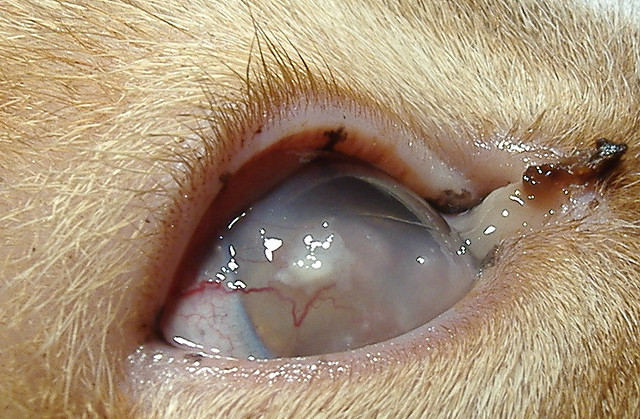
We've covered inflammation of the mucous membrane of the eyelids, but what is the name for corneal lesions in cats? Keratitis. It doesn't matter whether it was caused by injury or infection. It might seem difficult to detect any pathology on a transparent cornea, especially if your pet blinks or doesn't even want to open their eyes because they're in pain. However, certain symptoms can help you recognize keratitis in your cat.
This is tearing. With keratitis, tears flow constantly and in large quantities from the affected eye. It's as if the body is trying to "wash out" the infection. The moustachioed eye will try to keep the affected eye closed, and if the room (or even outside) is very bright, it will squint completely. This is called photophobia.
You'll agree, it's very difficult to miss. You can determine whether an infectious disease is the underlying cause of keratitis yourself. If pathogenic microorganisms (bacteria or viruses) are to blame, both eyes are almost always affected immediately. Fungi, on the other hand, are more complicated; they don't immediately spread to the other eye. However, in any case, you should seek veterinary attention as soon as possible.
Without treatment, in almost 100% of cases, conjunctivitis is added to keratitis (since there are plenty of microorganisms in the air) and the pet already has a different disease - keratoconjunctivitis.
In addition to lacrimation and photophobia, clinical signs characteristic of eyelid mucosal inflammation also appear. Pus begins to secrete very quickly.
If the cause of keratitis in a cat is not a wound (a scratch on the cornea can also appear from a foreign body under the eyelid, after a fight), then the transparent shell of the eye stops shining, becomes cloudy, and discharge (often purulent) accumulates in the corner of the eye.
Third eyelid
The nictitating membrane in cats is a unique protective "device" created by nature. If you're considering treating a cat's eye condition—a prolapsed third eyelid—you should first learn about the function of this amazing feature. The nictitating membrane protects the eyes from damage and contact with the cornea. The so-called third eyelid can be seen with the naked eye. This white film in cats is a thin layer of light-colored skin located near the inner corner of the eye.
The membranous membrane (inner eyelid) helps maintain the health of the mucous membranes on the surface of the eye. Besides cats, some other mammals and birds have a similar protective organ.
Eye disease in cats - third eyelid: prolapse is manifested by the following symptoms:
- uncontrollable spasms of the orbicularis oculi muscle (twitching and closing of the eyelids);
- increased lacrimation and redness around the eye;
- purulent or mucous discharge;
- massive formation in the corners of the eyes.
This pathology is similar to an adenoma. It is crucial to distinguish between these feline eye diseases, as misdiagnosis can lead to the development of a dangerous condition called keratoconjunctivitis, which cannot be completely cured.
Third eyelid in cats is a term commonly used to describe a condition—a prolapse of the nictitating membrane—that can be caused by certain medical conditions. Common ones include:
- different types of conjunctivitis;
- injuries that damage the eyes;
- diseases of internal organs (usually the gastrointestinal tract);
- fungal diseases;
- allergies;
- proliferation of internal and external parasites.
If the white film persists, it's time to consult a veterinarian. Early detection and prompt treatment can save your pet's vision, prevent the development of any disease, and perhaps even prevent death.
In a situation where the third eyelid is visibly present in only one eye, it is recommended to check the cat for the presence of pathologies such as:
- a foreign object getting under the nictitating membrane;
- traumatic injuries to the white film, cornea, cartilage or facial nerve;
- symblepharon;
- bacterial inflammation of the eardrum.
It's important to note that a prolapsed eardrum can occur in both eyes. This condition can be caused by:
- bilateral conjunctivitis;
- fusion of part of the third eyelid with the eyeball;
- helminthiasis.
Please remember that only a veterinary specialist can select and prescribe a treatment regimen for cats' eyes. Never prescribe medications yourself, especially if you are using eye drops and ointments intended for humans. The only thing you can do at home is rinse your eyes with warm boiled water or chamomile tea.
Sometimes a prolapsed eardrum will heal on its own within a few hours. If this doesn't happen, surgery will be necessary.
Blepharitis
Blepharitis in cats Blepharitis is simply called inflammation of the eyelid. Blepharitis is also classified as "simple," ulcerative, scaly, and meibomian. If you don't notice that the eyelid is red, swollen, and preventing your cat from opening its eyes, you may not be able to start treatment in time.
Without a proper treatment plan, "simple" blepharitis can easily and quickly develop into ulcerative blepharitis. Initially, a purulent plaque forms along the lash line, and underneath the plaque (or rather, when it begins to fall off), ulcers begin to appear. Treating this is much more difficult.
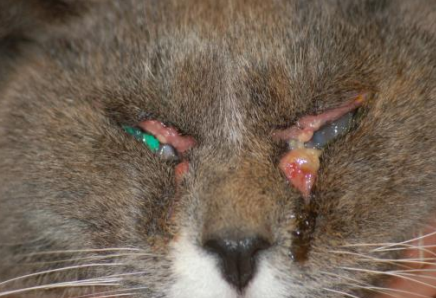
The pet may try to scratch its eye, which can lead to injury, as claws can easily damage the cornea or the inflamed eyelid. As the purulent plaque and ulcers spread, blepharitis in cats leads to eyelash loss. There's a high risk that the disease will spread to the conjunctiva and the eye itself, leading to the development of a completely different condition—panophthalmitis. And here, you'll need to act quickly if you don't want your pet to lose an eye.
Panophthalmitis
Although extremely rare, such cases do occur. It is a very serious condition, as it affects all tissues of the eye. The symptoms of panophthalmitis in cats and dogs are similar. Initially, the affected eyeball noticeably enlarges, and purulent discharge appears (panophthalmitis always results from an infection, hence the pus).
Unfortunately, saving the animal's eye is impossible. To prevent the infection from spreading to the brain, the affected eye is completely removed, and the eyelids are sutured. To prevent this, avoid ignoring excessive tearing in your pet (even if it's a breed predisposition), and don't spit on the crusted pus in the corners of the eyes or on the fur underneath.
As soon as anything alerts you or you notice any symptoms, consult a veterinary ophthalmologist immediately. Avoid gargling with decoctions, administering antibiotics, or applying anything at all. This will only mask the clinical signs, making it difficult to establish a definitive diagnosis. This will also impact the treatment plan, without which your pet's recovery is impossible.
Cataract
At cataracts in catsThe lens becomes cloudy. This condition is more common in older pets, but it can also develop in young kittens if the cause is an infection. The main symptom you may notice is deteriorating vision. The pet bumps into objects, walks cautiously and slowly, and has poor spatial orientation, especially in new areas.
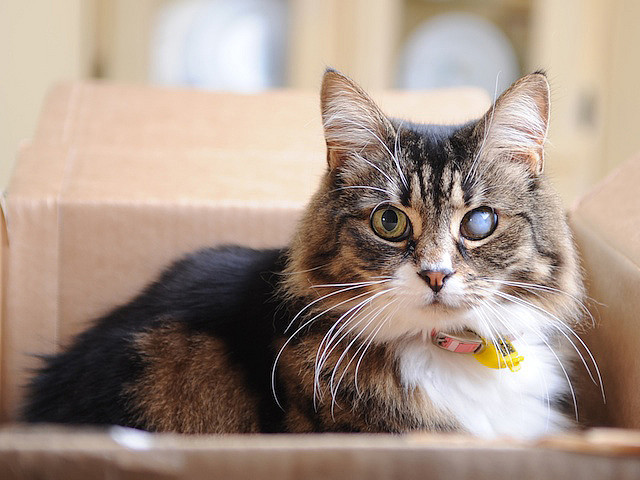
Having determined the cause of the disease, a veterinary ophthalmologist will prescribe medication. Only if this fails will surgery be performed. Self-medication is extremely dangerous. Firstly, the animal may completely lose vision in that eye. Secondly, if the cause is an infection, panophthalmitis, discussed above, may develop.
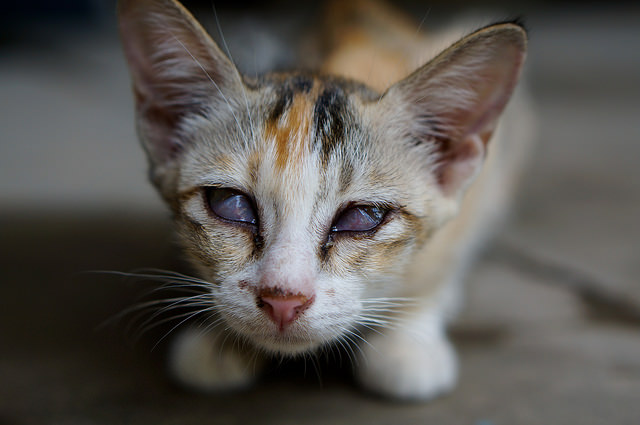
Inflammation of the nasolacrimal canals
Another common eye condition in cats. It occurs when the ducts that "connect the eye and nose" (to put it simply) become clogged. Many people don't even know these ducts exist. But if you remember a person crying, you've probably noticed that the discharge isn't just from the eyes, but also from the nose.
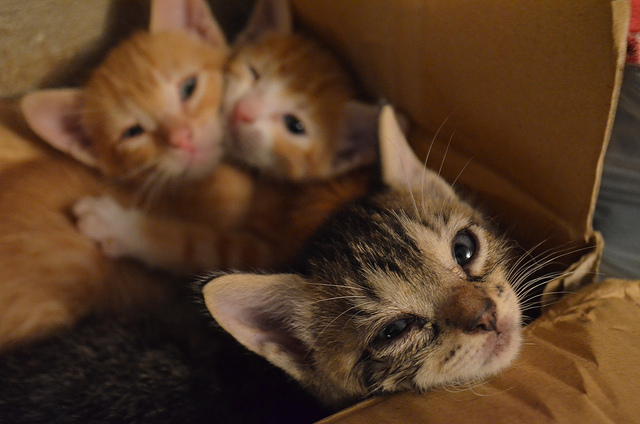
A symptom is profuse lacrimation. This can be mistaken for keratitis or conjunctivitis, but no ointment will help. The only way to help the animal is through probing. Yes, this is quite painful, but after the procedure, the cat feels better immediately. Your pet will feel relief literally without leaving the veterinarian's office.
More antibiotics will be prescribed to prevent infection from developing. However, they are usually discontinued after a week, and the cat is re-examined. If all is well, the pet is considered recovered.
Eyelid wounds
They can be superficial (when only a scratch is present), deep (when several layers of skin are damaged), or penetrating (when the entire eyelid is damaged). Cats are much more likely to injure their eyelids than dogs, especially fighters.
If the wound is superficial, it will need to be washed and treated with an antiseptic (at least iodine, but only if the wound is on the outside of the eyelid!). If it is deep or through, then only a veterinarian should be consulted. It will need to be thoroughly cleaned, all foreign particles removed from the wound cavity, and stitches applied. If the wound is through, it is important to ensure that the cornea is not damaged.
Inversion of the eyelid
Most often, the lower eyelid inverts. Its edge curls inward (toward the cornea), which isn't just uncomfortable. It's also very painful. Don't forget about the stiff eyelashes, which rub against the conjunctiva and cornea. As a result, chronic keratoconjunctivitis can easily develop due to inversion (inversion is less common in cats). Only surgery can help, as this is often a congenital condition. The surgery is not very complicated, but it is effective. The inversion is eliminated once and for all.
Glaucoma
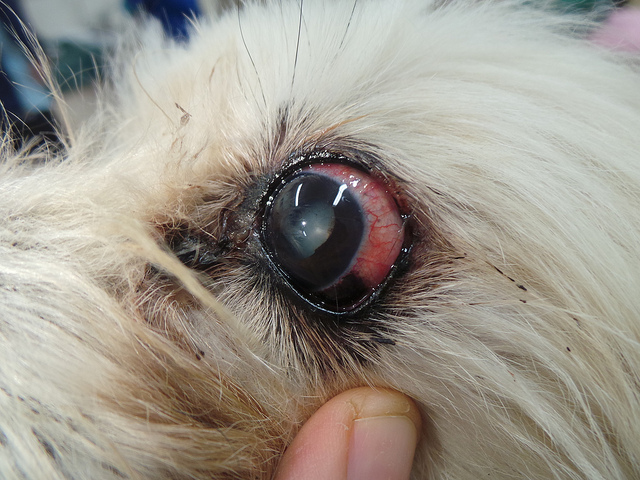
There are three types of glaucoma in cats: congenital, open-angle, and closed-angle. This condition causes increased intraocular pressure. A symptom of glaucoma that owners may notice is a severely dilated pupil. The blood vessels can't withstand the pressure and rupture. Hemorrhages are visible both in the conjunctiva and in the eye itself. The eyeball enlarges and becomes very hard (due to the extreme pressure inside).
With open-angle glaucoma, areas of cloudiness are visible on the cornea, and it is virtually insensitive, meaning the reflex is weakened. With closed-angle glaucoma, a cat's cornea displays a ring-shaped, closed corneal opacity, as well as extensive branching of ruptured or dilated blood vessels.
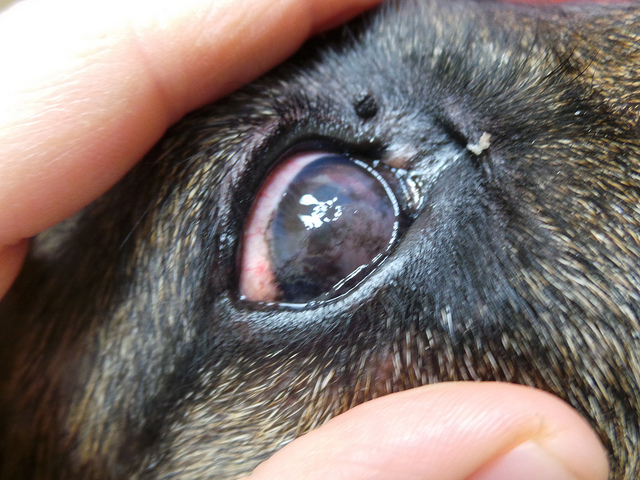
High intraocular pressure in cats affects not only visual acuity but also their overall well-being. It's extremely painful, and treatment requires the help of a veterinarian (ideally an ophthalmologist). The veterinarian will determine the cause. In some cases, medications that dilate the pupil are helpful. However, if the cause of glaucoma in a cat or dog is related to a dislocated lens, surgery is necessary.
This is just a small selection of eye diseases in cats. There are so many types of injuries, burns, and inflammations that it's impossible to cover them all in one article.
Any questions? You can ask our website's staff veterinarian in the comments below, who will answer them as quickly as possible.
Read also:


185 comments
Tatiana
Good evening, my cat has a reddish-brown ring around the edge of his eye, but it's not watering. Could this be because he was looking at a quartz lamp, but the other eye is normal, or is it a medical condition?
Daria is a veterinarian
Hello! I'm not entirely sure where exactly the rim is. I'm guessing it's around the iris? Or is it running along the white of the eye? It's quite possible that this is iritis (inflammation of the iris caused by the lamp). It's important to watch for photophobia, corneal swelling, lacrimation, redness, itching, restlessness, pain, etc. If any of these symptoms or any other abnormality (decreased visual acuity is also included), rush to the vet. It's possible that nothing serious has happened, and this is just a change in the iris color. There's no reason to panic. So, keep a close eye on your pet.
Love
Hello, my cat has a soft lump in the corner of his inner eye. What could it be? His eyes are inflamed.
Daria is a veterinarian
Hello! You need an in-person examination. Your tear duct may need cleaning; it's clogged. It can also become clogged. Inflammation is also possible. In that case, topical medications, including antibiotics, will be needed. Avoid applying any ointments or drops yourself; this can only make the situation worse.
Karina
Hello! At first, my cat had different pupils, one larger than the other, now one eye is completely closed and watering. What could this be?
Daria is a veterinarian
Hello! If the eye starts to water, it means there's an inflammatory process. If the animal closes the eye, it's photophobia (meaning light causes pain, which leads to tears). Rule out corneal trauma, uveitis (inflammation of the choroid), keratitis (inflammation of the cornea), or iritis/iridocyclitis (inflammation of the iris). Something may have gotten into the eye and scratched the cornea. In any case, an examination is necessary to determine the underlying problem. The correct eye drops should be selected based on this information.
The simplest ones are Tobrex/Tobradex (the latter should not be used if the cornea is damaged or ulcerated, or if there is a risk of corneal perforation, which can only be diagnosed during a doctor's examination), or their analogs. There are also analogs of natural tears, but they will not relieve inflammation because they do not contain antibiotics (Tobradex contains a hormone, so if your pet has diabetes, do not use this medication).
Maxim
My cat is 2 years old and spends most of his time outdoors. He's suddenly developed a noticeable third eyelid in both eyes, mostly in bright light. He only fully opens his eyes in dark places. His appetite has worsened—he's not eating enough. There are no other symptoms or signs.
What to do.
Daria is a veterinarian
Hello! How are your cat's vaccinations? Does he have access to the outdoors and contact with other animals? My cat closes his eyes in bright light due to pain. Keratoconjunctivitis is most likely present. Ideally, we should address the underlying problem, as eye diseases are most likely related to an infection, and inflammation is just one symptom. You can try Tobradex to reduce inflammation, but only if there are no corneal lesions and the animal has no contraindications to hormonal medications (including diabetes, which requires dexamethasone, a component of the drops). Provide your cat with rest, reduce exposure to bright light, and avoid unnecessary eye irritation.
Marina
After a three-year absence, the cat returned home. He had a skin condition similar to sarcoptic mites. The skin was thickened around the head and neck, as if cemented together. There were bald spots on the neck, but this didn't seem to bother him much, although it was itchy. He also had an eye problem: his eyelids were swollen and stiff, his eyes were drooping, and one eye was covered in a bluish film. He had a fever, and his head and ears were hot. Now the fever has subsided, the swelling has almost gone down, but the other eye still has a smaller amount of pus, and the conjunctiva is thickened.
Vidima's eye is itchy, he's scratching it with his paw. We've been putting "Bars" in his ears and "Advocate" on his withers. We've also been rinsing his eyes with chamomile. Is it really impossible to save his eyes? What should we do?
Daria is a veterinarian
Hello! If your cat's eye is covered with a bluish film, it's most likely chronic. Chronic diseases are much more difficult to treat. A veterinary examination is necessary to assess the eyes, ensuring their function and response to light. An in-person examination will also help determine the extent of the problem. Eye drops or ointments may be needed if the cornea hasn't become completely cloudy (keratitis may have spread into the cornea).
Catherine
Hello. A week ago, we started letting our 7-year-old cat outside in the countryside. He immediately got into a fight with a male cat (I didn't have time to break them up). The lower eyelid of one eye was swollen. At first, the eye was difficult to open and had a dark discharge, and he blinked frequently. Now the discharge is sparse and cloudy-white. The eye is almost the same size as the healthy one, but the swelling seems to have gotten larger. There are no scratches on it. He hasn't lost his appetite. His behavior is the same as usual. There is no vet nearby, so we don't know what to do.
Daria is a veterinarian
Hello! You need to wipe the eye with a water-based solution of furacilin (available at pharmacies) from the outer corner to the inner corner. And antibiotic drops (containing tobramycin, but without dexamethasone, as there's no guarantee there's no corneal injury, otherwise a corneal ulcer will occur). Apply the drops 2-3 times a day. However! You should still have the animal examined to rule out any serious pathologies. An infection could have occurred, which could lead to severe inflammation and vision loss.
Tatiana
Good afternoon. A week ago, I adopted a kitten from the street. Its eyes were completely glued together with pus, and its nose was barely breathing. At home, I cleaned the pus and put gentamicin drops on it. The vet immediately gave it several injections, including an antibiotic, and said it needed to be given for several days. I was afraid, since the kitten is very small, maybe a month old, that the antibiotics would kill it. I had a similar experience before: its liver failed and it died. I continue to clean its eyes and put drops on it, and there has been some improvement, albeit slight. It sneezes frequently, and its nose is breathing poorly. However, the kitten has been active and eating well all this time, and it has no fever. How can I speed up its recovery, since antibiotic drops can't be given for long periods of time?
Amina
Hello! I always treat eye conditions such as watery eyes and runny noses with the antibiotic Bicillin. I inject 0.5 ml into the muscle once, then rinse the eyes and nose with warm tea. Your kitten will stop getting sick. That's how I save my kittens. Good luck to you.
Marina
Good afternoon, Dasha! My cat's left eye is sore, his eyelid is inflamed, he sneezes occasionally and rubs his eye with his paw. The doctor prescribed Levomycetin drops for 5 days, but they didn't help. We went back because they didn't help. Now he's prescribed Floxal (1 drop 4 times a day), Meloxivet (0.4 ml) once a day, Unidox Solutab (1/4 tablet in the morning), and rinsing. We've been doing this for 5 days now and there's no result. What should we do?
Daria is a veterinarian
Good day! Levomycetin drops are often the first choice for dogs. Cats are more often prescribed drops containing tetracycline or fluoroquinolone active ingredients, as cats most often have eye problems due to chlamydia. The second time, a more appropriate regimen was prescribed, but again, no diagnosis has been made. Has an eyelid or corneal injury been ruled out? Is there an entropion of the third eyelid (in the corner of the eye)? Has the conjunctiva of the eyelid been examined? Are there any foreign bodies?
What about feeding? They warned about the specifics of Solutab administration, including not giving additional iron, calcium, or magnesium supplements (including in the diet; that is, if breastfeeding, dairy products are completely eliminated).
Elena
Hello, the kitten opened its eyes on time, and they are clean and healthy. After about 5 days, one eye stopped opening. I started washing it and noticed a white pustule on the outside of the upper eyelid, closer to the nose. It came off easily when I washed it, leaving a small pink indentation underneath.
Daria is a veterinarian
Hello! If it doesn't bother the kitten, doesn't cause any discomfort, isn't inflamed, or isn't festering, then don't bother touching it. Just be sure to vaccinate it according to its age (even if it's indoors 24/7) to prevent any infectious diseases or further problems.
Valentina
Good afternoon. I thought my kitten's eye was sore, but it turned out to be some kind of white lump. I tried to remove it with my fingernail, but the cat is meowing, and it's painful. What could it be? Is there any way I can send you a photo?
Daria is a veterinarian
Hello! Is it on the eye itself or on the eyelid? How long has it been there? What treatments have you tried? What's the animal's age? Vaccinations? Is it just on one eye, or is the other eye also inflamed? What other clinical signs are there besides the "white bump"?
Alex
Hello, I have a question: my kitten's eye is red on top and the flesh is swollen. What should I do in this case?
Daria is a veterinarian
Hello! You need to have the growth examined in person to determine its nature. If it's nothing serious and doesn't cause much concern, then surgery may be necessary. However, a papilloma on the eyelid should also be ruled out (in this case, antiviral therapy aimed at destroying the pathogen and strengthening the immune system to suppress the virus more quickly will help), but you can't make a diagnosis without seeing it. Again, only after the doctor has seen it in person. Don't apply anything to it yourself, don't try to tear it off, cut it off, or tie it off with thread. Otherwise, you'll only make things worse for your pet.
Catherine
Hello. I have a kitten and a male cat at home. We adopted the kittens from the street, keeping one and keeping them apart until we treated their ear mites and eye infections (we used levitra, but the watery eyes didn't completely stop; the vet said it might be due to dust; the female kitten is smaller than average and gets into a lot of places). We vaccinated them all at the same time, including the male cat. After a month and a half of their living together, the male cat had a coughing fit, lost his appetite, and developed a severely swollen throat. The kitten showed no symptoms other than her eyes. We took them both to the vet, who said she might be carrying a virus. The female cat received a five-day course of antibiotics through a catheter, and she received three injections every other day.
The cough subsided, but a month later, the cat started coughing again, but less frequently and less severely. His appetite remained intact, and he was given immunostimulants during treatment. Antibiotics were suggested again, and we decided to try an expectorant to soothe the throat irritation first. Icelandic moss helped, and the cough was cured. Two weeks later, the cat's eye started watering and became slightly swollen. We thought it might be a mechanical injury, but the veterinarian found no such injury. They prescribed chloramphenicol and tetracycline ointment to be applied every three days if the inflammation persisted.
The inflammation was going away, we didn't use ointment, we used drops for five days. On the sixth day, the cat was fine during the day. We came back in the evening and found him licking one of his sore eyes. It was swollen almost like in the first picture, barely opening, and there was a film where the pupil was. He hasn't lost his appetite. Could you please tell me what to do? I don't trust the local vets. Does he need surgery?
Daria is a veterinarian
Hello! Have you ruled out allergies in your cat, given the cough, swelling, and watery eyes? Have you at least done a blood test? Try Tobradex and Decta-2 eye drops—the former with tobamycin and dexamethasone, the latter with gentamicin and dexamethasone. These are antibiotics and steroidal anti-inflammatory medications that quickly relieve inflammation symptoms. Be sure to use the drops in both eyes to prevent the infection from jumping. Before applying the drops, wipe the eye from the outer corner to the inner corner with chamomile tea or an aqueous solution of furacilin. You can also add intramuscular antibiotic injections. Regarding surgery: even if it is necessary (and this can only be decided during an in-person visit and examination of the animal), you will still have to contact your vets, whom you don't trust. Try medications, and if there is no relief within 2-3 days, then go to the clinic.
Marina
I read the whole article, very informative!
BUT! I didn't find the main thing about herpes on the eyes of pets:)
In general, how can one distinguish conjunctivitis from herpes without laboratory tests?
Tatiana
Hello! After anesthesia, my cat has brown eyes and slightly swollen eyelids. It's been two days, but the color hasn't changed. Is this a side effect of the anesthesia? If so, how quickly will it resolve, and should I use any drops or ointments?
Daria is a veterinarian
Hello! It could also be an allergic reaction to the active ingredients of the anesthetic or other medications used during/after surgery or during the recovery period. If the animal doesn't feel pain when lightly pressing on the eye (touch the closed eye, see if it fidgets, or meows), it could be episcleritis. However, if there is pain, a bluish tint, photophobia, localized swelling, limited ocular mobility, or decreased vision, scleritis and other inflammatory ocular pathologies should be ruled out.
Daria is a veterinarian
Let's assume it's not that bad and it's just episcleritis. This condition often resolves on its own without treatment, but you can use drops or ointments containing nonsteroidal anti-inflammatory drugs (0.5% prednisolone in the conjunctival sac 4-6 times a day for 7-10 days in a row) or glucocorticoids (2.5% hydrocortisone ointment 3-4 times a day for the same period). Antibiotics can also be used to rule out a bacterial infection (especially if surgery was performed). Sedatives (Stop-Stress, Fospasim, KotBayun) are also recommended, as cats are prone to stress-related illnesses (such illnesses begin with the word "idiopathic").
Olga
Hello, I noticed a corneal lesion in one of my older (22-year-old) cat's eyes six months ago. It didn't bother him before, but now he's producing a lot of pus. Could this be related to his urination and sleeping in it?
Daria is a veterinarian
Hello! Your pet has been injured for over six months, and you haven't treated it or taken it to the vet? It's clear that your pet isn't peeing because of the eye (just as the eye didn't become infected for the same reason), but because of sphincter weakness and impaired innervation due to old age. Conjunctivitis and urinary incontinence are completely unrelated. We treat the eyes by wiping them with chamomile tea or an aqueous solution of furacilin, administering antibiotic drops (Tobradex is a good choice), and adding intramuscular antibiotics for a 5-7-day course. However, we need to address the incontinence. An ultrasound would be a good start.
Anonymous
Hello! Yesterday we found a homeless ginger kitten at our dacha. His mother is an old cat, according to a neighbor, and he is sick (he can barely stand on his paws, and his eyes are covered in pus and closed). Most likely, this is why the cat abandoned him. We put sodium sulfacyl drops in his eyes several times, the pus drained out, and his eyes opened, but they are cloudy. The kitten is weak and sleeps almost all the time. He is basking. Today we found another one, a gray one. He is more active and playful, but only one eye was open. We put sodium sulfacyl drops in the other eye, white pus drained out, and the eye opened, but it is pure red. We are currently feeding the kittens cow's milk (NOT store-bought) with a syringe; the gray one has been drinking a little from a bowl.
Daria is a veterinarian
Hello! Well, it's normal for one animal to have a cloudy cornea (keratitis) after advanced purulent conjunctivitis, while another has a red cornea. This is severe inflammation. Cleanse the cornea 3-4 times a day with chamomile tea or a furacilin solution. Antibiotic drops should be administered for 5 days (preferably with tobramycin, preferably Tobradex, as it also contains dexamethasone). Ideally, intramuscular injections should also be added to the 5-day course of treatment. If injections are not possible, then at least amoxiclav can be given. The problem is that it's best not to combine antibiotics with milk. Wait 2 hours between the antibiotic and the milk.
Irina
Hello. I have two kittens and an adult cat at home. Today I noticed a swollen eye on one of the kittens. I looked at the lower eyelid and saw a red streak that looked very much like a scratch. The eye is red and swollen. I'm treating it with chamomile, maybe something else will work. Please help.
Daria is a veterinarian
Kitten. If it's about 2 months old (+/- a week), you can use antibiotic drops to prevent serious inflammation. You can also wipe it with a furacilin solution; it's an excellent antiseptic (it was even used to prepare surgical sites in veterinary medicine, so it can also help with inflammation). And be sure to trim the kitten's claws. It's possible the kitten scratched itself while grooming (remember that cats have a side toe with a claw on their front paws, and they often scratch themselves with it).
Irina
Good evening. My young cat's right eye is inflamed. I started using tetracycline ointment and Iris eye drops, but nothing helped. We went to the clinic, had a biochemistry panel, a general blood test, and a chlamydia test. Everything was normal. We continued treatment, but the cat suddenly went blind in both eyes. The pupils of both eyes are huge, and there is some swelling under the upper eyelid. At the clinic, they prescribed Rebaflox, Refkinom, and Timazin. They don't know what's wrong with him. The inflammation hasn't subsided, and he's started bleeding. He has a good appetite, but he sleeps all the time. Can you tell me what this could be?
Daria is a veterinarian
Hello! I've never encountered anything like this before—eye discharge. I'd rule out a viral infection first. I'd prescribe antivirals, antibiotics to suppress secondary pathogens, medications to "wake up" the immune system, vitamins, and eye drops (there are some for viral infections). Are there any skin lesions, such as bumps, black spots, or hair loss? What about the eye discharge?
How are tears produced? Have problems with the tear ducts been ruled out? It's a strange idea, of course, but still: is hair/eyelashes growing on the mucous membrane of the eyelid (sometimes this is observed in young animals due to pathologies developing during embryonic development)?
Evgeny
Hello, my kitten (we adopted him the day before yesterday, he's 2-3 months old) has a fuzzy, reddish cornea, a much smaller pupil, and a slightly squinted eye. What could this be? How can this be treated? Everything was fine yesterday.
Daria is a veterinarian
Hello! Has the cornea become blurry? You've probably confused it with the iris. The cornea is clear, while the iris is colored (that colored circle around the pupil). How does the pupil react to light? Has the kitten had any head injuries? Perhaps a fall or a misjudged turn while running? Trauma, including a concussion, should be ruled out first. Inflammatory processes or injuries to the eye itself should be considered, but this requires a detailed examination of the eyeball and fundus. Eye drops alone cannot be prescribed without a detailed examination.
Nastia
Good afternoon. My cat has a red lump above her upper eyelid, and her eye is also watering. The lump has spread to a spot near her ear where there's little fur. The lump itself is hard. Could you tell me what to do if I can't take her to the vet?
Daria is a veterinarian
Hello! Has your animal been stung? It's warmer now, and wasps have started flying around. Many people are already bringing their pets in after being stung. Look at the lump and feel it (is it hot? Maybe you can see a dot in the center, like a stinger). If you find something like that, give at least a quarter of a Suprastin tablet or another antihistamine you have on hand. You might also have prednisolone at home (but don't mix it with Suprastin; use only one or the other). If it doesn't look like an insect bite, take your pet for an examination to determine what exactly is wrong.
Yanina
Hello, today I discovered an inflammation of the mucous membrane in the corner of our cat's eye. It looks like a growth. I didn't notice how it appeared, but I think he may have pawed it. He sometimes starts scratching his eye, rubbing it until it turns red. In these cases, I treated his eye with albucid, and the inflammation went away. We live in a small town. Please advise how to treat my cat. I can send a photo, and let me know where to send it. Thanks in advance.
Daria is a veterinarian
Hello! Are you sure this is a growth and not a protruding third eyelid? Perhaps the animal, while grooming, caught the nictitating membrane with a side claw on its front paw and damaged it? Albucid drops are very harsh (they cause extreme discomfort for animals, with a terrible burning sensation afterwards). They should not be used frequently. The pet needs to be examined. Surgery may be necessary (if the tissue is damaged). Eye drops or ointments that relieve inflammation may help. In any case, the claws should be trimmed, and the eye should at least be cleaned with chamomile tea or furacilin. Any other medications should be decided after an in-person examination by a veterinarian.
Elena
Good afternoon! My cat came in from outside with a sore eye. There's a small sac of pus at the corner of the eye. The upper eyelid seems to be turning inward. What should I do? It won't be long before we can get to the vet.
Daria is a veterinarian
Hello! You need to get to a veterinary clinic as soon as possible. These sacs may need to be surgically opened under sterile conditions. Eyelid surgery may also be necessary (the severity of the inversion needs to be assessed in person). The most you can do at home is gently cleanse the eyes with a furacilin solution or at least chamomile tea, and administer eye drops, such as tobramycin. Antibiotics should be given intramuscularly, and NSAIDs should be added (human meloxicam is suitable for cats).
Sergey
Hello, my cat has blue veins all over the white area of his eyes. I haven't looked closely, but it's bothering me, and I haven't found any answers. Maybe you know what's going on?
Daria is a veterinarian
Hello! Take a close look at the whites of your eyes in a mirror. You'll also see blood vessels. If they're barely noticeable, your pet isn't bothered, and there are no clinical signs of eye pathology, then don't pay attention. Has this always been the case or is it a recent development? Or did you just notice? Could it be simply a congenital vascular problem? Are there any bowel problems (perhaps constipation, excessively dry or large stools)? Perhaps excessive exercise? Has your pet been sick recently (maybe even had a cold)? Is this in both eyes or just one?
tn614@bk.ru
Good evening!
Could you please tell me what help I can give my cat? He was fine in the morning, but this afternoon he started rubbing one of his eyes. It was slightly swollen and the eyelid was red from his constant washing. We examined the eye and found no foreign objects. We rinsed it with water and applied hydrocortisone around the eye.
What could be the reason and how can I help the animal?
Daria is a veterinarian
Hello! Who advised you to use hydrocortisone? It's a hormone! Any hormonal therapy should only be administered under the supervision of a veterinarian! Did you even read the instructions? They say (even though they're for humans): avoid the eye area.
Wipe with an aqueous solution of furacilin, or tobramycin-based drops (as an antibacterial agent). DO NOT use tetracycline ointment! You can add an NSAID (at least meloxicam, for a course of 1-4 days, no more). However, the animal needs to be examined to rule out an eye injury or a serious inflammatory process. Are there any fleas? Perhaps a flea has bitten the eyelid? That would cause swelling and itching.
Pauline
Hello. I have a Devon Rex cat. When he was nine months old, he was treated for mycoplasmosis with injections for a week. But his eye didn't improve; it was watering, and the tears were dark brown. His inner eyelid was also slightly swollen and reddish. Then they told me to apply Corneal gel to his inner eyelid for a week. Nothing happened. I went to another veterinary clinic, but they tested him for five infections and found nothing. They told me to apply 1% tetracycline for a week. The eye still isn't improving. Please tell me what to do, should I go to another clinic?
Daria is a veterinarian
Hello! Mycoplasma, like chlamydia, isn't easily eliminated. Sometimes it takes 3-4 weeks to completely eradicate it. Tetracycline medications (such as doxycycline, but it can darken tooth enamel) should be used with caution in animals under one year old. For a stronger effect, consider adding fluoroquinolones such as ciprofloxacin, marbofloxacin, and others. Immunostimulants should be added to boost the immune system's natural defenses and help it cope. Apply tetracycline ointment twice a day for 2-3 weeks. However, it's important to clean the eyes before applying. Perhaps you're not following the treatment regimen strictly? Were the dosages calculated incorrectly?
Olga
Good evening, could you please tell me, I have a perfectly healthy cat! I want to get another cat from a foster home... but the thing is, they'll finish treating him and then they'll let me take him, but he had some kind of severe eye infection... what are the chances that, God forbid, my cat could get pregnant from him, even though he'll already be treated... but who knows, maybe he'll get an infection in his fur... I'm worried about my cat!!!! ((( Can you please tell me???? And one more question, can a cat that's been treated have a relapse???
Daria is a veterinarian
Hello! Yes, there is a significant risk. Your pet should first be vaccinated against viral infections, if it hasn't been vaccinated previously (active immunity will only develop two weeks after the SECOND vaccination, so if you start this procedure tomorrow, you should not come into contact with other cats who have recovered from the disease for at least 30 days). There's a concept called "carrier status," which means a recovered animal no longer shows clinical signs, but can still infect others for several weeks or months (depending on the pathogen). A relapse is also possible if the immune system is weakened and treatment isn't completed.
Olga
A spot on a cat's eye
It appeared on February 14, 2019, the cat came and went to bed, we noticed it in the evening
At the bottom of the left eye, brownish orange in color, translucent, when the eye is not wide open it is not visible, at first we thought it was on the outer surface of the eye, it approached the pupil in 15 minutes, it seems that it is deeper from the shell
She goes outside. There may be some injuries. There's a wound above her nose that appeared around the same time. She's a female cat under a year old, hasn't had any kittens, and isn't neutered. How can I help her? The injuries may not be deep enough, and we can treat her at home.
There are no doctors here, we won’t get into a good clinic.
Daria is a veterinarian
Hello! It's still necessary to examine the animal to understand what exactly is going on. It's difficult to diagnose based on your description. Could it be a pigmentation disorder, a consequence of an injury, or another eye disease (iritis—inflammation of the iris—can develop). If you can't get to a good clinic, at least some kind of veterinary specialist should be available. Any veterinarian can examine the eye and determine whether there's inflammation or whether there's a corneal injury. After observing the animal for several days, has the spot disappeared or remained? Has it gotten larger or is it the same size?
Alexander
Hello! About 3-3.5 months ago, I adopted a small kitten. He was already eating all kinds of food, so I think he's about six months old now.
A couple of days ago, he sneezed five times in a row. Yesterday, I noticed a strange, clear substance in his left eye, reminiscent of jelly or a stringy snot. He didn't react to it, even though it was sticking out of the bottom of his eye; he didn't even close his eye slightly. I removed the thing, and today, a tiny bit of completely clear jelly appeared in the same eye, closer to his nose. He didn't react at all to it, so I carefully removed it. I work security in a summer cottage community, and the nearest veterinarian is far away. I can't leave my post for long, and I don't have the money right now to go to a vet.
But they can buy and deliver medications for me; there are people in the village I can ask. Please advise me on something, I'm really worried, and tell me if it's dangerous. There's nothing like the photos on your website. Thank you in advance! I look forward to hearing from you soon.
Daria is a veterinarian
Hello! Apparently, the kitten hasn't been vaccinated or dewormed. At this age and with constant access to the outdoors, the first suspicion is that the disease is infectious. Therefore, observe and seek medical attention at the first signs of a serious infection. For now, you can start with eye drops (at least tobramycin-based), nasal drops of anadin/maxidin and their analogues, intramuscular medications containing butophosphan and vitamin B12 (katosal, phosphozal, and their analogues) - 1 ml, and interferon injections for 5 days in a row (1 ml on the first day, 0.5 ml on the remaining days). Wipe the eyes with a sterile solution of furacilin (water).
There's also an immune serum called Vitafel, which is injected into kittens for common viral illnesses (it contains pre-existing antibodies, making it easier for the body to "fight" the infection). Antibiotics should not be given intramuscularly yet; if the temperature rises, then you can add them to the treatment regimen. What are you feeding?
Denis
The kitten's eye is swollen and watery. A while later, the second one has the same problem. They're vomiting. What's the cause?
Daria is a veterinarian
Hello! Since the second animal has developed exactly the same symptoms as the first, the first step is to rule out an infectious cause (viral or bacterial). Is there a runny nose? Have the kittens been vaccinated? Is the eye just watering or is there a purulent discharge? What are they eating? Is there access to the outdoors? The simplest treatment is to wipe with the same furacilin solution, use antibiotic drops, and put anandin or similar medications in the nose. But if it's a virus, then serum is needed.
Tanya
Good evening. My 9-year-old cat has a lump between his ear and blood – it's swollen? The vet's appointment is only for tomorrow, what should I do today?
Daria is a veterinarian
Hello! Don't do anything, otherwise you'll make it harder for the doctor to diagnose. And most importantly, no brilliant green or iodine. You'll cover the tissue, making it difficult to see. These alcohol solutions can simply "burn" the inflamed tissue. You can apply a cool compress to reduce swelling. After the examination, it will be clear how badly the tissue is damaged, whether there's already an infection in the wound, and the cat will be prescribed ointments, antibiotics, and anti-inflammatory medications. But that's after a visit to the clinic.
Anonymous
Hello! I found a cat in the trash. One of its eyes was completely bulging out. Now the healthy eye is cloudy. I don't have money for a doctor. I have cancer. What could it be?
Daria is a veterinarian
Hello! Please find volunteers or ask for urgent help! The kitten has already lost one eye. Now the same thing will happen to the other! Panophthalmitis with subsequent blindness, and the inflammation can even spread to the meninges. The animal has an infectious disease (strays often die from them), and it urgently needs comprehensive therapy: serums, antivirals, immunostimulants, antibiotics, intravenous fluids, and vitamins. The first eye is inflamed and will likely need surgical removal. The second eye also requires comprehensive treatment: drops and ointments. This will be very expensive, so please seek help from volunteers immediately!
Igor
Hello, my Persian cat has one pupil that reacts to light, has become constricted, and the bottom has started to turn red. She covers it. She is 11 years old.
Daria is a veterinarian
Hello! Has your pet been injured? Did it fall? Did it miss a turn while running? Generally, such changes in the pupils indicate neurological problems. If you see redness, see a doctor immediately to examine the fundus and retina, rule out hemorrhages or the onset of glaucoma. Also, rule out the consequences of a brain injury (you're not monitoring the animal 24/7; it's possible the injury occurred without you).
Anna
Hello, I have a regular, non-pedigree cat, but she lives indoors. I left home for two days while my husband stayed. When I returned, my cat had a white film on both eyes. This film appears when she closes her eyes. When she opens her eyes wide, it goes away, but when she squints, the film remains. What should I do? Before this, she hadn't had any tears, sneezing, or eye discharge.
Daria is a veterinarian
Hello! You may have inflammation of the third eyelid. There are two possibilities: either an allergic reaction or an infection. Try drops with tobramycin (if you don't have a history of kidney problems) and maxidin. You can also use anadin in the nose (if you're not using maxidin). Review your diet (maybe your husband fed you something that triggered the allergy). Vitamins wouldn't hurt. Keep the cat warm (maybe you've caught a cold). If there's no improvement within 3 days of starting treatment, then have an examination to determine the cause. Intramuscular antibiotics are recommended. For now, try the drops. Don't apply tetracycline or chloramphenicol.
Oksana
Hello! Please help me with advice.
My cat is a Scottish Fold, she is about 4 years old, she has cataracts in her right eye, I went to the vet, she prescribed an ointment called "Tetracycline" to apply 2-3 times a day, she prescribed injections, I don’t remember the name, they were given for 3 days and also tablets in capsules, she said to dissolve them in water and give her to drink, unfortunately I don’t remember the name either =(
So I did everything she said, and some kind of film in her eye started to darken to a gray color. Yesterday I came back from my grandmother's; I was there for two days, and during that time, her sister took care of her!
When I arrived yesterday morning, I noticed that there was a bulge on my eye and the eye did not close completely and this film began to dry out.
We want to see a doctor and, if possible, have surgery to treat the cataracts! But that's the only way to do it until the New Year.
She climbed into an empty box and sleeps there all the time, sometimes I take her with me. She eats well,
Please advise me what to do until the New Year, because the eye does not close completely and dries out.
Daria is a veterinarian
Hello! Tetracycline for cataracts? What's the point? Only if it was keratitis that led to the cataracts. But if the primary diagnosis was cataracts, the treatment plan is a bit odd. It's too bad you don't remember what you're injecting your pet with. The eye may be enlarged due to developing glaucoma (as the lens swells, increases in volume, and presses inside the eye, which causes increased intraocular pressure). It could be panophthalmitis—an inflammation of the entire eyeball. Right now, you can only use natural tears (they're readily available at pharmacies, both human and veterinary). But don't wait until the New Year! Get the surgery done immediately! Otherwise, the animal will lose the entire eye, and now they'll only remove the lens.
Julia
Hello. Help me. I have two cats. Both are dear to me because I've had them since university. One is a 17-year-old purebred British Shorthair, and the other is younger, 14, a regular cat.
My older one rarely gets sick, and I noticed a broken tooth, not at the root, but a canine. He eats less, so I switched him to wet food. He doesn't eat dry food well. My younger one also has a broken tooth. They've been eating the same lately, but they have difficulty eating dry food, and they're fine with liquid food. Today, my older one's right eye is swollen, and there's a clear fluid leaking out. They fight, but they're still very friendly. They have long claws and use a scratching post. I had surgery to fix his soft paws, but they're growing longer.
And then they peel. I have small children at home, I'm worried. Is this a serious illness? My cats are dear to me. They've been with me my whole life. I'm asking for an answer because I can't see a doctor right now. I injured my leg the other day and am limping. I need a day or two to see a doctor. How can I help relieve the pain or just stop the progression of the disease? Out of desperation, I rubbed my eyes with strong tea leaves. What else can I do? Thank you. I'm waiting for an answer. Help.
Daria is a veterinarian
Hello! You were deceived about the soft paws operation. The purpose of the operation is to remove the phalanx of the toe, where the nail grows. Therefore, after this operation, the claws cannot grow, as the animal is practically disabled without a phalanx. Regarding the eyes? How can I diagnose the problem without seeing the animal? If you suspect this is due to an injury, and conjunctivitis has developed as a result, you can try tobramycin-based drops (2-3 times a day) and wiping the eyes with at least chamomile tea, but a sterile aqueous solution of furacilin is better. But what if it's an infection? Or an allergy?
Tanya
Hello.
A stray cat at my dacha has his eyes completely closed, walks around blind, and sometimes lifts his head high as if he can see something. I can't see any pus, and his eyelids look like they've fused together. What should I do to start treating him? Is it possible to save his vision? I can't see a doctor.
Daria is a veterinarian
Hello! How can you tell if your pet's vision is likely to be saved if you can't see? Start by wiping the eyes (a sterile solution of furacilin works well; it's an inexpensive and effective antiseptic) 3-4 times a day, and then add tobramycin eye drops (a good antibiotic) about twice a day. You should also monitor the eyelids. The scabs may gradually soften due to wiping, causing the eyelids to open. Alternatively, it could be purulent or ulcerative conjunctivitis, or blepharitis, and the eyelids may have become "tight" because the inflamed tissues were too close and tight. Wipe the eyes with furacilin for a couple of days, and if the eyes begin to open, then add drops (for up to 5-7 days). Don't apply ointment yet!
Olga
Good morning. My 8-year-old cat has been crying and the brown stuff has gone down her throat. We went to the vet two months ago and were prescribed tetracycline eye ointment and Brilliant Eyes drops. They're not helping. What should I do and what exactly is this condition?
Daria is a veterinarian
Hello! What's that brown gunk that's gone down below? Have you been using tetracycline ointment for the entire two months? Or was there a course and now there's a break? What is she feeding? Have you ruled out allergies? Have you examined her conjunctiva? Is it red or swollen?
Evgeniya
Hello! My 4-year-old cat has brown gunk coming out of her eyes. What is it? Her eyes themselves are fine! Could it be related? She also sneezes periodically and rests her head on her doorframes. I've treated her with tetracycline, fostrinil, vitafel, and tylosin. I'm planning to get tested for mecoplasma, chlamydia, and irinotrachitis. Please tell me what you think.
Daria is a veterinarian
Hello! I'm glad you understand that examinations are necessary. But ideally, you should get examined first, then treat. If you have a veterinary neurologist in your city, you should take your cat to a veterinarian. Find out why he's bumping his head into things (mycoplasma and chladymia are unlikely to cause such neurological symptoms). What are you feeding him? It would also be a good idea to rule out allergies.
Anna
Hello, my kitten (Scottish Straight) is one month old and his eyeball hasn't developed, the vet told me. Can he get a prosthetic?
Daria is a veterinarian
Hello! A prosthesis is possible, but not right now. Give the kitten some time to get stronger (a month-old probably won't tolerate anesthesia), and her skull needs to grow a bit. Do they perform this type of plastic surgery in your city? It's just that they don't do it in my city, only in the neighboring (larger) one. And it's quite expensive there. Find a clinic that performs such surgeries and consult with them specifically about your case. I'm sure their doctors will give you a much more detailed answer, answering all your questions (from preparation for the surgery to rehabilitation).
Zarina
What are you talking about, what kind of prosthesis is this? It's an eye, isn't it? Don't agree to this under any circumstances. It's very painful, but he won't be able to tell you. If you find a baby with a cosmetic defect unsightly, then find a good home for him, and don't torture him with any prosthetics.
Eleanor
Hello! My cat has been acting strange all day today. She's usually constantly running and playing, but today she slept all day and didn't seem interested in anything. Last night, when she looked at me, I noticed one pupil was red instead of black, and her eye was slightly closed. She was recently spayed, and while I don't think this is related, I still think it's worth noting. There's no discharge or swelling, just a red pupil. Is this normal and will it go away on its own, or should I see a vet? Thank you!
Daria is a veterinarian
Hello! Of course, you should see a vet. The pupil is a "hole," so if you see it red, something is happening inside the eye. Have them examine the fundus. Don't prescribe or administer any medications to your cat yourself, as this will complicate further diagnosis. It's best to wait until your cat is fully recovered before spaying.
Larisa
My beloved cat has black spots on his eyelids and something black is accumulating in the corners. I couldn't find what it could be in the article.
Daria is a veterinarian
Hello! It would be a good idea to have your beloved cat examined by a vet. The spots could be pigmentation, or they could be a symptom of another condition. There's a buildup of dry discharge from the eyes in the corners (just like people sometimes get crusty eyes in the morning). Any other symptoms? How is your cat behaving? Is she eating normally? Are there any spots on other areas of her skin? How long have these spots been around? How old is your cat? Are the spots getting any bigger? Are the eyes otherwise normal: shiny, moist, and free of pus? Is she sneezing or coughing?
Svetlana
Hello! My cat gave birth to five kittens. They are now two weeks old. All of their eyes opened normally, but one has very slanted eyes and a small slit. They look like they're fused at the outer corner. There are some marks, but they're only partially visible. The kittens aren't moving their eyes, they're just watering. Please advise what we should do. Should we take him to the vet immediately or wait until he grows up a bit? Thank you.
Daria is a veterinarian
Hello! Observe them for a day or two, maybe they'll open. The kitten may be weak (was it the last one born?) and lagging behind its siblings a bit. If the situation doesn't improve after a couple of days, take it to the vet for an in-person examination to rule out any underlying medical conditions. You can gently wipe the eyes with chamomile tea, without applying pressure.
Svetlana
Thank you!
Daria is a veterinarian
Get well soon =)
Elena
Hello! Six months ago, I found a kitten in the entryway of my building. She's a domestic cat, clean. I don't know her age, but she's not young. Her pupils are constantly dilated in both eyes. The left pupil remains dilated, but the right one has started to change. The white of her eye has turned brown, lumps have appeared near the pupil, and the pupil has become narrow, as if the lumps are tightening the pupil (as if the pupil is closing). Instead of a pupil, there's a slit. Please help! I don't know what to do!
Dasha is a veterinarian
Hello! Please go to the clinic for a checkup! The fact that my pupils are constantly dilated was a bad sign (possibly a nerve disorder). However, the fact that a pathological process has begun in the other eye is certain. An eye removal may be necessary. Tissue growth has begun inside the eye, which is why it feels like there are some kind of lumps, and the pupil has started to constrict. Has the eye's volume changed? Has it begun to increase in size or, conversely, to shrink? There's nothing you can do at home. You need to have your fundus examined and a diagnosis made during an in-person appointment.
Iraida
Hello! My cat is 2 years old. The third eyelid of both eyes is covering more than half of his eyes. He's become lethargic and has lost his appetite. He used to only come home to eat, but now he spends almost all his time at home sleeping. He's been sneezing for a couple of days. His eyelid isn't inflamed. There's minor discharge.
Dasha is a veterinarian
Hello! When the eyelid isn't inflamed, it's invisible. If it's already covering half the eye, there's clearly a serious problem. Go to the clinic; during an in-person examination, the doctor will decide whether surgery is necessary or whether conservative treatment (medication) can be used to save the eye. Don't put anything in the eye or use eye drops yourself. This will make diagnosis more difficult. Have you had your temperature taken?
Tatiana
Hello. Could you tell me what this could be? My 10-year-old cat has a black bump in the inner corner of his eye.
Dasha is a veterinarian
Hello! Where exactly is the bulge? Look closely. Is it on the lower eyelid or the upper? Or in the corner? Or is the third eyelid also swollen? Is it firm or soft? Is it bothering the cat? How big is it and how long has it been around? Has the cat been sick recently? How is the cat's overall health? Are the eyes shiny (no cloudiness in the eye where the swelling is)? Is there any pus? Are tears flowing? Is the bulge round or elongated?
Regina
Hello! My kitten (a little over a month old) has a severely swollen and stuck-together eye on the side, with slight redness on the eyelid. He's feeling well and is nursing. The other kittens in the litter are doing well. Could you please tell me how to treat this without taking him to the vet? After rinsing with warm water, the eyelids open up at the edges for a while—the eye is completely open, but still swollen.
Dasha is a veterinarian
Hello! You're asking for help treating this WITHOUT a VETERINARIAN, contacting a veterinarian (even if remotely). How long has this stuck together? The kitten may have purulent conjunctivitis, keratitis, or blepharitis. Apply a warm, sterile solution of furacilin (from the outer corner to the inner corner) several times a day. Just don't use tetracycline ointment, chloramphenicol drops, or other medications. They're not suitable for such small kittens.
Natalia
Hello, my kitten is 14 days old. One eye is fully open, the other half. It feels like the eyelid is fused. The eyes are clear. What can I do to help? When should I see a vet?
Dasha is a veterinarian
Hello! So, you need to take the kitten to the vet for an in-person examination and determine whether the little one is normal or abnormal. Perhaps the eyes haven't fully opened yet, or the eyes may be inflamed and the eyelids may be stuck together. Basically, an in-person consultation is needed. Unfortunately, without seeing the animal, I can't say what exactly is wrong; I'm not a psychic. The sooner you seek help, the better off you'll be.
Anastasia
Hello! My cat is a mixed-breed, 6-year-old. She was recently taken to the vet for oral inflammation. Initially, they suspected calicivirus, but a mucosal scraping test came back negative. I applied Metrogyl Denta to her oral mucosa and didn't give her any pills. Today (a week after the vet visit), I noticed that her eyes are all red. There are no swellings, she's not itching, she's eating and drinking as usual, she's still active, and she has no fever. A month ago, I changed her diet (from Royal Conine Sterilized (she's spayed) to Royal Conine Sensitive). She doesn't eat natural food and never has. Could her eye condition be a reaction to the diet change? Thanks in advance.
Dasha is a veterinarian
Hello! Let's start by saying that if you changed your cat's food a month ago, the reaction would have manifested sooner, and besides the redness, there would have been other clinical signs of an allergy. Why, if the veterinarian diagnosed it, did you only apply topical ointments to the oral mucosa? Wasn't any other treatment prescribed? Didn't they prescribe injections, antibiotics, immunostimulants/immunomodulators, or even vitamins? A gel alone seems a bit too little. Or are you not following your veterinarian's recommendations completely?
Contact your veterinarian. They can either add to the treatment plan or modify it after further examination. To rule out an allergic reaction (to the same food), a complete blood count and eosinophil count are sufficient.
Julia
Hello. Our two-month-old kitten has a lot of earwax in his ears, but I think it's not earwax, but fungus. He's constantly scratching his left ear. Today, my husband noticed his eyes are watering. What should I do?
Dasha is a veterinarian
Hello! Do you think it's a fungus? Why diagnose it by eye when you can take it to the clinic, and they'll quickly tell you whether it's mites, fungus, or just an ear infection, or maybe just a normal variant. Let the clinic make a definitive diagnosis, and then select treatment based on that. You should understand that in one case, acaricides are needed, in another, fungicides, in a third, antibiotics, and in a fourth, antihistamines, as it's an allergic reaction (to the same food). You can't use everything at once, and randomly selecting medications will only worsen the disease, complicating further treatment and delaying recovery.
Elizabeth
Hello, please tell me, my cat's eye started watering this morning, I just looked and there's pus in it and everything inside the eyelid is swollen, please tell me what to do (((
Dasha is a veterinarian
Hello! Your pet needs to be examined by a veterinarian. The eye needs to be examined. There may be a foreign body under the eyelid that is causing the rapid development of purulent conjunctivitis and blepharitis. The eye needs to be rinsed, cleaned, and treated with eye drops (avoid tetracycline ointment or chloramphenicol). And don't administer any eye drops before the veterinarian's appointment to avoid complicating the diagnosis.
Victoria
Thanks for your help. We dewormed my cat and started using Brilliant Eyes drops. Today I noticed a small, similar spot on the other eye. She's become more passive and lies down more. Can you tell me what this could be? Thank you.
Marina
Hello! The cat's eyes are clear and there is no discharge. We feed her Whiskas, dry and liquid, plus fresh fish. She does have fleas, but not many; we recently treated her.
Dasha is a veterinarian
Hello! Frankly, the diet is terrible. CHANGE!!! Firstly, natural food and processed food don't mix. It's either one or the other. Secondly, raw fish? Seriously? Haven't you read about the worms a cat can pick up from eating raw (or undercooked) fish or meat? Thirdly, Whiskas? Almost all veterinarians are against it. A host of illnesses develop after feeding it: urolithiasis, cystitis caused by it, gastrointestinal problems, allergic reactions, and more. For fleas: wash with a special shampoo, apply special drops to the withers, and you can enhance the effect with a collar.
Zalina
Good evening! For several hours now, my cat has had swelling on his lower eyelid (on the mucous part), as if it were floating over his eye... I don't know what to think anymore, how can I help him?
Dasha is a veterinarian
Hello! It's time for a checkup. Without seeing your pet, it's hard to say what's wrong. It could be inflammation (blepharitis), blocked tear ducts, a bite, or a foreign body (like a grain of sand) that injured the mucous membrane. It could be an allergic reaction, conjunctivitis could be developing, or something else entirely. Just don't apply anything yourself. Take your pet to an appointment, and after the exam, the doctor can tell you what to use to help bring relief faster.
Marina
Hello! My cat is a 6-year-old domestic cat. A week ago, she started scratching her right eye with her paw. There was dirt around her eye and on her nose, and it was easily visible because she's white. We tried applying iodine, but it didn't help. What could it be? Can you tell me?
Dasha is a veterinarian
Hello! Why use iodine? And near the eyes, no less? Why are you making it harder for the veterinarian to diagnose? The spot could be growing because of this: you've burned the inflamed tissue even more. You should have taken the animal to the vet immediately to rule out ringworm, an allergic reaction, dermatitis, maybe even vitamin deficiency, and other pathologies. Have you had a flea treatment lately? Was there any discharge from the eyes before? What are you blaming her for?
Maria
Hello, My cat has some vague and unclear symptoms. She simply wasn't eating, drank a lot, and slept a lot. It was immediately clear something was wrong. We took her to the vet, but he couldn't give any answers since our cat was apparently perfectly healthy. They took blood samples and gave her an appetite-inducing injection to encourage her to eat. The blood test results are perfect for a 9-year-old cat.
After visiting the vet and receiving an injection, the cat began to eat and walk a little, but after three days, a white film appeared on the cat's eye, and she also doesn't eat and drinks a lot.
Dasha is a veterinarian
Hello! Please have your pet examined further! What kind of examination is this? She appears perfectly healthy, and her blood counts are ideal for her age. Where are the numbers (test results)? Where are the deworming and vaccination records? What are you feeding her? How are you caring for her? What's her temperature? Without a detailed description of her health and living conditions, it's impossible to diagnose or prescribe treatment. What kind of injection did you give her? What's the name of the medication?
Victoria
Good afternoon. My cat is 10 years old. A clear film has formed in the middle of one eye. It's not smooth, but wrinkled. This eye used to water. The vet can't say what it is. He prescribed tetracycline ointment. We don't have an ophthalmologist. Please advise on treatment.
Dasha is a veterinarian
Hello! Was there any eye injury? Did you use Diamond Eyes (a natural tear substitute)? Did you use antibiotics? Was there any suppuration? Replace the tetracycline ointment with Solcoseryl gel. You can add antibiotic drops—tobramycin-based. Review the diet. Eliminate allergenic foods. Deworm to rule out an allergic reaction to a helminthic infestation. How does the eye look now?
Victoria
Thanks for your help. We dewormed my cat and started using Brilliant Eyes drops. Today I noticed a small, similar spot on the other eye. She's become more passive and lies down more. Can you tell me what this could be? Thank you.
Julia
Hello! My 16-year-old cat initially became less active and wasn't eating. One eye became cloudy, and there were visible irregularities on the cornea. We took her to the vet, where she received an anti-edema injection, and she began to move around a little, eat, and drink. They prescribed Iris eye drops. Now her eye has gotten even worse, with a red third eyelid protruding from both the inside and outside of her eye (like a piece of meat). I'm now using Solcoseryl eye gel in her eye 3-4 times a day. She can't see out of that eye anymore, and it seems like her entire side is sore. What can I do? Antibiotics? There's no discharge from the eye, but it was a little watery at first.
Dasha is a veterinarian
Hello! Intramuscular antibiotics are essential! Antibiotic drops are also necessary (at least with tobramycin). But find another clinic to perform the third eyelid surgery! Otherwise, panophthalmitis will develop, which will spread to the brain and the other eye, and it will only get worse. We can't neglect the health of animals like this.
Svetlana
We adopted a kitten, and my daughter looked after him. When she brought him home, it turned out he was very scared and had a problem with his eye. There was a cloudy film on his eye, but not the whole eye. The film was thin around the edge and thickened in the middle. I'm using chloramphenicol drops.
Dasha is a veterinarian
Hello! Your pet needs a physical examination. Let the veterinarian assess the severity of the situation and predict the outcome during an in-person examination. We'll culture the swab. We'll identify the bacteria and select the appropriate antibiotic. We'll also add an immunostimulant to help the kitten fight the infection. Rule out an eye injury (the cornea may be damaged). Levomycetin drops are weak. Stronger medications are needed (at least tobromycin-based), and antiviral medications may be required. Please understand that without a diagnosis, it's extremely difficult to prescribe a treatment plan.
Victoria
Hello, my cat has had one red eye this morning, and it looks like he's bleeding. What should I do? Should I use some eye drops?
Dasha is a veterinarian
Hello! Based on your description and the animal's medical history, we can only conclude one thing: blood vessels have burst. There's no specific information available. Not the animal's age, not the living conditions, not when it appeared, not what happened after, not how the animal is behaving. The animal needs to be examined. Are the blood vessels burst superficially or deeply? How severe is the eye damage, is there any retinal damage, and is there any vision loss? Take the animal in for an in-person examination.
Daria
Hello, please tell me, a kitten in the yard has a completely purulent eye, swollen, as if it is already coming out of the socket (my grandmother at first thought that a gooseberry was stuck somehow). What should I do? Should I take it to the clinic, it’s just too far for us to go, or can some ointments and drops be used?
We were told to try Ciprofloxacin and Levomycetin
Dasha is a veterinarian
Hello! If the eye is already protruding beyond the orbital boundary, it's most likely panophthalmitis. Only surgery can save the eye. Don't delay, as the purulent inflammation will spread and "migrate" (even to the brain).
Anna
Take some Ciprovet drops to the doctor.
Vladimir
Hello! My 4-month-old cat developed redness around her right eye this evening. Just a couple of hours ago, everything was fine, but now this has started. She squints constantly with her right eye, and it's watering. Overall, she looks fine, but the membrane protrudes a third of the way across the eye, if not more. Is this something serious?
Dasha is a veterinarian
Hello! It's not the eardrum, but the third eyelid. If it's protruding and red, it's probably inflamed. First, what's the cause? Did he get a fight? Or was he washing his face and scratched it with a claw? Or did he get an infection in his eye? So, it's best to go to the clinic for an in-person examination and tests (like a bacterial culture). You can use antibiotic drops and eye gel (but don't use tetracycline; don't skimp on the animal). It's important not to let things get worse to prevent the third eyelid from turning inward.
Evgeniya
Good evening! We got a kitten at the market, and both eyes seem to have cloudy lenses. He doesn't tear, there's no redness, and he can see clearly. He eats and goes potty. We went to the vet and had tests done for mycoplasmosis, calicivirus, and viral rhinotracheitis, all negative. His nose is stuffy and runny. I'm rinsing it out and using Derinat drops, as the vet recommended. After the tests, we're off to see an ophthalmologist, but I can't find a competent ophthalmologist here. Can you tell me if this is dangerous? He's 4 months old, and he looks like a Scottish Fold. Thank you very much in advance.
Dasha is a veterinarian
Hello! After treatment, get tested again for infectious diseases. If the antibody titer doesn't appear, there's no infection. If you can't find an ophthalmologist, just go to a good specialist. Often, non-specialized veterinarians can tell you what's wrong with your pet. Are you using any gel? Are you using any eye drops? Was Vibrocil recommended? Have your pet examined; perhaps he had an eye infection when he was very young.
Evgeniya
They didn't say anything else, they just took 1,850 rubles, prescribed a bunch of immune-boosting medications, and told me to feed her super-premium food. Should I alternate Vibrocil with Derinat? What eye gel and drops would you recommend? We're having some problems with the doctors.
Maria
Hello! Could you please tell me how and what to use to treat inflammation of the third eyelid in a cat?
Dasha is a veterinarian
Hello! Before starting treatment, it's important to determine the cause of the inflammation. Is it an injury or an infection? In some cases, eye drops and eye gel (like Solcoseryl) will help; in others, antiviral drops are needed; in others, antifungal medications are needed; in others, surgery may be necessary (if the eyelid has already turned inward or outward, or if trichiasis (the eyelashes have already turned toward the cornea and are causing injury)). Keratitis may have already developed due to inflammation of the third eyelid. Your question is too vague.
Lyudmila
Hello, I have a Maine Coon. I bought her when she was four months old, and even then I noticed her right eye was smaller and watering more. I tried Albucid eye drops and tetracycline ointment, and it seemed to go away for about five days. It keeps happening periodically. She's 15 months old now, and it's happening again. I can't tell the vet what to do; I'll only be able to take her to the vet in about a year when I get back to the mainland. Thanks in advance.
Dasha is a veterinarian
Hello! How can you have a Maine Coon, but there are no doctors nearby? This isn't just any stray cat, the kind that roam the streets even in the most remote villages. Have you ruled out allergies? Why prescribe tetracycline ointment for any eye condition? Review your cat's diet, treat parasites, and the watery eyes could be caused by an allergic reaction (check the conjunctiva to see if it's swollen or if it's turning inside out). You can't make a diagnosis without an examination.
Evgeniya
Hello! My kitten has had a runny eye for several days, and he scratches it periodically. The discharge is clear and sticky. There is no pus. Did he really catch chlamydia at the vet?
Dasha is a veterinarian
Hello! Firstly, why chlamydia right away? Secondly, why the veterinary clinic right away? You can bring any infection in from outside on your clothes, shoes, or hands. Moreover, if it were an infectious disease, the infection would be present in both eyes. It's extremely rare for symptoms to appear in just one. Check to see if the cornea is simply scratched. Perhaps the kitten was grooming or scratching itself and accidentally scratched the cornea, causing the tearing and itching. The animal needs to be examined and tested. I can't guess without seeing the animal and the test results.
Nastya
Hello! I have a Persian cat, Extreme. Today I noticed pink spots in the corner of one of his eyes, similar to a developing stye?
Dasha is a veterinarian
Hello! Take your cat to the doctor. Rule out a blocked or inflamed tear duct. Persians are generally prone to eye problems, and tear duct issues are common. Don't self-medicate, and don't use tetracycline ointment. Let your doctor examine your cat and make a diagnosis. Then, they'll decide which medication will be most effective for you.
Irina
Hello! My young cat also developed black, hard (dried?) spots, and now the mucus is reddish, and one eye squints. He walks outside. A year ago, he was diagnosed with allergies. We were treated, but without a diet. What could it be? We'll definitely go to the vet, but in a week (finance constraints).
Dasha is a veterinarian
Hello! What are you allergic to? How were you treated? Were the symptoms the same? Another possibility is that conjunctivitis has developed, complicated by a bacterial infection (hence the swelling and inflammation). It's impossible to say what's wrong with the animal without seeing it and knowing its condition and its full medical history. You can wipe it with a furacilin solution or chamomile tea (the easiest option). Do not use tetracycline. Drops should be selected based on the diagnosis (antibacterial, antiviral, anti-allergy, etc.) – there are different medications.
Elena
Hello, a stray cat and her kittens recently came to us. Two of the kittens have eye problems. One kitten's eyes are completely closed; they are swollen, stuck together, and covered in crust. The other's are half-open and watery. I washed them with tea, but I don't know what to do next.
Dasha is a veterinarian
Hello! It's time to take your kittens to the vet for a diagnosis. Choosing a treatment without a diagnosis is extremely difficult, and most treatments are ineffective. It's important to rule out infection. It's best to cleanse your kittens with a sterile, aqueous solution of furacilin. Draw the solution into a syringe to minimize contamination, then apply it to a cotton-gauze swab, and clean the kittens 4-5 times a day (from the outer corner to the inner corner, not the other way around). Tobradex, Ciprovet, or similar drops (the vet will prescribe the correct treatment after an examination) are also recommended. Solcoseryl eye gel is also an option. Intramuscular antibiotic injections may be required.
Nikolaeva Tatyana
Daria. Good afternoon! We were feeding a stray cat outside the city. She brought us two kittens. The kittens' eyes are in terrible condition. They are closed, covered in purulent crusts, and their eyeballs are very swollen. I washed them.
I applied chlorhexidine and tetracycline ointment. I'm taking them into my apartment, but I'm worried about my cats. Taking them to the vet in the city is out of the question. Can you tell me how to alleviate their condition?
Dasha is a veterinarian
Hello! Instead of chlorhexidine, rinse with an aqueous solution of furacilin (available at pharmacies) or dioxidine. Use Ciprovet/Lacrican or Tobradex eye drops (1 drop in each eye 2-3 times daily). Just don't use all the drops at once. You can put Vibrocil in the nose, 1 drop 2-3 times daily. Replace tetracycline ointment with Solcoseryl eye gel. To boost the immune response, administer Immunofan or Ribotan injections (for 5-7 days). Isolate your cats. Wash your hands thoroughly after contact with cats (you can also wipe them with chlorhexidine afterwards to prevent any contamination, since you bought it). If your cats aren't vaccinated, there's a high risk of infecting them (it's likely that kittens have IBR, but you can't be 100% sure without diagnosis and examination).
Natalia
Good evening. I'm a 12-year-old indoor cat who never goes outside. Her eyes are clear and healthy, but there's redness and baldness around the outer corners. Her ears are also slightly affected—right where they start to grow—they're red when held up to the sun, but she doesn't itch. I haven't noticed her scratching or being bothered by it, it's painful... but what can I do?
Dasha is a veterinarian
Hello! Your pet needs a physical examination. We need to rule out a fungal infection. Get a blood test and biochemistry panel. It's also important to rule out an allergic reaction. What are you feeding your pet? Has it been a while since you've had a parasite treatment? Have any medications been used (including without consulting a veterinarian)? Perhaps vitamins or supplements? Without an examination and information gathering, it's extremely difficult to know what's wrong with your pet.
Julia
Hello. Our Sphynx kitten's eye literally swelled up within about six hours. He sat in his house all day and didn't go out. We took him out, and his eye was completely swollen, covered in a blood-like discharge. We treated it with tea leaves and took him to the vet. He opened his eye, and it was like a white film, and he couldn't see the eye. He gave us an amoxicillin injection and prescribed suprastin and sofradex drops. They said it was allergic canjunctivitis, but I think it's something else. Please advise.
Dasha is a veterinarian
Hello! It's quite possible it's an allergy (but the other eye would also react, with a runny nose and sneezing). It's the beginning of the pollen season, and insects are flying around more often. Look at the lower eyelid (the conjunctiva)—is it noticeably thickened? Check the outer corner of the eye—the conjunctiva might be "sagging" onto the eyeball. It's best to wipe the eyes clean with a sterile furacilin solution (tea, chamomile, and other herbal and flower infusions are also allergens in this case), then just use the drops. How many times have you been told to take Suprastin? Is there any purulent discharge?
Olga
Hello, my kitten's eye is covered with a film (cloudy), the vet said he has hydrocele. The eye is bulging and it seems to me that he can't see very well with it. Please advise how and what to treat it with. Thanks in advance.
Dasha is a veterinarian
Hello! Without seeing the animal, it's impossible to say exactly what it has. How did the animal develop this disease? How long has the eye been enlarging and the cornea clouding been going on? It didn't develop overnight, did it? Were there any injuries or recent infections? Have panophthalmitis, glaucoma, cataracts, or other eye diseases been ruled out? What did the veterinarian who examined the animal say? Did they prescribe any medication? If the condition is advanced, the eye will have to be removed to prevent the inflammation from spreading to the meninges (this complication is often seen in advanced panophthalmitis).
Catherine
Hello, my cat was gone for a day, the next day she came back, her left eye was bulging out of its socket and curled up under her eyelid, it was bulging out of its socket and curled up under her eyelid, you can't see it, only a black ball on her eyelid... What should I do, help, URGENTLY!
Dasha is a veterinarian
Answered above.
P.S. If it was an emergency, why didn't you take the animal to the vet right away? If you saw a person (even a stranger) with an eye like that, you'd probably call an ambulance and take them to the hospital for emergency care. Why don't pet owners do the same for their four-legged family members? In situations like these, every minute can be crucial. The sooner you seek help, the better the chances of recovery.
Catherine
Hello, the cat was gone for one day, came the next, the left eye was swollen, the eyelid bulged out, the eye like a ball, the eye is not visible, the whole eye bulged out and curled up, the eye is not visible, only a big black ball came out and curled up, what should I do, please tell me!?
Dasha is a veterinarian
Hello! See a veterinarian immediately! Your pet most likely has an eye injury. Based on the symptoms you described, it seems likely that the animal will need eye surgery. If the eye was severely damaged and dislodged, it's unlikely to be repositioned. Moreover, the longer it's out of place, the higher the risk of complications. It's possible that the situation isn't that serious, but a veterinarian can only tell after an in-person examination (not based on your own words). There's nothing you can do at home; you'll only make your pet's condition worse.
Hulzilia
Hello, we adopted a kitten about 8 months ago with purulent, inflamed eyes. We completed a course of treatment, but his eyes remain cloudy, there is no discharge at all, and he squints almost constantly. He has a small, permanently protruding third eyelid. We haven't tried any treatment for about two months. Today he started scratching one ear. I have a second cat, and she is completely healthy.
Dasha is a veterinarian
Hello! What treatment did you use? What diagnosis did the veterinarian make after the examination? I can't tell you what medications to use if I don't know what's wrong with the animal. It's possible he's carrying a viral infection and needs antiviral therapy. Or it could be a secondary illness (a consequence) of a bacterial infection. In some cases, one regimen will help, while in others, different medications may be needed. Several of the following may be prescribed: ciprovet, solcoseryl gel, loratadine, immunofan or ribotan, macropen or sumamed, fosprenil, katosal, nucleopeptide, ciprinol, tobradex, and others. As you can see, there are many options, so prescribing treatment without a diagnosis is ineffective. Ideally, PCR testing for infections would be necessary.
Hulzilia
We went through a complicated treatment. Two vets treated us differently. The first prescribed Brilliant Eyes, Solcoseryl, and Levomecitin ointment to deworm. The second prescribed Floxal, Derinat, Polydox, and Groprinosin.
Hulzilia
I also used Taufon drops. The second vet diagnosed viral keratitis with Symblephoron based on a photo. The treatment didn't help.
Elena
Hello. I have a Canadian Sphynx cat. A week ago, he probably injured his eyelid while playing. Now, his lower eyelid is especially swollen, starting from the inner corner. I've been using Ciprovet drops for a week now; the instructions say to use them for 7-14 days. Two days ago, I started using tetracycline ointment at night. It seems like everything is still swollen. At first, there was a lump in the corner of his eye, but now it seems to be moving further. Could you tell me what other medications I can try? What should I do next?
Dasha is a veterinarian
Hello! Your pet should be brought in for an eye examination by a veterinarian (ideally an ophthalmologist). It's important to rule out inflammation and determine the severity of the eyelid injury. It's important to check for corneal damage and the extent of conjunctival damage. Eye irrigation may be necessary, gentle eyelid cleaning may be sufficient, or intramuscular antibiotics may be necessary. It's important to ensure the third eyelid isn't infected. Don't delay your appointment; without seeing your pet, it's difficult to say what treatment is needed or what course of treatment is necessary.
Inna
Hello. Our hairless kitten opened his eyes on the second day. A week later, his eyes closed and discharge appeared: they seemed to be sore and pus was flowing. We gave him 0.25 drops of chloramphenicol. His eyes opened and there was no discharge, but opaque blisters appeared halfway down both eyes. What should we do? He's now 16 days old.
Dasha is a veterinarian
Hello! Urgently consult a veterinarian (ideally, an ophthalmologist). The eyes need to be examined IN PERSON to determine the extent of the lesion. Blisters can also be caused by herpes or other viral infections. Therefore, the sooner you seek a consultation and get tested (PCR testing is best to determine the pathogen), the better your chances of saving your pet's eyes and preserving their vision. Self-medication will only mask the symptoms without addressing the underlying cause.
Inna
One of the bubbles burst five minutes ago. Clear liquid leaked out. Should I go straight to the doctor or do I need to treat my eye? Thank you.
Anna
Hello, please tell me, my indoor cat went out for a couple of days and came back with a swollen upper eyelid, but the eye itself is clear. Perhaps he got into a fight with other cats. What can I use to treat it and wash it?
Dasha is a veterinarian
Hello! Carefully examine the eyelid. Ideally, of course, you should consult a veterinarian for an in-person examination to rule out corneal or conjunctival trauma. If no serious injuries are noted, they will likely recommend wiping the upper eyelid with Chlorhexidine or Dioxidine (good and inexpensive antiseptics) 2-3 times a day. If the eye is slightly damaged, Solcoseryl gel or Cornegel can be used 2-3 times a day for up to 2 weeks. In complicated cases, intramuscular antibiotics are recommended. However, it is best to have the severity assessed by a veterinarian after the examination.
Inna
One bubble burst five minutes ago. Clear liquid leaked out. Should I go straight to the doctor or do I need to treat my eye?
Svetlana
Hello. I have a two-year-old Canadian Sphynx cat. Her left eye has been leaking since birth, and when it started watering, I went to the vet. They prescribed eye drops, but they say the diagnosis is entropion.
Please tell me how I can accurately determine what this diagnosis is, and the doctor insists on surgery under anesthesia.
And I have doubts.
Dasha is a veterinarian
Hello! See a different veterinarian for a consultation, but do not share the diagnosis or concerns your current doctor has expressed. Seek advice as if it were your first visit and listen to what the other clinic has to say. If the diagnoses are the same, surgery is the only option (otherwise, persistent inflammation will lead to conjunctivitis, then keratitis, and eventually blindness). If the diagnoses differ, consider either consulting a third doctor or deciding who you trust more.
Alexander
Hello! My cat's eye has become inflamed after rhinotracheitis. The symptoms resemble keratitis. What medications are best for treating this?
Dasha is a veterinarian
Hello! Ideally, you should perform a PCR test to ensure that the IRT (infectious rhinotracheitis) has subsided and that there are no complications such as chlamydia or mycoplasmosis, which can cause corneal clouding. However, please remember that these are RECOMMENDATIONS. It's best to wait for the test results and take your pet to a veterinarian, who will prescribe a treatment plan based on the diagnosis.
Rinse eyes with chamomile infusion until completely clean, twice daily for up to two weeks. Ribotan, an immunostimulant, is administered intramuscularly (IM) 0.4 ml once daily (one-week course), and Macropen and Ciprinol, 1/4 tablet orally twice daily (7-10 days course).
Serrata at the same dosage, but once daily for up to 10 days. Liarsin and Katozal, 1 ml intramuscularly (once and twice daily, respectively) for up to 2 weeks. Nucleopeptid and Lipoton, 0.5 ml intramuscularly once daily for up to 2 weeks (N. - inject in the morning, L. - administer in the evening). And Tobradex drops - 2 drops in each eye twice daily for up to 10-12 days.
Diana
Hello, could you please tell me? I recently saw a stray cat with red eyes... or rather, red eyelids. Yesterday, I noticed that the cat started squinting its right eye. At first, I thought it was because of the ruffled fur above it, but today I looked closer and it looks very similar to the problem that the stray cat had. There's slight redness on the lower eyelid, like in your second picture about conjunctivitis. But it's not contagious, right? What could it be? Could it be contagious to humans? And what should I do if the cat is very timid and unlikely to let the vet handle it? It's not a house cat, but it's not a stray either (it lives in my yard, and I take care of it). Thank you.
Dasha is a veterinarian
Hello! How is it that conjunctivitis isn't contagious? What if it's caused by bacteria or viruses (secondary conjunctivitis)? Especially since the cat is a stray, it's easy to pick up an infectious agent. Or maybe the conjunctivitis was caused by an injury (like a fight with someone)? This type of conjunctivitis is only dangerous to humans if it's caused by fungi or bacteria, and you come into contact with the animal (petting or touching areas or objects the cat has come into contact with).
Olga
Hello. Today, after a consultation, we were diagnosed with endotheliitis. It's not treatable with medication. Could you explain what it is and what causes it? How and what is the treatment?
Dasha is a veterinarian
Hello! What symptoms did you present to the clinic with? What tests were used to establish the diagnosis? What was the exact diagnosis? What adjective was used before "endotheliitis": diffuse, linear, discoid, or something else? In fact, the disease is virtually untreatable, only in the early stages and with "local" lesions, and even then there is no guarantee of a full recovery.
Lana
My cat has watery eyes, runny nose, and sneezing. I've been giving her antibiotics for a year, but it's not going away.
Dasha is a veterinarian
Hello! What antibiotics are you using? Did you prescribe them yourself or did the veterinarian prescribe them after an in-person examination? Has the cat been vaccinated at all? Ideally, a PCR test should be performed to rule out infectious diseases (including chlamydia, mycoplasmosis, infectious rhinotracheitis, and others). These require specific treatment with serums (for bacterial and viral infections), antiviral drugs, and antimicrobials to which the pathogen is sensitive (!).
Natalia
A black crust is forming around the eye and in the corner of the eye, what could it be?
Dasha is a veterinarian
Hello! Is the condition affecting one or both eyes? Does it occur in the morning or is it constant? Is there pus, discharge, or crusting that is firmly attached to the skin? Are there any other skin lesions (spots, rashes) on the body? What is the patient's age, breed, and gender? Does the patient have access to the outdoors? Are there other pets in the house? A thorough medical history is needed to make even a preliminary diagnosis.
Julia
Hello, Dasha! I have the same problem.
A dry, dark crust has formed in the corners of both eyes. It's slightly larger on one. There's no pus or discharge, but there's slight irritation of the eyelid contour, like slight redness. I constantly remove the crust from my eyes, daily, just with my fingers, but gently...
On the Internet I find descriptions of eye diseases only: purulent and viral ones with discharge, not that.
It seems like a small thing, but it's been going on for a long time and won't go away. Maybe I should wipe it with tea leaves or give it some antiviral drops? I don't want to do any harm.
The cat is 6 years old, no breed, neutered, apartment, no access to the street.
I also have a one-year-old cat, and he also has crust in the corners of his eyes in the mornings, but not as much, somehow within the normal range.
Please advise what I can use for drips. It's not very convenient to take him to the vet, the cat is timid.
Dasha is a veterinarian
Hello! If you can't take your pet to the vet, invite a specialist to your home. Diagnosing based on medical records (or even the internet) is not only incorrect but also dangerous. In one case, you could miss an infectious disease, wasting precious time. In another, on the contrary, a simple, non-contagious illness could be mistaken for an infection, leading to the animal being given a bunch of unnecessary medications. Therefore, a diagnosis should be made by a doctor after an in-person examination. Don't pick anything out with your fingers—they're not sterile and can introduce infection. It's better to wipe the area with chamomile tea (it's good for reducing inflammation).
If your cat has had this problem constantly, or day after day with age (especially in older cats), and there are no other worrying symptoms, there's probably no need to panic. Remember that crusts can form in the corners of the eyes in the mornings, too (especially when the immune system is weakened), but there's no cure for this. It could also be just your cat's natural behavior; keep an eye on it. Try "Diamond Eyes" eye drops—they're like pure tears, without antibiotics or other additives. Don't give your pet medications unless your veterinarian says it's necessary.
Anastasia
My cat (1 year, 8 months) has developed a visible film in the inner corners of his eyes. It covers almost half the eye, and there is no clouding or discharge. The film is dark and translucent (and the cat himself is dark-colored). What is this? Is it serious? What should I do?
Dasha is a veterinarian
Hello! Please consult a veterinarian, preferably an ophthalmologist, for an in-person examination. It's important to rule out inflammation of the third eyelid or any underlying pathology. While it may not be bothersome, it's important to rule out dangerous abnormalities that could lead to conjunctival/corneal inflammation, which could eventually lead to vision loss. There may be no problems, but it's impossible to confirm without an in-person examination.
Natalia
Hello! My 11-year-old Persian cat has had a lump on his LOWER EYELID for about two years now. Not on the third, but on the lower eyelid. The vet said the only way to remove it is surgical removal, which involves a lot of tissue removal—plastic surgery, which is very expensive. I've been applying tetracycline ointment, and the lump bursts on its own, leaking fluid and shrinking, but not for long. What could it be? Isn't the tear duct the third eyelid? And my cat also has chronic renal failure, so I'm afraid he won't survive the anesthesia.
Dasha is a veterinarian
No, the third eyelid is a kind of membrane in the inner corner of the eye. It's also called the nictitating membrane. There are no tear ducts there. The tear duct is on the lower eyelid near the inner corner of the eye (if you've ever had a stye, you know exactly where it is). You can't use tetracycline ointment constantly! It's an antibiotic, and any antibiotic shouldn't be used for more than 7 days (in extreme cases, 10 days). And using the ointment for 2 days, 3 days off, and 4 days on (meaning, I'm using the antimicrobial in a haphazard manner) will do more harm than good. Consult a different clinic. Your cat may have a narrowed tear duct, where secretions from the glands accumulate, causing swelling and eventually a rupture. They'll probe the duct.
Karina
Recently I noticed that my cat has started blinking more often in one eye and it has become smaller.
Dasha is a veterinarian
Hello! If she's started blinking more often, she's concerned. You should take her to the vet (if you live in a large area, you might see an ophthalmologist who can make a precise diagnosis and prescribe treatment). It's possible that it's not the eye that's shrunk, but the other one. This is why the other eye seems smaller. It could be age-related (for example, the cat is older), there could have been an injury, or an infection (in which case both eyes would be affected). How long ago did this start? What other symptoms are there? You need to examine the fundus and the overall condition of the cornea, iris, and lens.
Add a comment