
Lyme Disease in Dogs: Symptoms and Treatment
Lyme disease, also known as tick-borne borreliosis, is an infectious disease transmitted by ticks. It can affect not only dogs but also humans. The insidious nature of this disease lies in the fact that symptoms vary widely and appear over a significant period of time (several weeks or even a month). Therefore, it is not always possible to immediately match clinical manifestations with a previous bite. As a result, dogs do not receive timely and adequate treatment, which leads to the progression of Lyme disease and the development of negative consequences.

Content
General characteristics
Lyme disease in dogs and other animals, as well as in humans, occurs after the bite of an infected tick. Wild animals and pets that roam freely are also susceptible to infection. The disease is not transmitted by direct contact, so there is no need to worry about infection if a pet is diagnosed with the disease. However, safety precautions are still necessary.
Symptoms of Lyme disease don't appear immediately and, in the initial stages, may resemble a common ailment. Over time, the disease progresses, affecting various organs, which can also complicate diagnosis. Therefore, to initiate timely treatment, it's important to record tick attacks on your dog and, if your dog's condition worsens, consult a veterinarian. It's important to inform the veterinarian about any previous bites, even if they occurred 1-1.5 months ago.
Lyme disease (borreliosis) is caused by spirochetes (a specific type of bacteria) of the genus Borrelia burgdorferi. The pathogen enters the body of an animal or person through the saliva of an infected tick. The pathogen is carried via the lymph and bloodstream to various organs, causing dysfunction. When Borrelia dies, they release an endotoxin, which triggers abnormal immune responses.
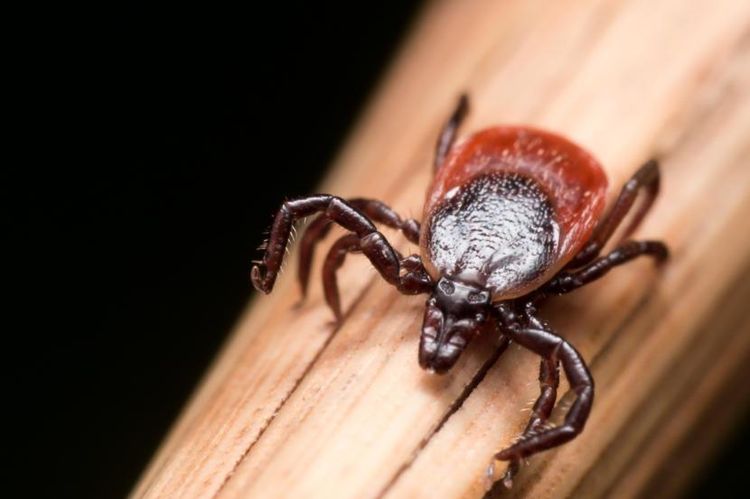
Routes of infection
The disease is most widespread in the Northern Hemisphere. Ixodid ticks, the primary vectors of the infection, are equally common on the American and Eurasian continents. They migrate with the help of birds. They are most often found in mixed forests and areas with tall grass.
Seasonal tick activity begins in early spring, subsides during the intense heat of midsummer, and resumes in September. The risk of contracting Lyme disease is highest in May, when the grass is tall enough for the parasite to easily migrate to mammals.
Borrelia live in the intestines of ticks, so infection may not occur within the first 24 hours after a bite. Therefore, it's important to examine your dog after a walk and immediately remove any ticks (including the chelicerae).
Humans can also become infected with Lyme disease after a tick bite. If a dog is infected, it poses no danger to humans. However, it should be noted that infection can occur through the conjunctiva of the eye if the pathogen comes into contact with it. This can occur when the tick's body is crushed when the owner removes it from the animal. Therefore, it is important to remove the parasites with extreme care, being careful not to damage them.
Because the pathogen can persist in a dog's body for a long time, there is a risk of transmission during blood transfusions. Cases of intrauterine infection have also been recorded. However, fetal death is most often the result.

Clinical manifestations
Lyme disease in dogs is typically asymptomatic. The disease may remain asymptomatic for a long time or disguise itself as various other ailments, eventually becoming chronic. Symptoms typically appear during the acute stage and may include:
- fever, high body temperature;
- general lethargy, depression;
- poor appetite, which soon progresses to a complete refusal to eat;
- muscle soreness;
- pain and pathological enlargement of large joints (elbow, knee, hock, etc.).
Below is a table with a more complete picture of symptoms:
| System | Symptoms |
|---|---|
| Musculoskeletal | Lameness, joint pain, stiffness after rest |
| Metabolism | Decreased appetite, weight loss |
| Nervous system | Convulsions, apathy, lethargy |
| Heart | Arrhythmia, slow pulse, shortness of breath during exertion |
Often the symptoms are similar to other diseases, which complicates timely diagnosis.
As Lyme disease progresses in dogs, symptoms become more pronounced:
- the animal has purulent arthritis (inflammatory joint disease);
- synovitis (inflammation of the synovial membrane of the joint);
- lameness;
- enlarged lymph nodes.
Joint pathology is the most characteristic symptom of Lyme disease in dogs. Joints located immediately adjacent to the bite site are the first to be affected. Over time, the infection spreads to distant areas of the body.

Note: Joint pain, arthritis and lameness can be paroxysmal, returning even years after a course of treatment.
As the infection progresses, the functioning of many organs and systems is disrupted. Most often, changes are observed in muscle tissue, the cardiovascular, and nervous systems.
The combination of neurological pathologies with chronic arthritis gives reason to suspect Lyme disease in an animal.
Diagnostics
A characteristic symptom of the disease in humans is erythema migrans. Its presence confirms the development of Lyme disease, so appropriate treatment is prescribed without delay.
Erythema migrans is difficult to detect in dogs due to their fur. Therefore, laboratory and instrumental diagnostic methods are used to diagnose the disease in animals.
Detecting the parasite in animal tissue is quite difficult because it is very small and present in tissues in spore form. Serological blood tests, PCR diagnostics, and electron microscopy are used for detection. Indirect immunofluorescence (IIF) testing has shown good results. It can identify the infectious agent using specific antibodies labeled with fluorescein.
X-rays can detect arthritis in various joints. In the early stages, no visual changes may be visible. However, a specialist may notice a deterioration in gait and a limp.
A general blood test may show leukocytosis, and a biochemical test may show an increase in liver function tests.

Basics of diagnostics:
-
Serological tests (ELISA, Western blot).
-
General and biochemical blood tests: reveal inflammatory processes and signs of liver/kidney dysfunction.
-
X-ray and ultrasound of joints in case of prolonged pain.
-
Electrocardiogram for suspected cardiac complications.
A table of sensitivity of different tests can be useful:
| Method | Sensitivity | Peculiarities |
|---|---|---|
| ELISA | High | Excellent for long-term forms |
| Western blot | Main | Accurate diagnostics |
| PCR | Average | Difficult for routine use |
Treatment
Only a specialist can treat Lyme disease. This condition requires long-term therapy with strict monitoring of its progress.
Antibacterial therapy is used to treat the disease. Medications are prescribed for up to four weeks, and the course can be extended if necessary. It is also possible to change the antibiotic if the initial choice does not produce the desired result or if the pet does not tolerate it well.
Important! Antibiotic therapy may worsen the condition due to the mass death of Borrelia, as they release endotoxin when they die.
High antibody titers may persist after completing the full course of treatment. This is normal, as dogs are highly susceptible to Borrelia. However, they will still be lower than before.
In parallel, symptomatic therapy is prescribed, which may include various types of drugs, depending on the localization of the parasite's activity:
- antispasmodics;
- painkillers;
- nonsteroidal anti-inflammatory drugs;
- immunostimulants;
- vitamins;
- solutions for infusion.

Sample treatment plan
For the convenience of owners, here is a table with the stages of the treatment plan:
| Stage | Duration | Target |
|---|---|---|
| Antibiotic therapy | 4–6 weeks | Eliminating infection |
| Supportive therapy | 2-3 weeks | Reduces inflammation, helps joints |
| Recovery | Up to 2 months | Physiotherapy, vitamins |
If necessary, additional examinations are prescribed: ultrasound of the kidneys, ECG, coagulation tests.
Prevention
The most effective means of preventing Lyme disease is the use of insecticides and repellents. The modern pet market is replete with a variety of topical products that rid animals of parasites and prevent their infestations.
The funds are presented collars, sprays, and drops applied to the withers. They act locally, meaning they don't enter the bloodstream. Their effectiveness can last from several weeks to several months. It's crucial to begin treating your dog at the very beginning of the tick season (April-May) and continue until the autumn cold sets in.
Features of the course of the disease and long-term consequences
-
Some dogs develop persistent joint inflammation, which requires lifelong supportive care.
-
Kidney and nerve dysfunction may persist.
-
After recovery, it is important to carry out annual preventive measures and observations.
Read also:
- Staph in dogs: symptoms and treatment
- Lyme disease in dogs: symptoms and treatment
- Adenovirus and adenovirus infection in dogs: symptoms and treatment


Add a comment