
Cat scratch disease – felinosis
Anyone who has a cat at home is probably familiar with cat scratch disease. Almost everyone has been scratched by a cat at least once. Most scratches heal quickly, but sometimes inflammation develops.
This is easily explained by the fact that an animal's claws are full of various microorganisms. A cat, on the other hand, walks on the ground, uses its litter box, and buries its feces, so its paws harbor a huge number of pathogenic microorganisms. When an animal scratches you, it transfers bacteria from its claws to your wound, which causes serious inflammation. Stray animals pose a particular danger, as they wander the streets and trash heaps, often walking through the excrements (even dried ones) of other stray animals, which are either sick or carry dangerous infectious diseases.
Content
The causative agent of cat scratch disease
Felinosis is a zoonotic disease, meaning it can be transmitted to humans from animals. The causative agent is a bacterium from the Bartonella family. Although the infection is acute, it poses no particular danger to health or life. Bartonella bacteria initially multiply at the site of entry—the primary infection site, or portal of entry.
Pathogenic microorganisms then travel through the bloodstream to nearby lymph nodes. Their main function is to filter bacteria, viruses, and fungi from the blood. Lymph nodes strive to minimize the number of pathogens, so they are the first to react—they become inflamed. Typically, the bacteria do not spread further and do not affect internal organs.

The disease usually resolves on its own—it's controlled. However, sometimes the body needs help to overcome the condition more quickly.
Cats become infected by fleas, which harbor Bartonella (though only briefly, about 9 days). Fleas pose no danger to humans. Infection can be acquired from cats (less commonly, dogs). The pathogen is found in high concentrations in saliva. Therefore, not only scratches but also bites are dangerous.
Causes of cat scratch disease
Scratches and bites from a sick animal. More than half of cats carry Bartonella. Stray cats or those kept in unsanitary conditions are especially dangerous. The teeth and claws of such cats are full of pathogenic bacteria. Therefore, even the smallest wound on the skin or mucous membrane, which can be penetrated by the bacteria, is enough for a person to develop the disease.
Cat scratch disease is also reported in children. This can be explained by the fact that children are more interested in animals than adults. Many fearlessly approach wild strays, trying to catch them and play with them. Few cats enjoy this. And in self-defense, they extend their claws or use their teeth, thereby infecting the child.
If you've had feline mange at least once, you're unlikely to suffer from it again. Immunity develops.
Symptoms of cat scratch disease
The cat itself will not have any symptoms, so you cannot know for sure whether the cat in front of you is healthy. mustachioed or a carrier of Bartonella. Only after a cat paws you can you be sure you've been infected. Therefore, all the symptoms described below are typical for humans.
From the moment a cat scratches until the first symptoms appear, it takes from a week to a month and a half. There are two forms of the disease: typical and atypical.
Typical form
At first, the scratch or bite wound itself becomes red and inflamed. Then papules form, which gradually develop into pustules. The lymph nodes closest to the infection site (the wound) enlarge (due to inflammation) and become painful. The pustules dry up, forming a scab that soon falls off, leaving no trace. If you don't want scarring, don't pick at the scab. Wait for it to fall off on its own.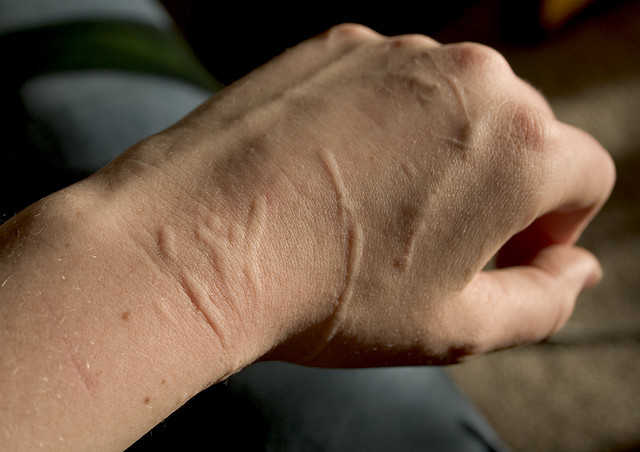
After two weeks, the lymph nodes begin to swell. Cat scratch disease, benign lymphoreticulosis, and felinosis are all the same names for the condition. The node can reach the size of a matchbox, but much less commonly, it can reach 10 cm. The inflammation causes a fever. It varies from person to person, depending on their immune system. Those with a strong immune system rarely experience problems. It lasts a couple of weeks, then recovery begins.
Atypical forms
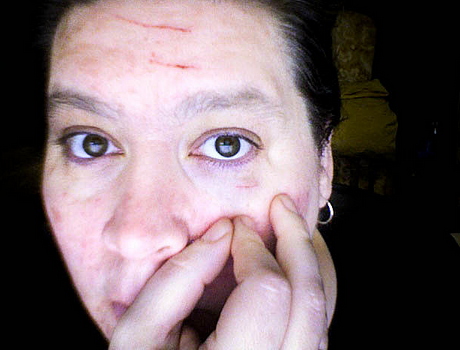
The ocular form occurs when the pathogen from an infected pet's saliva comes into contact with the conjunctiva. Ulcers and granulomatosis develop, and the eyelids become swollen and red. The eyes open with difficulty. Lymph node adenitis begins in the mandibular and parotid nodes.
Neuroretinitis is an inflammation of the optic nerve head. Nodules and a star-shaped spot appear on the retina, and the blood vessels in the fundus are significantly altered. While the patient remains healthy, vision in one eye declines significantly.
A neurological atypical form of cat scratch disease develops extremely rarely. Muscle pain, radiculitis, and myelitis occur, while inflammation of the meninges and the brain itself is very rare. However, encephalitis and meningitis do occasionally develop. However, these symptoms appear only a couple of weeks after the lymph node reaction.
The liver and spleen can also be affected in the atypical form. Granulomas (nodules) appear, and the temperature fluctuates, appearing as if in waves if plotted on a chart. Blood tests can reveal a lot. Bilirubin, as well as AST and ALT, are elevated, and other liver enzymes are also elevated. An ultrasound will show that the organs are larger than normal, with the presence of masses (nodules).
Less frequently, endocarditis and osteomyelitis are observed.
Treatment for cat scratch disease
If you've been diagnosed with cat scratch disease, treatment will be prescribed only to support your body's strength and help it fight the infection more quickly. The disease itself may resolve on its own. But why suffer for weeks when you can get rid of the symptoms much more quickly and develop lasting immunity?
Prescribed medications include antihistamines, anti-inflammatory drugs (no steroids!), and antibacterial drugs that are effective against Bartonella (usually doxycycline, erythromycin, rifampin, gentamicin, and others). Your doctor will prescribe the dosage.
There's no need to treat your cat. She's not suffering from this bacteria. You just need to be careful. Even if you don't develop symptoms of feline infection after the scratch, there's no guarantee that another infection won't develop (cats' claws are susceptible to all sorts of things, especially those that roam freely).
Prevention of cat scratch disease

Preventing felinosis is simple. Avoid cat scratches and bites. Avoid handling unfamiliar, barely familiar, or stray pets. Avoid angering easily irritated pets. Don't allow children to play with cats (stray or domestic) if the animal is aggressive or if playing with them causes discomfort or pain.
There are no vaccines. The disease is not fatal and rarely causes serious complications. And almost everyone contracted it as a puppy, when they pulled the ears or tails of kittens whose claws and teeth are as sharp as needles.
A TV program about cat scratch disease. Watch the video.
Any questions? You can ask our website's staff veterinarian in the comments below, who will answer them as quickly as possible.
Read also:


Add a comment