
Boykin Spaniel
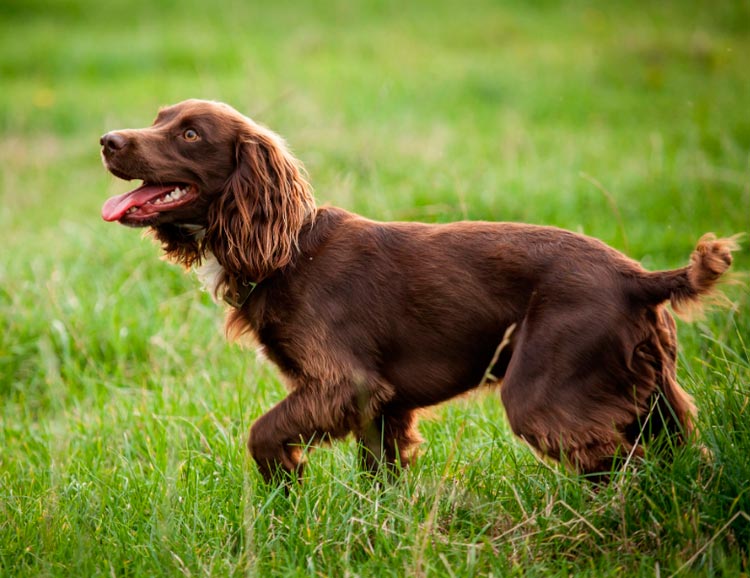
The Boykin Spaniel, or Boykin Spaniel, is a relatively new breed of dog, developed in the state of South Carolina, USA. Experienced hunters say these chocolate-colored beasts are the best at hauling drakes, and they're also known as "dogs that don't rock the boat." For those who don't hunt, the Boykin Spaniel makes a wonderful family dog and companion. Energetic, playful, intelligent, and great with children and other pets, they're also a popular choice for a family dog.
Content
History of origin
The Boykin Spaniel was developed by hunters in South Carolina, USA, in the early 20th century. They were searching for the ideal dog for hunting ducks and wild turkeys in the marshes of the Wateree River.
The ancestor of all modern Boykin Spaniels was a small stray dog. It was adopted by banker Alexander White around 1905-1910. He soon recognized that Dumpy, as he named the dog, was showing talent for retrieval and entrusted him to his friend and hunting partner, White Boykin, for training. In the hands of this experienced hunter and dog trainer, Dumpy developed into an excellent retriever. White Boykin's grandson recounted that many hunting breeds were involved in the breeding program: Chesapeake Bay Retriever, Springer Spaniel, cocker spaniel, American Water Spaniel and others.
The Boykin Spaniel is the national breed of South Carolina. It even has its own holiday. September 1st is Boykin Spaniel Day.
In 1977, the Boykin family founded the Boykin Spaniel Society, which began maintaining a stud book. In 1985, the breed was recognized by the United Kennel Club (UKC), and in 2006, it was eligible to compete in AKC competitions.
Usage
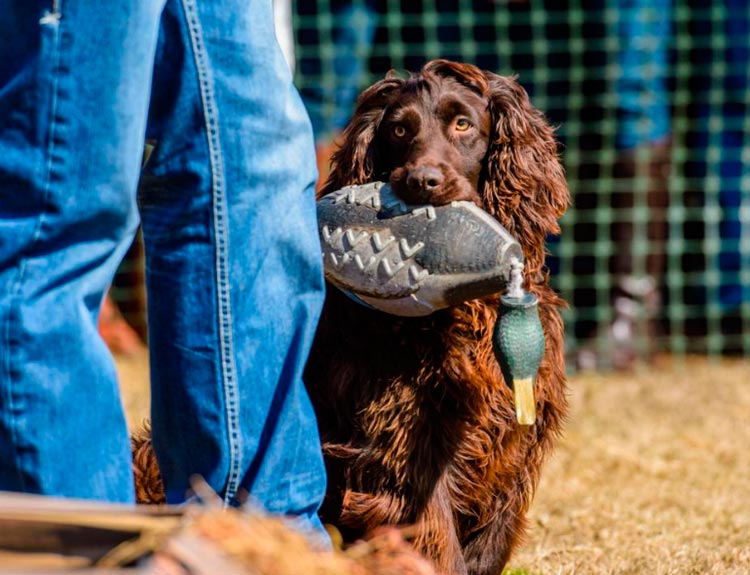
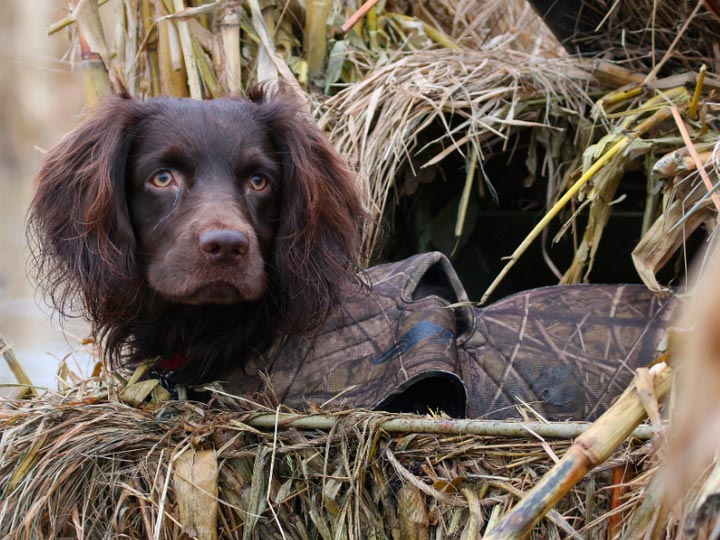
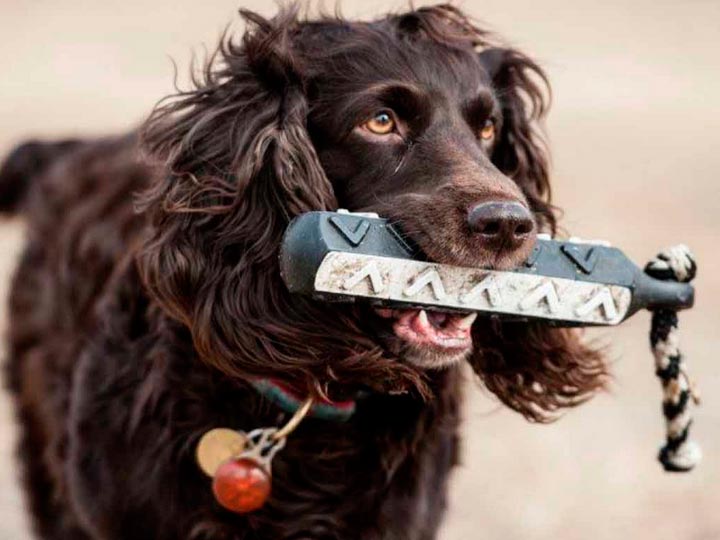
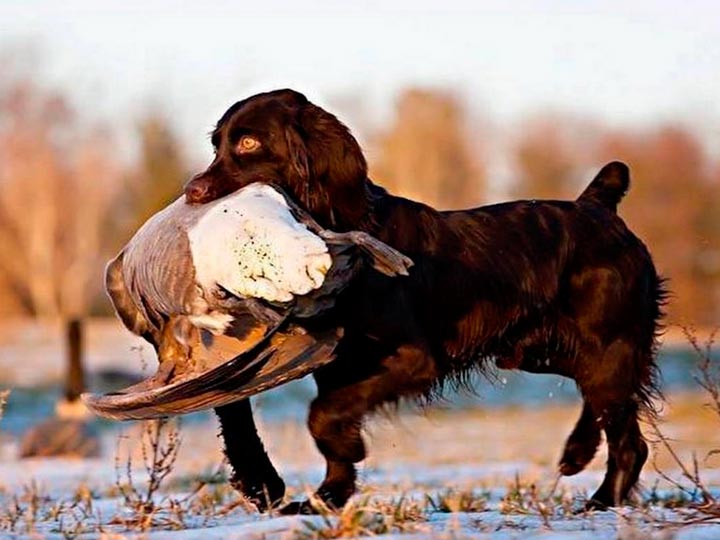
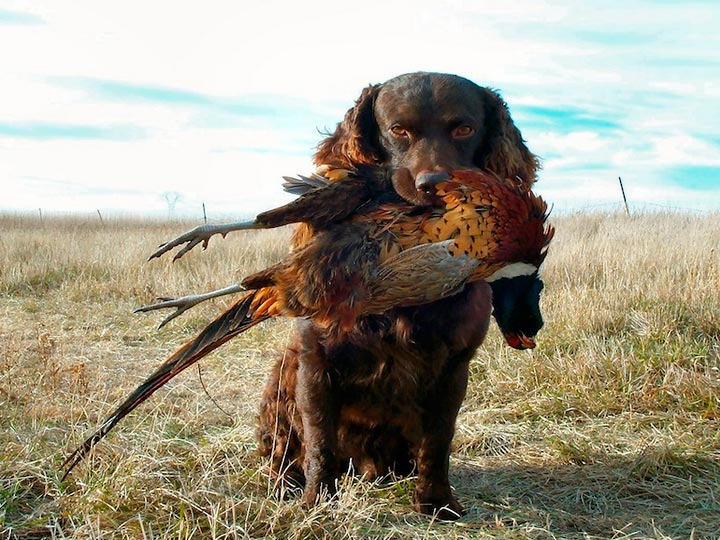
The Boykin Spaniel's endurance, adaptability to various weather conditions, and eagerness to please have made it a popular choice among hunters. It persistently searches for birds, retrieves them, and brings them into flight or drives them toward the hunter. After the shot, it locates and retrieves wounded game from land and water.
Appearance
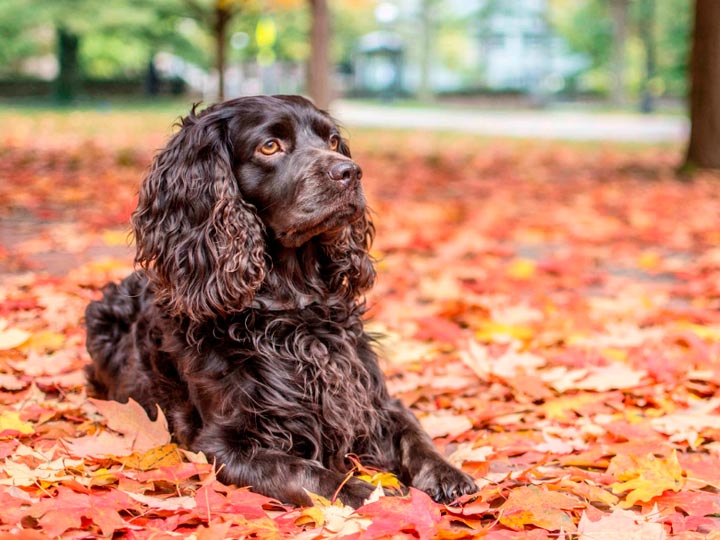
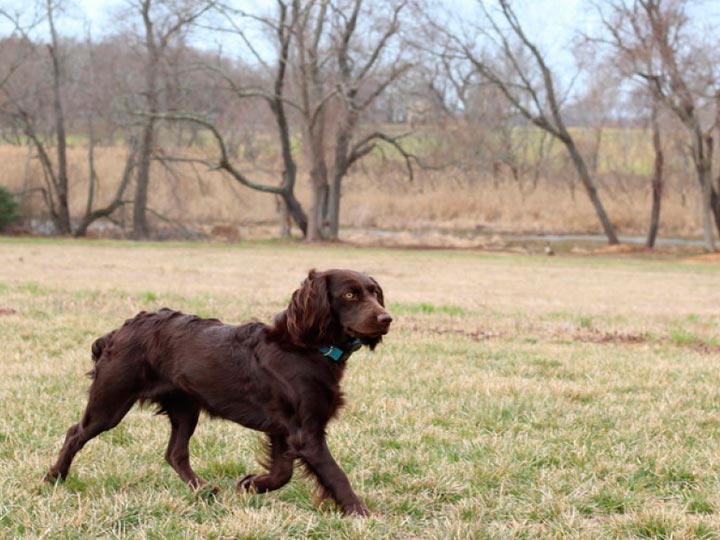
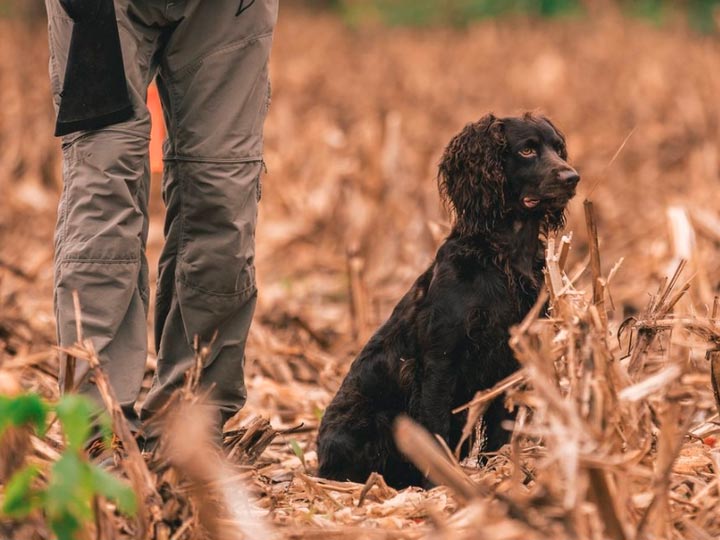
The Boykin Spaniel is a medium-sized, sturdy dog. A typical spaniel with a glossy, soft, chocolate-colored coat, it can be mistaken for a German WachtelhundSexual dimorphism is expressed.
- Height at the withers of males: 39-43 cm, weight: 14-18 kg
- Height at the withers of bitches: 36-42 cm, weight: 11-16 kg.
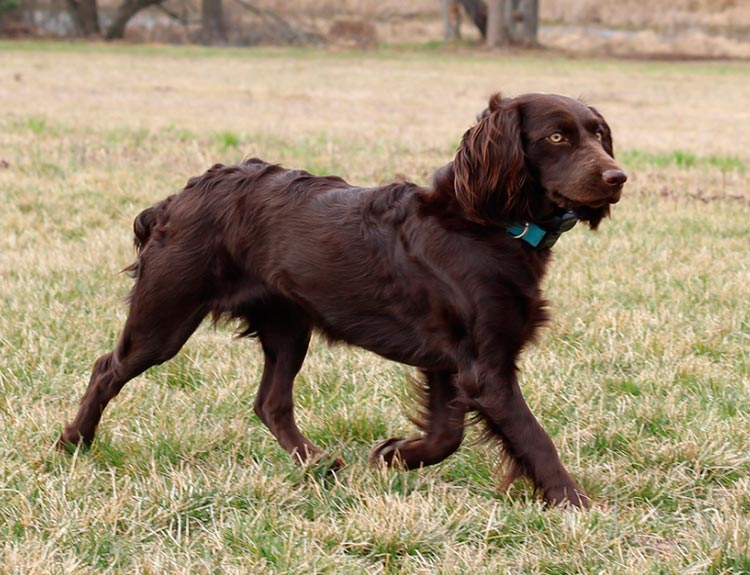
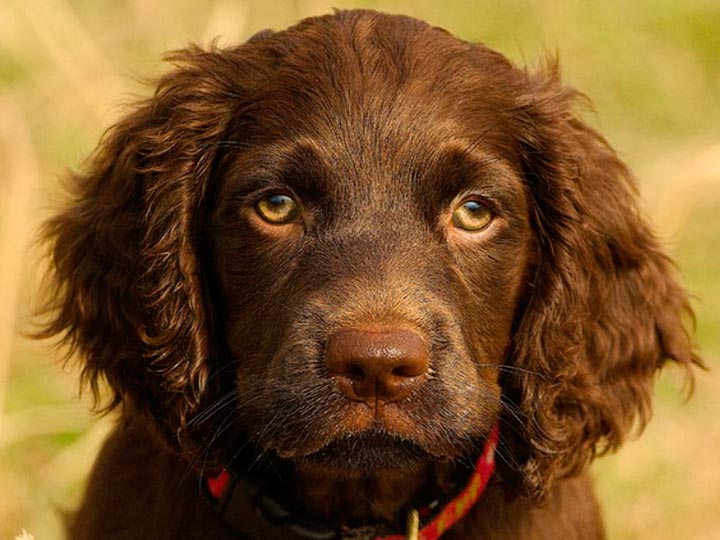
The head is proportionate and covered with short hair. The jaws are long enough to allow the dog to carry prey easily. The nose is dark brown, with well-opened, wide nostrils. The muzzle is not too pointed, with a straight nasal bridge. The eyes range from yellow to brown, matching the coat color. The ears are moderately long, set just above the eyes, reaching the nose when extended, and are carried close to the head.
The body is solidly built, not too compact. The chest is well developed. The back is strong and level. The loin is slightly arched. The legs are strong, medium length, and well boned. The tail is docked approximately 1/3 of the way at 3-5 days of age; in adult dogs, the tail length is approximately 7 cm.
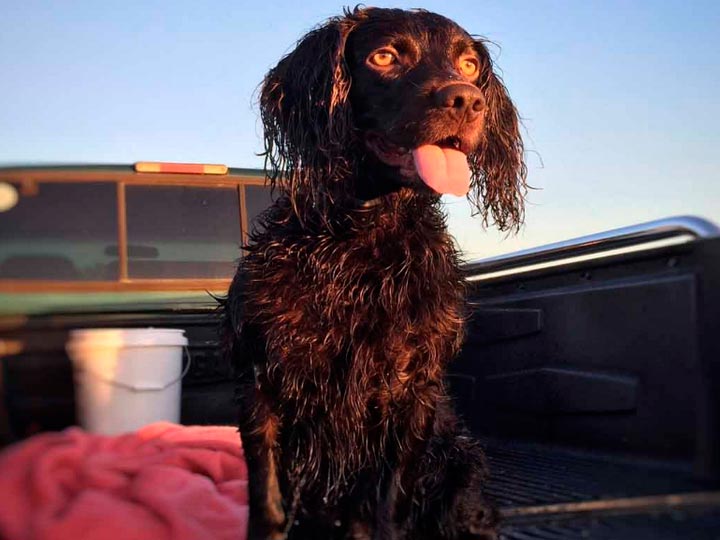
The coat is straight or moderately curly, medium length. It is short on the muzzle, head, and front of the legs. On the back of the legs, feet, ears, chest, and belly, the hair is fine, medium length, and often curly. The color is reddish brown or dark chocolate with a small white patch on the chest.
Character and behavior
The Boykin Spaniel is a sociable, friendly dog, considered a good family pet and companion. It generally gets along well with children. It is very hardy and adapts extremely well not only to climate but also to social interactions. It is almost never aggressive, attentive, and eager to please its owner. It is very affectionate and obedient with all family members. It gets along peacefully with other pets.
The Boykin Spaniel possesses boundless enthusiasm, stamina, and moderate speed. He is a strong swimmer with proven hunting abilities and a talent for retrieving. He learns quickly and is easily bored by monotony. He is prone to questioning his owner's authority if he is neglected.
Features of maintenance, care
The Boykin Spaniel is highly adaptable to various weather conditions and climates, except in extremely cold or hot conditions. This dog thrives in both the southernmost states of the United States and in the northernmost.
Like other spaniels, the Boykin is best suited for indoor living. He thrives in company and is busy with work. He requires good exercise and at least an hour of daily walks.
Grooming should be regular. Their soft coat is prone to matting and collects grass seeds, small twigs, and other debris. Therefore, owners of dogs that frequently spend time in fields or forests prefer to keep their coats short during the warmer months. During the rest of the year, they should be brushed regularly and treated with a detangling product. Bathe as needed. Grooming for Boykin Spaniels also includes nail trimming, teeth cleaning, and ear cleaning.
Health and life expectancy
According to the Orthopedic Foundation for Animals, Boykin Spaniels have had an alarmingly high rate of hip dysplasia since 1985. Although this rate has decreased slightly over the past seven years, there is a risk of inherited heart, eye, and thyroid disease. Less common are degenerative myelopathy and exercise-induced collapse (known in Labrador Retrievers). Life expectancy is 11-13 years.
One of the most dangerous genetic disorders in Boykin spaniels is the inability to produce proteins needed to maintain muscle function during prolonged exercise in high temperatures. This can be fatal. As of 2017, exercise-induced collapse was reported in approximately 10% of all Boykin spaniels.
Buying a Boykin Spaniel puppy
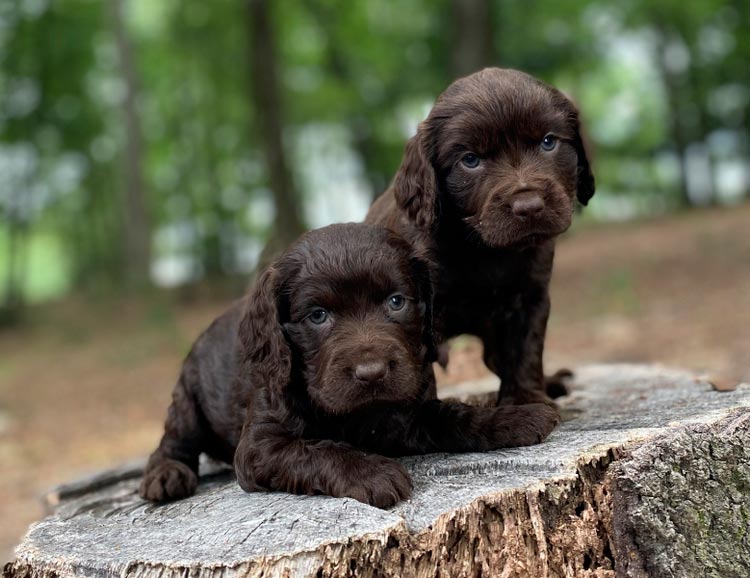
The majority of these dogs are concentrated in South Carolina. Here, they are popular and beloved primarily as pets, but there are also many hunters who have kept this breed for decades. Puppies can also be found in other states and Canada. Outside of these countries, Boykins are virtually unheard of.
Price
In the US, the average price of a Boykin Spaniel puppy is $1,000. The price is influenced by the merits and working ability of the parents, the availability of genetic testing for common diseases, and the kennel's status. A list of kennels is available on the official website of the Boykin Spaniel Society, but the club makes no guarantees or recommendations regarding puppies or breeders.
Photos and videos
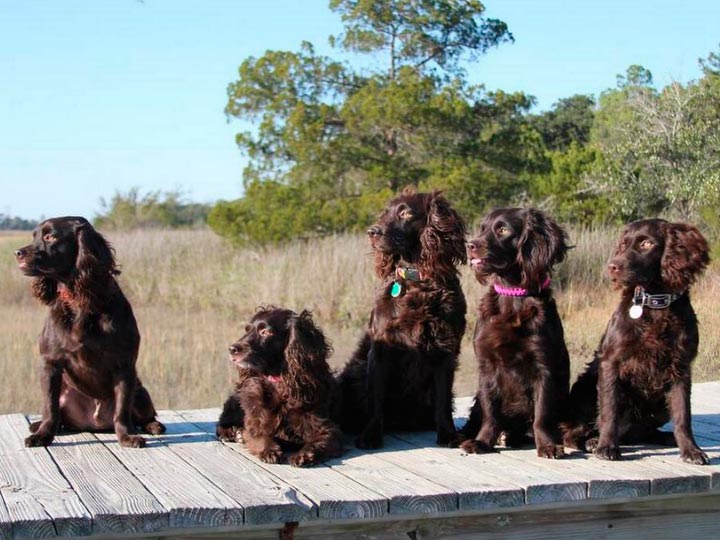
You can see more photos of Boykin Spaniel dogs in the gallery.
Video about the Boykin Spaniel dog breed
Read also:


2 comments
Arkady
Although the name translates as "Spanish," the breed's country of origin is currently unknown. It is believed, however, that it was in Spain that spaniels' ancestors were used in falconry. However, they were most widely distributed in Great Britain. English cocker and springer spaniels began to be imported to Russia in the late 19th century, but they proved poorly adapted to our natural conditions. Breeders then began selecting the largest, long-legged dogs that could work in dense grass and swamps. Thus, a new breed gradually emerged—the Russian spaniel.
Yaroslav
The first thing that can be said about spaniels is that they are very cheerful dogs. They are almost always in a good mood, always ready to socialize, and even better, to play. Spaniels seem to have an inexhaustible supply of energy. They rarely sit idle; they are constantly on the move, following you around, and participating in all household chores. Of course, there are some misanthropes among them, but this is the exception rather than the rule. More often, spaniels are difficult to calm. They love walks and can run for many kilometers. When hunting, they are tireless and fearless, unafraid of gunfire, which is why they are one of the favorite breeds among hunters. In general, their hunting instincts are very well developed, so during walks, it is worth keeping an eye on your four-legged friends, in case they have found any "game" in the form of a cat, pigeons, or ducks in the pond. Spaniels love water, enjoy bathing, and are excellent swimmers thanks to the webbed toes. So, they often return from walks not only wet but also dirty. However, this doesn't dampen their spirits; quite the opposite, in fact. Spaniels are generally affectionate, so they're unlikely to make good guard dogs.
Add a comment