
The psychology of predator and "prey", or is friendship possible?
In the wild, pets hunt rodents, trying to protect their territory and their owner's home from pests. But these days, many people keep pet rats, which, unlike stray rats, are very cute and playful. Like dogs and cats, rats come in a huge variety of breeds, each one charming in its own way.
Many people, seeing a photo of a cute rodent, are eager to get one. Some begin studying the topic, interacting on forums, and searching for reputable breeders of their favorite breed in their city or a nearby town. Others, however, mindlessly buy the first rodent they see, not even considering that the pets sold at bird markets are not always healthy.
But today we'll talk about how a cat and a pet rat, who are naturally hostile, get along. Will the rodent be bothered by the pet's presence, or is the cat more afraid of the rat? How can they befriend each other? And is it even worth getting a cute little eared pet if you already have a cat?
Content
How do a cat and a rat get along?

Much depends on the pets' personalities. If the cat is typically calm and completely indifferent to any other inhabitants of the house, then there shouldn't be any problems. She might be afraid of the rat, but only because she's never seen such a cute Mickey Mouse before. There will definitely be an initial interest. The cat will come up and sniff the cage with the rodent. And if the cat is truly afraid, she won't approach the cage again. She won't attack, let alone attack; she'll simply keep as far away as possible.
If the cat is inherently aggressive or is a rat-catcher, it's best to be on the safe side. Such a pet will always be ready to attack and strangle the rodent. The owner must decide whether to either not take the rat or protect it from predator attacks (place the cage high, out of the cat's reach, and never leave the animals alone, even for short periods of time). Don't rely on luck. You'll be responsible for both the cat and the baby. In any case, this will be stressful for both pets. For one "duet," the stress will quickly pass, and the animals will become friends. For the other pair, however, this stress will continue as long as both animals share the same territory.

However, don't think that the cat's personality alone determines how a predator and a pet rat will get along. Believe me, this cute rodent is far from defenseless. It's armed with tenacious paws with sharp claws and strong, sharp teeth. And if anyone encroaches on the pet's territory or life, it will fight for it. And it won't be easy.
There have been cases of domestic cats becoming "victims." Some rodents terrorize their pets, fearlessly attacking them or bullying them (pulling their whiskers or fur, trying to bite their nose or paw if the cat gets too close to the cage bars). Then, owners have to think about how to protect their cat from the attacks of their cute, big-eared companion. But such bullies aren't all that common. And even if you have such a fearless, mischievous cat, that doesn't mean you can leave them alone with your cat. Yes, they'll stand up for themselves, but what could that cost them?
Much less common are cats that are afraid of everything, even their own shadow. Such pets will stay as far away from the rodent's cage as possible. Avoid forcing the animals to meet or interact with each other. This will be stressful for both. And remember, a baby rat's heart is tiny, and it already beats much faster than a cat's. Fear will cause it to flutter, which is very bad.
How do you know if you can have a cat and a rat at the same time?
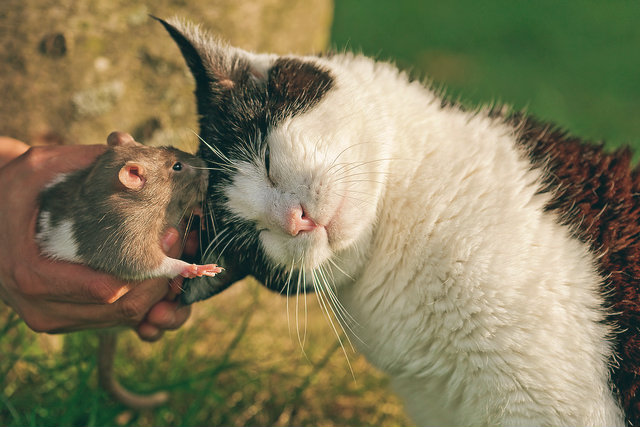
Many people try to make friends between predator and "prey" for the sake of beautiful photos. But this is a huge risk. It's like putting you next to a trained tiger. It's a real "Russian roulette." Either everything will be fine, or you'll get bitten, despite the trainer. Either way, it'll be a real scare. So is it worth doing this with a rat? It's one thing if the pets are drawn to each other and show interest. But it's quite another if you initiate this "friendship."
In any case, think carefully beforehand: are you ready for such a responsibility? It's not just getting a new pet. You're taking responsibility for its life and health. Will you be able to provide it with a decent and peaceful life? Do you have a place in your house where the cat can't get to it? Just make sure the cage isn't in a drafty or cold/damp area.
Also, consider how your cat will react to the new family member. You know her personality and have noticed how she reacts to guests or other animals. Is she jealous or ready to share you with the whole world?
Pets aren't toys. It's crucial to think things through beforehand, rather than grabbing the first animal you like, dragging it into the house, and then wondering if the cat and rat will get along.
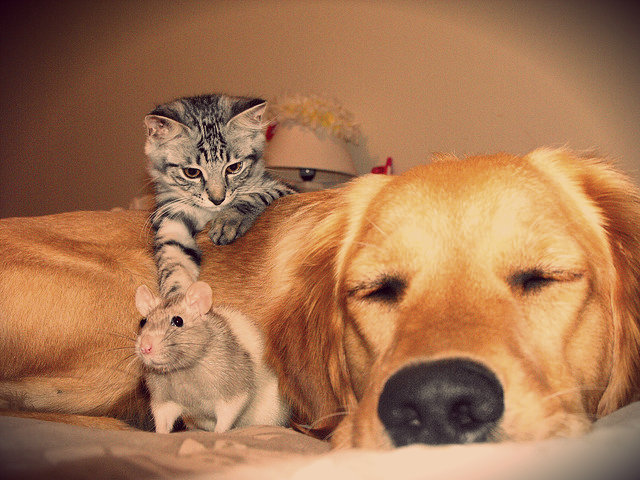
It's a different story when you already have a rodent and you've found, bought, or been given a cat. It's a little easier with a small cat, although its curiosity and playfulness can be traumatic for the rodent. All contact between the animals will need to be not only supervised (to prevent the kitten from getting too carried away and causing harm, or being harmed by a frightened rat), but also moderated. Kittens are more fearless than adult cats. This is because they're still learning about the world and are curious and new to everything. Although almost all small pets are frightened the first time they meet, becoming arched and trying to jump away. However, interest eventually takes over, and the kitten reaches out to sniff and touch the stranger. In any case, you shouldn't leave these two cuties alone. Even if they don't seem afraid of each other and become friends from the very first second, anything can happen. They're animals, after all, and it's impossible to read their minds.
And remember, if your cat (or any of its relatives) is a mouser or ratter, it's best not to keep rodents in the house. Genetics will take over sooner or later.
Read also:
- How to make two adult cats friends?
- How to make friends between a cat and a dog in an apartment
- Should I get a dog?



Add a comment