
Flea Dermatitis in Dogs: Symptoms and Treatment
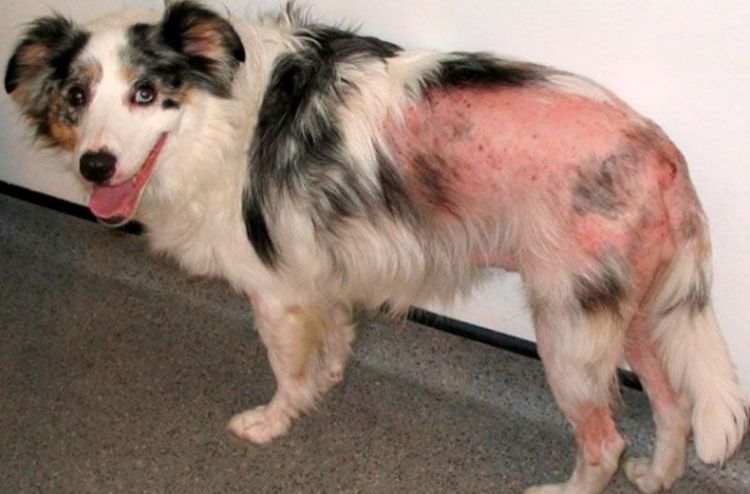
Fleas not only cause itching and transmit various infections in animals, but they can also trigger a severe allergic skin reaction. This can lead to a serious condition called flea allergy dermatitis. Symptoms of this condition don't appear immediately in dogs, and treatment in its advanced stages is significantly more difficult due to severe complications (as the photo shows, the pet can lose almost all of its fur). Therefore, it's crucial to diagnose the condition promptly and begin treatment immediately.

Signs
Flea allergy dermatitis in dogs is accompanied by severe discomfort, as the skin becomes irritated, red, and incredibly itchy. Consequently, the animal constantly scratches, damaging the outer coat and introducing infection, which leads to inflammation and further aggravating the problem. The hair in the scratched areas breaks off or falls out. The back, thighs, and under-the-tail area are most often affected, but if the condition persists, the entire body can become affected.
Furthermore, the symptoms of flea allergy dermatitis in dogs extend to their general health, which is reflected in their behavior. Typically, this manifests itself through the following changes:
- irritability, anxiety, frequent whining and barking for no reason appear;
- periodically anxiety gives way to lethargy and apathy;
- appetite is significantly reduced, digestion is disrupted, vomiting occurs, and body weight decreases;
- The appearance deteriorates, which is aggravated by hair loss with the formation of seborrheic scales and crusts on the skin.
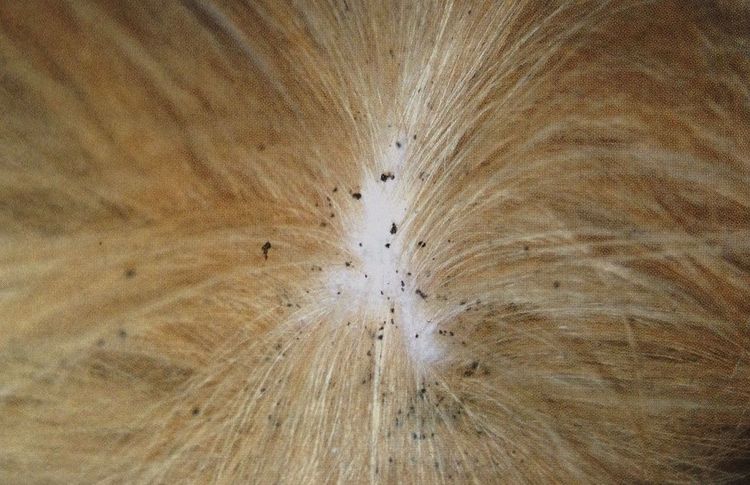
Important! The presence of flea allergy dermatitis does not mean that your dog has fleas. If your pet is prone to allergies or has extremely sensitive skin, even an accidental bite from one ectoparasite can cause a severe allergic reaction.
Dogs with flea allergy dermatitis look very sick in photos, as the condition causes them a great deal of suffering and therefore requires immediate treatment. Recognizing the disease can be difficult if the animal is kept outdoors. Diagnosis and treatment of flea allergy dermatitis in dogs living indoors or apartments are usually prompt, as the signs of the condition are so obvious that they are impossible to miss. However, the clinical picture can be sporadic and often misleading. If no action is taken, the disease progresses rapidly. In any case, if a dog is infected with a large number of ectoparasites and is allergic to their bites, and if flea allergy dermatitis is not treated adequately, it can lead to a painful death.
Reasons
The primary cause of an allergic reaction is flea saliva, which penetrates the bite wound. Ectoparasite saliva contains special substances—antigens—that are perceived as foreign by the dog's immune system.
Most animals are resistant to these compounds, but some are so sensitive that a single flea bite is enough to cause a dog to develop flea allergy dermatitis. Furthermore, an allergy can develop not only in response to the bite of an adult insect but also as a reaction to its waste products.
Flea allergy can affect dogs of any breed, regardless of age or living conditions. However, the risk of developing the disease increases significantly if your pet doesn't receive timely antiparasitic treatment.
Treatment
Treatment of flea dermatitis in dogs is carried out in two directions:
- complete destruction of fleas and their waste products;
- relief of symptoms of an allergic reaction
Since it's impossible to cure allergies without eliminating the sources of antigens, flea control is the first priority. Various medications (sprays, shampoos, drops) are available at any veterinary pharmacy. However, you shouldn't choose the right medication yourself. This should be done by a veterinarian, taking into account the severity of the disease, the number of ectoparasites, the size of the affected areas, and other individual factors that may affect the effectiveness of treatment.

Antiparasitic treatment is carried out in two stages, separated by two weeks, which allows for the complete destruction of not only adult insects but also their larvae. How is flea dermatitis treated? Most commonly, medications are used. Frontline, Stronghold, "Fiprist." Additionally, Capstar tablets are widely used for internal use; their active ingredient penetrates the animal's bloodstream and kills the ectoparasite after a bite.
Along with flea treatment, a complete disinfection of the pet's living space is performed. This begins with vacuuming, then all rooms in the house or apartment are treated with a solution of special products (Neo-Stomazan, Butox) or spray (Bolfo, Bars). All toys, furnishings, and the dog's sleeping area are also disinfected. If the dog lives outdoors, the dog's enclosure is also cleaned of fleas.

Along with flea control, flea allergy dermatitis is also treated directly, which can reduce the severity of symptoms and alleviate the dog's condition. Glucocorticoids are most often prescribed for this purpose.Prednisolone(Methylprednisolone, hydrocortisone, etc.) to relieve inflammation, reduce itching, and reduce the severity of the reaction to antigens. In some cases, antibiotics may be used for treatment, and in severe cases, steroid injections.
Caution! Antihistamines are not very effective in treating flea allergy dermatitis in dogs. They should only be given to pets in advanced stages of the disease to relieve severe allergy symptoms.
It is strictly forbidden to treat flea allergy dermatitis in dogs by making a self-diagnosis by comparing photos of sick animals online with your pet's appearance. All therapeutic measures and medications should be prescribed by a veterinarian, taking into account the individual characteristics of the disease. Traditional medicine should only be used as a supplement to the treatment prescribed by a veterinarian.
With adequate treatment, the prognosis for flea allergy dermatitis in dogs is very good. Otherwise, the disease can lead to sepsis, pyoderma, lymphadenopathy, and other serious complications, including death.

Prevention
It's impossible to completely cure a dog's flea allergy. Therefore, it's important to remember that if your pet is prone to flea allergy dermatitis, you should do everything you can to protect them from ectoparasite bites. To do this, follow these recommendations:
- put on a flea collar and change it in a timely manner in accordance with the expiration date;
- regularly wash the bedding he sleeps on in the house or in enclosure;
- periodically carry out sanitization of the premises, car interior and other places where the dog is;
- systematically treat the animal with antiparasitic agents based on selamectin, imidacloprid, fipronil, which kill fleas immediately after contact;
- protect from contact with stray animals;
- observe hygiene rules and inspect daily for ectoparasites;
- Strengthen your immune system with proper nutrition, enriched with vitamin complexes.
Flea allergy dermatitis is a serious allergic condition that can be prevented by preventing your dog from becoming infested with fleas. To do this, remember that fleas, their eggs, and larvae are everywhere, so prevention measures must be multi-pronged and systematic.
Read also:
- Wet eczema in dogs: symptoms and treatment
- Acanthosis Nigricans in Dogs: Symptoms and Treatment
- Pododermatitis on the paws of dogs: symptoms and treatment


1 comment
Elena
What laboratory tests (specifically) are performed to diagnose flea dermatitis? The article doesn't mention it.
Add a comment