
Blepharitis in dogs
Blepharitis in dogs is an inflammatory condition. The pet's eyelid appears unsightly and may become inverted due to excessive swelling. The animal experiences severe discomfort and pain.
Blepharitis is an inflammation of the eyelid.The outer layer (skin) is most often inflamed, but the mucous membrane (conjunctiva) is often involved. One eye disease in dogs can quickly progress to another, and complications can develop.
Content
Reasons
The main causes of blepharitis in dogs are various types of impacts on the eyelids. These include mechanical (trauma), chemical (household chemicals), allergies, genetics, and many others.
Sometimes the predisposition to blepharitis is congenitalWhen a pet is born with abnormal eyelids, this can cause many eye diseases. If several eyelashes grow abnormally (inward, as if under the eyelid), conjunctivitis, keratitis, and blepharitis can develop due to constant friction.
Allergy. Due to an allergic reaction, the animal most often develops conjunctivitis, however, blepharitis is also registered. The eyelid begins to swell severely, itching begins, and the skin becomes red. There is no pain. Scales appear on the eyelid. But in addition to blepharitis, allergies Other clinical signs may include dermatitis, itching, redness of the skin, swelling, hair loss, conjunctivitis, lacrimation, sneezing, or coughing. Allergic blepharitis in dogs can also be caused by an insect bite on the eyelid.
Other possible reasons
- Bacterial infections, especially coccal infections. Small localized abscesses (pimples, pustules) form on the eyelids.
- Demodicosis (subcutaneous mites) is a parasitic disease that is difficult to treat.
- Dermatitis is an inflammation of the skin.
- Diabetes mellitus.
- Diseases of the endocrine system (especially thyroid problems).
Breed predisposition
Some breeds are predisposed to blepharitis. If your pet has a short muzzle and many folds of skin, they'll be more likely to develop eyelid inflammation than other barking four-legged friends. Dogs with long, narrow muzzles and large, bulging eyes are also often affected. These include Shih Tzus, Bulldogs, Chow Chows, Labradors, Rottweilers, Pekingese, Poodles, Golden Retrievers, Collies, and others.
Symptoms
The symptoms of blepharitis in dogs cannot go unnoticed. The inflammation can affect one or both eyelids.
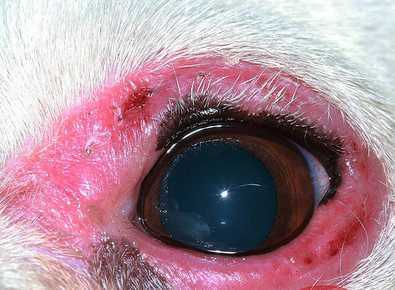
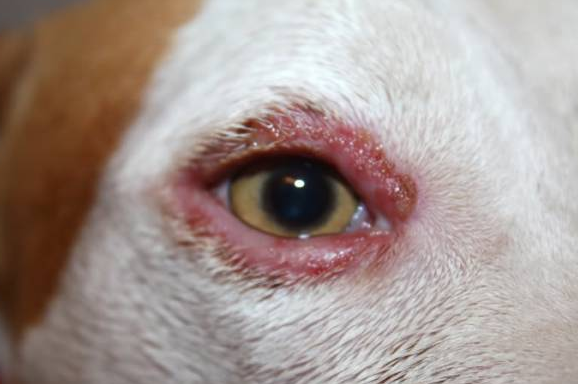
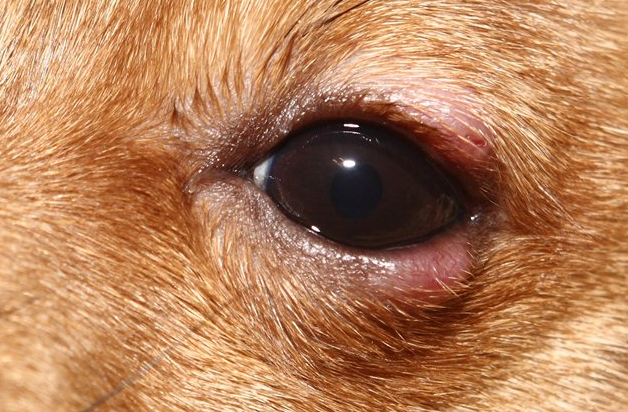
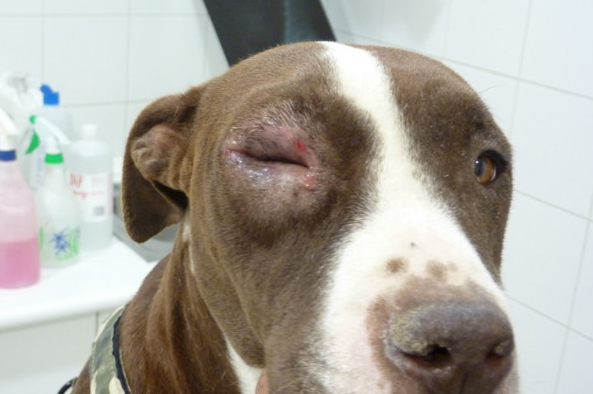
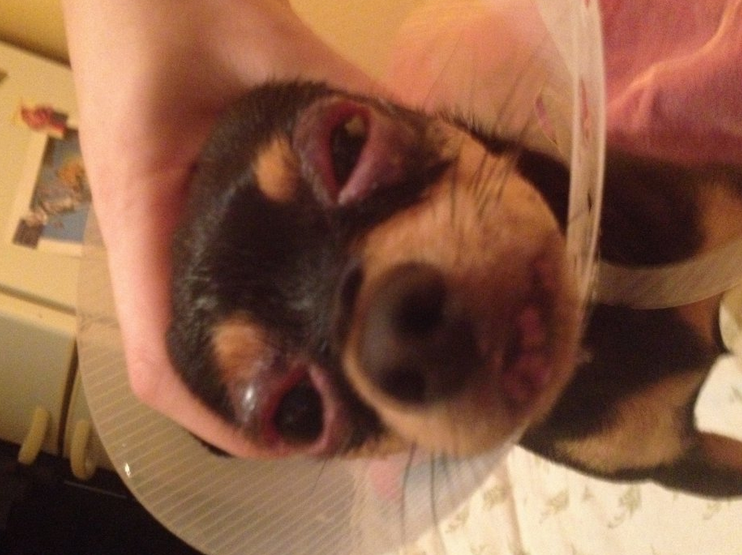
- Severe swellingThe eyelid increases in size and swells. It hangs over the eye. In more severe cases, it completely covers the eye, and the animal cannot even open it. The edge of the inflamed eyelid thickens, hardens, and becomes painful.
- The tissues become red and may curl up.A very important symptom of blepharitis in dogs. Also noted is an inversion of the eyelid (with the eyelashes curling outward or inward, which only complicates the disease). If the eyelashes curl inward (under the eyelid), they rub against the conjunctiva and cornea of the eye. This results in keratoconjunctivitis. If the dog remains untreated for a long time, the cornea will eventually ulcerate. There is a high risk of permanent vision loss.
- The animal blinks frequently or cannot open its eyes at all.Sometimes the eyelid becomes so inflamed that it doesn't close, and the eye remains open all the time. The cornea dries out, causing the dog to experience severe discomfort.
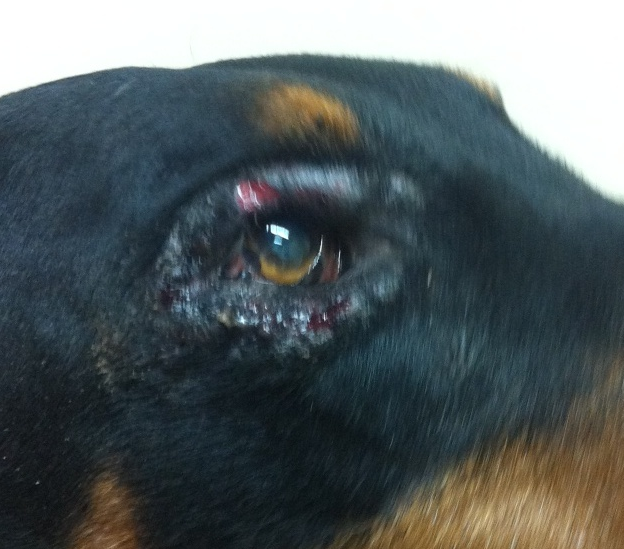
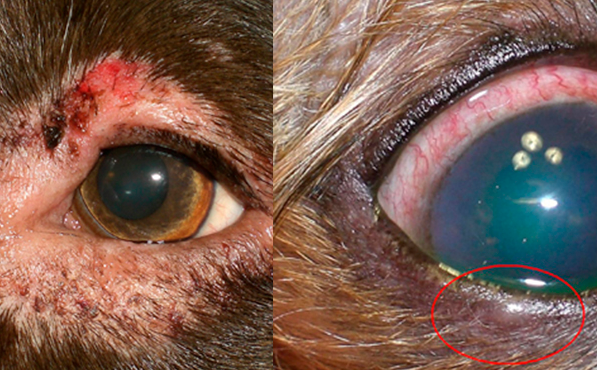
- Severe itchingThe dog scratches and accidentally scratches the inflamed eyelid with its claws. This causes trauma to the inflamed tissue, which can lead to wounds. Crusts appear on the skin, and purulent discharge appears in the corners of the eyes.
- Flaking may occur along the lash line. Eyelashes may fall out.If crusts form on the skin, a dog may scratch the crusts while scratching, exposing the erosive surface (ulcers). Ulcers are an entry point for pathogens, allowing them to easily enter the animal's body. This can lead to the development of pustules or even an infectious disease.
As a complication, conjunctivitis develops, keratitis.
Symptoms of blepharitis in a dog in the photo:
Treatment
Treatment of a dog with blepharitis is always associated with eliminating the cause of the disease:
- If bacteria were to blame, then antibiotic therapy is absolutely necessary. However, you shouldn't prescribe medications yourself, as you can't determine the sensitivity of the microorganisms causing the inflammation. Antimicrobials should be used in a course to achieve a positive result.
- If there was a congenital anomaly of the eyelid If the eyelashes are growing inward (trichiasis or distichiasis), surgical intervention is necessary. The veterinarian will carefully trim the eyelid to prevent it from turning inward.
- For allergic blepharitis in dogsFirst, the allergen is identified and eliminated. Antihistamines (anti-inflammatory) are given to alleviate symptoms. Hormonal ointments (corticosteroids) may also be prescribed, but all medications should only be prescribed by a veterinarian.
- If the cause lies in demodicosisIf Demodex mites are present, treatment will be lengthy, as they are not easy to eradicate. Sometimes it can take six months or even longer. Simple anthelmintics won't help. Demodex mites live in the skin, causing severe itching, hair loss, and inflammation of the skin. The mite's face, chest, shoulder blades, and abdomen are most often affected. Treatment must be specific. The owner must strictly adhere to the prescribed treatment regimen. Even if improvement is noticeable, discontinuing treatment is absolutely essential! Only after the vet confirms that all Demodex mites have died can the pet be considered fully cured.
General recommendations
General recommendations for treating blepharitis in dogs at home are as follows. All discharge from the eyes (purulent or clear) must be removed. Clean, warm, boiled water and herbal infusions (filtered several times through cheesecloth beforehand) can be used. Calendula and chamomile are the best. They are excellent for reducing inflammation. Frequent compresses help reduce inflammation (with pustules, do not apply heat to the tissues!). Salt compresses draw out pus, but be careful not to get salt in the animal's eye. After compresses, crusts may form on the eyelids. These should be removed very carefully (do not tear them off, but gently peel them off if they peel off easily), and any wounds or ulcers that appear should be cauterized with iodine or brilliant green (again, be careful not to get salt in the eye or conjunctiva).
Remember that without eliminating the underlying cause, it will be impossible to cope with the disease!
If you have any questions about blepharitis in dogs, please leave them in the comments and we'll do our best to answer them!
Read also:


2 comments
Andrey
Hello! My German Shepherd has swollen upper and lower eyelids, and slight redness. Her eye won't open fully. She doesn't feel any pain. What could this be?
Alina Veterinarian
Hello! If a dog squints its eye, it may be painful, even if it's not overtly visible. This usually indicates a wound (from playing, sniffing, an ectopic eyelash, a foreign body, etc.). Similar symptoms can also indicate a bacterial or viral infection, or an allergic reaction to something (but usually, in addition to redness, itching is also present).
Add a comment