
Blepharitis in cats
Blepharitis in cats is a fairly common eye condition. Our furry friends get sick just as often as we do. And the list of ailments they can suffer from is simply enormous. There are over a dozen inflammatory conditions alone. But today we'll tell you about blepharitis in cats, specifically the causes, symptoms, and home treatment methods.
Content
What is blepharitis?
Blepharitis is an inflammation of the eyelids.Very often pet owners confuse blepharitis in cats with conjunctivitisAnd they decide to treat it themselves. They use eye drops, rinse with herbal infusions or strong tea, and apply ointments. But there's no result. The eyes remain closed, the animal suffers and wastes away more and more each day.
But in reality, distinguishing between the two isn't all that difficult. You just need to know the symptoms of blepharitis in cats and the clinical signs characteristic of conjunctivitis. However, it's important to remember that one can quickly transition into the other. And it's extremely rare for these two conditions to occur simultaneously. There are several types of blepharitis in cats, and these determine the appearance of the affected pet's eyelids:
- "Simple" or scaly
- Meibomian
- Ulcerative

Symptoms
Although the disease is the same, the symptoms of blepharitis in cats vary slightly depending on the type of inflammation. But first, a few general symptoms: itching, watery eyes, swelling, and redness of the eyelids. Pets may try to scratch their eyes with their paws, which can only further injure themselves.
Scaly blepharitis
The most common type of inflammation. It often leads to other types. The eyelids initially become red and swollen. The edges become thick and dense. Grayish scales may be visible where the eyelashes grow. Gradually, pus may be seen in their place. Eventually, the eyelashes fall out.
Ulcerative blepharitis
Scaly blepharitis develops first in cats (photo below). When the crusts of pus dry and fall off, an ulcerated surface forms on the eyelid. Ulcers are wounds, which are always a gateway for infection. The inflammation only worsens, as pathogens will not miss the opportunity to enter the body through them.
As the disease progresses, some areas become scarred. This leads to skin tightening. As a result, the main symptoms of blepharitis in cats become obvious: inversion or eversion of the eyelid. Eyelashes stop growing, and the eyelid does not completely cover the eye.

Meibomian blepharitis
This type of blepharitis in cats develops due to increased secretion from the meibomian glands (anyone who's ever had a stye knows where this gland is located, as it becomes inflamed and swollen). The edge of the eyelid becomes noticeably thickened and reddened. Pus appears quite quickly because pathogenic microflora has penetrated the ducts of these same glands.
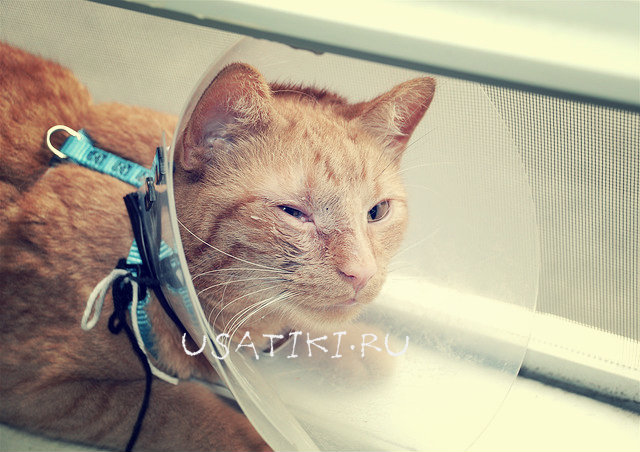
Reasons
What causes blepharitis in cats? What causes eye pain?
- Pathogenic microorganisms. Viruses and bacteria. Among bacteria, pyogenic cocci (staphylococci and streptococcoid) are the most common cause of blepharitis in cats.
- Parasites, particularly subcutaneous ones pliers (diseases are called demodicosis, sarcoptosis). However, not only the eyelids are affected, but also the face and neck.
- Fungi. Most often these are the causative agents of trichosporia and microsporia (lichen).
- AllergyIt could be from food, medicine, dust, plants, anything at all. There are thousands of allergens in nature!
- Trauma to the eye, usually a wound (such as from a fight or self-scratching).
- Seborrhea. When the sebaceous glands are disrupted, not only does the pet develop dandruff, but flakes also appear on the eyelids.
- Salivary duct transplantation.
Veterinary surgeons perform all sorts of surgeries. If an animal's lacrimal glands don't produce enough tears, the pet will have dry eyes. This isn't just unpleasant; it's quite painful. To avoid constantly using eye drops (after all, you can't be near your pet's eyes 24/7 for their entire life), the salivary gland ducts are surgically "transferred." However, saliva is more "aggressive" than tears (saliva not only helps moisten food in the mouth, but also contains many enzymes that begin to break down the food already chewed in the mouth). This can lead to eye problems.
- Endocrine and autoimmune diseases. The list is vast. A diagnosis can only be made by a qualified veterinarian after a comprehensive examination and a host of additional tests.
Treatment
Treatment for cats suffering from blepharitis should be comprehensive and only performed under the supervision of a veterinarian. Based on examinations, the veterinarian should identify the cause and eliminate it.
If microorganisms are the culprit, a course of antibiotics or immunoglobulins will be required. If subcutaneous mites are detected, treating the cat for blepharitis and demodicosis/sarcoptic mange will take months. Furthermore, extreme caution is necessary, as these diseases are classified as parasitic zoonoses. Ringworm is also not easily eliminated. While trichophytosis can be eradicated with three vaccinations (10-14 days apart) and regular use of fungicidal ointments, microsporia is more challenging. There is no vaccine against it, and ointments alone are very difficult to get rid of.
Antibiotics will need to be administered not only as ointments but also by injection. However, some procedures will need to be entrusted to a veterinarian, such as the administration of antibacterial suspensions and emulsions into the conjunctival sac. Treating your cat's blepharitis at home alone, without a veterinarian, is impossible. A comprehensive approach is needed, meaning multiple medications will be used to attack the disease from all angles.
Prevention of blepharitis
Preventing blepharitis in cats isn't easy. While vaccinations can protect your pet from certain viral diseases and ringworm, there's no miracle cure for bacteria and mites. The only solution is to isolate your pet from sick and stray animals. Also, wash your hands thoroughly, and put your outerwear and shoes away immediately to prevent your pet from sniffing or licking anything. Don't forget to visit your veterinarian regularly.
You need to be constantly vigilant and cautious. By petting an animal outside (or at someone's home), you risk infecting not only your four-legged friend but yourself as well. This applies not only to ringworm but also to subcutaneous mites. Furthermore, blepharitis very quickly spreads to the conjunctiva, causing inflammation, and to the cornea (causing keratitis). It's difficult to predict how the inflammatory process will progress. One thing is certain: your pet will not get away with just swollen and reddened eyelids.
Any questions? You can ask our website's staff veterinarian in the comments below, who will answer them as quickly as possible.
Read also:
- Corneal ulcers in dogs and cats
- Cystitis in cats
- Blepharitis in dogs
- Otodectosis in cats: symptoms and treatment


Add a comment