
Rabies in dogs: symptoms and treatment
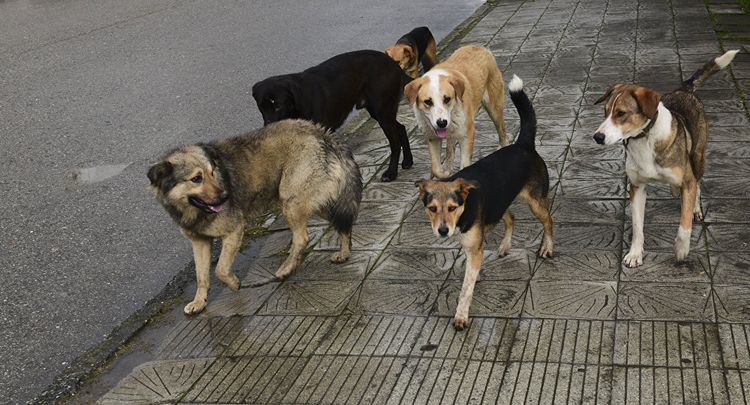
One of the most terrifying diseases feared by pet owners is rabies in dogs. Dogs can contract the virus while out for a walk from stray dogs that have had contact with wild animals (mice, hedgehogs, foxes, etc.). The virus is often transmitted through a bite, but sometimes just saliva on an open wound is enough. This is enough to initiate the development of such a dangerous disease as rabies.
Content
The incubation period of rabies
The disease is caused by a neurotropic virus that attacks the brain. It's virtually impossible to detect the virus in your pet immediately after contact with an infected animal, as the incubation period can last up to three months. A saliva test can accurately determine whether your dog is infected. However, this is only possible a few days before the first symptoms appear. signs of rabiesThis is why owners must carefully protect their pets from contact with all wild animals, and stray dogs in particular.
Rabies in dogs: symptoms
The disease affects dogs' nervous systems, causing respiratory paralysis, limb paralysis, increased excitability, and hydrophobia. Unfortunately, the disease is fatal. Therefore, it's important to be aware of the symptoms of rabies in dogs.
In the early stages of the disease (lasting 2 to 10 days), you may notice changes in your pet's behavior. Typically, your dog will experience:
- Irritability.
- Malaise.
- Chills.
- Muscle pain.
- Refusal to eat.
- Sudden weight loss.
- Anxiety.
- Cough.
- Photophobia.
- Diarrhea or vomiting.
- Fever.
Forms of rabies
The disease is usually divided into several forms: silent, violent, abortive, atypical and relapsing forms of rabies.
Quiet form
The late stage of mild rabies is called the silent stage. It lasts from 3 to 7 days. This type of rabies is considered an atypical development. In this case, the dog eats normally and behaves relatively calmly. Signs of the disease include increased salivation, paralysis of the limbs and pharynx (the dog cannot even swallow water), the appearance of a strange barking sound, and the dog's desire to eat something inedible.
Violent form
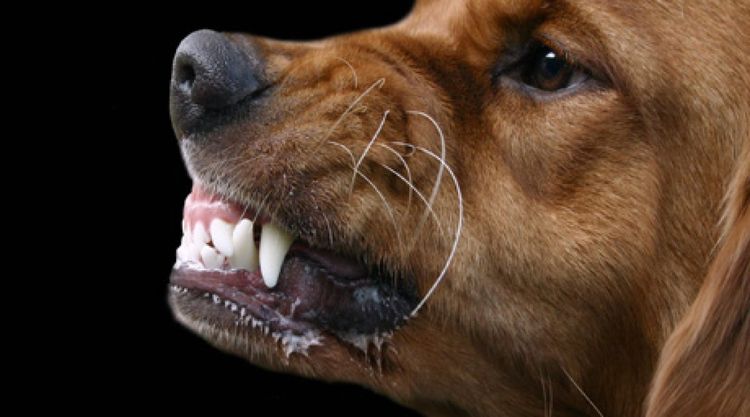
This stage of the disease lasts from 5 to 13 days. It is this stage that people most often use to identify rabies in dogs. In fact, the furious stage is further subdivided into three:
- Prodromal stage. This lasts no more than three days. During this time, the animal may hide in secluded places and not respond to its owner's calls, or, conversely, demand constant affection and attention. In this case, the dog owner may notice salivation and difficulty swallowing. The danger of this stage is that the largest amount of virus is released during this time, increasing the risk of human infection.
- Manic stage. The duration is the same. However, apathy is replaced by aggression. During this stage, the animal may attack anyone, even its owner. The dog also vents its anger on objects around it. During the manic stage, the animal's grasping movements are extremely forceful, which can even lead to jaw fractures. If an infected dog breaks free from its leash, it can bite countless people and animals in its path. Even the owner will be unable to stop the enraged dog. One of the clear signs of this stage is the appearance of increased salivation (foaming).
- Paralytic stage. This stage lasts up to 7 days. During this period, the dog experiences severe pain, has severe breathing difficulties, has virtually no swallowing movements, and develops limb paralysis. Ultimately, the animal falls into a coma and dies within a few days.
Abortive form
In this case, the dog recovers from rabies. This form of the disease is extremely rare. Most scientists are still unable to determine the exact cause of this, and research in this area is ongoing.
Atypical form
The insidiousness of this form is that the first signs of rabies can be “masked” by symptoms of gastroenteritis.
The animal begins vomiting and has bloody diarrhea, and the owners are simply unaware of their pet's dangerous disease. At this point, the dog can easily infect both humans and other animals.
Reflexive form
It is characterized by the animal’s recovery, which after a few days (usually two weeks) is again replaced by all the main symptoms of the disease.
Diagnosis of rabies
As mentioned above, rabies may not manifest itself for quite a long time. Furthermore, the disease's symptoms closely resemble those of other serious illnesses. Therefore, only a veterinarian can detect the virus and differentiate rabies from Aujeszky's disease, encephalitis, or the nervous form of distemper.
- Pseudorabies, or Aujeszky's disease. The dog develops intense itching, scratching itself until it bleeds. It doesn't attack people, but instead takes out its aggression on objects around it. This disease is fatal within three days.
- Encephalitis. Paralysis of the limbs develops, the dog becomes apathetic, shakes violently, and develops a fever. If the pet is taken to the vet promptly, it can be saved.
- PlagueIt also manifests itself as hind limb paralysis, but unlike rabies, it never paralyzes the lower jaw. Recovery is possible with prompt treatment.
Outcome of the disease
Treating rabies in dogs remains a pipe dream for many pet owners. Unfortunately, this disease is incurable. However, to prevent more serious consequences, every dog owner must take a responsible approach to the problem and seek professional help at the first sign of rabies. Typically, the animal is quarantined for ten days. During this time, a specialist can reliably confirm the presence or absence of rabies by conducting the necessary tests and monitoring the progression of the disease.
Rabies prevention
The transmission of rabies in dogs has been discussed above. Therefore, every pet is at risk, and only preventative measures can reduce this risk. These include annual vaccinations.
It's worth noting that the first vaccination won't provide lasting immunity. A dog can only be considered reliably protected against rabies after the third vaccination. Therefore, it's important to monitor your pet very closely for the first three years and keep it away from other animals.
Without a rabies vaccine, your dog will not only be ineligible to participate in dog shows, but you won't be allowed to travel on trains or planes. Taking an unvaccinated animal hunting is also prohibited.
First aid for a pet
Quite often, dog owners panic or, conversely, ignore a confrontation between their pet and another animal, be it a dog, a cat, etc. In fact, leaving this situation unattended is not a good idea, nor is panicking necessary.
If your dog has been bitten by a stray dog or attacked by a stray cat, the best thing to do is to:
- take the dog home;
- put a muzzle on her;
- examine your pet while wearing rubber gloves.
If you discover a wound or even a small scratch, wash it with soapy water. To make it easier, you can trim some of the fur around the wound and apply the soapy solution using a syringe under pressure. Regular laundry soap is best for this purpose.
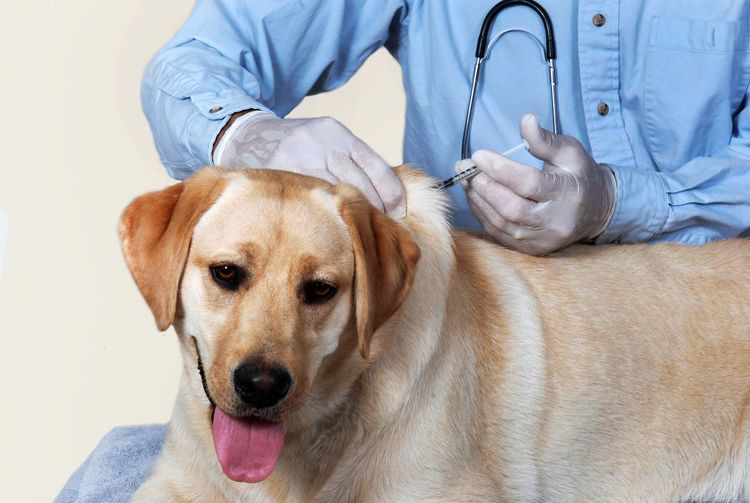
After the wound has been treated, it's time to consult a specialist. If possible, a veterinarian can be called to your home. After the initial examination, the animal will be given a rabies vaccine, with a booster dose administered two weeks later. The animal should be closely observed for 10 days. This is usually when symptoms characteristic of rabies develop.
It's worth noting that the time it takes for signs of the disease to appear depends directly on the number of wounds. If it's a single scratch or bite, symptoms will be visible after at least 7 days. If the dog has multiple wounds, signs of rabies will likely appear within 2-3 days.
Bite of a rabid dog
You've probably heard many times that after a dog bite, you should immediately go to the doctor and get 40 injections. But many people don't know how dangerous this disease is for humans. If you've been bitten by a dog (or fox, hedgehog, mouse, or stray cat), you must seek medical attention immediately, as delay could cost you your life.
First, clean the wound with soap and water. Then apply hydrogen peroxide and bandage it. After administering first aid, don't be afraid to go to the emergency room. They don't give as many shots today as they did decades ago, and you'll only receive seven shots in the shoulder. If you get them before signs of rabies appear, the chance of a full recovery is 100%.

To understand the seriousness of the problem, it's worth describing separately what happens to a person after being bitten by a rabid dog and not seeking medical attention.
- From 24 hours to 3 days, symptoms such as pain at the site of the bite, stabilization of temperature at 37-37.3 degrees, the appearance of headache and weakness, vomiting and diarrheaLoss of appetite, poor sleep, and nightmares occur. If the bite is on the face, the person may begin to experience hallucinations.
- Over the next three days, nervous system arousal increases, hydrophobia develops, breathing becomes difficult, facial twitches appear, the person is constantly afraid, stares at a fixed point, sweats profusely, and salivates. During this period, the patient becomes irritable and extremely nervous. Their aggression can extend beyond people and objects. A person infected with rabies may bite themselves, tear things, and pull out their hair. And all this is simply because, at this time, the patient sees certain frightening images or hears voices.
- After a short time, paralysis sets in. This period lasts no more than a day, after which the person dies in severe agony.
To avoid putting yourself and others at risk, it's important to be responsible about vaccinating your pets. A timely rabies vaccination is essential to a happy life for you and your pet.
You can also ask our website's staff veterinarian a question, who will answer them as quickly as possible in the comments box below.
Read also:


11 comments
Nina
The puppy is 3 months old. Today we had a booster shot of the Eurmcan vaccine. The nurse administered part of the vaccine incorrectly, causing wet fur and a small puddle. We decided to re-administer the full dose half an hour later because we weren't sure how much had leaked. Now, four hours later, the puppy seems to be doing well.
The question is: can a puppy contract the diseases it was vaccinated against because the vaccination dose was increased? I mean, can it contract the disease from the injections themselves?
Daria is a veterinarian
Hello! If your puppy was healthy to begin with, and you strictly adhere to quarantine and safety precautions (remove shoes and outerwear, and wash your hands before handling the puppy), it shouldn't get sick. For the first 2-3 days, you might see lethargy, a slight fever, and poor appetite. But that's all. Just keep an eye on it. If the temperature gets significantly higher than normal, persists for more than 3 days, or any symptoms uncharacteristic of post-vaccination develop, rush to the vet. I'm sure everything will be fine.
Natalia
Help! Yesterday, my Yorkie (he hasn't had a rabies shot) was bitten by a large stray dog. Today, my Yorkie won't get up or eat. What should I do?
Dasha is a veterinarian
Hello! My dog needed to be taken to the clinic on the FIRST 24 hours for an emergency rabies vaccination with a double dose. The dog isn't getting up or eating, which could be due to stress or infection from the bite. Rabies doesn't show up that quickly; the incubation period is clearly more than 24 hours. The animal needs to be taken to the vet for an examination. Antibiotics may be necessary. In general, keep an eye on your dog for 10-14 days after the bite. If any suspicious symptoms appear during this time, rush to the clinic.
Nastya
Hello! My dog was vaccinated over a year ago (the exact date is unknown; most likely, it was a couple of months overdue. They say it was vaccinated last year, but I don't understand that to be accurate). Three weeks ago, the dog had diarrhea, shortness of breath, and red eyes for two days. Her bowel movements seemed to have improved, but the shortness of breath remained mild, and her eyes remained red. A week ago, the dog bit a weakened person, and rabies prophylaxis was only started the following day. My question is: could this be an atypical form of rabies? And if so, if the dog is alive on the 10th day, is that a guarantee that it is not infected? Can veterinarians determine this by eye? Thank you!
Dasha is a veterinarian
Hello! The atypical form is called atypical because the symptoms are not characteristic of the usual forms, but the nervous system disturbance will still be noticeable. The first things to ask when investigating such cases are vaccinations, contact with other animals (fights, slobbering, perhaps outside during play, attacks on animals, participation in hunting, or hiking in the woods). If the dog has not had such contact with another animal (a rabid one), then the risk of rabies is minimal.
This disease can't be diagnosed by eye! There are two methods of diagnosis: laboratory testing and observation (10-14 days). The second, preliminary, is lengthy and dangerous for humans, because if the animal is found to be rabid, ALL warm-blooded animals in contact with the sick animal are vaccinated. Laboratory testing is postmortem (microscopic examination of a brain smear, looking for specific Babes-Negri bodies). This method 100% confirms or refutes the diagnosis. But, forgive me, no veterinarian would risk looking at the animal and saying whether it has rabies or not! This is too dangerous a disease to diagnose or dismiss at random. Animals suspected of having the disease must be kept under strict surveillance!
Nastya
Thanks for the reply! Yes, she's under observation, but even if she shows no classic rabies symptoms after 14 days, that's still no guarantee, right? The bitten person is vaccinated, but the person has a weakened immune system and is feeling unwell, so we're very worried. Now we don't know whether the feeling is due to rabies or nerves.
Hope
We were walking the dog today... Something strange happened to him. He was running, fell, and started kicking his paws, twitching for about 20 seconds, then struggled to get up, his tongue hanging out, he was swaying, then he threw up, and after about 3-4 minutes, he was running like normal. The dog is 3-3.5 years old, I don't know his exact age because he was abandoned and we "adopted" him a year ago... I still don't understand what happened to the dog. This has never happened to him before...
Dasha is a veterinarian
Hello! Did your dog exhibit any behavioral changes prior to this seizure (between an hour and a few minutes before the actual seizure)? Perhaps her orientation became impaired? Were she unsteady? Did her pupils dilate? Was there any sign of "rigor" before the seizure, like a fall, or rather, a "stiffness" (a limb extended, head thrown back)? Based on the symptoms you described, epilepsy is a possibility (especially since the first seizure often occurs at this age). A veterinary examination is necessary for an accurate diagnosis and treatment plan.
Lyudmila
A 2-year-old Yorkie was bitten on the head by a mouse. How long will it take to know that she has not been infected with rabies?
Dasha is a veterinarian
Hello! Rabies symptoms appear at different times in different animals. Some show clinical signs within a couple of days, while others may take up to a week. Typically, an animal should be observed for 10-14 days. If the pet doesn't die during this time and no symptoms characteristic of rabies appear, the observation period is lifted. If the animal hasn't contracted rabies, be sure to vaccinate it two weeks after deworming! Remember that rodents can carry other infectious diseases besides rabies (for example, plague). Don't forget annual vaccinations, even if your pet doesn't go outside.
Add a comment