
Rabies in cats
Rabies, or rabies (from the Latin "rabies" meaning "frenzy"), is a deadly disease that affects almost all mammals and humans. Rabies in animals was first described by the ancient Greek scientist Democritus of Abdera, and the routes of transmission to humans were described by the physician Cornelius Celsus in the early 1st century AD.
Today, this anthropozoonotic disease is found in more than 150 countries worldwide. In Europe, rabies is most common among foxes, wolves, jackals, dogs, raccoons, cats, bats, and hedgehogs. According to statistics, several million wild animals die from this terrible disease every year.

Content
Pathogen and routes of infection
The causative agent of rabies is a neurotropic virus of the Rhabdoviridae family, genus Lyssavirus. - Rabies virus. Varieties of this pathogenic microorganism may be specific to different mammal species, but all are infectious to humans, dogs, and cats.
Rabies virus is resistant to low temperatures; it remains viable for up to two years in the frozen brain of a dead animal. However, exposure to high temperatures, ultraviolet light, disinfectants, emulsifiers, alcohols, alkaline fat solvents, and other aggressive chemicals kills this non-cellular organism within 2-3 minutes.
The rabies virus is transmitted exclusively by contact, through saliva. A cat can become infected through a bite or scratch from an infected animal, or by eating an infected rodent. Once in the body, the infectious agent begins to rapidly multiply, moving along nerve and muscle fibers. It attacks the central and peripheral nervous systems, causing gradual paralysis of the respiratory system, heart muscles, musculoskeletal system, and gastrointestinal tract, ultimately leading to death.
Why is rabies dangerous in cats? video
The incubation period for rabies depends on the cat's age, the amount of the infectious agent, and the location where it enters the body (if it enters areas close to the brain, the disease progresses much more quickly). In adult animals, the first symptoms of rabies usually appear after several weeks, while the latent period in kittens lasts 5-7 days.
Forms of rabies, clinical symptoms
This disease in cats can occur in three different forms, which differ in symptoms.
Classical
This form of rabies is the most common and typically lasts 1-2 weeks. Early symptoms of rabies include behavioral changes: the cat may become overly friendly or, conversely, aggressive and unsociable. This prodromal phase progresses after a few days to the manic phase (the agitation stage): the cat is hyperactive, irritable, and uncoordinated. Muscle tremors and laryngeal spasms occur, making swallowing difficult. Drooling, foaming at the mouth, and voice loss are observed.
Strabismus, anisocoria (dilated pupils), and corneal clouding often develop. Periodic convulsions are observed, and the cat's lower jaw is permanently drooping. The cat's appetite is absent or perverted: it may chew inedible objects (wallpaper, plaster, shoes). The final, depressive stage is characterized by the development of hydrophobia and photophobia, followed by complete paralysis, quickly leading to coma and death.
Paralytic
The first phase of the paralytic form of the disease is similar to the classic course: the cat becomes either overly affectionate, lethargic, and apathetic, or overly active and irritable. However, these periods of friendliness and aggression alternate more frequently and progress more quickly. Due to the generalized damage to the body, the cat may vomit blood or have bloody diarrhea. With this form of the disease, the animal dies within three to four days.

Atypical
This form of rabies is less common than others and more difficult to diagnose, as its neurological manifestations in cats are usually much milder or absent altogether. The following may be observed:
- salivation;
- symptoms of gastritis or enteritis;
- diarrhea;
- vomiting without cause;
- sudden weight loss;
- muscle atrophy;
- prolapse of the 3rd eyelid, strabismus;
- hoarse voice;
- decline in activity;
- reluctance to eat and drink.
The disease can last for several months, then death occurs from general paralysis.

Diagnosis and treatment
Currently available diagnostic tools do not allow for the detection of rabies virus infection in animals. Diagnosis is based on the cat's typical symptoms and the owner's information regarding its contact with suspicious animals.
If signs suggesting rabies are detected in a cat, it must be immediately isolated and reported to the state veterinary service. The animal will be quarantined for 10 days. If a cat suspected of having rabies has scratched or bitten someone, the wound should be immediately washed and treated with an antiseptic, and then taken to a medical facility: it may be necessary to undergo a course of preventative vaccinations.
There is no treatment for rabies in cats. Affected animals are slaughtered and disposed of in accordance with legal procedures. Laboratory diagnostics are performed postmortem. The brain of the deceased cat is examined microscopically for the presence of Babesi-Negri bodies and by IFA (immunofluorescence assay) for the presence of Rabies virus-specific antigen.
Prevention
The primary method of protecting cats from rabies is vaccination with a live rabies vaccine. A live vaccine builds immunity somewhat faster than an inactivated one, but a dead vaccine is safer in terms of allergy development and side effects. Several rabies vaccines are currently available, with efficacy rates of 96-98%. Some vaccines offer a combination of effects, protecting cats not only from the rabies virus but also from other pathogens.
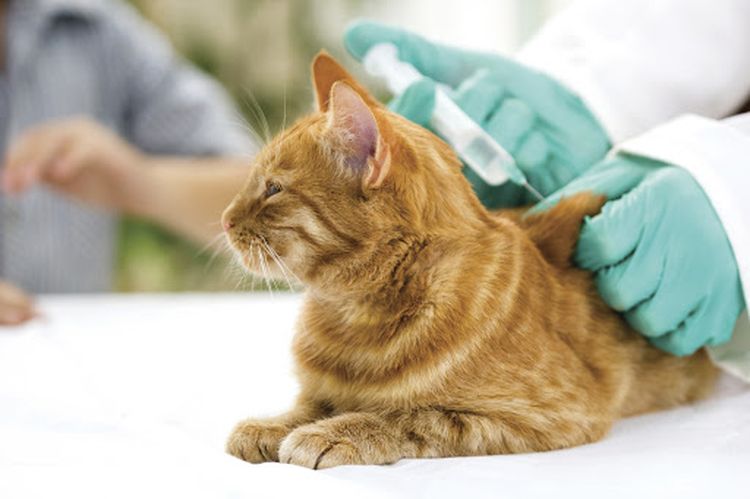
The most popular vaccines are:
- Russian Rabifel;
- Dutch NobivacRabies vaccination for cats;
- American Defensor-3;
- French Rabisin;
- German Quadricat.
A cat whose veterinary passport does not contain a note indicating a rabies vaccination is not permitted to be transported on a train or plane and will not be admitted to exhibitions.
Cats receive rabies vaccinations starting at 3 months of age and are repeated annually. Vaccinations are only recommended for healthy animals; during pregnancy and during recovery from surgery, the vaccination date should be rescheduled. Antiparasitic treatment should be administered 10-15 days prior to the scheduled vaccination. Following the vaccination, it is recommended to keep the animal in a warm room for 10 days. Bathing is prohibited, and it is advisable not to allow the animal outside, with limited activity.
According to Russian law, rabies vaccinations for animals are free at state veterinary clinics. Rabies vaccines for cats cost between 130 and 150 rubles, while vaccinations at private veterinary clinics in Moscow, including all related services, cost between 250 and 1,000 rubles.
Read also:
- Signs of rabies in humans after a cat bite
- Salmonellosis in cats: symptoms and treatment
- Hemobartonellosis in cats: symptoms and treatment


29 comments
Valery
Hello! My situation is this: when I tried to give my cat a pill (he was prescribed an antibiotic), he resisted and bit my finger quite deeply. He's a pet cat, goes outside, and has been vaccinated against rabies for the third year in a row with Rabizin. The night before, the cat strangled a mouse in our yard. Could the cat have transmitted rabies?
Daria is a veterinarian
Hello! If the booster vaccination period has not yet come, and there have been no "encounters" or contact with suspicious animals, then the risk that your pet has rabies is extremely low. Your cat bit you in protest because it didn't want to take a pill. Did it bite again? Did it attack? Are there any signs of rabies? In any case, your animal should be placed under observation by your local veterinary station/SBBZH, but after 10 days, if there are no clinical signs of rabies, the observation is lifted, and a response to the alert notification is sent to your regional sanitary station (if you contacted the hospital). But again, based on what you wrote, the risk of your cat becoming infected with rabies (or of you becoming infected after this bite) is practically zero.
Marina
Good afternoon
The cat was vaccinated on September 5, 2018.
Missing from home on September 30, 2018.
On October 15, 2018, we found her skinny and hungry, with two small wounds with dried blood under her jaw and near her nose. We took her to the vet right away to have them looked at. He found a dried spot, scraped it off, and prescribed chlorhexidine, levomekol, methyluracil, and solcoseryl. The vet didn't say anything about it looking like a bite. But I'm still concerned about the spot near her nose and under her jaw. It could be a bite.
Can a vaccinated cat become infected with rabies? Zoetis 3 Defensor USA vaccine
Dasha is a veterinarian
Hello! If you've vaccinated according to all the instructions (I don't know the cat's age, whether they gave it two doses in the first year, and then annually without fail, or whether this was the first time they gave it only once), then the risk is minimal. But there's always a risk. There's a risk that the vaccine didn't work: it wasn't stored properly, for example, the dosage wasn't followed, boosters weren't administered, etc. But if you're sure the vaccination schedule is up to par, don't worry too much. Just keep an eye on your cat. And treat any wounds as prescribed by your veterinarian.
Pauline
Good afternoon
Am I correct in understanding that a house cat that is not allowed outside (no other animals are brought into the house) cannot possibly have the rabies virus?
Yesterday she bit my hand until it bled. She's become more aggressive lately, but I attribute this to the cat's puberty. She's 7 months old and unfortunately hasn't been vaccinated yet. We adopted her from a village 5 months ago, but if she had been infected, would the disease have manifested itself by now? She's not afraid of water, she eats normally. She had a wound once a couple of months ago when she cut her paw on something on the balcony, so I washed the blood off with soap.
Should I be worried about her bite and run to get vaccinated?
Dasha is a veterinarian
Hello! The risk of rabies in a completely domestic cat is minimal (there have been cases of infection occurring without direct contact with an animal, but this is extremely rare). Also, the likelihood of a kitten's incubation period lasting that long is practically zero (I remember one case from an epizootology course where a fox's incubation period lasted a year, but that's the exception rather than the rule). Keep an eye on your cat. If you're really worried, you can rush to the vet; I can't tell you not to go and that everything is fine without seeing your cat. In the future, vaccinate your cat (it's old enough to do so) and then repeat annually.
Julia
Good afternoon. I have an adult cat at home. On August 28th, I brought a kitten home from outside and put it in a box in the kitchen. The kitten had no contact with my cat (he didn't bite or lick). Three days later, a friend adopted him. On September 1st, the kitten started drooling. On September 3rd, the vet euthanized him; an autopsy confirmed rabies. That same day, September 3rd, my friend and I started rabies vaccinations, and I vaccinated my cat as well. The vet recommended repeating the vaccination on days 14 and 30. The quarantine period is 60 days. Is this correct?
Dasha is a veterinarian
Hello! What do you mean the autopsy confirmed it? A lab confirmation is needed! That's one. Secondly, how can you be so sure the kitten didn't drool anywhere and your pet didn't come into contact with that saliva (even though they were in the same box and maybe even ate and drank from the same bowl)? The virus is quite stable in the environment, so even after several days, your pet could have licked or had broken skin come into contact with the drooling site. This is no joke, it's life-threatening.
In general, vaccinating an animal that has been in contact with a rabid animal is only beneficial within the first 24 hours after exposure! The first dose should have been doubled. You're taking a risk by keeping the cat. It should be isolated for the entire observation period (10-14 days). Quarantine is correct: 60 days from the date of the last confirmed rabies diagnosis. Doctors should have vaccinated all susceptible animals in the risk zone (wherever this kitten was)! Suspected or suspected cases are euthanized!
Alice
Hello. My cat was vaccinated against rabies on July 10, 2018. Today, July 23, the cat bit my arm, drawing blood. Is there a risk of infection?
Dasha is a veterinarian
Hello! Was the vaccination given once, or was there a booster shot on July 10th (either a repeat shot or a timely annual one)? Does the animal go outside? Has it been in contact with other animals since or before the vaccination? Has the cat shown any symptoms? Until we have complete information about the situation, it's impossible to say how great the risk is. But even with vaccinations, there's a risk that the animal will become ill (if the booster shot wasn't given on time, the vaccine didn't work, immunity didn't develop, or the vaccine was given against the wrong strain).
Tatiana
Hello! I was bitten by my indoor cat. He had chronic kidney failure. I took him to the vet, where they took blood tests while I held him. He was hurt, and he bit me. But I was still told to observe him for 10 days. The cat died six days after the incident, but I don't think he died from rabies, but from his kidney disease, his old age, and from not eating or drinking for about 10 days (he refused food 2-3 days before the bite). Surgeons are telling me to start vaccinations immediately... I have a serious rheumatological condition and am afraid to boost my immune system. I'm also afraid of rabies... But how can an indoor indoor cat have it if there was absolutely no contact with a sick animal, or with any animals at all? Thank you!
Dasha is a veterinarian
Hello! What was the problem with submitting the cat (dead) to the lab to rule out or confirm rabies? In such controversial cases, we always take the animal's brain for testing. Now you have two options (both risky): either wait and hope the cat wasn't sick, or get vaccinated. I have no right to advise or persuade you. But the cat refused food for three days, which could be a symptom of rabies. The incubation period can also vary (there have been cases of animals dying from rabies six months after contact with an infected animal). Can you rule out any contact with any warm-blooded animal for six months to a year? Did you bring anything contaminated by other animals into the house during this period (the virus is transmitted through saliva, not blood, and travels along nerve fibers, so the speed of movement is slow and the incubation period varies).
Masha
I washed my hands immediately with soap and water, and used antiseptic just in case.
Dasha is a veterinarian
That's right. Better safe than sorry. Keep an eye on both the cat and the child. You can also wipe the bite site with chlorhexidine. But if there are no wounds, there's no need to worry (provided the cat is vaccinated against rabies).
Masha
Hello, my child and I came to the countryside, and a cat bit my finger. There are no bite marks, the child says it was just a nip. The cat is vaccinated, but for the last six months he's been lethargic, has a poor appetite, and about six months ago, he disappeared, returning early. Is there a chance the child could be infected with something?
Dasha is a veterinarian
Hello! What has your cat been vaccinated against? If it's rabies and the vaccination is recent (less than a year old), then the most dangerous thing a bite can cause is a bacterial infection. A pet's mouth contains a huge number of pathogens, and their teeth are sharp, so the infection can penetrate deep into the skin and, through damaged capillaries caused by the bite, into the bloodstream. However, if you say there are no bite marks, then the risk of infection for the child is minimal. Has the cat been dewormed recently? If it's wandering around outside and has become lethargic with a poor appetite, start deworming.
Irina
Good evening. Are there any cases of rabies in St. Petersburg? We sometimes take our cat for walks on a leash, but we don't allow her to come into contact with other animals. Is there a risk?
Marina
Good night! Today my cat came in from outside with a wet tail, he won't let me touch him, he's eating and drinking. There are a lot of foxes in the village. Maybe they bit him. What should I do with him?
Dasha is a veterinarian
Hello! If there are foxes and there's a possibility that your cat has been bitten, immediately notify your local veterinary authority! They should place your cat under observation and rule out rabies (at least 10 days of observation). I suspect your cat isn't vaccinated, which is incorrect. The vaccine is free (at those same authorities), and you're visiting areas where foxes live (the main carriers of this extremely dangerous disease). The animal should have been protected. You should definitely take it to the vet now!
Peace
Good afternoon, I'm witnessing a terrible situation. My cat isn't neutered, so he spends a lot of time outside. He came home on Tuesday (two days ago) with a severely infected eye and a huge lump on it. His mouth won't close, his teeth are crooked, and it feels like some are broken. He's only drooling a little, just normal drool. He barks intermittently at the roof of his mouth. He hasn't shown any signs of eating food, so I won't let him in because he's a small child, and I'm also afraid of rabies. We live near a forest, which poses the greatest danger to our animals. The cat came in today in the rain and sat on the windowsill, asking to come in (he doesn't seem to have hydrophobia). He's acting calm. It's possible he was simply hit in the face, causing his eye to become infected and his teeth to be in trouble. He's young, only two years old. However, it's concerning that he hasn't started eating his wet food. He doesn't feel lethargic, but rather quickly climbs a tree and a board to the window. What should I do? My heart bleeds. I'd like to take him to the vet... but I'm scared; we recently had cases of rabies. I'm afraid to risk myself and my family. Is there any other way to determine if he really does have rabies?
Dasha is a veterinarian
Hello! If there have been rabies cases in your area, why haven't you vaccinated your pet who has access to the outdoors? A rabid animal's eye doesn't become infected. Teeth don't break. It won't eat because it's in pain (perhaps its jaw is broken, and the animal urgently needs to be examined by a vet). Furthermore, hydrophobia doesn't appear immediately. A definitive diagnosis will be made either after 10-14 days of observation or postmortem. No one will make a diagnosis based on a quick examination, as rabies is fatal to both animals and humans.
Maria
Hello! My cat died literally within a minute. Before this, she was fine, had a great appetite, and was drinking water. She had no salivation, photophobia, or other symptoms of rabies. An autopsy was performed, but the cause of death could not be determined; there were no visible signs of illness. Could you please tell me if rabies can be asymptomatic and immediately kill a cat?
Dasha is a veterinarian
Hello! Even with atypical rabies, there are characteristic pathological signs. Furthermore, if veterinarians suspected rabies, they would have been REQUIRED to remove the brain and send it to a lab for testing. This is not a disease that can be confirmed or ruled out by eye. Has your cat been outside? Has it interacted with other animals? Has it been in a fight or been bitten? Has it bitten you or behaved suspiciously (has its behavior changed significantly)?
Maria
She was a domestic cat, had no contact with other animals, and was only taken to veterinary clinics in a carrier. She would only bite or scratch when playing; she never attacked. She was neutered a month ago, and she had become calmer, but her appetite was very good. She drank well, didn't hide, and lay in her favorite spots and came to sleep with us. I still don't know if she would have shown any symptoms if she had rabies before her death.
Maria
She was a domestic cat, had no contact with other animals, and was only taken to veterinary clinics in a carrier. She would only bite or scratch when playing; she never attacked. She was neutered a month ago and has become calmer—that's the only behavioral change. Her appetite was excellent, she drank well, and she didn't hide; she lay in her favorite spots and came to sleep with us. I still don't know if she would have shown any symptoms if she had rabies before her death.
Elena
Hello! We bought a kitten two months ago. He doesn't leave the apartment. He recently injured his paw. It's almost healed. Yesterday, I tried to pick him up, but he ran away. When I picked him up, he bit me. Not very hard, but still. Is there a chance he might have rabies? He lives in the apartment and hasn't been outside for at least two months? Thank you in advance, I'm very worried!
Dasha is a veterinarian
Hello! First of all, are the kitten and the cat in your post the same animal? Or are they two different pets living in your home? Secondly, the cat was most likely simply showing that she doesn't want or like being picked up. Some scratch, others bite, and still others simply hiss. Thirdly, read up on the disease. Are there any similar symptoms? Have there been any suspicious contacts with other animals? If not, the likelihood of the cat having rabies is slim (practically zero). Simply treat the bite site with iodine or brilliant green, and watch for inflammation (after all, pet toothpaste is full of bacteria). Also, keep an eye on the cat to see if its behavior changes in the next few days.
Xenia
Good day
I'm forced to bother you because of my own stupidity. I absolutely adore cats. Today I was walking down the street and saw a well-groomed cat sitting on a bench, meowing loudly. I couldn't resist petting him. At first, he rubbed against my hand, then offered his neck. I scratched it, and he nipped at my finger—not enough to draw blood, just a nip. I came home about 20 minutes later, washed my hands, and, just in case, put some hydrogen peroxide on my finger (if that could help at all).
I understand that the virus can only be transmitted through blood, so
The question is: is this behavior of the cat normal, or should I report it to the veterinary service for the safety of others?
P.S. I'm in the Vologda region, and three foxes have already been diagnosed with rabies this summer. But the cat was sitting on a bench, wet from the rain, and when I left, he calmly returned to his spot.
Dasha is a veterinarian
Good afternoon
I'm sorry to disappoint you, but the rabies virus is found in SALIVA! And it spreads not through blood vessels, like almost all infectious disease pathogens, but through nerve fibers. Therefore, for your own safety, go to the hospital first (they'll notify the Hygiene and Epidemiology Center, who will then notify the veterinary service). You're unlikely to find the cat to observe in isolation. You'll need rabies injections (they no longer administer 40 in the abdomen, as they used to; now they administer 8 in the forearm). Symptoms of rabies don't appear immediately. The animal may behave more or less normally, but still be contagious. Perhaps the cat bit simply because it was tired of being petted. But is it worth risking your life?
Add a comment