
Bernese Mountain Dog (Bernese Mountain Dog)
Today we will tell you about a very interesting dog breed - the Bernese Mountain Dog.
Content
History of origin
The Bernese Mountain Dog's origins can be traced back to the heyday of the Roman Empire. Some chronicles of that era mention working dogs that are very similar in appearance to modern representatives of the breed. Their ancestors are believed to have been Alpine herding dogs and Roman Molossoid breeds, which arrived in Switzerland after the Roman legions conquered the country.
For decades, Swiss farmers and peasants used the Bernese Mountain Dog as a guard, herding, and draft dog. However, the name "Sennenhund," which translates as "prairie dog," came somewhat later. Previously, the breed was known as the Dürbachler. For a long time, no one focused on targeted selection and the development of consistent breed characteristics. Such work only began toward the end of the 19th century, when breeders selected several remarkable tricolor shepherds for their own purposes. The breed was first shown in 1902, and just five years later, the first breed club was founded.
The Bernese Mountain Dog's original purpose was to assist farmers and peasants, using them as draft dogs, herders, and guard dogs. This working breed also makes an excellent family companion. Originating in Switzerland, it is also known as the Bernese Mountain Dog or Bernese Mountain Dog.
Appearance
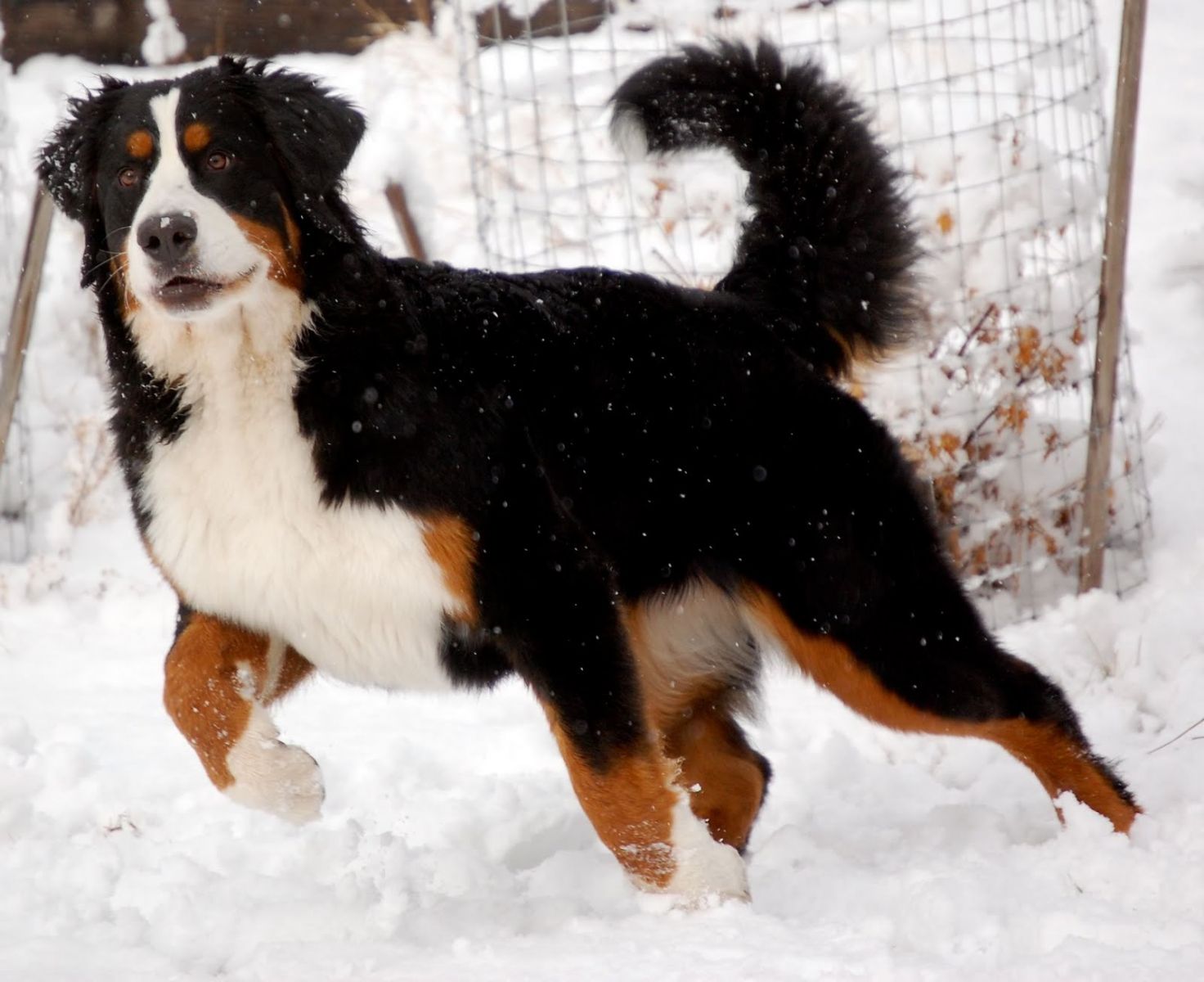
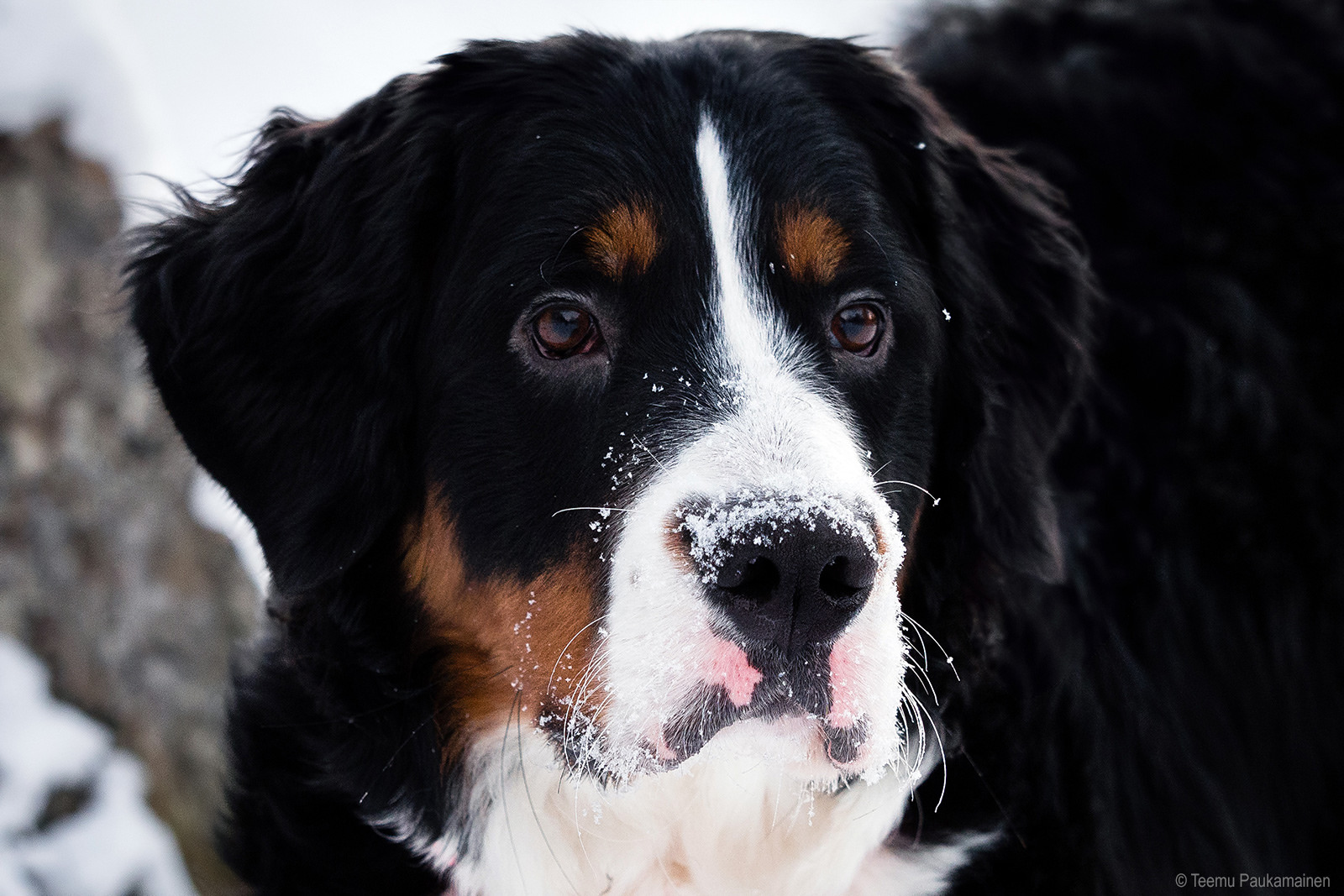
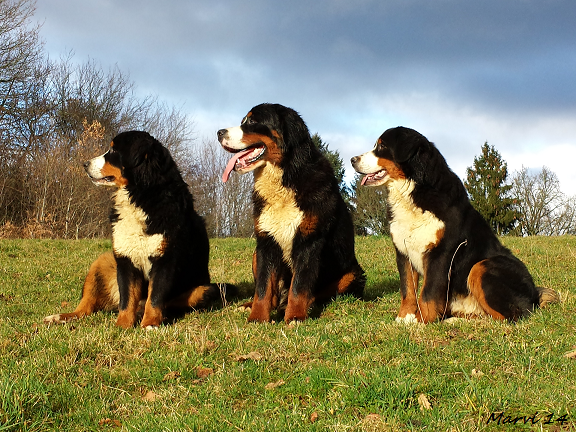
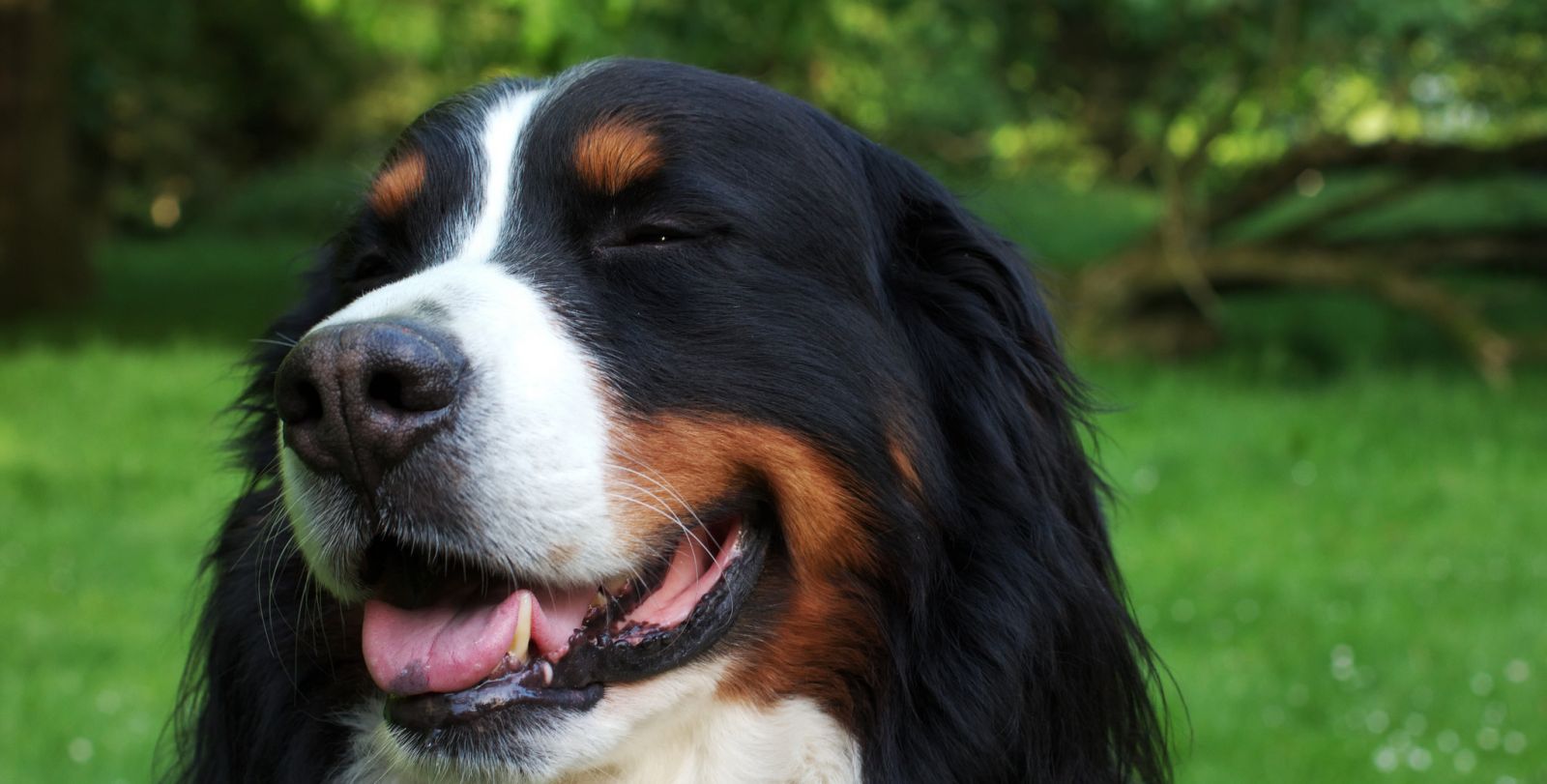
A long-haired, tricolor, harmoniously built large dog. The head is medium-sized, with a well-defined stop from the forehead to the nose. The nose is dark. The bite is pincer-shaped. The eyes are almond-shaped and dark brown. The ears are medium-sized, rounded at the tips, hanging, and raised at the back when alert. The neck is muscular, strong, and of medium length. The back is straight. The chest is deep, reaching to the elbows. The tail is bushy and carried low, rising to the level of the back when moving. The limbs are straight, set parallel. The coat is shiny, long, straight, and may be slightly wavy.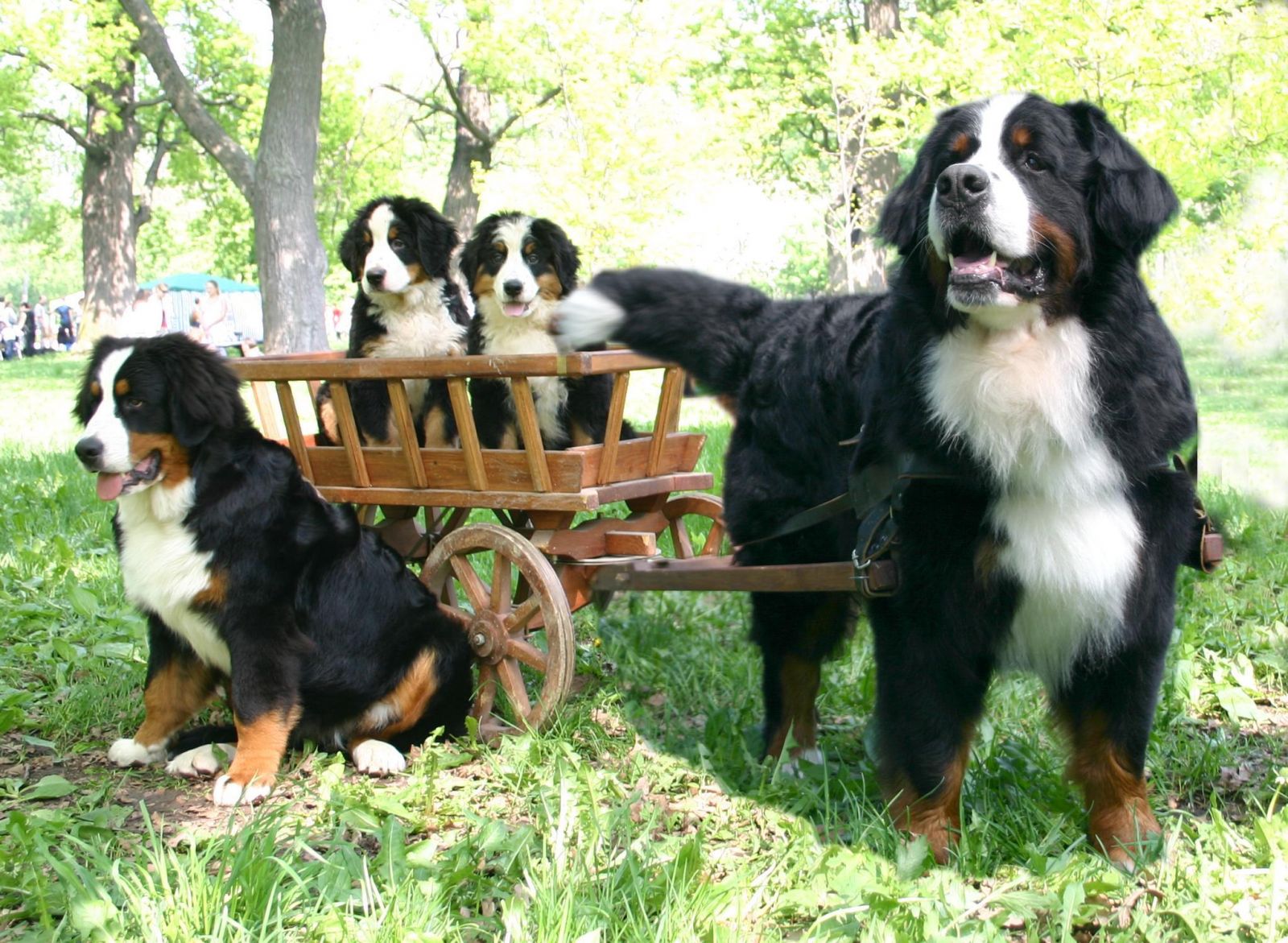
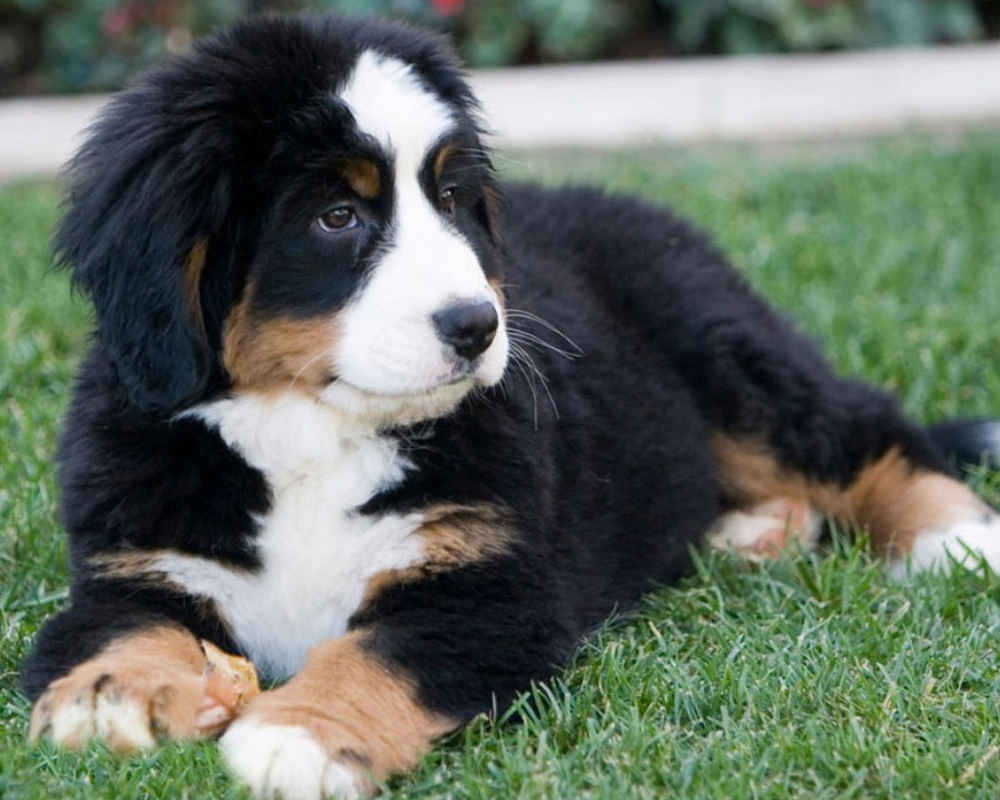
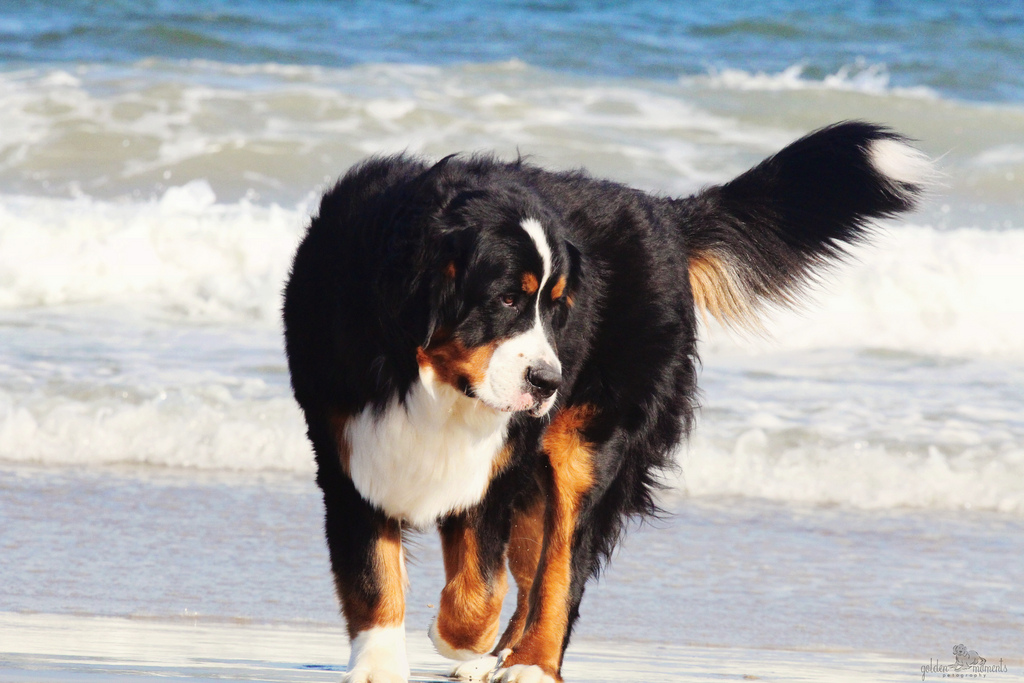
Bernese Mountain Dogs are distinguished by their distinctive coloring. Black is the predominant color, with bright tan markings on the paws, cheeks, eyebrows, and chest, and white markings on all paws, throat, chest, and tail tip. A white blaze rising between the eyes on the nose is desirable.
Training
Bernese Mountain Dogs are known for their excellent working abilities and high intelligence, but developing their full potential requires proper training and regular exercise. They don't reach full mental and physical maturity until they're two years old, so although training begins early, it's limited to a basic set of commands. Obedience training is recommended to be postponed until 5-6 months, and then, at around 10-12 months of age, a specialized course can be started.
Training a Bernese Mountain Dog will require patience and persistence from the owner. It's also worth noting that these dogs prefer variety and exercises that allow them to demonstrate their ingenuity. Bernese Mountain Dogs should be given adequate exercise, but overtraining them is not recommended. Despite their endurance and working abilities, they prefer slow, long walks and moderately active games. They can also join their owner on a light jog.
Character
It has long been noted that shepherd dogs are ideal family companions. Bernese Mountain Dog personality:
- strong;
- independent;
- balanced.
By nature, they are friendly and not at all aggressive. With proper socialization, they will be incredibly devoted to their family. They are very owner-oriented, striving to please their owner in every way and to prove their devotion. They absolutely cannot stand being alone. They can be lazy at times, but when truly needed, they will work tirelessly.
Dogs of this breed are self-confident, attentive, and sensitive. Despite their size and imposing appearance, they are very good-natured and devoted to their families. They are often friendly even with strangers. The psychological profile of a Bernese Mountain Dog depends largely on the environment in which the dog was raised, as well as the character and habits of its owner.
Bernese Mountain Dog Reviews
We've compiled a few Bernese Mountain Dog reviews for you. While it's clear this dog deserves attention, ignoring the reviews of this wonderful breed would be unfair to those who want to praise (or criticize) their Bernese Mountain Dog. So, let's get started!
- Alexey. Novosibirsk.
This is the best dog breed in the world!!! They are friendly and kind, and if well trained, they can protect their owners. The Bernese Mountain Dog is definitely the best of the best. I love these dogs more than any other breed in the world! And I also want to say that this dog, no matter how humiliated or tormented by its owner, will remain loyal to him until his last breath.
- Mikhail. Smolensk region.
Anyone who says the Bernese Mountain Dog has no guard qualities is deeply mistaken. I don't care about other reviews; you can't judge the entire breed based on one dog. They're excellent guard dogs and just a friend. I know what I'm talking about; I've had a Bernese Mountain Dog for seven years now, and I've had puppies before. I recommend this breed to everyone. As for the coat, I personally brush mine rarely, maybe once every few months, and that's enough. And overall, they're the most effective breed.
Of course, this is just a drop in the ocean of reviews about the Bernese Mountain Dog. But I can assure you that a positive trend is evident on all forums where the breed's qualities are discussed.
Maintenance and care
An apartment isn't the best option for this breed. The ideal environment for a Bernese Mountain Dog is a private courtyard, preferably with free roaming. They get along well with other animals, are very fond of children, and will never harm even the smallest child, nor will they allow others to be harmed.
A distinctive feature that significantly complicates the care of the Bernese Mountain Dog is its year-round shedding.
Hair loss can be controlled by regularly brushing your dog up to three times a week. During periods of heavy shedding, daily brushing may be necessary. Bathe them infrequently, and after bathing, it's important to thoroughly dry their thick coat. Any mats or tangles should be carefully trimmed. Regularly inspect their nails and trim them if necessary. If any plaque appears on their teeth, remove it with a toothbrush or a rough cloth. Regularly inspect their ears; they should be dry and clean.
Diet and health
These dogs aren't picky eaters, but that doesn't mean they can be fed just anything. Their diet should be healthy and balanced, especially for puppies.
Puppies require a special diet based on cottage cheese, meat, and bones. To ensure proper kidney function, the food can be lightly salted, but the dog's salt intake should not exceed 8 grams per day.
Bernese Mountain Dog puppies are extremely sensitive to vitamin intake. Excessive intake of vitamins A, C, and E can cause severe allergic reactions.
Given dogs' predisposition to bloat, it is recommended to feed them at least twice a day, and if possible, divide the daily portion into 3-4 feedings.
The food can be natural or prepared, most often dry. Some breeders recommend a mixed diet for Bernese Mountain Dogs. They pay special attention to the vitamin, mineral, and gelatin content of the diet, which is essential for healthy ligaments and joints. It's also important to maintain a feeding schedule, which the pet's digestive tract quickly adapts to.
By the way, most Bernese Mountain Dogs respond positively to raw foods, including fruits and vegetables.
Try not to overfeed your animal, as excess weight can cause ligament problems.
Like most large breeds, Bernese Mountain Dogs are predisposed to hip dysplasia, and sometimes elbow dysplasia. Osteochondrosis is common in older dogs. Eye problems include entropion (inward turning of the eyelids), retinal atrophy, and cataracts.
The breed is prone to cancer, most often diagnosed in dogs over 6 years of age. Improper feeding can lead to flatulence and gastric torsion. Owners concerned about their Bernese Mountain Dog's health should protect their dogs from heatstroke or sunstroke and implement all preventative measures promptly.
Life expectancy is on average 11 years.
How to buy a Bernese Mountain Dog puppy
Dog lovers know how touching it is to bring home a fluffy, soft bundle of life and joy. But for that moment to happen, you need to think through everything beforehand. Remember, a shepherd dog isn't staying in your home for a year or two, but for an entire lifetime. And the kind of puppy you get will determine your future life.
Don't rush; this isn't a purchase you can throw away. Don't be fooled by low prices on online classifieds, and forget about terms like "bird market" and "flea market." Sellers will paint a colorful picture of the advantages of the Bernese Mountain Dog they're selling, but whether they'll be honest with you remains to be seen.
But we know exactly where you can buy a Bernese Mountain Dog with a pedigree and an impeccable reputation:
- clubs;
- exhibitions;
- nurseries.
There are also famous breeders and, as a rule, their addresses can be found in the same club.
So, you've decided that a herding dog is your pet, and you've already looked at the photos, now you need to evaluate the puppy's living conditions. This is important, as an experienced and responsible breeder won't keep dogs in poor conditions. Conversely, poor conditions are a sign of a lack of care for the breed, and possibly even its purity.
The first thing to pay attention to is the condition of the whelping box, the room, and the area where the dogs are kept. The breeder deserves a thumbs-up if the room is odor-free and the box and floor are clean.
The next target is a Bernese Mountain Dog puppy. Examine the puppy from all sides; this is normal. Its eyes should be clear and free of pus, and its coat should be clean, not dry or brittle. A wet nose and a lively demeanor are another plus for buying a puppy. You can also check under the puppy's tail; if there's a lot of matted fur, the puppy is suffering from an upset stomach.
Important! If your little Bernese Mountain Dog has just woken up or has recently eaten a large meal, you may suspect they're unwell. They may have a sluggish gait, appear sleepy, or have trouble moving. This is normal; remember how you felt in the first few minutes after a large meal.
Now, regarding choosing a specific pet. The Bernese Mountain Dog is primarily a working dog, a toiler, and a helper. Therefore, you need a free-moving animal with:
- strong, wide bones;
- voluminous chest;
- with a straight back.
Coat and color are good, but not paramount. An animal possessing all the above qualities but with minor flaws in color is better than a pet with a perfectly symmetrical coat but weak limbs and a sagging back.
How much does a Bernese Mountain Dog puppy cost?
The price of a Bernese Mountain Dog puppy is influenced by the following factors:
- parents' pedigree;
- availability of documentation;
- place of purchase;
- exterior.
Based on data we obtained from bulletin boards and pricing in kennels, the average price of Bernese Mountain Dog puppies in Russia is in the range of 35-40 thousand rubles.
The cost of babies in Ukraine is approximately the same, translated from hryvnia – 25-30 thousand rubles.
Photos
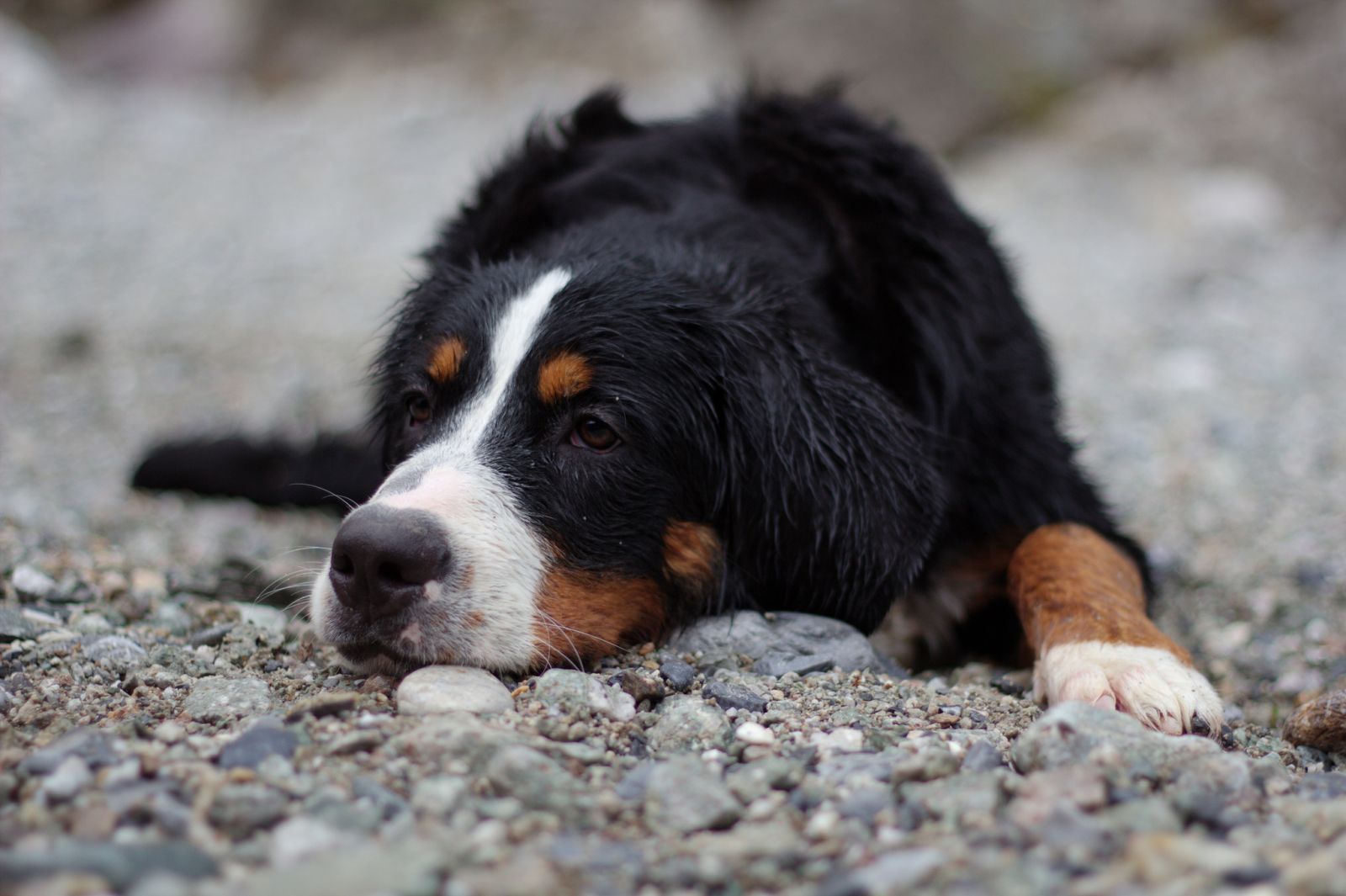
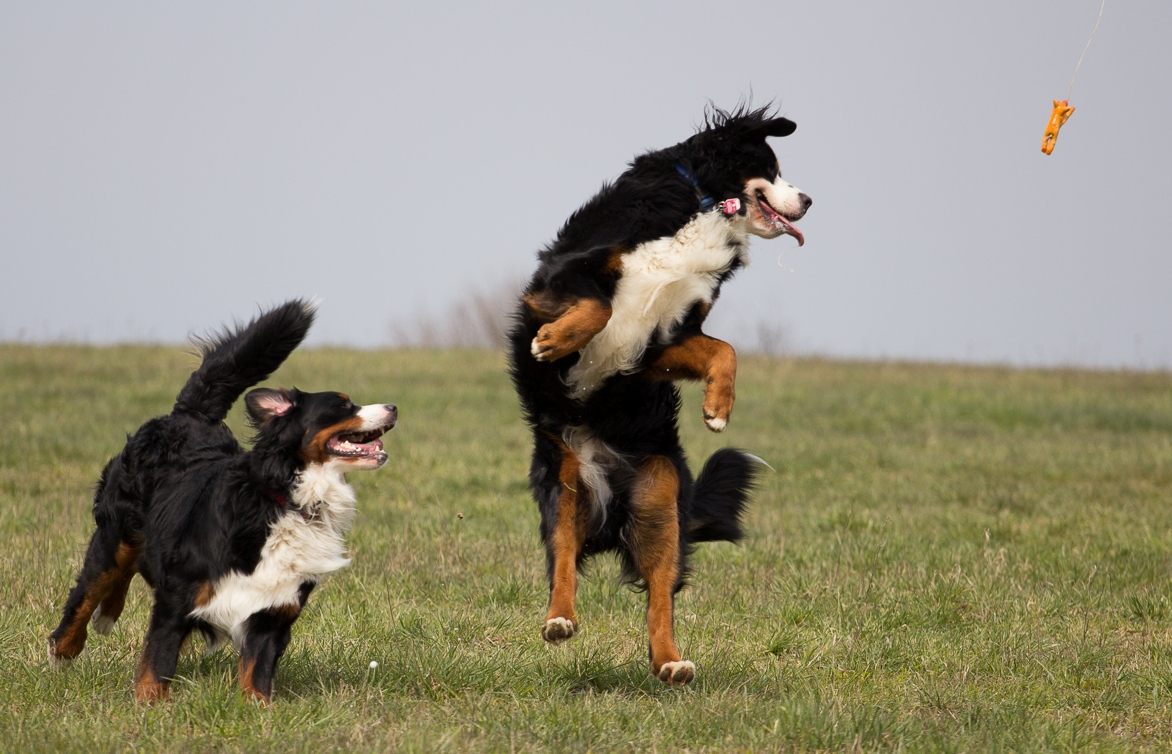
Photos of the Bernese Mountain Dog:
Read also:
- Greater Swiss Mountain Dog (Gross, Large Mountain Dog)
- Entlebucher Mountain Dog (Swiss Mountain Cattle Dog)
- Appenzell Mountain Dog (Appenzell Herding Dog)


Add a comment