
Dog pregnancy in detail, day by day
A dog's pregnancy is a crucial period, as the owner's careful actions during this time largely determine the health of the future offspring. Knowing the day-by-day progress of a dog's pregnancy allows you to get a rough idea of what's happening in the animal's body from the moment of mating until the birth of the offspring.
Pregnancy chart
Important! You can estimate when your dog is due by knowing the exact day of mating. The average pregnancy is considered to last between 56 and 70 days.
If you find it difficult to create a pregnancy calendar for your dog yourself, you can calculate the probable date of birth using a universal calendar.
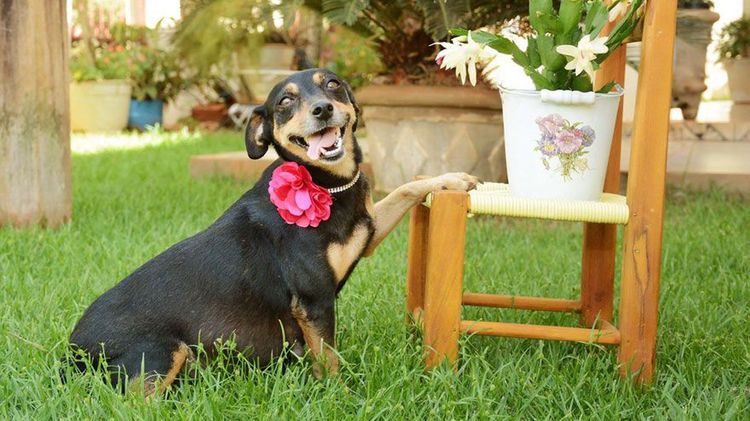
If mating took place in the first half of the month (from the 1st to the 16th inclusive), use table No. 1; if in the second half (from the 17th to the 31st), use table No. 2.
Table No. 1
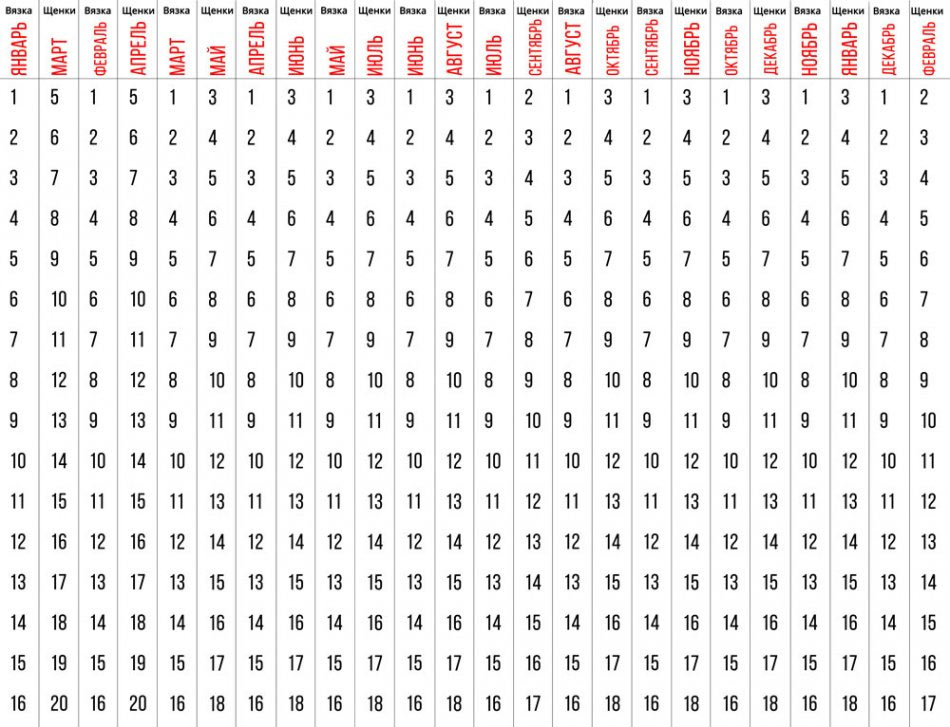
Table No. 2
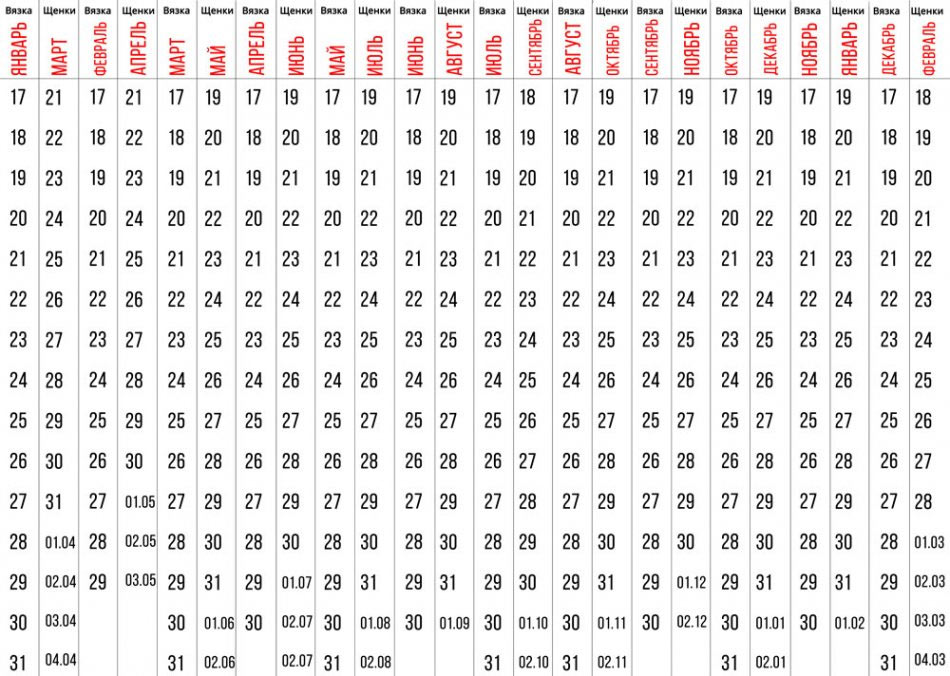
Please note that the table calculates a dog's pregnancy by days, assuming an average pregnancy of 64 days. This means owners should be fully prepared for the arrival of the puppies at least a week before the due date, but it's possible for the birth to occur up to a week later (on the 70th day). It's also important to note that small dogs tend to give birth a little earlier, while large and giant breeds carry their puppies to 70 days, and sometimes even longer. Learn more on our website. How do dogs give birth?.
The average gestation period for representatives of different breeds can vary within the following limits:
|
Dimensions |
Duration of pregnancy (days) |
|
Small ones |
55 – 62 |
|
Average |
62 – 63 |
|
Large |
66 – 72 |
Important! The table above only shows when a dog's pregnancy may be complete, but only a veterinarian can provide detailed information on a day-by-day basis.
Pregnancy calendar by day
The dog pregnancy calendar below is based on the "normal pregnancy" data.
- 1st – The day of the first mating, which is the starting point for pregnancy. However, the calendar date of mating may differ from the date of fertilization by 1-6 days, due to the ability of sperm to remain viable for up to 7 days and the moment of egg release from the ovaries, which can occur before or several days after mating.
- 2nd day – Sperm are sent to the eggs for subsequent fertilization. A test mating is also necessary on this day.
- 3rd – Sperm reach the fallopian tubes.
- 4th – The eggs are fertilized, resulting in the formation of zygotes.
- 5-11th – Zygotes move through the fallopian tubes to the uterus, and embryonic membranes form around them.
- 12-14th – The zygotes are approximately 0.6 mm in size. They enter the uterus and are anchored by villi in its mucous membrane, and the outer and mucous membranes serve as the basis for the formation of the placenta.
- 15th – After the embryos are fixed in the uterus, the process of organ formation begins in them, so it is important to protect the pregnant dog from any stress or strain.

- 16th – The embryos continue to develop, growing to 1 mm. At this stage, slight hair loss is possible in the abdominal area and around the nipples. The nipples may become slightly larger and more pink.
- 17th – Embryos begin the process of forming the head, body, spine and nervous system.
- 18-19th – Embryos grow to 2 mm, their internal organs continue to develop, and the front and hind limbs are formed.
- 20th – The embryos continue to develop their nervous system and internal systems, and their size reaches up to 4 mm.
- 21st – The embryo has grown to 5 mm and the heart begins to develop. Pregnancy can now be confirmed by ultrasound: the embryos are still indistinguishable, but their fetal membranes can be seen.
- 22nd – An ultrasound can be done to confirm pregnancy. During this time, clear vaginal discharge, loss of appetite, vomiting, and lethargy may occur.
- 23rd-24th – The future fetus is almost 1 centimeter in size, and the eyes, nose, ears, jaws, and liver are beginning to form. These days are considered ideal for an ultrasound.
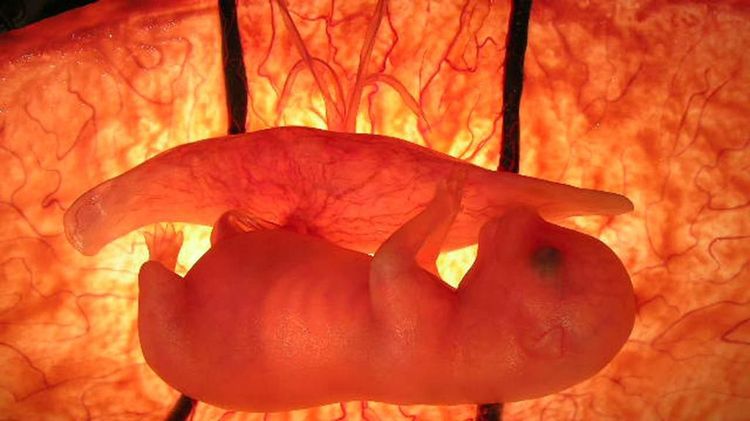
- 25th – The embryo's limbs and spinal column begin to grow, and the foundations for future teeth are laid. Their size at this point is 1.4 cm.
- 26th – The embryos grow to about the size of a walnut, so an experienced dog handler can determine pregnancy by palpating the animal's abdomen. From this time on, active play or movement should be limited to prevent injury to the unborn offspring.
- 27th-29th – This is the best time to diagnose pregnancy, both through ultrasound and abdominal palpation, as the fetuses have already grown to almost 1.7 cm. Their skulls and jaws are beginning to calcify.
- 30th – The “calcification” process continues, and the embryo grows to 2 cm.
- 31st – Vibrissae (“sensory hairs”) begin to grow in the area of the nose, eyebrows and chin.
- 32nd – The second half of pregnancy begins: the embryos now move into fetal status, and their weight is approximately 20% of the birth weight of newborns.
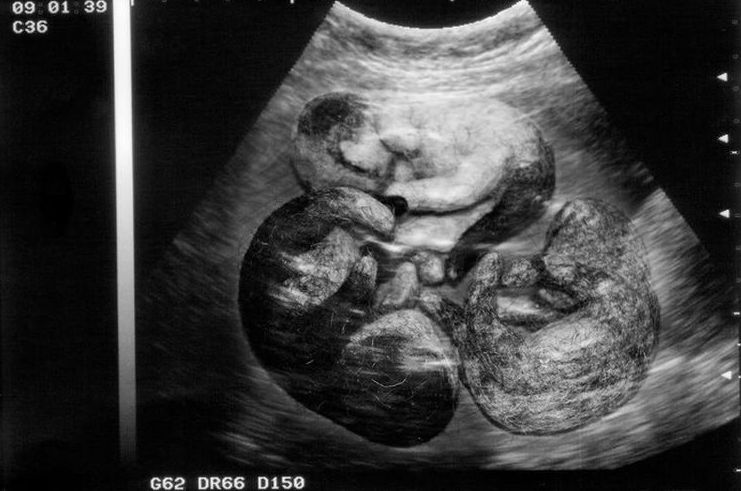
- 33rd – The fetus is already 2.7 cm in size, growing and developing rapidly, and the ribs and limbs are strengthening. Around this time, the palate begins to tighten, so the chemicals and medications used can lead to irreversible consequences (including cleft palate syndrome).
- 34th – The dog’s belly visually increases in size and it behaves more “quietly” and calmly.
- 35th – Appetite increases, but avoid overfeeding to avoid harming the dog and its future litter. By this time, the dog should be eating at least three times a day.
- 36th – Active fetal growth begins: their size already reaches 3.5 cm. All the important body systems are already formed, bones continue to grow, shoulder blades are formed, and fur begins to grow, developing the primary sexual characteristics of the offspring.
- 37-39th – Active growth of the body and bones of the fetus continues.
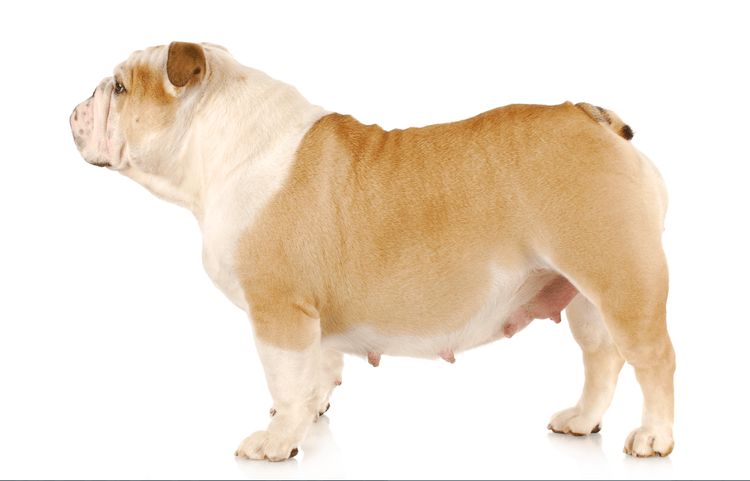
- 40th – The fetuses grow to 6.5 cm in size, and the formation of all internal organs and eyes is complete, although they remain closed. Fingers also begin to form, and the spinal bones begin to grow.
- 41-43rd – The process of finger formation and spine growth continues.
- 44th – The uterus enlarges significantly, taking up most of the abdominal cavity. The dog's mammary glands noticeably grow, and the hair around them begins to fall out. Palpation will allow you to feel the presence of future offspring, but it's impossible to determine their number. During this time, any activity (running, jumping, etc.) should be avoided.
- 45-47th – The size of the fetus is almost 9 cm, the pelvic bones continue to form and grow.
- 48-49th – There is a noticeable increase in the size of the abdomen, restlessness appears in behavior, and the dog spends a lot of time licking its nipples.
- 50th - In the area of the abdominal walls, you can see the movement of the puppies, because they have already grown to 12 cm, have a formed body and weigh about 75% of the weight of newborns.
- 51st – Minor milk discharge from the mammary glands may appear (especially during the second and subsequent pregnancies).
- 52-54 – The abdomen continues to grow, and the animal spends most of its time resting and grooming itself. X-rays can now determine the number of fetuses.
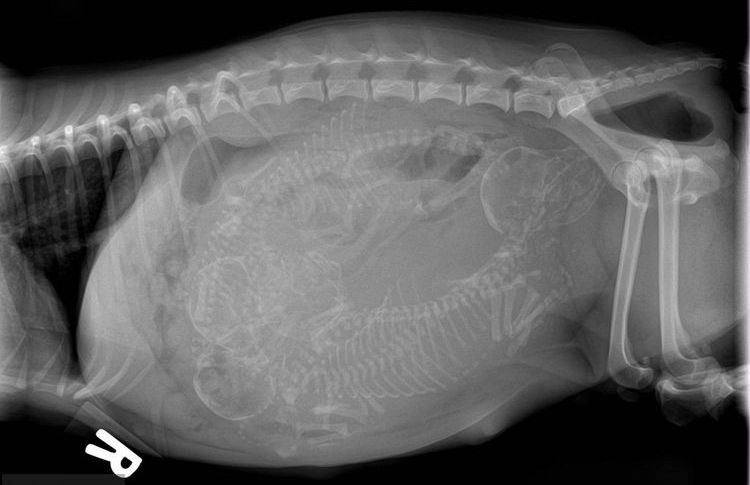
- 55-57th – The size of each fruit is almost 14-15 cm.
- 58th – When you press on the nipples, milk begins to flow.
- 59th – The pregnancy is considered full-term, so labor can begin at any time. Approximately 8-24 hours before this, the dog's body temperature drops to 36°C.
- 60-62nd – The fruits grow up to 16 cm, and their body is covered with hair on the muzzle, tail, belly, and paws.
- 63rd - Shortly before birth, the amniotic fluid begins to discharge in the form of a pale yellow liquid of viscous consistency and the process of opening of the cervix begins, the "corpora lutea" dissolve.
- 64-65 days – Approximate due date (normal dates are considered to be between 57-69 days). Due to hormonal changes, active uterine contractions begin, resulting in contractions. In large and medium-sized breeds, newborn litter sizes range from 16-22 cm.

Differences in the features of the pregnancy calendar by day, in particular the size of the fetus will differ in representatives of large, average and small breeds. For all the details, consult a qualified veterinarian, especially if you're preparing to deliver a puppy for the first time.
You can also ask our website's staff veterinarian a question, who will answer them as quickly as possible in the comments box below.
We invite you to watch a video from National Geographic – the life of a dog from a tiny cell to birth
Signs of approaching labor
You can tell that labor is approaching by these classic symptoms:
- decrease in temperature (37.5°C and below);
- lowering of the abdomen;
- anxiety (the dog breathes rapidly, is nervous, and actively licks itself);
- loss of appetite (sometimes on the day of birth, dogs refuse to eat at all);
- frequent urination;
- vomiting and diarrhea (immediately before childbirth are a normal variant).
To avoid missing the signs of labor and recognize the approaching milestone, doctors recommend taking your dog's temperature three times a day and recording it, starting at 55 weeks. Typically, the difference between normal and pre-labor temperatures is 1-1.5°C, so the minimum may vary slightly from dog to dog.

Normally, labor can last from 3 to 12 hours, and the interval between the birth of the baby can vary from 15 minutes to an hour.
Important! Labor lasting more than 12 hours is a reason to contact a veterinarian. You should also seek professional help if contractions or pushing are strong but do not produce results within 30 minutes, contractions or pushing are weak, labor has not begun within 4 hours of the water breaking, or there is a gap of more than 2 hours between puppies.
Premature birth
Owners should accurately calculate the pregnancy calendar to determine if their dog is about to give birth prematurely (before 55 weeks). However, the symptoms of premature and normal labor are not significantly different.
Read also all about false pregnancy in dogs, and also about diet feeding a dog after giving birth.
The reasons for the premature onset of labor can be very different:
- health condition of a pregnant dog;
- too young or, on the contrary, too old;
- fetal developmental pathologies;
- a very large number of puppies;
- excess weight;
- stressful situation.
The table presented in the first section, which details a dog's pregnancy day by day, shows that fetal development is complete by day 55 of pregnancy. If puppies are born after this time, they generally adapt well and require no special care.
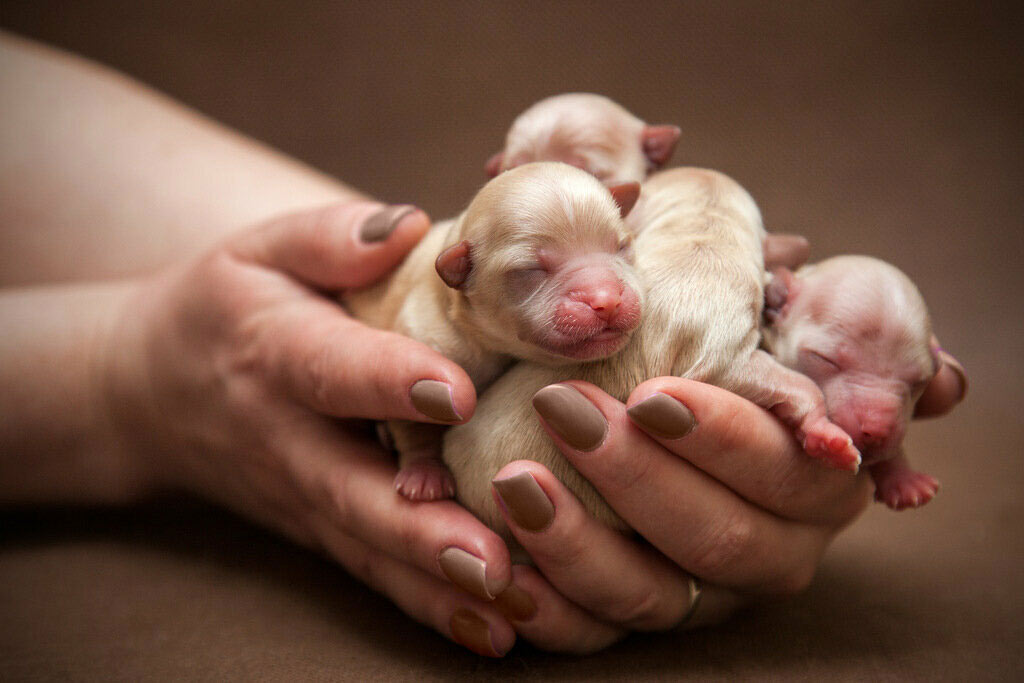
Important! If birth occurs before day 55, there is a high risk of loss of the puppies, as the puppies may not be viable.
You can check the babies' viability by holding a finger dipped in their mother's milk to their muzzles. A healthy baby should normally try to suckle, driven by its first and strongest instinct. Of course, there's a chance they'll survive even if they're weak and don't even try to suckle, but in this case, everything depends on the owner's willingness to care for the babies, who will require 24-hour care, constant warmth, and artificial feeding.
Read also:






9 comments
Ulyana
Hello, we have a German Shepherd who will soon be two years old! She's already in her second year, but she acts like a baby! Will her personality change during pregnancy? Should she be dewormed on the 35th day of pregnancy? What about feeding her? We feed her porridge with meat, but they tell us she should only eat meat! And add flaxseed and a little fruit! So, can we forget about porridge?
Daria is a veterinarian
Hello! It's not a given that her personality will change =) No, she shouldn't jump around like that during pregnancy (her instinct to protect her offspring should kick in), but that's not a given afterward. My German bitch was jumping around like a goat just a couple of days after giving birth. She still hasn't matured like a little child, and she's already, mind you, 8.5 years old. Pregnant women aren't dewormed; that's what everyone does before mating. Why can't she eat cereals and vegetables? Nonsense! Meat alone is bad for the kidneys. Cereals are carbohydrates, which means they provide energy. And lactating and pregnant women need energy (they produce milk, which is what the body uses up). Vegetables and fruits are also necessary, but how else will the puppies get everything they need? Only when you are lactating, make sure that she eats hypoallergenic foods (be careful with beets, carrots and other colored vegetables, no barley/chopped grain/semolina/corn and other small cereals).
Sergey
Hello. My beagle is 35 days along. For the last week, when he sleeps, he snores loudly. When he's not sleeping, he breathes heavily. He has an increased appetite and drinks a lot. What should I do?
Dasha is a veterinarian
Hello! Have you had an ultrasound? Perhaps the fetuses are large or there are a lot of them. They may have shifted and are putting pressure on the chest organs, making it hard to breathe. How's the weather where you are? It could be very hot, which is why she's drinking a lot. She's eating, of course—growing bodies need nourishment. How is she peeing? Is she also peeing a lot, or is she drinking more than she pees?
Teimina
I have a Siberian Husky, she was mated on February 1st, but she still hasn't given birth. They check her nipples, the milk comes out a little, her belly is not visible at all, and her behavior is also cheerful. Do you think pregnancy can last more than 75 days?
Dasha is a veterinarian
Hello! No, you won't be pregnant like that. Pregnancy would be noticeable by that stage (a simple rounding of the belly). The easiest way to determine the animal's condition is an ultrasound. Don't touch the mammary glands, otherwise you'll cause unnecessary strain. Take your animal to a veterinarian for an in-person examination; they'll palpate, examine, perform an ultrasound, and tell you what's wrong with your animal at this point.
Catherine
Hello, my question is this: we have a 17-month-old English Bulldog girl, we mated her 40 days ago, she is still very active, the only signs are that her nipples have stretched out and that's it, they haven't even turned red. If it's not visible anymore, does this mean that pregnancy hasn't occurred?
Dasha is a veterinarian
Hello! You know, the easiest way to find out about pregnancy is to take her for an ultrasound. It's not always possible to notice anything just by looking at her, especially given her age, she's pregnant for the first time. Most likely, she's only carrying a few puppies (maybe even just one), which is why there's no noticeable roundness. Therefore, it's best to take her for an ultrasound to confirm pregnancy (I hope it's not a false pregnancy) and to find out how many puppies she's carrying and whether everything is going well. If you're not afraid, you can very gently feel her belly (at this stage, you can already feel the fetuses), but you need to be extremely careful to avoid miscarriage. If you're worried, take her to see a veterinarian.
Materinstvo.Info
A dog's pregnancy lasts sixty to seventy days. This is very short and unusual for humans. However, nature has an explanation for this phenomenon.
Add a comment