
Bengal cat
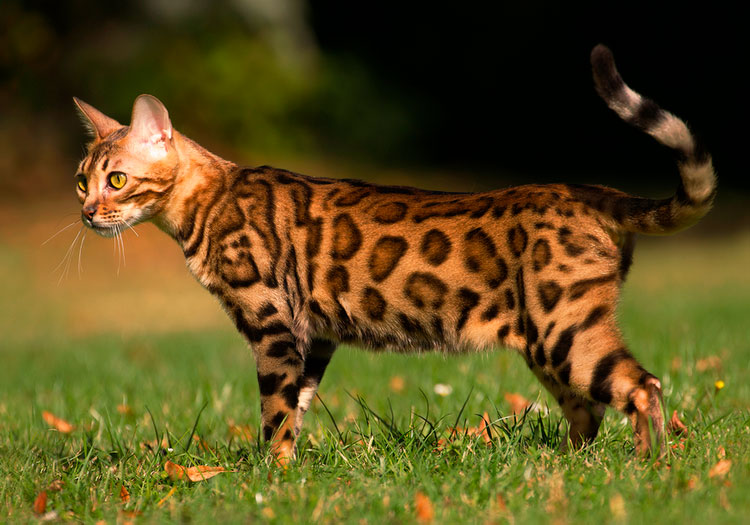
Bengal cat A bright, graceful, and mysterious little predator with a gorgeous coat. This is what immediately catches your eye when you first meet a Bengal. And you immediately want this little leopard to live in your home. But the Bengal cat, due to its characteristics, is not suitable for every owner.
Content
- 1 History of origin
- 2 Description of the breed
- 3 Character
- 4 Reviews of the breed
- 5 Maintenance and care
- 6 Nutritional Features
- 7 Diseases and life expectancy
- 8 Distinguishing qualities of the Bengal cat
- 9 Knitting rules
- 10 Carrying kittens: pregnancy
- 11 The process of childbirth
- 12 Choosing a kitten and price
History of origin
This unusual, exotic breed was created by biologist Jane Mill, who wanted to create a domestic cat with the appearance of a wild leopard but with a gentle nature. She spent many years developing the new breed by crossing a domestic shorthair with a wild cat. leopard catMany were skeptical of this experiment, knowing that interspecies crossbreeding does not produce offspring. But Jane Mill's experiment was successful, and in 1983, the Bengal cat breed was registered with TICA.
From the very first exhibitions, Bengals won universal admiration, and over the years the number of their fans has only grown.
Video review of the Bengal cat breed:
Description of the breed
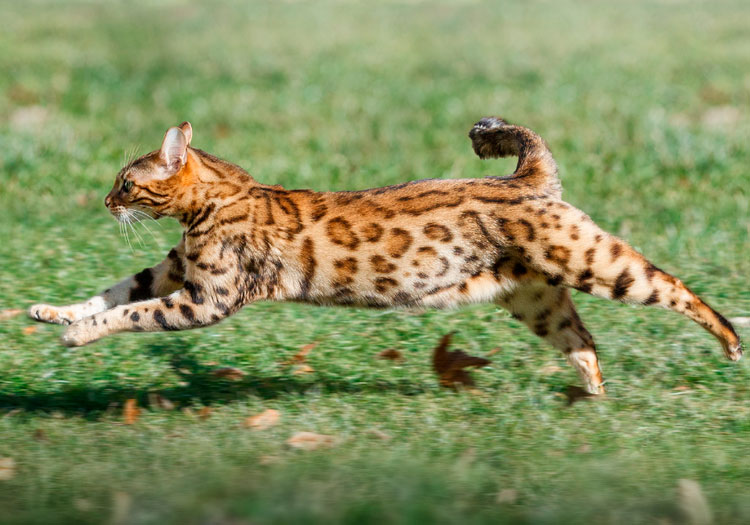
Let's move on to the breed description. Bengal cats are medium to large in size. They have a well-built, strong, and muscular appearance, and their expressive eyes set on a small head convey the appearance of a forest predator.
Head and muzzle
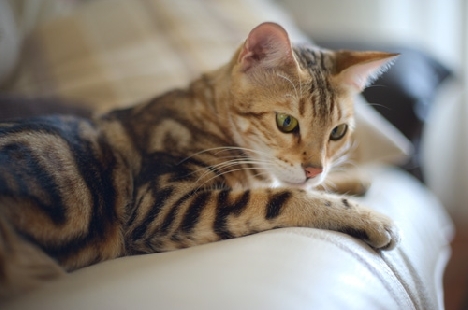
The Bengal's head is a wide, modified wedge, with rounded contours. It is slightly longer than it is wide. The ears are small and short, with rounded tips. They are set fairly wide apart. Lynx tufts are undesirable, but tufts inside the ears are acceptable. The eyes are large and rounded oval.
The eyes are set wide apart and slightly oblique. The richer the color of the iris, the better, and is independent of the coat color. The nose is large and wide; the tip is slightly upturned. The profile line is smooth. The muzzle is broad and full, with clearly visible whisker pads.
Frame
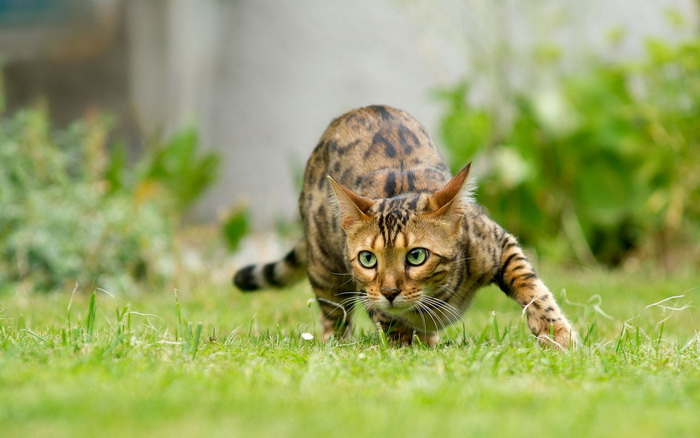
The body is large and powerful, elongated. The legs are medium length. The paws are small, round, and curled into fists. The tail is medium length, thick, and tapers to a rounded tip. The skeleton is not slender, but strong. The muscles are very well developed, especially in males.
Wool
Bengal cats have a medium-length coat, which can be slightly longer in kittens. It feels soft and dense to the touch, fitting snugly to the body.
Coloring of Bengal cats
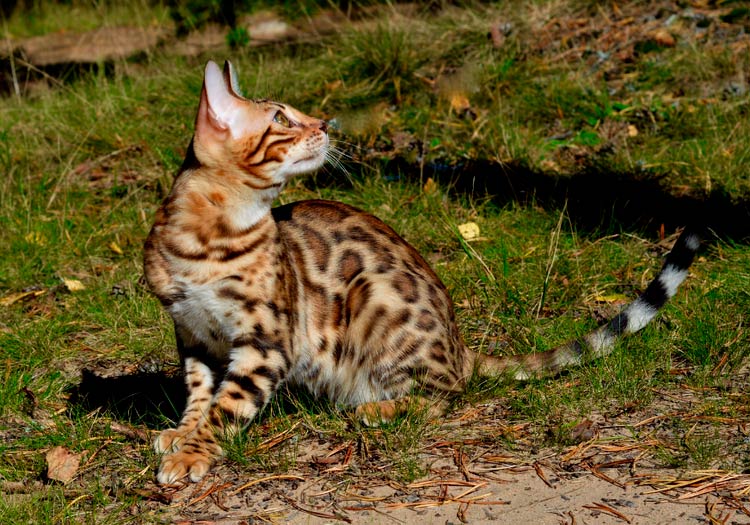
Let's start with the fact that Bengal cats are allowed to have two types of patterns:
- Spotted or rosette;
- Marble.
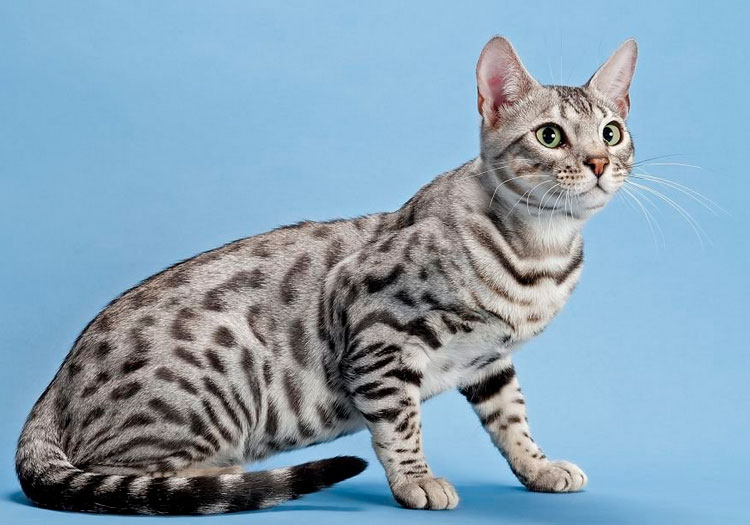
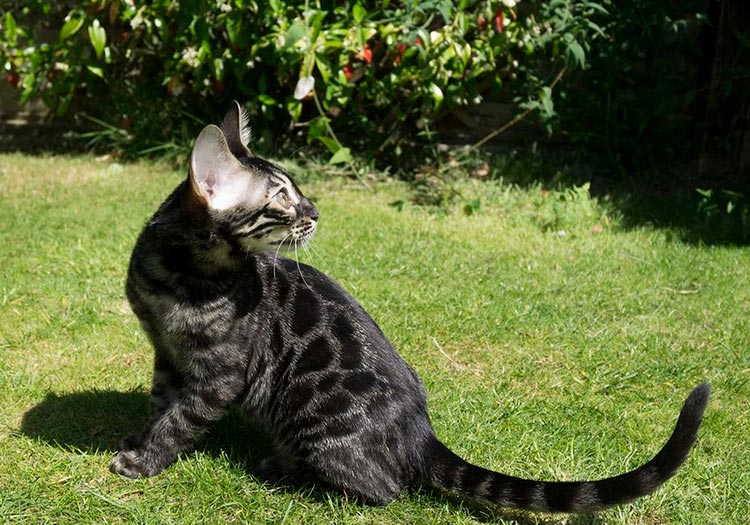
The outlines of spots, rosettes, or marbled markings should be clear and contrasting with the base color. Rosettes should be at least two-colored, and their shape can vary (doughnuts, darts, paw prints).
The neck should be decorated with a collar, the tail with rosettes or black rings, and the tip should always be black. A lighter belly is desirable.
Now, let's talk about colors. TICA recognizes the following Bengal colorings:
- Brown tabby;
- Silver tabby;
- Snow Bengals are divided into three shades: sepia (the darkest snow color), mink (golden sable) and lynx (cream);
- Charcoal (very dark);
- Blue Bengals (recently recognized).
Bengals' characteristics: glitter and fuzzy
Glitter (from the English word meaning "shine" or "glitter") is one of the Bengals' distinctive features. Their entire coat appears to be covered in tiny sparkles, which is especially noticeable in bright sunlight. Not all members of the breed boast glittery fur, but it is highly prized.
The Fuzzy Effect The process is that, starting at 1.5 months of age, kittens begin to grow a topcoat, which blurs the pattern and makes their fur slightly fluffy. Between 5 and 9 months of age, the "ugly duckling" begins to transform into a "beautiful swan," with the long fur falling off and leaving only short fur with a bright, distinct pattern.
Character
The breed's unusual origins are reflected in the Bengal cat's personality, which combines the temperament of a domesticated animal with that of a wild animal. Bengals are active (even hyperactive), friendly, and curious. Their hunting instinct is highly developed. Many owners acquire Bengal cats solely for their beautiful appearance and unusual coloring, but they forget that these are willful animals, not suitable for everyone, and require proper training.
Bengals are independent and intelligent, but to a certain extent they understand and accept the rules of their family. They often choose one owner to whom they become very attached, while maintaining friendly relationships with others.
If kept in a cage or completely neglected, they quickly become feral. When raising kittens, it's important to accustom them to handling, other people, and animals; otherwise, they may grow up aggressive.
Bengal cats love water. They adore playing with it and splashing around with their paws. If their owner goes to take a bath, the Bengal cat will be there, and if there's an opportunity to use the toilet, the Bengal won't miss the chance to splash around in the water.
The next feature that is noted in the character of the Bengal cat is this is extraordinary talkativenessShe doesn't just meow; she communicates. Meowing, purring, growling, and squeaking can go on for a very long time if the scratchy cat has decided it has something interesting to discuss with its owner. Any attempt at aggression in the ring will inevitably lead to disqualification. This is because Bengals are descended from wild cats, and negative traits must be suppressed.
Reviews of the breed
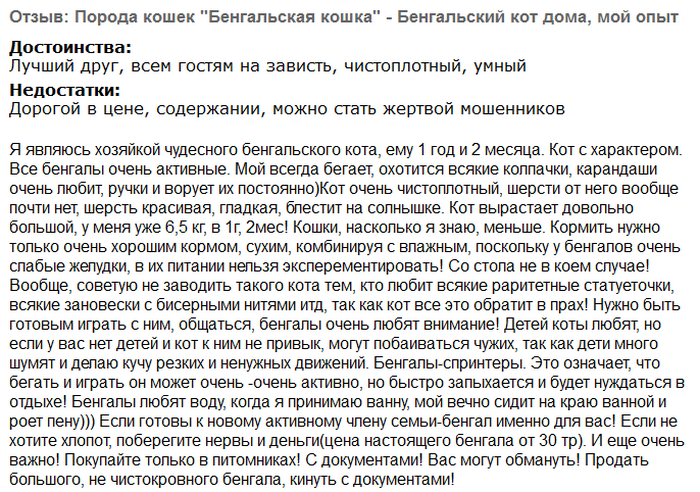
From numerous reviews of Bengal cats, one can draw quite objective conclusions:
- Cats are very playful, incredibly active and extremely inquisitive - all this is not an exaggeration;
- Bengals have a very distinctive, loud voice. They talk frequently and for long periods of time, whether anyone is listening or not;
- Bengal cats are not aggressive, but they are not exactly tame either. They don't like to be held or slept on laps;
- It is difficult to make Bengals swim and dive, but they love to play with water;
- Once outside, Bengals will be constantly itching to get out.

Keeping with other animals often poses challenges for both animals and owners.
 With the arrival of a Bengal cat, your life will most likely change.
 Of course, there are exceptions! Much also depends on the cat's upbringing and the owner's personality.
Bengal breed will do Experienced owners with a sense of humor who can properly raise a cat and channel its boundless energy in the right direction.
You absolutely does not fit Bengal cat if:
- you like order;
- you won’t be able to devote much time to playing with your cat;
- you think that a cat should love and cuddle its owner;
- don't take kindly to the cat's incessant monologue;
- you are not going to forgive the animal for its mischief, tricks, or damage to property;
- are sure that cats can eat anything;
- not familiar with the concept of cat training.
Maintenance and care
The breed is unique in every way, and even its care requires consideration. To keep your Bengal's apartment relatively tidy, it's best to provide it with plenty of toys and a high play structure. If these aren't available, the cat won't be upset; she'll simply find the toys herself. Don't be surprised if these are favorite curtains used as a swing, or shoes scattered and scattered. They also love to dig in the litter box, scattering litter over impressive distances, so it's best to choose a litter box with high sides or a covered one.
Bengals, both male and female, begin marking their territory early. The smell in the apartment will be, to put it mildly, pungent. If the animals are not used for breeding, it's best to consider spaying/neutering.
Cohabitation with other pets
Bengals sometimes get along with other domestic cats and even dogs if they are introduced to them at a young age. Adult cats may never accept strangers in their territory. As for birds, hamsters, fish, and other small animals, Bengal cats are only interested in them as prey.
Care
Bengals' short coats are easy to maintain; brushing them 3-4 times a month is sufficient. Frequent bathing is not recommended, except before shows or after the seasonal shedding period.
Eyes and ears are regularly checked for debris and cleaned with special products. Nails can be trimmed, but only by a few millimeters; excessive trimming will inevitably cause stress. It's a good idea to train your kitten to use a toothbrush and brush their teeth at least once or twice a week, which is an excellent preventative for oral diseases.
Nutritional Features
Most breeders recommend feeding Bengal cats commercially prepared dry or wet food, but they should also be given raw, frozen meat (veal, rabbit, or turkey) once or twice a week. Be careful with other foods, especially dairy.
Bengals have a weak stomach and are intolerant to many foods, so it can be difficult to find the right diet.
Confused owners may still ask, "What should I feed a Bengal cat?" When it comes to dry, prepared foods, Royal Canin, Ekanuba, and other high-quality products are ideal for adult Bengal cats, as they'll be enjoyed by your pet. Different cats may prefer different foods, so it's important to consider your cat's preferences.
When choosing products for pregnant or nursing cats, as well as kittens, make sure the packaging is specifically labeled "for kittens and nursing/pregnant cats" or "for kittens." For example, Royal Canin 34 food is intended for kittens up to 4 months old, although it can be fed to a kitten up to 6-7 months without any harm to their health. Sanabelle food for kittens and adolescents up to 1 year is also well-received by these little pets.
In addition, Bengal cats, like many others, love wet cat food.
It's best to feed your cat strictly in portions. Firstly, a regular schedule is essential for proper digestion. Secondly, Bengal cats often bury leftovers. Kittens are fed up to 5 times a day; adolescents – 3 times; and adult cats – 2 times a day. Clean drinking water should always be freely available. A large, wide bowl that's difficult to tip over is ideal. A special cat water fountain is an excellent option.
Diseases and life expectancy
Bengal cats are generally hardy and healthy. However, it's important to remember that they are predisposed to a number of genetic diseases:
- Hypertrophic cardiomyopathy. The most common heart defect;
- Another serious genetic disorder is flat-chested syndrome in newborns. This problem is thought to be caused by genetic incompatibility between different species, which is common in hybrid breeds. These kittens typically die between 10 days and 3 weeks of age. However, sometimes the chest returns to normal, and the kittens survive. Whether this condition affects their future life is unknown.
- The breed is characterized by a weak digestive system, is sensitive to the quality and quantity of food, and is prone to inflammatory processes.
- Without vaccination, cats have a high risk of becoming infected with feline viruses (leukemia, peritonitis);
- Bengals also suffer from a condition called dry nose syndrome. In kittens under one year of age, the dry nose becomes cracked and crusted, eventually developing into ulcers. Prompt treatment can alleviate the problem. Many breeders consider this condition a breed characteristic rather than a pathology.
Average life expectancy is 10-12 years.
Distinguishing qualities of the Bengal cat
A Bengal cat is incredibly curious compared to other felines. She'll explore the entire house as best she can: cabinets, nightstands, boxes, windows—nothing escapes her attention. Furthermore, her owner will be under constant observation, noting all their actions and thus learning their habits.
Animals of this breed are naturally highly intelligent, which allows them not only to quickly master scratching posts and litter boxes, but also to perform unusual actions unusual for cats. For example, Bengals can learn to turn off lights, flush the toilet, and even walk on it.
The Bengal cat is quite freedom-loving, as this breed's ancestors were wild animals. She has absolutely no need for excessive affection, and if you insist on hugging her without ceremony, she might scratch you. This isn't an act of aggression; it's simply that her proud feline nature dislikes having her freedom restricted.
And, as already mentioned, another interesting feature of the Bengal cat - a complete lack of fear of water - also contributes to its popularity among cat lovers.
Knitting rules
Mating a Bengal cat is fraught with difficulties and has its own specific characteristics and rules, without which the future offspring will have defects. When breeding Bengal cats, breeders strive to gradually increase the gene pool.
Therefore, some of them use the rare Felis Bendalensis species for breeding. To produce crossbreeds, only F1 and F2 cats must be selected. This method allows for the domestication of the "little leopard" wild cat after four to five generations.
Please note that breeding a Bengal cat with other species is not recommended, as this will only result in defective or non-viable offspring.
Your pet will be ready for mating after two heat cycles, at the beginning of the 3rd.
Before agreeing to breed, make sure the cat is indeed in heat. Her behavior is a clear indication: she meows loudly, raises her hindquarters, arches her back, and stomps around.
It's recommended to mate a female cat on the male's territory. Before mating, make sure both female and male cats are up-to-date on vaccinations and free of any pathologies or infections.
A female cat is usually brought in for mating on the third day of her estrus cycle, and it's recommended to leave her alone with her partner for at least two days. This will allow them to get used to each other and prepare for intimacy. After mating, the male moves away from the female, and she begins licking her genitals, after which she rolls on the floor. If the male stops responding to his partner, mating occurredYou will find out whether it was successful in 3 weeks.
Carrying kittens: pregnancy
So, the Bengal cat has mated. How many kittens can we expect from her? It's worth noting that Bengals aren't very fertile. The most successful litter produces four kittens. This is also one of the reasons why these animals are considered rare breeds, and their prices are rising.
The symptoms of pregnancy in a Bengal cat are almost identical to those of other breeds. The first signs are nausea and lethargy. After some time, the nipples change color and become erect. By mid-pregnancy, the cat gains noticeable weight, and a little later, the unborn litter can be gently palpated. Around 8-9 weeks, the cat becomes restless and rushes about, searching for a nesting site.
She carries a pregnancy for about nine weeks.
The process of childbirth
If you notice stains on the bedding and the cat is meowing pitifully, as if asking you for help, then this indicates that the Bengal cat is about to give birth.
Support your beloved pet in every way possible. Labor contractions in Bengal cats can last up to a day. If the birth is natural and without complications, you don't need to participate. The mother will care for her babies herself:
- will gnaw through the amniotic sac and free the babies;
- will diligently lick the babies.
On average, labor, with some breaks, can last up to six hours.
Choosing a kitten and price
The price of Bengal kittens varies so widely that it’s hard to tell: from 3,000 to 80,000 rubles. In a short period of time, the breed has become very widespread; there are many nurseries, and even more people wanting to make money from their pets without delving into the nuances of breeding.
The situation is that kittens in catteries cost between 15,000 and 80,000 rubles. Many factors influence the price:
- pedigree;
- merits of producers;
- color;
- geographic location of the nursery;
- kitten's compliance with standards and prospects.
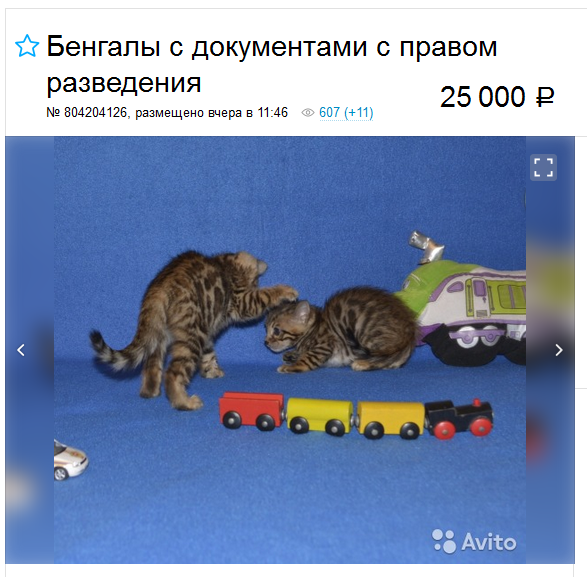
- Pet-class puppies (for the soul) are cheaper, but they are not permitted for breeding. By all rights, they must be spayed or neutered. (10,000-25,000 rubles)
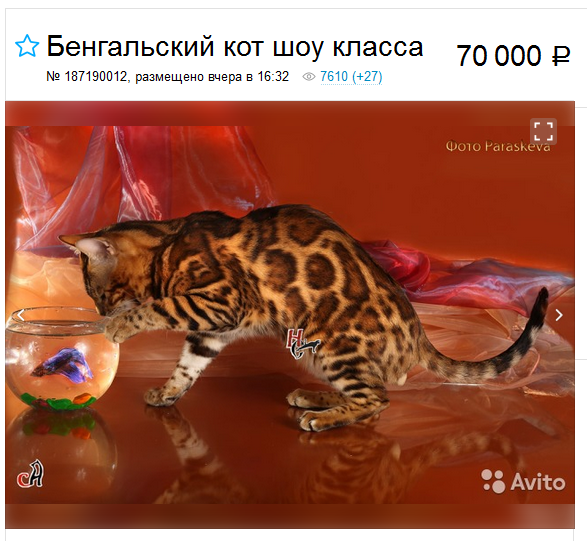
- Breed and show-quality kittens can be breeders, have excellent characteristics, and cost significantly more (35,000-70,000 rubles).
The cost of undocumented, "conveyor-breed" kittens ranges from 3,000 to 15,000 rubles. Generally, no one can guarantee that they are free of hereditary diseases or character flaws.
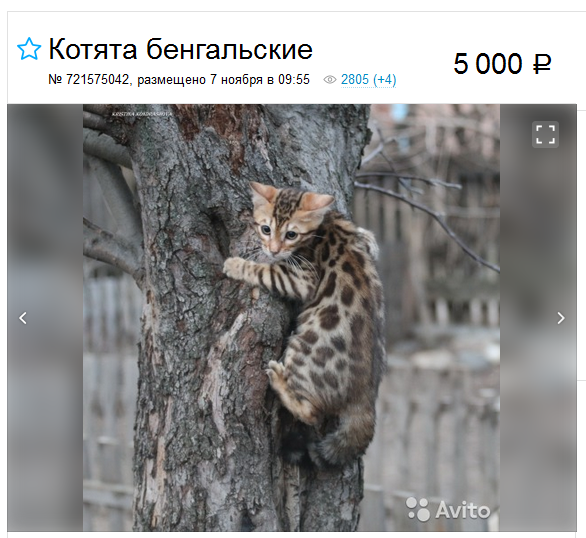
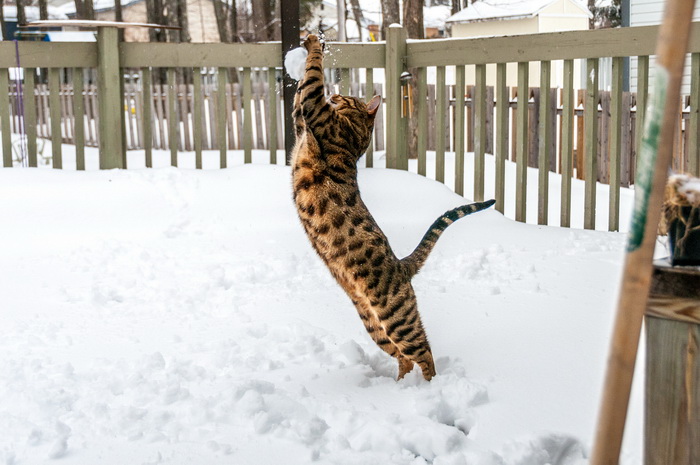
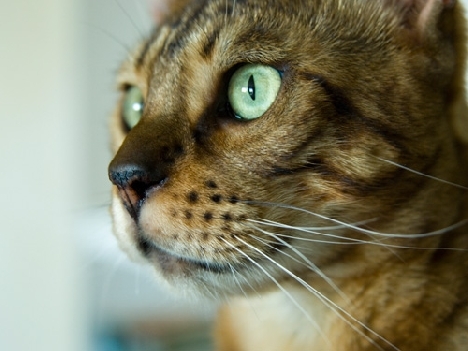
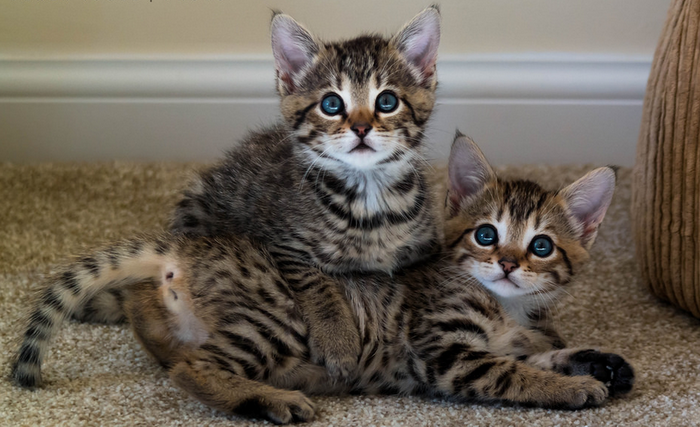
Photos of Bengal cats:
Read also:


2 comments
anaktoron
A charming Bengal kitten from Anaktoron cattery (registered with the International Federation of Cats, the World Cat Foundation, and the International Cat Federation) is for sale. His parents are genetically tested. The kitten has a beautiful, symmetrical leopard-like coat, a gorgeous contrast, and a mink-like topcoat. This Bengal fully meets breed standards and has a loving nature. We offer reliable delivery. With us, you can find the perfect kitten who will become a beloved member of your family.
Svetlana
Bengal cat cattery "Big Marshal" offers kittens. Bengal kittens are little leopards in your home! Playful, affectionate, sociable, and high-quality. Brown spotted tabby (rosetted). Also available in snow-white. With a contrasting pattern that will remain beautiful throughout life and won't fade by the age of one! From breeders who have won numerous Russian shows. Kittens are fully accustomed and vaccinated according to age (each kitten has a veterinary passport). We do not house cats in cages or aviaries. Cats and kittens live with us in love and affection! We have only purebred Bengals! All kittens have a pedigree. The breeders at the cattery are tested for diseases! Kittens are microchipped (at the buyer's request). Photos of cats and kittens are available on daiky.net. Tel. 8-499-730-92-30, 8-926-534-76-46, 8-916-515-33-87. Svetlana.
Add a comment