
Bavarian Mountain Hound (Bavarian Hound)
The Bavarian Mountain Dog was developed in Germany in the late 19th century. It specializes in blood tracking, but its talents extend far beyond that. Bavarians have an attractive appearance, exceptional intelligence, and a calm, even temperament. They are hardy, energetic, and ready for any challenge: hunting, sports, and search and rescue.
Content
History of origin
The history of the modern Bavarian Mountain Hound begins in the 1870s. At that time, Baron Karl Bebenburg Reichenhall began breeding a "lightweight" hound for work in the mountains. The Hanoverian Hound served as the basis, and blood from common hounds, known in German as Bracchi, was added. The dogs were selected according to the following criteria:
- The absolute thrill of hunting;
- Confident and unmistakable tracking;
- The joy of hunting;
- Keen sense of smell;
- Ability to follow a scent using a voice.
Secondary importance was given to external appearance. The Bavarian Mountain Hound was registered as a distinct breed in 1883. It quickly found its place among hunters in mountainous regions, and then in other areas. In 1912, the Bavarian Mountain Hound Club was founded in Munich to develop and popularize the breed. The International Canine Organization (FCI) recognized the breed in 1996.
Purpose
The specific use of Bavarians is determined by their name—the German word "Bayerischer Gebirgsshweisshund" literally translates as "Bavarian Bloodhound."
When working, Bavarian Hounds rely on the scent of the animal, not its appearance. They have a very sensitive sense of smell, and their drooping ears, according to one theory, help them collect scents from the air and hold them close to their muzzle. The best dogs can pick up scents even if the animal has crossed a body of water. Bavarian Hounds have a calm, confident search. They follow the scent with a vocal cadence. They are persistent, active, and independent, yet focused on their owner, trying to keep them in sight.
The main purpose of the Bavarian Mountain Hound is to track ungulates by following their blood trail.
Bavarian hounds can participate in driven hunts for ducks and hares, showing good results. However, they can be prone to errors in such work.
Besides hunting, you can practice almost any kind of canine sport with Bavarians: agility, frisbee, freestyle, coursing, bike rides, and more. These dogs can be found serving in the police, customs, and emergency services.
Appearance
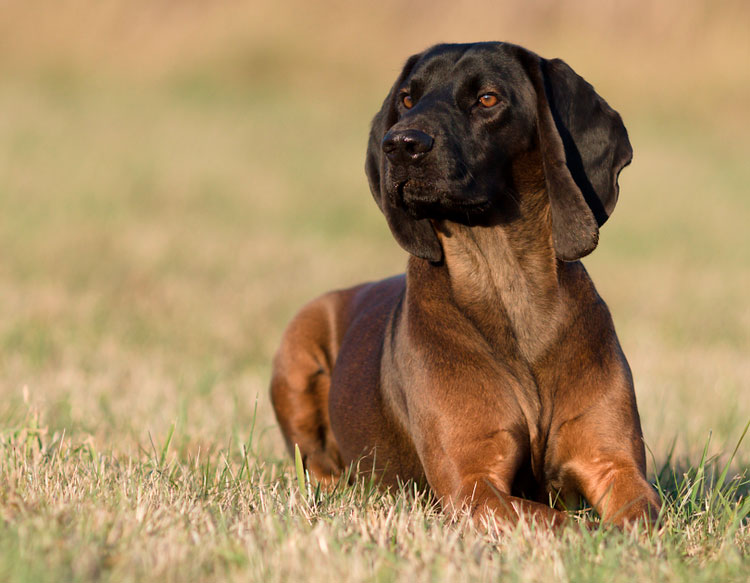
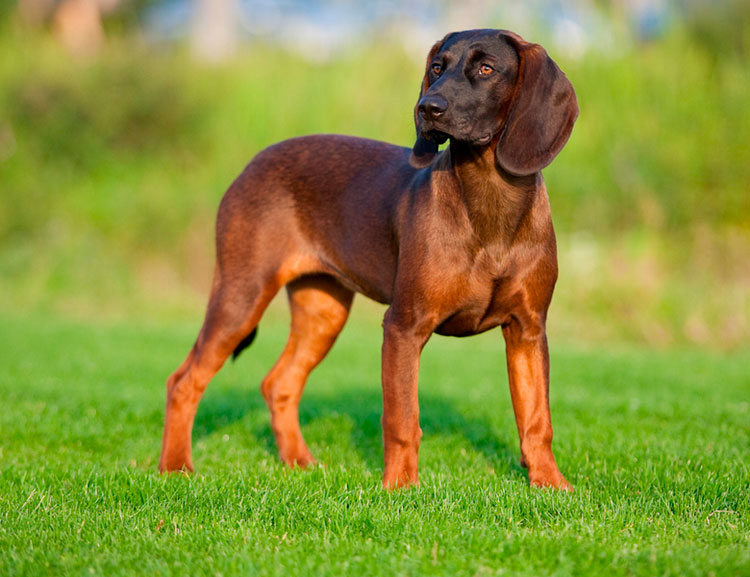
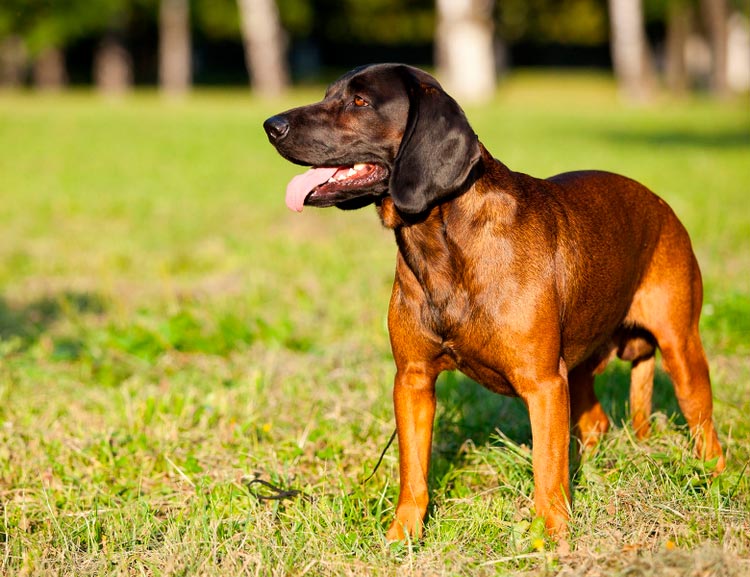
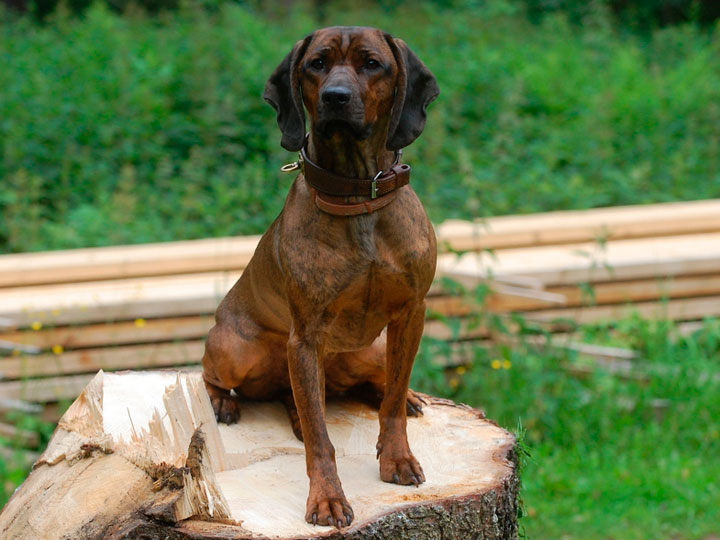
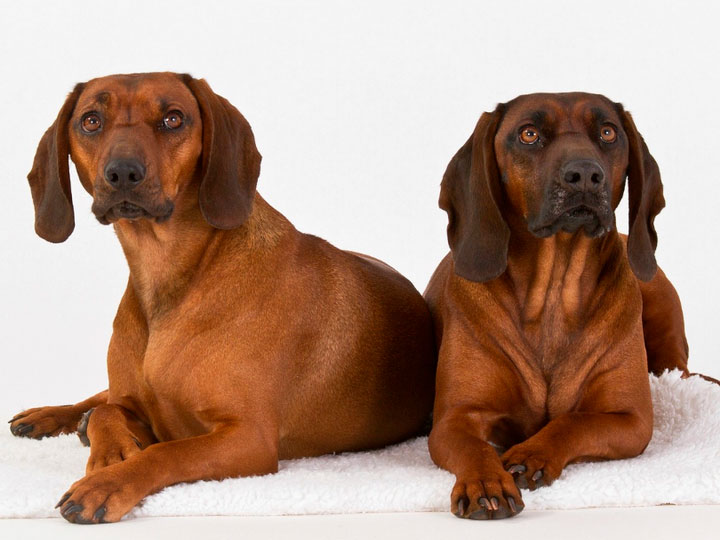
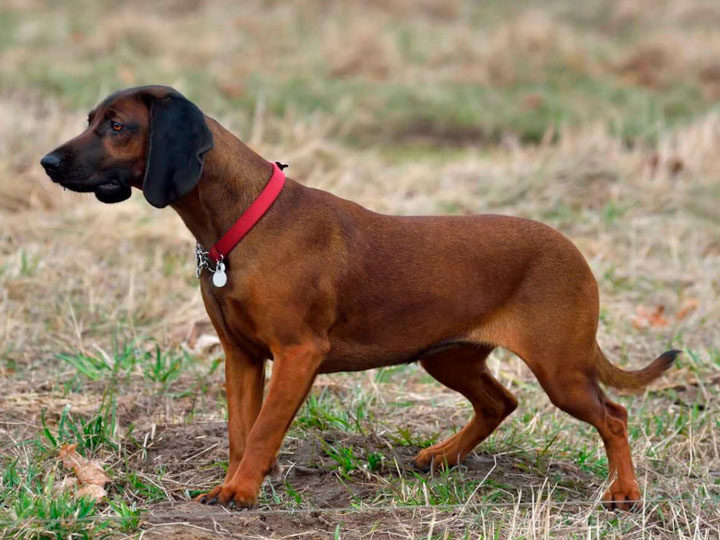
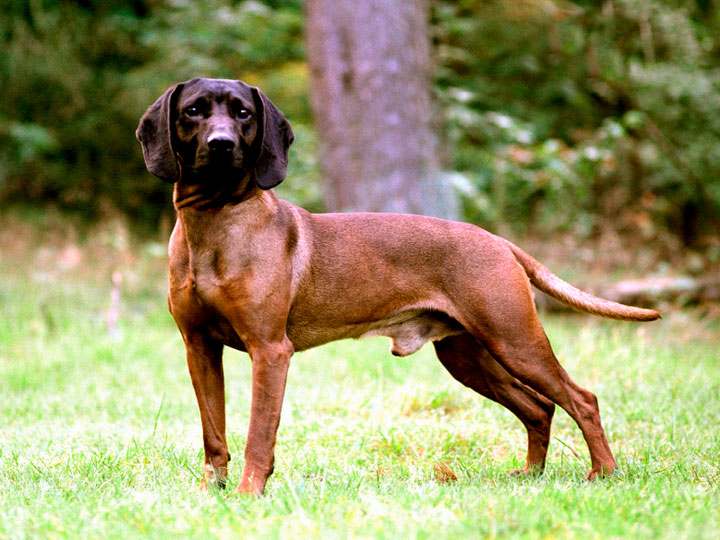
The first thing that catches the eye about the Bavarian's appearance is its unusual coloring. A red body with smooth transitions and a black velvety mask. This "design" was chosen for a reason. It allows the dog to completely "disappear" into the autumn landscape, and autumn is the hunting season for ungulates. The Bavarian Mountain Hound is harmonious, agile, and flexible, of medium height, slightly elongated, and well-muscled. Sexual dimorphism is pronounced.
- The height at the withers of males is 47-52 cm, weight is 20-30 kg.
- The height at the withers of bitches is 44-48 cm, weight is 17-25 kg.
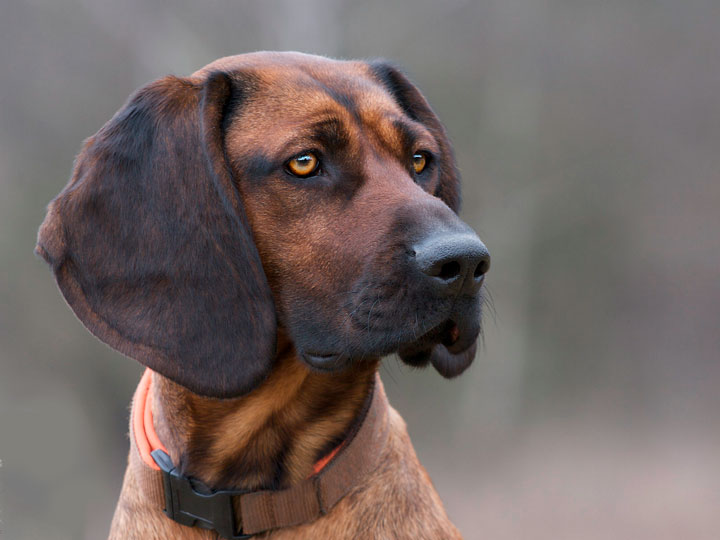
The skull is slightly domed, with well-developed superciliary ridges. The stop is distinct. The muzzle is slightly shorter than the cranial part, broad, not pointed. The bridge of the nose is straight or slightly convex. The nose leather is large, not very wide, the nostrils are well open, dark red or black. The lips are tightly fitting, of medium thickness, with clearly visible corners. The jaws are strong, with a scissor bite, a straight bite is allowed. The eyes are neither too round nor too large, dark brown or somewhat lighter. The eyelids are well pigmented, fitting tightly. The ears are pendant, reaching the tip of the nose, heavy, set high, wide at the base, with rounded tips.
The neck is of medium length. The skin on the throat is somewhat loose. The body is well balanced and muscular. The topline rises slightly from the withers to the sacrum. The back is flexible and strong. The circle is long, slightly sloping (20-30 degrees is considered ideal). The loin is short and wide. The chest is deep and long, moderately wide. The ribs are well sprung. The ribcage reaches the elbow joint. The belly is slightly tucked up. The tail is of medium length, set high, carried horizontally or slightly downwards. The limbs are straight, parallel, placed well under the body, with good angulation, pronounced joints and developed muscles. The paws are oval in shape with tightly knit, arched toes. The pads are well pigmented, strong, and coarse. The claws are black or pink.
The skin is tight-fitting and strong. The coat is smooth, dense, moderately harsh, with a slight sheen, and lies close. It is finer and shorter on the head and ears, while it is harsher and longer on the belly, limbs, and tail. Colors: dark red, fawn, red, reddish-brown, brown, as well as brindle or interspersed with black hairs. The color of the coat on the back is usually more intense. A dark mask should be present on the muzzle in any color. The tail is usually darker. A small white spot on the chest is allowed.
Character and behavior
The Bavarian Hound is a calm, loyal, obedient, and even-tempered dog. It is reserved with strangers. It is not designed for guarding or protection. It is very owner-oriented.
Active and hardy outdoors, she's practically unobtrusive and reserved at home. She's naturally very social and craves companionship, affection, and attention. She's friendly with other dogs and often gets along well with even small pets. She gets along well with children, but won't listen to them on walks and doesn't prioritize playing with them.
The Bavarian Mountain Hound, unlike many other hunting dogs, does not run away from its owner. Even the thrill of the hunt doesn't prevent it from letting down its guard and regularly returning to "mark" itself. In everyday life and on the hunt, it is bold, self-confident, and inquisitive, with a touch of adventure and a sense of humor. It shows no signs of cowardice or aggression.
Education and training
Bavarian Mountain Hounds are highly trainable; they are sociable and intelligent. They quickly understand what is expected of them. Working with them requires moderate persistence, consistency, and an understanding of the dog's nature, as well as the complete avoidance of pain and the suppression of independence. Bavarians have a strong sense of boundaries, but will periodically test their owner's limits. It's also important to remember that they are excellent manipulators and actors.
During the process of raising and training a dog, the owner must not only be a leader and mentor, but also be understandable and engaging for the dog, and remember to provide positive reinforcement in the form of treats and praise.
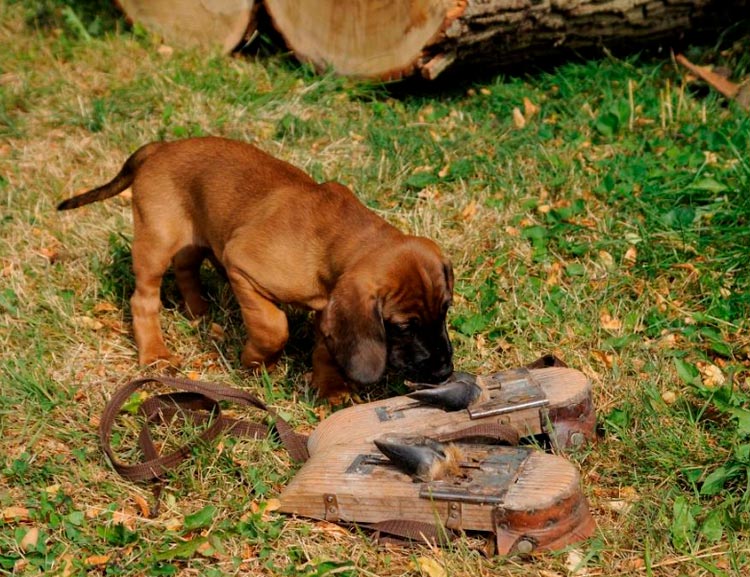
Bavarian Hound training begins early. From 1.5 to 2 months old, the dog is introduced to skins, paws, and hooves. Tracking can begin as early as 4 months: they perform a "drag" and create a blood trail along a black trail. As early as 9 to 10 months, the dog can be taken out into the wild.
Content Features
The Bavarian Mountain Hound adapts well to city life, including apartment living. With adequate mental and physical stimulation and alternative hunting, it typically exhibits no adaptation or behavioral issues. It's often claimed that this is a "hunter's dog" and is not suited to city life. This isn't entirely true and stems from the German Bavarian Mountain Hound Club's policy, which discourages the use of these dogs as "couch potatoes," but rather as working dogs. The short-haired variety is best suited for indoor living; it doesn't smell, doesn't drool, and sheds little. Outdoor living is possible, but the enclosure must be equipped with a well-insulated kennel.
The Bavarian Hound has excellent potential, but to develop all these wonderful qualities, it requires regular training, physical and psychological stimulation, and proper education. Without this, even the most talented Bavarian will become a couch potato, disobedient and prone to destructive behavior.
The Bavarian Hound thrives on long walks in the forest or trekking. This provides the optimal physical and mental stimulation for the dog's proper development. Owners can observe their Bavarian at its best: resilient, inspired, and happy.
Care
Grooming a Bavarian Mountain Hound is easy for owners and doesn't require much time or money. Regular brushing with a rubber mitten or a brush for short-haired dogs is sufficient. Bathe every 4-6 months. Also, keep an eye on the eyes, ears, and nail length. Regular teeth brushing is recommended.
Health and life expectancy
Bavarian Mountain Hounds are generally healthy. With proper care and feeding, they rarely get sick. The most common problems are injuries related to their high activity and sociability:
- Minor sprains, bruises, cuts;
- Dog bites;
- Insect bites.
At a young age, the following are more often registered:
- Poisoning;
- Adenovirus;
- Oral papillomavirus.
No hereditary diseases or pathologies are observed in the breed. Breeding animals are always tested for hip dysplasia. Life expectancy is 11-13 years.
Important preventative measures include timely vaccination, deworming, and treatment against external parasites, which, among other things, are carriers of dangerous diseases: piroplasmosis, dirofilariasis, other.
Where to buy a Bavarian Mountain Hound puppy
Thanks to the work of Polish breeders, Bavarian Hound enthusiasts now have an international database where they can learn about the dog population, planned litters, competition results, and view the personal pages of representatives of the breed. According to this database, the largest number of Bavarians lives in Poland (approximately 7,000). Slightly fewer live in Slovakia and Italy. Approximately 1,500 dogs are registered in Austria and the Czech Republic. In Germany, there are only 809 Bavarian Hounds. This is most likely due to breeding restrictions imposed by the Bavarian Mountain Hound Club: no more than 100 puppies per year. In Russia, Belarus, and Ukraine, the population is small, but there are many Bavarian owners and several professional breeding kennels.
When choosing a puppy, you should first consider its parents. Pedigree, working ability, health, and character are all assessed. If puppies are born to dogs that haven't hunted for several generations, but only compete in agility, you shouldn't expect them to excel in blood tracking.
All puppies in a litter should be healthy in appearance, with clear eyes and shiny coats, energetic and playful. They also pay attention to whether the puppies meet the standard. However, it's important to remember that it's difficult to spot a future champion or outstanding hunter in a 2-3 month old puppy. All existing tests offer no guarantees.
Price
A good puppy from working parents costs around 60,000 rubles. However, it's worth noting that the price can vary widely and depends on many factors.
Photos and videos
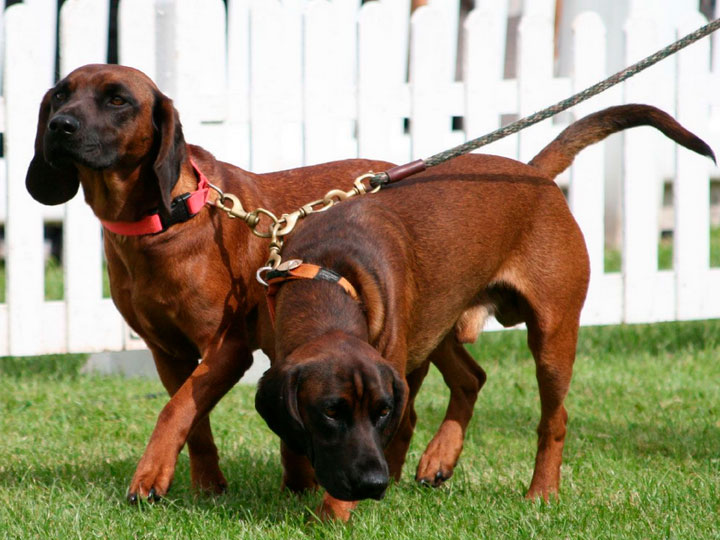
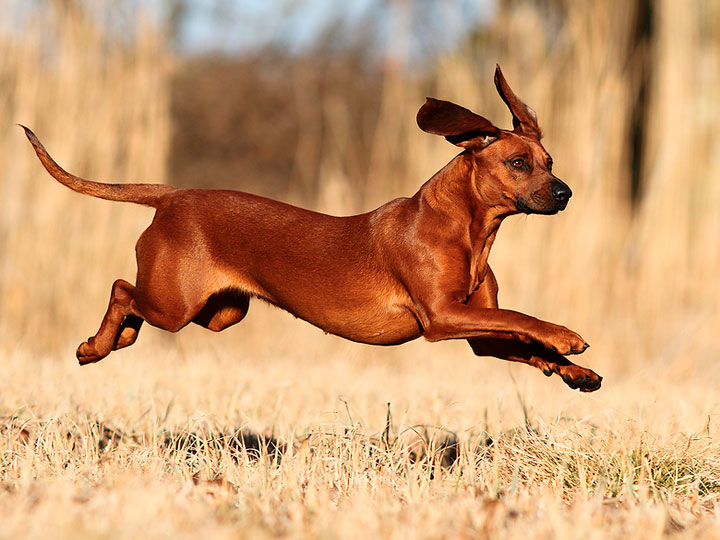
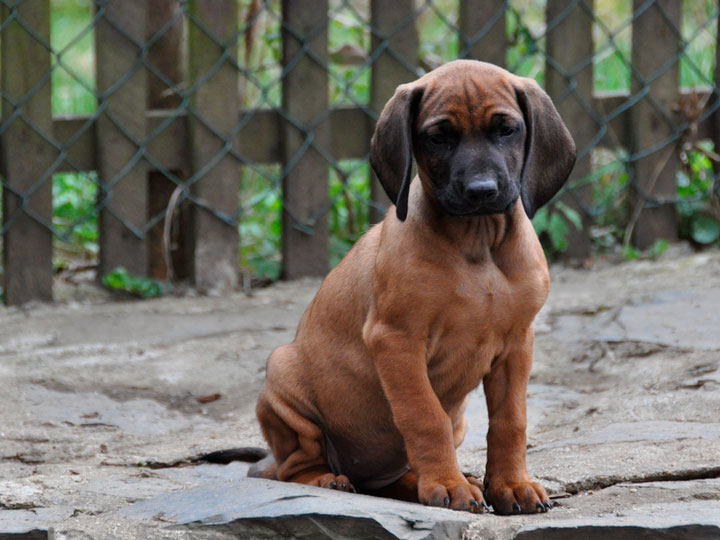
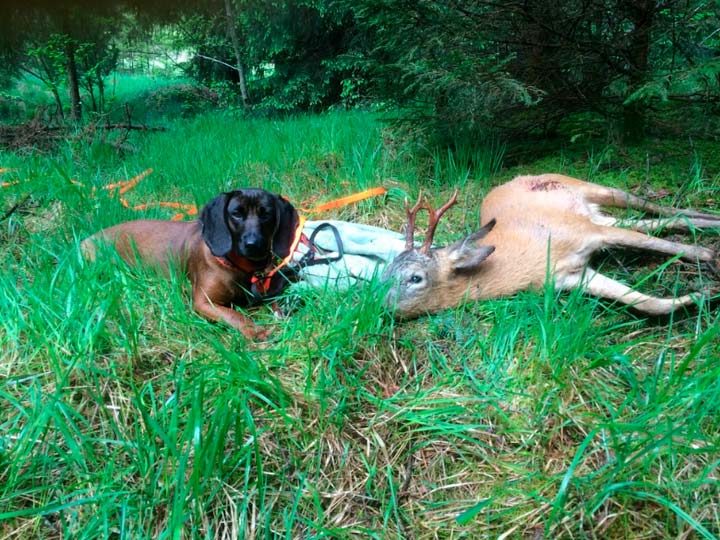
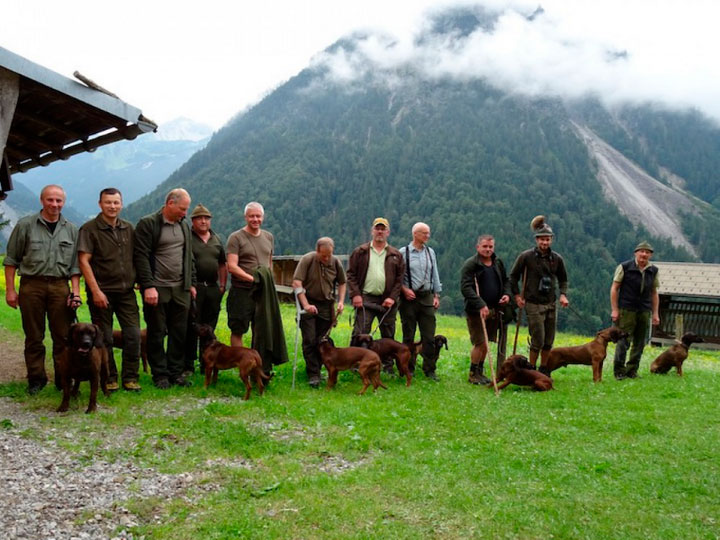
The gallery features photographs of Bavarian Mountain Hounds at work and in everyday life. The dogs are of different genders and ages.
Video about the Bavarian Mountain Hound dog breed
Read also:


Add a comment