
Basset Hound
The Basset Hound has one of the most unique appearances in the canine world, but almost everything about it is deceiving. It appears clumsy and ungainly, but this belies its playful nature, agility, and endurance, while its outward stolidity and stubbornness belie its intellectual potential. The Basset Hound has a docile, friendly disposition, the temperament of a true hound, an excellent sense of smell, and many other virtues, but this breed is not for everyone.
Content
History of the breed's origin
The history of these English "gentlemen" began in France. According to one version, the Basset Hound was bred by monks in the 13th century from discarded hounds of the lower type. The first written mention of "Bassets" appears in the hunting tales of Jacques du Fouilloux, written in 1585. The author claims that this type arose as a mutation in a litter of Norman Staghounds, descendants of the Saint Hubert hounds. Hunting on horseback with fast hounds was the privilege of the nobility, while slow, short-legged dogs were bred primarily by "commoners" for hunting on foot. Bassets became popular in high society during the reign of Emperor Napoleon III (1852-1870). In 1863, at the first dog show held in Paris, the Basset Hound achieved international recognition.
The name of the breed comes from French bas - "low" and English hound - "hound".
Although this breed is related to many French bassets, it was finally established in Britain in the late 19th century. Dogs from all over France were actively imported to England from the early 1870s. Artificial insemination of a basset hound female with a male bloodhound The British succeeded in producing a heavier type, which was then further refined through selective breeding. The first standard for the breed known today as the Basset Hound was drawn up in Great Britain in the late 19th century.
Hunting with a Basset Hound
The Basset Hound is a scent hound that specializes in tracking wounded game. The Basset Hound has a highly developed sense of smell, specifically its lower sense of smell. Its job is to locate game by scent and drive it toward the hunter with a loud bark. In the field, it displays great persistence and endurance. It prefers to work alone. It pursues game at a slow pace, which is ideal for hunting on foot. It has a keener sense of smell than other pack dogs. It often takes game by attrition. Although a hare runs faster, it cannot throw the Basset Hound off the scent. Sooner or later, it will bring the game within range. Basset Hounds are primarily used to hunt hares, foxes, badgers, and wild boar. They are excellent at following blood. For birds, Basset Hounds are used in team hunts with spaniels.
In recent years, very few owners have developed hunting skills in their Basset Hounds, so it is difficult to find information about hunting with them or field trials.
Hunting instincts emerge early in puppies. With proper development, training, and hunting, almost any Basset Hound can become a good hound. However, if you only point the dog, you can't expect good performance. Instilling a curiosity and ferocity in an adult dog is virtually impossible. Furthermore, show-quality dogs are often too short and short; they are unsuited to long chases, tire quickly, and have difficulty moving over rough terrain.
Appearance
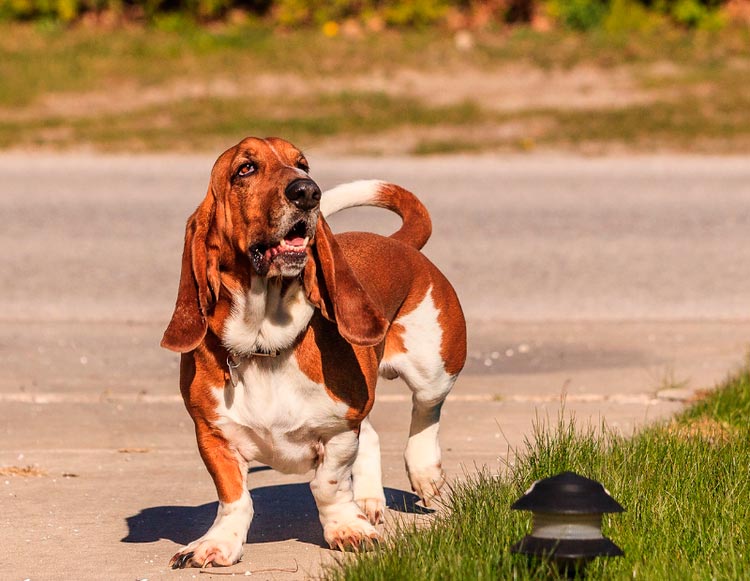
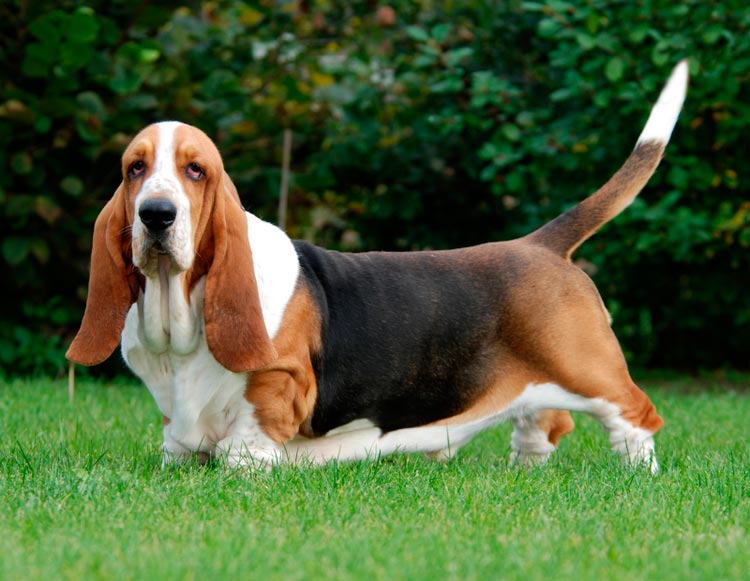
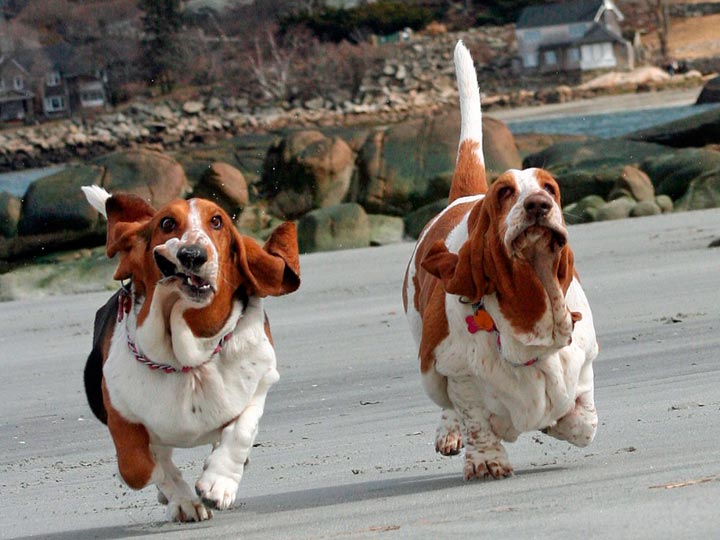
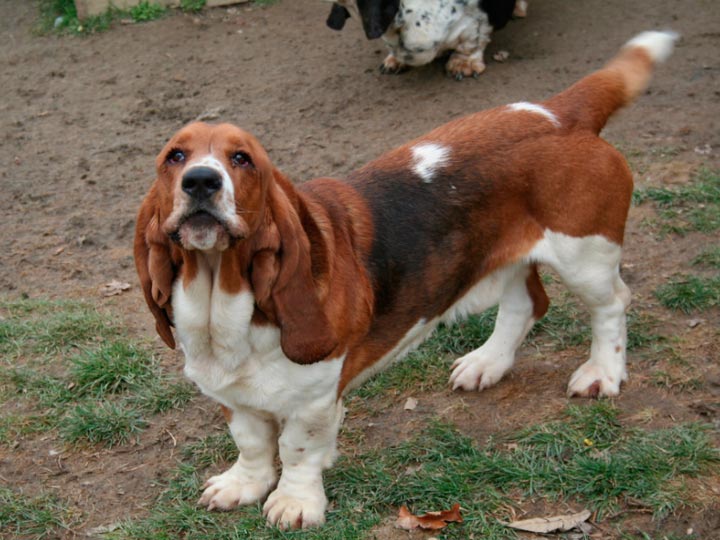
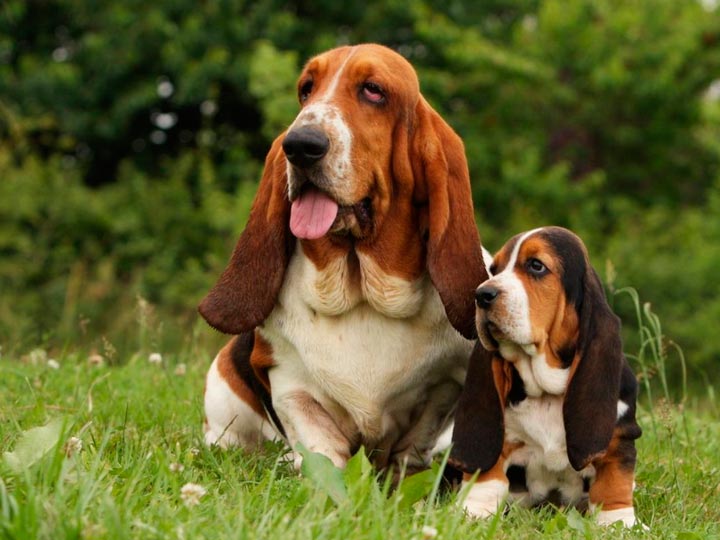
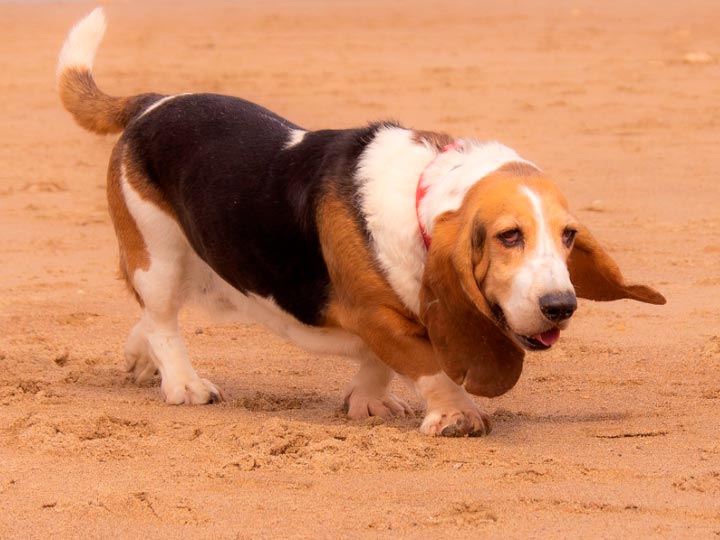
Basset Hounds have a distinctive, distinctive appearance. They have a long body on short legs, supple, elastic skin that folds, long ears, a saber-shaped tail, and a sad, melancholy expression. Their body shape is elongated, their constitution is loose or coarse, and their skeleton is strong. Because of this, they weigh more than other dogs of similar size. For example, if Petit Basset Griffon Vendeen A Basset Hound of the same height weighs no more than 18 kg at a height of 35 cm. Sexual dimorphism is well-defined.
- The height at the withers of males is 30-38 cm; weight is 25-34 kg.
- Height at the withers of bitches is 28-36 cm; weight is 20-29 kg
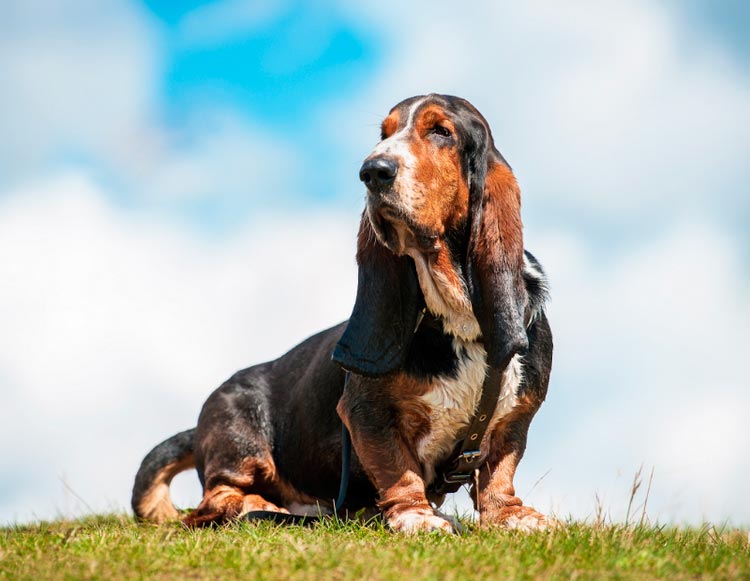
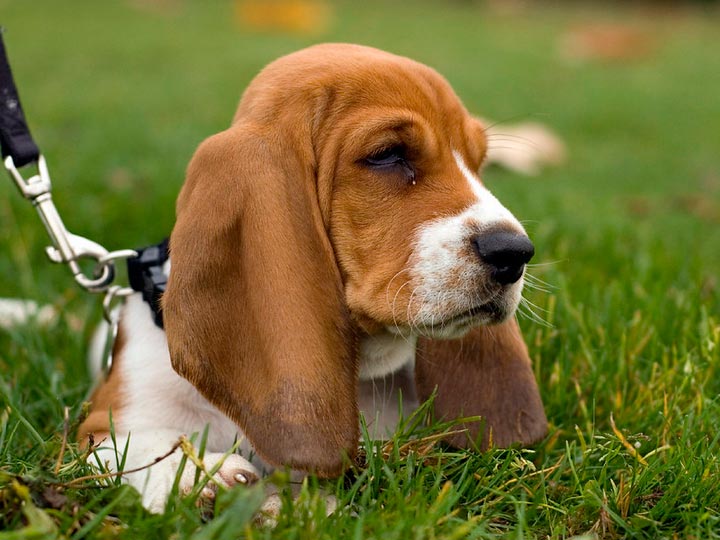
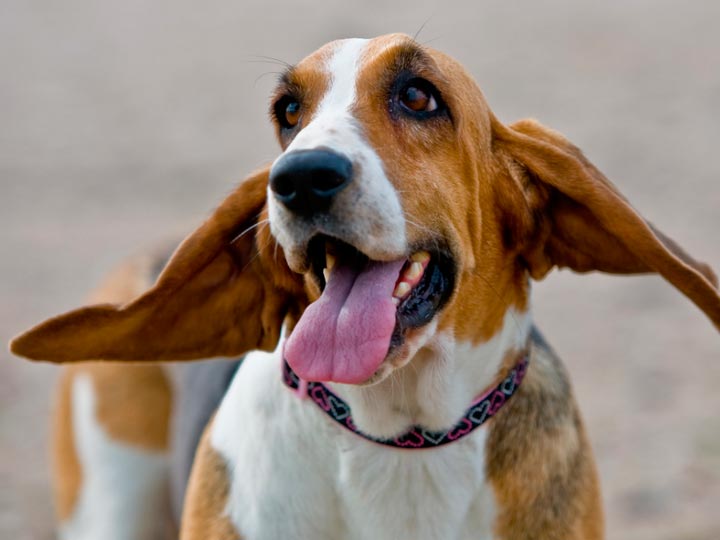
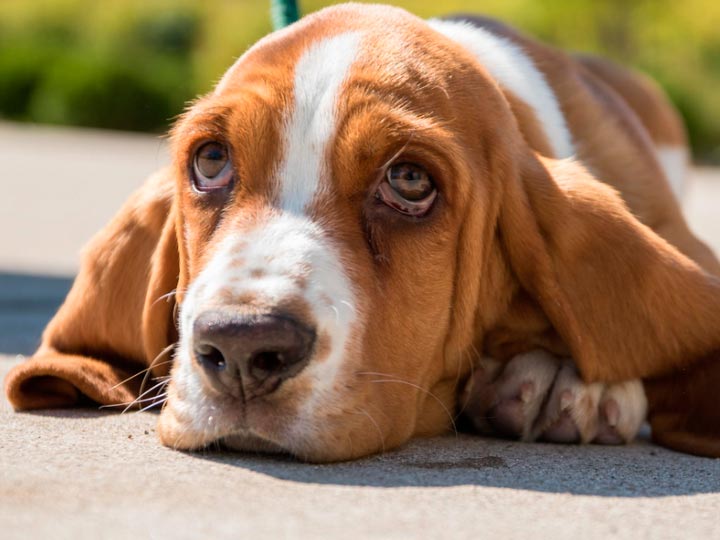
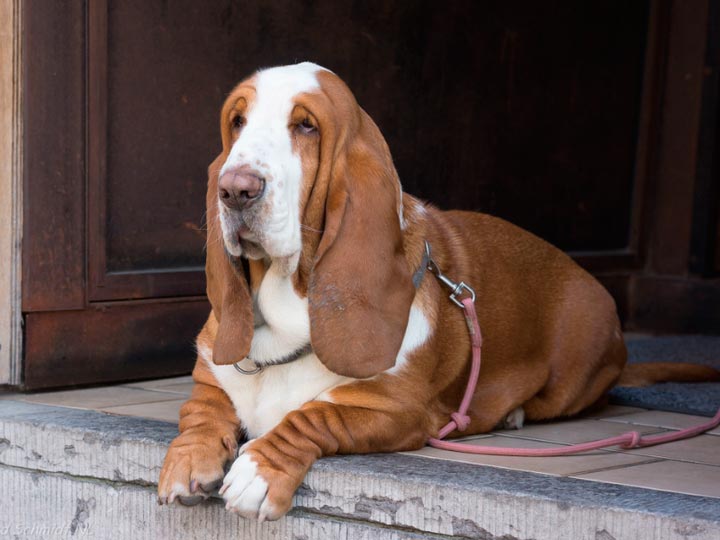
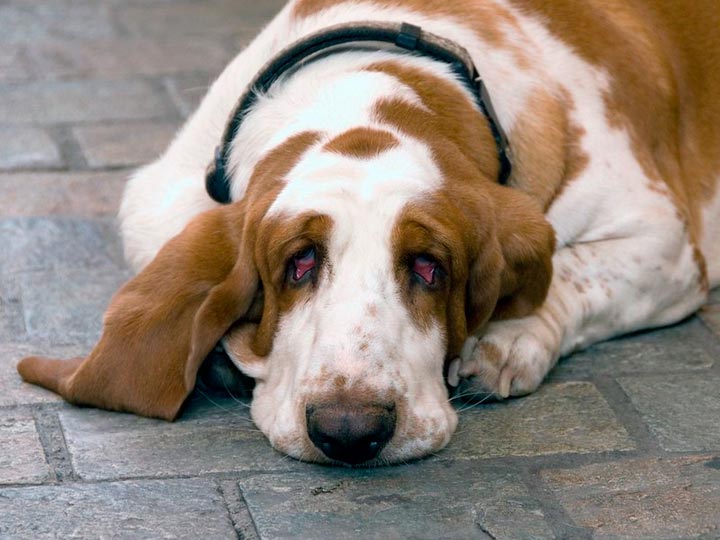
The skull is domed. The muzzle is elongated and powerful, with a well-developed jaw, not pointed. The skin is quite pliable, forming folds on the head when stretched or tilted. The lower eyelids may droop slightly, which is what gives the dog its sullen appearance. The eyes are diamond-shaped, and the irises are always brown. The ears are very long, soft, and set fairly low. In relation to the dog's size, they are at their longest until the age of 3-4 months; puppies literally step on their ears when running. The neck is fairly long and muscular.
Basset Hounds from different breeding lines can vary greatly in leg length, amount of loose skin, and body type.
The body is long and deep. The back is broad and level. The loin is slightly arched. The brisket is prominent. The underline should be set high enough to allow the dog to move freely over any type of terrain. The tail is long, strong, tapering to a sabre-shaped tip. The limbs are massive and short, with strong bone and well-developed muscles, especially noticeable on the thighs. Wrinkles may be present on the lower legs. The paws are large, well-knit, and stand on strong pads, so the Basset Hound's tracks leave no empty areas where they meet the ground.
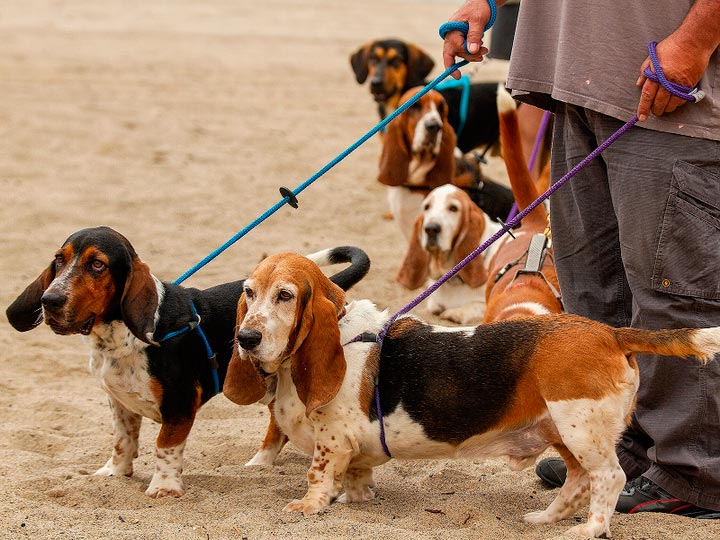
The coat is short, smooth, not very soft, and lies close to the body. The coat is bicolor or tricolor, most often white and brown or black, white, and brown.
Character and behavior
The Basset Hound has a rather complex personality. It's intelligent, cunning, resourceful, and prefers to make its own decisions. This makes it seem stubborn and willful. It's impossible to force a Basset Hound to do anything; you can only ask, and it's very difficult to stop it once it's set its mind on something. At the same time, it's very attached to its family. It's responsive, friendly, affectionate, and sociable. Despite its hunting heritage and size, it often behaves like a lap dog, demanding constant attention and affection.
The Basset Hound is full of self-esteem, he is willful, can be very stubborn and seriously believes that he has acquired a human.
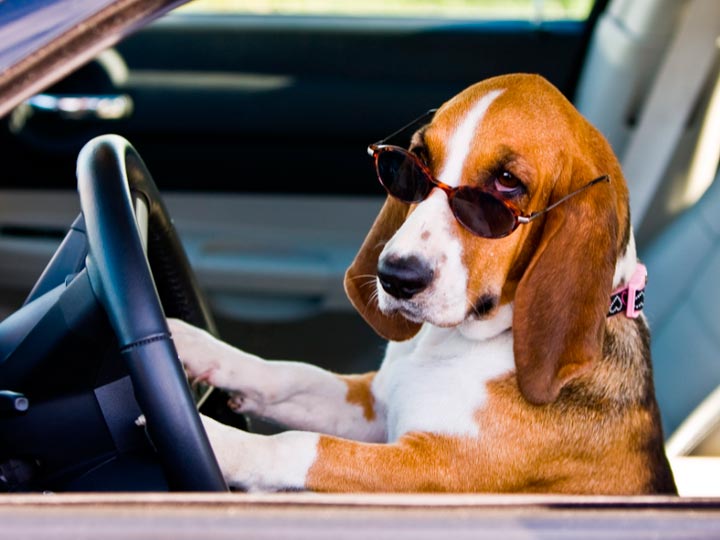
The Basset Hound has a high level of emotional stability, which is often mistaken for phlegmaticness. In fact, he cares deeply about what's going on around him. Many things require personal intervention and participation. He's very patient and completely non-aggressive, making him an ideal companion for children. He'll happily join in any undertaking: ride in the car, play outside, or simply watch TV. He suffers greatly from loneliness.
He makes a good watchdog, deterring intruders with a deep, loud bark. However, he's completely unsuited to guarding or protecting. He's either curious or indifferent to strangers on the street. He's tolerant of cats and gets along well with other dogs. He's easily captivated by new smells and surroundings. His hunting instincts encourage him to sniff everything and follow a scent. Send a seemingly lazy Basset on a scent trail, and you'll see him transform into a finely tuned search engine.
Education and training
The Basset Hound is far from stupid, as many people think, but it has a mind of its own. It quickly learns commands, but is slow to follow them. It's also generally untrainable. Obedience is the most difficult thing to achieve. It takes all commands on board, like a cat.
You need to learn to understand the Basset Hound and to yield to it in some ways. It obeys as much as it's interested. Often, it only comes when called when it's finished with its business.
When raising a puppy, the owner must be loving, very patient, and unwaveringly consistent. Basset Hounds are sweet and playful when young, but they can also be incredibly stubborn, easily offended, and moody. Motivation is crucial for them, and this must be taken into account when training. Training should be done exclusively with positive reinforcement. Basset Hounds must be trained regularly throughout their life. If the owner stops training the dog consistently, it will become unruly.
Don't be surprised if, after any command performed by a basset hound, the owner feels as if the dog has done them a favor. Training requires patience, consistency, and time. And as a reward for the effort, the owner receives a reserved, calm, and responsive companion.
Content Features
A Basset Hound is primarily a companion, requiring constant companionship. Therefore, indoor living is considered the ideal option. Basset Hounds also thrive in apartments, but they can feel cramped in smaller spaces. Keeping a single dog in a crate is strongly discouraged. If you have two or more Basset Hounds, they can easily live in a crate year-round. In this case, living conditions should be good, with the dogs being walked outside and socialized daily, and brought indoors during cold weather. The yard should be well-fenced.
The Basset is prone to wandering and will certainly run away in search of adventure if given the opportunity.
Basset hounds value comfort and will most likely sleep on their owner's bed. They are prone to damage, even when young. Boredom can lead to undesirable behavior: they may lift up hardwood floors, chew on furniture handles and shoes, bark, howl, and constantly return to the trash can to check for food.
Providing your dog with adequate exercise is crucial. Don't expect a Basset Hound to be quiet. It's constantly on the move, exploring its surroundings. It's very active and agile. Those unfamiliar with the breed may be surprised by how agile and maneuverable this slouchy dog can be, and how much time is required for walks.
Basset Hounds typically can't swim and can't jump into a car on their own. They shouldn't climb steps. However, jumping onto the sofa is rarely a problem.
Care
Brushing the coat two to three times a month is sufficient, and slightly more frequently during shedding season. However, the ears and eyes require special attention. The ears should be cleaned, and the eyes should be washed as needed. It's also important to keep the teeth clean. A thorough bath with dog shampoo is recommended as needed.
Basset hounds often need to be rinsed after walks. Due to their small stature, they get very dirty around their paws and belly.
Nutrition
Basset Hounds can be fed either natural or dry food. Mixing the two is not recommended. Many owners prefer a raw, natural diet. The diet should be formulated according to standard recommendations, taking into account the dog's age, weight, and activity level. Vitamins and minerals are always included. Other supplements are added as needed. If you decide to feed your dog prepared food, it should be a high-quality, complete, super-premium or holistic diet.
Eating something tasty and big is a Basset Hound's favorite pastime. Even if he's just had a hearty meal, he looks as if he's been starving for a week.
Basset Hounds are known to be food lovers. They beg for food and, given the opportunity, will easily snatch a tasty morsel from the table. They tend to overeat and gain weight quickly, which has a negative impact on their health. Therefore, you always need to monitor your portions and diet.
Health and life expectancy
This is a generally healthy breed. However, they are susceptible to a number of ailments. Among the most common ailments are skin, digestive, and musculoskeletal problems. Some representatives of the breed suffer from glaucoma and von Willebrand disease. Due to their long bodies and short legs, these dogs often suffer from back pain. This is especially true for obese pets. The structure and length of their ears increase the risk of otitis. Fungus can develop in the folds near the lips due to increased humidity.
Life expectancy is 10-13 years. The oldest Basset Hound surveyed died at 16.7 years of age. The leading causes of death, according to the study, were tumors (31%), old age (13%), gastric torsion (11%), and heart failure (8%).
Choosing a Basset Hound Puppy
Before buying a puppy, it's worth researching the breeder. Be sure to learn about the litter's parents and talk to the owners of dogs from previous litters. There are several large forums dedicated to the breed. They can always recommend good kennels and offer helpful advice.
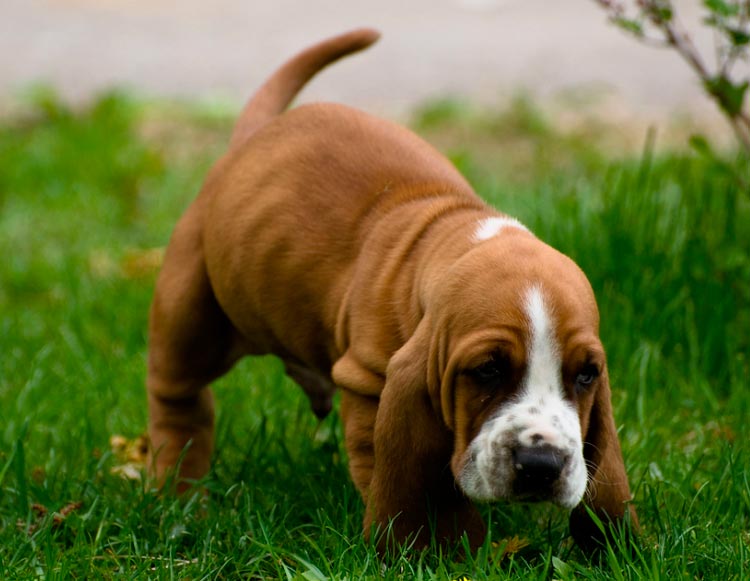
It's best to inspect puppies in person to assess their living conditions, nutrition, and the breeder's attitude toward their dogs. Care, hygiene, and quality feeding, including mother-feeding for the first two months of life, significantly increase the likelihood that a dog will grow up strong and healthy with a normal demeanor. Puppies' coats should be shiny. The skin, eyes, nose, and mouth should be clean. The vertebrae should not be clearly visible or the ribs prominent. The abdomen may be rounded, but not excessively so. The tail is checked for kinks and knots. A correct scissor bite is required. The puppy should be inquisitive, playful, and active. A tattoo should be placed in the groin or ear. The breeder must provide a puppy card and a passport with vaccination records.
Price
The average cost of a good basset hound from a breeder is $700.
Photos and videos
You can see more photos of Basset Hound dogs in the gallery.
Video about the Basset Hound dog breed


Add a comment