
Basenji is a breed of dog
The Basenji is an ancient African breed that doesn't bark, but is far from silent. Highly intelligent, energetic, beautiful, and sociable, it is also independent, stubborn, and difficult to manage outdoors. The Basenji is a unique dog and hardly lives up to the stereotype implied by its name.
Content
Breed characteristics
Basenji – a rare dog in our area, attracting attention with its noble exterior and good-natured, sociable character.
|
Original title |
Basenji |
|
Country of origin |
Central Africa |
|
Weight |
9.5-11 kg |
|
Height (at withers) |
40-43 cm |
|
Life expectancy |
12-16 years old |
|
Price of a puppy (with pedigree) |
60,000 – 90,000 rubles |
|
Price of a puppy (without pedigree) |
from 20,000 rubles |
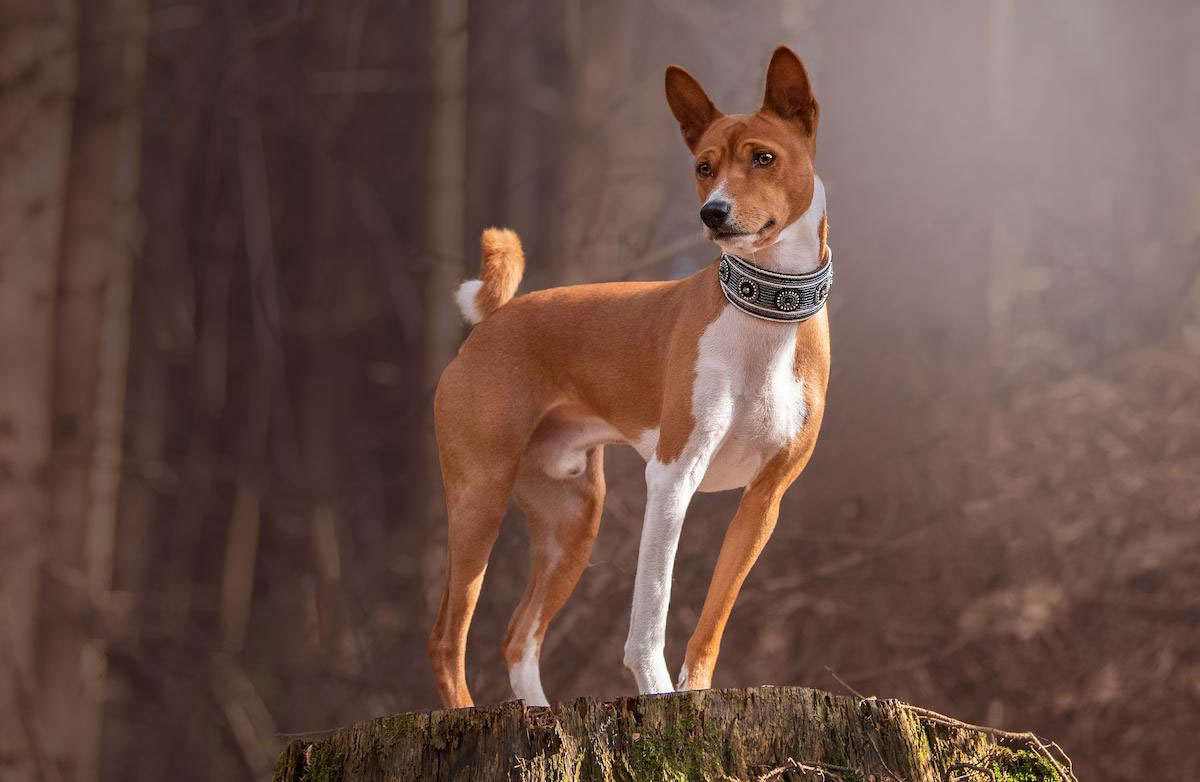
If you dream of owning a true Congo Terrier, we suggest you take a closer look at the breed characteristics listed in the table:
|
Parameter |
Level |
Points |
|
Size |
|
3 out of 5 |
|
Intelligence |
|
3 out of 5 |
|
Training |
|
3 out of 5 |
|
Health |
|
3 out of 5 |
|
Noisiness |
|
2 out of 5 |
|
Picky eating habits |
|
2 out of 5 |
|
Activity |
|
3 out of 5 |
|
Aggressiveness |
|
2 out of 5 |
|
The need for communication |
|
4 out of 5 |
|
Molting |
|
2 out of 5 |
|
Attitude towards children |
|
4 out of 5 |
|
Attitude towards strangers |
|
3 out of 5 |
|
Cost of maintenance |
|
3 out of 5 |



Origin of the Basenji
The Basenji is one of the most ancient breeds. Similar dogs have been found in Egyptian tombs dating back over 6,000 years. Tutankhamun's tomb contained two such dogs, embalmed, wrapped in precious fabrics, and wearing precious stone collars. They likely held immense cultural significance. Household items, figurines, and wall paintings also point to their ancient origins. With the decline of civilization, Basenjis fell into oblivion in North Africa, but survived in the central regions of the continent. They were highly prized by the natives for their hunting skills, speed, exceptional intelligence, and silence. They were even credited with magical powers, such as the ability to restore auras and absorb negative energy.
Interestingly, even today, Basenjis can be found roaming freely in the African jungle. These semi-wild dogs are quite capable of foraging for food on their own. In the wild, they gather in small packs.
In 1905, several Basenji dogs were brought to England. However, the attempt to introduce these amazing creatures to the world was unsuccessful. The dogs did not survive the months-long journey and soon died. The breed's official debut occurred in 1937, when Basenjis were exhibited at the Crufts Show under the name Congo Terrier.
The Basenji is called the "bush dog" by African pygmies and is still used for hunting, including lions.
Basenjis appeared in Russia in 1997. The current population is small, but of a high standard and can compete at international shows.
Appearance
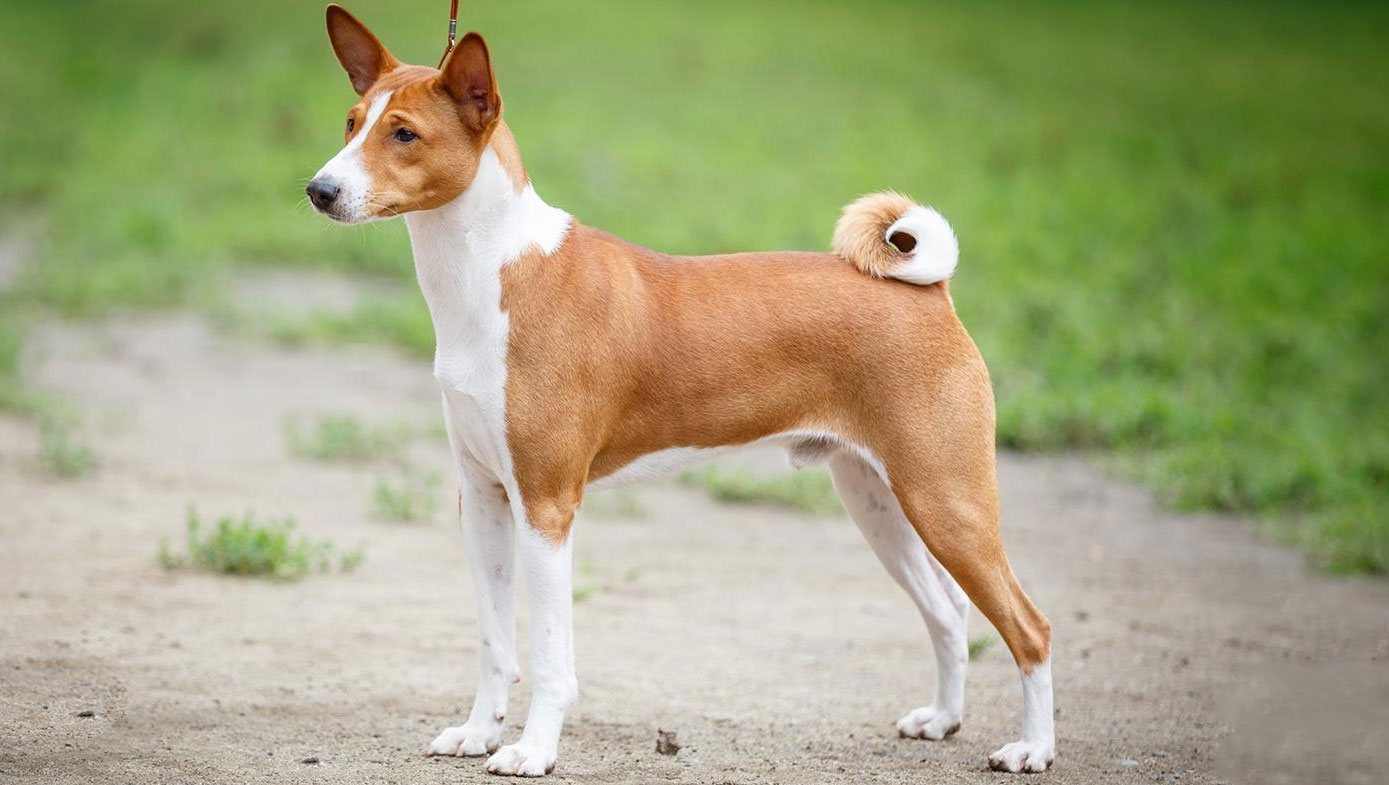
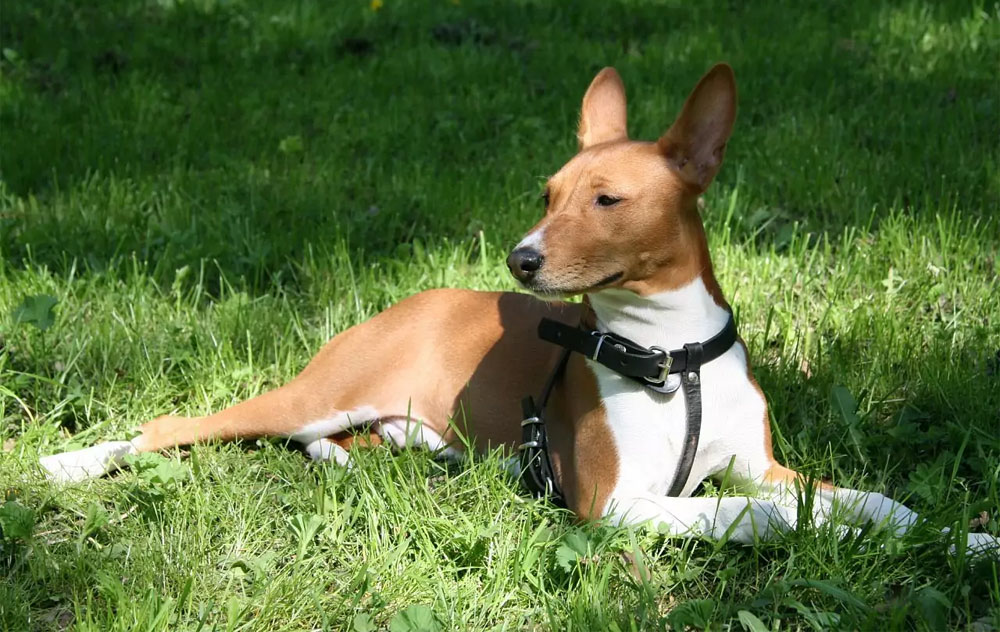
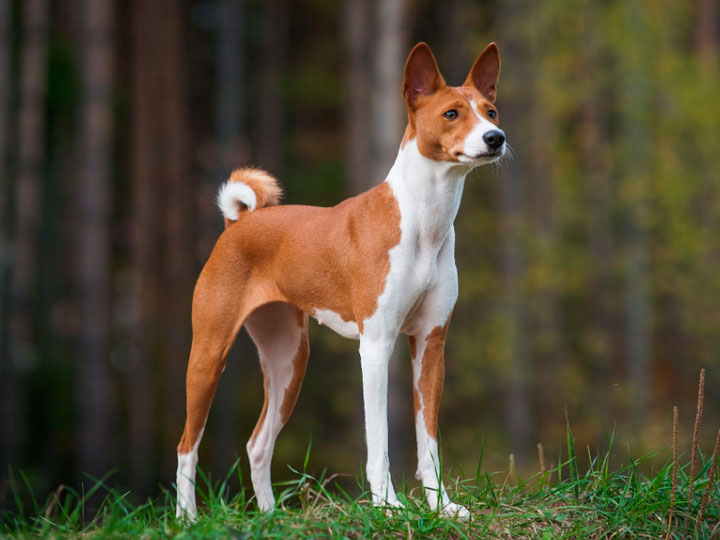
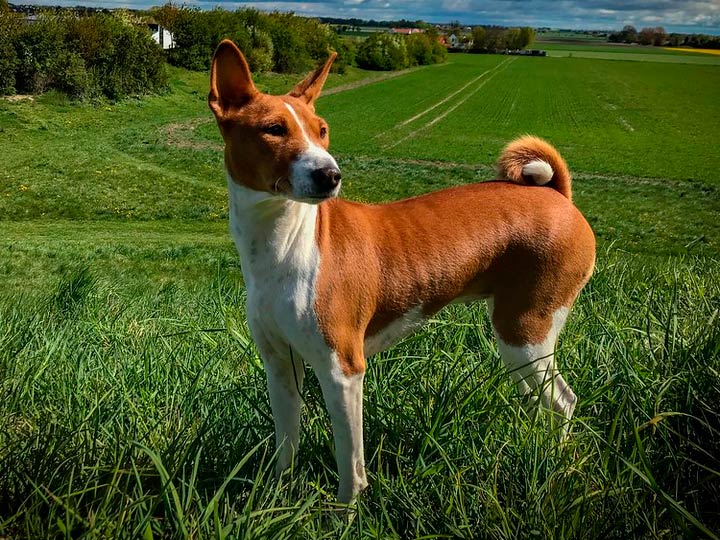
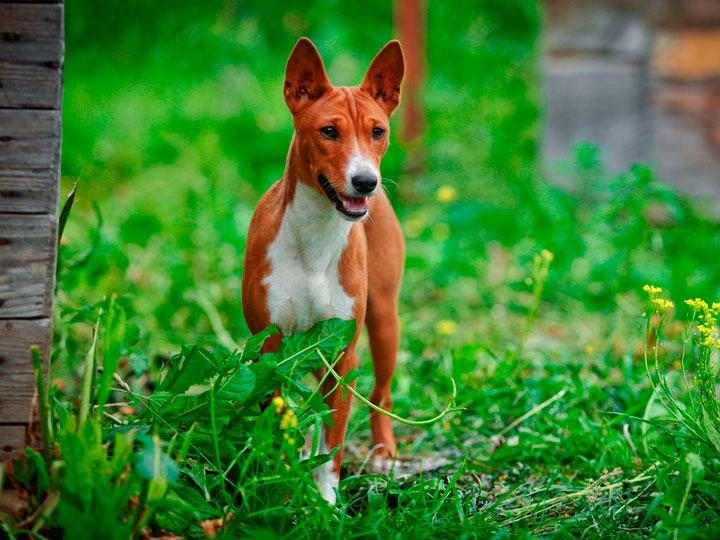
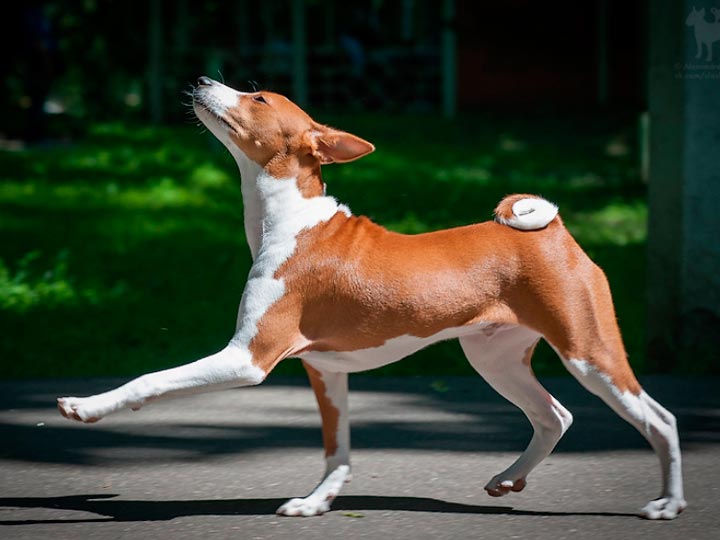
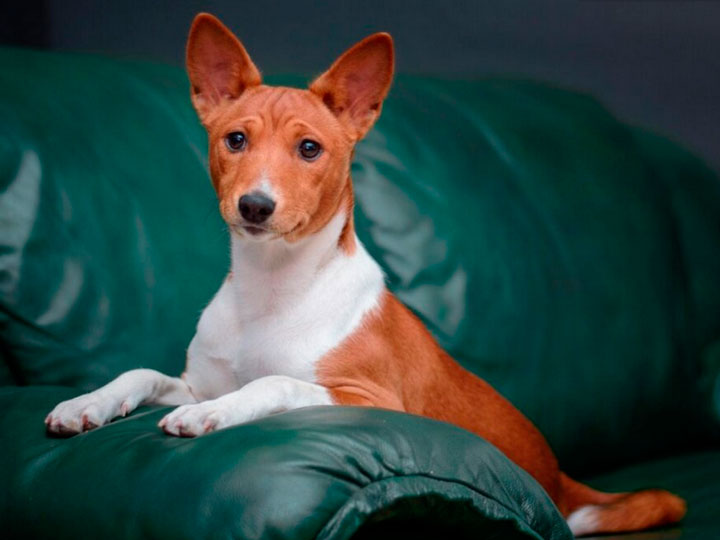
The Basenji is an elegant, short-haired dog with fine bone structure. Its head, with erect, wrinkled ears, is carried proudly on a well-arched neck. Its tail is tightly curled, and its chest flows smoothly into a well-defined waist.
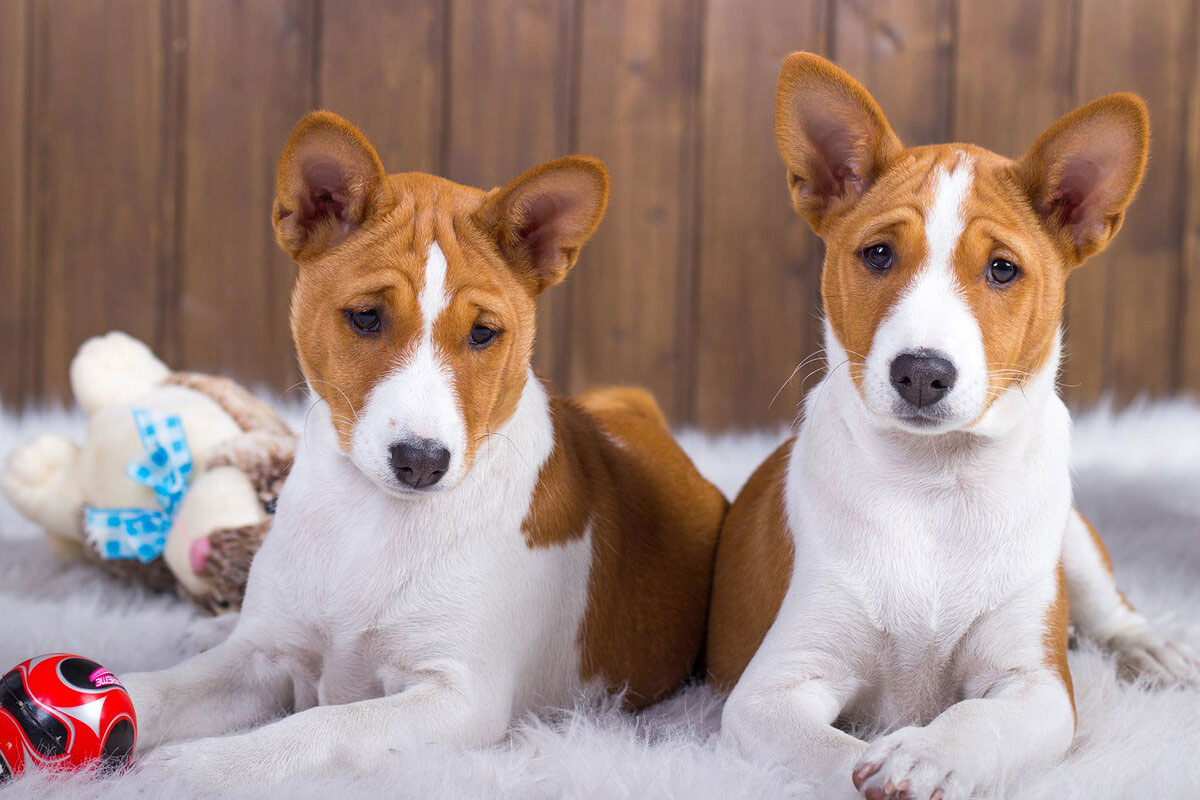
The skull is flat, medium width, and tapers toward the nose. Numerous fine wrinkles form on the head when excited. The jaws are strong with a perfect scissor bite. The eyes are almond-shaped, dark, set obliquely, and look into the distance. The expression is slightly enigmatic. The ears are erect, small, and finely textured. The neck is of good length, strong, with a noticeable nape, and set well on the shoulders. This gives the head a proud carriage.
The lack of barking has nothing to do with the Basenji's vocal cords. They are perfectly functional and enable them to produce a wide variety of sounds: snorting, giggling, growling, groaning, mumbling, and a distinctive howling sound.
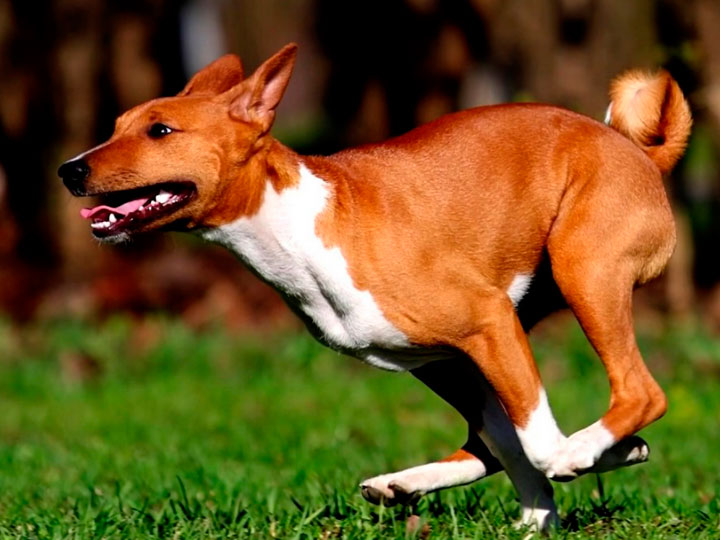
The back is horizontal and short. The loin is short. The tail is set high, close to the spine, and curled in a single or double curl. The chest is deep, rising to a pronounced waist. The forelimbs are lean, fine-boned, and muscular. The paws are small and compact, with deep pads and short nails.
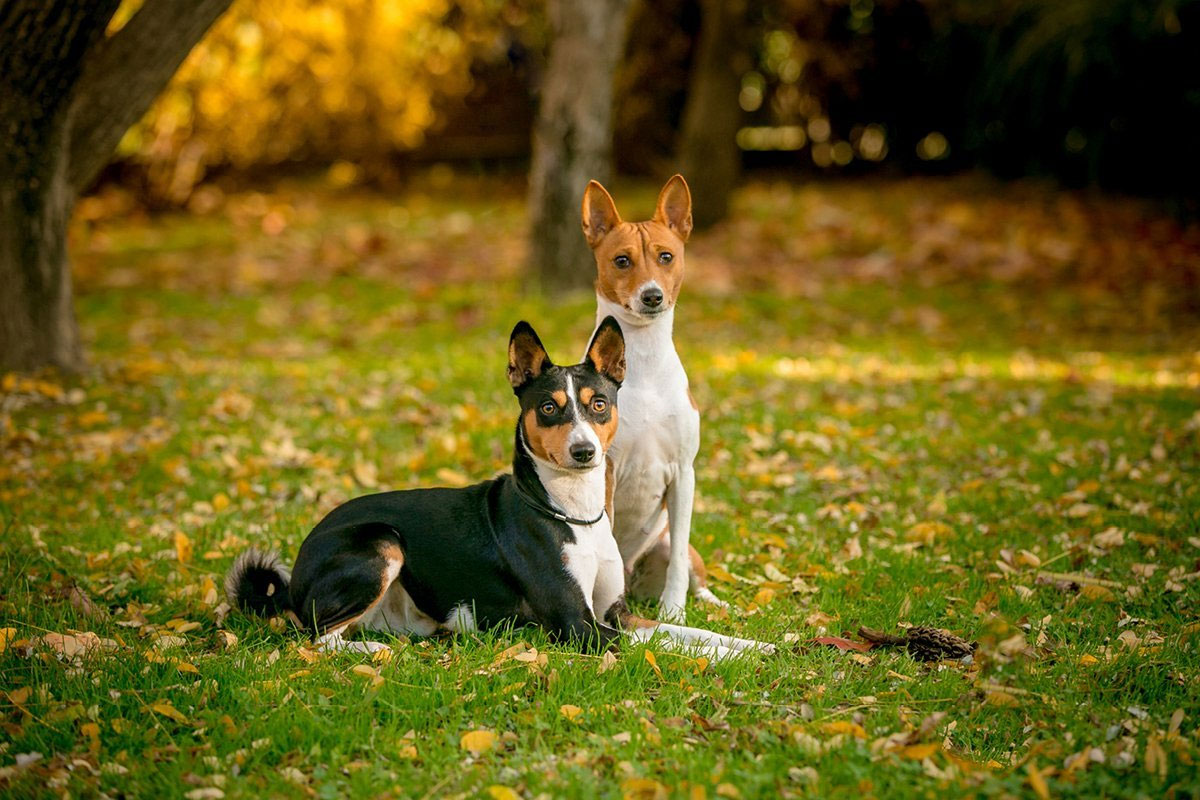
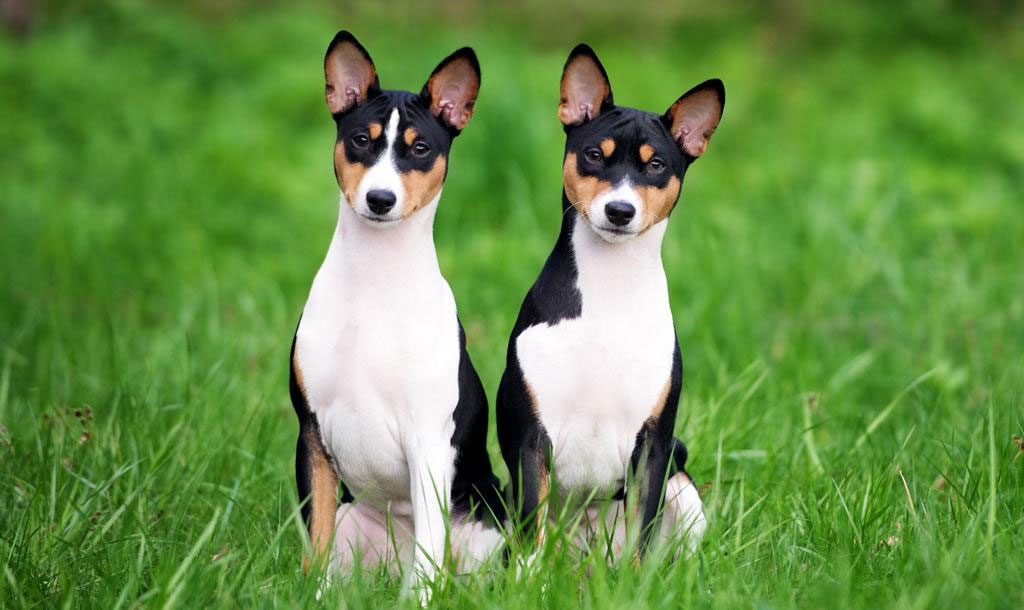
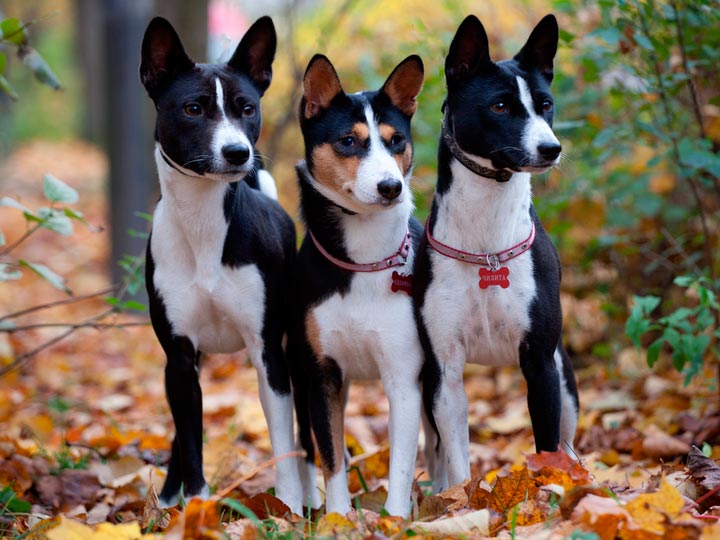
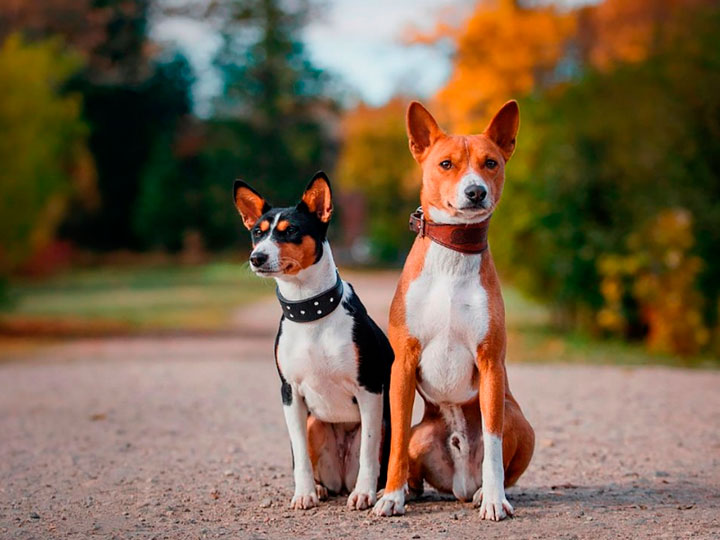
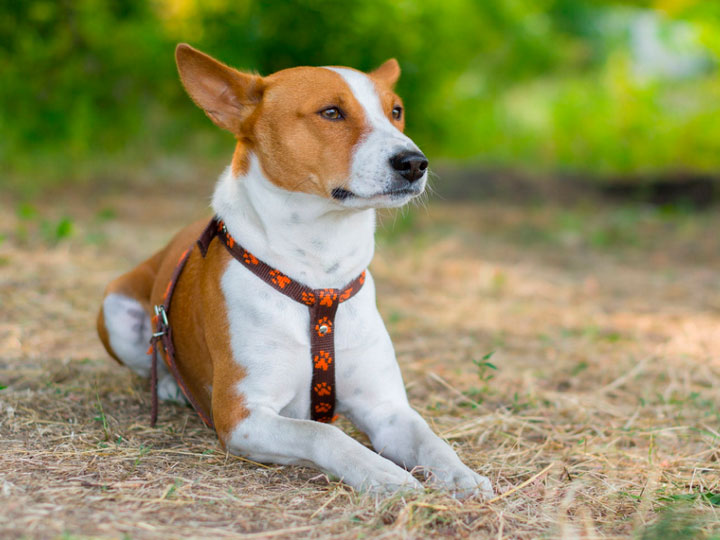
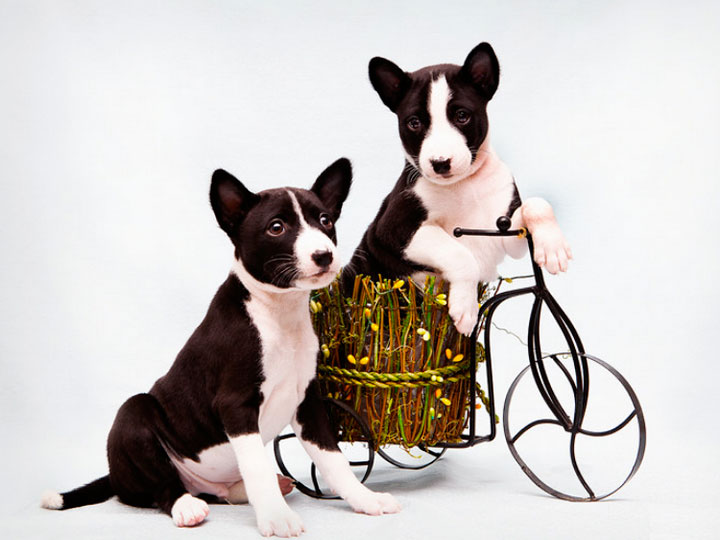
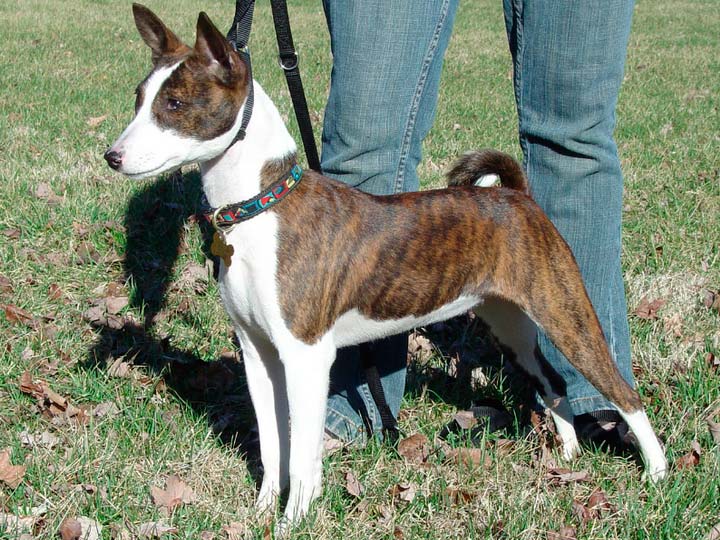
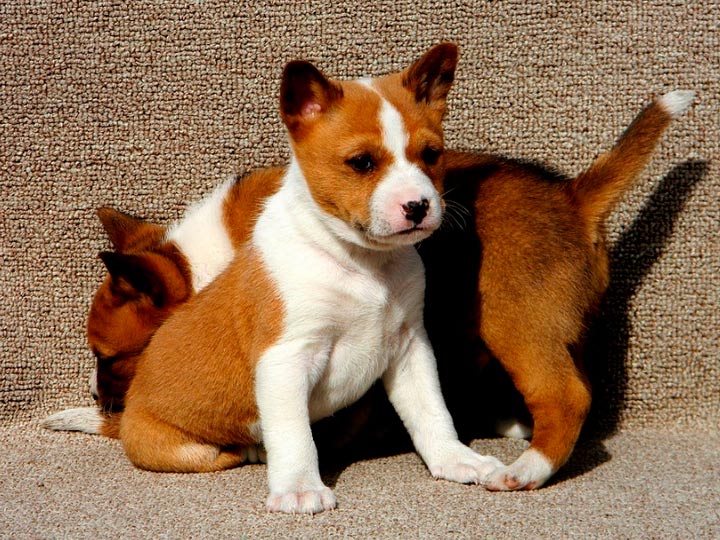
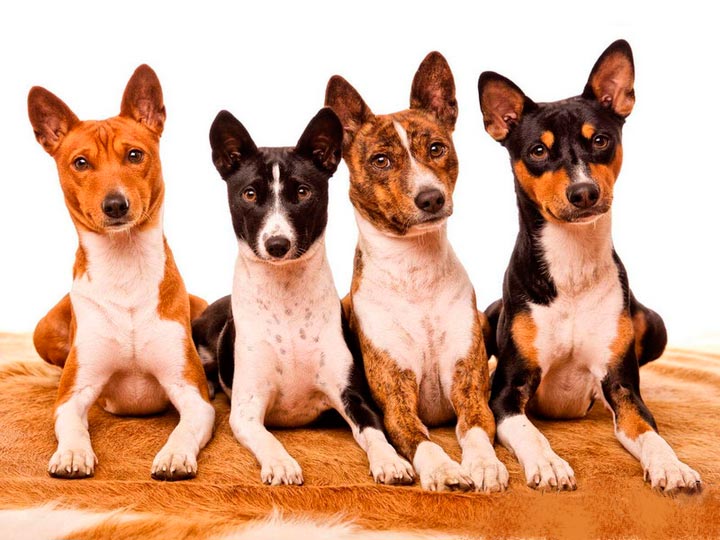
The coat is short, dense, and lies close to the body. There is no undercoat. Colors:
- Black and white;
- Red and white;
- Brindle (black, distinct stripes on red);
- Tri-color: black and white with melon seed colored markings.
In warm climates, the Basenji's coat is silky and copper-colored. In cold climates, it becomes coarser but retains its shine.
Character and behavior
Basenjis have a complex yet fascinating character. Many compare them to cats due to their mannered behavior, curiosity, sharp intelligence, and stubbornness.
These are playful, active dogs with a distinct sense of humor. They are curious about everything that happens around them and have their own opinions on everything. Basenjis are quite reserved and independent.
They don't bark, but they're not shy about showing their feelings and often accompany their actions with other sounds. They can growl, squeal, groan, snort, and howl loudly. It's believed that Basenjis were once able to bark, but humans trained them for "silent" hunting, where barking was unnecessary. Incidentally, the howls of the Basenji and New Guinea singing dogs They're very similar. No other dog breed can boast the ability to sing like that.
In the home, the Basenji considers itself a full member of the family, asserts its rights, and demands attention and time. It gets along well with cats, especially if raised together. However, it's not recommended to keep smaller pets, such as birds, ferrets, hamsters, guinea pigs, or rats, as its hunting instinct may take over. Basenjis are often aggressive toward other dogs, regardless of size or gender. This behavior is genetically determined and is more of a ritualistic one. Basenjis have no desire to harm their opponents, but rather to prove their superiority or rightness.
Those who want to get a Basenji must be prepared to forgive the dog's pranks and understand its nature, which is dominated by independence, cunning and energy.
Basenjis are very affectionate and gentle with their owners and family members. They are very attached to all family members. They prefer to sleep at your feet, or even in your arms. They get along well with children. Basenjis are playful, but they are not exactly a child's best friend. A puppy often needs to be shown that a human child is not prey to be chased and bitten. When playing, Basenjis mostly run in circles or run away, don't bring back their tray, and don't listen to commands. Therefore, children don't find them very interesting to play with.
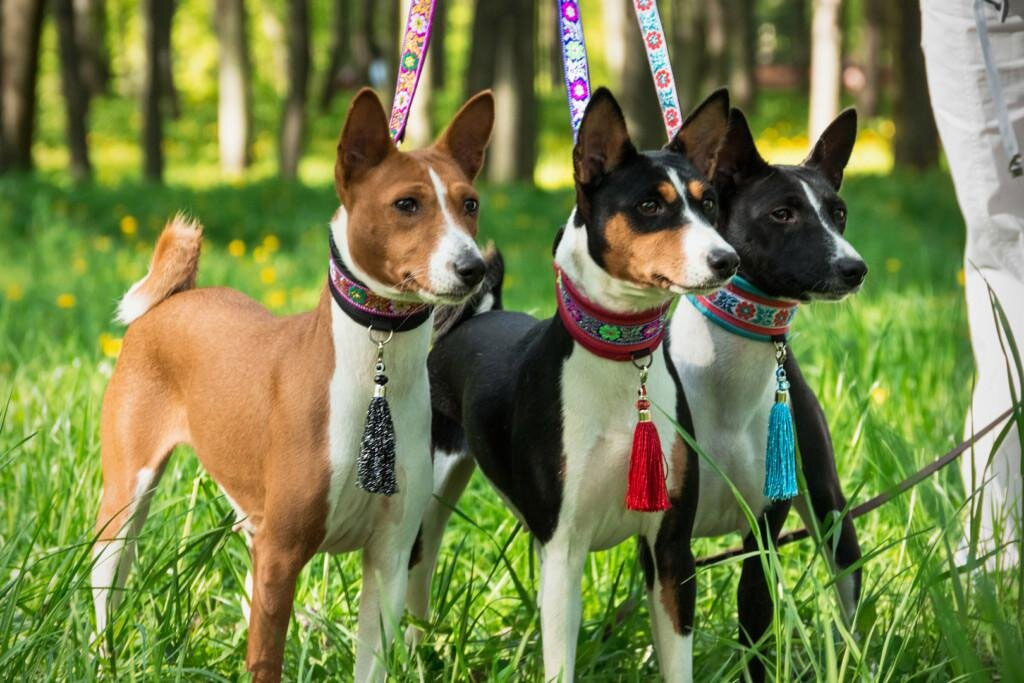
Basenjis have no guarding instinct and are completely non-aggressive toward people. They are friendly, aloof, or cautious with strangers. Some dogs are very friendly toward everyone.
Education and training
Much has been said about Basenjis' stubbornness and uncontrollability, their inability to obey, and their strong-willed and independent nature. This is true to some extent. Independence is the key to their survival in the wild for thousands of years. Nevertheless, Basenjis are highly intelligent and trainable, grasping everything quickly and memorizing commands. Some specimens are even competed in agility competitions, demonstrating their high level of sociability.
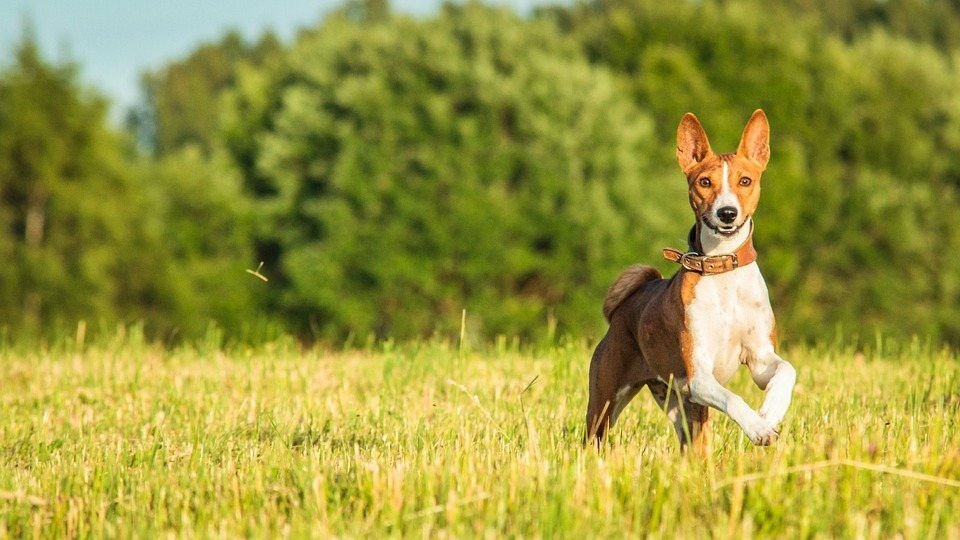
This breed is not for beginners. A Basenji owner must have experience in owning and training dogs, and be energetic, calm, and patient.
At home, these dogs are attentive and responsive to their owner. They always try to stay close. Outside, their instincts take over, and Basenjis often become unruly. They are very difficult to motivate, even with their favorite treats, if something else in their environment is more interesting. Basenjis require constant training, otherwise they become lazy and stop responding to even the simplest requests.
Features of Basenji care
The African Wild Dog is not suited to year-round outdoor living in temperate climates, but is perfectly suited to being kept in a private house or apartment. It thrives on comfort and seeks it by any means necessary. At home, it should have its own corner with a bed and toys, where it can retreat and relax. Basenjis do not smell, even when their fur gets wet. Seasonal shedding is moderate, but light at other times. The coat is short and rather coarse; if not groomed, it can cling to upholstery and clothing.
It's worth mentioning that these dogs simply can't stand rain or cold. They'd rather go for a walk when it's -10°C than stick their muzzles out in the rain. This doesn't apply to bathing. Most Basenjis tolerate water well and love to swim in ponds in the summer, especially if there are ducks or other game to hunt.
It's hard to find a Basenji owner who hasn't encountered the problem of ruined items. This dog will chew on anything, from socks and shoes to phones and televisions.
For many owners, the only solution is a dog run or crate. It will protect the dog from accidents, such as electric shocks caused by messing with cords, and from curious noses and sharp teeth.
Basenjis are social and don't tolerate prolonged loneliness. This dog isn't recommended for people with long work hours and unwilling to devote time to long walks.
Owners joke that this dog can't walk. Regular, leisurely walks aren't suitable for Basenjis. These dogs require a lot of active walking, challenging their brains and senses, otherwise they'll start looking for "entertainment" at home, chewing, howling, and whining.
Basenjis love to pick up things from the ground and are difficult to break. They are prone to escapism and are difficult to manage outdoors. They respond to command only when they deem it necessary. Males can be pugnacious, and the size of the opponent is of little concern to them. They will run into traffic without looking back. Many owners walk Basenjis exclusively on a leash, but without jogging or cycling, the dog will not get the exercise it needs. It has been noted that Basenjis are more likely to display aggression toward other dogs when walked on a leash. When running in the field, Basenjis primarily follow their owner and remain within sight. However, not all Basenjis behave this way. To be on the safe side, some owners equip their pets with a collar with a GPS tracker. When the temperature drops below 5-10°C, the dog is dressed according to the weather.
For calm people, walking a Basenji is difficult and uninteresting. Only people with nerves of steel, plenty of free time, and a nearby running track should consider owning one.
Care
Basenjis are naturally very clean. They even wash themselves like cats. They never have any odor. In fact, many Basenji owners claim they are the cleanest dog breed. Their coat should be brushed once a week with a brush. This will minimize shedding. Bathing is infrequent. Ears are cleaned as needed. Teeth brushing is recommended once a week, but this is often replaced by dental toys and treats. Nails are trimmed as they grow.
Nutrition
A Basenji's diet should include a full range of vitamins, proteins, carbohydrates, and minerals essential for its health. You can feed your pet commercially prepared foods above the super-premium level or natural products. Commercial Basenji foods are suitable for complete diets for medium-sized dogs with active lifestyles. When choosing a food, consider your dog's age.
The basis of a natural diet should be meat and organ meats. However, don't feed your pet only meat; include cereals, vegetables, and fruits. Basenjis absolutely adore fresh greens. Their diet should also include high-quality, medium-fat dairy products. As for meat, it's best to choose lean cuts of beef, veal, and turkey. It's also important to carefully monitor the quality of the food, keeping in mind that Basenjis are prone to obesity.
They love to beg for food from the table. However, owners should not indulge in such behavior. Basenjis should have their own bowl for food and fresh water. Feeding Basenjis sweets is prohibited, as this can lead to diabetes. Tubular bones and fish bones should also be excluded from their diet, as they can be dangerous. Spicy, smoked, fatty foods, and sausages are also contraindicated.
Health and life expectancy
Basenjis are generally strong and healthy dogs. The breed is generally considered to be relatively healthy, but is not immune to genetically inherited diseases. One such condition is Fanconi syndrome, which causes kidney dysfunction.
Many clubs require dogs used for breeding to have a marker test for Fanconi syndrome.
In addition, there are diseases to which a predisposition is noted:
- Dermatitis;
- Bladder infection;
- Hypothyroidism;
- Pyometra;
- Infertility;
- Hemolytic anemia;
- Hip dysplasia;
- Enteropathy;
- Ophthalmological diseases (progressive retinal atrophy, residual pupillary membrane, coloboma);
The average life expectancy is 13 years. The most common causes of death are: old age (30%), Fanconi syndrome (13%), accidents and injuries resulting from bites (9%), and tumors (9%).
Choosing a Basenji Puppy
The Basenji is a rare and uncommon breed. Finding a breeder relatively close to home isn't difficult, but you may have to wait for a puppy available for sale. Even if you don't plan to show or breed, it's advisable to get a puppy from a reputable breeder who has long been familiar with the breed and breeds only healthy dogs with good temperaments.
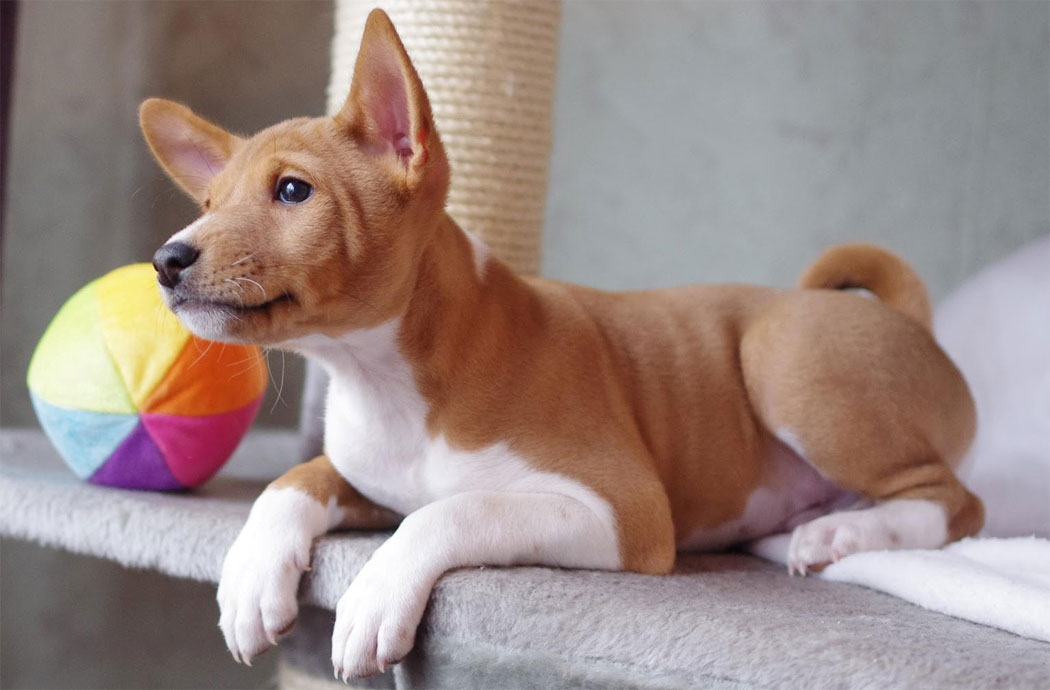
Before choosing a puppy from a litter, you should meet the parents, assess their personality, appearance, the conditions in which they are raised, and the breeder's attitude toward their pets. It's also a good idea to decide on the desired color and gender in advance.
You can find out about breeders and planned matings at the National Breed Club.
The puppy should appear completely healthy, neither shy nor aggressive. It's important to ensure that it meets the standard. Wrinkles on the head are more pronounced in younger puppies. They may also be present on the chest. The paws should appear strong, and the tail should be properly curled, without kinks. The coat should be clean and smooth. Occasionally, puppies with some kind of exterior flaw, such as light eyes or an unusual color, are encountered. These puppies are typically considerably less expensive, but their pedigree documents, as well as subsequent pedigrees, are marked only with the word "rejected."
It's best to bring your puppy to its new home no earlier than 2 months of age, after its first vaccinations. At the time of purchase, the puppy should have a birth certificate, a tattoo, and a veterinary passport with vaccination records.
The price of a pet-class Basenji puppy ranges from 30,000 to 40,000 rubles and up. Only puppies without papers are usually sold for less. Promising puppies and youngsters for shows and breeding rarely cost less than 70,000 rubles.
Photos
The gallery features photographs of Basenji dogs of different sexes, ages, and colors.
Video about the Basenji breed
Read also:
- Fox Terrier (smooth and wirehaired)
- Greyhound (English sighthound)
- Newfoundland (Water Dog) is a dog breed


Add a comment