
Sand cat
Sand catThe sand cat, or steppe cat, is a member of the wild feline family, known for its ability to survive in the harsh conditions of arid deserts. It is the smallest of its relatives, but is also very agile, strong, and resilient. Sand cats' attractive appearance makes them desirable pets, but these cute predators are ill-suited for this role.
Content
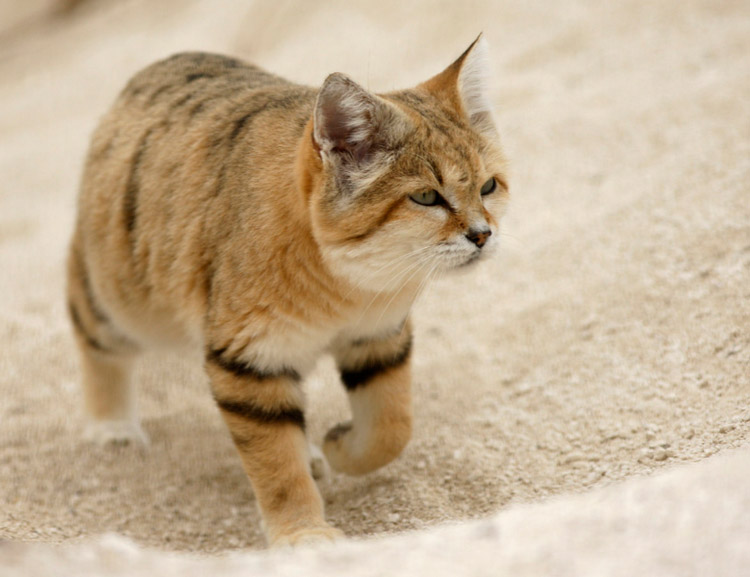
A sand cat in the wild
The sand cat's habitat, with its beautiful Latin name, Felis margarita, extends from the Sahara Desert across the Arabian Peninsula to Central Asia. Found exclusively in hot, arid regions, it inhabits sandy deserts with virtually no vegetation and rocky valleys overgrown with shrubs. It is nocturnal, occasionally active only at dusk during the cold season. It seeks refuge from the daytime heat in shelters, primarily abandoned burrows of corsac foxes, foxes, and porcupines. If none are available, the cat digs shallow holes or enlarges rodent burrows.
Due to their secretive lifestyle in remote, arid areas, the exact population of sand cats is unknown, but scientists estimate it to be approximately 50,000 individuals. For the same reason, felinologists know very little about sand cats, their lifestyle, and habits. The only remaining resource is studying those living in zoos.
The home ranges of individual cats can cover up to 15 square kilometers and often overlap. In search of food, sand cats can travel up to 10 kilometers per day. They dislike rain and bad weather. During these times, they prefer not to leave their burrows, even if it means starving. Sand cats' natural enemies include monitor lizards, large snakes, jackals, and birds of prey.
Despite its small size and weakness, the sand cat is a strong and powerful predator, very resilient and fast, and can reach speeds of up to 40 km/h.
By nature, the velvet cat is very cautious and unsociable. If threatened, it will try to hide in a shelter, but if cornered, it will fight back.
Reproduction
In the wild, the breeding season lasts about two months and varies depending on the location. In the Sahara, it's from January to April, and in Pakistan, from September to October. Gestation lasts 59-63 days. A litter typically consists of 3-5 kittens, rarely up to 8. The kittens open their eyes at two weeks of age, begin to hunt at 5 weeks, and are free-ranging by 8 months. Sexual maturity occurs at 9-14 months.
In captivity, velvet cats live for about 13 years and are ready to breed several times a year. Breeding them is complicated by the fact that they often reject their newborns. Most kittens do not adapt to artificial feeding and die.
Diet
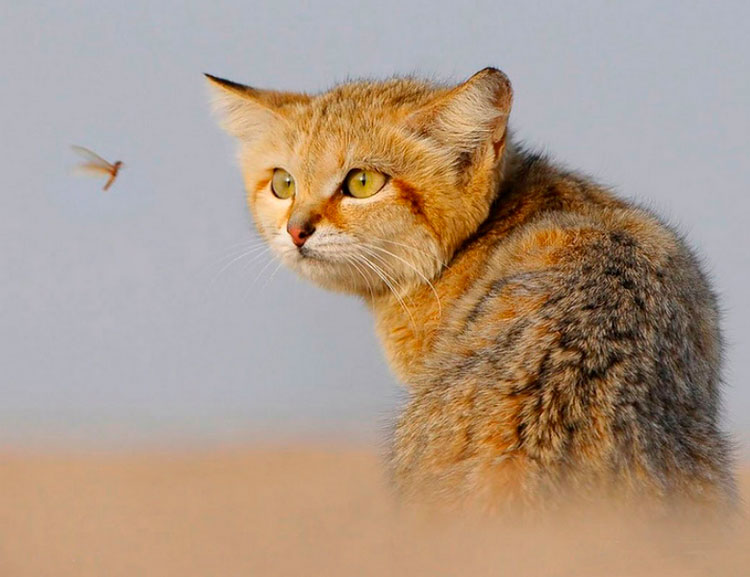
The sand cat is a predator. Its diet includes any prey it can find. This primarily includes small rodents, insects, spiders, lizards, and occasionally birds. They can go for long periods without water, obtaining moisture from their food.
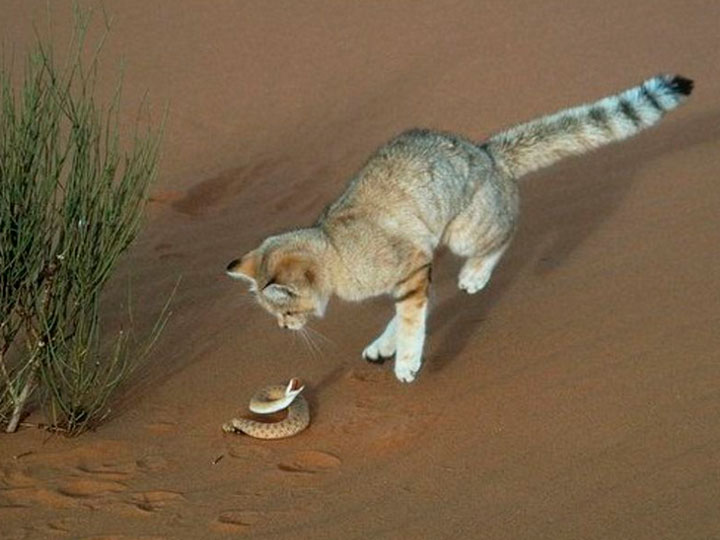
The sand cat is also known for its ability to hunt venomous snakes.
During the cold season, steppe cats sometimes move closer to settlements, but do not touch domestic birds or cats.
Appearance
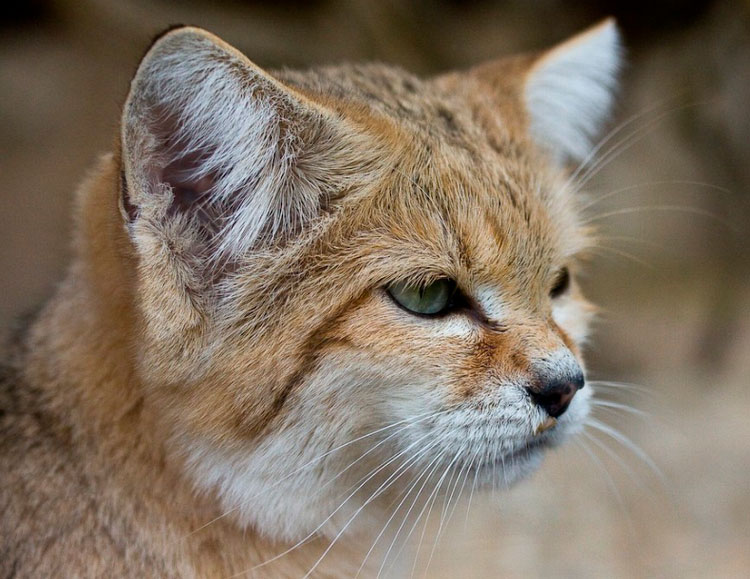
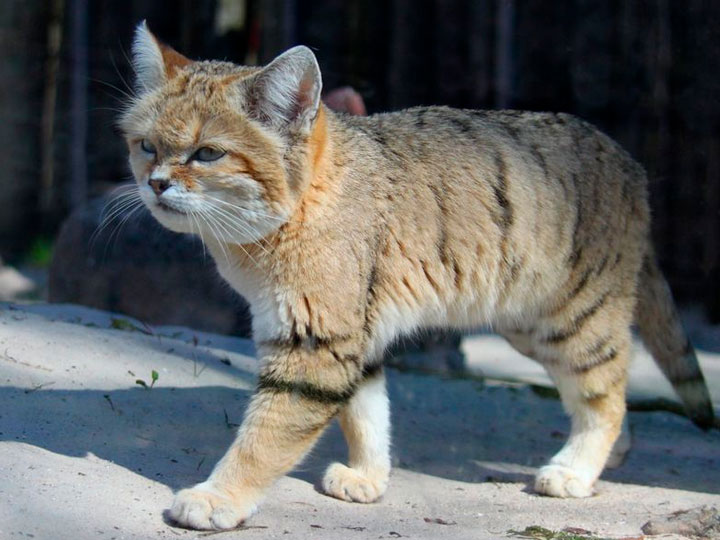
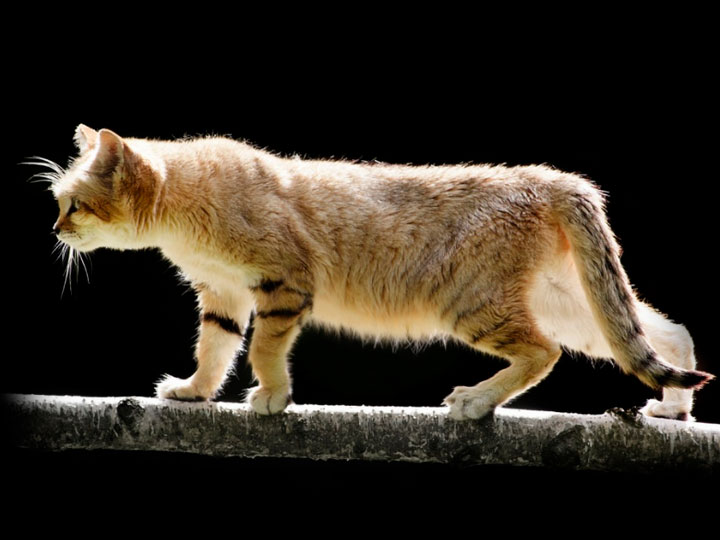
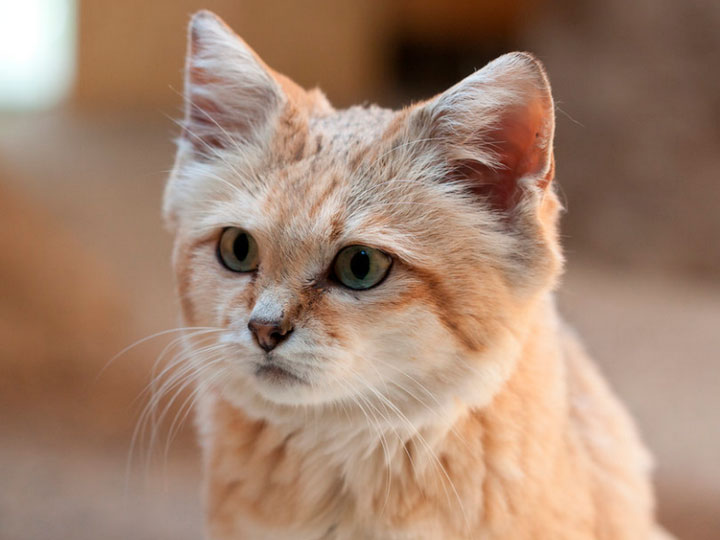
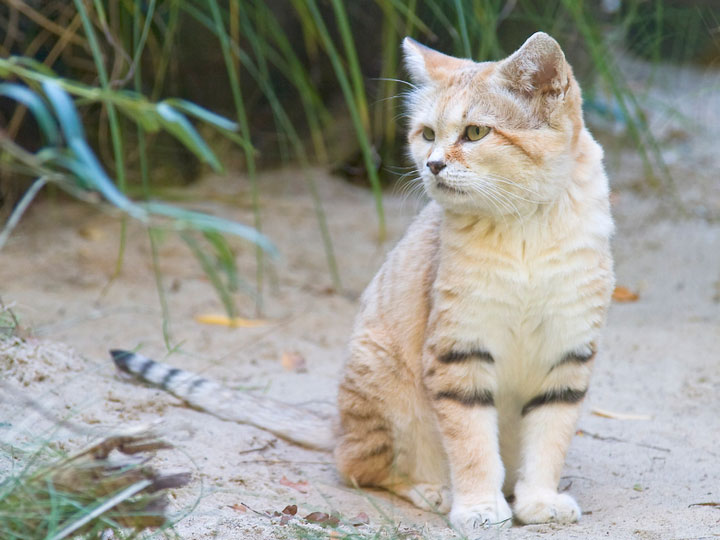
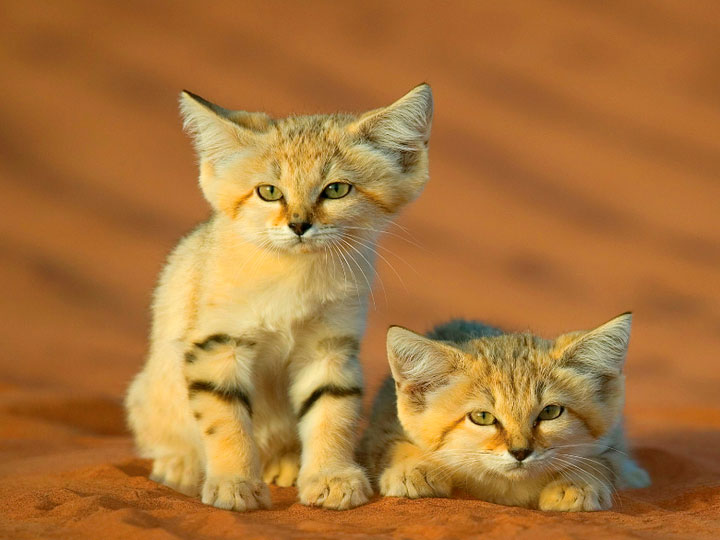
The sand cat is one of the smallest wild cats, weighing approximately 3 kg (6.6 lb) as an adult and reaching a body length of no more than 55 cm (22 in). Its appearance is somewhat unusual and quite attractive. Its rather large head is slightly flattened, adorned with large ears and thick sideburns. Sand cats have short but strong paws. Their feet are covered with thick, coarse fur, which protects the pads from burns from hot soil.
The fur is soft and thick. It protects against the cold at night and the heat during the day. The color ranges from sandy to light gray with various darker stripes and markings that often blend into the overall color. The fur on the chest, chin, and belly is very light.
Captivity
Sand cats are kept in many large zoos around the world, but they are rarely seen in captivity. Sand cats are absolutely not suitable for homes, much less apartments. They require plenty of open space. In captivity, they live in spacious enclosures, which are often designed to resemble their natural habitat.
Sand cats raised in captivity become accustomed to humans and are less aggressive and shy, but playing with them is dangerous. They can severely scratch or bite. They follow their instincts and are not easily trained like domesticated cats. Adult animals in captivity experience profound stress, which often leads to neuroses and behavioral problems. Another problem is their territorial marking, which, unlike that of domestic cats, cannot be corrected by castration.
What to feed a sand cat at home
A domestic sand cat's diet should differ minimally from that of the wild. Small live rodents should constitute the majority of its diet. In zoos, cats are fed meat and meat products, and sometimes eggs and poultry.
Where to buy a sand kitten
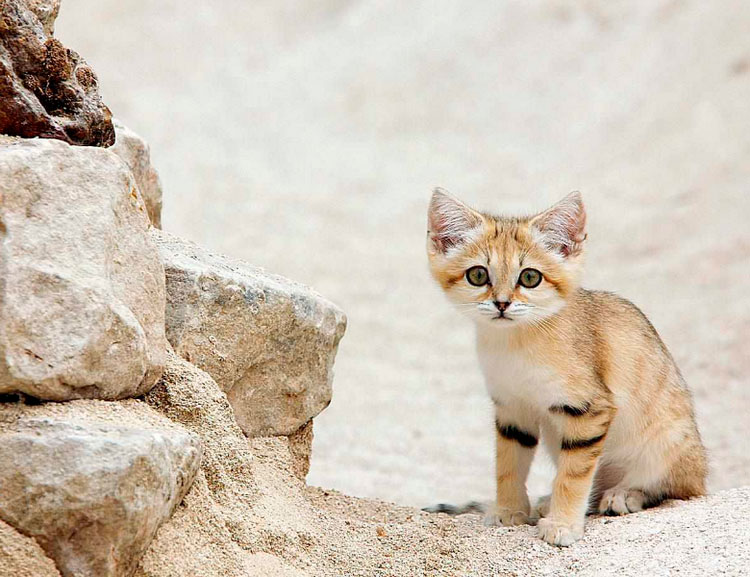
Sand cats are typically sold only by zoos to other zoos. The average price for a kitten is $2,000. Legally purchasing a domestic sand cat is virtually impossible. In Turkmenistan, Uzbekistan, and Kazakhstan, poachers sometimes capture adult sand cats or take their kittens for sale. Buying such exotic animals is not only illegal but also dangerous. Wild animals remain wild their entire lives and can also carry serious diseases.
Photos and videos
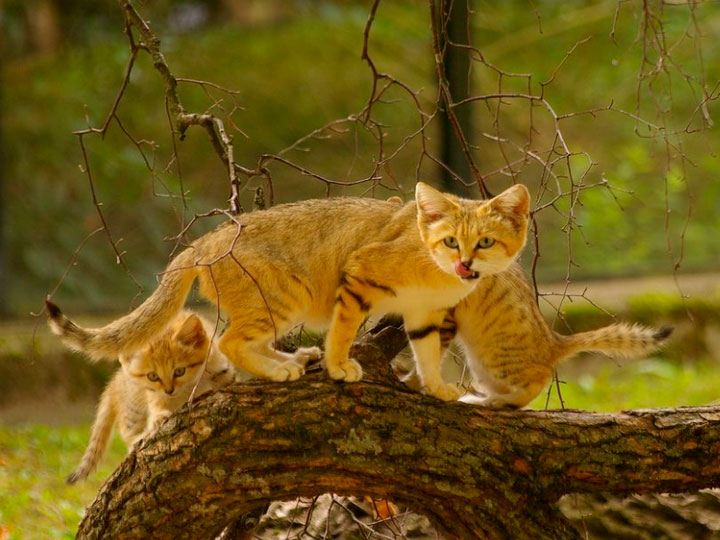
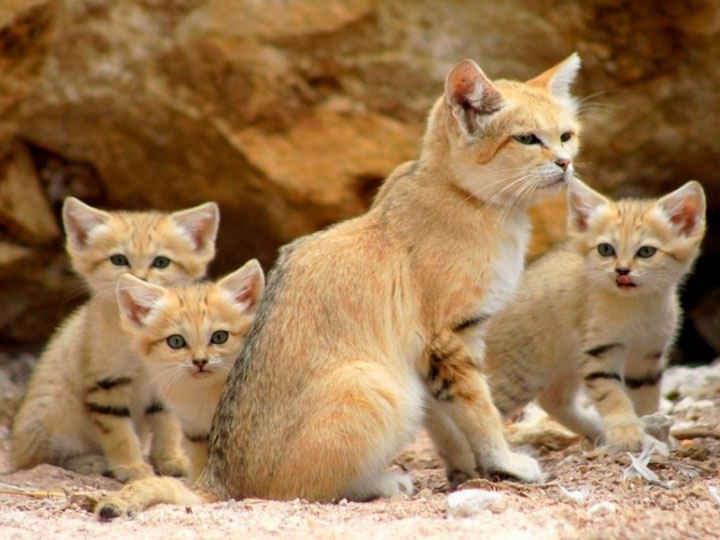
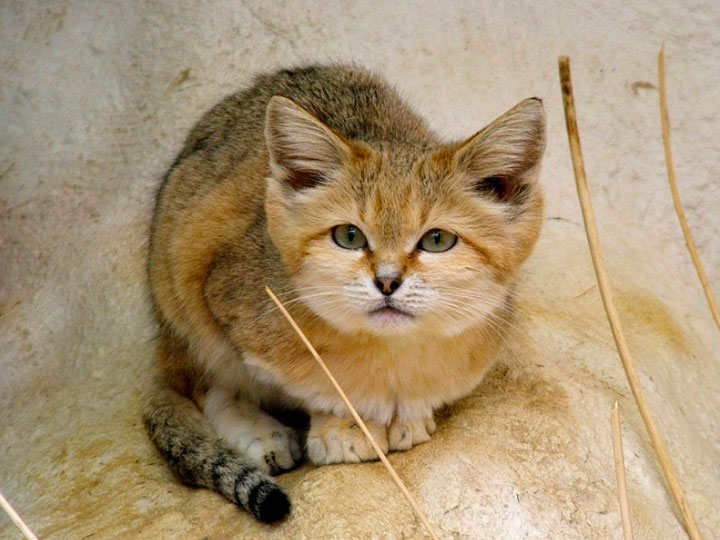
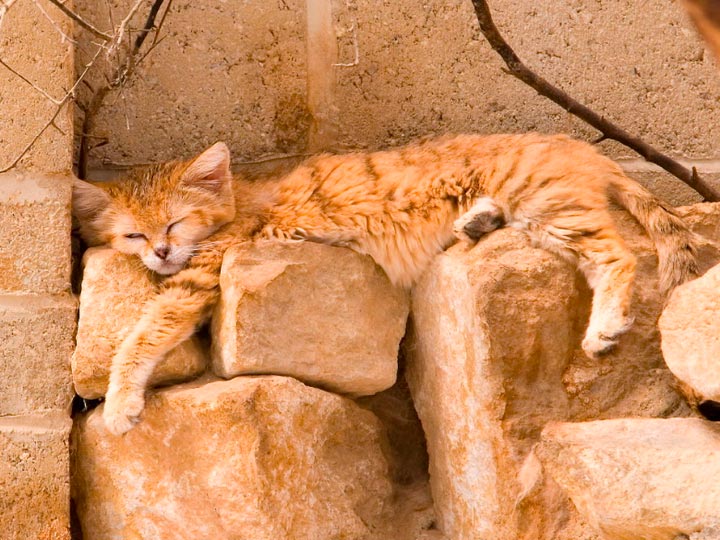
The gallery contains photos of sand cats (steppe cats) of different ages, sexes, and subspecies, which differ from each other only slightly in color.
Video about sand cats (steppe cats)
Read also:


Add a comment