
Bambino
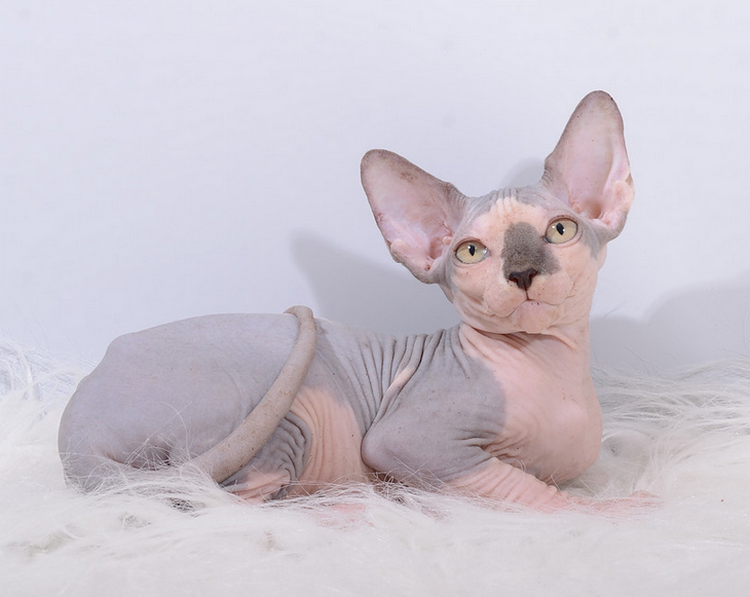
This funny creature has a name Bambino, which means "child" or "baby" in Italian. This young but already popular breed was created by crossing Munchkins and Canadian Sphynx cats, resulting in two mutations: hairlessness and short legs.
Content
History of origin
The first representatives of miniature cats with short legs were munchkinsThe breed emerged from a spontaneous natural mutation that was successfully established by American breeders. Munchkins were recognized in 1985, but American breeders were unstoppable. They crossed Munchkins with Curls, creating a new breed called the Kinkalow. The love between the Munchkin and the La Perm gave rise to the Skookum breed, and Munchkins and Persians brought the world Napoleons. We could have stopped there, but soon another surprise awaited the cat lovers. Whether by accident or on purpose, someone decided to breed the munchkins with sphinxesThis marked the beginning of a new breed – the Bambino.
History of the breed in America
In the early 2000s, a hairless, short-legged kitten was acquired by Stephanie and Pat Osborne, a couple from Ozark, Arkansas, who owned the HolyMoly Sphynx cattery. The breeders decided to foster these unusual traits, and with their considerable experience breeding cats, their efforts were successful. The Osbornes named their first kitten Bambino. They later decided this name would be a fitting name for the breed. The Bambino litter was first registered in 2005, and the breed was granted status in 2006.
The Bambino is not yet a true breed, as it is not recognized by any international organization. TICA has only granted it experimental status.
Development of the Bambino breed in Russia
In parallel with American breeders, crossbreeding between Munchkins and Sphynxes was also underway in Russia, specifically at Baby Moon Cattery, run by Maria and Elena Chernov. The first domestic Bambinos were registered in 2005 by the WCA Nica Center. By that time, the cattery had already bred 18 litters (from the first to the fourth generation).
Video review of the Bambino cat breed:
Today, Bambinos are registered on the Rare and Exotic Family List (REFR) and are also recognized by the Toy Cat Association (TDCA).
Appearance and standards
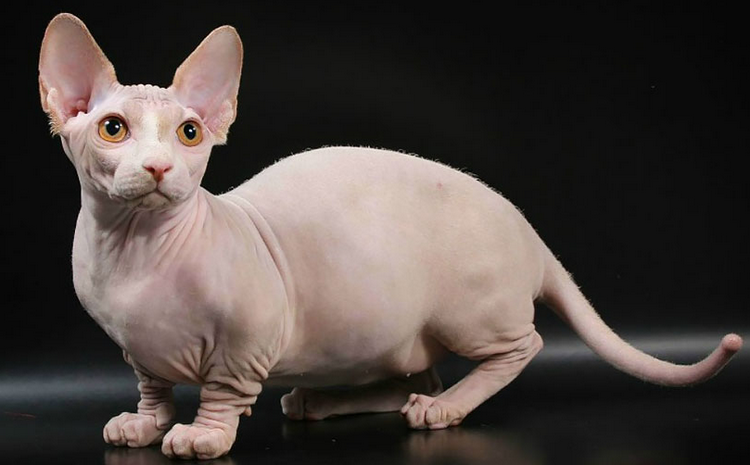
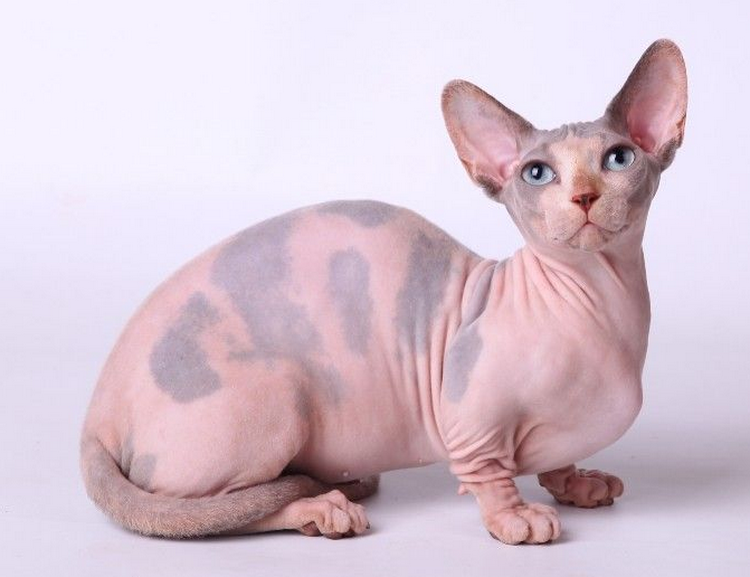
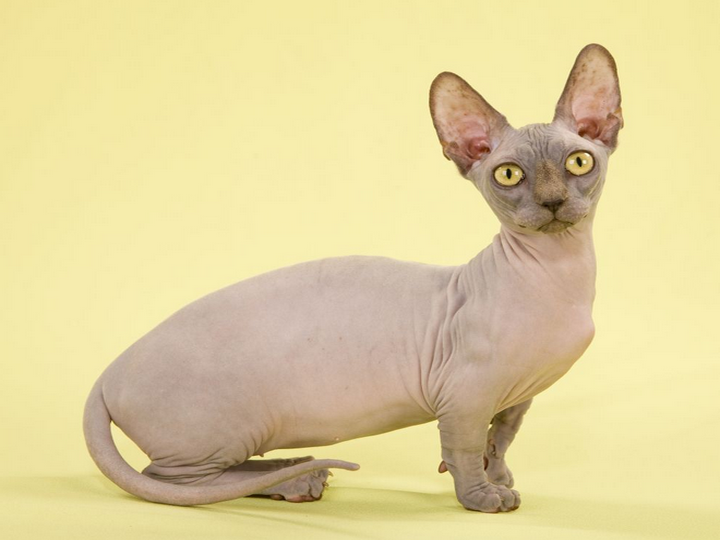
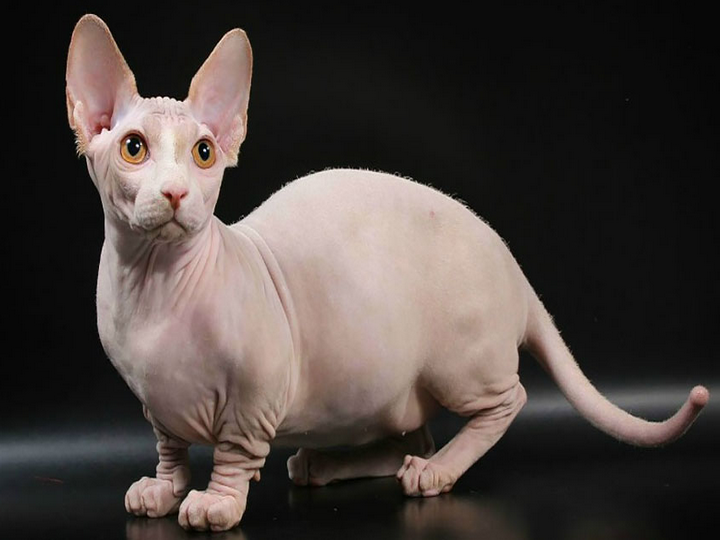
Bambinos lack the grace and refinement of Canadian Sphynxes. They are playful and charming, with an unusual gait and amusing mannerisms inherited from Munchkins. These stocky creatures are small in size, weighing an average of 2-3 kg.
Head and muzzle
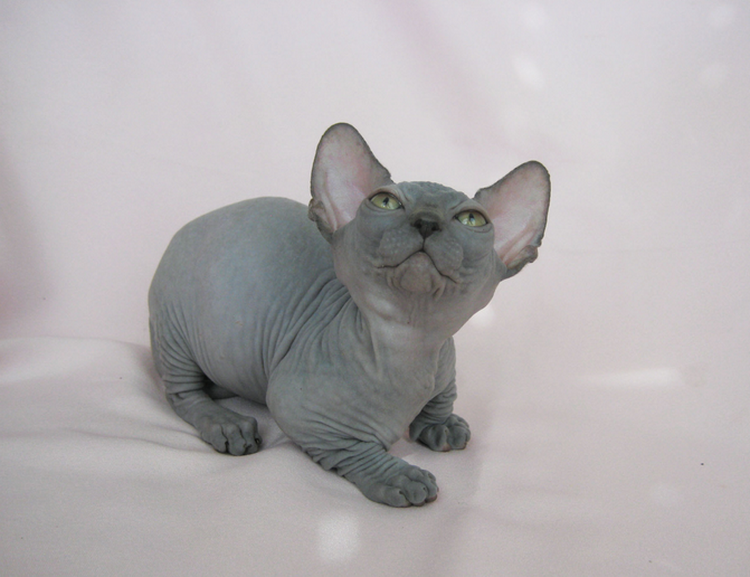
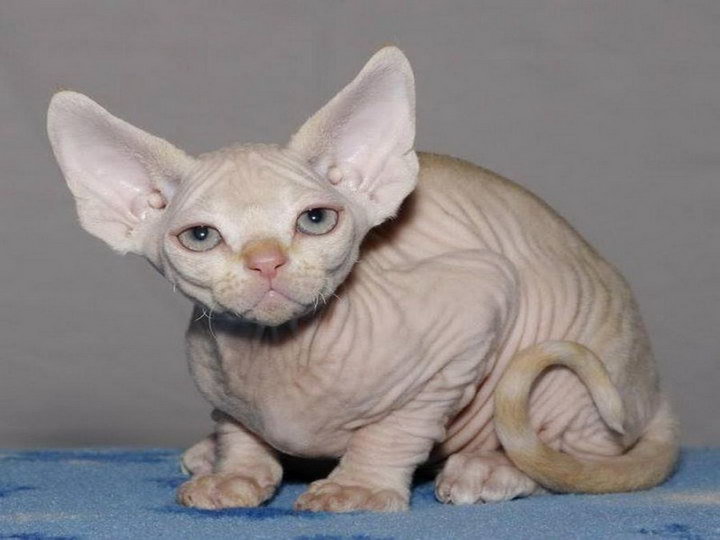
The Bambino's head is medium-sized, a modified wedge with rounded edges, slightly narrower than long. Cheekbones are prominent, with a well-defined break. The muzzle is rounded, full, and accentuated by a pinch. The chin is strong but not protruding, and is aligned with the nose. The ears are large to very large, well-opened, and leaf-shaped. A slight lateral spread is noticeable. It is important that the distance between the ears is not less than the width of the base of the ear. The eyes are large, set slightly obliquely and wide apart, and are a bright, uniform color that matches the coat color.
Physique
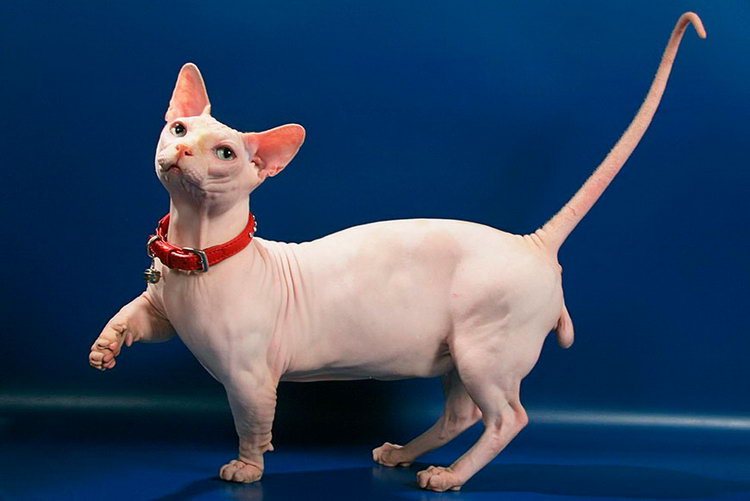
The body is slightly elongated, but not stretched out. The width at the hips and shoulders is approximately equal. The muscles are well developed. The neck is of medium length, rounded and slightly arched toward the base of the skull. The chest is deep, smoothly flowing into powerful, strong shoulders. The belly is full and rounded. The line of the back rises toward the rounded croup. This rise is especially noticeable when the cat is standing. The skeleton is quite heavy, with pronounced sexual dimorphism. The legs are short and strong. The hind legs are slightly longer than the forelimbs, the shoulders and forearms, as well as the thighs and lower legs, are approximately equal in length. The preferred leg length is 1/3 of the height at the withers. The tail is proportionate to the body, flexible, fairly thick at the base, with a rounded tip.
The gene responsible for short legs in Bambinos is recessive, so in the same litter, along with dwarf babies, babies with long legs are born. These babies are recognized as purebred and used for breeding, but they do not participate in shows.
Skin, coat and colors
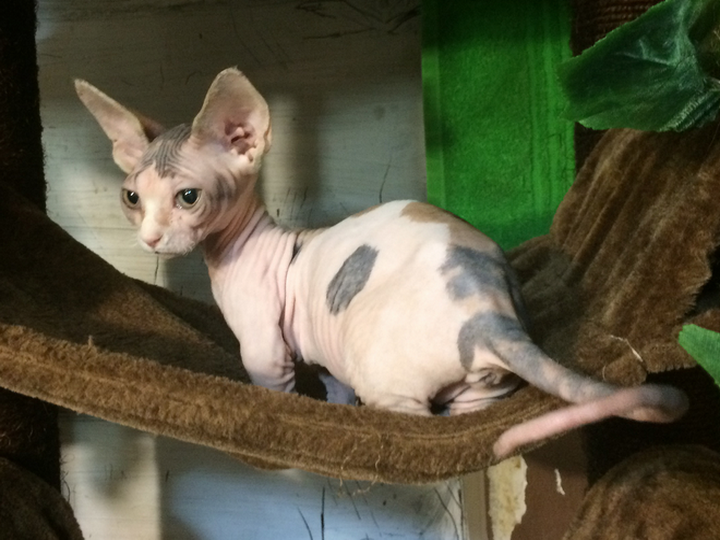
The Bambino's skin is fairly thick with a good layer of subcutaneous fat, folded, especially around the shoulders and muzzle, between the ears, and on the neck. The whiskers are short, curled, and broken, or completely absent. A few short, fine hairs are present on the legs, tail, and scrotum, and short hair often covers the bridge of the nose. A small amount of light down is permitted along the contour of the lower part of the inner ear, as well as on the outer part of the auricle. The rest of the body may be completely bare or covered with soft down no more than 2 mm long, which feels like suede or velour.
Any colors are accepted, in any combination, with the exception, of course, of those characterized by zonal distribution of color along the length of the hair.
Character
Bambinos may appear clumsy and pampered, but they are actually strong, lively, very active and playful cats, just as bouncy and noisy as their larger, hairless cousins and just as playful and curious as Munchkins.
According to breeders and experienced owners, Bambinos are completely devoid of aggression and any hunting instincts. They are very gentle and affectionate, getting along well with other animals, even rodents and birds. They mature slowly, retaining the curiosity and spontaneity of kittens until they are three years old, later becoming a little calmer and more self-assured.
Content
There are several important aspects to keeping a Bambino that future owners should be aware of. The room temperature should be comfortable, between 22-25°C, and drafts should be avoided.
If maintaining the required microclimate is not possible, it is necessary to provide additional insulation for your pet and select comfortable clothing. In cold weather, it is important to ensure that the delicate skin does not get damaged by a hot radiator, and in summer, protect your little one from ultraviolet rays. Lounging in the sun or on a windowsill on a sunny day can not only cause a tan but also serious burns. Otherwise, the requirements are the same as for any other cat. Your pet should have its own bowls for water and food, and a litter box. suitable filler, a scratching post, or better yet, a play complex, a couple of toys, a bed or a cozy house where the child can retire and relax.
Diet
It's important to decide in advance what type of feeding you'll be feeding your pet: natural food or prepared foods (dry or wet). The feeding schedule and diet depend on your pet's age, but it's best to stick to a routine your pet will quickly adapt to.
Bambinos inherited their healthy appetite from the Sphynx, so it's important to focus not only on the cat's desires, but also on the recommended portions to prevent obesity and related problems.
Features of caring for a Bambino
The key to grooming is keeping the skin clean. Like Sphynxes, Bambinos have sebaceous glands that secrete a special oil that must be removed. Bathe them as needed, approximately every 7-10 days. Sometimes, bathing can be replaced by wiping the skin and folds with wet wipes. It's recommended to use shampoos specifically designed for hairless breeds or baby shampoos like Johnson's Baby.
Ears become dirty quite quickly due to the lack of fur, so it's important to clean the auricle regularly. Eyes should be washed daily to remove any accumulated debris. Special lotions, chamomile infusions, or tea can be used.
Dental and oral care involves acclimating your kitten to a toothbrush and toothpaste, and brushing them once or twice a month. However, many owners skip this step, and a well-balanced diet is the key to healthy teeth.
If your cat is accustomed to a scratching post and doesn't damage furniture or scratch, there's no need to trim their claws. Otherwise, you can trim their claws with special clippers every 3-4 weeks.
Health and life expectancy
While the breed is still too young and poorly studied to confidently determine whether it has any specific genetic diseases, several common health issues can already be identified:
- Allergies and various types of dermatitis;
- Tumors developing due to empty estrus;
- Isolated cases of development of hip dysplasia.
Bambino cats require regular vaccinations, routine deworming and protection from external parasites. Breeders claim that Bambinos are very strong and healthy cats, despite their unusual appearance, and that mutations associated with short legs and hairlessness do not pose any problems. The average lifespan is 12-13 years.
Choosing a kitten and price
Buying Bambino kittens privately at a low price is unlikely; the breed is not yet widespread and is primarily bred by specialized catteries. As of 2016, their number in Russia did not exceed 10. Most kittens are sold with the condition of subsequent spaying/neutering.
A kitten can be called a bambino if at least three generations have passed since the mating of a munchkin and a Canadian sphynx.
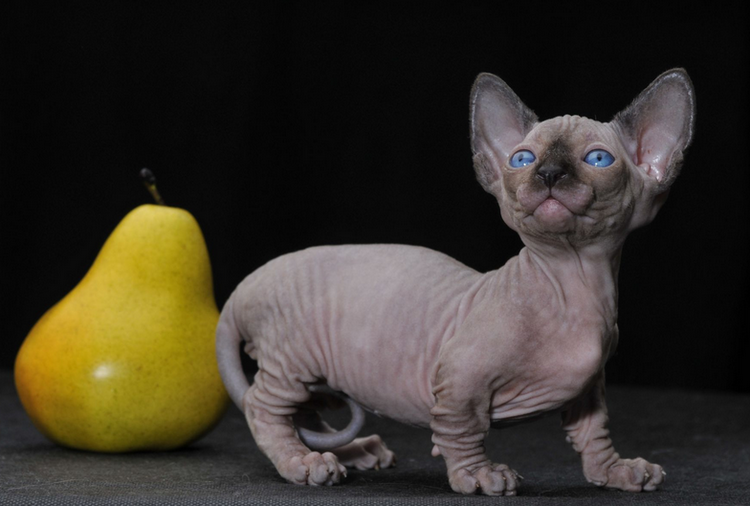
Cats generally tolerate pregnancy well and give birth to up to five kittens, treating their offspring tenderly and very attentively. Kittens, especially those with short legs, are much smaller than their peers in other breeds, and their skin has many folds that smooth out somewhat by the time they are one or two years old.
The price of a Bambino kitten from breeders who maintain a high reputation and maintain the purity of the breed is approximately 70,000-100,000 rubles. In some cases, a kitten can be purchased for significantly less. For example, if the kitten has some appearance flaws or the breeder has decided to offer a significant discount for personal reasons. In America, Bambino cats for breeding cost between $2,500 and $4,000.
Photos
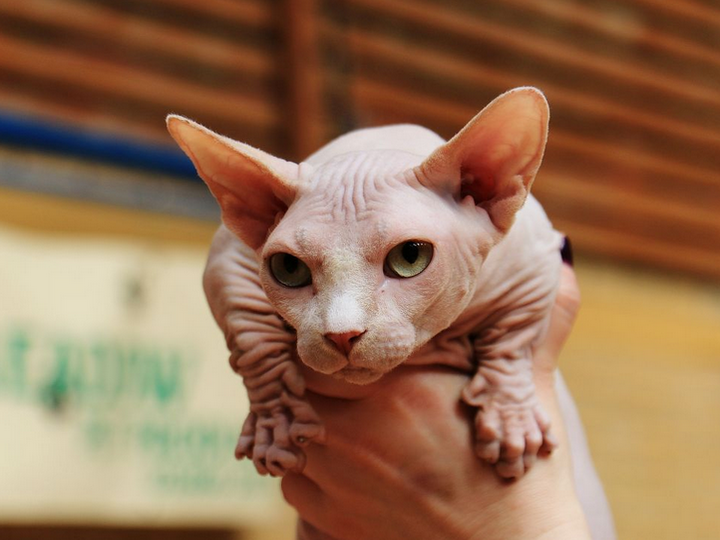
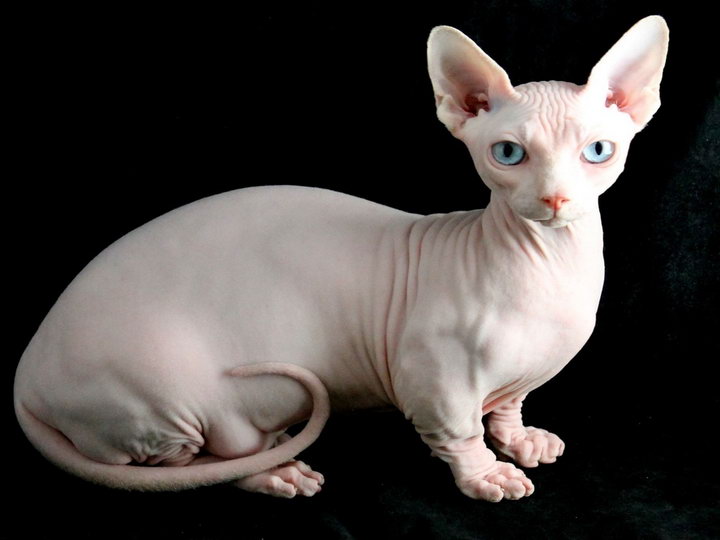
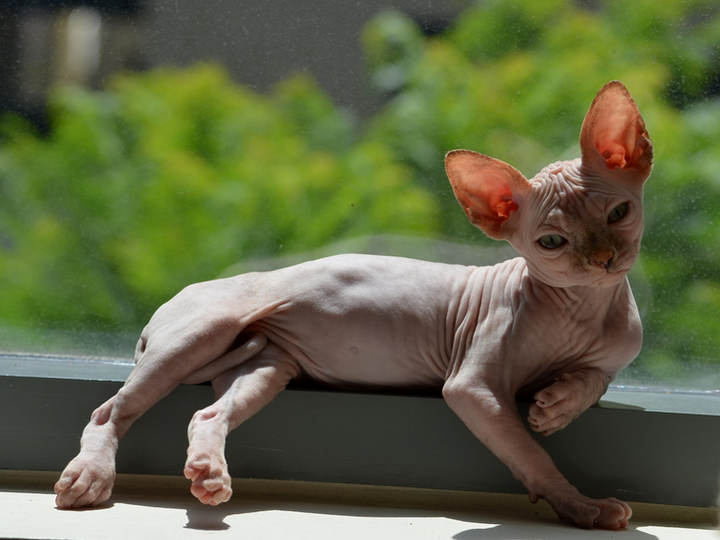
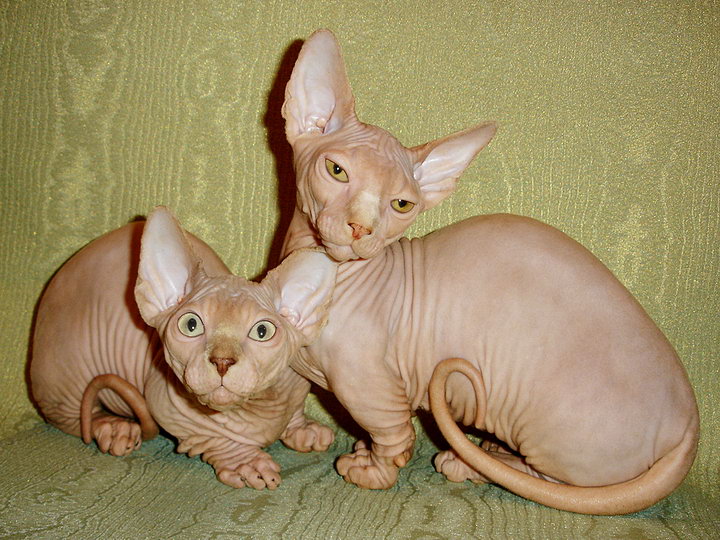
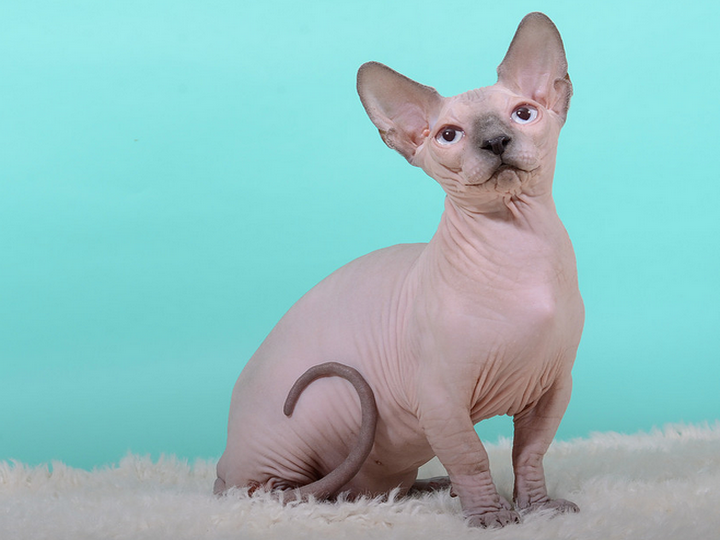
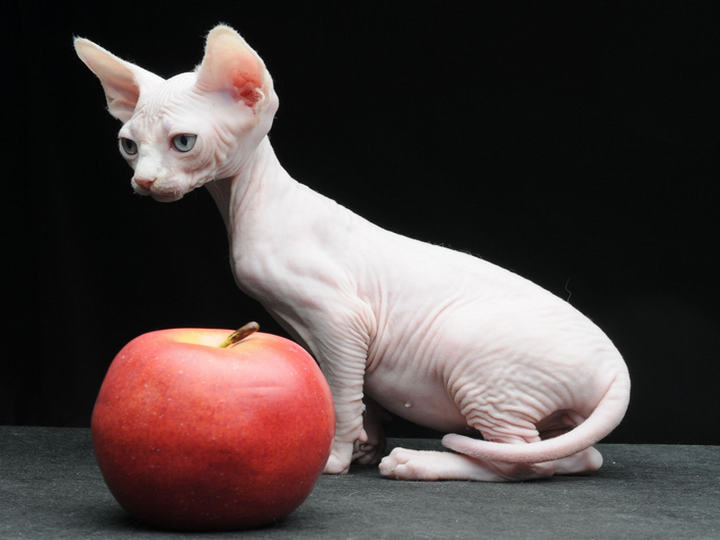
Photos of Bambino kittens and cats:
Read also:
- Hairless Cats: Photos, Breed History, Care, and Maintenance
- Petersburg Sphinx (Peterbald)
- Don Sphynx: male and female cats


Add a comment