
Bakhmul
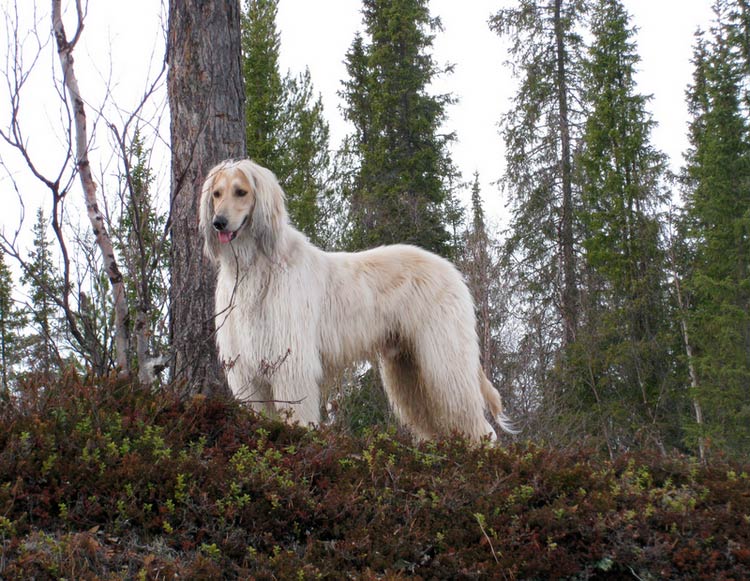
The Bakhmul is a hunting sighthound, a variety of the native Afghan Hound, the most beloved and prized breed in its homeland. The Bakhmul is a stately, elegant dog with a beautiful, long, fawn-colored coat. It possesses distinct hunting qualities and a correct physiological structure, which allow it to excel in work. It has a pleasant, typical sighthound temperament, and a strong psyche. It requires regular, but uncomplicated, grooming.
Content
History of origin
The Bakhmul's ancestral home is Punjab, and its second homeland is Afghanistan. In the mountain ranges of Central and Middle Asia, these aboriginal sighthounds developed in high-altitude conditions and were used to hunt goats, sheep, foxes, wolves, and wild cats. Today, Bakhmul dogs are very rare in the border zone of Pakistan and Afghanistan. Their main qualities are their long, silky-velvet coat and their ability to hunt mountain game. Due to political and economic circumstances, breeding efforts are currently not conducted in Afghanistan. Aboriginal Afghan hounds have been preserved in Russia, where imported dogs have been bred since the 1970s. In central Europe, they are used to hunt hares, foxes, and wolves.
The breed got its name from its silky coat. The word "bakkhmul" means "velvet" in Dari.
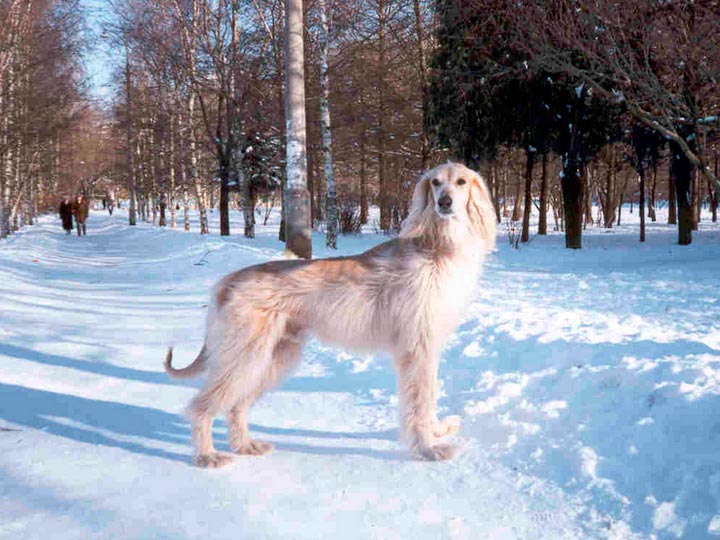
In the late 1970s, Soviet troops brought pedigree sighthounds from Afghanistan. These dogs formed the basis of the Afghan hound line developed by the Military Cynological Society and Dynamo. In 1985, a standard was developed and approved for the Aboriginal Afghan Hound breed. At the same time, the Blue Valley El Bark Club systematically bred native Afghan hounds of the Bakhmul type, establishing exterior and working qualities (tested on free-ranging animals). The founder of the line was a male named Rad-o-Bark (Thunder and Lightning). The standard for the Bakhmool breed was adopted in 1997.
Thus, the Bakhmul is a Russian-bred line of sighthounds from Afghanistan. Calling it an aboriginal Afghan breed would be inappropriate.
Hunting with bakhmuls
In the Bakhmul's historical homeland, sighthounds are used to hunt argali, mountain goats, wild cats, wolves, and smaller game (hares, foxes, rabbits). Several dogs are accompanied by riders. Upon spotting an animal, they unleash the lightest and fastest dogs, who then chase and surround the prey without touching it. The driven sighthounds wait for the leader—a powerful and fearless leopard—to approach and capture the animal on sight, or hold it until the hunter arrives.
Their jumping ability and maneuverability allowed Afghan hounds to move relatively safely over rocks and crevices.
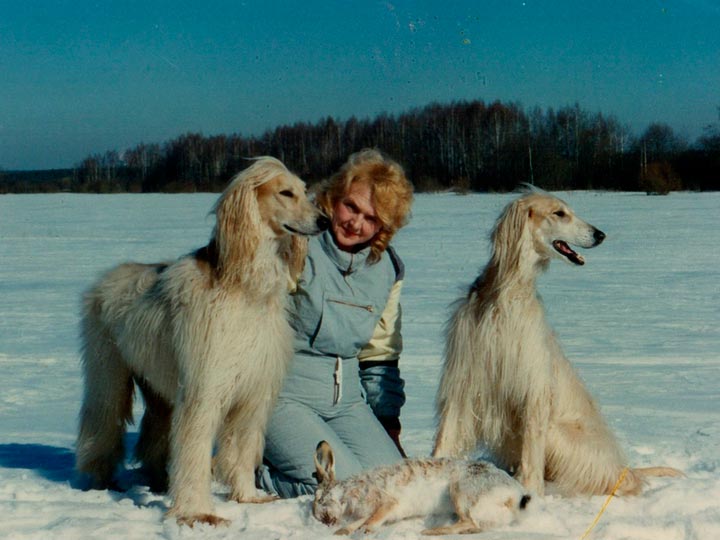
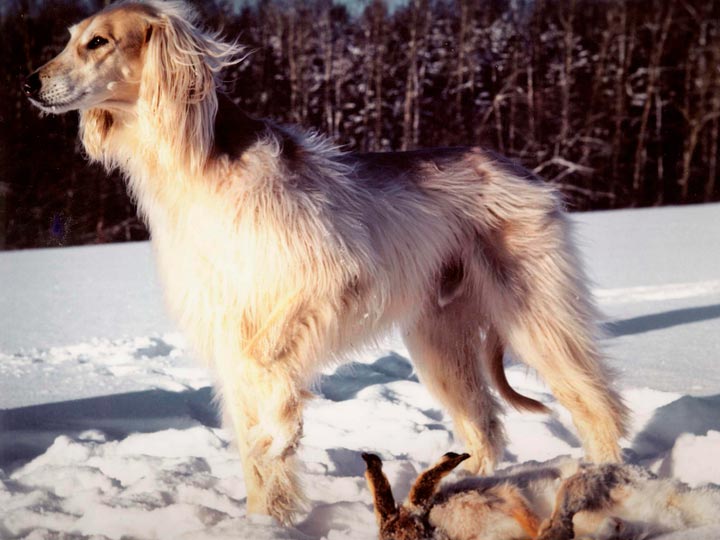
The Bakhmul has adapted perfectly to work in central Russia. It is used to hunt foxes, hares, and, in some regions, ungulates. It moves easily on firm ground and crusted snow. It has a more difficult time on rain-washed ground and snow deeper than 20 cm. Bakhmuls can hunt in temperatures down to -15°C. After catching its prey, it sits and waits for its owner. It works in pairs, alone, or in a small pack. It can easily take a hare from 70 meters away.
Bakhmuls always hunt for their masters, so they have a calm attitude toward the game they catch. If dogs ate their prey, they were removed from breeding.
When approaching an animal, the Bakhmul often growls or even barks intimidatingly. This demonstrates its desire to win and the ferocity of its intentions. Its speed and maneuverability are excellent, and its endurance, tenacity, and passion are inexhaustible. The Bakhmul is so passionate about hunting that it can continue pursuing a hare even in the forest.
Appearance
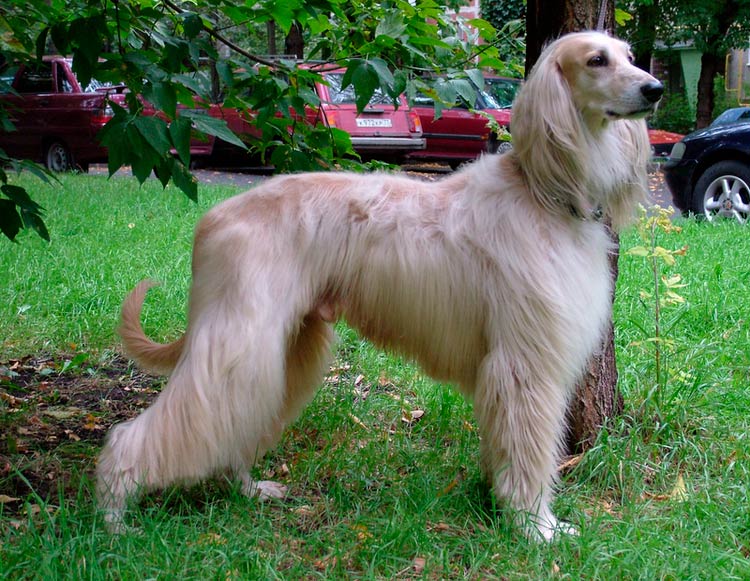
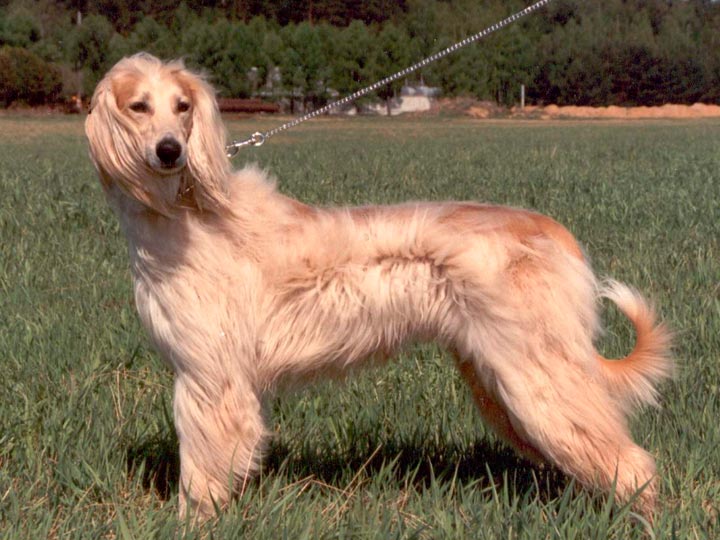
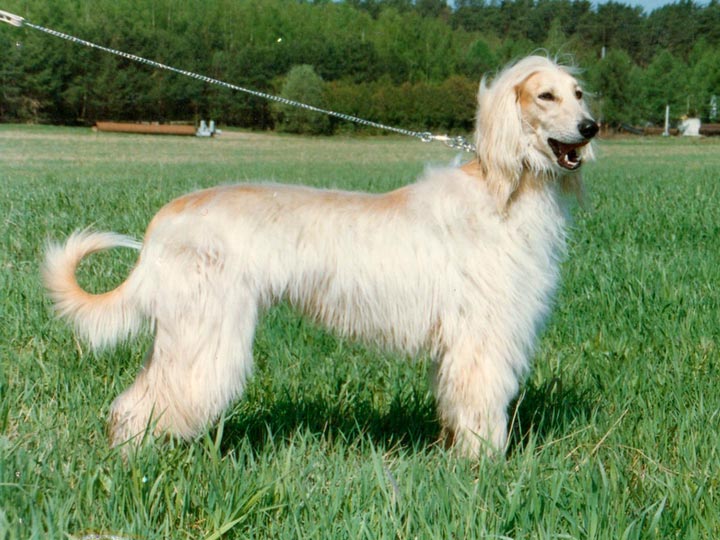
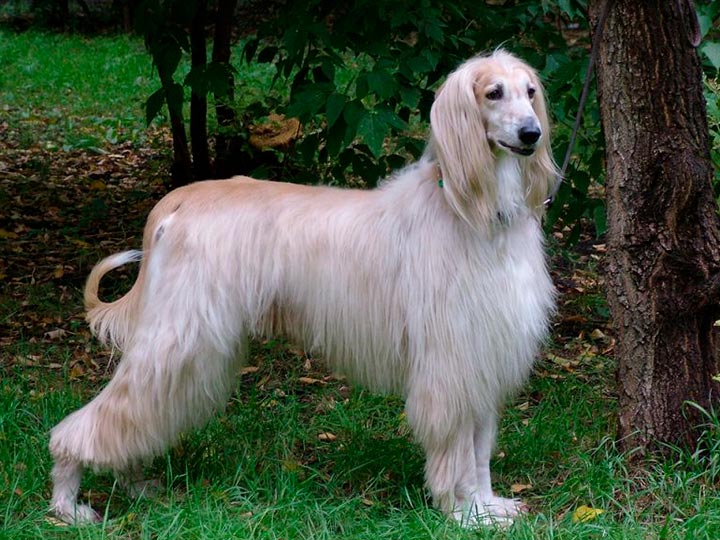
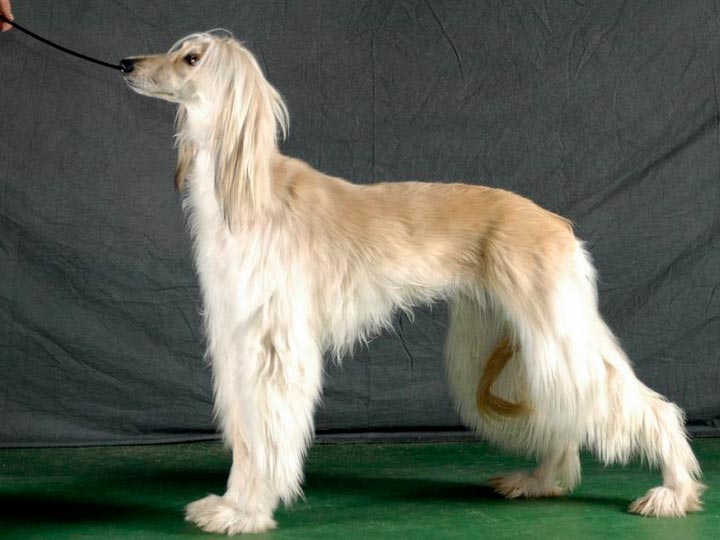
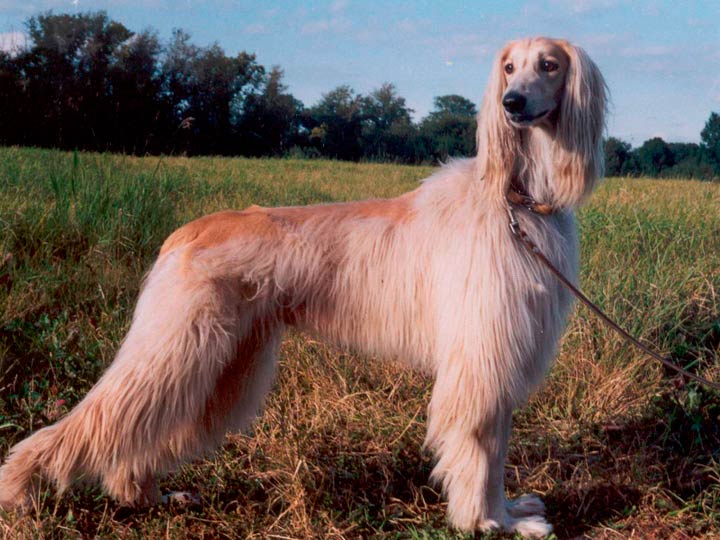
The Bakhmul is a harmoniously built, fairly large sighthound, high in front, muscular, with a proud carriage and a velvety, light fawn coat. The length index is 103-105. Sexual dimorphism is pronounced.
- Height at the withers of males: 68-73 cm;
- The height at the withers of bitches is 65-70 cm.
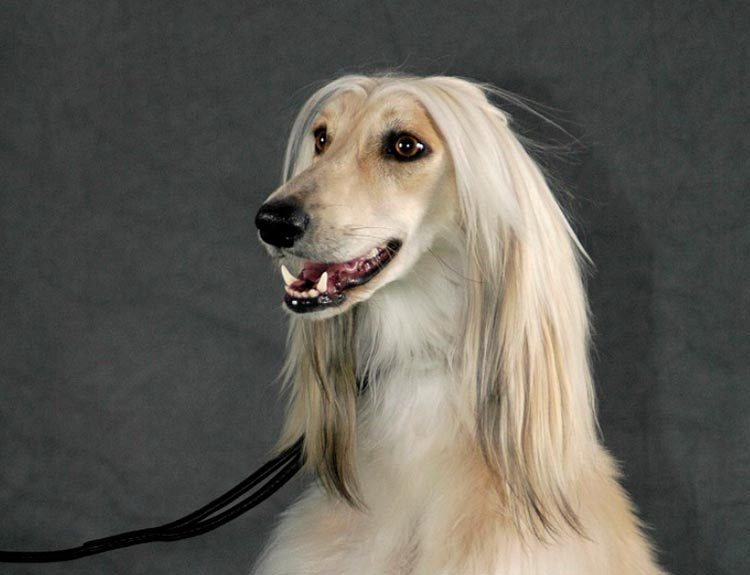
The head is elongated, the skull is not very narrow, with a pronounced occipital protuberance, superciliary ridges, and a furrow between the eyes. The stop is smooth. The muzzle is full, straight or slightly humped. The jaws are strong and well developed. The dentition is complete, with a scissor bite. The eyes are dark. The pigmentation of the nose and lips is dark. The ears are long, hanging, set at the level of the upper corner of the eyes or slightly higher. The eyes are almond-shaped and slanted. The earlobe is large, black, with wide nostrils. The neck is muscular, strong, long, and arches into the shoulders.
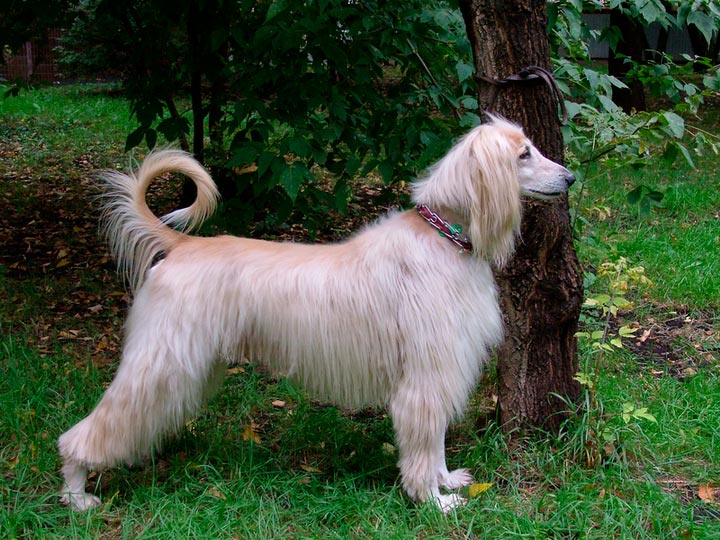
The chest is deep and wide, tapering toward the base. The withers are prominent and powerful. The height at the withers exceeds the height at the loin by 3-4 cm. The back is strong and broad, with a slight overhang. The belly is tucked up without tuck-up. The forelimbs are lean, straight, parallel, and muscular. The hind legs have long levers and well-developed angulation. The paws are oval, with long phalanges, compressed into a ball. The claws point toward the ground. The tail is set high and carried in a ring or semicircle, tapering to a tip.
The Bachmool's coat is straight, fine, silky, and long, covering almost the entire body. It is short on the forechest, neck, muzzle, forehead, and back, where it forms a "saddle." Colors:
- fawn undercoat. On the muzzle, sides, chest, belly and limbs it changes to a lighter shade (whitish or white);
- ivory;
- white;
The "saddle" is always a darker color (fawn or gray).
Character and behavior
Bakhmuls are characterized by a strong, balanced personality and a calm disposition. They are cheerful, alert dogs with pronounced leadership qualities, making excellent watchdogs, which is unusual for sighthounds. In everyday life, they are calm and friendly with people. They are very clean and completely unobtrusive, yet extremely attached to all family members and the home. Guarding property and its owner is not typical for sighthounds, but there have been cases of Bakhmuls acting defensively.
In the field, the Bakhmul is lively and agile, possessing incredible maneuverability and jumping ability, as well as good eyesight and a keen sense of smell. At home, it's a calm, laid-back dog who loves comfort.Bakhmool puppies require very early socialization and regular walks. This largely determines how well-balanced and healthy they will grow up. Owners will have to devote a lot of time to training them. Typical service training is not suitable for this breed. The Bakhmul is endowed with natural resourcefulness and exceptional intelligence. Independent in judgment and behavior, it is never a slave, but an equal friend and companion.
With proper training, they get along well with other pets and do not bother livestock or poultry. They defend their territory against strange dogs. At work and in everyday life, the Bakhmul is a true aristocrat with a strong sense of self-worth. They value freedom and independence, but most of all, they enjoy the challenge of hunting.
Content Features
The Bakhmool enjoys the comforts of home, but a more optimal environment would be a spacious enclosure with an insulated kennel or a separate room with easy access to the yard. The Bakhmool's coat lacks an undercoat, but it can protect the dog from heat and cold, and it has no distinctive odor.
Bakhmuls need to be taken out into the fields regularly to maintain working condition. A mechanical hare can't always replace free running. Furthermore, intelligent greyhounds don't always agree to chase a rag, or they perform the task with disinterest. On days off from hunting, Bakhmuls should be walked off-leash, away from roads, preferably in a field.
The Bakhmul self-limits its food intake and is therefore not prone to obesity. It consumes about 0.5 kg of food per day. Traditionally, in Afghanistan, dogs were fed lean lamb on the bones and wheat bread with milk. Today, many owners prefer ready-made dry food.
Care
The Bakhmool's long coat requires little grooming. It only needs occasional brushing, especially after field walks. Bathe as needed, usually every two to three months. Keeping their nails long and ears, eyes, and teeth clean is essential.
Health and life expectancy
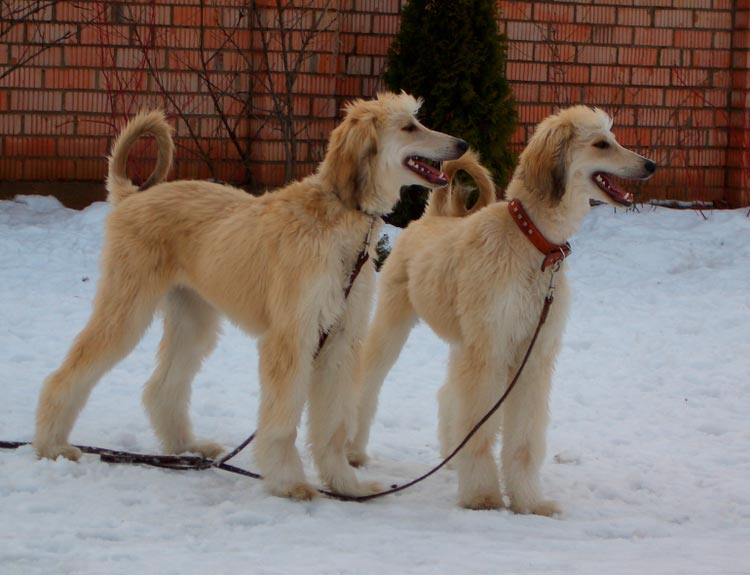
Bakhmuls are healthy, strong, and hardy dogs. When kept in good conditions, with proper nutrition and timely veterinary and preventative care, they are virtually disease-free. Life expectancy is 12-14 years.
Where to buy a puppy
Unlike decorative Afghan hound, the natives and their descendants in Russia can be counted on the fingers of one hand. Those wishing to purchase a Bakhmul dog should seek assistance from the Blue Valley El Bark Club, whose president is Natalya Pavlovna Geraseva, a cynologist specializing in oriental sighthounds.
Photos and videos
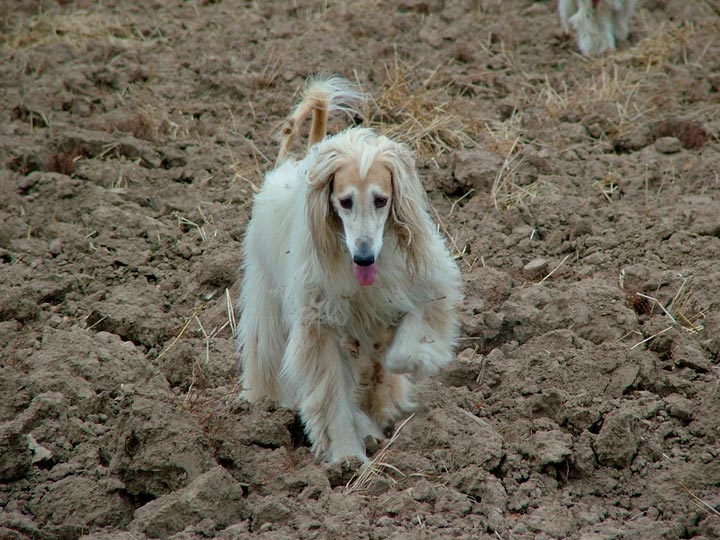
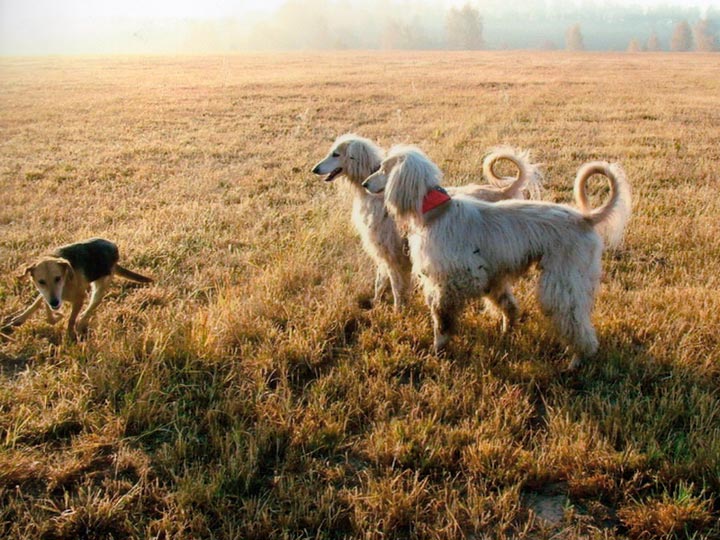
You can see more photos of the Bakhmool breed in the gallery. As you can see in the photos, all the dogs are light-colored, with beautiful long coats, stately and elegant. The second photo shows the founder of the Bakhmool breed, Rad-o-Bark, at age 15.
Video about the Bakhmul breed
Read also:


Add a comment