
Asian leopard cat
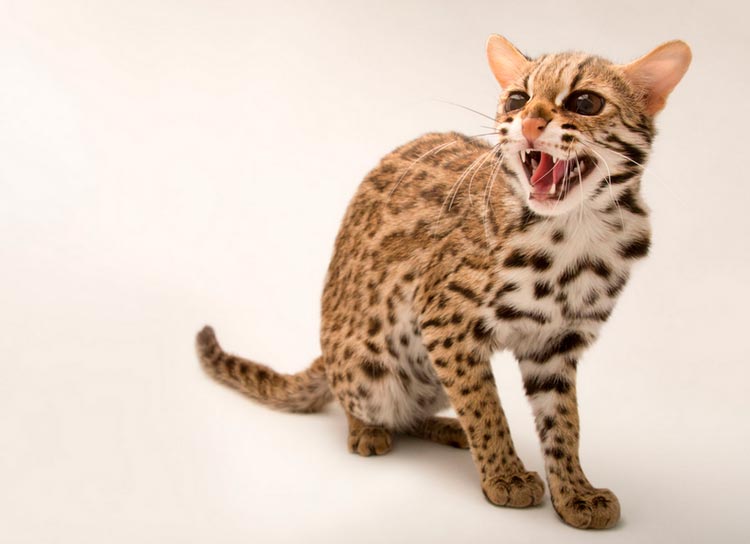
Asian leopard cat Another wild member of the feline family, increasingly seen as a pet. This species was also involved in the development of a very well-known and popular breed today.
Content
- 1 Asian leopard cat
- 2 Appearance
- 3 Asian leopard cat in the wild
- 4 Character and behavior
- 5 Keeping leopard cats in captivity
- 6 Diet.
- 7 Taming and keeping Asian leopard kittens
- 8 Health and life expectancy
- 9 Where to buy an ALK kitten: choosing a kitten and price
- 10 A direct descendant of wild Asians - Bengal
- 11 Photos
Asian leopard cat
In 1858, Russian explorer and naturalist Nikolai Severtsov first proposed a classification for the wild cats inhabiting the vast territory of Southeast Asia. In 1917, the taxonomic classification was finally accepted by British zoologist Reginald Iness Pocock, who subsequently described them in more detail. The genus Prionailurus includes four species:
- Asian leopard cat, also known as Bengal cat (Prionailurus bengalensis);
- Rusty-spotted cat (Prionailurus rubiginosus);
- Fishing cat (Prionailurus viverrinus);
- Sumatran cat or flat-headed cat (Prionailurus planiceps).
Bengal wild cats are called Asian leopard cats because of their distinctive spotted coat and habitat.
The Asian leopard cat (Bengal cat), discussed below, comprises over 20 subspecies. They have distinct appearances and inhabit different areas.
- Indian Bengal cat;
- Chinese Bengal cat;
- Himalayan Bengal cat;
- Far Eastern cat or Amur forest cat;
- Iriomote cat (often considered a separate species), etc.
A video about Asian leopard cats: "Living with a Mini Leopard. Is it Possible to Tam a Wild Bengal?"
Appearance
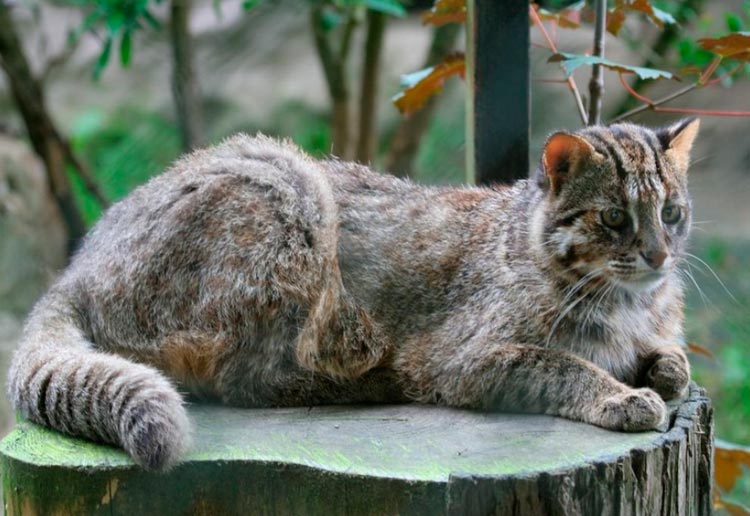
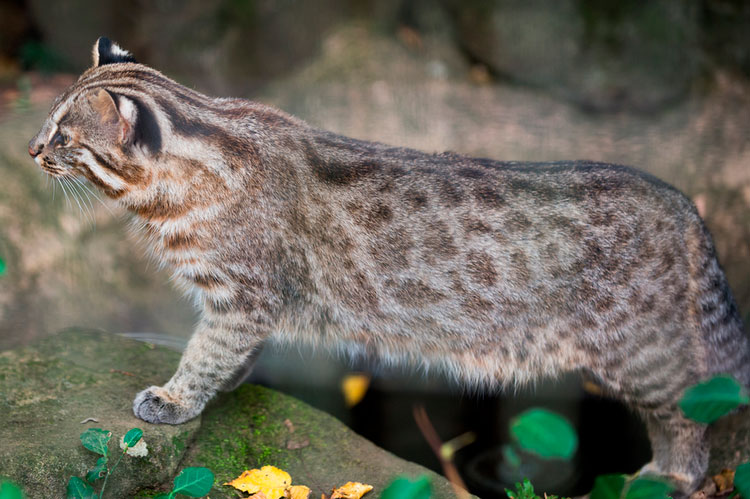
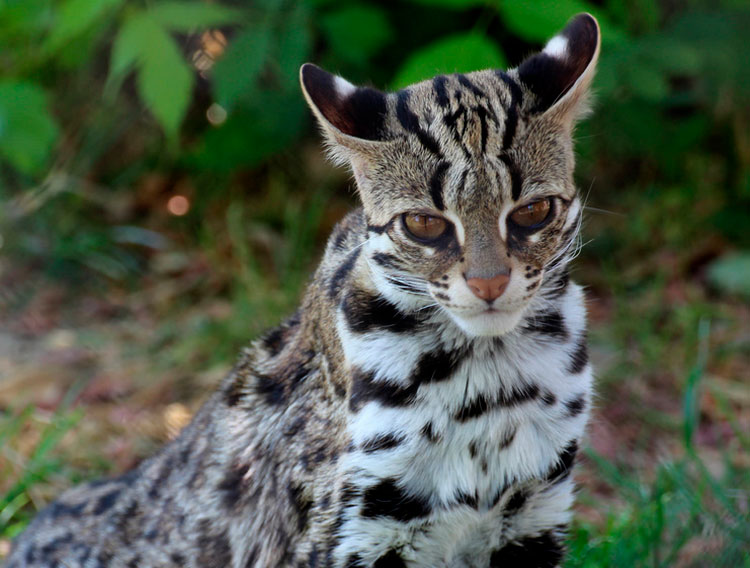
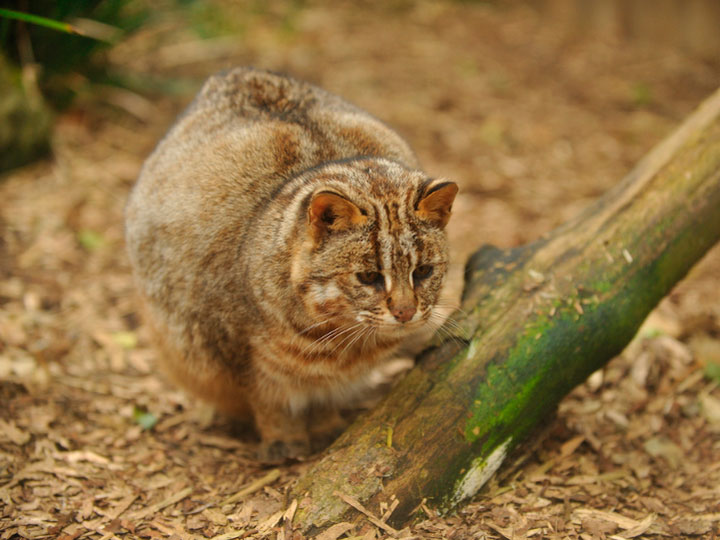
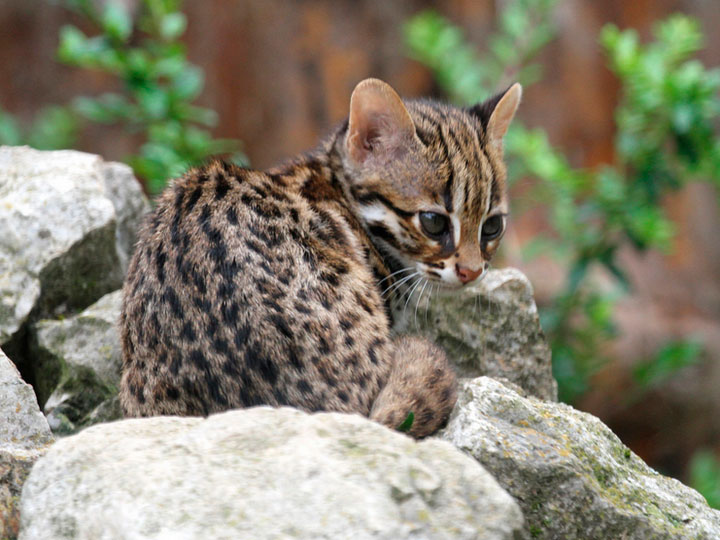
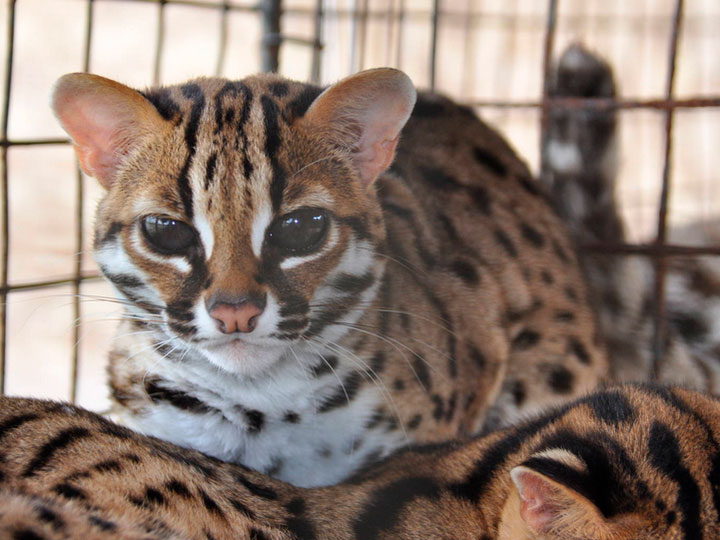
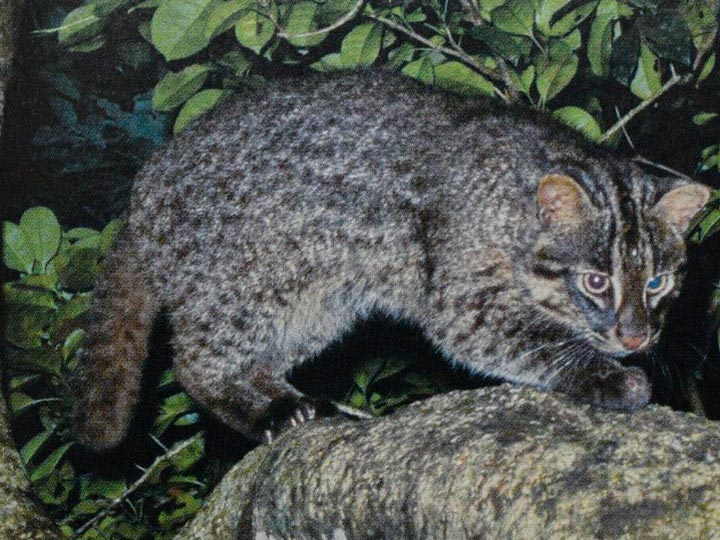
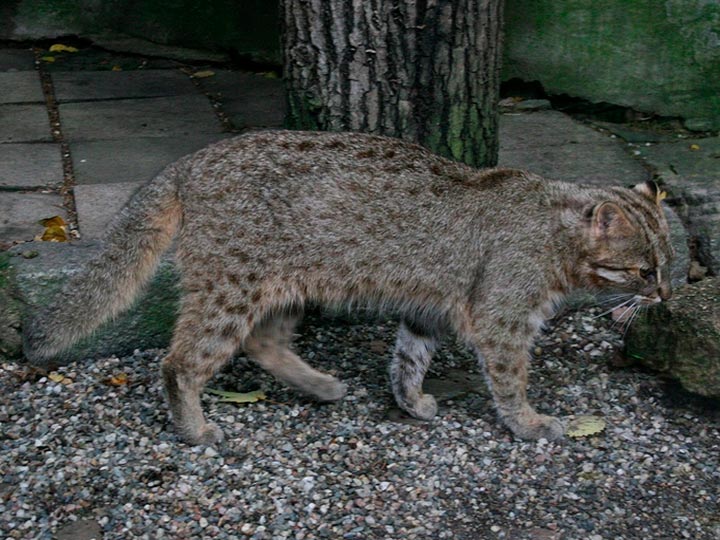
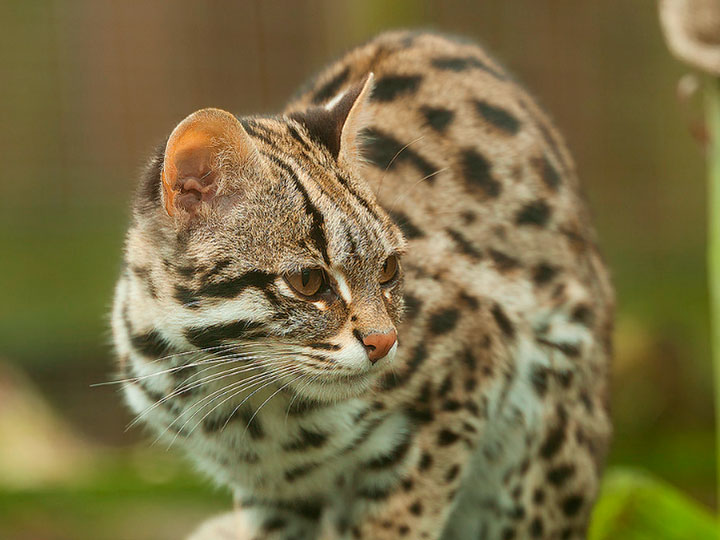
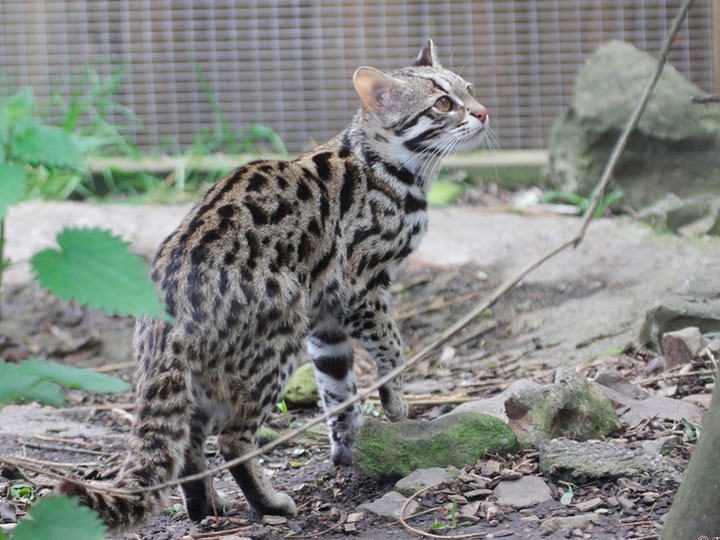
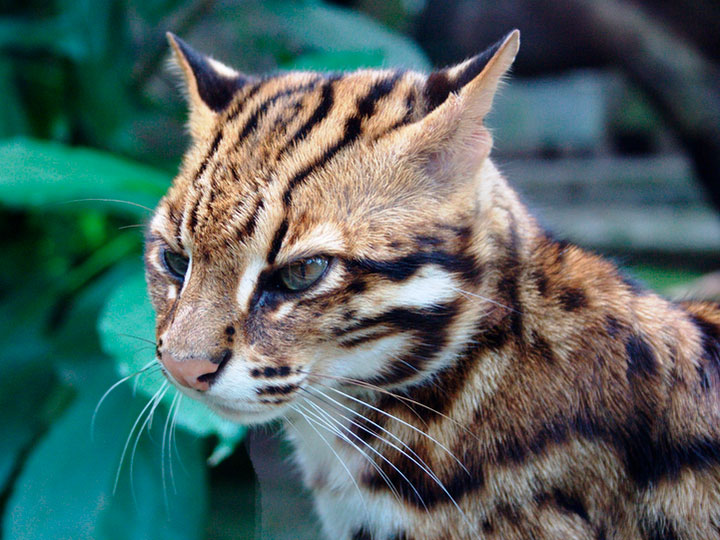
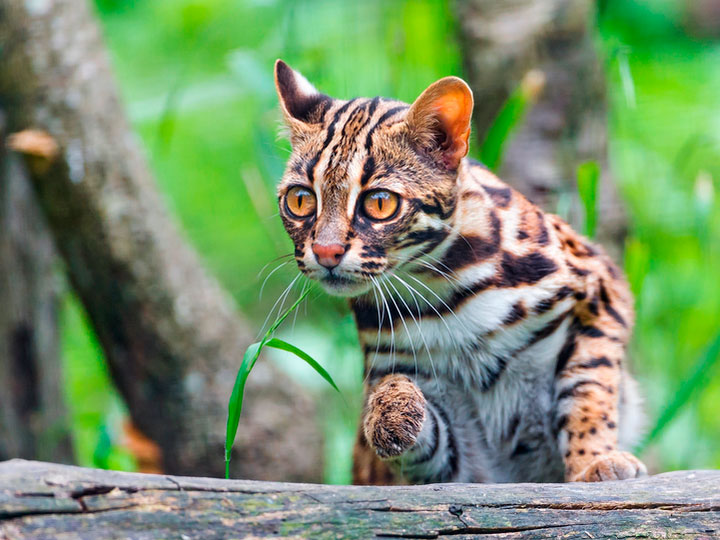
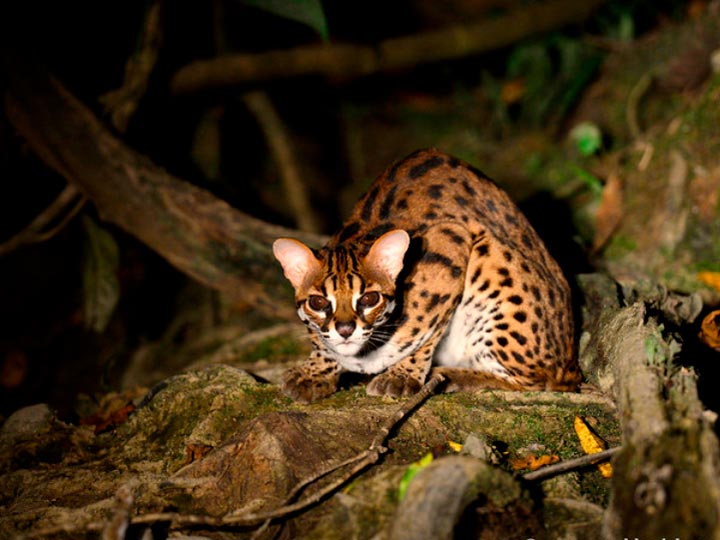
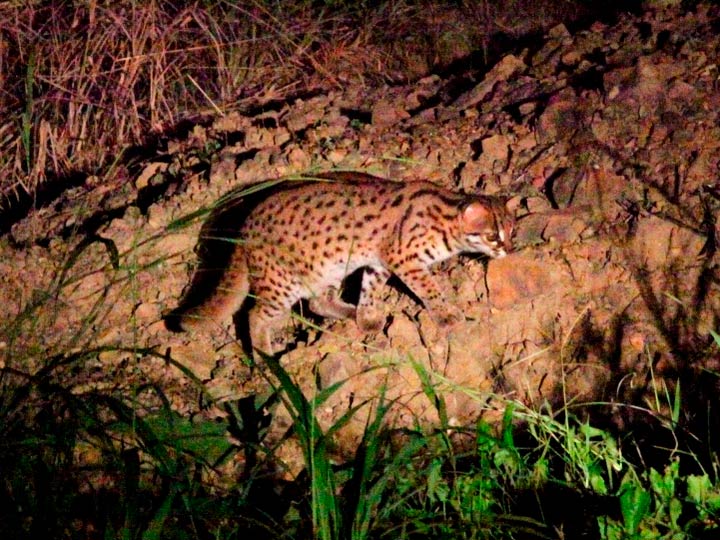
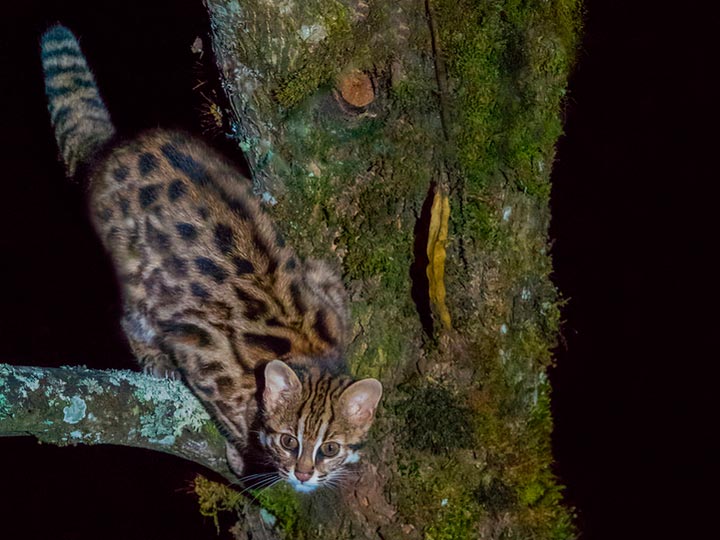
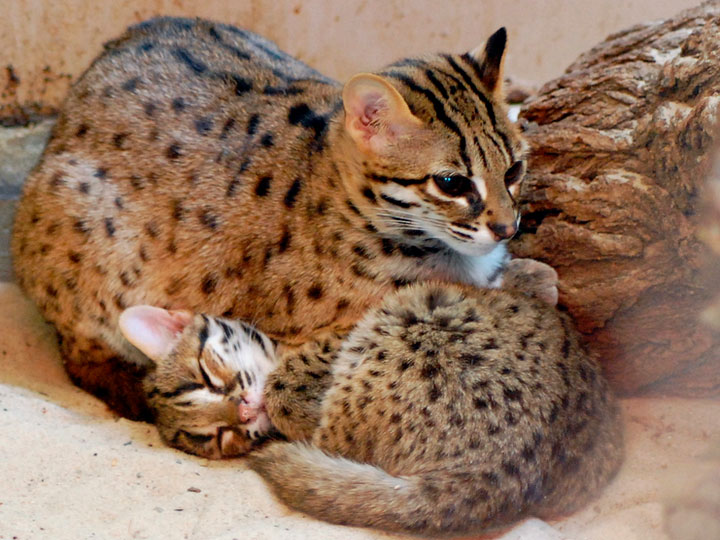
The Asian cat is roughly the same size as the domestic cat, but there are slight regional differences. For example, those from Indonesia average 45 cm in body length, with a 20 cm tail, and weigh 4.5-6.8 kg. Cats from the Amur region grow to 60 cm, with a tail that reaches 40 cm, and weigh around 10 kg; males can weigh up to 15 kg in winter. Coat color also varies slightly depending on habitat. In the south, the base color is more yellow, truly reminiscent of a leopard. In the north, it is predominantly gray-brown. Northern cats have circular spots, while southern cats often have rosettes or black markings. You can see the differences between some subspecies of the Asian cat in the photos in the gallery.
Asian leopard cat in the wild
Leopard cats always live near water. They thrive equally well in coniferous forests and tropical habitats, in mountains or savannas. They are extremely cautious by nature, avoiding close proximity to people and human settlements. Only occasionally do they cross cultivated fields. Leopard cats are excellent swimmers but rarely enter water. Both males and females mark their territories, which can be 2-3.5 square kilometers.
A single cat may have several shelters. A den is an abandoned burrow, a hollow tree, or a hole under the roots of a large tree. The most comfortable and secure one is used for roosting and raising young, usually hidden in dense undergrowth on the ground. Leopard cats are solitary, pairing up only during the breeding season. Some are active during the day, but most prefer to hunt at night. Bengals are excellent tree climbers and enjoy resting high in the branches.
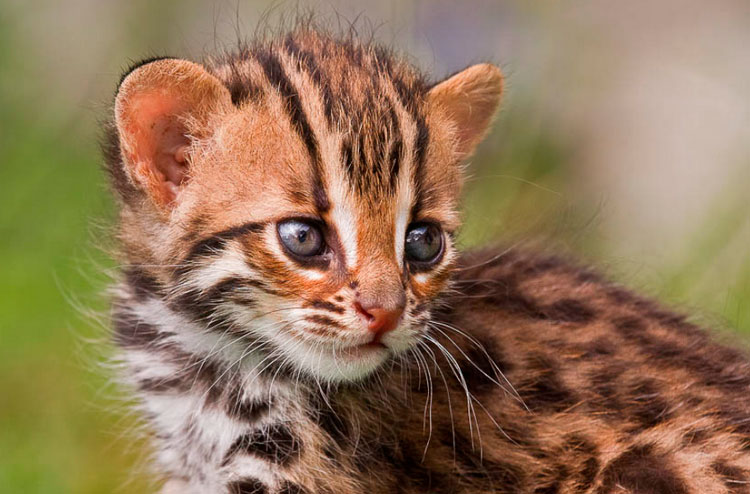
In warmer regions, ALKs can breed year-round. Closer to the northern edge of their range, females give birth only in the spring, or, in rare cases, twice a year if the kittens from the spring litter die. Gestation lasts 60-70 days. ALKs have an average fertility rate: 2-4 kittens. The kittens remain in the den for the first month of life. They are born weighing 75-130 g, and their eyes open by the 14th day. At 4 weeks of age, they begin to emerge from their den, taste solid food, and weigh almost four times more.
Character and behavior
The Asian leopard cat is naturally very reserved and cautious, rarely attacking unnecessarily and seeking refuge in a protected area. This behavior is also observed in domesticated individuals. They often bond only with family members, remaining aloof and wary of others. If persistently petted, they will aggressively defend themselves. They are very independent and do not particularly enjoy being petted.
Tamed ALKs are very playful, especially when young. They prefer games that allow them to express their hunting instincts. They often enjoy catching live fish in the bathtub.
They get along well with other cats, but rarely develop genuine friendships. They generally avoid dogs, but small animals remain potential prey.
Keeping leopard cats in captivity
Asian leopard cats are kept both indoors and outdoors in an enclosure. When kept outdoors, a cage measuring 1.5 x 3 x 1.5 m is ideal. The mesh size should be no larger than 50 x 50 mm. A wooden floor is preferred. Sometimes, raised areas with various herbaceous plants are planted in the enclosure. This is done to enrich the cat's environment and for aesthetic reasons. A litter box, typically a large litter tray, is ideal for maintaining cleanliness. A shelter is essential. This is a small wooden kennel with straw bedding inside. Different Bengal cat species tolerate cold temperatures differently. For southern subspecies, the kennel should be heated; the optimal temperature is 20°C. Northern subspecies tolerate cold weather more easily. Tree cuts and shelves at varying heights are installed in the enclosure.
Upon reaching sexual maturity, even domesticated animals become aggressive and unruly, especially due to the inability to fulfill their sexual instincts. Subsequent castration or sterilization helps solve this problem. If breeding is not planned, the surgery is recommended before puberty.
Maintaining an active lifestyle is crucial for physical and social development, as well as reproductive health. This can include various games, toys, and artificial mice. Periodically, dig a few bunches of goutweed or wheatgrass onto the floor of the cat's enclosure. The scent of freshly picked grass will add variety to the cat's time and stimulate its olfactory center. Catching live food is another useful activity.
Walking kittens and adult cats is very important for their full psycho-emotional and physical development.The domestic Asian leopard cat needs regular walks in the fresh air, where it receives ultraviolet light, feeds on meadow grass, and becomes familiar with new smells.
Diet.
Bengal cats are exclusively carnivorous. They feed on a variety of small prey, including mammals, amphibians, lizards, birds, and insects. In most of their range, small rodents, mice, and rats form the bulk of their diet, with birds, eggs, fish, and grass remaining as snacks. Bengal cats are active and agile hunters, leaping from ambush and biting their prey. Unlike many other cats, they do not play with their food, holding it tenaciously with their claws until it quickly dies. This is likely due to the high proportion of birds in their diet, which fly away, unlike rodents.
What to feed an Asian cat at home
In captivity, the Asian leopard cat's primary diet consists of lean meats (beef, rabbit, veal), but live food (mice, rats, day-old chicks, and quail) is essential for maintaining health and physiological activity. Without stimulation of the hunting instinct, behavioral responses become dull, leading to boredom and obsessive movements. This is also necessary for maintaining the animal's health. After all, in addition to fresh meat, the cat eats intestinal contents, part of the skin, and brains. To complete the protein diet, fish is offered once a week.
The Asian leopard cat typically eats once a day. The daily allowance includes two mice, one rat, or 200 g of lean meat. If live food is not available, supplement the diet with vitamins and minerals.
Once a week, they have a fasting day. In captivity, cats don't expend as much energy as in the wild, resulting in excess weight gain, frequent illness, and even death. Some cats, in addition to one fasting day, have a semi-fasting day, when they are given half their daily ration.
First-time mothers often abandon their kittens, requiring artificial feeding. Various feeding methods have been developed, but the best substitute for a mother is a domestic cat. Alternatives include powdered cat milk, goat milk, or baby food.
Taming and keeping Asian leopard kittens
Undoubtedly, feral cats have a harder time adapting to life near humans. However, they generally learn to litter well and quickly learn to use a litter box filled with sand or other filler, which should be spacious enough.
Kittens raised from the very first days trust humans completely, become strongly attached to their owners, and quickly adapt to various hygiene procedures and veterinary examinations.
If you plan to keep a leopard cat as a pet, it's best to buy a kitten from a breeder, where the kittens have known humans since birth, are raised by them, and are socialized from an early age. It's best if the parents are also human, but keeping them in a cage is also possible. Unfortunately, many kittens that appear on the market were taken from their mothers at an early age by local residents and purchased by dealers. They are very difficult to tame and retain wild behavior throughout their lives.
Health and life expectancy
Overall, the Asian leopard cat enjoys robust health and a strong immune system. It is susceptible to the same diseases as its domestic relatives, but falls ill less frequently. To maintain its health, it requires regular vaccinations against major infectious diseases, good housing conditions, and proper nutrition. Its lifespan in captivity can reach 20 years.
Most subspecies of leopard cat are endangered.
In the wild, wild cats have many predators, mostly larger predators. Because they are agile and stealthy, they are rarely caught. A much greater threat comes from humans, who hunt the spotted cat for its beautiful fur. From 1984 to 1989, approximately 200,000 spotted cat pelts were exported from China. In 1988, the European Union imposed a ban on their import, but this did not completely stop hunting. Japan continued to purchase the raw material. In addition to fur, locals kill the spotted cat for meat or in retaliation for killing a bird. Poachers also capture cats and kittens to sell on the black market to exotic pet enthusiasts.
Where to buy an ALK kitten: choosing a kitten and price
As mentioned above, it's best to buy a kitten from a breeder where the kittens are raised by humans from a very young age, are tamed, and are minimally aggressive. Be wary of companies that sell exotic animals. They often buy small kittens captured by locals in Southeast Asia and sell them as kittens from a breeder's facility. When choosing a breeder, it's important to ensure that the kittens are from their animals and personally assess their living conditions. The average price of an Asian leopard cat kitten is $15,000.
A direct descendant of wild Asians - Bengal
Currently, the Asian Leopard Cat is used in various breeding programs; whether these will yield any results will only be known over time. Today, a striking descendant of the wild Bengals is a domestic cat breed known for its gorgeous coloring and spirited nature—the Bengal. Work on the breed began in the 1960s, when American Jean Mill brought two wild Bengal kittens from Asia. Her work was long viewed with skepticism, but it yielded results. And by 1991, Bengals They took part in the TICA championship. Today, the breed is accepted by almost all feline associations and is beloved and popular in many countries around the world.
Photos
In the gallery, you can see photos of Asian leopard cats of different subspecies and see how representatives of the ALC from different regions of their range differ.
Read also:
- Serengeti (a domestic cat with a "wild" coloring)
- Asian Tabby: Cats and Tomcats
- Catahoula Leopard Dog


1 comment
Leah
It was very interesting to read about my cat's wild ancestors. In some of the photos in your gallery, I recognized the wild Amur (Far Eastern) forest cat; these cats are very common in the forests around Vladivostok and the Primorsky Krai.
I have a domestic Bengal cat (there's not much written about the personalities of domestic Bengals here). I'll say this breed is very active, with strong natural instincts (it's best to neuter them at 6-7 months, otherwise they'll be difficult to keep in an apartment). At the same time, they're very intelligent and trainable, adapting to a specific person's lifestyle, and love to go for walks on a leash and splash in the water.
Regarding nutrition: he only requires meat and fish. If you mix ground meat with anything, he'll pick through every crumb and choose only the meat or not eat it at all. He only allows white bread mixed with meat. He only ate canned meat cat food as a puppy, but now he turns his nose up at it. I had a hard time getting him to eat premium dry food, but I'm under the impression that dry food is causing health problems for Bengals. If you feed him dry food frequently, he can't digest it, and almost all of it comes out as waste. He drinks a lot and runs out to pee every 15 minutes. After a couple of days of this, he starts peeing blood every 5 minutes.
At first, I thought it was an infectious cystitis and treated it with antibiotics, but the problem returned when I returned to dry food (we tried different foods from different manufacturers and countries). But I can't feed my cat only meat, can I? This breed also has a weak stomach: he won't eat just anything, and he won't eat meat or fish that's been sitting in his bowl overnight. However, if he eats anything inedible (like chewing on cellophane, plastic, or rubber but can't spit it out), he immediately vomits.
To keep him from jumping around the cabinets, I had to bring some real trees (logs with bark) into the house. My cat, despite his semi-wild behavior, turned out to be very affectionate and friendly with everyone, even strangers. He loves to sleep next to people, hugging his owner's legs (it keeps him warmer). And most importantly: he doesn't shed! And he doesn't scream! He only quietly chirps occasionally or meows a couple of times when he wants to communicate with his cat. His fur is soft, silky, and shiny, with a leopard-like rosette pattern. This breed is only for patient owners who can be around their cat a lot.
Add a comment