
Azawakh (African greyhound)
The Azawakh, also known as the African or Tuareg sighthound, is an elegant, beautiful dog with a typical sighthound build, adapted to life in hot climates. Worldwide, the breed remains rare and unpopular. Despite its positive qualities, the Azawakh also has a number of shortcomings that potential owners should be aware of.
Content
History of origin
The Azawakh breed's roots go back to the early days of Nigerian civilization. Ancient dogs of a similar type accompanied the nomadic Tuareg tribes. It is believed that they are also descended from them. Saluki and the Sloughi. Nothing is known about the breed's history before the early 20th century; the Azawakh's origins can only be inferred from indirect evidence and rare archaeological remains.
The Azawakh is an indigenous breed, primarily influenced by natural factors in the Sahel region, a tropical savanna that serves as a transition between the Sahara and the more fertile southern lands. Humans played only an indirect role. Today, the Sahel encompasses countries such as Burkina Faso, Algeria, Mali, Mauritania, Senegal, Chad, Cameroon, Nigeria, Eritrea, and Sudan. Of these, only Mali has been officially recognized as the Azawakh's country of origin. The breed is under the patronage of France, the country that registered it with the FCI. The Azawakh gets its name from the valley on the border of Nigeria and Mali, from where the first dogs were imported. Other names for the breed include the Tuareg or African Greyhound.
In the 1960s and 1970s, French legionnaires returning from the Sahel took with them seven local dogs, which became the founders of the French line. Around the same time, a Yugoslav diplomat sent two dogs home, which became the foundation of the Yugoslav line. Later, Azawakhs began to be bred in Germany, Holland, and Switzerland. The Azawakh is one of the rarest and most rare breeds. One of the main reasons for their unpopularity is their difficult character.
Azawakh breeding began in Europe, with just a dozen dogs, to which most modern pedigrees can be traced.
Dogs from Africa are still imported to Europe and America, which is necessary to maintain a broad gene pool and preserve the pristine breed. But this is becoming increasingly difficult. The ABIS Association, which sends annual expeditions to Africa, confirms that fewer and fewer Tuareg and their Azawakhs remain. Members of the upper caste, who owned the best specimens of the breed, were exiled or killed during the coup. Modern imported dogs are no longer as purebred. They are smaller and more bony, and rarely produce good breeding stock.
Video about the Azawakh (African Greyhound) dog breed:
Appearance
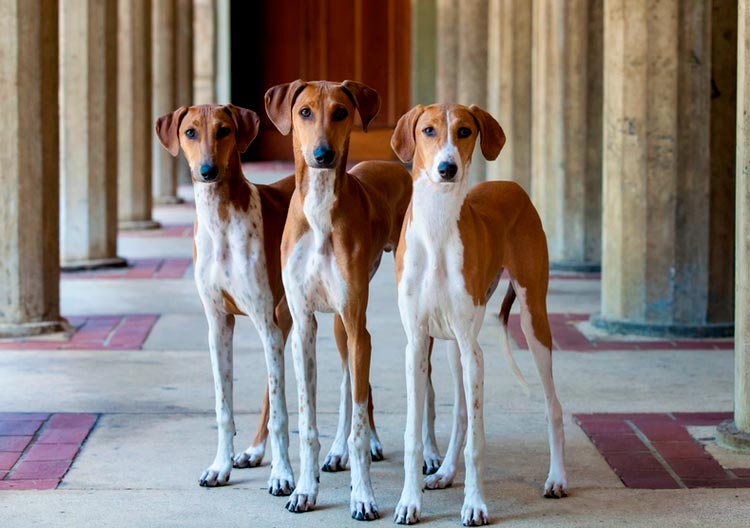
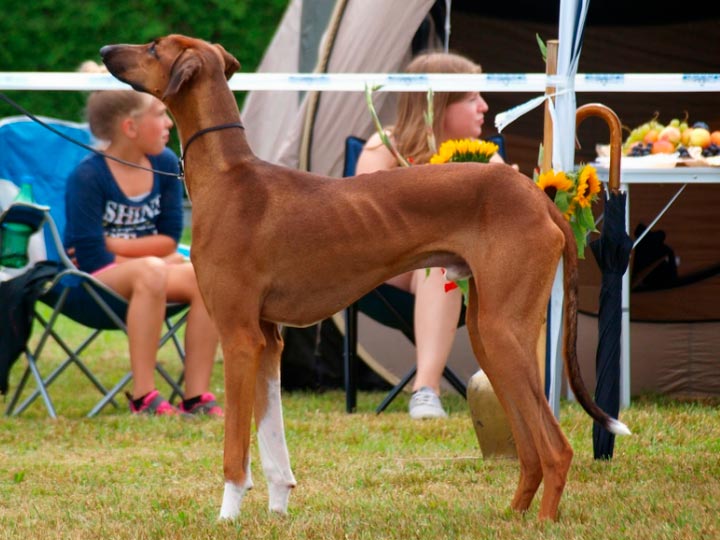
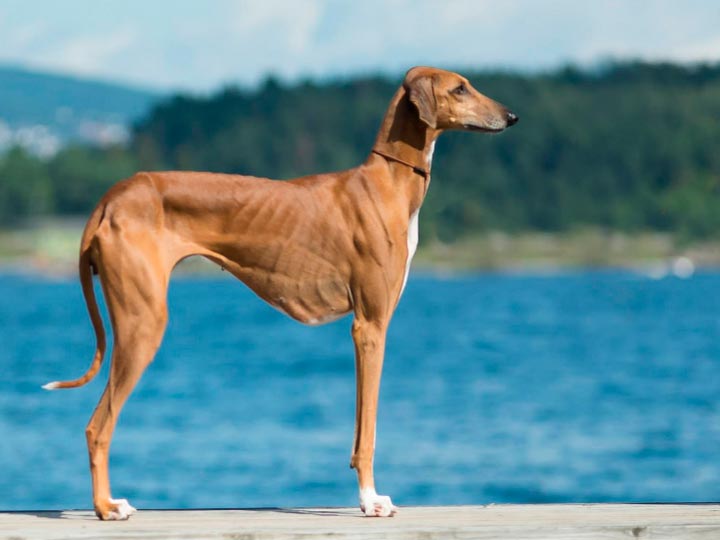
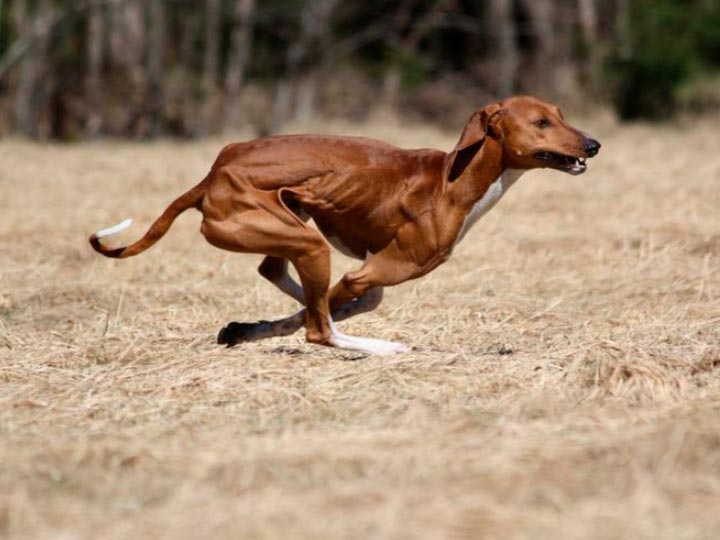
The Azawakh is distinguished by its very lean yet harmonious build, with straight lines and open angulations. It appears very large due to its long legs and relatively short back. In reality, it is medium-sized, with a height of 55-71 cm at the withers and a weight of only 13.5-25 kg.
Today, two distinct types are recognized within the breed: the French and the Yugoslav. French dogs are more elegant, imposing, and quick, proud and spirited, with a narrow head, underdeveloped lower jaw, and a shorter, lighter muzzle than Yugoslav dogs, which are also heavier and more heavily boned, have excellent paws, a strong lower jaw, and fewer white markings.
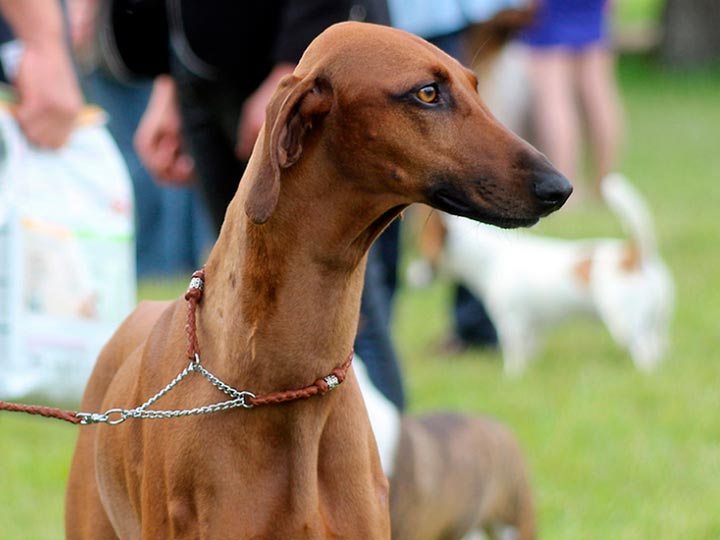
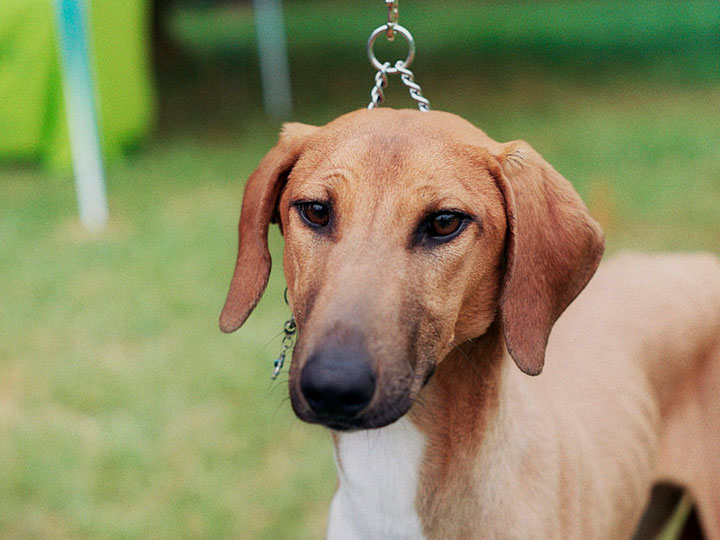
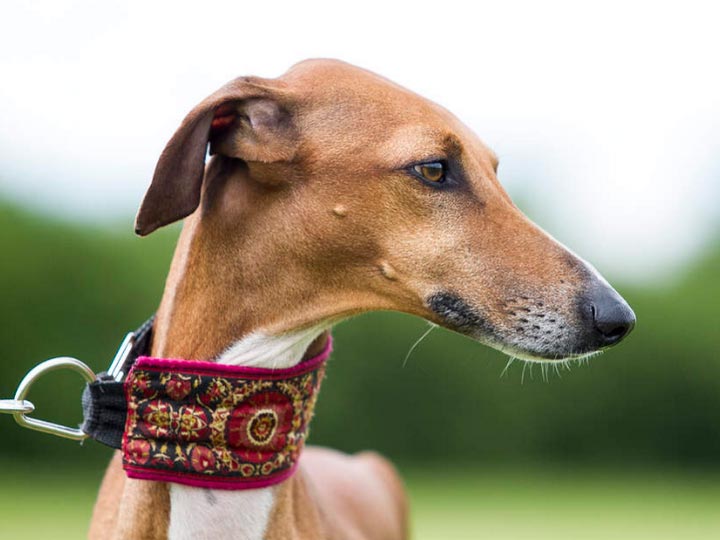
The head is long and narrow, the skull moderately wide. The ears are flat, drooping, very wide at the base, and mobile. The eyes are large, almond-shaped, and set obliquely. The color ranges from dark to light brown. The large teeth meet in a correct bite. The nose is pigmented to match the coat.
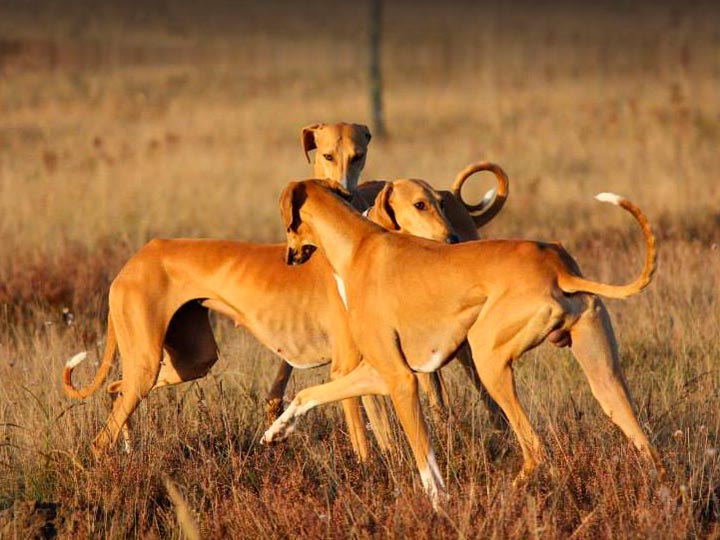
The neck is straight, set high, and flexible, enhancing the impression that the dog is very tall. The forelegs are elongated, compact, and chiseled, without a hint of weakness. The withers are well defined. The ribs are flat and long. The sternum is arched and short. The abdomen is sharply tucked up. The croup is steeply sloping. Its wide angle reflects the wide angle of the shoulder blade. The hind legs have prominent, high arches. The stifle joint is open, the knee joint is high, and the hock is close to the ground. When standing, the Azawakh straightens the hip joint vertically. The topline is slightly arched. The hip bones appear to be higher than the withers, but in fact, they are level. The loin is dry, short, and straight. The feet are rounded, medium-sized, with high, distinct toe joints. The tail is thin, tapering to a point, set low, and sickle-shaped, but may be looped at the end, as in the Kazakh Greyhound. The gait is elastic, free, harmonious, and balanced.
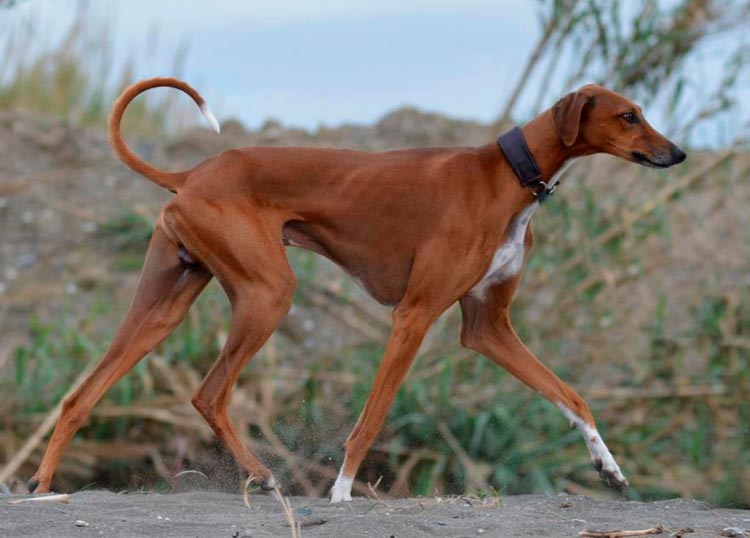
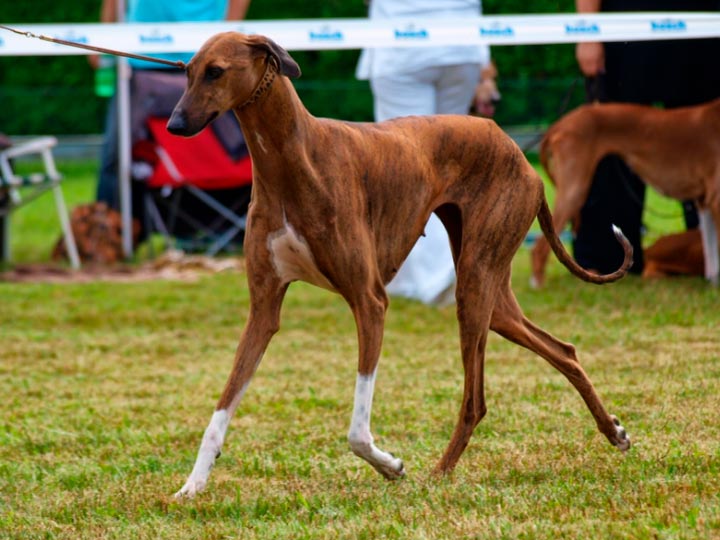
The coat is short and fine, and may be absent from the belly. The first dogs brought from Africa were mostly solid fawn and red, but in their native land, the color range is much wider, with sandy and brindle dogs with white spots or almost entirely white, blue, black, and grizzly.
Character
Azawakhs have a complex character; they are independent, strong-willed dogs with a tendency to dominate. At the same time, they can be timid and easily offended. Their temperament is difficult to describe. The Azawakh is a breed exclusively for amateurs. Often compared to a cat, they are reserved, not affectionate, and must be socialized with strangers from an early age. Despite their affinity with sighthounds, they are not particularly friendly, but have a strong watchdog and sometimes even protective instinct.
The Azawakh has a very complex personality. Don't think about buying a puppy based solely on appearance. Many people, including greyhound breeders, have been disappointed with their final results.
As they mature, the Azawakh becomes deeply attached to their family, becoming part of it. However, they see only one person as their owner, and are very sensitive to separation. The Tuareg highly value the Azawakh for its strength of character, which is considered a sign of nobility, and excessive sociability is uncommon.
Azawakhs have a well-developed sense of territory. They dislike invasions of their personal space, rough handling, noise, and fuss. In their homeland and in kennels, they form packs with a clearly defined hierarchy. They can live with other dogs, but until their social relationships are established, conflicts and fights will arise. If Azawakhs form a pack, they become unruly.
The Azawakh is not the best choice if the family already has other animals. They can be aggressive toward other dogs and are not always able to establish friendly relationships due to their tendency to dominate, which is especially pronounced in males. They sometimes get along well with medium- or large-sized dogs that do not exhibit leadership qualities. They often perceive small dogs and cats as potential prey. They are relatively tolerant of animals they have grown up with, but this does not extend to neighboring animals or other animals. The Azawakh is intolerant of small animals and birds, which will trigger their hunting instinct.
The Azawakh is not suitable for families with small children due to its independent nature and energy. It will not tolerate restrictions on its freedom, is not the best companion for playing ball or bowls with a child, rarely obeys anyone but its owner, and may accidentally push or intentionally snap at a child if it is disturbed. Furthermore, running children can trigger the Azawakh's hunting instinct, causing it to chase and knock them down. Dogs that are not familiar with children from an early age are suspicious of them and are intolerant of noise and sudden movements.
Education and training
The Azawakh is not suitable for a beginner. Only someone with experience keeping sighthounds, who understands and accepts this dog's temperament, and who is willing to devote some time to training and choose the right training methods, which may vary at different ages, can handle it. The Azawakh likes to do things its own way, so it should be trained to be neither aggressive nor timid to ensure it behaves appropriately in various situations.
The Azawakh can be taught to respect its owner and obey his requests, but it cannot be trained and expected to obey unquestioningly.
Azawakhs don't tolerate brute force; they become withdrawn or aggressive. They dislike monotony and aren't prone to following commands without a purpose. During training, it's important for the owner to establish leadership and maintain that position. Socialization is crucial. As the puppy matures, it should be exposed to new smells, animals, and people. If this isn't provided, the dog may become nervous, aggressive, or timid.
Content Features
The Azawakh is completely unsuited to outdoor life. This dog should only be owned by those who intend to keep it indoors or in an apartment. This hound breed requires exercise, including 30-60 minutes of active jogging or playtime daily, to maintain good physical condition. A suitable area near the house should be available to allow the Azawakh to run freely without ending up in traffic or other areas. If the Azawakh doesn't get the exercise it needs, it will, at a minimum, gain weight, become lethargic, lazy, and possibly hyperactive and destructive. In hot weather, dogs dig holes to cool off. In the yard, they often play "digger" out of boredom. Azawakhs dislike water, rarely enjoy bathing, and almost never swim.
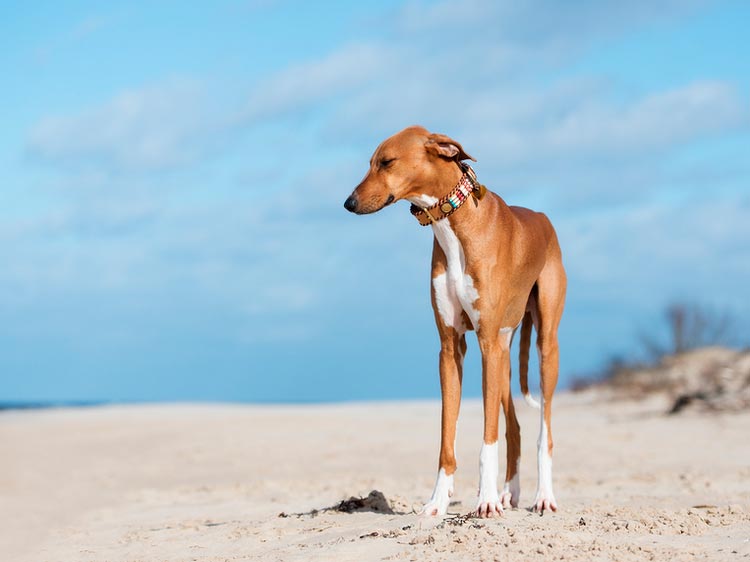
The Azawakh tolerates hot weather very well and absolutely detests cold. It has a short coat, no undercoat, and very thin subcutaneous tissue. Temperatures as low as 0°C (32°F) and as low as 5°C (41°F) can cause the dog to freeze. In damp weather, the Azawakh can easily catch a cold. Additional insulation is the solution. Clothing should be selected according to the weather. It's important to note that greyhound collars differ from those for other dogs by having a higher collar, which can often be pulled up to the head. This collar protects vulnerable areas such as the ears and neck from hypothermia. Regular thin collars are not suitable for the Azawakh; very wide greyhound collars are used, and harnesses are less common. The Azawakh requires a lot of attention and does not tolerate loneliness well.
Care
Azawakhs are completely undemanding in terms of grooming. They should be brushed periodically with a mitten or have any overgrown hair removed with a damp hand. Bathing is infrequent. Keep ears, eyes, and nails clean. It's a good idea to accustom the dog to weekly teeth brushing. They should be regularly treated for external and internal parasites.
Nutrition
In their native habitat, they try to feed the same diet as their owners, primarily millet and goat's milk. The Azawakh's digestive system is adapted to a low-protein diet. Their diet shouldn't contain much meat, but it should include grains (millet or wild rice), fruits and vegetables (bananas, carrots, zucchini, apples, etc.), fermented milk products, greens, and first- and second-grade meat, sometimes substituted with offal or fish. Many modern dogs adapt to eating prepared foods, which are individually selected. Low-protein diets for medium and large breeds are suitable for the Azawakh.
The Azawakh drinks relatively little; its body is designed to absorb maximum fluid from its food. However, water should always be freely available, especially when feeding dry food.
Health and life expectancy
Azawakhs are known for their robust health, hardiness, and undemanding nature. Their lifespan typically ranges from 10 to 12 years, although long-lived dogs are not uncommon. While the breed is generally healthy, it is not without hereditary health problems, which occur with varying frequency:
- Hip dysplasia;
- Hypothyroidism;
- Eosinophilic myositis;
- Von Willebrand disease;
- Predisposition to gastric torsion;
- Cardiovascular diseases;
- Epilepsy (more common in dogs from Yugoslav lines);
- Incorrect structure of the front legs (a known problem in French Azawakhs).
Due to the small population, breeding Azawakhs is impossible without more or less close inbreeding. Therefore, German breeders have recently proposed crossbreeding with other similar breeds to preserve the breed. Most breeders, however, believe this approach is motivated by a fear of physical illness and should not be resorted to due to the risk of losing the breed's unique characteristics.
Choosing an Azawakh Puppy
Finding a good Azawakh puppy in Russia is difficult, as is the case in neighboring countries. There are a few good dogs in Poland, Latvia, and the Czech Republic. Those serious about buying an Azawakh puppy are advised to look for a kennel in Germany or France. Several good examples of the breed have recently appeared in Moscow. Time will tell what quality the Russian breeding line will be.
The American Kennel Association (ACA) does not recognize the breed, so Azawakh puppies born in the United States cannot be registered with the FCI. However, if dogs were imported from Europe with FCI documents, their offspring can be registered with alternative American clubs and will be recognized only by these clubs, not the FCI. This confusing situation is typical for many rare breeds and hinders the exchange of breeding stock between America and Europe.
When searching for a puppy, it's important to look for breeders who breed dogs with suitable temperaments and who prioritize health, not just appearance. After all, the way the litter is raised and the behavior the parents demonstrate to the puppies will largely determine the adult dog's personality. At 2-3 months, it's already possible to tell what type and personality traits an Azawakh will have in the future. The build, proportions, size, and color are all evident. However, it will be difficult for someone unfamiliar with the breed to assess the dog's potential, and it's best to either trust the breeder or seek the help of a qualified dog trainer.
It's recommended to bring an Azawakh puppy into a new home no earlier than three months of age. Early socialization and exposure to other Azawakh puppies of all ages are essential. Only a breeder can provide such conditions.
Price
Due to low demand, the price of an Azawakh puppy is rarely exorbitant. A puppy with papers from reputable parents can be purchased for 35,000-40,000 rubles. Ads for Azawakh puppies without papers are very rare. The breed is not commercial, and most breeders practice responsible breeding.
Photos
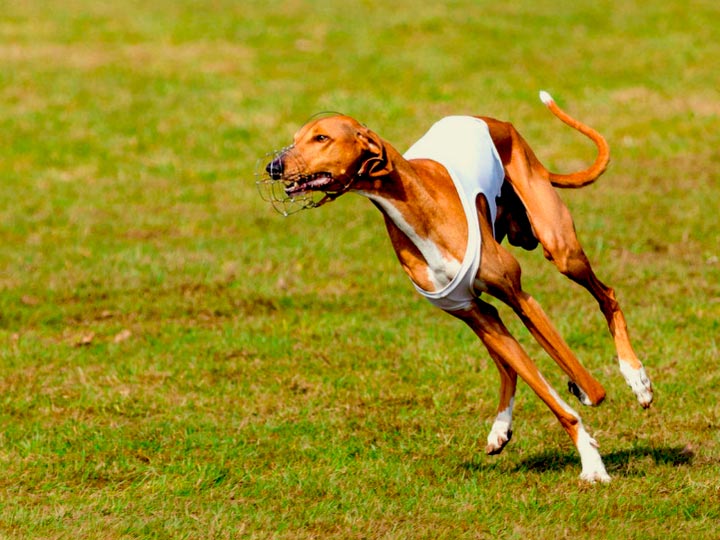
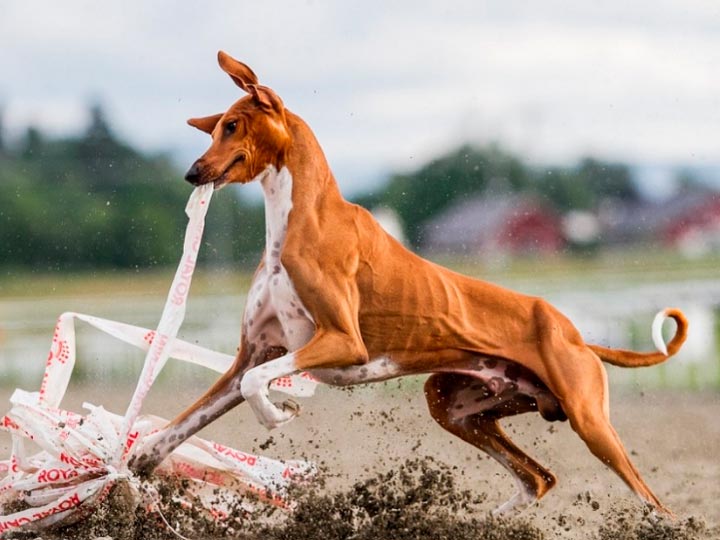
The gallery contains photographs of Azawakh dogs.
Read also:


Add a comment