
Australian Shepherd (Aussie)
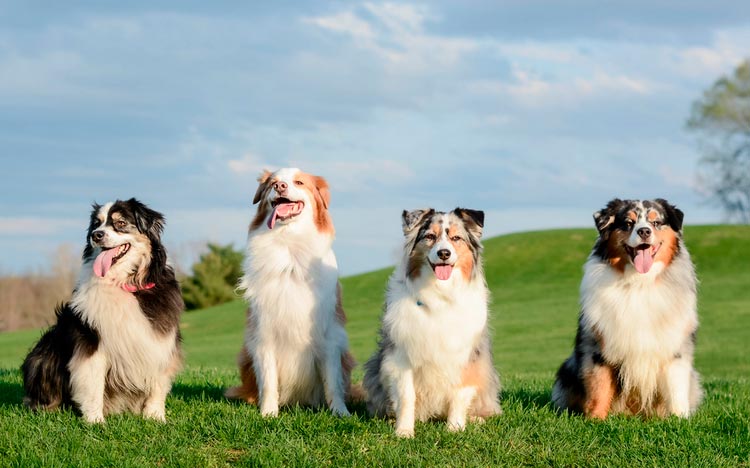
The Australian Shepherd has many talents. First and foremost, they are excellent herders, capable of handling not only a flock of sheep but also a herd of bulls. They are wonderful companions and sporting dogs, responsible guardians of the home and family, and with proper training, they can become excellent drug sniffers and police officers. They are hardy, strong, highly intelligent, and undoubtedly beautiful. Another name for this breed is the Aussie.
Content
History of origin
Hearing the name Australian Shepherd, an ignorant person would not even think that the breed was bred not in Australia, but in America. Likewise English Shepherds, the Australian one has only an indirect relation to the country after which it is named.
The history of the Aussie is complex and lengthy. The rapid settlement of Australia and the development of livestock farming led to the spontaneous crossing of various breeds. This resulted in numerous mixed-breed dogs. Many of these dogs came from Australia to America in the late 19th century. The dogs had little in common, but they were all called "Australian Shepherds." A few enthusiasts in America began to actively develop the breed. There are virtually no records of their work. By the 1960s, a group of Australian Shepherds with a more or less uniform appearance could be identified.
The Aussie became famous after a couple of tricks performed during a break at an American rodeo and thanks to two Walt Disney films.
The first breed standard was adopted in 1976, and in 1980 the Australian Shepherd Club of America was founded. In 1993, the breed was recognized by the American Kennel Club, and in 1996 by the Fédération Cynologique Internationale.
Video about the Australian Shepherd (Aussie) dog breed:
Appearance
The Australian Shepherd is a well-balanced, slightly elongated dog of medium size and bone structure. It comes in a variety of colors and is flexible, agile, active, and muscular. Its coat is medium in length and harshness. It may have a naturally short tail. The height at the withers for males is 51-58 cm (20-22 in); for females, 46-53 cm (18-21 in). Males are more massive but should not be coarse, while females should be fine-boned.
The Aussie's head is well-defined, dry, and strong. The top of the skull is slightly domed, and its length and width are approximately equal. The stop is clearly defined. The muzzle is slightly shorter than the length of the skull, tapers toward the nose, and is rounded at the tip. The nose leather can be black or brown, depending on the coat color. More than 25% of light spots on the earlobe in dogs over one year old is a fault. The teeth are complete, strong, and white. A scissor bite is preferred, but a level bite is also acceptable. The eyes are almond-shaped. Eye color may vary, including heterochromia. The ears are medium-sized, triangular, and set high, with tips hanging down or to the side.
The neck is of moderate length and strong, with a slightly arched nape. The back is straight and level. The croup is moderately sloping. The chest is deep but not wide. The ribs are long and well sprung. The underline has a moderate rise. The tail is straight, long or short. The length of the tail, if docked or naturally short, should not exceed 10 cm. The front and hind legs are approximately the same width apart. The paws are compact, oval, with well-arched toes. The pads are firm and thick.
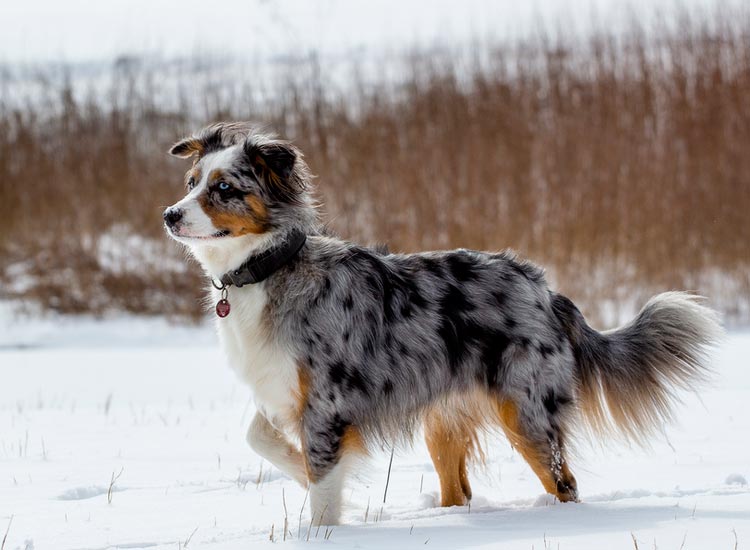
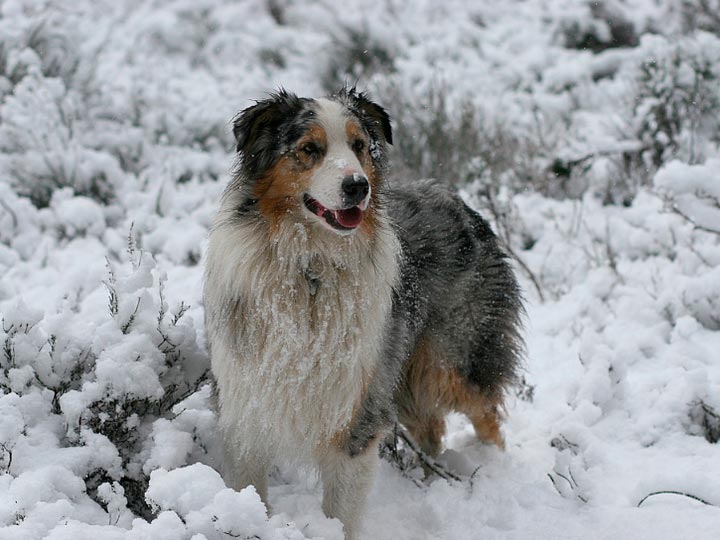
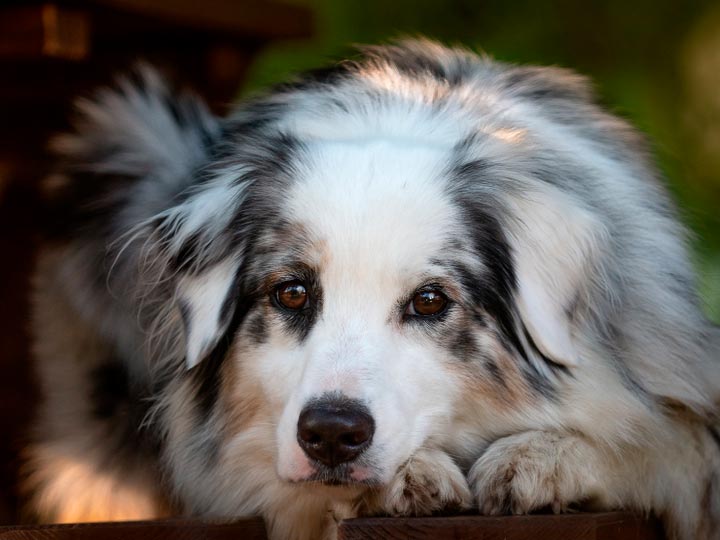
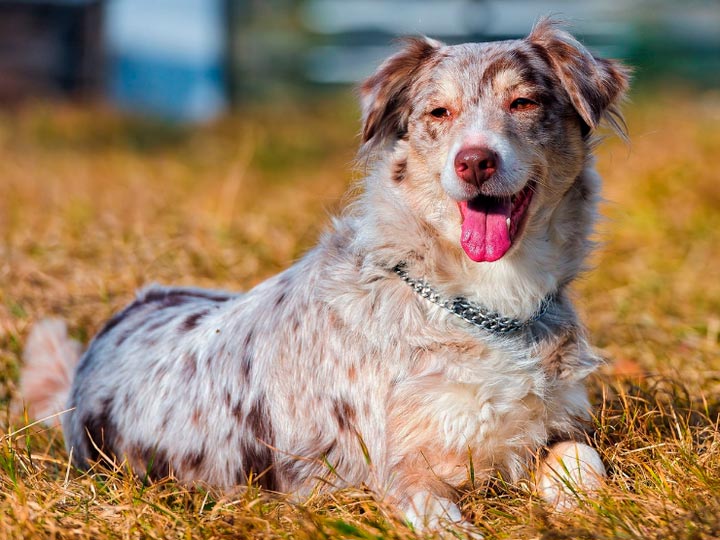
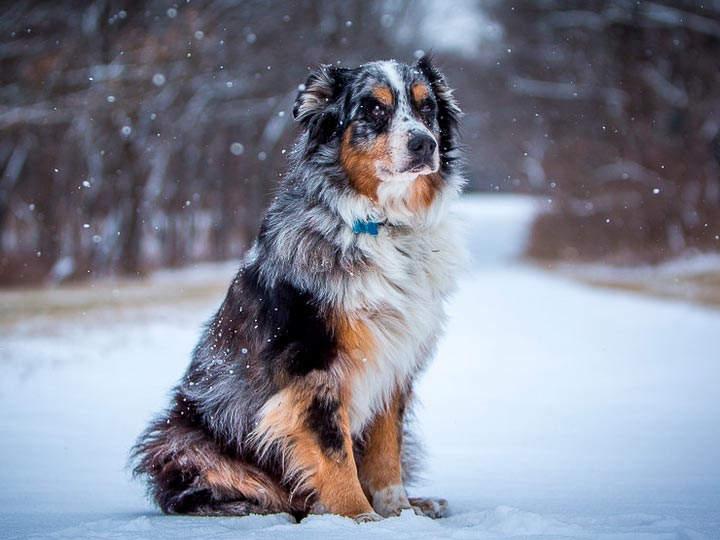
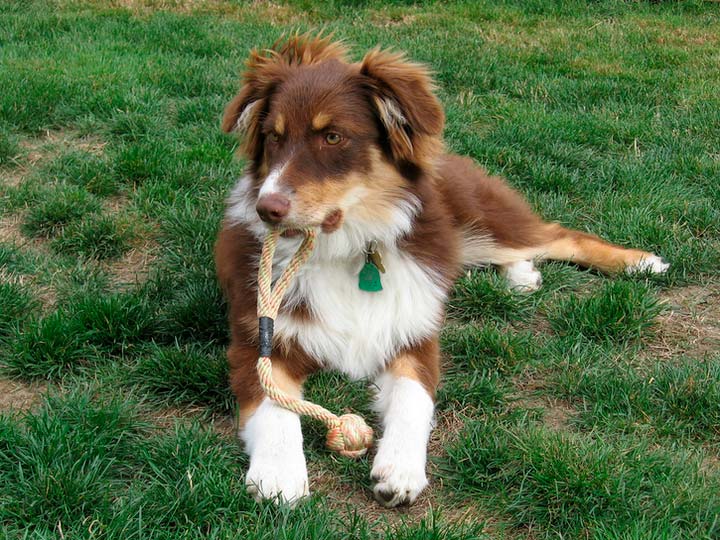
The Australian Shepherd is often confused with border collieThe coat is straight or wavy, medium in length and texture. The undercoat may be more or less pronounced, depending on the climate. The hair on the head, ears, front of the legs, and below the hocks is short. The back of the legs is moderately feathered. Males have a more pronounced collar. Colors vary: black, red, blue merle, and red merle. All colors are available with or without white markings, with or without tan markings. The white collar should not extend beyond the withers. White should also not predominate on the head. Merle colors become darker with age.
Miniature Australian Shepherd
Small dogs have always been present in the breed, as evidenced by old photos and written records. And there were always people who preferred them over the standard breed. One of them was Doris Cordova of Norco, California. She began breeding a miniature version of the Aussie using a special program. Doris soon found followers and, together with them, founded the Miniature Australian Shepherd Breed Club. Currently, it is recognized only by the American Rare Breed Association. Outside the United States, miniature Aussies are virtually unheard of.
Character and behavior
The Australian Shepherd is an intelligent, balanced, working dog with a strong herding and guarding instinct. Loyal, energetic, and hardy, it has a pleasant disposition and is rarely quarrelsome. It is wary of strangers. Aussies never bark without cause and are rarely aggressive. Despite their strong watchdog and territorial instincts, the Australian Shepherd is not suited to being a bodyguard, much less a serious guard dog. Ease of training, agility, adaptability, and a strong desire to spend time with their owner make the Australian Shepherd an excellent companion and a good friend for the whole family.
The Australian Shepherd is an incredibly responsible, hardworking, friendly, and affectionate dog. Unpretentious and resilient, the most important thing for her is to stay in the center of things. She is an attentive student. Very energetic and ready to support her owner in any active pursuit. Absolutely cannot stand loneliness. Without constant training and proper upbringing, a dog can disappoint and upset its owner with its uncontrollability.
The quiet, sweet, and devoted Australian Shepherd is completely predictable. He will make a loyal, reliable friend and a wonderful companion for children. He is completely reliable both indoors and outdoors.
Aussies get along well with other pets, from small rodents and birds to large dogs. They tend to avoid conflict and rarely compete for dominance in the pack. This dog can be brought into a house where there are small children without any problems. An Aussie will treat children with affection and care. Another advantage is that the shepherd obeys all family members approximately equally. It rarely ignores commands from a teenager, even if it recognizes an older family member as its owner.
Education and training
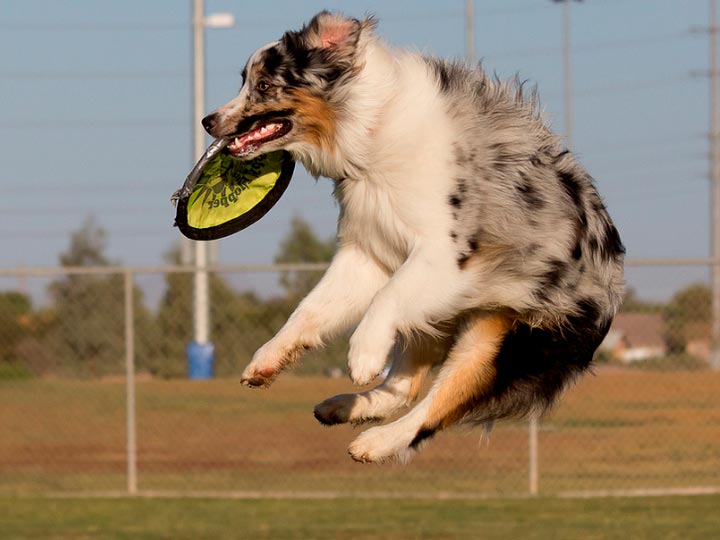
The Aussie is a very intelligent and smart dog with excellent trainability. A close bond and regular work with its owner will help it reach its full potential. The first thing you need to do with an Aussie is general training course. This could be a regular OKD or UGSBoth include a basic set of commands that will make your pet obedient and manageable. Those looking for something more challenging can consider various dog sports: agility, frisbee, flyball, and freestyle.
Aussies are very intelligent, but that doesn't mean a puppy will learn everything on its own. It's the owner who makes them well-behaved and obedient.
The Australian Shepherd's main passion is herding. They work enthusiastically with livestock, are very resilient and obedient, but are also capable of making their own decisions. They are willing to gather livestock, help drive them, and, if necessary, will defend them.
Content Features
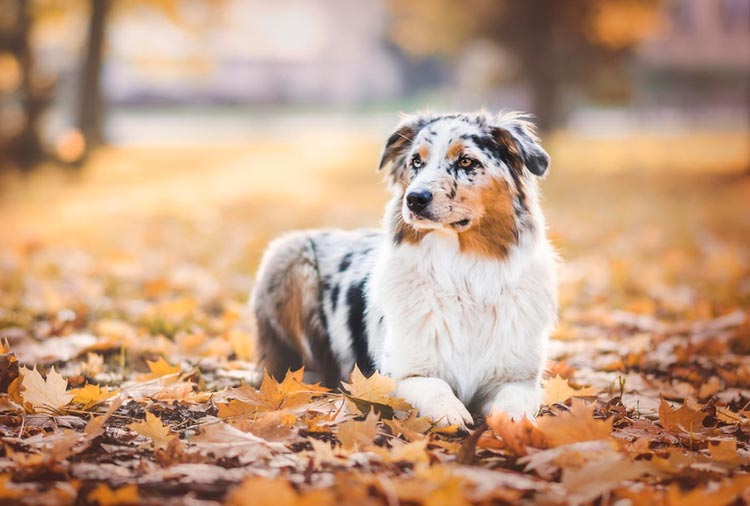
The Australian Shepherd is ideal for a free-ranging life on a farm or in a private home with a large yard and the opportunity to run free all day. The worst thing for them is life in a kennel or on a chain. As for apartment living, much depends on the owners and their lifestyle. Aussies have little in common with toy breeds. They require a great deal of physical and mental stimulation. Often, city dwellers provide dogs with more suitable conditions than owners who keep them for the outdoors. The bare minimum for an apartment Aussie is a long daily walk and occasional trips out of town.
An Aussie will happily accompany its owners on hikes, become a companion on jogs, bike rides, or engage in some kind of sport.
Care
Grooming an Australian Shepherd is simple. They require regular brushing and bathing when they get dirty. Aussies shed heavily seasonally, twice a year. In between, there won't be any significant coat issues. Another advantage is that Aussies have no distinctive odor, and their coat is very soft and pleasant to the touch.
Show grooming includes washing, drying, combing, and a light trim. Typically, hair is removed from between the toes and pads, and the feathering on the front and back legs is trimmed. Sometimes, trimming is used to give a neater appearance to the collar, ears, and tail, if it's short.
Nutrition
Aussies don't have any special dietary requirements. They easily adapt to a regular routine and the food provided. Most breeders and owners prefer to feed their dogs natural foods: meat, organ meats, fish, cereals, vegetables, fruits, and fermented milk products. However, some prefer prepared dry food. Aussies are best fed food designed for medium-sized dogs with active lifestyles, and above premium quality.
Australian Shepherds rarely have allergies. They're not prone to overeating, but they're quite fond of begging and won't hesitate to pick up anything on the street.
Health and life expectancy
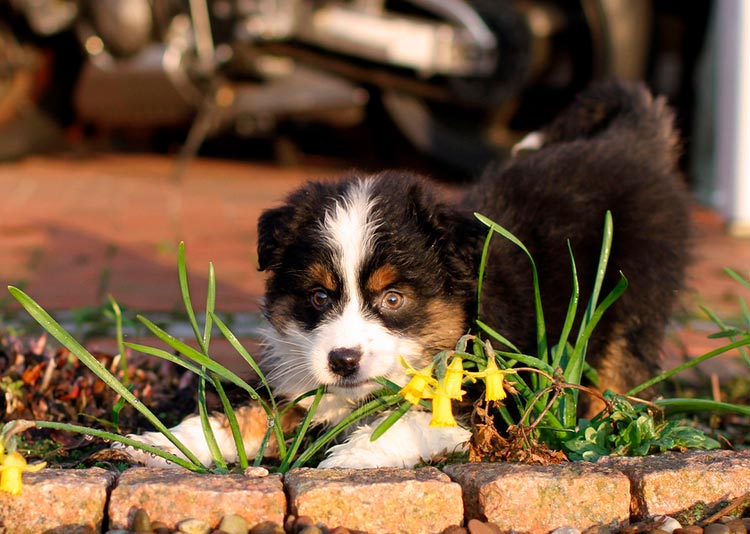
In general, Aussies rarely have health problems. They are hardy, robust, and have strong immune systems. However, the breed is susceptible to several health problems that can be passed on from parents to their offspring:
- Progressive retinal atrophy;
- Hereditary cataract;
- Collie eye anomaly;
- Degenerative myelopathy.
Today, genetic tests are available to any breeder for all Aussie breed diseases.
In addition, Australians sometimes experience intolerance to certain medications (ivermectin, loperamide, dioxin, tacrolimus, quinidine, lysine, vinblastine, cyclosporine, paclitaxel, verapamil, docetaxel, doxorubicin, hydrocortisone, dexamethasone, levofloxacin, sparfloxacin, and ondansetron). This condition is not a disease, but it can be fatal and should not be ignored.
Due to the increased sensitivity of Aussies to certain substances, drugs based on ivermectin and its derivatives, as well as angelmintics containing macrocyclic lactones (Milbemax) should be used with caution.
Choosing an Australian Shepherd Puppy
America is the leading country for Australian Shepherd breeding. However, Russia also has a significant population. One of the main indicators of the success of domestic breeders is the number of their dogs sold abroad. Potential owners should keep in mind that there are two types of Australian Shepherds. Breeders often favor one over the other. Working Aussies are smaller, fine-boned, with a less dense and voluminous coat and a simpler head. Show dogs are larger, more bony, with a rich coat and a distinctive head. The two varieties cannot be compared as to which is better. Each has its own advantages and disadvantages and is used for a specific purpose.
The Australian Shepherd isn't a commercial breed, but it's quite popular. Finding ads for available puppies is easy. For example, on Avito, most ads are from professional kennels and breeders, but some are scams. Therefore, choosing a puppy requires great care.
The puppy's parents should be checked for common breed-specific diseases; it's a good idea to see them in person or on video. Each puppy should have a tattoo and a puppy card. These are the only proof of pedigree. When inspecting the litter, the puppy they like best is usually chosen based on their own preference. But before taking the puppy home, it's important to ensure that the puppy is physically and psychologically healthy and meets the breed standard (especially if the dog is being acquired for show and breeding). It can be difficult for a non-professional to spot any flaws in a small puppy. In this case, you can either trust the breeder or choose a puppy from an experienced dog trainer.
Price
In Russia, the average cost of an Australian Shepherd puppy is 40,000 rubles. In Europe and America, puppies cost about the same, but transportation and paperwork costs must also be added to the price.
Photos
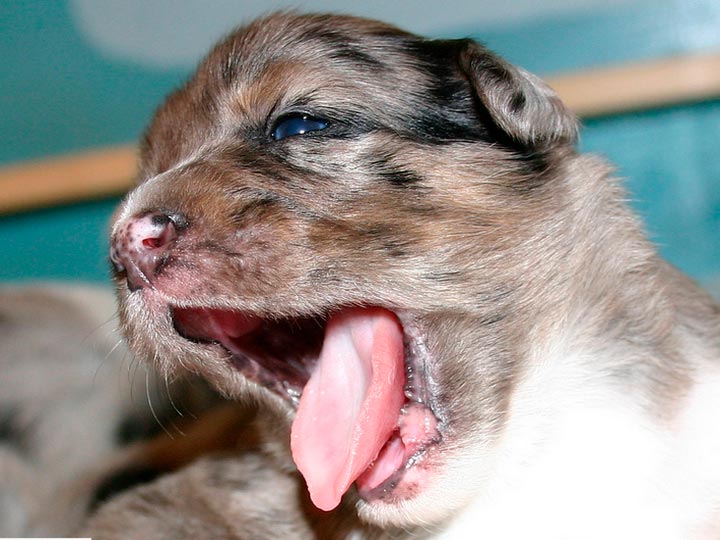
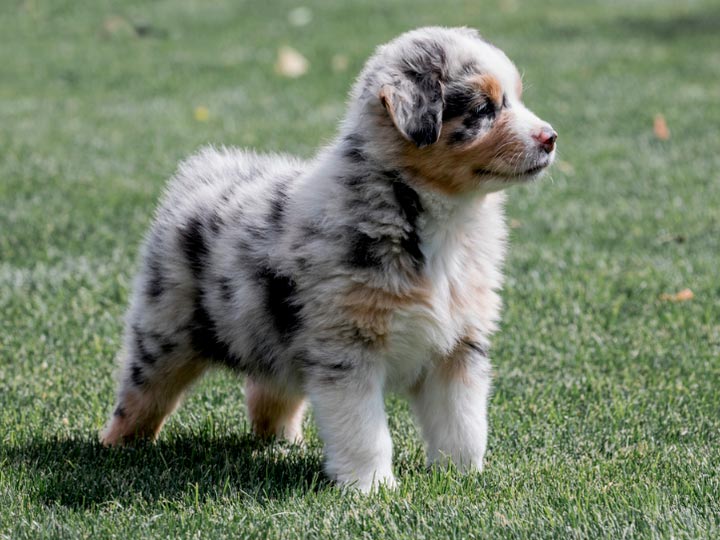
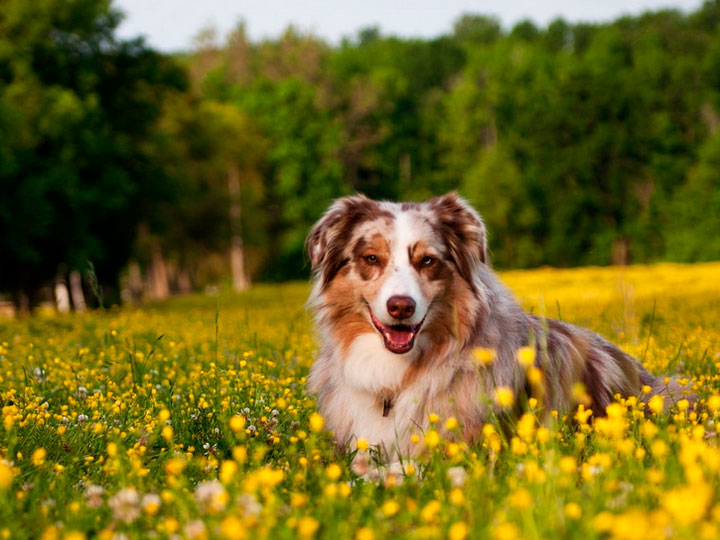
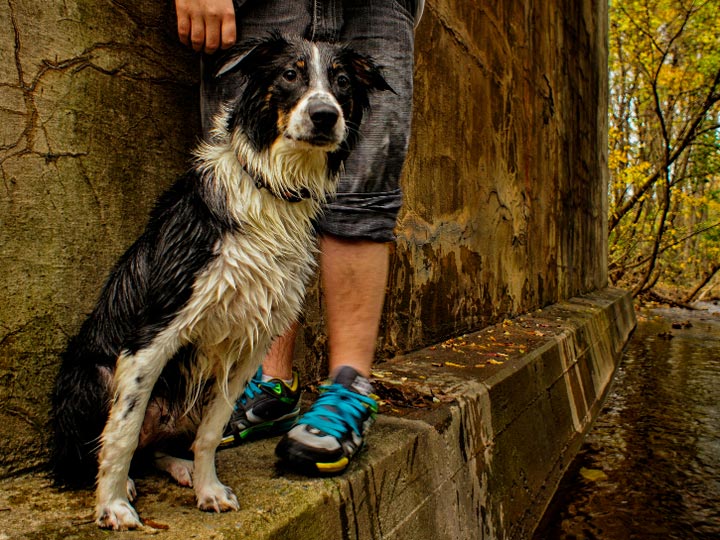
The gallery contains bright photographs of puppies and adult dogs of the Australian Shepherd (Aussie) breed.
Read also:
- Australian Labradoodle (Australian Cobberdog)
- Australian Terrier
- Australian Heeler (Australian Cattle Dog, Australian Cattle Dog)


Add a comment