
Australian Terrier
The Australian Terrier was once a purely working breed, living on farms, serving as a guard dog and rodent exterminator. Today, this charming toy dog has become a beloved companion. It's intelligent, cheerful, and tireless, and requires little grooming. It's very popular in its native land, but little known outside of Australia.
Content
History of origin
The Australian Terrier was developed in Australia in the early 19th century. The breed's genetic foundation came from dogs from Great Britain that arrived in the New World on ships with settlers. These dogs were presumably the Dandy Diamond, Yorkshire, Cairn Terrier, Irish and old-type Scottish Terrier.
The Australian Terrier can confidently lay claim to the title of "the first dog breed bred in Australia."
By 1870, the Australian Terrier had already been established as a distinct breed. The population was quite large and uniform. These small dogs were known by various names: Rough-Coated Terrier, Broken-Coated Terrier, and Wire-Coated Terrier. It wasn't until 1890 that they were officially called Australian Terriers. The breed was officially recognized by the English Kennel Club in 1933. A breed club was established in 1936. Australian Terriers were introduced to the United States in the 1960s, but the first dogs began appearing in Russia only in the last decade, making them a rare and little-known breed.
The Australian Terrier is one of the smallest working terriers, bred as a farm helper and companion.
Video about the Australian Terrier dog breed:
Appearance
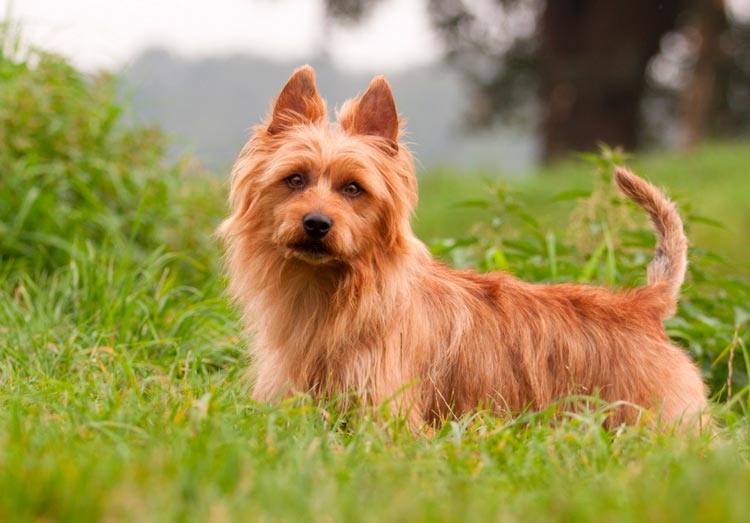
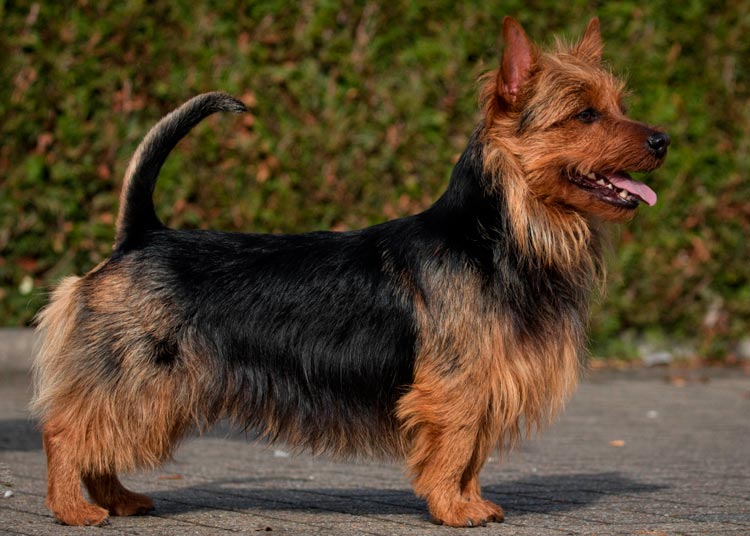
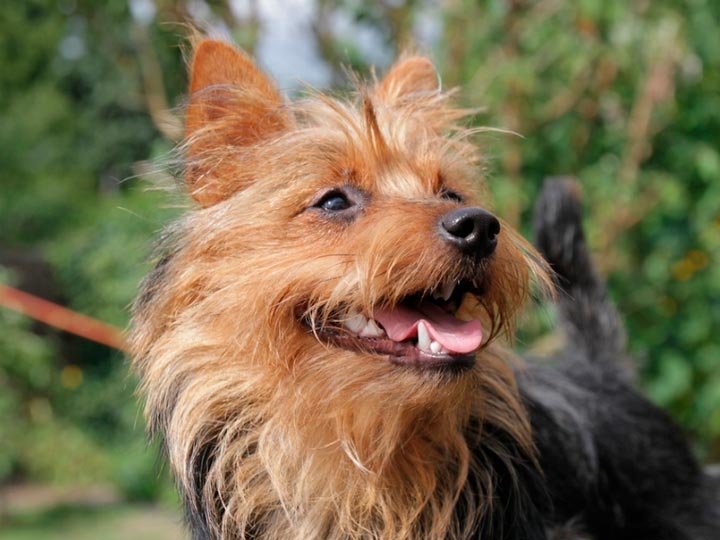
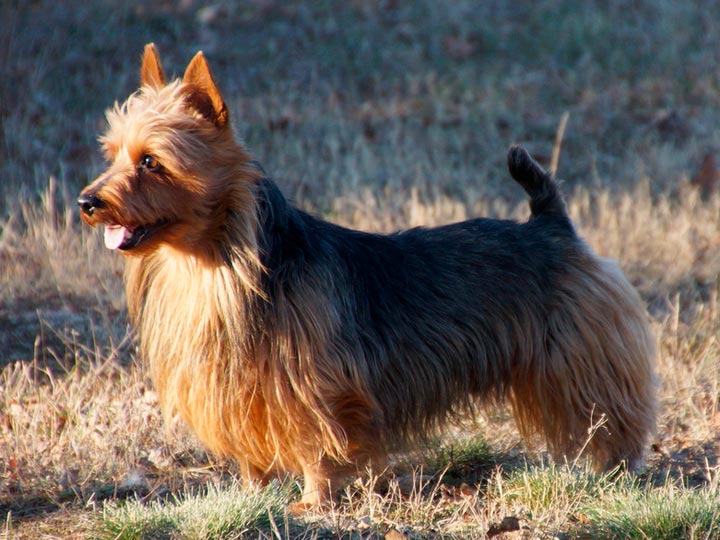
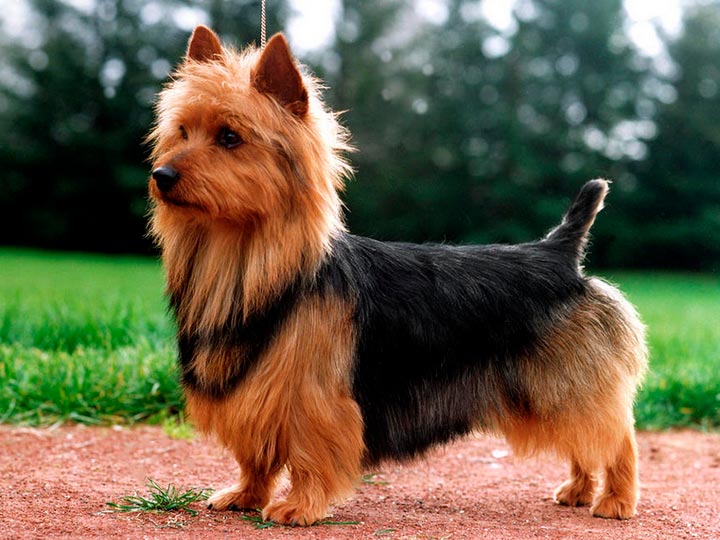
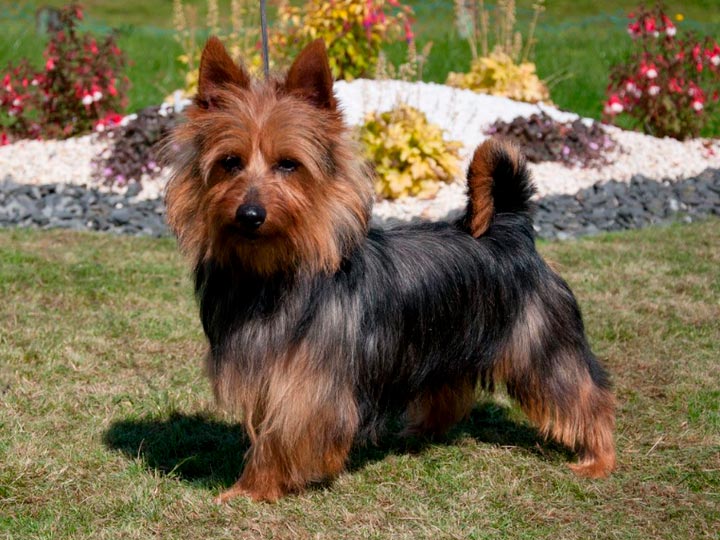
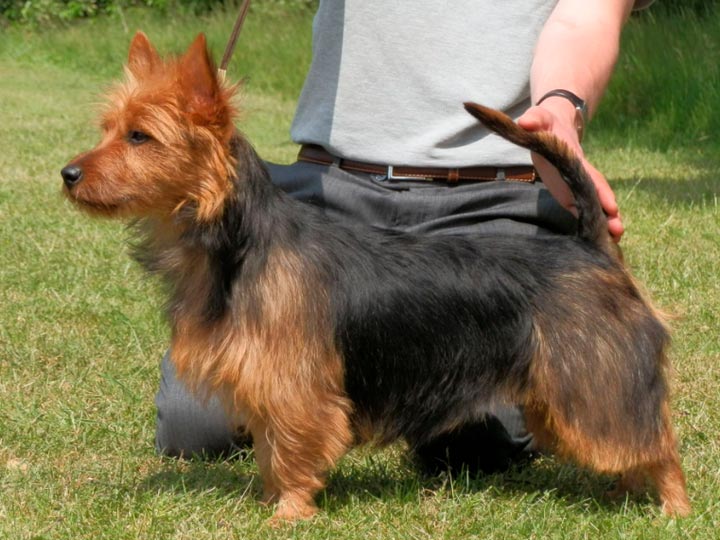
The Australian Terrier is a small, sturdy dog with beautiful proportions, a coarse coat, and a ruff around the neck. Its appearance is somewhat unkempt, but this is precisely what gives it its charm. Sexual dimorphism is slight. Its height at the withers is approximately 25 cm, and its weight is 6.5 kg.
The skull is long, flat, and moderately wide. It is well-filled under the eyes. Soft hair forms a tuft on the head. The stop is distinct but shallow. The muzzle is strong, equal in length to the skull, and should be firm. The nose is medium-sized and black. The lips are tight-fitting, dry, and black. The jaws are strong, with a powerful bite. The teeth meet in a scissor bite. The eyes are oval-shaped, small, dark brown, and set wide apart. The ears are erect, small, pointed, set moderately wide apart, and very alert.
The hair on the Australian Terrier's neck forms a thick collar.
The neck is of good length, slightly arched, strong, and blends smoothly into sloping shoulders. The body is strongly built and elongated. The back is level. The loin is strong. The chest is moderately deep and broad. The ribs are well sprung. The tail is docked to two-fifths of its length, but may be left natural in countries where docking is prohibited. In any case, it is carried erect and should not curl over the back. The forelegs are straight, well-boned, and parallel, with slight feathering to the pasterns. The hind legs are of medium length when viewed from the rear, parallel, the thighs are muscular, and the angulations are pronounced. The paws are small, rounded, with strong pads, the toes are tightly closed, and the nails are strong and dark in color.
The double coat consists of a stiff, straight topcoat approximately 6.5 cm long and a short, soft undercoat approximately 6 cm long. The muzzle and lower legs are covered with short hair. Two colors are permitted:
- Black and silver (steel or dark gray with rich tan;
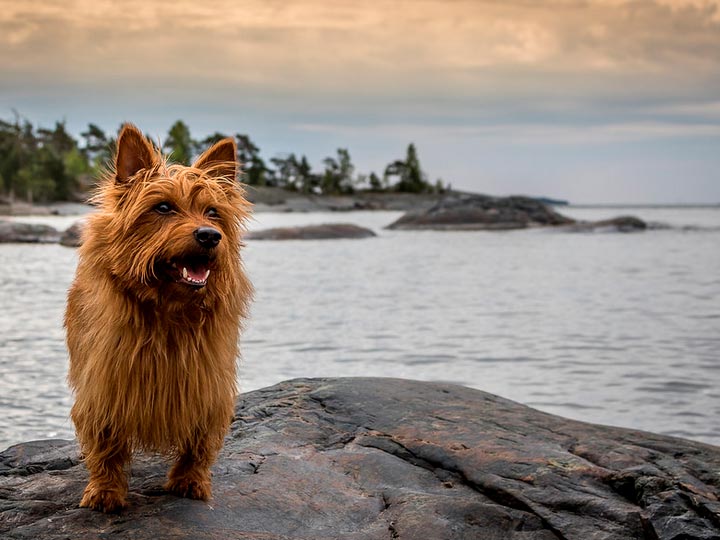
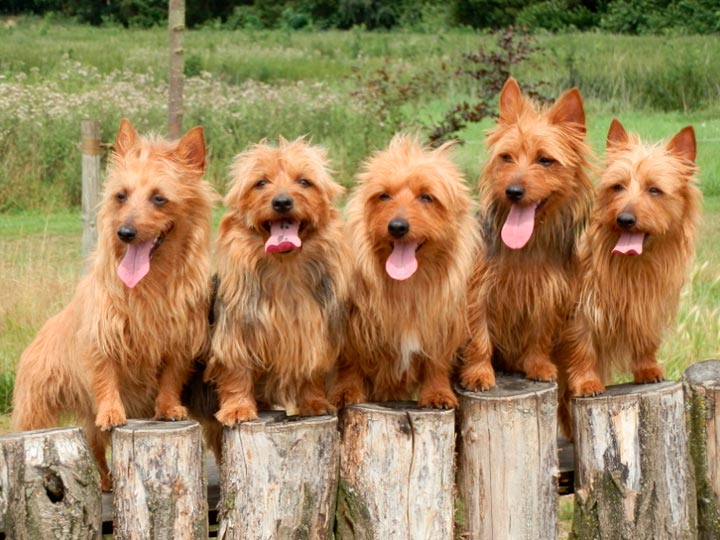
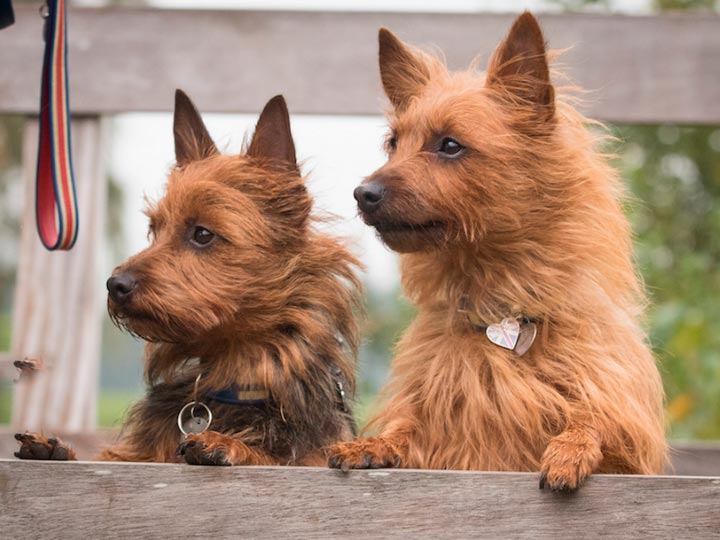
- Pure red, in which a forelock of a lighter tone is allowed.
In any color, dark spots and white markings on the paws or chest are undesirable.
Character
Australian Terriers have a true terrier-like temperament; they are hardy and courageous, possessing a keen sense of smell and quick reflexes, as well as a strong watchdog and hunting instinct. They are not designed to be couch potatoes, making them ideal for energetic young and old people, as well as families with children. Owners claim that these small dogs never have a bad mood; they are always friendly, playful, and affectionate. Australian Terriers have a balanced personality and are rarely overly irritable or nervous. They generally get along well with children of all ages, especially with proper early socialization. However, interactions with children should be supervised. A terrier may snap if a child gives them too much attention or causes them pain.
The Australian Terrier is an alert and always busy little dog who loves to be at the center of things and never lets anything or anyone out of her sight. She thrives as a pet as long as she has something to do: daily exercise, plenty of mental stimulation, and games, including games that test her wits.
Terriers also have some less-than-positive traits, such as toughness, independence, stubbornness, and extraordinary courage, which can sometimes lead to foolish behavior. As is typical of terriers, Australian Terriers have a passion for small animals. They eagerly chase birds and rodents, and catch butterflies and other insects. Many dogs have a natural death grip. They dislike other dogs and are often quarrelsome with other dogs. However, they get along well with animals they have grown up with.
Education and training
The Australian Terrier responds well to positive reinforcement training, is obedient, and strives to please its beloved owner in every way. Training should begin as early as possible. Some dogs exhibit a tendency toward dominance. To avoid problems, this trait should be addressed promptly.
This small, independent dog requires a very serious approach to training. Its size is deceptive and disproportionate to its strength of character. An Australian Terrier needs to understand that it is loved, but not the boss of the family.
Owners with a gentle nature often raise puppies who are spoiled, which can lead to a host of problems: disobedience both indoors and outdoors, aggressive behavior, excessive barking, and more. Australian Terriers quickly learn commands and happily perform them for rewards. They are easily trained to perform tricks. They excel in various sporting events, including agility, flyball, and frisbee.
Content Features
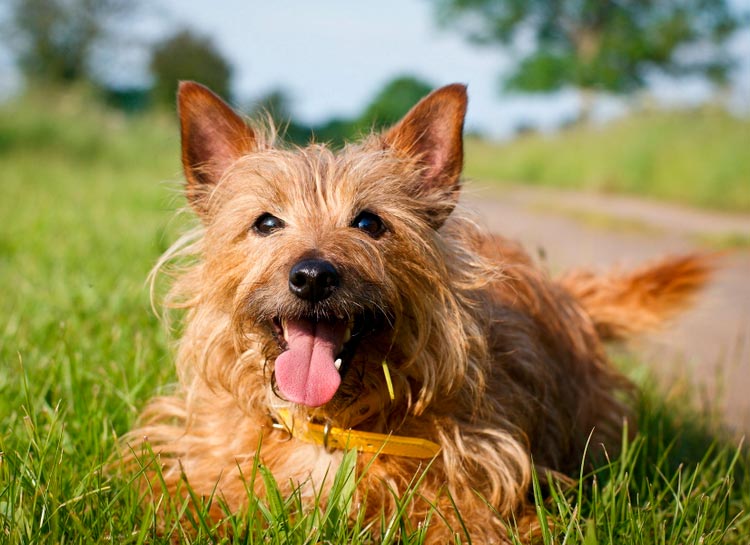
The Australian Terrier is completely unpretentious in terms of maintenance. Its small size and lack of shedding, with regular grooming, make it a comfortable apartment dweller. At home, the terrier is neat and clean, although it can sometimes be overly noisy. It adapts well to city life. It has long been out of use as a rabbit catcher, rodent killer, and snake killer, but it will happily spend a lot of time in a private yard. It is theoretically suitable for outdoor living and as a small watchdog.
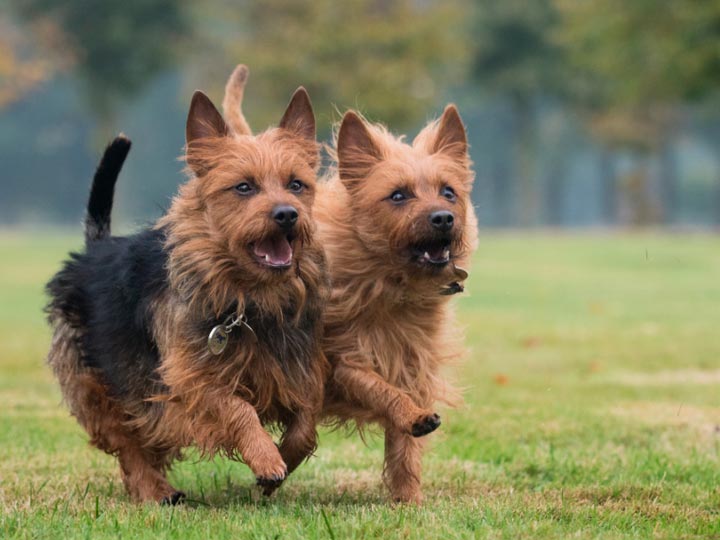
Despite its small stature, the Australian Terrier is very energetic and requires ample exercise. Walks should be long, at least an hour daily, and opportunities to hang out with other dogs and chase butterflies are encouraged. Walks can also be enriched with active games and activities. A bored Australian Terrier quickly develops bad habits that can be difficult to correct later.
Care
The Australian Terrier is a wire-haired dog, and its main characteristic is that it has no pronounced shedding period. The coat grows to a certain length and then begins to fall out. It needs to be plucked periodically to maintain a neat appearance and allow new hair to grow. Wire-haired dogs are not usually clipped. Their coat is plucked three or four times a year. Show dogs are plucked more frequently.
Bathe as needed, usually every 2-3 months. A healthy, clean dog has no distinctive odor. Other essential hygiene procedures include regular teeth and ear cleaning and nail trimming.
Nutrition
There are no specific feeding recommendations for Australian Terriers. Small dogs are fed a diet based on their age, size, and activity level. Most breeders and owners prefer commercially prepared dry or wet foods, whether super-premium or holistic. Sometimes, portion sizes may need to be adjusted slightly to control weight or a change in brand due to allergies. Australian Terriers are rarely picky eaters, so a balanced, natural diet can be provided if desired.
Health and life expectancy
With proper care and nutrition, the Australian Terrier's lifespan is 12-14 years or more. Most dogs are generally healthy, but the breed is susceptible to hereditary health problems, which occur with varying frequency:
- Diabetes;
- Eye diseases (cataract, progressive retinal atrophy, persistent pupillary membrane, retinal dysplasia);
- Patellar dislocation;
- Cruciate ligament rupture;
- Allergic dermatitis;
- Ear infections.
To maintain the health of an Australian Terrier and prevent many diseases, timely vaccinations and treatment for external and internal parasites are necessary.
Choosing an Australian Terrier Puppy
Finding an Australian Terrier puppy outside of their homeland can be very difficult. There are breeders in America and Europe. In Russia and neighboring countries, there are only about 100 representatives of the breed, and only a few breeders who breed them professionally.
Because the breed is so rare, there is no national club, and therefore no mandatory testing requirements for breeding animals. However, responsible breeders do test their dogs for genetic diseases. It's advisable to purchase puppies from such breeders. It's worth paying attention to the litter's parents; it's good if they've already bred, so you can track the puppies from previous litters, their show careers, and their health. Most often, puppies must be reserved in advance; in this case, the terms of purchase are negotiated individually.
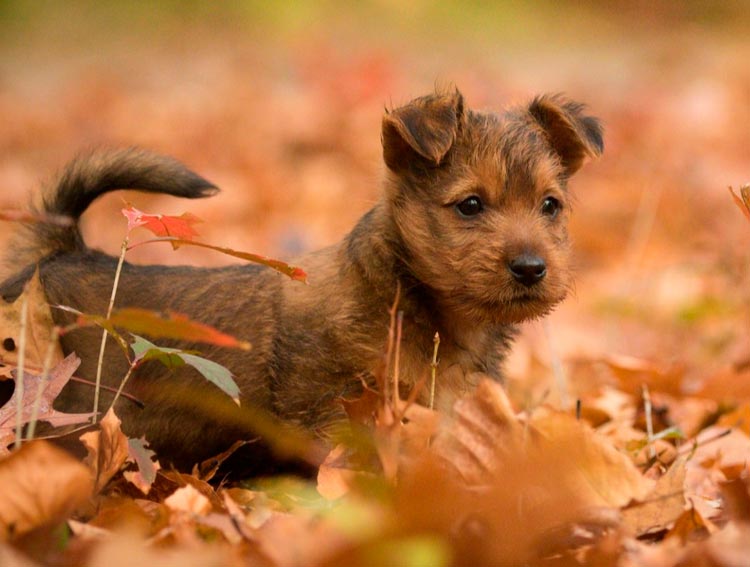
When choosing a puppy, they rely on the breed standard and, of course, their intuition. It will be easier if you decide on the gender, desired color, and personality in advance. The breeder will be able to tell you which puppies are active and independent, and which are more docile and calm. Health is also important. There should be no signs of illness, such as lethargy, discharge, scabs, rashes, or bald spots. Signs of a healthy puppy include: moderate weight, bright eyes, a moist black nose, a coat that shines in the sun, curiosity, friendliness, an excellent appetite, and sound sleep. Don't buy an Australian Terrier based on a photo or be tempted by a low price. An Australian Terrier puppy is not cheap.
The price of an Australian Terrier in Russia typically starts at 50,000 rubles. Often, puppies must be reserved in advance, even before mating.
Photos
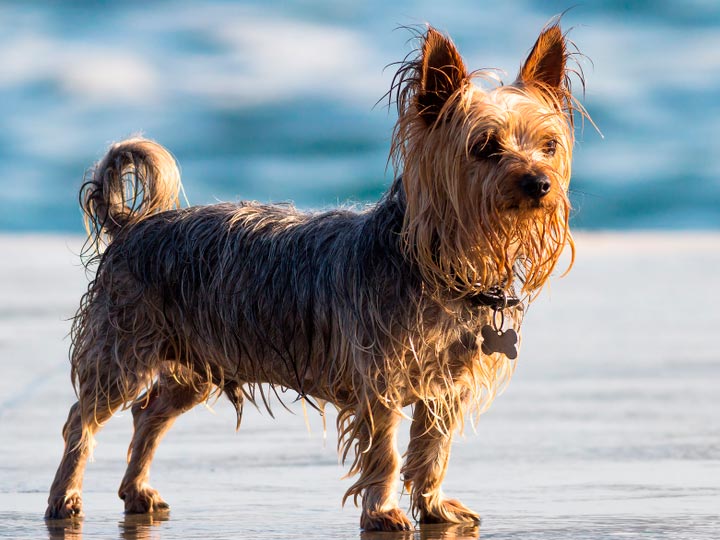
The gallery contains photos of Australian Terrier puppies and adult dogs.
Read also:


Add a comment