
Australian Heeler (Australian Cattle Dog, Australian Cattle Dog)
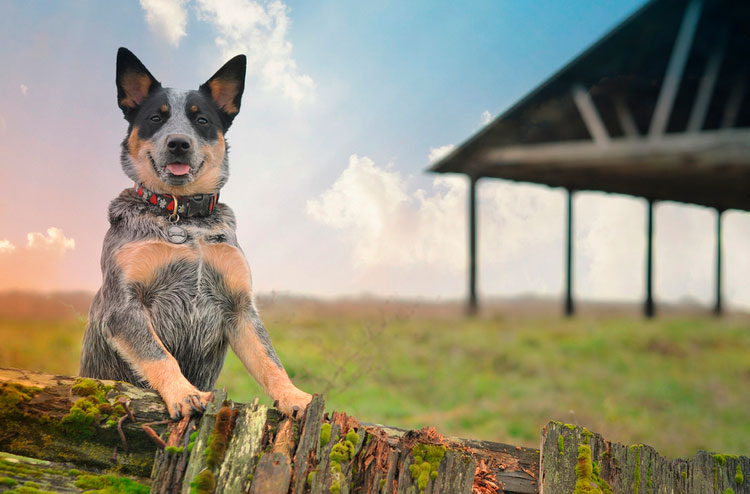
The Australian Heeler is a medium-sized herding dog breed also known as the Australian Cattle Dog or Australian Cattle Dog. The Heeler is strong and hardy. very smart He's loyal and protective. He's completely low-maintenance, but requires plenty of exercise. He can be used as a herding dog, a sports dog, or simply a companion.
Content
History of origin
The history of the Australian Heeler begins with the introduction of European settlers to the dingo.
The first colonists to arrive on the continent studied wild dogs, observed them, and attempted to domesticate them. Sometimes they succeeded. Weaned from their mothers at an early age, puppies became attached to their owners, were good guard dogs, and didn't bark at all. Despite these qualities, these predators remained predators. They were unpredictable and a real nuisance. It was then that the first crossbreeding experiments began. dingo with other breeds.
In the early 19th century, farmers faced difficulties driving cattle over long distances. Losses in a single drive could reach up to 200 head. It was clear that a four-legged companion was needed, one that could accompany them on the journey, possess endurance and strength, protect the herd from wild animals, and, if necessary, gather those lost in the bush. At the same time, various herding dogs, primarily collies, began to be imported, but they were poorly adapted to the Australian heat and had difficulty covering distances. They were also too noisy.
In the 1920s and 1930s, South Wales farmer Thomas Hall, on the advice of his parents, crossed a dingo with a blue-collared collie, which he imported to Australia. At the time, they were known as Welsh Collies. For 30 years, he kept his successful formula to himself, using his dogs himself; they were called Hall's Hillers.
Over time, Australian Heelers split into two breeds: the Australian Cattle Dog and the Australian Stumpy Tail Cattle DogThe breed was recognized in 2005, but remains rare and few in number even in its homeland.
After the farmer's death in 1870, his farm was sold, and the Australian Cattle Dog Society became interested in the dogs. Among the society's members was the Bagust family, who subsequently made a significant contribution to the breed's development and improvement. In 1893, Harry Bagust began infusing Hall's Heeler blood into the breed. Dalmatian, dingo and Australian KelpieThe dogs acquired an unusual coloring, leading to their renaming as "Blue Heelers." A prolific advocate of the breed was Bagust farm assistant Robert Kaleski. He wrote and published the first standard in 1903. The breed was later officially recognized by the Fédération Cynologique Internationale (FCI) under the name Australian Cattle Dog, which literally translates as "Australian Cattle Dog."
The Australian Heeler is a domesticated version of the Dingo. Modern dogs contain over 50% Dingo blood.
Video about the Australian Heeler dog breed:
Appearance
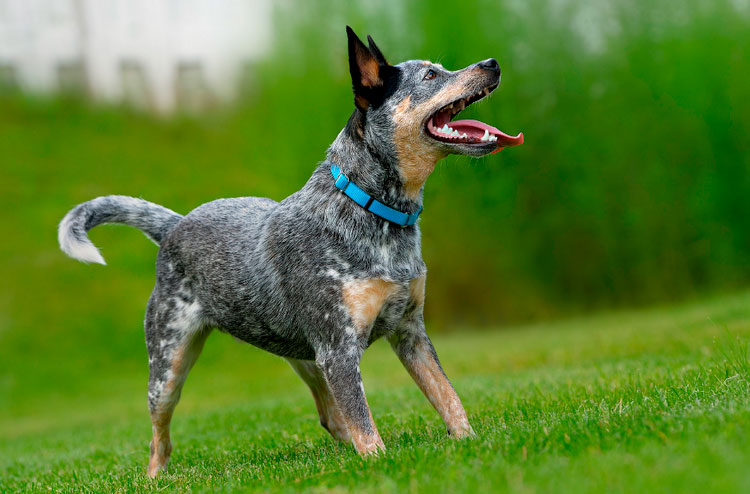
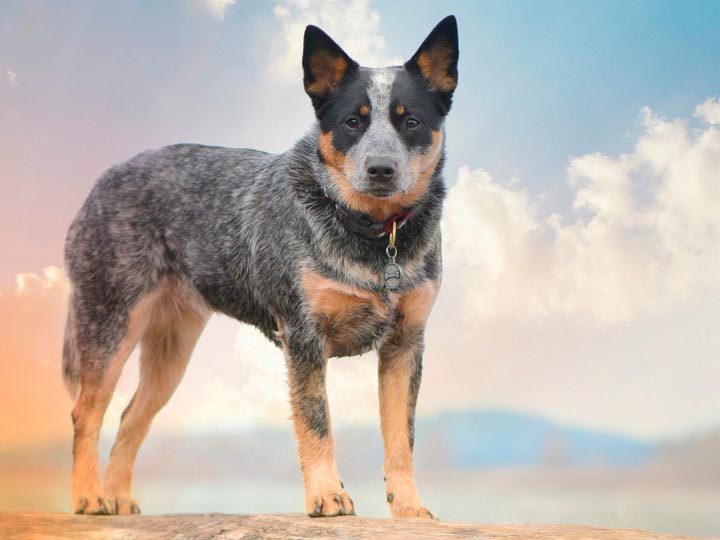
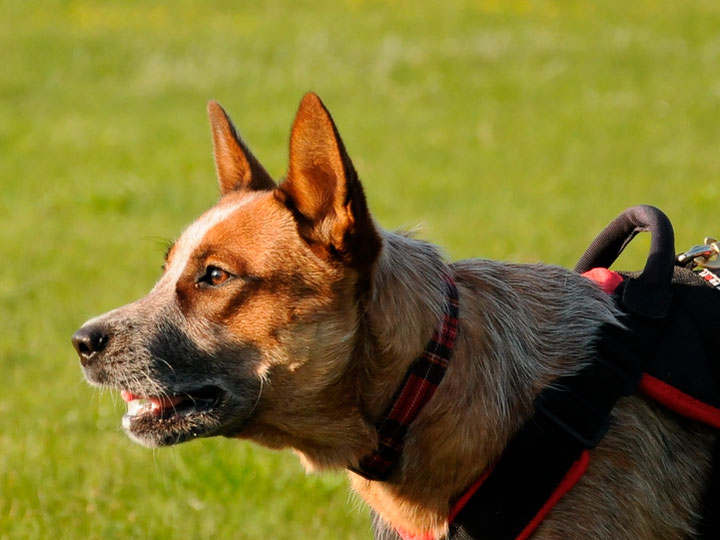
The Austrian Australian Heeler is a strong, well-proportioned, compact dog that should convey an impression of agility, strength, and tenacity. It should not appear heavy or lazy. The body is somewhat elongated, with the length and height being 10 to 9. The height at the withers for males is 46-51 cm (18-20 in), and for females, 43-48 cm (17-19 in), with an average weight of 20 kg (44 lbs).
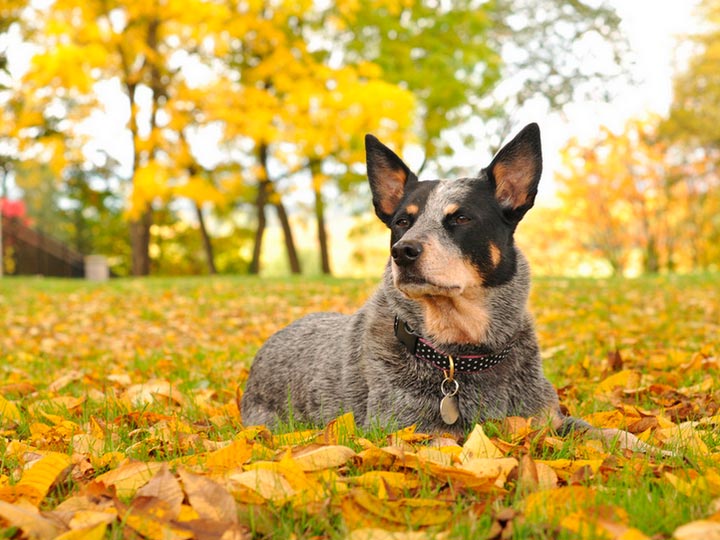
The head is proportionate. The skull is broad, slightly convex between the ears. The stop is clearly defined. The muzzle is broad, medium in length, deep, gradually tapering toward the black nose. The lines of the muzzle and forehead are parallel. The lips are dry and tight. The cheekbones are muscular, not protruding. The jaws are strong, with the lower jaw being particularly well developed. The teeth are healthy and strong, with a scissor bite. The eyes are medium in size, oval, and dark brown. The ears are medium in size, wide at the base, erect, with moderately pointed tips, set wide apart and turned out to the sides. The inner part of the ear is covered with hair.
The neck is very strong, of medium length. The topline is level. The back is strong and firm. The loin is wide. The croup is long and sloping. The chest is muscular, deep, and moderately wide. The ribs are well sprung, but do not create a barrel-shaped chest. The sides are deep. The tail is set very low, reaching the hock joint, and is either let down or slightly curved. The tail ends in a tuft. The forelimbs, viewed from the front, are straight and parallel, very strong. The hind legs, viewed from behind, are straight and parallel, wide, muscular, and strong. The paws are rounded, the toes are short, and well-knit. The nails are short, and the pads are hard.
The coat is smooth and double, consisting of a short, dense undercoat and a straight, stiff guard hair that lies close to the body and provides excellent protection from moisture. On the thighs, the hair forms small feathering. The hair on the head and front of the legs is very short. The average length of the body hair is 2-4 cm.
Possible colors:
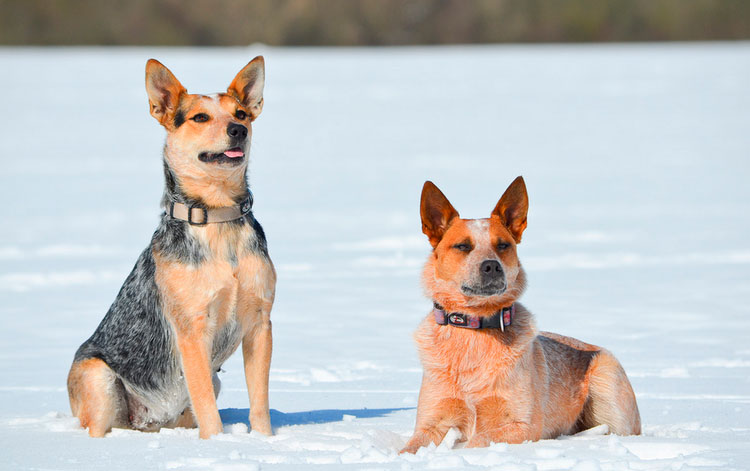
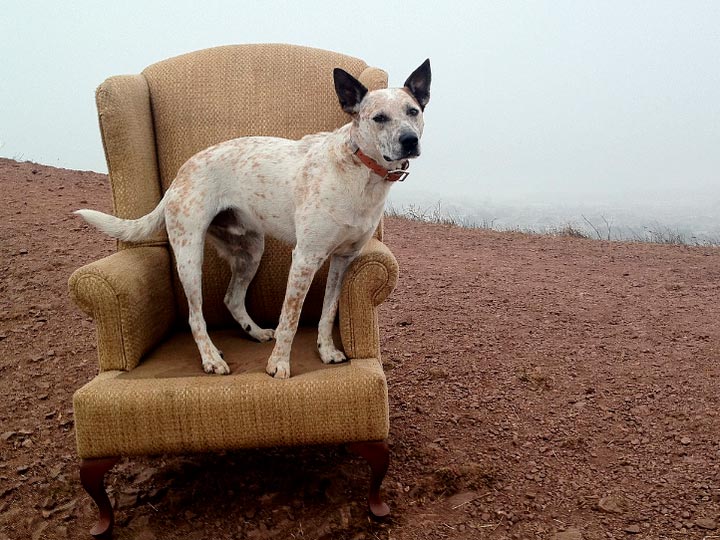
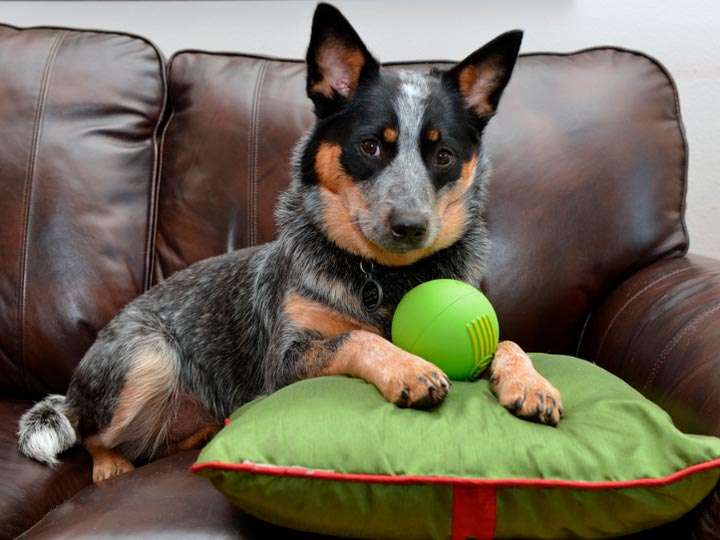
- Blue with speckles, with or without other markings. Black, blue, and fawn markings on the head are permitted. Spots on the body are undesirable. The forelegs are covered with tan markings, as are the jaws and inner thighs.
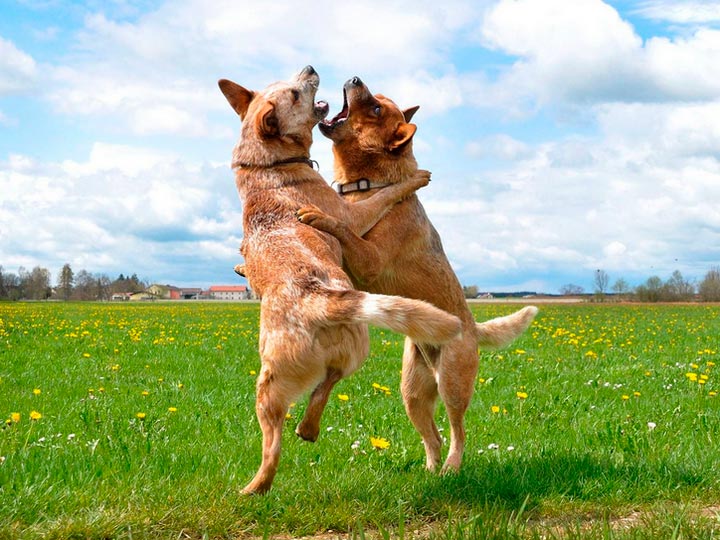
- Red or fawn with uniform red flecks over the entire body, including the undercoat. Markings on the head are desirable; on the body, they are permitted but not desirable.
Character and behavior
The Australian Heeler possesses all the qualities necessary for a good herder: swift, resilient, agile, and capable of precise and targeted nipping, controlling the flock. However, first and foremost, he is a companion: friendly, loyal, extremely intelligent, and obedient. He can be willful and stubborn, especially when young, and has a strong opinion on everything. He gets along well with children of all ages. However, problems can arise with very young children. It's not the dog that's dangerous, but its excessive energy. In the heat of the moment, he can knock down or grab a small child by the hand.
The herding instinct varies from dog to dog. As puppies, Heelers may lightly nip at the ankles of family members, but this behavior is easily corrected. They are wary of strangers, but not overly aggressive. They usually stop at barking and growling. If a dog senses danger from a stranger, they may bite. They are capable of protecting family members and property, making them suitable as a watchdog and bodyguard.
The Australian Heeler is very intelligent and quick-witted, yet also guileless and even simple-minded. All of its tricks are hidden and easy to deceive. Many owners also note that the Heeler is very shy. To relieve itself, it wanders far away, often literally hiding in bushes. It is also very clean. It can roll in the mud or hide in a hole, but then becomes very upset about getting its paws dirty. It loves being the center of attention. It is always ready to accompany its owner everywhere, and is cheerful, playful, and playful.
The Australian Heeler is a suitable companion for active people, athletes, and families with or without children who are willing to give the dog sufficient attention. Farmers may consider it a companion herding dog.
He gets along very well with other animals in the house. He is often indifferent to dogs outside. He rarely provokes conflicts, but always responds to aggression with aggression. If you have small animals or birds in the house, you don't need to worry. The Heeler has almost no hunting instinct.
Education and training
The Heeler is relatively easy to train, but it can also be stubborn and opinionated, which can sometimes hinder its work. Even a novice can train a Heeler well, as long as they don't follow its lead, but rather clearly define the rules of behavior and enforce them. As for training, it's recommended to teach Heelers through play and positive reinforcement, such as treats or toys.
The Australian Heeler loves its owner unconditionally, but doesn't just sit there waiting for orders. It considers every command carefully and isn't prone to unquestioning obedience.
During training, the dog will be easily distracted, especially when young. Sometimes, it needs a gentle nudge. Inexperienced dog owners are advised to begin training their Australian Shepherd with a general training course under the guidance of an experienced instructor. Subsequent training can be tailored to any direction: herding, obedience, agility, or even guard dog training.
Content Features
The Australian Heeler is completely undemanding when it comes to living conditions. This breed was bred to be a hardy working dog that requires little grooming. And that's exactly what they are. They tolerate heat relatively well, and in winter, they grow a warm, thick undercoat. Furthermore, their coat provides excellent moisture protection and self-cleansing. Australian Heelers adapt quickly to apartment life, provided they receive regular, good exercise. They can live indoors or outdoors. On farms, they are typically free-roaming. The worst thing for them is life on a leash or in a small enclosure.
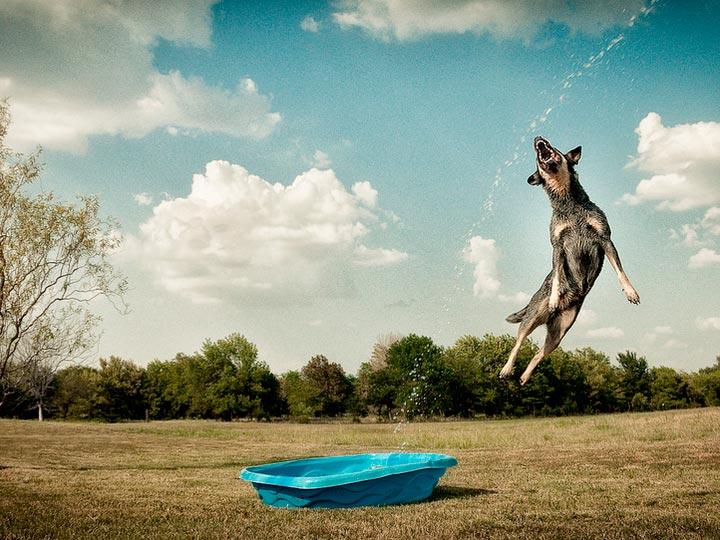
Australian Cattle Dogs are energetic. They find it difficult to live without work. Sports such as agility and obedience can be a good alternative to herding. It's crucial that the dog fulfills its need for exercise, and this shouldn't be limited to leash walks. Heelers need plenty of jumping and running; exercise is essential to maintain their fitness and health.
Care
The Australian Cattle Dog doesn't require much grooming, which is a definite plus. Heavy shedding occurs once a year, in the spring. During this period, brushing should be done slightly more frequently to speed up the coat change. In females, this shedding can also be associated with the heat cycle. Otherwise, brushing two to three times a month is sufficient. As for grooming tools, there's no consensus. Some prefer combs with rotating teeth, while others prefer Furminator, and third stripping. A full bath is rarely necessary. Heelers are fairly clean, and their coats are virtually odorless. If a dog gets dirty, it can simply be rinsed without detergent. Ear wax accumulation rarely needs to be removed. Nails, unless they wear down naturally, are trimmed. Normally, they should not touch the floor.
Nutrition
In Australia, most breeders adhere to the feeding system developed by Australian cynologists. It's known internationally by the acronym BARF. Essentially, it's a natural diet that's as close to the natural diet as possible. In America and Europe, dogs are primarily fed dry food. This means that Heelers are generally suited to any type of diet, as long as it meets all their needs. Australians rarely suffer from allergies, but they are prone to overeating and obesity.
Health and life expectancy
In the English version of the breed standard, the word "strong" appears more than 10 times. The Australian Heeler should be robust, hardy, and healthy, adapting well to a variety of living conditions and climates. Breeders strive to preserve these qualities, but have not yet been able to completely eradicate some hereditary diseases:
- progressive blindness;
- congenital deafness;
- hip dysplasia (more common in European-bred dogs);
- absence of one or more teeth;
- malocclusion;
- In hot weather, some dogs suffer from eczema.
The average lifespan of an Australian Heeler is 12-13 years. Many dogs remain active and maintain their weight into old age. They rarely suffer from vision or hearing problems or tooth loss.
Choosing an Australian Heeler Puppy
The Australian Heeler, while rare in Russia and the CIS, isn't so rare that a puppy is unavailable. The quality of the dog and its price are another matter. Most breeders of this rare breed take a responsible approach to their work. There's no national club for the breed yet, but there is a forum for Australian Heeler enthusiasts where prospective and current owners can find answers to all their questions.
Show dogs and working dogs are not bred separately. Puppies in the same litter can have different talents, making it difficult to predict which will be suitable for herding, which for show dogs, or which for sport.
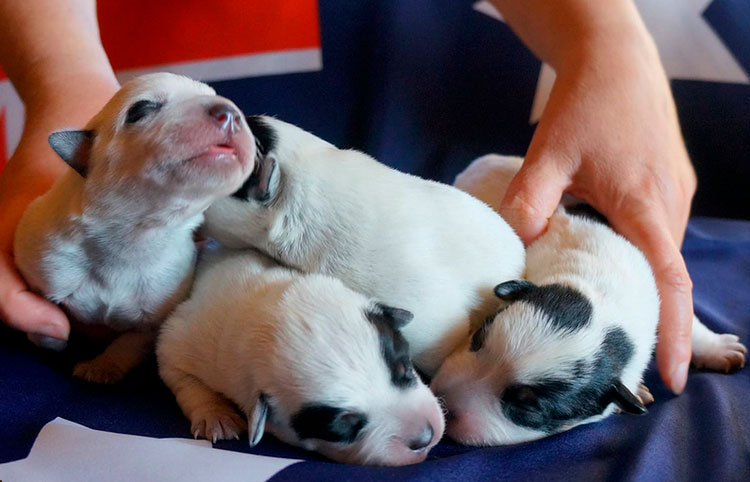
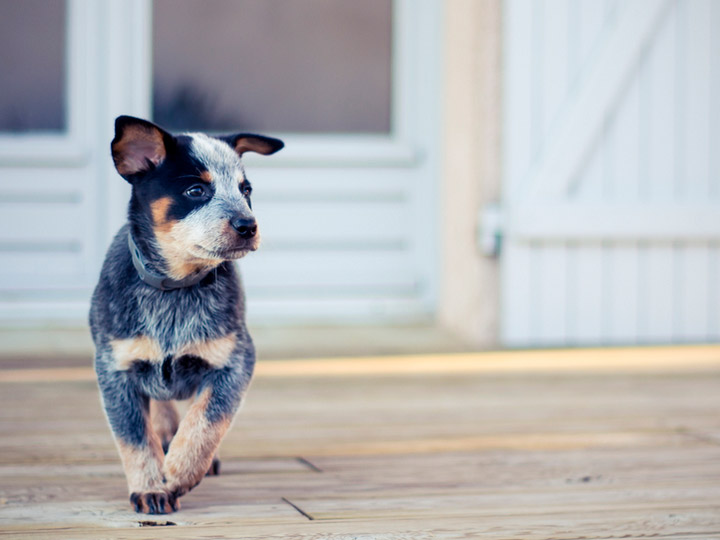
Australian Heeler puppies are born white and begin to develop their coloring after a few weeks. By 2-3 months of age, when they are usually adopted, they should largely conform to the Standard developed for adult dogs. Ear and eye set, body proportions, bite, coat color, and eye, nose, and eyelid color are assessed. Puppies should be mentally healthy and show no signs of illness. It's possible to tell whether a puppy is deaf at around 6 weeks of age. 14% of Heelers are born deaf in one ear and 2% in both ears. The breed is recognized by the FCI, so the only proof of breed identity is a puppy card, which can later be exchanged for a pedigree. Puppies must also be vaccinated according to age.
Price
The price of an Australian Heeler varies greatly. Pet-class dogs cost around 35,000-40,000 rubles. Promising Australian Heelers for show and breeding can cost up to 100,000 rubles. The average price ranges from 75,000-80,000 rubles.
Photos
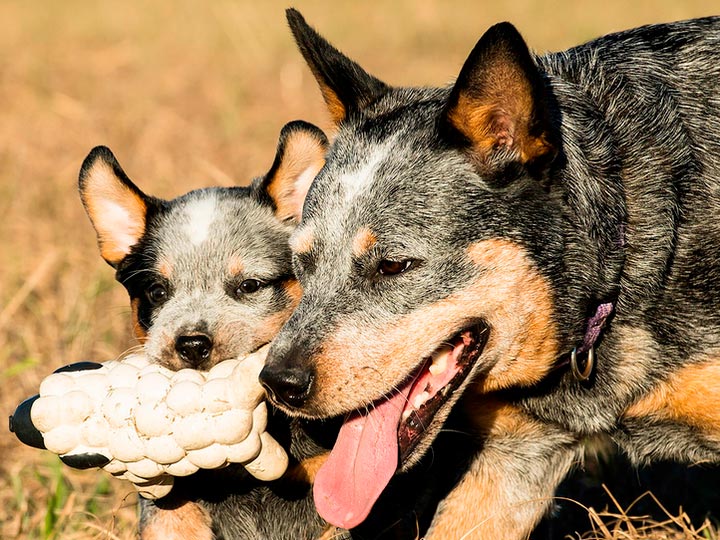
The gallery contains vibrant photos of Australian Heeler puppies and adult dogs.
Read also:


Add a comment