
Atopic dermatitis in dogs: symptoms and treatment
Atopic dermatitis (atopy) is a chronic skin disease in dogs characterized by persistent itching. Delaying treatment will lead to an increase in the affected area and more frequent relapses. It's important for dog owners to closely monitor their pet's behavior and condition to detect the condition in its early stages and seek veterinary attention promptly.

Causes of pathology
Atopy is a dog's body's reaction to a specific allergen. When it enters the respiratory tract or contacts the skin, the immune system produces antibodies to eliminate the irritant, causing a characteristic skin reaction. Depending on the origin of the allergen, the condition can be seasonal or non-seasonal. It is inherited, but puppies within the same litter may have different triggering allergens.
The most common provoking factors are:
- Home microclimate (household dust, indoor plants, changes in room temperature and humidity, changes in region of residence).
- Incorrect approach to care and maintenance of the pet (inappropriate food, lack of antiparasitic treatment).
- Concomitant diseases (urolithiasis, giardiasis, hypothyroidism, etc.).
- Heredity and breed characteristics. Atopy most often manifests itself in Shar Pei, pugs, Labradors, boxers, bulldogs, spaniels and Dalmatians.

Symptoms
Among the most characteristic symptoms of atopic dermatitis in dogs:
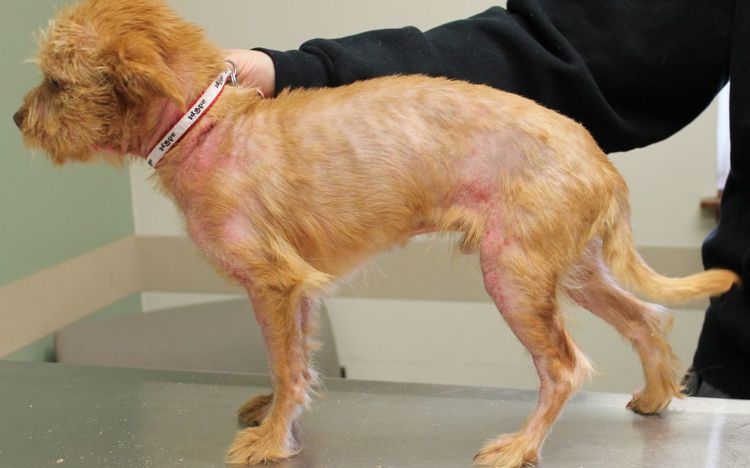
- the appearance of inflamed areas on different parts of the body (most often the limbs, abdomen, face, armpits);
- severe and constant itching, which is accompanied by intense scratching and licking;
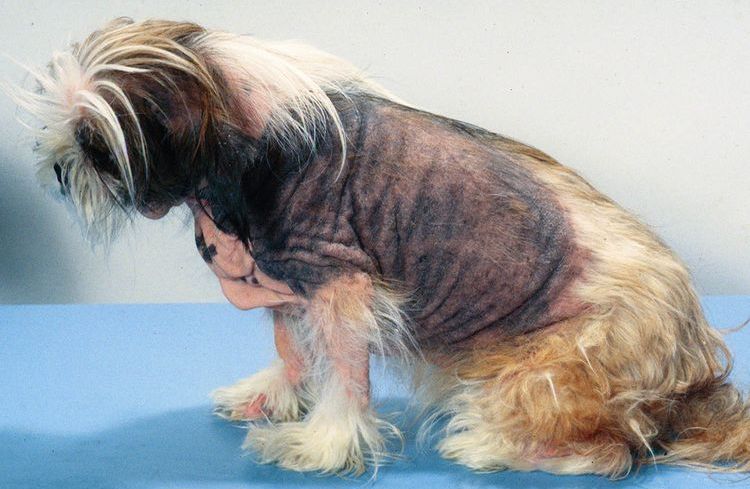
- redness (purple) of the affected areas with the appearance of scales;
- greasy appearance of the coat or its loss in areas of damage and scratching;
Inflammation of the skin and seborrhea oleosa can often lead to the development of a concomitant pathology – a yeast infection, which is accompanied by the appearance of papules and boils. In addition, a concomitant manifestation of rhinitis, otitis externa, asthma, staphylococcal pyoderma (with ulcers, fistulas and inflammations).
Atopic dermatitis is characterized by varying degrees of damage to body areas, which determines the duration of periods of exacerbation and remission:
- Mild – affects isolated areas. Irritation lasts for 2-3 weeks and occurs no more than twice a year, with a remission period of 6-8 months.
- Moderate – affects multiple areas of the body. The condition manifests itself 3-4 times a year for 1-2 months.
- Severe – characterized by multiple pathological spots that often merge into a single entity. The disease progresses over two months, four or more times per year. Remissions can last up to 30 days or be absent altogether.
Diagnostics
One of the key steps in diagnosing atopic dermatitis is a detailed interview with the dog's owner to obtain an accurate medical history and determine the appropriate treatment. Additionally, a clinical examination of the pet and laboratory tests are performed:
- blood test (general, hormone and biochemical), urine and stool tests;
- scrapings from affected areas;
- bacteriological/mycological cultures (including sensitivity to antibacterial drugs).
One diagnostic method may involve prescribing a so-called "elimination diet," where the pet is fed only one food item, with new ones gradually introduced. This approach helps identify food allergies.
Treatment
Treatment for atopy begins with identifying the irritant and eliminating its exposure. This involves completely adjusting the animal's diet and living conditions. Sometimes these measures alone are sufficient to alleviate the condition. However, in practice, it is often discovered that the body is sensitive to a whole host of allergens, which cannot always be eliminated. However, their impact can be reduced by:
- regular wet cleaning;
- maintaining normal humidity levels in the room;
- removing dust, which is a favorable environment for dust mites;
- periodic disinfection of housing.
Medication for atopic dermatitis is selected based on the specific animal's triggering factors and the severity of the skin lesions. The treatment plan may include:
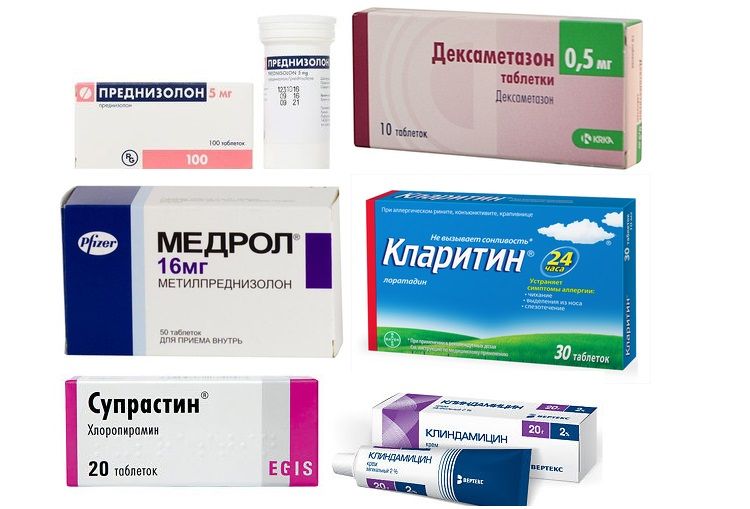
- Corticosteroids provide a rapid and powerful effect in reducing the factors that cause the condition, helping to eliminate redness, itching, and allergic swelling. However, they can have side effects such as shortness of breath, muscle atrophy, drowsiness, and more. Among the most commonly used are prednisolone, dexamethasone, and methylprednisolone.
- Antihistamines block the development of allergic reactions. Modern medications (Claritin, Zyrtec, Telfast, Lomilan) offer longer-lasting action and are less addictive than first-generation medications (Suprastin, Tavegil).
- Antibiotic therapy helps prevent the development of concomitant infections. Most commonly used are injections of Amoxicillin, Cephalexin, Clindamycin, Cefaclor, or Erythromycin.
- Topical treatments reduce itching and remove allergens from the skin. These include medicated shampoos (Sulfoden, Mikohex), ointments and creams (Triderm, Pimafukort, Nystaform), and others.
- Antifungal therapy. For this purpose, systemic medications are prescribed, administered 1-2 times daily (Diflucan, Nizoral, Rumikoz, etc.).
- Immunotherapy, which involves gradual introduction (over the course of a quarter to six months) into the dog’s body, which promotes the development of immunity.
Important! Any medications and their dosages should only be prescribed by a veterinarian after a preliminary examination of the dog.
Since atopic dermatitis can be one of the manifestations of other health disorders (pyoderma, parasite exposure, and endocrine dysfunction), identifying and addressing these underlying conditions is essential for successful treatment. Additionally, your veterinarian may prescribe multivitamin supplements to speed up skin and coat recovery.
Your dog should be treated under the full supervision of a veterinarian. Only by following the veterinarian's recommendations will you be able to cure your pet or alleviate its condition in severe cases.
Read also:


Add a comment