
Roundworms in cats: symptoms and treatment
One of the most common parasitic diseases in pets is ascariasis. Statistics show that almost every pet suffers from it at least once in their life. Cats are more likely to become infected with ascariasis (worms) than other animals due to their specific diet, which can contain the pathogen. The course of the disease and its difficulty in treatment depend primarily on the overall immune system and health, as well as the owner's prompt intervention.
In veterinary practice, the official name for this disease, toxocariasis, is more commonly used. It derives from the Latin name of the genus of roundworms that causes this pathology, Toxocara.

Pathogens
Toxocariasis can be caused by three types of roundworms:
- Toxocara leonina. These creamy-white worms are up to 10 cm long when mature. Their eggs, once formed, can be passed in the feces and enter new hosts within 3-6 days.
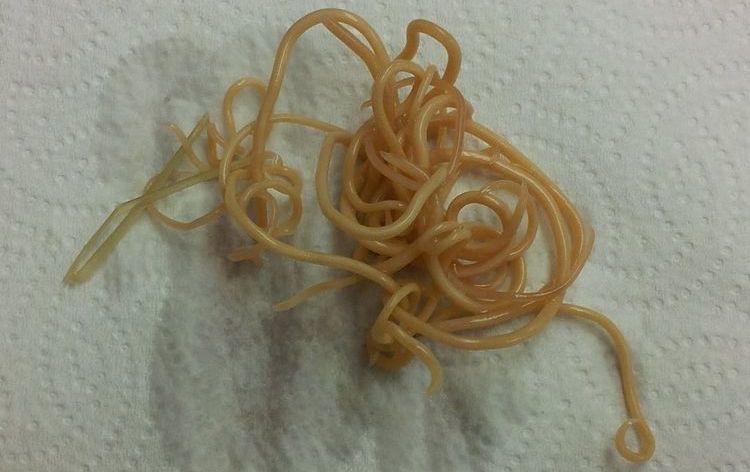
- Toxocara mystax. These light yellow worms grow up to 18 cm in length. From the intestines, they migrate throughout the body and, upon reaching the oral cavity, are re-ingested.
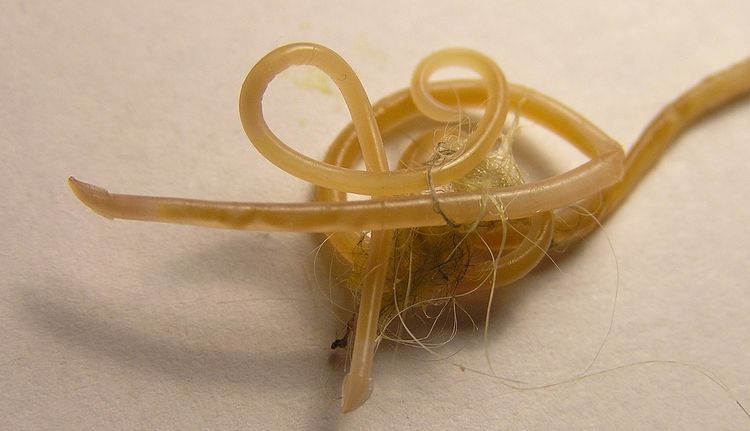
- Toxacara catti. They resemble small earthworms but lack rings on their bodies. The largest Toxocara species, which grow up to 20 cm, migrate through the bloodstream until they settle in the liver for a year, where they grow and develop. After maturing, they enter the trachea and are re-ingested.
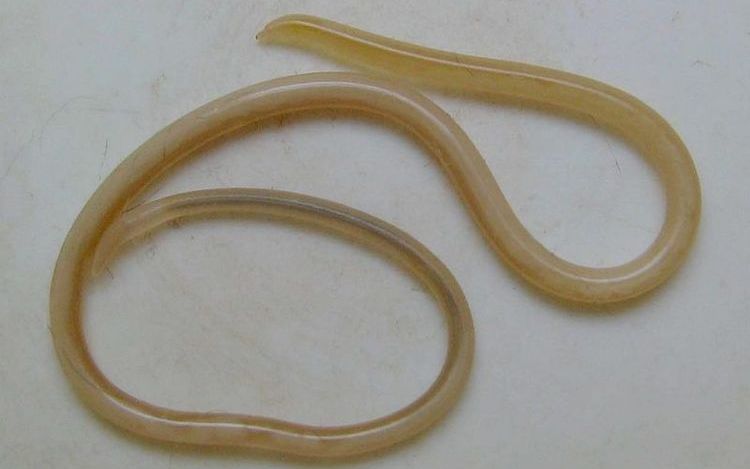
All these worms They are large nematodes. They are round, dioecious helminths that parasitize primarily the gastrointestinal tract of cats. They resemble medium-sized strings of white or yellowish fabric.
In the early stages of infection, only roundworm eggs are present in animal feces. However, they are impossible to see with the naked eye. As the infection continues for a long time, adult roundworms begin to pass through the feces, easily spotted due to their large size. Their body surface is smooth and shiny.
Although they can live in various organs of the animal, reproduction occurs only in the gastrointestinal tract.
Methods of infection
Roundworms and their eggs can be found anywhere in the world, as they are resistant to a variety of climatic conditions. For cats, the main source of toxocariasis is infected other cats, who release feces containing eggs into the environment.
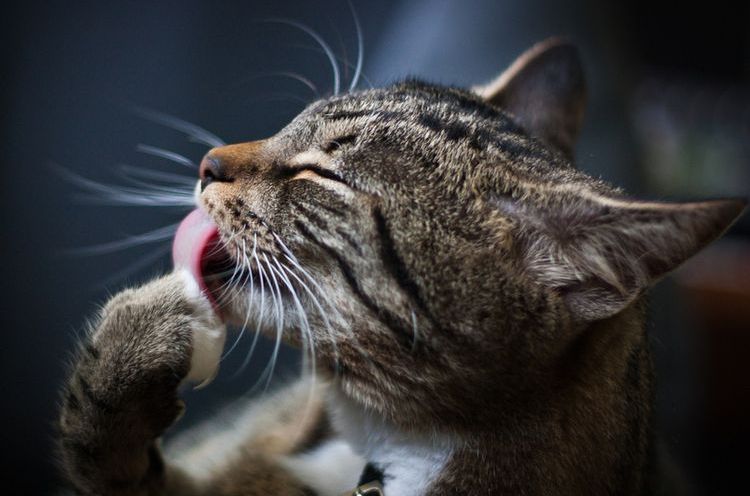
These eggs move very easily and quickly, so they can be found anywhere: on furniture, in the soil, on the owner's clothing, etc. The largest number of eggs is found on the fur of cats, where they fall during grooming and firmly adhere to the fur.
The most common routes of infection are:
- undercooked food products (meat, liver, fish, bones);
- roundworms swallowed together with small rodents (mice or rats) or insects (fleas, grasshoppers, flies);
- dirty, undisinfected palms of people, their clothes or shoes, which are rubbed against or licked by pets;
- contacts with other cats during exhibitions or matings;
- randomly picked up objects and food particles on the street;
- intrauterine infection during pregnancy, when the larvae penetrate the placental membranes and inhabit the body of developing kittens.
The last type of infection has the most severe consequences, leading to irreversible damage in the first months after birth: severe intoxication, intestinal blockage, and rapid death. Often, the intense infestation in kittens leads to balls of roundworms rupturing the delicate intestinal walls, resulting in peritonitis.
Symptoms
The most common symptoms of toxocariasis in cats are:
- pet's lethargy, tired appearance;
- poor appetite or the opposite picture - incredible hunger with a general decrease in weight;
- abdominal distension (especially noticeable in kittens)
- frequent diarrhea and vomiting, colic, constipation;
- blood impurities in feces;
- dull and thinning coat;
- paleness of the mucous membranes and signs of anemia;
- souring in the inner corners of the eyes;
- the main signs of allergies are dermatitis, dried scales and crusts near the eyes or nose;
- difficulty breathing;
- periodic convulsions and epileptic seizures;
- Signs of anal itching include constant licking of the anus and sliding the anus on the carpet or floor.
Such symptoms can be caused not only by the presence of roundworms, but also by many other diseases, so even the appearance of most of them cannot be an unambiguous sign of toxocariasis.
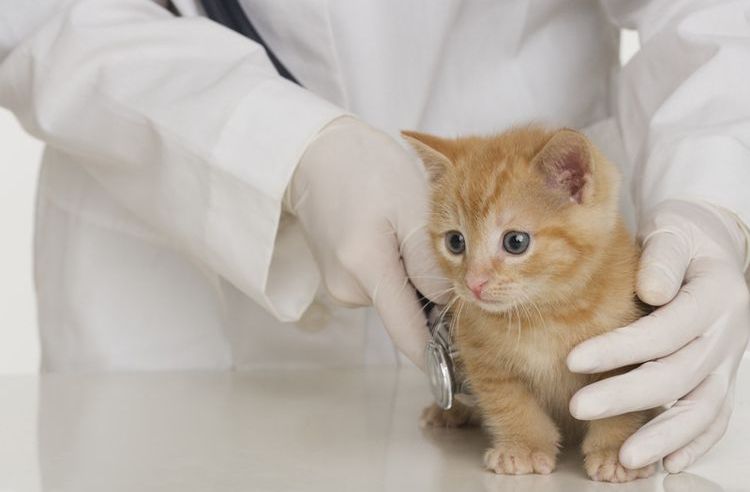
The only reliable symptom is the presence of roundworms in the feces, but the cat owner will not be able to accurately determine what type of helminth these are, so if you notice such symptoms in your pet, you should immediately contact a veterinary clinic.
Diagnostics
Diagnosing and identifying roundworms can be challenging even for an experienced veterinarian. Based on external signs and symptoms, a veterinarian can only assume a cat has toxocariasis, after which diagnostic tests are performed. First, a stool examination is performed to detect eggs.
To be certain of the results, the veterinarian must obtain data three times, so samples are submitted for analysis at least three times, at weekly intervals. This is necessary because a negative result may indicate a stage of infection at which the cat has not yet harbored mature roundworms, or the female has not yet released eggs at the time of stool collection.
To detect parasites, you need to follow these rules:
- the sample should be collected in the morning hours, when the number of eggs in the feces is at its maximum;
- Deliver the sample to the laboratory as quickly as possible, and if this is not possible, then place the hermetically sealed container with the sample in the refrigerator until the owner can go to the veterinary clinic.
Clinical tests for the detection of helminths are rarely prescribed; most often they prefer to use them immediately. drug dewormingAfter administering special medications, it is possible to determine in 90% of cases whether helminths have parasitized the cat's body, as dead helminths are excreted in the feces and become easily visible.

Treatment
Currently, there's only one way to get rid of roundworms: by taking specialized medications. Most of these are very strong, so their use without caution is not recommended. Each medication has its own side effects and is selected based on the cat's age, condition, and physiological characteristics.
Most medications used for helminth control have a comprehensive effect: they combat various parasites, including flatworms, roundworms, fleas, and ticks. Modern medications do not require a special diet or the simultaneous use of laxatives. The correct dosage is determined based on individual characteristics, and this responsibility falls to the veterinarian.
The most well-known medications are in the form of ointments or drops that are applied to the withers area, where the cat cannot lick them:
- "Gelmintal K" is an effective remedy against roundworms for cats weighing over 4 kg;
- "Prazicide" is suitable not only for adult animals, but also for young cats from 6 months;
- "Prazitel" is used in case of pregnant animals and kittens in the first month of life.
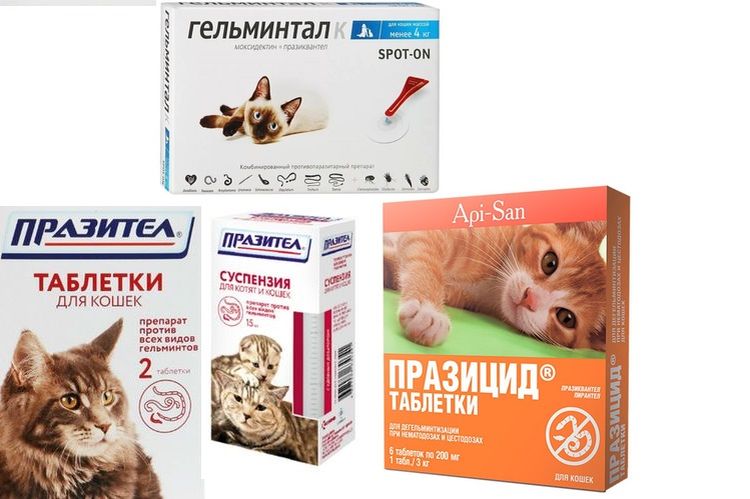
The elimination period of these drugs is about 25 days, during which they manage to eliminate several generations of roundworms from the body.
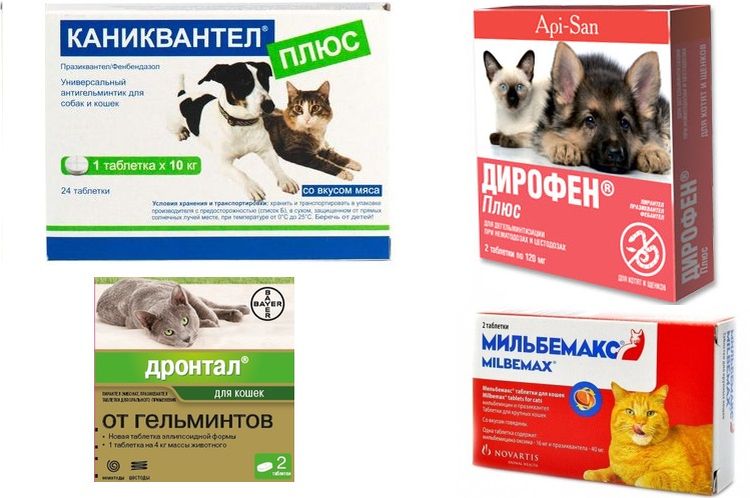
For those who prefer tablets, there is also a suitable remedy:
- "Kaniquantel Plus" - has a smell that is attractive to cats, so it is easy to use;
- Dirofen Plus — its use is not permitted during the first 1.5 months of pregnancy;
- Drontal — a fast-acting drug, but it cannot be used for kittens under 6 months of age and for pregnant cats;
- Milbemax — a complex product for single use.
You can also use the drugs for periodic deworming, which is recommended to be done once every 3 months.
Read also:
- Praziquantel for cats
- Can a person become infected with worms from a cat?
- How to deworm a cat at home


Add a comment