
Arthritis in cats
Arthritis (from the Latin "arthritis") is an inflammation of the joints, a disease belonging to a large group of rheumatic disorders that share similar symptoms. In monoarthritis, the inflammatory process is localized to a single joint; if multiple joints are affected, it is called polyarthritis.
This disease is uncommon in cats and is considered age-related, although it can be caused by other factors. Arthritis requires mandatory treatment: its progression can lead to bone deformity, thinning of articular cartilage and synovial membranes, and, in advanced cases, disability.
Content
Reasons for development
Arthritis in cats can be caused by:
- Age. In older animals, cartilage tissue becomes thinner, and the bones in the joints touch each other. The friction during movement leads to inflammation.
- Overweight. In obese cats, the joints of their limbs are under excessive strain.
- Injuries (bruises, dislocations, sprains or ligament tears).
- Hypothermia. Frequent hypothermia is considered one of the main causes of inflammatory joint diseases.
- Autoimmune diseases. In autoimmune diseases, the body perceives its own healthy cells as foreign and produces antibodies against them, destroying bone or cartilage tissue.
- Infectious diseases. Joint inflammation can develop in the presence of pathogens causing hepatitis, viral bronchitis, chlamydia, mycoplasma, and salmonella.
- Metabolic disorders. An unbalanced diet is often a factor causing joint tissue destruction.
- Congenital pathologies. In cats of some breeds, anatomical defects of the musculoskeletal system are often found in the form of dysplasia (inferiority, underdevelopment) of the joint or cartilage tissue degeneration. Such pathologies lead to rapid joint wear and the development of arthritis.
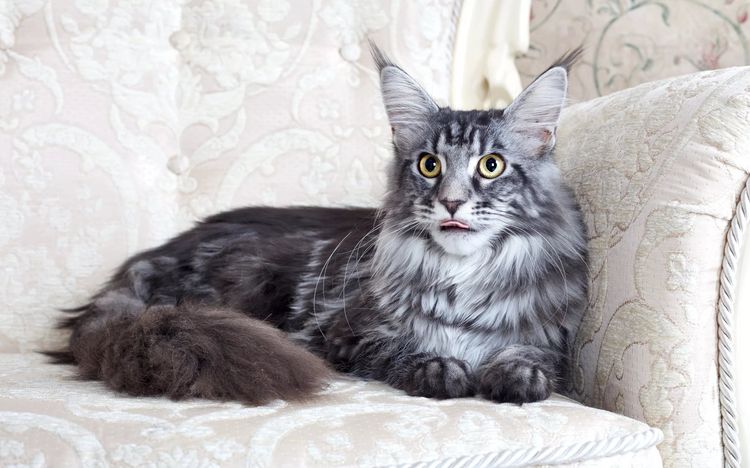
Artificially bred cat breeds, such as the Scottish Fold, British Shorthair, Persian, Abyssinian, and Maine Coon, are at risk for joint diseases associated with genetic mutations. According to felinologists, these breeds are most often diagnosed with secondary arthritis, which develops as a result of congenital osteochondrodysplasia.
Symptoms
The main symptom of early arthritis in cats is decreased activity, which owners often attribute to age-related changes. Pets become apathetic, lose interest in active play, walk slowly, sit carefully, their movements become stiff, and they sleep more than before. Pets with arthritis often lose their appetite, while in other cases, weight gain is observed despite an unchanged diet.
Subsequently, due to pain in the affected joint, the cat begins to limp, stops using the scratching post, and fails to bury its feces after using the litter box. The affected joint may be swollen and hot to the touch, and the animal may become aggressive when touched. The elbow and hip joints are most commonly affected.
If you notice any of the behavioral and physiological changes described above in your cat, you should take it to the veterinarian: treating arthritis in its early stages is much easier than treating an advanced disease.
Diagnosis of arthritis in animals
Several methods are used in veterinary medicine to diagnose arthritis. The main ones are:
- Orthopedic examination. The doctor palpates the joints to determine changes in their size and shape, the presence of swelling or local hyperthermia, and to determine the degree of pain.
- X-ray or ultrasound examination. X-rays or ultrasound allow us to assess the structure and condition of the joints.
- Examination of synovial fluid. Macroscopic analysis of synovial fluid obtained during joint puncture is necessary to differentiate the type of arthritis.
- Blood test. In arthritis, elevated ESR and uric acid levels are detected in the blood serum. In cases of rheumatic inflammation, blood tests reveal the presence of antinuclear antibodies.
Treatment
Arthritis therapy is aimed at relieving pain and inflammation in the joints, as well as eliminating the underlying cause. Comprehensive treatment includes the use of:
- Anti-inflammatory drugs. NSAIDs have a combined anti-inflammatory and analgesic effect. Ketonal, Amelotex, Rimadyl, Ketofen, Quadrisol, Vetalgin, and Meloxicam (Metacam) are approved for veterinary use.
- Hormonal drugs. Glucocorticoids Hydrocortisone, Prednisolone, Dexamethasone, Kenalog are used in the treatment of rheumatoid arthritis in cases of severe inflammation and intense pain, as well as in cases where NSAIDs are ineffective.
- Antibiotics (if arthritis is caused by an infection). Cats are usually prescribed Streptomycin, Neomycin, Gentamicin, and Enroxil.
- Chondroprotectors. The active ingredients of these medications—chondroitin and glucosamine—slow degeneration and promote cartilage restoration. The best chondroprotectors are considered to be ArthroVet, Stop-arthritis, and Arthroglycan. Stride Plus, Hondartron.
Most medications used to treat arthritis in cats can cause side effects, including allergic reactions. Therefore, they should be prescribed by a veterinarian, taking into account the animal's overall condition, age, and any underlying medical conditions.
In addition to medication, cats diagnosed with arthritis are usually prescribed a special diet. If your pet is accustomed to homemade food, animal fats, organ meats, eggs, and broths should be limited in their diet. Lean meat and fish, cereals, cooked vegetables, and fermented milk products are recommended. If your cat eats commercial food, choose therapeutic kibble and canned food containing chondroprotectors, vitamins, and micro- and macronutrients (for example, Royal Canin Mobility, Eukanuba Restricted Calorie, Hills Prescription Diet J/D).
Arthritis prevention
To prevent the development of inflammatory joint diseases in cats, veterinarians recommend:
- Avoid the possibility of injury and hypothermia of the animal;
- Treat infectious diseases in a timely manner;
- A cat's diet should contain a sufficient amount of essential substances: proteins, fiber, vegetable and animal fats, vitamins, minerals;
- Ensuring constant access to fresh water is important for maintaining all types of metabolic processes in the body;
- Prevent your cat from becoming obese;
- Provide your cat with opportunities for physical activity - set up a play area for it or provide it with the opportunity to go for a walk.
By following these simple rules, the risk of arthritis in your cat can be minimized.
Read also:
- My cat is limping on a front or back leg: what should I do?
- My cat's hind legs are not working properly: causes and treatment
- Osteochondrodysplasia in Scottish Fold cats


6 comments
Elena
Hello! We have a similar case. Our cat is 12 years old and has started limping on her front right paw. We also found a scab on her right ear from a wound. We suspected she had a fight with a younger cat. However, the cat doesn't have a single scratch and they are never alone at home. In any case, the family would have noticed. Yesterday, my son also discovered a scab on her back. The lameness doesn't go away, and she's started hiding in secluded places. She hasn't lost her appetite. She eats dry food and wet food when you bring it to her. She comes to the dry food on her own. We have an appointment with a therapist in two days. But I'd like to know at least a tentative diagnosis.
Daria is a veterinarian
Hello! Is it possible that these are the cat's own scratches? Could external parasites be causing the itching and scratching? Has it been a while since you've had a flea treatment? It's impossible to keep a close eye on the animals 24/7; there are nights and times when someone is out. My cats can get into a fight in 10 seconds. A young cat will chase down the old lady, bite her, rip out a clump of fur, and then calmly go to bed. She's stubborn and can fight back, growling. But sometimes she doesn't have time to react due to her age (she's 15.5 years old), and I only know about the fight by the clumps of fur on the couch.
Galina
I have a 12-year-old cat. I came home from work with him limping on his back leg. He jumps on the sink and off on his own, eats well, and goes to the bathroom without any problems, like on schedule. I don't understand what's happened. He lets me touch his paw, and there are no abrasions or visible injuries. Taking him to the vet is stressful; he doesn't go outside. He doesn't interact with other animals. What could it be?
Daria is a veterinarian
Hello! It's possible your cat jumped out of nowhere. It might have been running and hit a corner while turning, especially if the floors aren't carpeted (e.g., linoleum, tile, laminate, etc.). Or, conversely, it might have caught a claw on the carpet and pulled. It could be a minor sprain. Generally, if the limp is minor, you should observe it for up to a week. Limping usually resolves if it was minor. If the lameness worsens, and there's obvious restlessness, lethargy, or a refusal to eat, then you should see a vet. They'll do an orthopedic examination and possibly x-rays. But I think it will resolve unless there were any serious issues.
Natalia
Hello, I'll describe my case. My cat is 9 years old and diagnosed with arthritis. He was running and jumping over a fence, everything was fine in the evening, but the next morning he suddenly started limping on his back paw. The vet diagnosed arthritis. He prescribed treatment. After the second injection, the cat stopped putting weight on his paw and is experiencing severe pain when moving. He also hasn't responded to painkillers. Now the doctor is suggesting a nerve block.
Daria is a veterinarian
Hello! What injections did they give the animal at the clinic? Perhaps they injected the medication into the sore paw; it's quite painful, which is why the animal is now protecting it. Did they take an X-ray? Maybe it's not arthritis? Maybe the pet jumped awkwardly and damaged muscles, ligaments, tendons, or a joint? Maybe a severe bruise? A sprain? A dislocation? A nerve block is a good and quick way to relieve inflammation. But you need to be sure it's inflammation and not some serious injury. How is the paw functioning? Does it bend at that joint?
Add a comment