
Basset Artesian-Norman
The Basset Artesian Normand is a short-legged, elongated hound with long ears and an excellent sense of smell. The breed was developed in France in the early 20th century. It is used for hunting small game. In Europe, these athletic, short-haired Bassets are increasingly being kept as companions and impressive show dogs.
Content
History of origin
The registration and targeted breeding of low-slung hounds in France began in 1870. By this time, several types had already emerged, differing in size, coat, color, and purpose.
It is known that the Basset Artésien-Normand descended from the Artesian and Norman hounds. The former were renowned for their excellent working qualities. They had an elongated, athletic body and straight front legs. The latter represented a more impressive show type, distinguished by their heaviness and crooked forelimbs. In 1924, both breeds were combined into one, which was named the Basset Artésien-Normand (French: Basset artésien normand). A breed club was also founded at the same time. Cynologists believe that the Artesian and Norman hounds also descended from basset hound.
Use in hunting
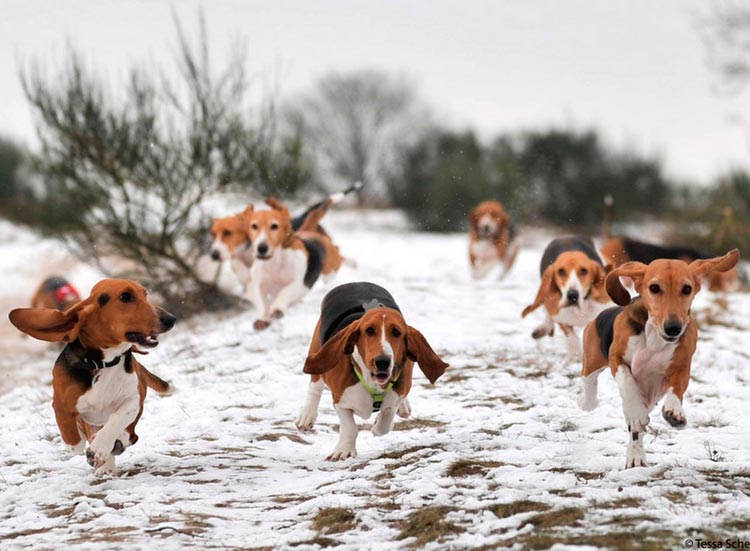
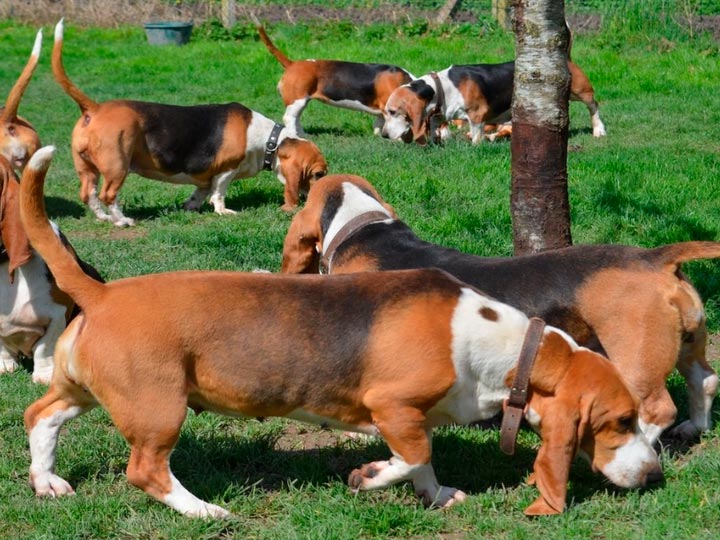
The Basset Hound Artesian-Normand is ideal for hunting on foot; it moves at a moderate speed, making it easy for a hunter to keep up with. It works both alone and in a pack. It follows scent with its lower senses and a loud bark. It easily navigates dense undergrowth and flushes out hidden game. It searches persistently and systematically.
The Basset Artesian Normand is best suited to hunting hare and rabbit, but is also used to hunt other small game and roe deer.
Appearance of the Basset Artesian Normand
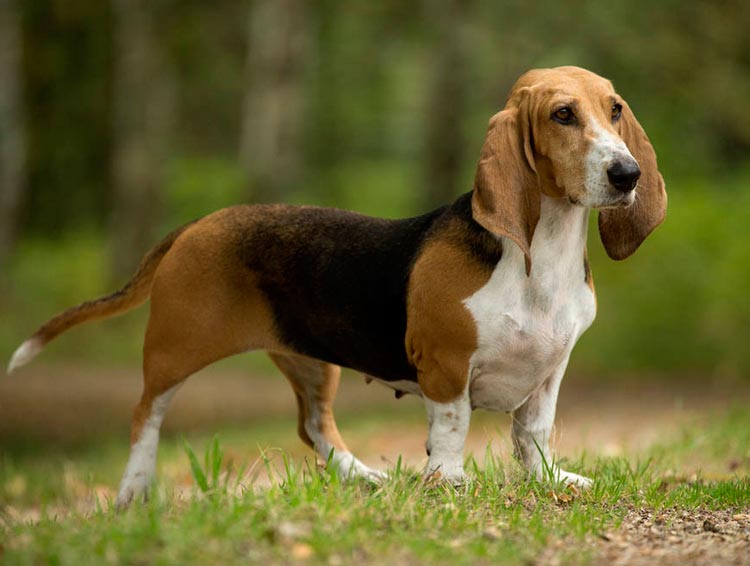
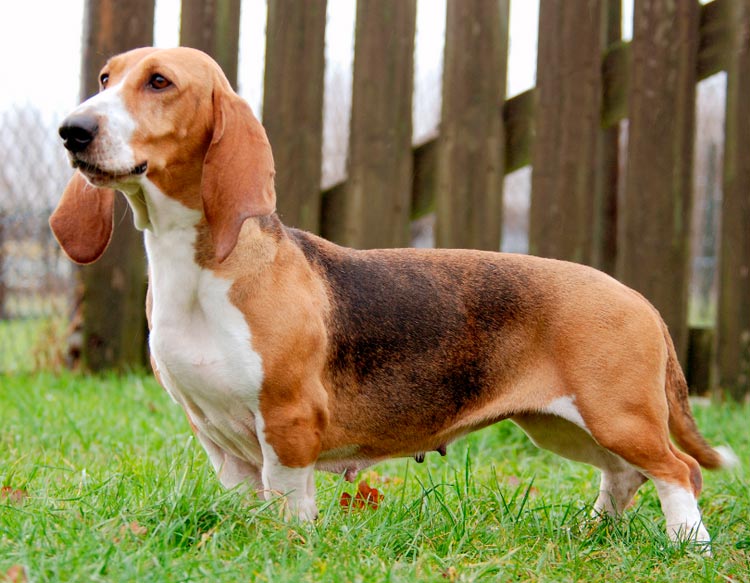
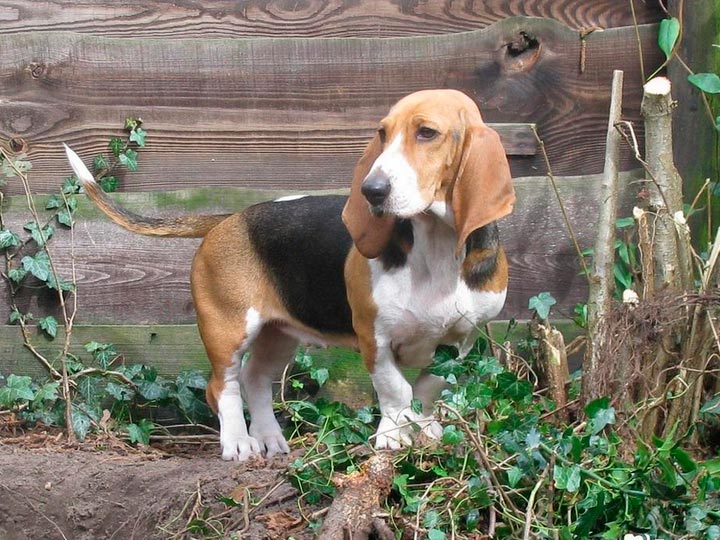
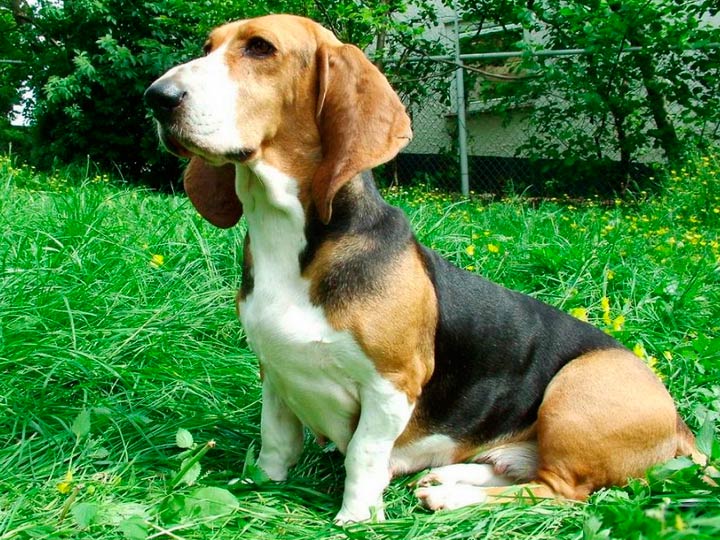
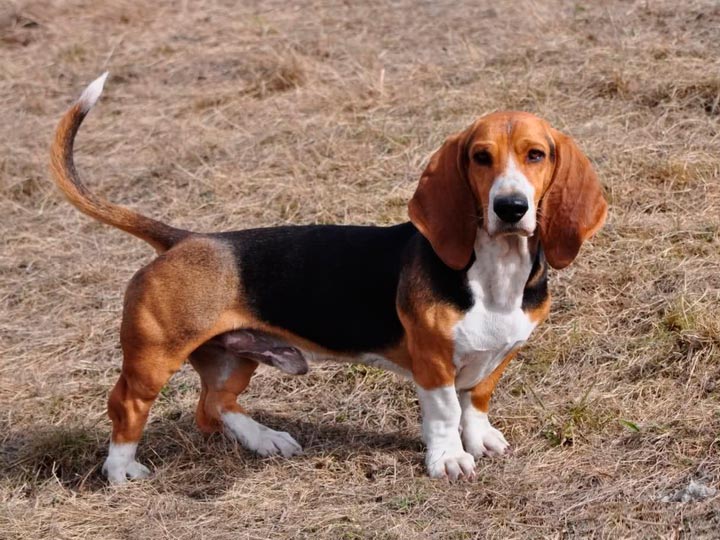
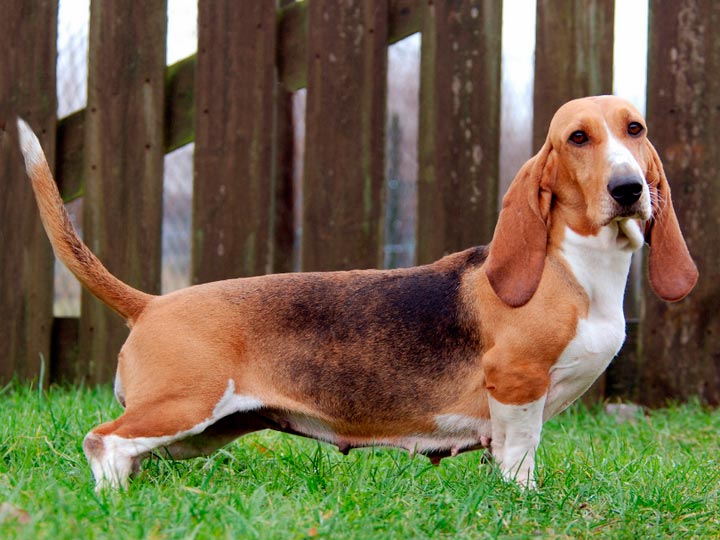
The Basset Artesian Normand is a stocky, compact dog with an elongated build. Its body is not heavy, and its build is athletic. Sexual dimorphism is pronounced.
- Height at withers: 30-36 cm;
- Weight: 15-20 kg.
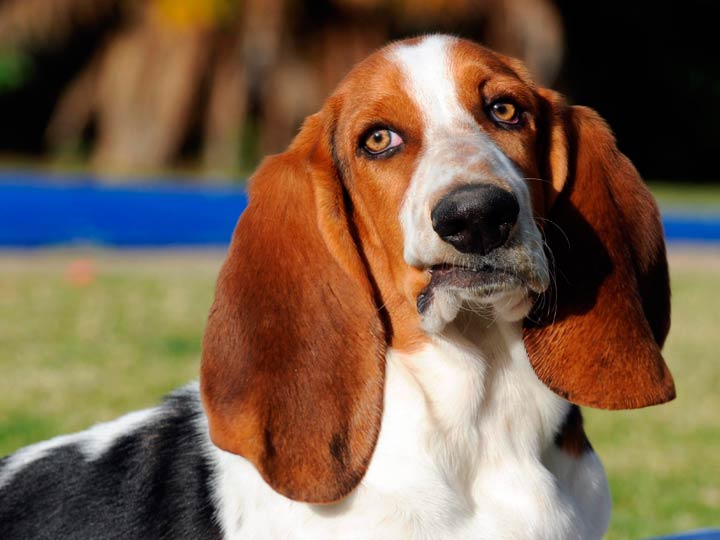
The skull is domed, the head is dry, and the stop is defined. The muzzle is slightly humped. The nose is broad and protruding, with wide-open nostrils. The upper lip overlaps the lower lip. The bite is scissor-like. The skin on the cheekbones forms one or two folds. The eyes are oval, dark, with a calm and melancholy expression. The ears are set low, narrow at the base, and pendulous. The ear leather is soft and thin, curled inward, with the tips reaching the lobe or slightly longer. The neck is fairly long and dewlap.
The body is of an elongated format. The back is broad and strong. The loin is slightly arched. The croup is slightly sloping. The chest is oval, extending far back, protruding well in front, with the lower part reaching just below the elbows. The tail is long, thick at the base, and tapering to a tip. At rest, it touches the ground; when moving, it is sabre-shaped. The forelimbs are short, with well-developed bone, arched in the middle. The wrists may have folds. The hind limbs are well-muscled and vertical when viewed from behind. The paws are oval, with moderately long, well-knit toes.
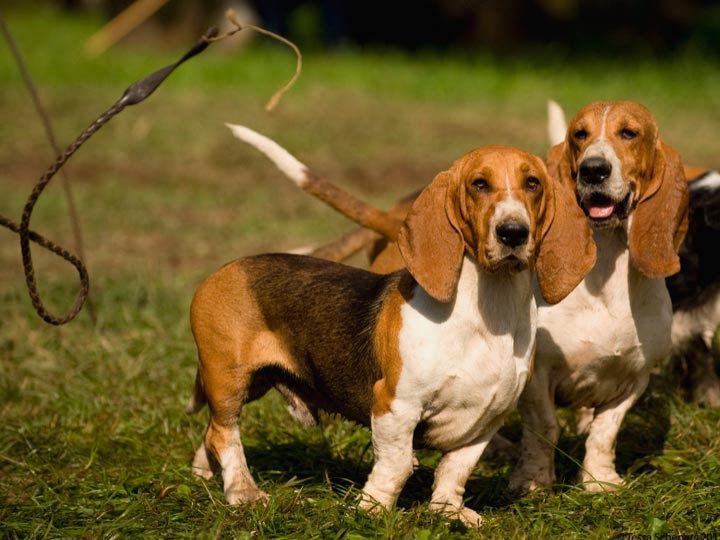
The skin is elastic and thin. The coat is short, dense, smooth, and not too fine. The coat is fawn and white with a black saddle (tricolor) or fawn and white (bicolor).
Character and behavior
The Basset Artesian Normand is a true scent hound with a keen sense of smell and tenacity, a clear, loud voice, and a strong hunting instinct. Its character is cheerful, friendly, and affectionate. Its temperament is calm.
The Basset Hound is docile and friendly in a loving family. It doesn't tolerate loneliness well and seeks companionship in any person it meets. This could be people or other pets; it even gets along well with cats if it's been around them since puppyhood. It's very affectionate and requires a lot of attention. It's not recommended for people who work long hours. The Basset Hound gets along well with children.
The Basset Artesian Normand often uses its ringing voice in everyday life to express feelings, greet others, or detect an interesting scent. Barking is second nature to the Basset Artesian Normand, and this can be challenging when kept in an apartment. Like other hounds, it is very persistent and can be stubborn.
Peculiarities of education and training
Basset Hounds are intelligent, curious, and boast an excellent memory. They are easily trained and learn tricks. They are capable of participating in various dog sports, but they enjoy retrieving most. Their instincts and highly developed sense of smell constantly prompt them to follow scents. If the scents prove too enticing, the dog may suddenly become deaf to the owner's command to return.
It's important to determine in advance what the dog will be used for and train it consistently. The Basset Artesian Normand does not tolerate contradictory orders or harsh treatment.
If the Artesian-Norman Basset is only companion Or a show star who must accompany his owner everywhere, he needs early and comprehensive socialization and manners training. Attention will need to be paid to curbing his hunting instincts and barking.
If a dog is destined to hunt, the owner must help the puppy develop its instincts, teach it to hunt in games, practice the necessary commands at home and in the forest, and then properly train it to hunt the desired type of game.
Features of maintenance and care
The Basset Artesian Normand will thrive in an apartment or house. Keeping it outside year-round is possible if favorable conditions are created, but is not recommended.
Despite its awkward appearance, the Basset Artesian Normand is an energetic, athletic dog that requires ample exercise to maintain its tone and mental balance. It is very resilient and capable of covering long distances. Weekly forest outings or jogging sessions are recommended, but avoid rough terrain. In cold weather, the Basset prefers the comfort of home to long walks.
The Basset Artesian Normand is neat, calm, loves comfort, attention and hates change.
The Basset Artesian Normand doesn't require extensive grooming. Regular brushing, occasional bathing, keeping its ears and teeth clean, and nail trimming are sufficient.
Health and life expectancy
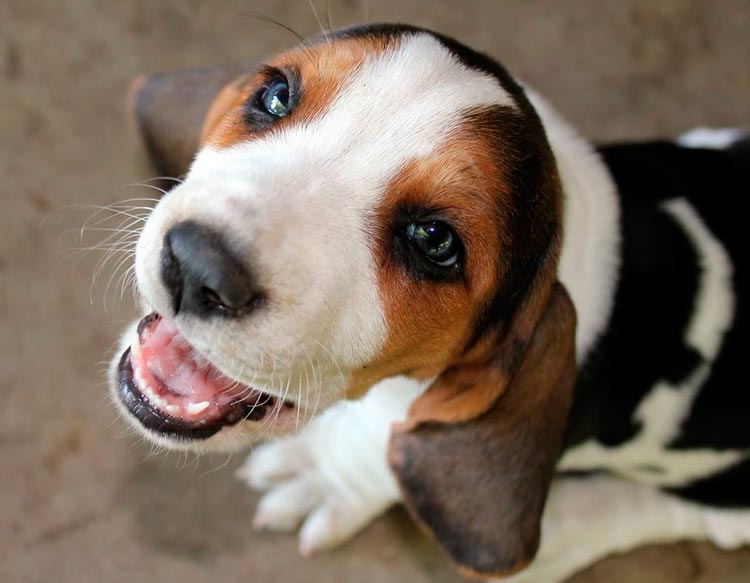
The breed has a number of problems related to morphology or heredity: diseases of the spine and joints, ear infections, hypothyroidism. Life expectancy is 10-13 years.
It is very important that your pet does not become overweight or obese, which can increase back pain, joint disease, heart disease, and other health problems.
Buying a puppy
These dogs are rare in Russia, so finding a puppy of your desired gender and color can be difficult. The breed isn't particularly popular abroad either, even in France. It's best to look for a dog through breed clubs, which bring together breeders and owners, ensure purity of breeding, and maintain working qualities.
Price
Basset Hound Artesian Normand puppies cost between €400 and €900 in Europe. There is no price data available in Russia.
Photos and videos
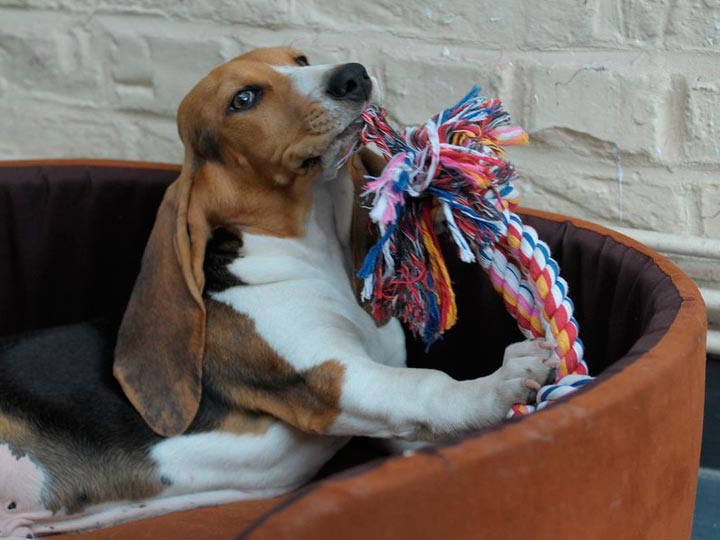
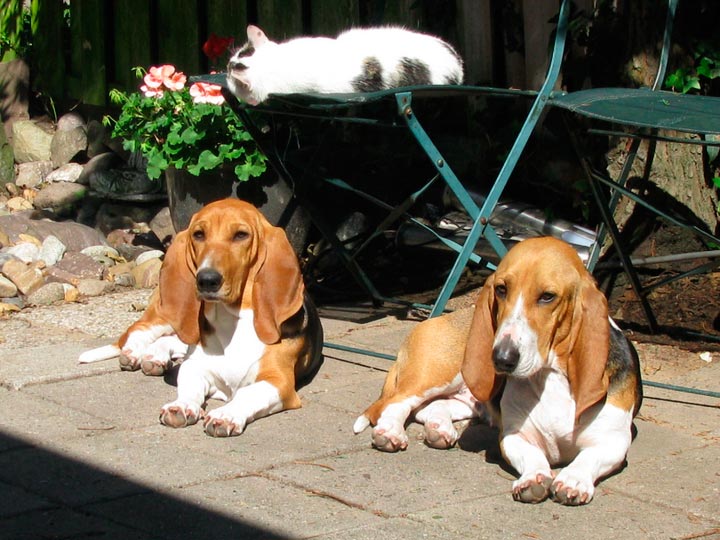
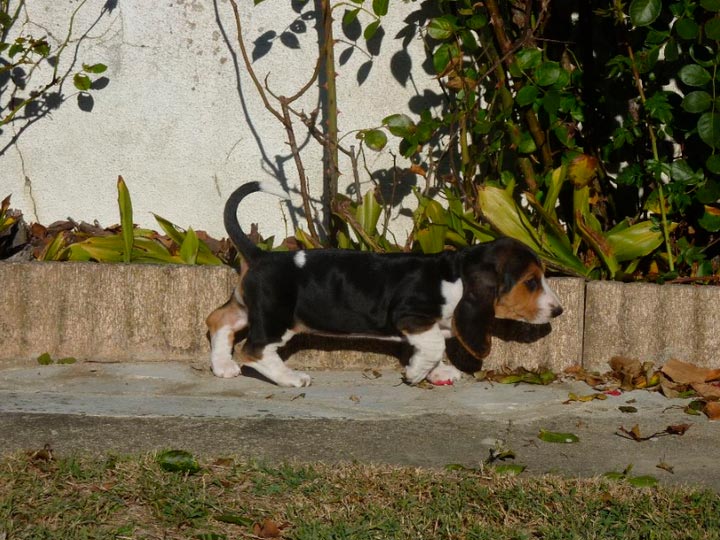
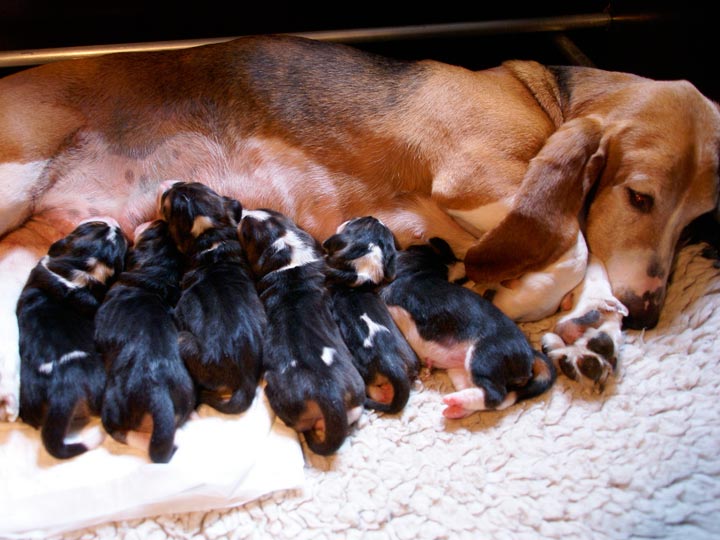
The gallery contains more photos of Basset Artesian Normand dogs.
Video about the Basset Artesian Normand breed
Read also:


Add a comment