
Appenzell Mountain Dog (Appenzell Herding Dog)
The Appenzeller Sennenhund is a breed of herding dog native to Switzerland, one of four in the large Sennenhund family. The Appenzeller is a medium-sized, energetic, and robust dog with a strong guarding instinct. Although rarely used for its intended purpose in recent years, it has proven itself as a companion, family dog, and sporting dog.
Content
History of origin
Dogs of this type lived in the Swiss Alps for centuries, assisting farmers with their difficult work. However, they were never singled out as working "mongrels." Appenzellers were first noticed by Dr. Friedrich von Tschudi. In his book "Animal Life in the Alps" (1853), he describes the herding dogs of the Appenzeller region. They were medium-sized, high-pitched, with short, multicolored coats, and were used primarily for guarding and herding livestock. Another name for the breed is the Appenzell Herding Dog.
The breed's name comes from the Swiss "senn," a word for shepherds, and "hund," a dog. Appenzell is a historical region in northeastern Switzerland.
A little later, Swiss forester and Sennenhund enthusiast Max Weber approached the Swiss Cynological Society for assistance in developing the breed, receiving a positive response and 400 francs. The first Appenzellers began appearing at shows. In 1906, a stud book was established for them, and the first breed club was founded under the direction of Professor Dr. Albert Chaim, who made significant contributions to the development of mountain herding dogs and the Appenzeller in particular. In 1916, the first breed standard for the Appenzeller Sennenhund (German: Appenzeller Sennenhund) was developed. Related breeds include: Bernese Mountain Dog, Greater Swiss Mountain Dog And Entlebucher Mountain Dog.
Video about the Appenzeller Sennenhund dog breed:
Appearance
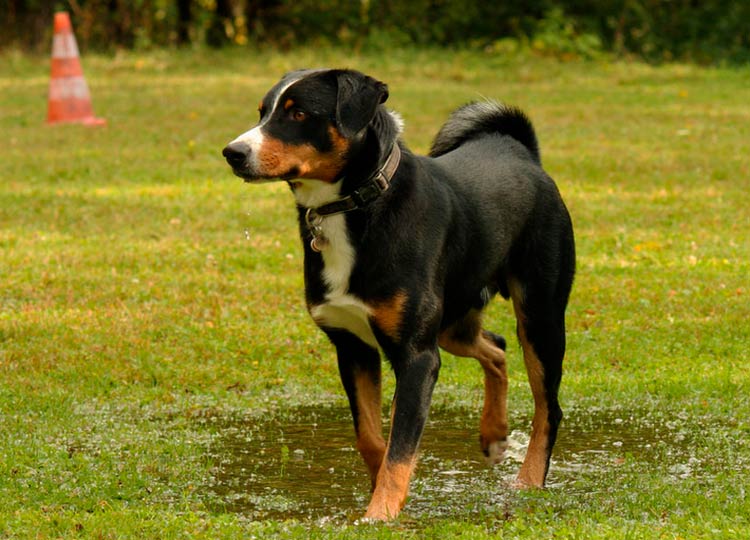
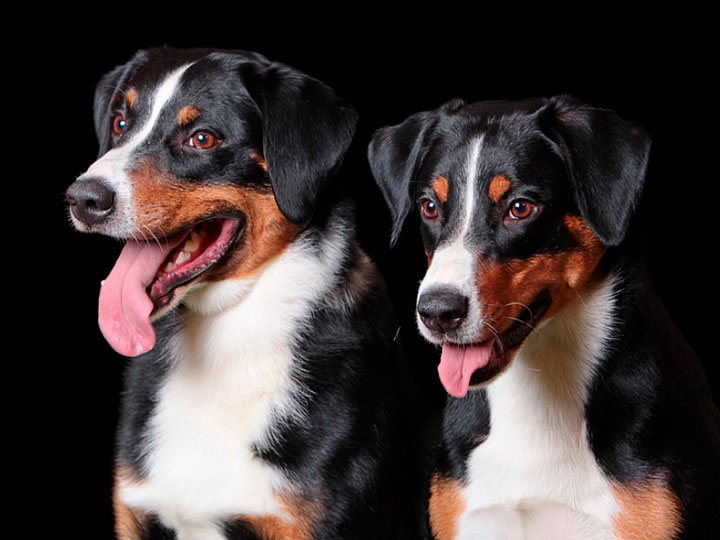
Appenzeller Mountain Dogs are medium-sized dogs with a nearly square build, slender and muscular, very agile, maneuverable, and intelligent. They should also be stocky and compact. Sexual dimorphism is moderate. The height at the withers for males is 52-56 cm, and for females, 50-54 cm.
The Appenzeller Sennenhund is a medium-sized dog with a strong build and muscular body.
-
Height: males - 52–56 cm, females - 50–54 cm
-
Weight: 22–32 kg
-
Wool: short, dense, with a thick undercoat
-
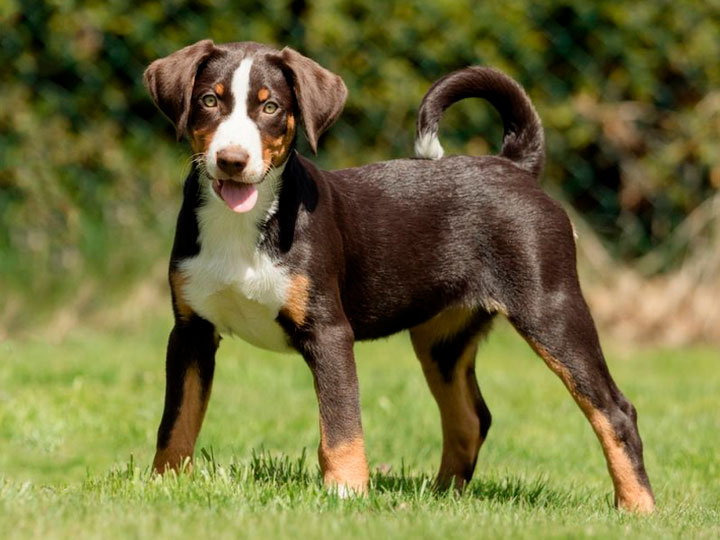
Color: tricolor - black or dark brown with red and white markings
-
Tail: bent into a ring on the back
These dogs have an expressive appearance and an energetic look.
The head should be in good proportion to the body, shaped like a wedge. The skull is flat, tapering slightly toward the muzzle. The bridge of the nose is straight, and the tip can be black or brown, depending on the coat color. The lips are dry and close-fitting. The bite is correct and scissor-shaped. The cheeks are slightly defined. The relatively small eyes are set fairly close to the nose and almond-shaped. The iris color should be as dark as possible. In brown dogs, the iris is always lighter than in black dogs. The ears are pendant, set high and well apart. The pinna is triangular in shape with smoothly rounded tips. When the dog is alert, the ears are raised and pointed forward.
The neck is dry and relatively short. The body is strong, compact, and powerful, with a nearly square format. The height-to-length ratio is 9:10. Appenzellers are not as elongated as Entlebuchers, with which they are often confused. Additionally, their ear tips are more rounded, and their muzzle appears stronger. Despite this, it can be difficult to distinguish the two breeds in many photos. The loin is moderately long, and the croup is relatively short. The tail is strong, medium length, and set high. When moving, the tail curls over the back or to the side, and at rest, it can be lowered to any position. The chest is deep and wide, reaching to the elbows. The ribcage is prominent, reaching far back. The limbs are strong, lean, and firm. Viewed from the front and rear, they are straight and parallel.
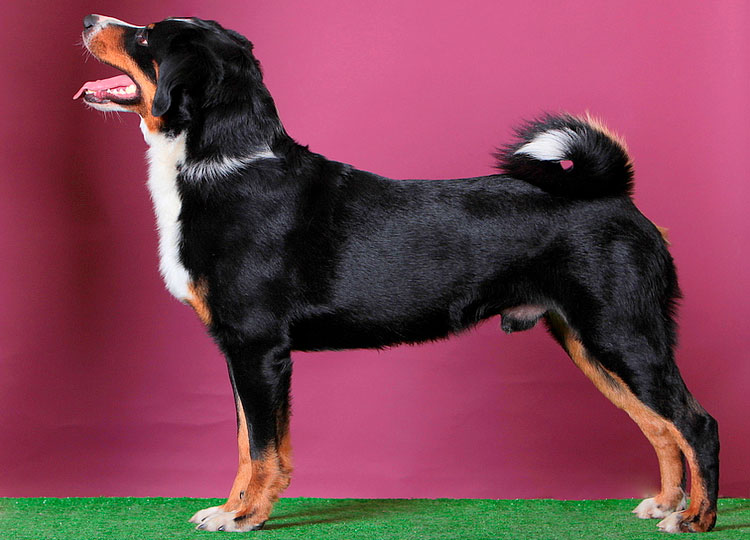
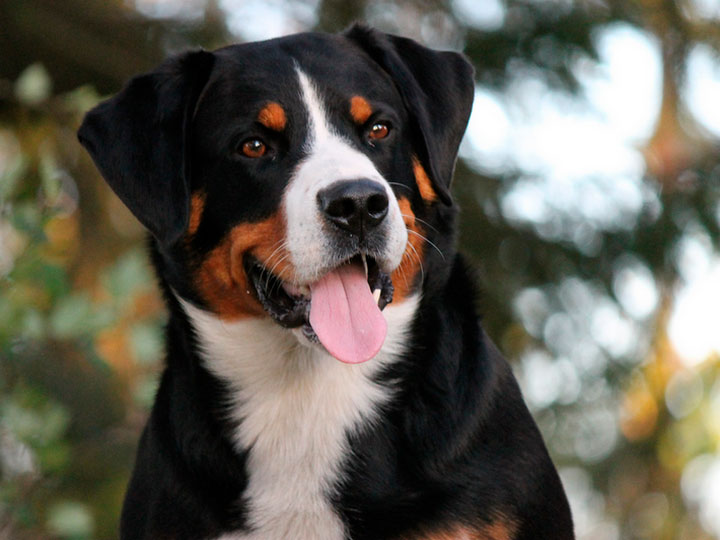
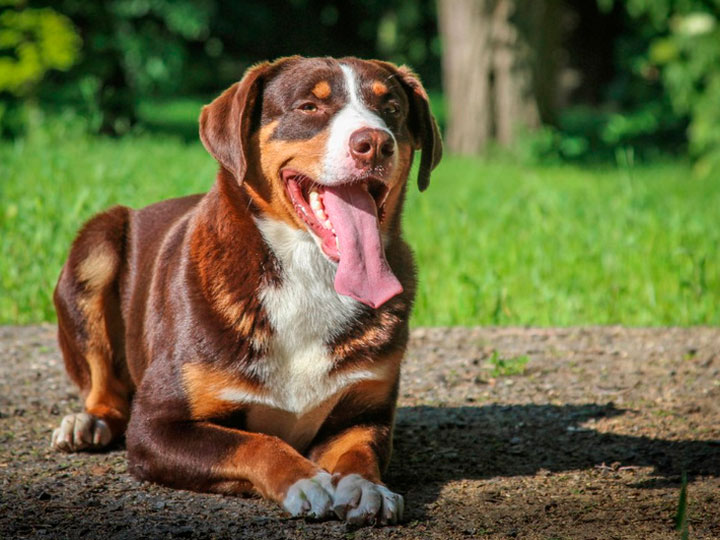
The coat is double, consisting of a thick, shiny outer coat and a brown, black, or gray undercoat that should not be visible through the outer coat. The hair on the withers and back may be slightly wavy. The coat is tricolor. The base color is black or brown. Brown markings are present on the chest, cheeks, above the eyes, legs, vent, and underside of the tail. White appears as a stripe on the forehead, which may partially cover the muzzle, on the chest, and on all four legs.
Character
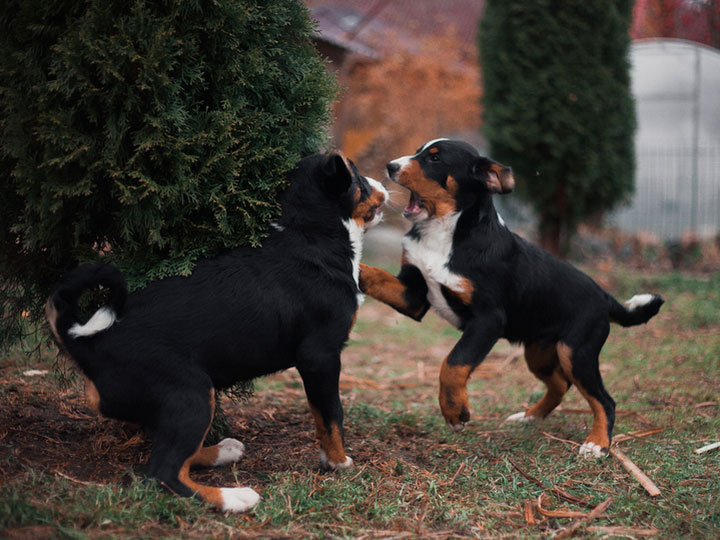
The Appenzeller Sennenhund is an active, self-confident, and spirited dog. Energetic, playful, and cheerful, it is suspicious and incorruptible with strangers. With family, it is very affectionate, cheerful, and understanding. Traits such as stubbornness, independence, and short temper are especially pronounced between 7 and 18 months of age. These tend to fade with age. Socialization and the family's relationship with the dog are of great importance in shaping its character.
Appenzellers are very temperamental, selflessly guarding their territory and sharing it with other males. Under normal circumstances, they are not prone to aggression toward people. They are always wary and distrustful of strangers and unfamiliar people, and are unwilling to engage in contact, earning them a reputation as incorruptible guard dogs. Appenzellers consider guarding the home and all family members their primary job. This alert dog will raise a commotion at the slightest sound. Generally, this dog is quite vocal; whether it barks only when it has a reason or simply because it does so depends on its training.
The Appenzeller gets along well with other pets, especially those raised with them. In adulthood, minor conflicts with dogs of the same sex may occur. They are usually protective and guardian of other animals, including farm animals, but due to their energy, they can sometimes chase them. They generally get along well with small children, demonstrate guardianship skills, and allow themselves to be handled with great care. However, interactions between a small child and a dog should not be left unsupervised. Owners rarely report inappropriate or aggressive behavior in Appenzellers. This is more the exception than the rule, a consequence of being spoiled and not properly trained.
The Appenzeller is very intelligent, adapts easily to new environments, and adapts to the rhythm of family life. When interacting with people, it learns to read their gestures, facial expressions, and tone of voice. An adult dog seems to be able to read minds, so well does it understand its family. A lack of activity drives working Zenns into depression. They develop bad habits, become destructive, and disobedient.
Education and training
The breed's remarkable qualities are fully realized only with proper training. Stubborn, self-assured Appenzellers, accustomed to making their own decisions, must understand that an adult human ranks above them. Furthermore, it's important to consider the young Appenzeller's high excitability and energy. They won't engage with training until they've satisfied their need to run and completed all their tasks. If you use playful training, the Appenzeller responds very well to training. It's easy to work with an adult dog that has acquired the necessary foundation and obedience skills.
When training an Appenzeller, it's important to learn how to negotiate with the dog without using physical force or yelling. Furthermore, emotional and energetic Sennenhunds often try to be cunning. The owner should stand their ground and not give in to demands; then the dog will be obedient and comfortable in the city.
Early socialization and training are crucial for a guard dog. An Appenzeller needs to be taught right away what is permitted and what is forbidden, and this must not be changed. Otherwise, it will quickly slip beyond human control and become a wayward, unruly dog. Persistent, long-term work will bear fruit, albeit not immediately.
So, Pppenzellers are easy to train and love to work with their owner.
-
Start of training: from 4–5 months
-
Methods: positive reinforcement, treats, praise
-
Socialization: meeting different people, animals and situations
-
Games and tasks: using interactive toys and tasks for mental stimulation
Content Features
The Appenzeller Sennenhund is suitable for apartment living, provided it receives regular, playful exercise. However, a more suitable home would be a private home with a fenced yard, where it can roam freely and, of course, work as a guard dog. Keeping the dog in a kennel is out of the question, as it requires close human contact. In winter, the Appenzeller develops a thick, warm undercoat, so it doesn't require additional insulation.
The Appenzeller requires good physical exercise. Two short walks a day won't be enough; he needs runs, games, and, in warmer weather, swimming. Mental stimulation is equally important—learning new commands and playing active games that challenge him to find and use his wits.
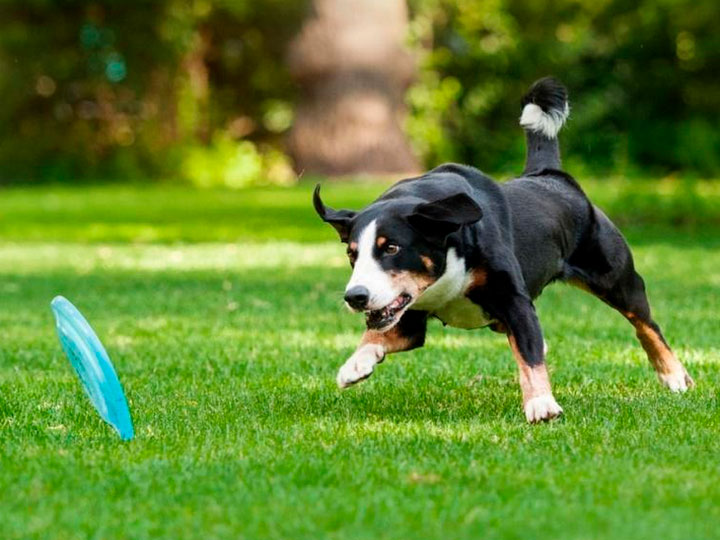
The Appenzeller Sennenhund has long been considered a companion dog and is rarely used for its original purpose as a herding dog. Some owners train their pets in this craft for their own enjoyment and overall development. Sports can also help channel their energy positively. Appenzellers excel in Frisbee, canicross, agility, and other competitions.
Care
Grooming a short-haired dog is easy. Brush the coat once or twice a week, sometimes less frequently. Daily brushing is possible during shedding season. Eyes and ears are monitored and cleaned as needed. Nails, if not worn down during walks, are trimmed as they grow. Bathing frequency may vary depending on the dog's living conditions and skin type. Bathing products are selected individually. It's helpful to accustom your Appenzeller to regular teeth brushing, which will help prevent dental problems later in life.
So, caring for an Appenzeller Sennenhund is not difficult, but it requires regularity.
-
Wool: combing 2-3 times a week, especially during the shedding period
-
Bathing: as needed, usually 3-4 times a year
-
Ears and eyes: regular inspection and cleaning
-
Claws: trim every 3-4 weeks
-
Physical activity: at least 2 hours of active walking daily
Nutrition
Proper nutrition is the key to the Appenzeller's health.
-
Ready-made feeds: Preference should be given to premium or super-premium class foods for active medium-sized dogs
-
Natural nutrition: lean meat (beef, chicken, turkey), offal, cereals, vegetables and fruits
-
Supplements: vitamin and mineral complexes as recommended by a veterinarian
-
Feeding regime: 2 times a day, following the established schedule
-
WaterFresh water should be available at all times, especially after physical activity.
There are no special feeding requirements for the Appenzeller Sennenhund. Most breeders and owners prefer to feed their dogs dry, commercially produced food above the super-premium level. This makes it much easier to provide a complete diet. If desired, you can introduce your pet to a natural diet. At least 50% of the diet should be meat and by-products, with the remainder consisting of cereals, fermented milk products, vegetables, and fruits. Vegetable oil and a small amount of bran are added daily. An egg and lean sea fish are given once or twice a week. A natural diet requires short-term vitamin and mineral supplements during the active growth period and in the off-season. As for food, Appenzellers are suited to diets designed for active small breed dogs. Regardless of the diet, clean drinking water should always be freely available.
Most Appenzellers are big food lovers, so it's important for owners to monitor portion sizes and calorie intake. Without adequate exercise, dogs quickly gain excess weight.
Health and life expectancy
The Appenzeller Mountain Dog is a robust, hardy dog that rarely gets sick and is considered genetically sound. The breed is susceptible to a number of hereditary health problems, but they are relatively rare:
- Problems with the kidneys, genitourinary system (most often urolithiasis);
- Heart failure;
- Dysplasia hip and elbow joint;
- Low elasticity of the knee joint ligaments;
- Progressive retinal atrophy;
- Patella;
- Ectopia of the ureter;
Female dogs sometimes experience various problems associated with breeding, including ectopic and false pregnancies, delayed maturation, and early fertility decline. It's worth noting that most illnesses are caused by improper care or nutrition. Also, don't forget about important veterinary preventative measures: annual vaccinations and treatment for external and internal parasites. Life expectancy is usually 12-14 years.
Choosing and pricing a puppy of this breed
In Russia and the CIS, the Appenzeller Sennenhund is not the most common variety of mountain herding dog. They are bred by a few kennels in large cities, so puppies sometimes have to be reserved in advance and wait for. There is currently no National Club for the breed, so only real owners can help you find a puppy on forums or at large dog shows. Preference is best given to breeders who keep their dogs in private homes. In the yard, puppies get sufficient exercise. In an apartment, they cannot move as much as they need, which can lead to musculoskeletal problems.
It's important to decide on the dog's gender and color in advance. A young puppy should already largely meet the breed standard, being strong and stocky. The coloring should be as symmetrical and rich as possible, especially if it's brown, which is often dull and only becomes lighter with age. The Appenzeller's temperament is crucial; it shouldn't be aggressive, even if the dog will later be tasked with guarding the entire territory, and it certainly shouldn't be timid. Calmer puppies are better suited to apartment life, while active ones are best adopted into a private home. And of course, puppies should be healthy, with no outward signs of illness or disease. It's best to pick up a puppy no earlier than 2.5-3 months old, and it should be vaccinated against major infectious diseases.
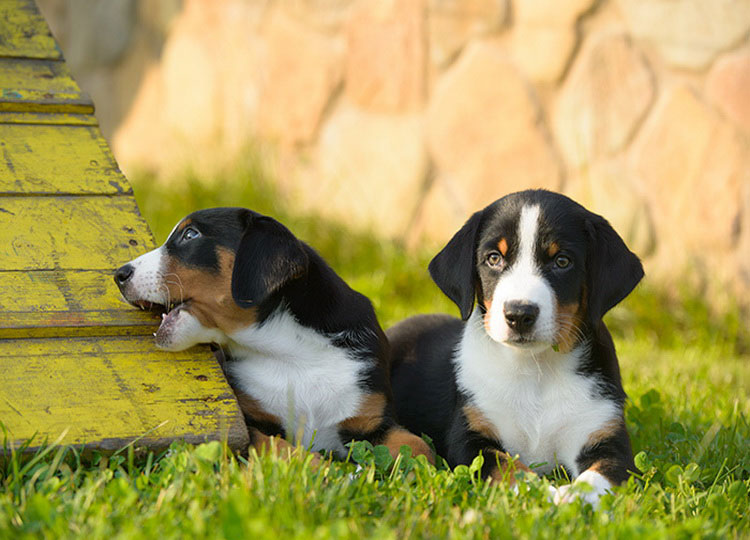
Appenzellers can carry a recessive gene for long hair. Testing dogs for this gene is not common in Russia. Puppies born with long hair are considered a breeding defect. However, their appearance is so striking and attractive that sometimes long-haired babies are specifically sought out by people uninterested in shows and breeding. A fluffy puppy may not be immediately apparent. Around six weeks, they begin to distinguish themselves from their fellows by their softer, denser coat, which is slightly longer on the chest and wavy on the ears.
An Appenzeller Sennenhund puppy costs an average of 30,000-35,000 rubles. The price of puppies from a breeder can be higher. Undocumented puppies rarely cost more than 10,000 rubles, but their origin may be questionable. Fraudsters often sell similar mixed-breed puppies under the guise of expensive breeds.
Photos
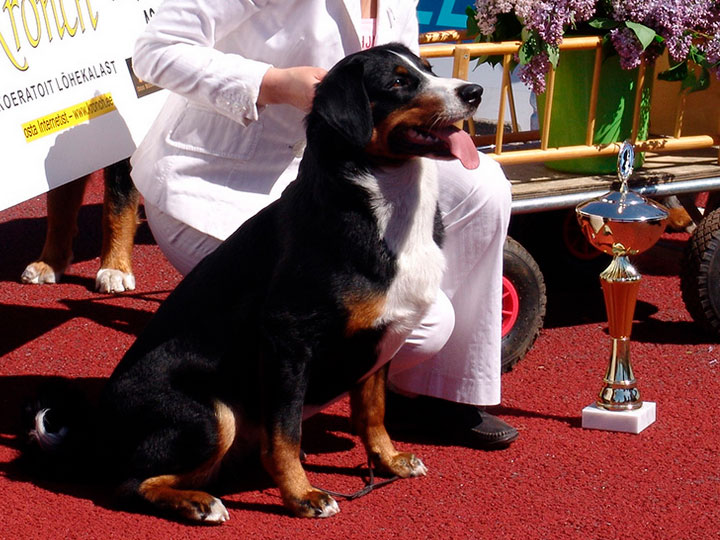
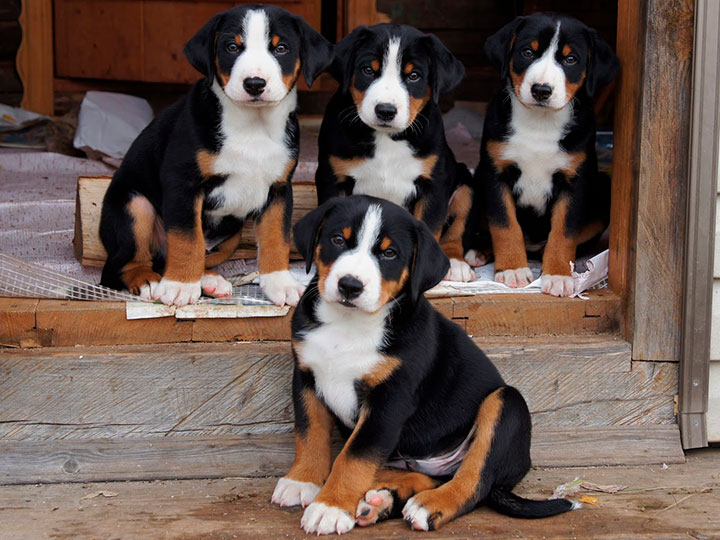
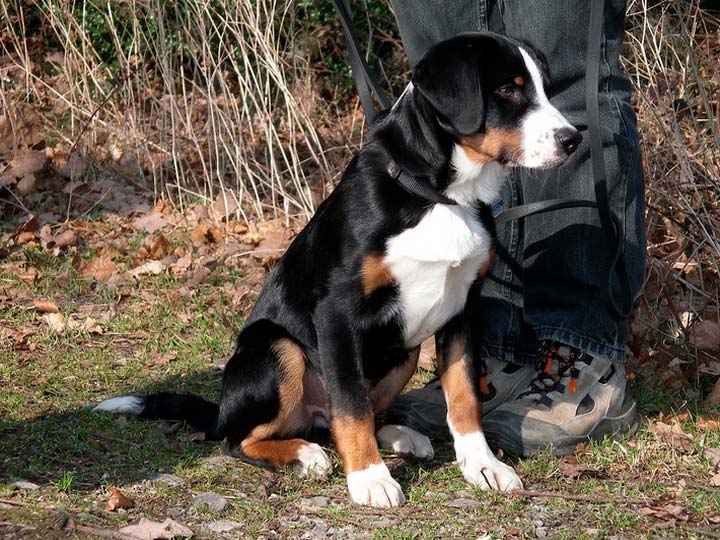
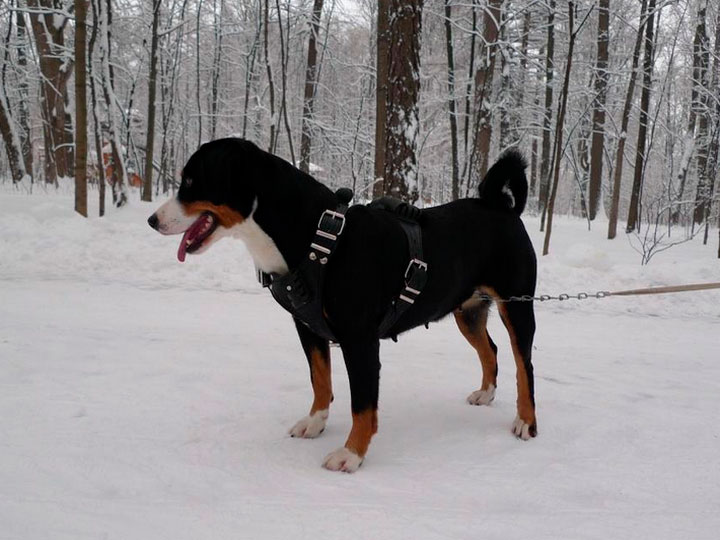
The gallery contains photographs of puppies and adult dogs of the Appenzeller Sennenhund breed.
Read also:


Add a comment