
Anti-scratch mittens for cats
Pets may be fluffy on the outside, but they have claws that not everyone wants to deal with. That's why cat scratchers are so popular these days. What are they, how do you use them, and are they really safe?
Content
- 1 What is this?
- 2 Behavior of cats with a "manicure"
- 3 When are anti-scratch mitts necessary?
- 4 How to choose multi-colored caps?
- 5 Instructions: How to put on anti-scratch pads for cats?
- 6 Veterinarian reviews of anti-scratch mats for cats
- 7 Is the material of the caps harmful?
- 8 Answers to frequently asked questions
What is this?
Anti-scratch caps are caps made of soft silicone. These caps are placed on a cat's claws to prevent scratching and damage to furniture. The world owes this invention to Toby Wexler, a veterinarian, almost a quarter of a century ago. He became famous as a staunch opponent of declawing animals. He proposed these caps as a replacement.
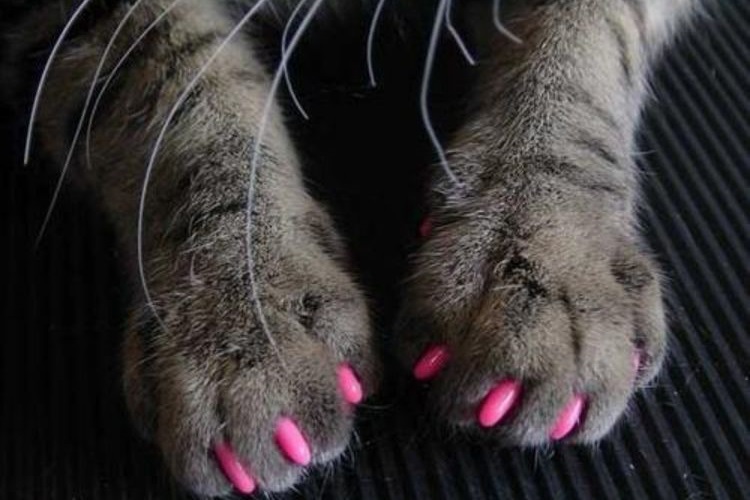
You can now see many photos online of what anti-scratch posts for cats look like. Some jokingly call them "cat manicures." Owners are delighted: they come in colorful, bright, and eye-catching shades. And their beloved pets look very fashionable. The claws look rounded, convex, and painted in their favorite colors. And most importantly, they don't scratch human skin, the upholstery of sofas and armchairs looks like new, and children don't cry or walk around with scratches. It seems ideal, but it's not that simple.
Behavior of cats with a "manicure"
Usually, the cat behaves as usual. She stretches, even sharpens her claws. But these "exercises" leave no marks on carpets, furniture, or scratching posts.
However, at first, after you put the caps on her, she may feel uncomfortable, stepping on the floor unusually, and running around strangely. She may also try to chew off the caps. This unnatural "decoration" is uncomfortable for the animal.
When are anti-scratch mitts necessary?
- Health. Some cat owners suffer from allergies, poor blood clotting, and immunodeficiency syndrome. Even a single scratch can be very dangerous. Therefore, they decide to protect themselves by using colorful claw caps. Some resort to declawing, but most veterinarians agree that this is an extremely inhumane measure.
- Small children in the house. Children rarely exercise self-control when playing with pets, and the animals usually don't appreciate this. Cats use their claws to defend themselves and can injure a child. However, there's a downside. If a child torments an animal, it won't even be able to defend itself. And the child will never learn to be gentle with their four-legged friends. Try to explain to children that cats are not toys and should be handled with care. Then you won't need to buy claw caps.
- Excessive animal aggression. Anti-scratch claws for cats that attack even those who don't grab them or tease them are helpful for those who have no longer been able to raise a cat.
In all other cases, the decision to attach these accessories to a cat's claws is a tribute to fashion, a desire to make the animal "more beautiful," etc. These are selfish goals; you shouldn't torture an animal for your own amusement.
How to choose multi-colored caps?
Some owners believe that color is the main criterion when choosing a dog. However, the most important factor is size.
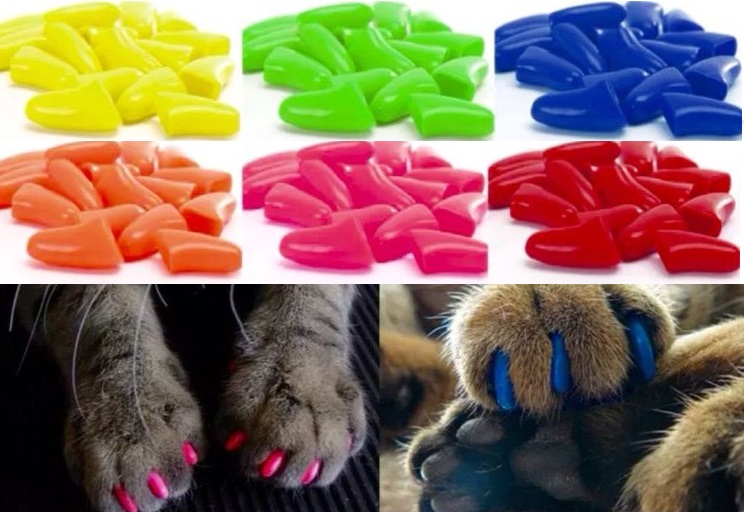
If you put on a cap that's the wrong size, it could cause discomfort, causing your cat to chew it off. Or it could cause severe pain and potentially cause serious injury.
- Kittens and miniature cats weighing between 500 grams and 2 kg are recommended to wear size XS. However, kittens shouldn't be given caps because their claws are already soft. They grow quickly, so caps will need to be replaced frequently.
- For animals from 2 to 4 kg – S.
- For medium-sized cats weighing 4 or 6 kg, M caps are suitable.
- For large cats over 6 kg: Bengals, Maine Coons, Savannahs – size L.
Instructions: How to put on anti-scratch pads for cats?
To help the caps last longer, wipe the nails with a solution containing a small amount of alcohol. This will remove dirt and oil.
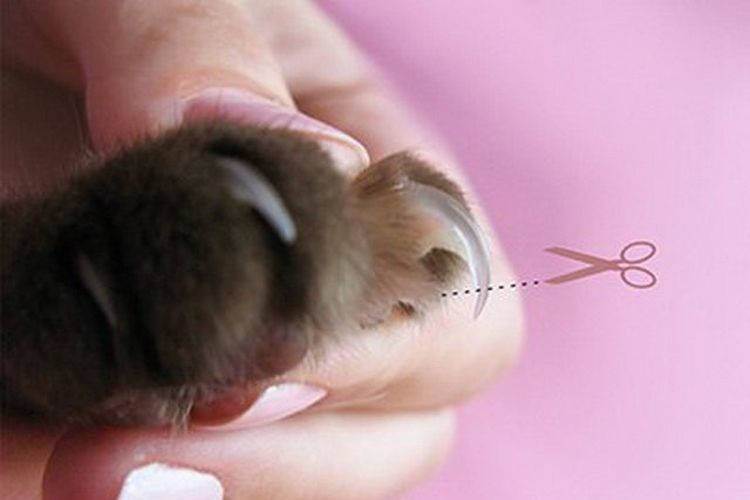
- You need to take your pet by the paw and knead the pad a little with your fingers so that the cat releases its claws.
- First, try on the scratch guard. It should cover only a third of the nail, no more. Ideally, just the tip.
- The cap should be shortened a little if necessary.
- A cat's claw can also be trimmed perpendicular to the direction it grows.
- Fill the cap 1/3 full with adhesive, then apply it to the nail, pressing down on the sides. Hold for 5 to 10 seconds.
- When the last anti-scratch cap is on your pet's claw, let him rest in your arms for a while. You want the glue to dry, so the cap doesn't come off with the first movement.
Veterinarian reviews of anti-scratch mats for cats
Here's what veterinarians say: A cat is an animal with claws, and owners need to accept that. Interfering with a pet's nature is inhumane. However, silicone caps are a much more humane solution than declawing.
Veterinarians recommend training your pet to use a scratching post. And if damaged furniture is a serious reason to put nail caps on their claws, consider getting a toy dog. These dogs don't scratch upholstery.
From a medical perspective, these caps generally pose no significant harm to cats. While they may be uncomfortable at first, they eventually get used to them and sometimes even stop noticing them.
The potential harm of anti-scratch claws for cats is due to improper application.
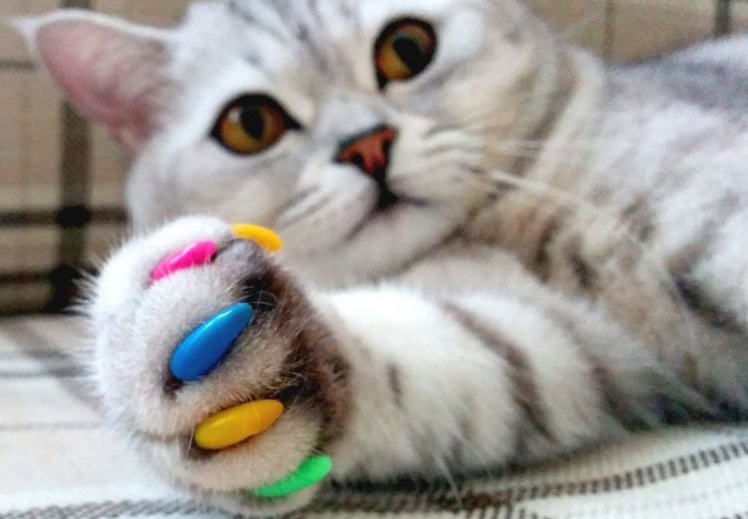
Caution! Do not apply caps too deeply or unevenly, to avoid causing pain to the animal. An adverse effect of such improper application is the cap growing into the paw, which will require surgery.
Another risk associated with claw caps is if the cat has a high-pile carpet and is accustomed to climbing the curtains. The cat may get its claw entangled and attempt to escape, which can cause injury. There have been cases of claws being torn out of their pads.
Is the material of the caps harmful?
This question worries cat owners who notice their pets trying to chew them off their claws. Sometimes they succeed. Manufacturers reassure them: the pads are made of a harmless material. It decomposes when ingested. Thanks to their streamlined shape and flexibility, they pass through the cat's intestines painlessly. They pass naturally.
Warning! Glue can be dangerous. Yes, it's non-toxic, even if ingested. However, sometimes animals are allergic to it.
Cat owners often don't understand certain things. Therefore, it's worth clarifying the main misconceptions and myths about scratching posts. Read also about silicone claw caps for cats — which ones are better to choose.
Answers to frequently asked questions
Question: Do cats' claws itch and hurt under the pads?
Answer: No, just like nails under regular nail polish on women. Cats' claws can be trimmed; they tear them off themselves on scratching posts, and it doesn't hurt.
Question: Will anti-scratch pads affect a cat's gait?
Answer: Possibly. At first, when your four-legged friend is just getting used to the "decoration," they may move with constraint. Then their gait returns to normal.
Question: Do caps interfere with the retraction of natural nails?
Answer: Perhaps, but only if the owner was too lazy to read the instructions for applying scratch guards to cats. Again, the cap should only be applied to the part of the claw that always protrudes from the pad. Don't tuck the pet's entire claw in.
Question: If a cat spends part of its time indoors and part of its time outside, can it use anti-scratch pads?
Answer: Definitely not. Claws are a cat's primary weapon. If you let your pet outside, even occasionally, it must not be left unprotected. It can't hunt or fight off a cat or dog. This could seriously injure or even kill your pet, as climbing a tree trunk is impossible.
Question: How to remove anti-scratch pads?
Answer: The caps usually fall off on their own after 1.5 to 2 months. If a cat's cornea is shedding at a fairly rapid rate, this process occurs even faster—in just a couple of weeks.
Considering the price of cat scratching posts and comparing it to the cost of a scratching post, it's cheaper to avoid torturing your cat and train them to sharpen their claws in a designated area. Incidentally, special safe compounds are used for this purpose, attracting cats' attention.
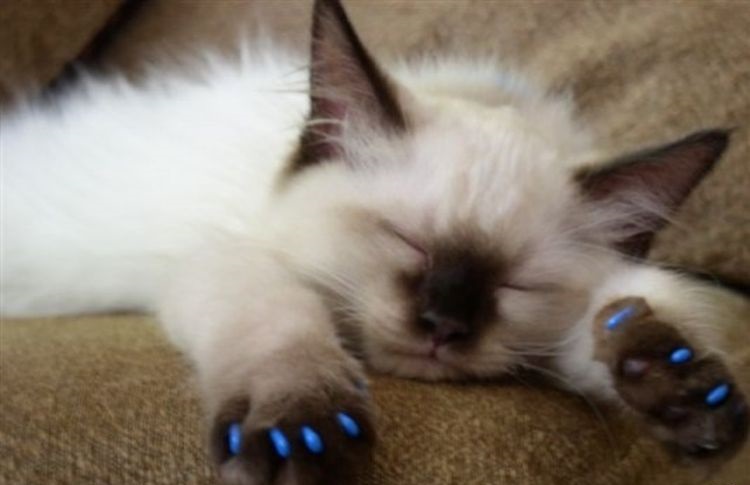
Question: By the way, how much do the multi-colored caps for cat paws cost?
Answer: Cat scratching posts typically cost between 250 and 400 rubles per set. However, the exact price depends on the location of purchase, brand, and other factors.
Question: What's included, just anti-scratch pads?
Answer: As a rule, the kit includes 20-40 silicone caps, a tube of special glue, and instructions.
One set is designed to last for about a couple of years if used continuously, but you will only need to change them regularly. caps on 1-2 clawsThe glue also has a shelf life of approximately two years. It won't spoil or dry out if stored properly in a tightly sealed tube.
Although instructions are included with the package, not everyone can follow these simple steps, particularly if their pet is quite frisky or aggressive. This can lead to even more scratches from these scratch guards than if they were left alone. In this case, don't torment yourself or your pet. It's best to consult a professional who knows how to handle your pet to avoid injury and ensure the guards are applied correctly.
So, weigh the pros and cons before buying nail caps and putting them on your pet's paws. Consider the necessity. If you're simply trying to make your pet "prettier" and think they'll enjoy them as much as you enjoy a fresh manicure, then definitely don't.
Read also:


Add a comment