
Antihistamines for cats
Antihistamines can help relieve allergic reactions in cats, just like in humans. Your pet will calm down and experience relief from the unpleasant symptoms, but this will only be temporary. To successfully treat an allergy, it's important to identify the irritant and, if possible, eliminate or minimize your pet's contact with it.
Content
Types of drugs
Veterinary medicine uses the same antihistamines as those used to treat allergies in humans; only the dosages differ. These should be prescribed by a veterinarian based on the animal's age and weight. If prompt consultation with a specialist is unavailable, the manufacturer's recommendations for use in children can sometimes be used, but adjusted for the cat's weight. In this case, it's important to adhere to the "better underdosed than overdosed" rule, as overdosing will only worsen the pet's condition.
These medications work by blocking receptors sensitive to histamine, a special substance produced in the body when an allergen enters the body and, when it interacts with cellular receptors, causes allergy symptoms. However, when choosing allergy medications for cats, it's important to consider which specific receptors the medication is targeting. Most of them block H1 receptors, while some (Ranitidine, Cimecidine, Famotidine) block H2 receptors. The latter are strictly not suitable for use in cats.
A veterinarian should determine which antihistamine to give to a cat, its exact dosage, and the duration of administration in each case, depending on the nature of the allergic reaction, the clinical picture, and the individual characteristics of the animal.
The list of antihistamines for cats includes three generations of drugs, which differ in their effect on the animal's body and the presence of side effects.
1st generation
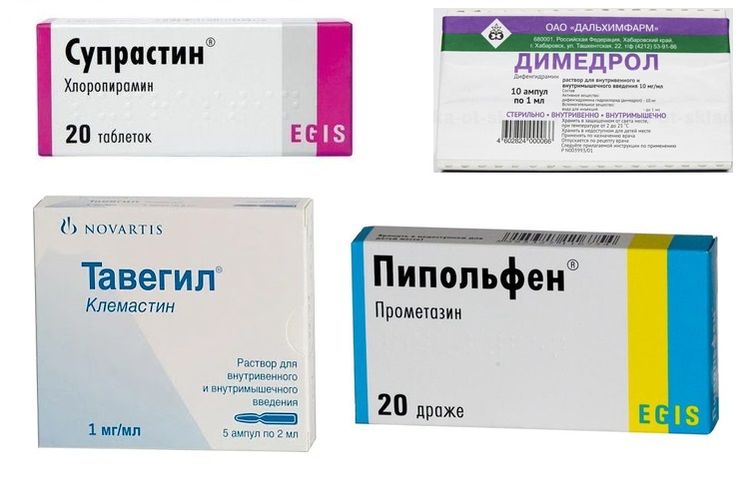
The main characteristics are short-term action (up to 4 hours), requiring two to three doses per day, a pronounced hypnotic and sedative effect (due to its effect on the central nervous system), addiction, and a large number of potential side effects. The main advantage is the elimination of acute allergic reactions.
| Name | Active ingredient and dosage | Indications | Contraindications | Side effects | Price, RUB |
|---|---|---|---|---|---|
| Suprastin (Chloropyramine) | chloropyramine hydrochloride, ¼ tab. up to 6 kg of weight or 1/6 – for 2.5-3.5 kg | Allergic reactions to food, medications | Gastrointestinal diseases, bronchial asthma | Lethargy, drowsiness, nausea, loss of paws (as a sign of poisoning) | 116 |
| Diphenhydramine | diphenhydramine, 0.02-0.04 ml (for injection), for tablets - 1.5-2 times more | Acute allergic reactions, anaphylactic shock, Quincke's edema, allergy to insect bites | Gastric ulcer, bladder pathologies, combination with antipyretics | Urination and blood pressure disorders, dry mucous membranes, dizziness | 40 |
| Clemastine (Tavegil) | Clemastine fumarate, (½ tablet (0.1 mg/kg) | Allergic rhinitis, cough, lacrimation, urticaria, Quincke's edema | Hypersensitivity, lower respiratory tract diseases | Apathy, refusal to eat, loose stools, thirst | 193 |
| Pipolfen | Promethazine | Itching associated with allergic reactions, infectious and parasitic diseases | Combination with sedatives | A strong hypnotic effect | 730 |
2nd generation
These medications do not cause drowsiness and last up to 24 hours, meaning they can be administered once daily. However, they have adverse effects on the cardiovascular system, liver, and stomach, and are not suitable for weakened, pregnant, or elderly animals. Another drawback is their inability to manage acute reactions (such as bronchospasm), which can be life-threatening. They also cannot be used in combination with antifungal medications, as this can trigger cardiac arrest.
| Name | Active ingredient and dosage | Indications | Contraindications | Side effects | Price |
|---|---|---|---|---|---|
| Claritin (Loratadine) | Loratadine, ¼ tab. 10 mg/3-4 kg weight | Hives, skin allergic reactions, allergic conjunctivitis | Hereditary diseases, serious liver pathologies | Dizziness, headache, nausea, fatigue, abdominal pain | 197 |
| Zyrtec | Cetirizine dihydrochloride, 1 mg/kg | Hives, allergic rhinitis and dermatoses | Individual intolerance, renal failure | Tachycardia, convulsions, headache, lethargy, abdominal pain | 198 |
| Zodak | 135 | ||||
| Kestin | Ebastine | Allergic reactions in the form of a runny nose and skin manifestations | Hypersensitivity | Headache, drowsiness, nausea, vomiting, diarrhea | 201 |
| Fenistil | Dimethindene | Itching of various etiologies | Bronchial asthma | Drowsiness, lethargy | 383 |
3rd generation
The medications are effective for up to 24 hours but do not cause drowsiness or adverse effects when combined with other medications. They are also well-tolerated by animals, do not affect the heart or central nervous system, and rarely cause side effects. Dosages are determined based on the cat's age and weight.
| Name | Active ingredient | Indications | Contraindications | Side effects | Price, RUB |
|---|---|---|---|---|---|
| Suprastinex | Levocetirizine dihydrochloride | Quincke's edema, dermatoses, urticaria | Renal failure, hypersensitivity | Sleep disturbances, urination, shortness of breath, cramps, nausea, headache | 321 |
| Xizal | 286 | ||||
| Zodak Express | 256 | ||||
| Elzet | 134 | ||||
| Lordestin | Desloratadine | Allergic conjunctivitis and rhinitis, skin reactions | Individual intolerance | Nausea, headaches, tachycardia, psychomotor agitation | 296 |
| Erius | 512 | ||||
| Telfast | Fexofenadine | Hives. Allergic rhinitis. | Renal and hepatic failure | Headache, drowsiness, diarrhea, nausea, cough | 1300 |
| Fexofast | 221 | ||||
| Fexadin | 576 |
First- and second-generation allergy medications are contraindicated for pregnant cats, as they can cause irreparable harm to the offspring. In cases of extreme necessity, third-generation medications may be prescribed.
Features of application
When giving your cat antihistamines for allergies, follow these guidelines:
- Do not exceed recommended dosage without first consulting your veterinarian.
- It is advisable to give the medicine at the same time, preferably between meals.
- Mixing the tablets with water can mask the bitterness characteristic of most antihistamines. Injections are usually used for acute and severe allergies.
- For seasonal allergic reactions (for example, during the flowering period), it is better to start the course in advance, even if characteristic symptoms are not yet present.
- Carefully monitor the reaction; if side effects occur (vomiting, diarrhea), stop using the product.
- In case of overdose, contact a veterinary clinic as soon as possible, and if this is not possible, give your pet plenty of water to induce vomiting and thus flush out the stomach, then do not feed for 10-12 hours.
Many veterinarians recommend using first-generation drugs to eliminate bronchospasms, anaphylactic shock and other dangerous symptoms, and second- and third-generation drugs in case of skin manifestations of allergies.
Reviews
Lydia:
"After my cat chewed toilet paper, her nose, mouth, and eyes suddenly started swelling. After calling the vet, we gave her half a Zyrtec tablet, which my husband, who suffers from allergies, always keeps in his medicine cabinet as a first aid. Thanks to the small size of the tablet, it was easy to administer to the cat, and the allergic swelling subsided within 30 minutes."
Nikolay:
"It looks like the cat was bitten by some kind of midge: his eyes and face are severely swollen. Since it happened at night and we couldn't consult a veterinarian, we gave him half a Suprastin tablet. When we went to the vet for a checkup the next morning, there was practically no trace of an allergic reaction left."
Dmitry:
"For occasional allergy symptoms, we give our cat Zodak, a cetirizine-based medication. It quickly relieves itching and speeds up the healing of scratches. Thanks to its neutral taste, the cat swallows the drops easily, without much resistance. This medication has proven more effective for us than the topical ointments the veterinarian previously prescribed for skin restoration."
Read also:


3 comments
Anna
For some reason Tavegil is not listed.
Kotofei
Give him plenty of water to drink – but how?! With a pipette?
Marina
With a syringe without a needle.
Add a comment