
Hookworm in Dogs: Symptoms and Treatment
Helminthic diseases are diagnosed extremely frequently in pets, as helminth eggs are ubiquitous in the environment, and few owners practice preventative deworming of their pets. Hookworm infection in dogs is considered a serious helminthic disease, most often affecting puppies under one year of age. In adult animals, the disease often manifests as a mild, asymptomatic form, due to lower susceptibility and/or the presence of immunity.

Content
The causative agent of the disease
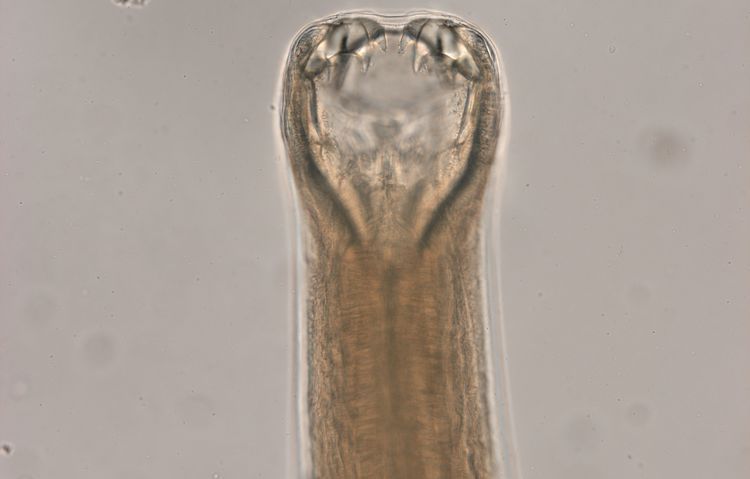
Hookworm infection in dogs is caused by the nematodes Ancylostoma caninum and Uncinaria stenocephala, both species belonging to the suborder Strongylida. These are thin, roundworms that parasitize the intestines and feed on blood. The hookworm's mouth capsule (also known as hookworms) contains two hard plates with curved teeth. These hookworms, like hooks, attach themselves to the intestinal mucosa and bite through it, reaching the blood. Depending on the species, the hookworm's body length ranges from 10 to 21 mm, and its eggs are 0.06 to 0.07 mm in diameter.
Adult hookworms, larvae, and eggs can remain viable for up to six months in high-humidity environments, but quickly die when dried out. The widespread prevalence of hookworms is explained by the worms' fecundity (a female can produce up to 30,000 eggs per day) and the variability of their transmission.
Hookworms have a dual pathogenic effect on dogs: mechanical and toxic. Attached to the intestinal wall, hookworms absorb up to 0.2 ml of blood per day, and periodic shifts in attachment site cause multiple tissue damage. The metabolites these worms release during their life cycle are toxic to animals, leading to the development of various pathologies affecting internal organs and systems.
Routes of infection
Hookworm infection is most commonly transmitted orally, through water or food contaminated with helminth eggs. Dogs can become infected by licking or eating grass, or by sniffing feces or soil. Once in the gastrointestinal tract of a healthy animal, hookworm larvae "take root" in the intestinal mucosa. They can also migrate to the lungs, muscle, or fatty tissue. In this case, they encapsulate: the larvae become covered in a protective shell and enter a dormant state.
Ancylostoma nematodes can enter an animal's body through the skin (primarily on the paw pads). They migrate via the bloodstream to the trachea and lungs, and then to the digestive tract. Hookworm infection can also be caused by intrauterine infection of the fetus or by transmission to puppies through the mother's milk. Hookworm has been shown to readily cross the placental barrier.
Hookworm species that infect dogs can cause severe skin and internal diseases in humans. Cases of intestinal hookworm infection in humans caused by canine hookworm species have been recorded. Therefore, if these helminths are detected in a dog, all family members should take necessary safety measures to avoid infection.

Symptoms
Hookworm infection can be acute or chronic. In the acute stage, the animal experiences:
- paleness of the mucous membranes due to constant blood loss;
- lack of appetite;
- thirst;
- sudden weight loss;
- profuse diarrhea - diarrhea accompanied by frequent bowel movements and the presence of mucus, traces of pure blood (hematochezia) or melena (elements of coagulated blood, colored black) in liquid feces;
- vomit;
- general loss of strength;
- rapid breathing;
- tachycardia (increased heart rate);
- tenesmus (constant sharp pain in the rectum), forcing the dog to take forced uncomfortable positions;
- dry skin and coat.
When hookworm larvae penetrate the subcutaneous tissue, an animal can develop dermatitis, and if they migrate to internal organs, severe pneumonia and other systemic diseases can occur. Such cases often result in death.

Diagnostics
Hookworm infection is diagnosed based on clinical symptoms and fecal examination for parasite eggs. Analysis is performed using the Fülleborn or Kotelnikov ovoscopy flotation methods. A minimum of 50 g of feces is collected and examined on the day of defecation, then the sample is placed in a standard solution. Helminth eggs have a lower specific gravity than the homogeneous medium in which they are located, and therefore float to the surface and are easily detected.
Additionally, a hematological test may be performed to confirm the presence of anemia in the dog, which is one of the main symptoms of hookworm infection.
Attention!Hookworms reach sexual maturity in 2-3 weeks and begin to reproduce intensively.The eggs are released into the external environment with feces. If the stool test is performed after a recent infection, the result may be false negative.

Treatment
Anthelmintics are used to treat hookworm infection. A veterinarian prescribes these medications based on the severity of the infestation and the dog's overall condition. Anthelmintics block the adult nematode's absorption of glucose and cause persistent paralysis of the parasite's muscles, leading to its death. However, these medications are ineffective against hookworm larvae, so the treatment course must be repeated after two weeks to kill any worms that have hatched.
A veterinarian may prescribe the following for a dog:
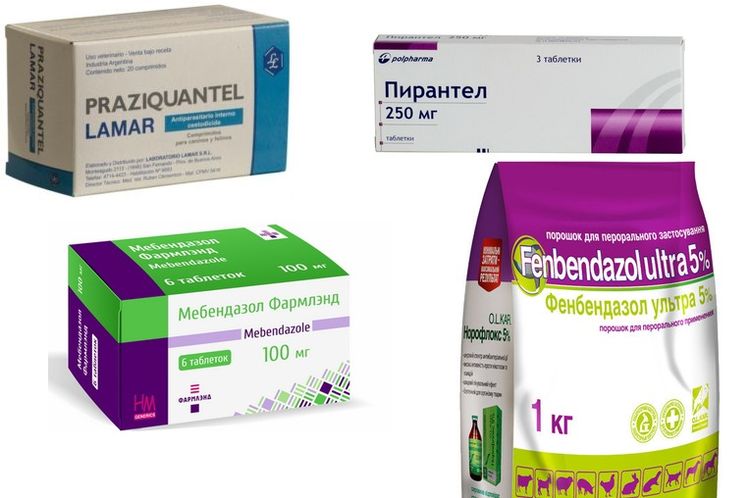
- Praziquantel - a single dose of 5 mg/kg of animal body weight.
- Febantel - 0.01 g/kg body weight for 3 days, once a day.
- Pyrantel - one time 1/2 tablet per 5 kg of animal weight.
- Fenbendazole - 25 mg/kg of animal body weight, 5 days, once a day.
- Mebendazole - granulate 60-100 mg/kg of body weight once with food or 5 days, 1/2 tablet twice a day.
In cases of severe hookworm infection and severe anemia, a course of pathogenetic therapy is administered: iron-containing supplements (Ursoferran, Ferrodex, Ferroglucin) are prescribed, and the animal is placed on a high-protein diet. If necessary, the dog may receive a blood transfusion.
Prevention
To prevent dogs from becoming helminthic, the premises where they are kept should be regularly disinfected with disinfectants. Solutions of soap, table salt, and borax kill worm larvae, and hookworms also do not survive in dry premises. It is recommended to change the dog's bedding daily.
The main means of preventing hookworm in dogs is regular deworming, starting at 3 weeks of age. Anthelmintic drugs are available in the form of tablets, suspensions, and drops; veterinarians consider the most effective Drontal, Dirofen, Kaniverm, Milprazon, Procox.
Deworming is recommended twice a year. However, if your dog eats natural food or spends a lot of time outdoors unsupervised, and therefore may come into contact with contaminated soil, grass, or water, deworming should be done four times a year. During pregnancy, deworming is recommended to be administered once a year.
Read also:
- Anthelmintic medications for dogs: reviews, prices
- Dirofilariasis in dogs
- How often should a dog be dewormed?


Add a comment