
English Springer Spaniel
The English Springer Spaniel is one of the oldest gundog breeds, still retaining its working qualities and being used for its intended purpose. Springers are also kept as companions and family dogs. They have a pleasant appearance, a docile nature, and are highly trainable, but in addition to their advantages, potential owners should be aware of their shortcomings.
Content
History of origin
Historians believe that spaniels spread across Europe with the Roman legions, and their name likely derives from a modified version of "Spain." As an independent breed, the Springer Spaniel was introduced to Great Britain in the 19th century in Norfolk County from the Field Spaniel, from which it differs primarily in that it does not point. Over the centuries, the Springer Spaniel's appearance has changed greatly. Even today, dogs in different countries, as well as working and show types, exhibit clear differences. The breed was officially recognized by the English Kennel Club in 1903.
After World War II, the Springer Spaniel was one of the most popular breeds in England. Currently, there are approximately 11,000 Springers registered in Britain.
Purpose
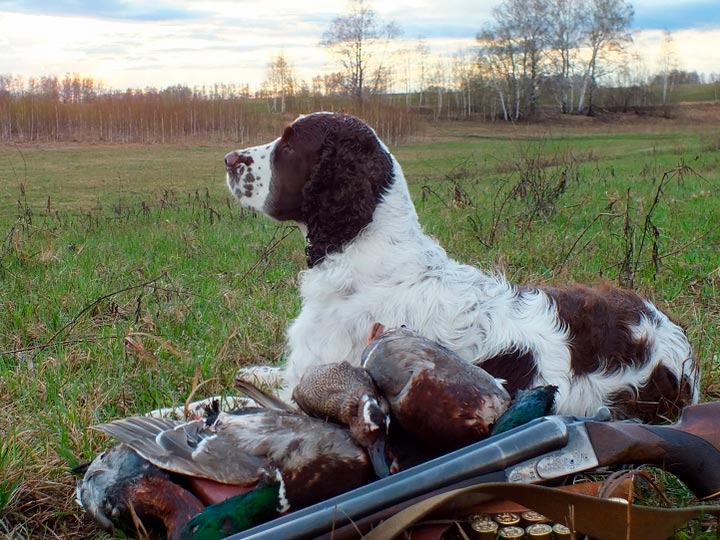
In the UK, no other hunting breed can match the popularity of the Stringer. This powerfully built working dog with numerous talents is suitable for virtually any type of hunting. It is calm when shot, has an innate ability to retrieve, thoroughly and quickly searches the area, fearlessly enters water, delicately retrieves game, and is exceptionally hardy and hard-working. While hunting, it is silent, instinctively bonds with its owner, and is easily trained.
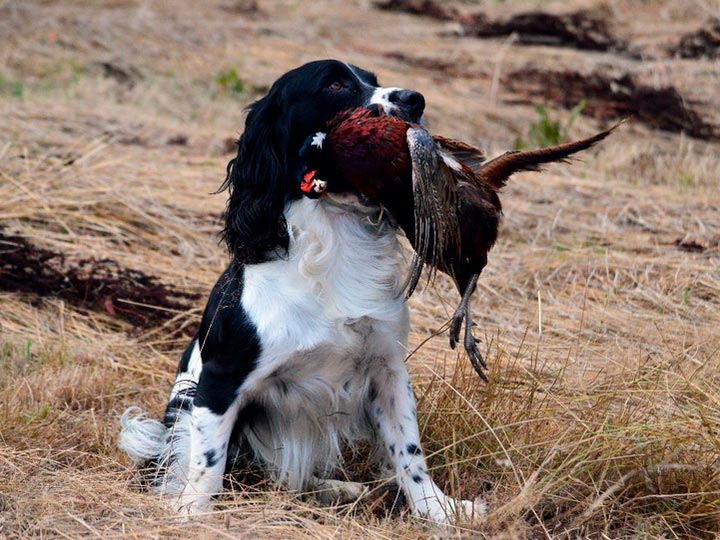
Originally, the English Springer Spaniel was designed to locate game and flush it under a net, a falcon, or with the aid of greyhounds. It is an excellent retriever, capable of bringing back a large fox or hare in its mouth. Today, as in the past, spaniels are primarily used for bird hunting. The dog's job is to locate game, flush it under the gun, and then retrieve the wounded animal from both land and water.
Video about the English Springer Spaniel dog breed:
Appearance
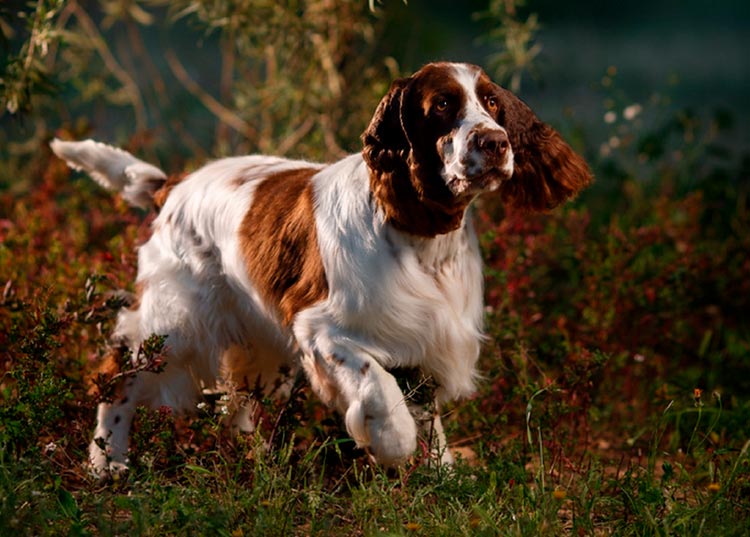
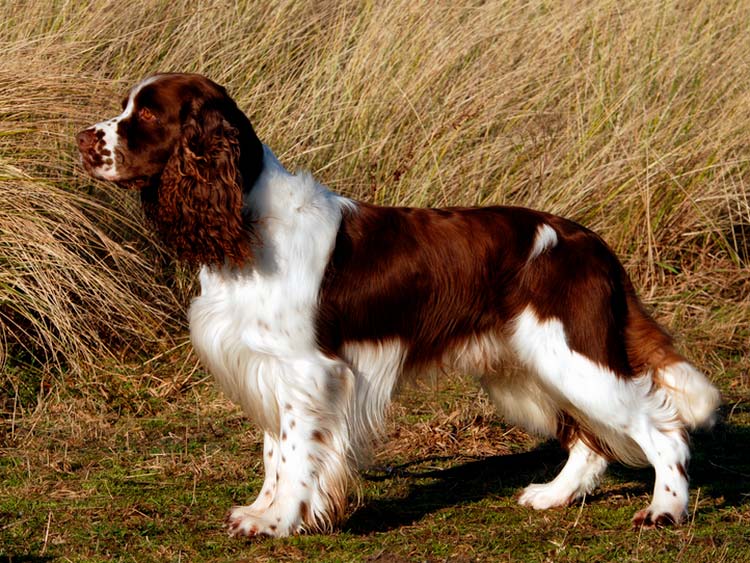
The English Springer Spaniel is a symmetrically built, compact, and sturdy dog. It is the tallest and fastest of all British spaniels, yet is distinguished by its relatively light frame. The approximate height at the withers is 50 cm; weight is 15-20 kg. Sexual dimorphism is moderate.
In practice, there are two types of Springer Spaniels: working and show. However, it's also worth noting that Springer Spaniels in different countries have distinct differences in appearance, and American-bred dogs have distinctly different builds, with shorter muzzles and longer coats than many European show-class dogs.
The skull is of moderate length, broad, and slightly rounded. The occiput should not be convex. There is a groove between the eyes that tapers off along the forehead. The stop and superciliary ridges are moderately pronounced. The length of the muzzle is equal to the length of the skull, which is well chiseled under the eyes. The nostrils are well developed. The lips are deep and square. The jaws are strong and have a correct bite. The eyes are almond-shaped, medium in size, set well in their sockets without showing conjunctiva, and are dark hazel in color. The ears are lobed, of good width and length, lying close to the head, and set level with the eyes.
In the past, Springer Spaniels always had docked tails. Today, they are docked at the owner's/breeder's discretion only in countries where the procedure is legal, and only if the dog is not intended to be shown in Europe.
The neck is of good length, muscular, strong, without dewlap, and tapers toward the head. The body is not too long and is strong. The loin is strong, muscular, and slightly arched. The chest is deep, with well-sprung ribs. The tail is set low, not drooping, and not carried above the level of the back. It is well-furred and lively when moving. The forelegs are straight and well boned. The hind legs are well set, with moderate angulation. The feet are firm, compact, and rounded, with strong pads and nails.
The coat is dense and straight, sometimes slightly wavy, but never curly. The ears, front and back legs, and body have longer feathering. Any typical spaniel color is acceptable, but the most preferred colors for the Springer are white with coffee-colored or black markings. Any of these colors may be complemented by red tan markings.
Character
The English Springer Spaniel combines two roles: working, hunting, and companionship. They are loyal, intelligent, and affectionate, forming strong bonds with their owner and other family members. They are good with children and friendly with guests and other animals. They have a lively, docile nature, and are playful and obedient.
The Springer Spaniel is not shy or aggressive, but is very cheerful and energetic. It adapts easily to the rhythm of family life and can be overly clingy only if completely neglected. Generally silent, it will bark loudly to alert guests or any noise. It generally lacks a strong territorial instinct, so it is not prone to conflict, including with other dogs, and is not known to be protective of its owner or property.
They get along well with other dogs and cats. As for small animals and birds, a Springer Spaniel can learn to ignore them, but there's a good chance their hunting instinct will eventually take over.
Education and training
Springer spaniels are very easy to train. This intelligent dog wants to please its owner, quickly learns commands, and eagerly obeys them. Of course, there may be exceptions when it comes to outdoor obedience training, where there are many more interesting activities. When training a Springer spaniel, it's important to keep treats in a sealed bag and not reveal them until the puppy has completed the task.
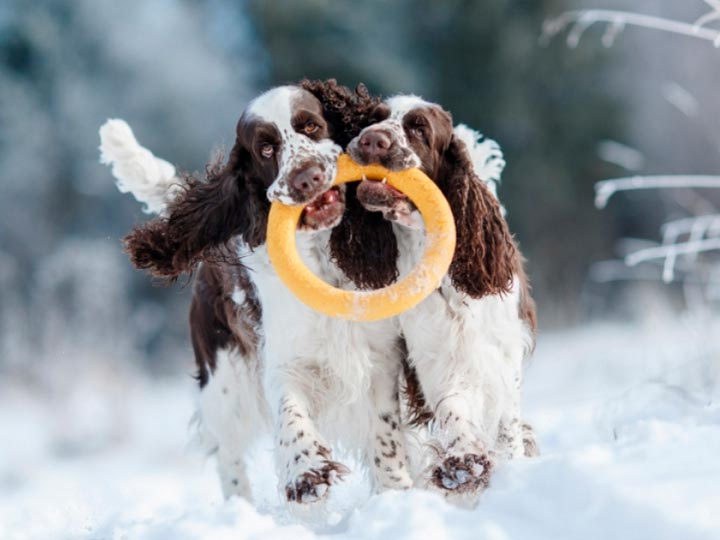
The Springer Spaniel is highly trainable and willing to obey its owner, so it can be seen competing in agility, tracking, flyball.
Springers mature late, reaching full physical and psychological development only by 2-3 years of age, so training can take a bit longer. Young children are often overly active and curious, making it difficult for them to concentrate on training, so it's important for owners to be patient. It's best to train a Springer Spaniel in a specific direction, either as a city companion or as a hunting dog.
Peculiarities of training and coaching a hunting springer spaniel
A springer should be taught to retrieve as early as possible, literally from the first month of life. First, the retriever is thrown a short distance away, after the puppy is commanded to lie down. Repeat the task no more than 3-4 times. Once the command has been mastered, you can move on to finding a hidden toy. Feather puppets, which the puppy is not allowed to play with, are best for training. The dog should not be acclimated to water until it is 4 months old. Around the same time, training begins with a shuttle search of 20-40 steps to the right and left while the owner walks straight. Springers generally do not need gun training; they are not afraid of loud noises from birth. Training begins no earlier than 5 months of age, after the puppy has mastered the basic commands and tested them in the field. If the puppy has insufficient experience with a hunting spaniel, training should be conducted under the supervision of an instructor.
Content Features
Springers lack an undercoat, so they will freeze outdoors in winter, making them unsuitable for year-round kennel living. Furthermore, close contact with their owners is essential for a spaniel; the relationship between a dog living outdoors and an indoor dog will never be the same.
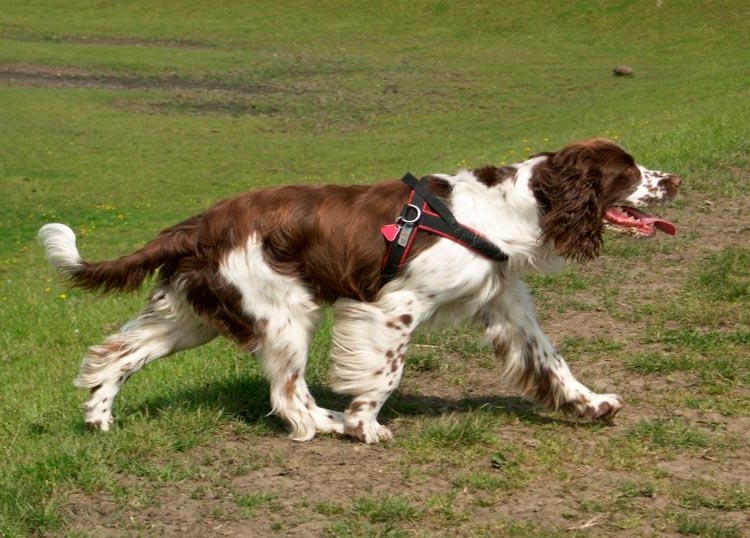
Moderate exercise is required, although some members of the breed can be quite energetic. Regular walks in nature and the opportunity to swim in a pond during the warmer months are desirable.
Care
Springer spaniels aren't particularly high-maintenance, but they do require regular grooming, which requires time and money from the owner for grooming tools, haircuts, cleaning products, and cosmetics. The frequency of brushing depends on the coat type. Some dogs develop mats more quickly than others. Springer spaniels also require regular grooming. Show dogs need their coats trimmed every 1-2 months, while pet dogs are usually only groomed in the summer, with the decorative hair removed to make grooming easier.
To make a Springer Spaniel's face look more polished, the dog's whiskers are trimmed. However, recently, more and more experts and dog trainers have come out against such changes.
Show dogs are typically bathed every 10-15 days. Regular pets are bathed every 1-2 months, depending on how dirty they get. The right bathing and grooming products are selected individually. This does not include regular rinsing after walks. Overalls can help prevent heavy soiling in rainy weather.
Various ear caps are a very useful item for spaniel owners. They are used to keep their dogs' ears in place during feeding, after bathing, in rainy weather, and on walks in tall grass where there are lots of burdocks.
Ears need to be cleaned from time to time to remove wax buildup. Teeth also require care. The easiest way to prevent plaque buildup is to accustom your dog to having it cleaned once or twice a week. Special toys, beef tendons, and fetlocks also help combat plaque buildup. Springer spaniels' paws should be compact and well-knit. They can sometimes become loose due to lack of exercise. In this case, it's recommended to spend more time walking on sand, gravel, or snow. Paw deformities can also be caused by excessively long nails, which should be trimmed as they grow, approximately every 3-4 weeks.
Nutrition
English Springer Spaniels can be picky eaters when young. Some dogs have food allergies. A feeding plan is tailored to the individual. A natural diet is developed according to standard guidelines. Food is selected based on age, weight, and physiological condition. Mixed feeding is less common. Portions should be proportionate to physical activity. Dogs that spend a lot of time outdoors or are used for hunting eat a lot, but do not gain weight or lose it quickly; they are lean and resilient. Show dogs are usually more stocky; thinner ones do not look as impressive. Some Springer Spaniels are prone to overeating and gaining excess weight.
Health and life expectancy
The English Springer Spaniel is considered a relatively healthy breed. Its lifespan is 10-15 years. Most dogs are healthy and have strong immune systems, but some are susceptible to hereditary diseases, which occur with varying frequency in different lines.
- Eye diseases (primary glaucoma, progressive retinal atrophy);
- Fucosidosis and phosphofructokinase deficiency (rare inherited metabolic diseases);
- Epilepsy;
- Allergy;
- Otitis of various etiologies.
A hereditary behavioral problem known as "rage syndrome" is also noted in the breed. It is very rare and characterized by increased aggression toward other dogs. To maintain good health, timely vaccinations, regular treatment for external and internal parasites, and an annual medical examination are important.
Choosing a puppy and price
The English Springer Spaniel is a very popular breed in Europe and America. There are many kennels in England, Sweden, Finland, and Denmark. In Russia, about 10 kennels breed high-quality Springer Spaniels. There are also experienced breeders in neighboring countries.
Before you begin searching for a puppy, you need to decide what you want the dog for. Will it be a pure pet or a hunting companion? For example, in England, working and show lines almost never cross. In France, the trend is different: breeders want working dogs to also have an ideal appearance. In Russia and neighboring countries, working dogs are bred separately. It's a good idea to decide on the sex and color in advance. With a clear idea of what you want your Springer to be like, you can contact the National Springer Club, which can help you choose a breeder and a dog.
Unscrupulous sellers sometimes sell cockers and other spaniels as English springers.
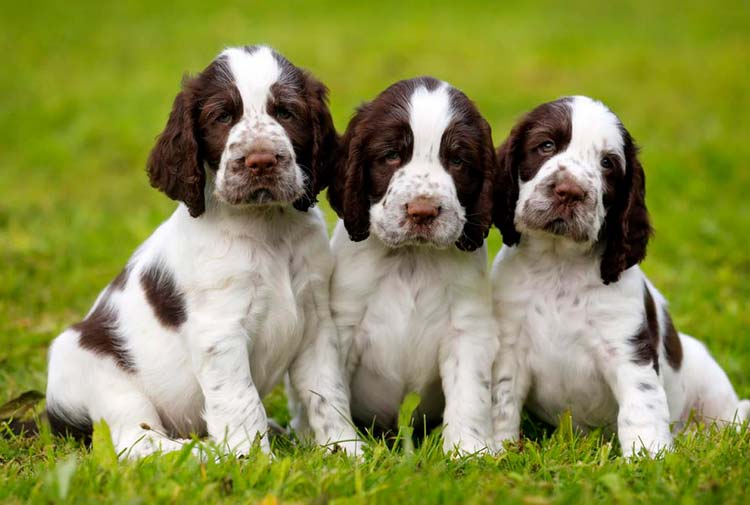
A Springer Spaniel puppy weighs about 5 kg at 2.5 months, and about 10 kg at 3.5 months. Young Springer Spaniel puppies should appear well-fed, even plump; this allows them to develop stronger bones as adults and reach the desired weight more quickly than thinner puppies or adolescents. Health is essential. A puppy should be completely healthy in appearance, active and curious, and should not show aggression or shyness when meeting new people.
Price
The breed's popularity influences pricing. In Europe, the price of a puppy fluctuates around €600. In Eastern Europe, the average is €1,000. In the UK and Scandinavia, it can reach £1,500. In Russia, the breed is rare, even exclusive, but breeders peg their prices to European standards. On average, an English Springer Spaniel puppy costs 20,000-30,000 rubles. Promising puppies can cost more, especially if they were bred abroad.
Photos
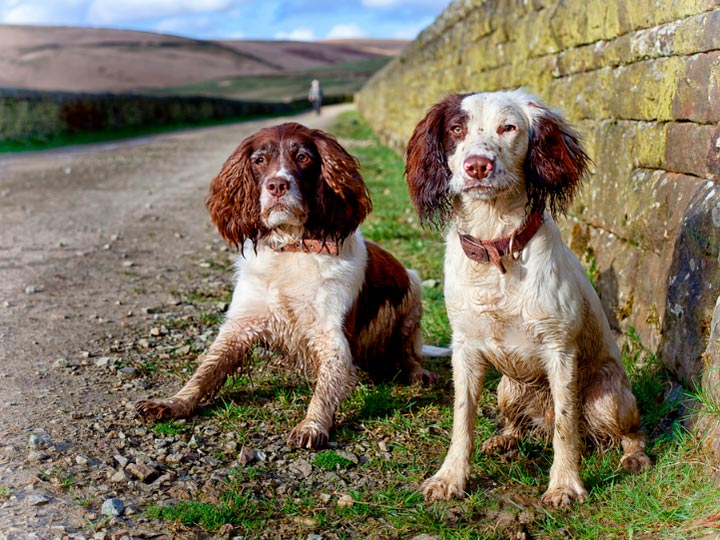
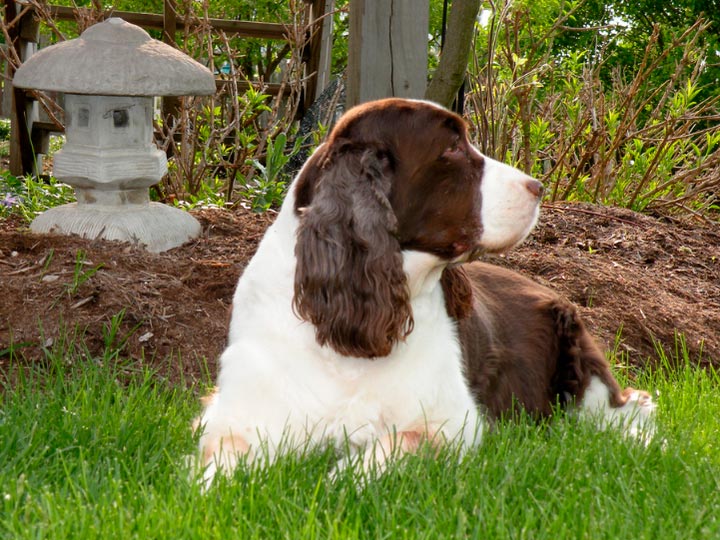
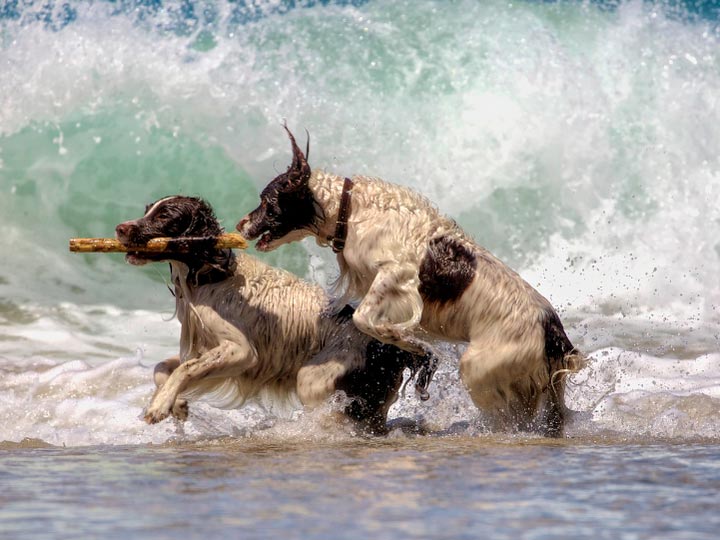
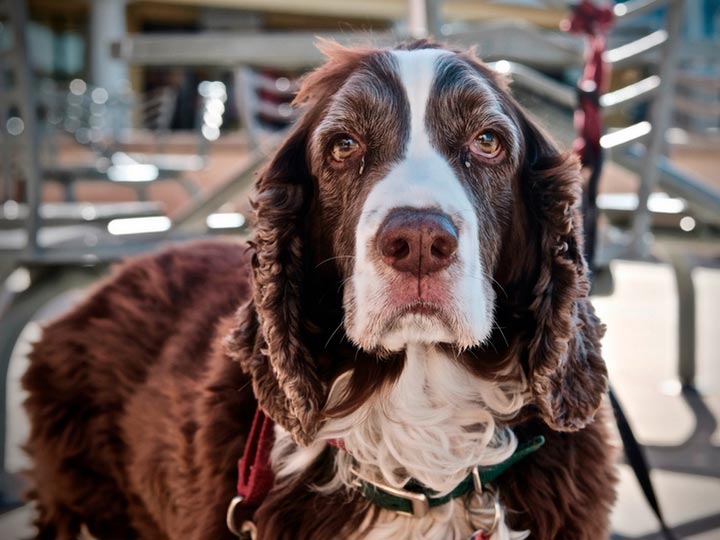
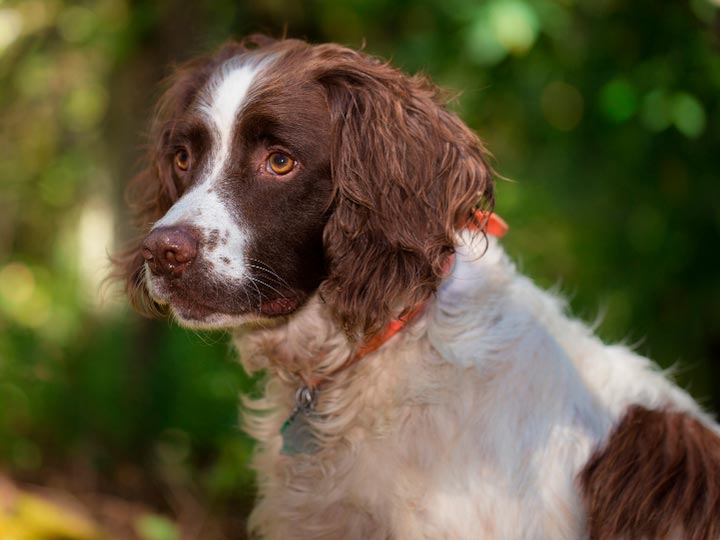
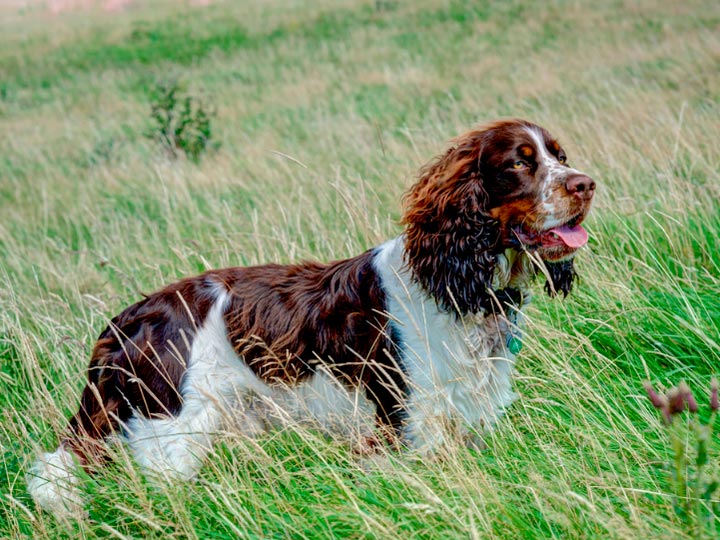
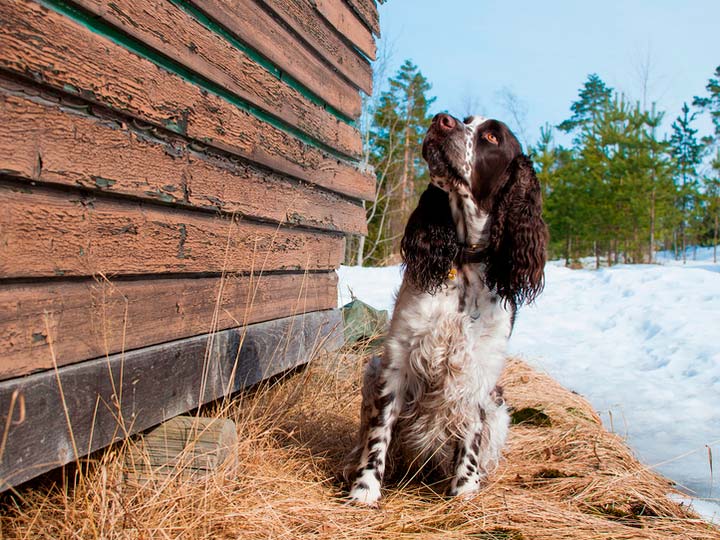
The gallery contains photos of English Springer Spaniel puppies and adult dogs.
Read also:


Add a comment