
English Foxhound
The English Foxhound is a breed of hunting dog that has been bred in a purebred manner for over two centuries. The Foxhound is hardy and hardy, with a strong hunting instinct, friendly, energetic, and non-aggressive. It prefers to live and work in a pack.
Content
History of origin
The English Foxhound is one of the oldest dog breeds. It was developed in England around the 16th century from Celtic hounds. The breed was formed with the help of greyhounds, various terriers, and a bulldog. The breed has been bred in purity since the mid-18th century. Stud books for English foxhounds have been kept in England since 1786, allowing the pedigrees of most modern dogs to be traced back to their earliest ancestors. In the 17th century, the first English foxhounds arrived in America, giving rise to a new breed—the Foxhound. American FoxhoundIn Europe, they served as the basis for the creation of many hounds. In Russia, with their participation, the Russian Piebald Hound.
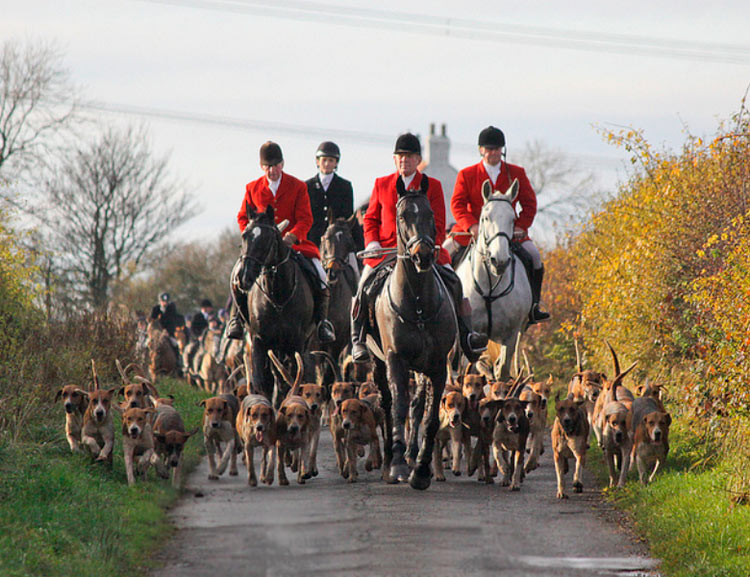
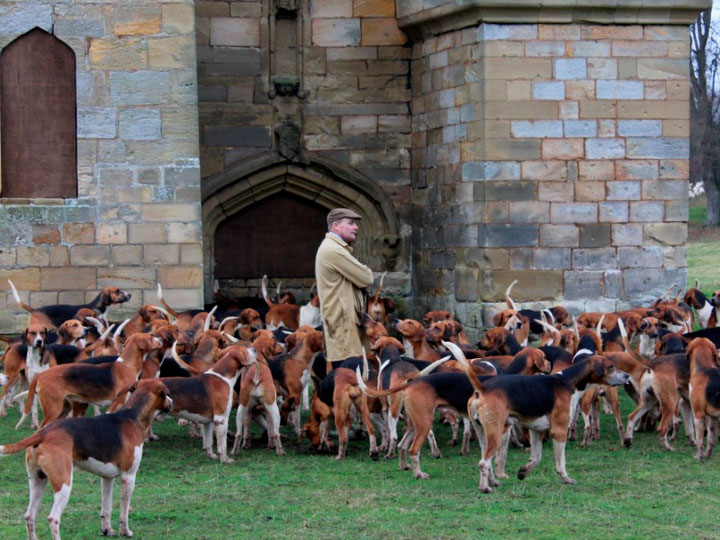
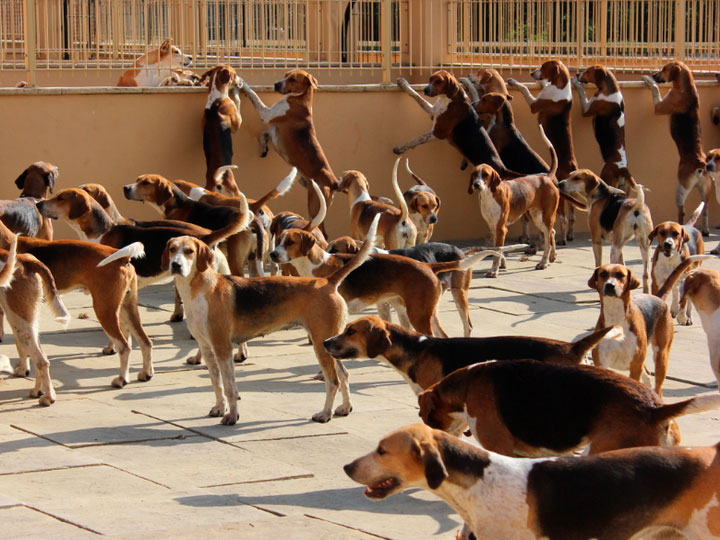
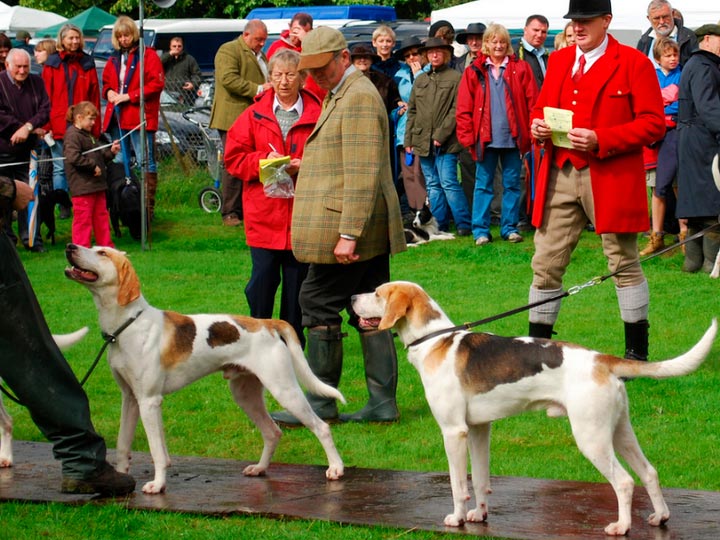
English Foxhounds reached their peak popularity in the 19th century. There were approximately 7,000 packs in England. They were also popular in Europe; for example, Napoleon III's pack consisted of over 100 dogs. In 1964, the breed was officially recognized by the Fédération Cynologique Internationale (FCI). Today, the English Foxhound has lost its former popularity. The breed is maintained only by the efforts of people known as "Masters of Hounds." They honor the traditions of foxhound breeding and use—hunting hare and fox on horseback, accompanied by a pack of hounds. It's worth noting that outside the UK, foxhounds successfully hunt jackals, ungulates, lynx, and other animals.
Appearance
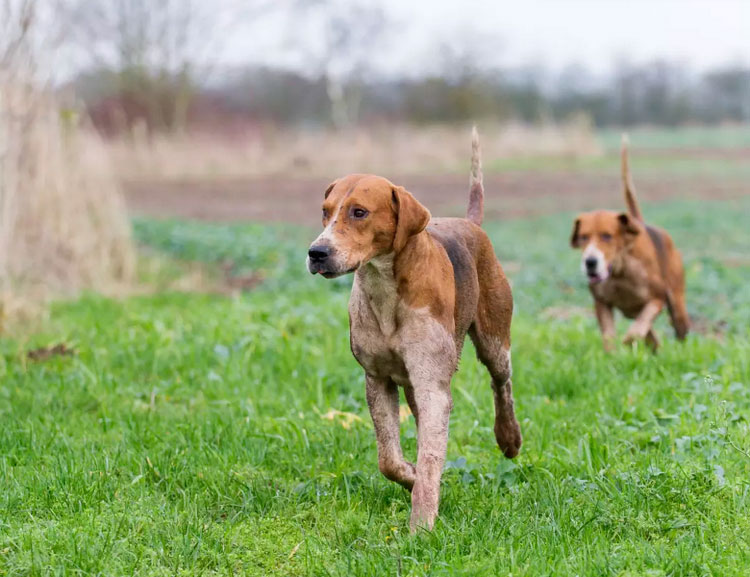
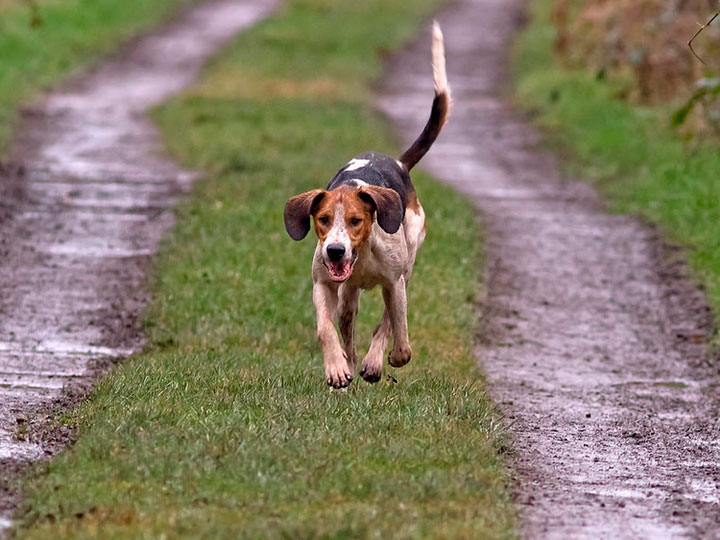
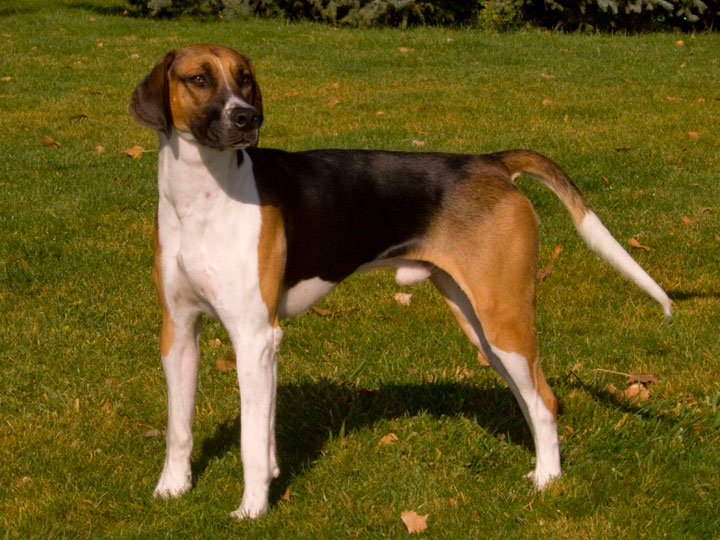
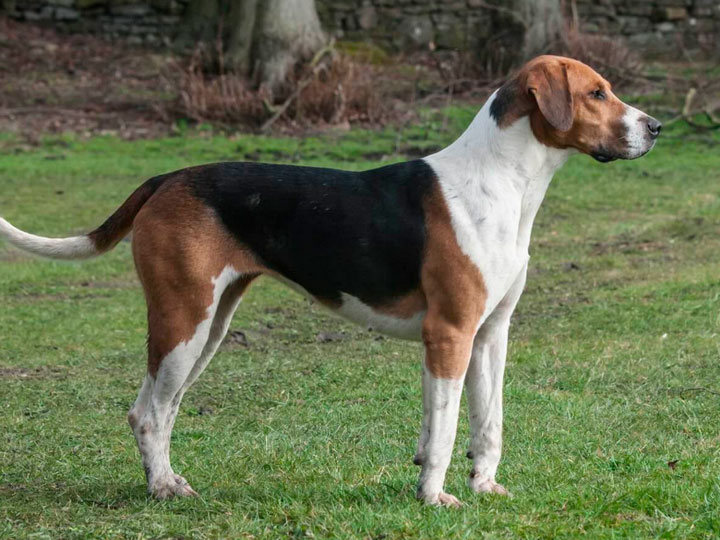
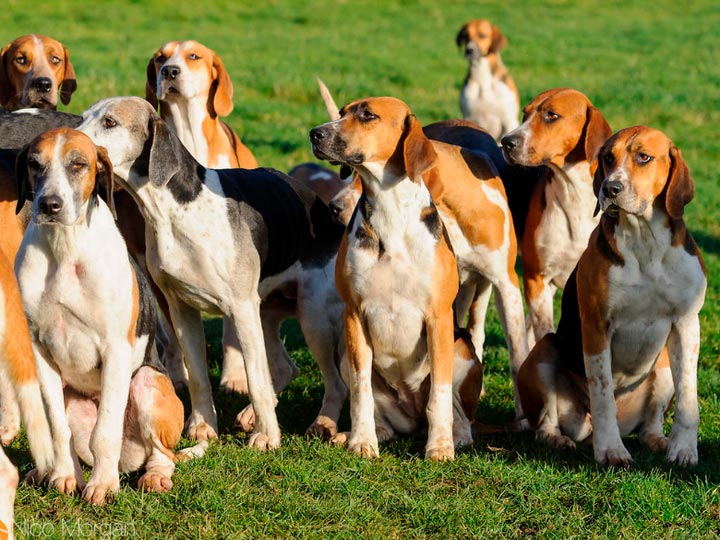
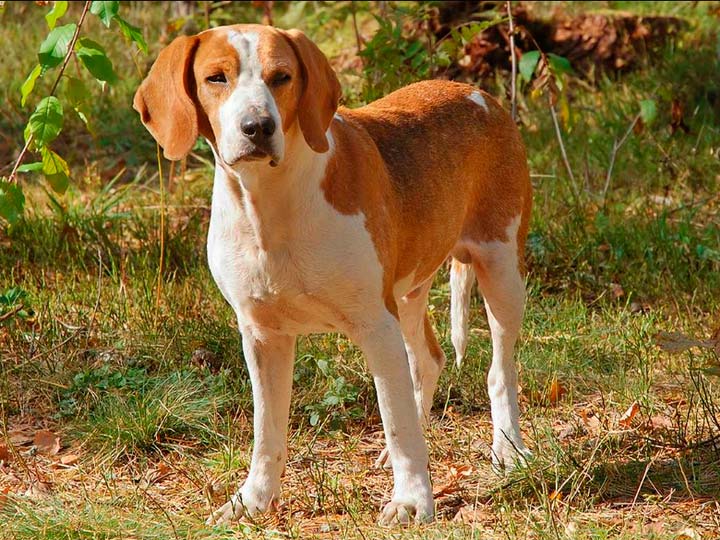
The English Foxhound is a powerful, well-balanced dog with clean lines, often tricolor. Sexual dimorphism is moderate. Height at the withers is approximately 56-64 cm.
The English Foxhound standard is quite laconic. Despite this, the dogs are remarkably typical and remain exclusively working dogs to this day.
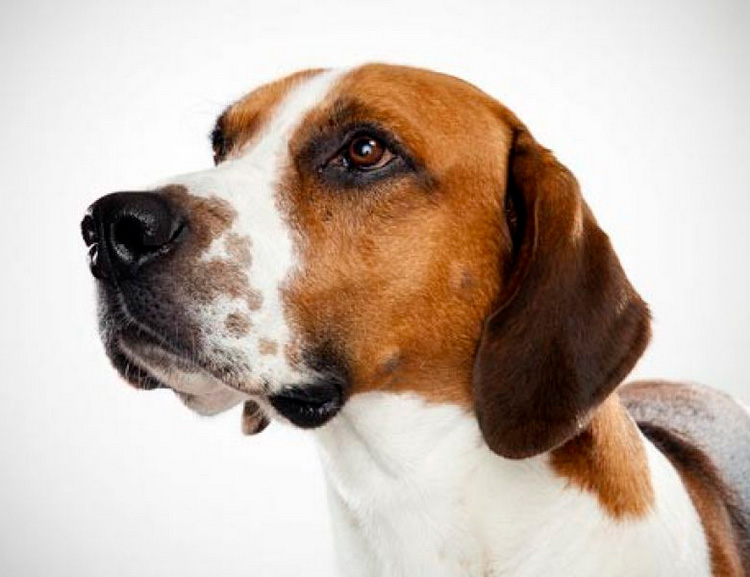
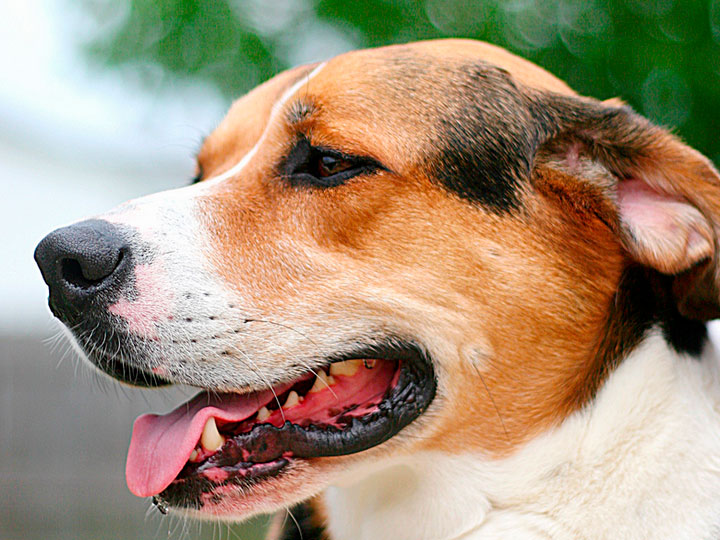
The head is well balanced. The skull is of medium width and flat. The muzzle is square and long, with moderately developed cheekbones. The nose is large, with wide-open nostrils. The stop is moderately pronounced. The jaws are strong, with a scissor bite. The eyes are medium in size and brown. The ears are pendant, set high, and close to the head.
The neck is slightly arched, long, and well-developed. The body is strong, with well-developed, well-defined muscles. The back is straight and broad. The loin is slightly arched and strong. The chest is deep, with well-sprung ribs. The tail is set high and never curled over the back. The forelimbs are straight, long, and well-boned. The hindquarters are powerful, well-muscled, and well-boned. The paws are firm, round, and strong, with strong claws and pads.
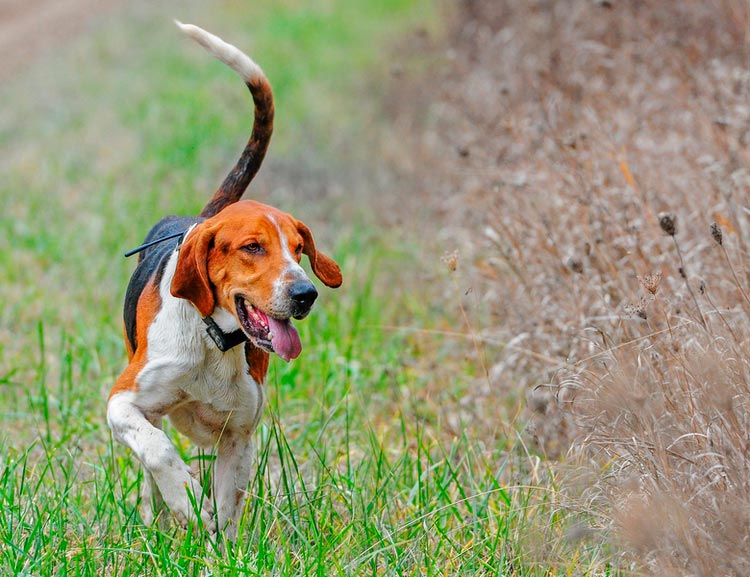
The coat is dense and short, and comes in any color recognized among hounds. The English Foxhound is most often tricolor: white with tan markings and a saddle blanket on the back.
Character and behavior
The English Foxhound possesses character traits and behavior that make it an excellent hunting dog: friendliness, lack of aggression toward people, independence, determination, hard work, an innate hunting instinct, agility, tenacity, and remarkable endurance. The dog is capable of enduring long races with obstacles over rough terrain, maintaining an average speed of 20-25 km/h. Its sense of smell is weakened due to the fox, its primary prey, having a rather pungent odor. The English Foxhound is independent and often stubborn. It prefers the company of its own kind to human companionship, as would be expected from a breed bred to work in a pack. Foxhounds that live alone in a family setting are very friendly and affectionate, and often get along well with children if raised with one.
The English Foxhound is territorial and makes a good watchdog. While it will make noise at the slightest noise, it is not a guard dog for people, much less property. It is friendly with strangers and generally gets along well with other pets. It can even coexist peacefully with birds and small animals if raised with them. English Foxhounds are not the devoted dogs of legend, but they form a strong bond with their owners. Moderately playful, they would much rather run over rough terrain than kick a ball around the yard.
Education and training
Raising and training an English Foxhound requires a great deal of patience. Both as adults and as puppies, these hounds are quite independent and stubborn in their judgments and habits, but they respond well to a tasty reward.
Don't expect unquestioning obedience from a dog. A hound follows its instincts and isn't used to being submissive. It can only be a friend and companion, a hunting companion.
At the same time, the English Foxhound is one of the most obedient of all hounds. In his book "Hunting Dogs," L. P. Sabaneyev wrote about the obedience of English foxhounds and noted their high intelligence. Each dog must know not only its own name, but also the names of the best hounds, which are used to call the pack that has covered the scent. Furthermore, only male hounds come out at the call of "Hounds!"; female hounds at the word "Ladies in!"; and young dogs at "Pups!"
Content Features
The English Foxhound is a very beautiful dog that adapts equally well to both cold and warm climates. It requires little grooming but does require a good deal of exercise. It has a strong hunting instinct and a strong need for companionship with other dogs. It is not the best choice for a family dog or companion. In rare cases, Foxhounds are bred and used for solo hunting.
English Foxhounds are still traditionally kept in packs today. They hunt only with others they share a home with. It's impossible to form a hunting pack from individual hounds belonging to different owners.
They are unsuited to urban living in many ways: their penchant for loud barking, lack of a pack, and limited walking space. Failure to realize their hunting potential often leads to behavioral problems. Outside of a fenced area, English Foxhounds are not recommended for off-leash walking.
Care
Grooming an English Foxhound is easy. Occasional brushing with a special brush or mitten for short-haired dogs is sufficient for their glossy, single-layer coat. Bathe them only when they are very dirty, usually no more than two or three times a year. Regularly inspect their ears and clean them as needed. If their nails don't wear down on their own, they are trimmed to an appropriate length. Their teeth also require good care. When young, they are white, strong, and robust, and are not prone to early loss. Tartar, which develops later, is often a problem. To prevent tartar buildup, train your dog to have their teeth brushed, or remove plaque by feeding them natural treats (bones, dried sinew, etc.).
Health and life expectancy
The English Foxhound is considered a healthy breed. Most dogs are healthy and immune, and are free of hereditary diseases. Life expectancy is 11-13 years. In rare cases, genetic diseases are registered in the breed:
- hypothyroidism;
- deafness (more common in white and merle colored dogs);
- Pelger-Hewitt anomaly;
- thrombasthenia;
- cardiomyopathy;
- primary seborrhea;
- chronic active hepatitis;
- hound ataxia;
- kidney disease;
- hip dysplasia;
- malocclusion.
Where to buy an English Foxhound puppy
Today, there are only about 300 packs of English Foxhounds in the UK. There are about 100 in America, but no more than 10% of these dogs qualify for the English Foxhound label due to their American Foxhound heritage. There are also several packs in Germany. The breed is unpopular in many countries, as not everyone can afford to keep a whole pack of dogs and use them for their intended purpose: hunting foxes on horseback with hounds.
Finding an English Foxhound puppy is not difficult, but only abroad, in the UK, France and Germany.
Photos and videos
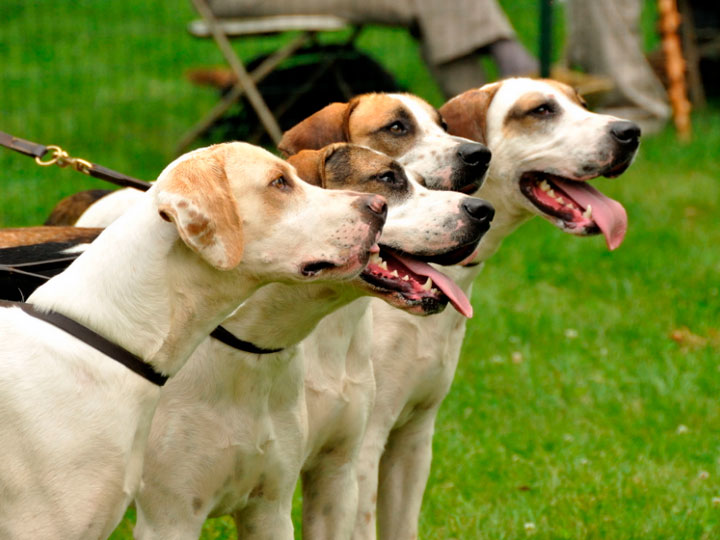
The gallery features photographs of English Foxhounds of different genders, ages, and colors.
Video about the English Foxhound dog breed:
Read also:


Add a comment