
Anemia in cats
Anemia in cats is a condition caused by a decrease in hemoglobin or red blood cells. Sometimes, it's called anemia, when the overall blood volume decreases. Today, we'll discuss the causes, symptoms, and treatment of anemia in cats.
Red blood cells, as we know from biology class, are red blood cells. These cells contain iron. When exposed to oxygen, iron is oxidized, and the red blood cells are carried by the bloodstream to the cells that scavenge the oxygen. If there is insufficient hemoglobin, red blood cells, or blood itself, there simply won't be enough oxygen. This oxygen deprivation disrupts tissue and organ function.
Content
Disease classification
Due to the causes of the disease, anemia in cats is classified into:
| Posthemorrhagic | Develops after blood loss. With posthemorrhagic anemia, a cat's circulating blood volume decreases. |
| Hemolytic | This type of anemia is characterized by the destruction of the red blood cells themselves. This is usually associated with a parasitic disease (babesiosis, piroplasmosis, hemobartenellosis) or poisoning (for example, with nitrites). Hereditary hemolytic anemia is also sometimes observed. Less commonly, cats can develop autoimmune diseases that lead to the destruction of red blood cells. |
| Hypoplastic | This type of anemia is caused by a deficiency of substances necessary for red blood cell formation. If a failure occurs at any stage, there won't be enough red blood cells in the blood. |
| Aplastic | This type of anemia is caused by the bone marrow's inability to produce blood. This can be caused by intoxication. Another condition to consider is leukemia. |
Reasons
Having already familiarized yourself with the classification, it is clear what causes anemia in cats can occur.
- Blood lossThese include both external wounds and internal ones (such as ulcers). Therefore, injuries can be considered as causes.
- InfectionsThey "poison" the body, destroying red blood cells. Some infections even destroy the bone marrow (for example, viral leukemia).
- Parasites. Including those that affect and destroy red blood cells (piroplasmosis).
- MedicinesThat's why you shouldn't prescribe medication for your pet yourself. You don't know how a particular medication will affect your pet's health. For example, paracetamol, which we commonly use to treat fever, is fatal for cats. It should never be used to treat a pet. Its generic equivalents are also prohibited. This is a form of individual intolerance. Some medications also have contraindications or side effects. Be sure to read the labels and consult a veterinarian before giving your pet any medication.
- PredispositionFor example, Somali and Abyssinian cats suffer from the fact that their red blood cells are extremely unstable and quickly deteriorate. These breeds require thorough veterinary examinations, and blood tests are essential.
- Poor nutritionThis leads to a decrease in phosphate levels in the animal's blood. Or, if you feed your pet table food containing onions, it's no surprise that the animal develops anemia. An unbalanced diet leads to insufficient hemoglobin production.
- Blood transfusion, which is incompatible with the recipient animal's blood type. Sometimes newborn kittens experience such problems (especially if they are nursed by another nursing mother, not their own). A conflict occurs, and the kitten's own red blood cells are destroyed.
- Other reasonsIron deficiency. Chronic inflammatory processes (even latent ones).
As we can see, there are simply a lot of possible causes of anemia in cats.
Symptoms
Let's identify the most obvious symptoms of anemia in cats to help you identify the disease in its early stages.
Posthemorrhagic anemia
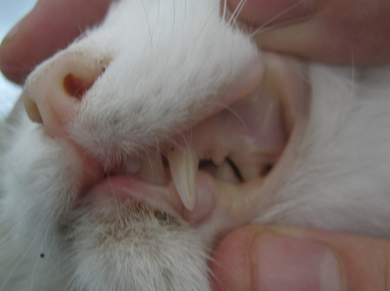
Symptoms of this type of anemia in cats include all mucous membranes becoming so pale, almost white. This is because the blood in the body has significantly decreased. The heart rate increases, and if you listen to it, you'll hear it pounding very loudly against the chest. The temperature drops, and the pet becomes very lethargic. If significant blood loss occurs, the animal goes into shock.
Other symptoms
Other symptoms of anemia in cats include:
| Hemolytic anemia | If the cause of anemia in a cat is the destruction of red blood cells, the mucous membranes will take on a yellowish tint. The cat will become weaker, develop shortness of breath, and show signs of heart failure. |
| Hypoplastic anemia | The mucous membranes are pale, and the pet is lethargic. A blood test shows hemoglobin levels significantly below normal. |
| Aplastic anemia | Here, in addition to the symptoms characteristic of hypoplastic anemia, signs of intoxication or an infectious disease appear, which led to a disruption in hematopoiesis. Not only the red blood cell count decreases, but also the white blood cell count, which is very life-threatening for the animal (the immune system cannot cope with the infection, even a fatal one). common cold). Most often, aplastic anemia occurs in a “duet” with leukemia. |
Treatment
How to treat anemia in cats? First and foremost: don't self-diagnose or self-medicate!
Treating a cat with anemia should begin with identifying the underlying cause. Only by understanding the underlying cause can the appropriate treatment be chosen. It's pointless to administer iron supplements if the anemia is caused by bone marrow failure.
If your pet is bleeding, you need to make sure the bleeding has stopped (both external and internal). A blood transfusion may be necessary, and for this, it's essential to contact a veterinary clinic. It's also important to look for one that has a blood bank for treating anemia in cats (or find a healthy donor).
- A 10% solution of calcium chloride is administered intravenously (only intravenously!)
- You can use a drip with glucose (or other saline solutions) to restore blood volume.
- If there are no bone marrow problems, no infection, or other contributing factors, this will help. The pulse will return to normal, and red blood cells will recover over time.
- The veterinarian will prescribe iron-containing drugs to increase the hemoglobin level.
The diet should be enriched with proteins (cottage cheese, meat, fish, eggs, etc.), vitamins (particularly ascorbic acid), and trace elements (cobalt is good). Folk remedies for treating cats with anemia include rosehip, chamomile, nettle, lingonberry, hawthorn, and rowan infusions. If poisoning is the cause, be sure to remove the toxin from the body. A gastrointestinal lavage, laxatives, and diuretics are also helpful. However, a veterinarian will prescribe all of these.
We hope this article has been helpful. If you have any questions about anemia in cats, please leave them in the comments.
Read also:
- Leukemia in cats: treatment and symptoms
- Protein in Urine in Cats: Causes and Treatment
- Epocrin for cats


1 comment
Olga
Thank you, it was very useful to read.
Add a comment