
Anatolian Shepherd Dog (Turkish Akbash)
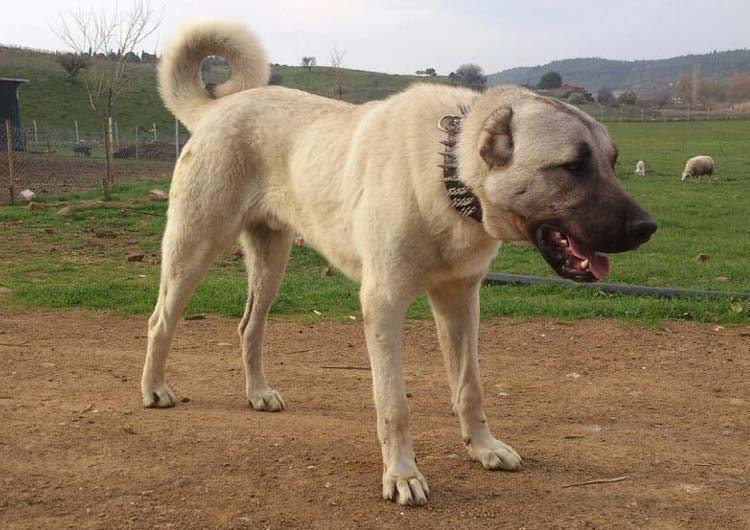
The Anatolian Shepherd Dog (Turkish Akbash) originates, surprisingly, from Turkey, but American breeders were responsible for its development and recognition. These dogs have proven themselves to be excellent guard and patrol dogs, can hunt large game, and are excellent companions for shepherds. They are rightfully considered the most popular guard and sheep herding dogs in the country. Currently, they are not an FCI-recognized breed.
Content
History of origin
Little information remains about the ancestors of the Turkish Akbash Dog. However, there are sources indicating a relationship between this breed and European white shepherd dogs. Cynologists have never reached a consensus on the breed's origins. Some believe the dog was brought to Italy from Asia Minor by the ancient Romans. Others claim the Akbash Dog is the ancestor of the white shepherds of Europe. Various varieties of the latter have inhabited various countries for many centuries.
The strong and hardy Anatolian Shepherd Dog was developed in a natural environment, influenced by a lifestyle and work outside the home in all weather conditions.
In Turkey, two breeds of dogs used to guard flocks of sheep have historically existed. Today, the Akbash Dog and Kangal Dog are used for this purpose in this country. It is not yet clear whether they are varieties of the same breed or have separate origins (although differences in behavior and personality suggest this). Apparently, the Akbash breed descends from the herding dogs of Italy, Hungary, and France, and also includes greyhounds and mastiffs. Thus, the Anatolian Shepherd Dog has acquired an oriental character along with European prudence. In 1978, the Turkish Akbash was first exported to North America to guard cattle in pastures. The name Anatolian Shepherd Dog and the breed itself are not recognized by Turks, as there are several types of shepherd dogs there.
In the 1970s, breeders Ballard and Nelson imported several Turkish dogs to America, destined for popularity. Soon, two breed clubs emerged overseas: the Anatolian Shepherd Club of America, founded by Ballard, and the American Kangal Club, led by Nelson. Ballard called all dogs Anatolian Shepherds and didn't assign them to a specific region, while Nelson identified several types and named them by the regions in which they were common: Kangal, Akbash, and Kars. The Anatolian Shepherd Dog developed from several Turkish herding dogs, mixed with Turkish Mastiff blood.
The Anatolian Shepherd Dog is no longer a breed.
The breed was recognized by the FCI in 1989. The standard was valid until June 25, 2018. From now on, both the standard and the breed name are no longer valid. The FCI published a new standard for the Kangal Shepherd Dog (Kangal Shepherd Dog) under No. 331. Naturally, this state of affairs has raised many questions and debates among owners and breeders. What to do: what was once a breed, now a mongrel? The FCI clarifies that all dogs with a pedigree and the name Anatolian Shepherd Dog can be re-registered as Kangal Shepherd Dogs (Kangal Çöban Köpeği, or Kangal Shepherd Dog), provided they fully comply with the new breed standard. Anatolian Shepherd Dogs who receive documents confirming they are now Kangals can continue breeding and showing under the new name. The rest, unfortunately, will be considered mongrel dogs.
Video about the Anatolian Shepherd dog breed:
Purpose of the Anatolian Shepherd Dog
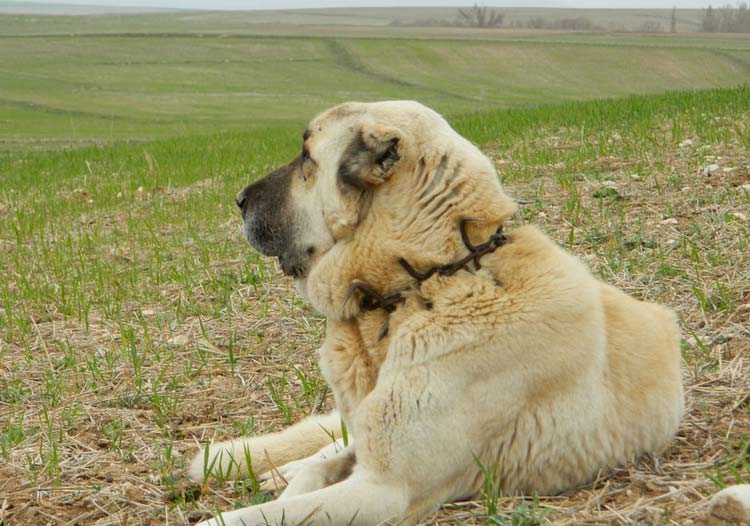
The Anatolian Shepherd, also known as the Turkish Wolfhound, is a herder and livestock guardian without equal. The dog always prefers to remain on high ground, observing its surroundings. In Turkey, the breed is still used for this purpose. Puppies' ears are traditionally cropped to avoid vulnerable spots, and herd guardians wear spiked collars. The breed is highly loved and prized in Australia. In South Africa, Akbash dogs are used to guard herds from cheetahs.
Appearance
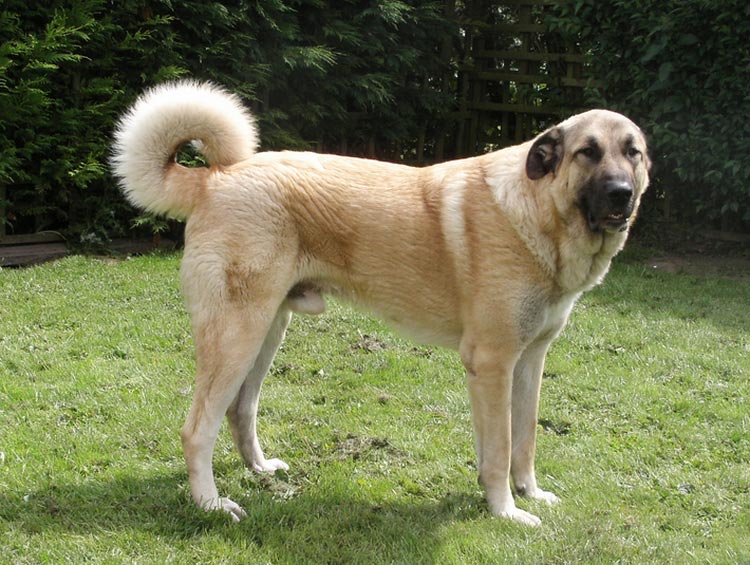
The Anatolian Shepherd is a large, powerful dog whose appearance exudes strength, agility, and endurance. The dog has strong bones and well-developed muscles. Sexual dimorphism is pronounced. Males stand 75-80 cm tall; females 70-79 cm. Males weigh 60-65 kg; females 40-55 kg.
The head is fairly large and powerful. The eyes are almond-shaped and medium in size. The color may only be brown, ranging from light to dark. The eyelids should not be loose or drooping and are well pigmented. The ears are set low, hanging on cartilage, about 10 cm long, with rounded tips. A noticeable furrow descends from the forehead between the eyes. The jaws are strong, and the lips are slightly pendulous.
The neck is slightly arched, strong, and muscular, of medium length. The skin on the neck forms a slight dewlap. Overall, the body is very well proportioned. The chest is deep, and the belly is noticeably tucked up. The tail is long, and when relaxed may be slightly curved, but when excited, it rises to the back. The topline is arched, gradually sloping downwards behind the withers, rising at the croup and then descending to the tail. The hindquarters are distinguished by wide, strong thighs, while the forelimbs are relatively long and straight. The paws have well-arched, oval-shaped toes. Dewclaws may be present, which are best removed.
The coat is short and sparse. The hair on the body is approximately 2.5 cm long, slightly longer on the shoulder blades, thighs, and neck, reaching up to 4 cm. The undercoat is very short and dense. Any color is acceptable, with reddish-brown and beige being preferred. A black mask on the face and black ears are desirable.
Character
Although the dog has a rather stern appearance, it is, in fact, a very loyal, affectionate, and gentle animal with a gentle nature. At home, the dog is not at all aggressive, often attempting to dominate, but is independent.
The Akbash adapts to its owner and new habitats without much trouble. It is wary of strangers. This breed isn't known for expressing emotion, although it is very sensitive to its owner's tone. If it hears a hint of displeasure in a human voice, it will show concern, while well-deserved praise, on the contrary, will significantly improve its mood. The Akbash is distinguished by its keen intelligence, confidence, courage, loyalty, and reliability. It has an excellent memory; it will never forget an insult and will always remember its friends. The Akbash is cautious and prudent, with quick reflexes—qualities essential for its work and independent protection of the flock.
The dog's strength allows him to defeat not only a wolf but also a bear, which is significantly larger. The four-legged shepherd decides for himself how to act in a dangerous situation, so a person can rely on him completely.
As already noted, the Anatolian Shepherd loves to dominate. Considering itself a leader, it is always ready to defend all family members and animals it considers its wards. However, the dog may display aggression toward strangers, perceiving them as a potential threat. It is very friendly with all family members, especially children.
Education and training
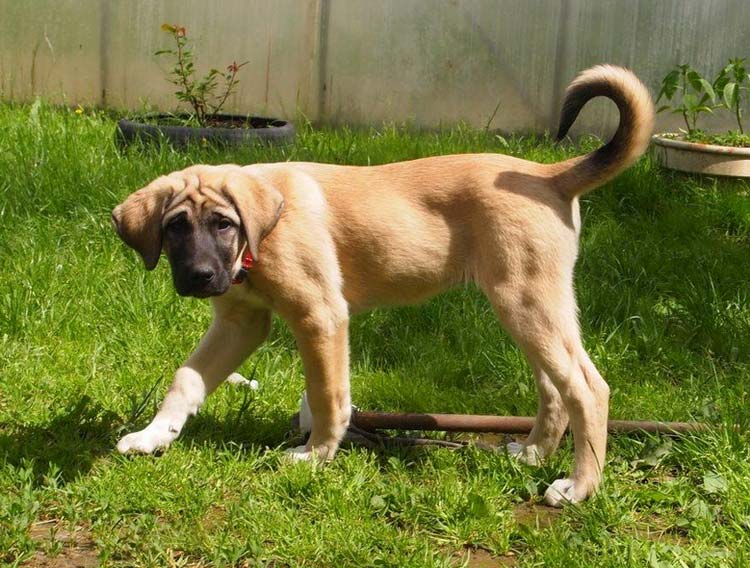
Even as a puppy, an Akbash needs to be socialized, and a lot of attention should be paid to its upbringing. It's crucial to begin training your pet from an early age, as it can be quite challenging to correct negative habits in an adult dog. This is a natural leader and pack leader, not only among dogs but also among other animals.
Proper socialization will not hinder a dog's natural ability to work. A puppy must be trained with strict discipline that is firm, fair, consistent, and immediate.
The Akbash also displays a leadership nature with its owner, so it's important for the owner to avoid showing weakness when interacting with the animal. Even after extensive training and education, the Akbash will retain a desire to be dominant in relationships, so the owner should always demonstrate their dominance. Training the Anatolian Shepherd using standard methods is quite difficult, as it tends to think and act independently and dislikes being commanded. A puppy can be allowed to bite livestock during a corral, and it can do the same to a person, so the Anatolian Shepherd should not be allowed to engage in rough play or use its teeth.
Content
This breed of dog is not suitable for apartments; it would be most comfortable in a private courtyard (with fencing) or in the countryside. This breed is not recommended for first-time owners, as the Turkish Akbash requires very careful training and a personalized approach. An Akbash's owner should be well-versed in its behavioral characteristics. Akbash dogs are known for their cleanliness and are virtually odorless.
The Anatolian Shepherd needs space and regular exercise; it is important for it to always be busy and to carry out its duty.
The Akbash is a guard dog, so it shouldn't be kept on a chain, as it can become unruly and aggressive. It's best to provide it with a securely fenced area, allowing it complete freedom of movement. It tolerates all weather conditions well. The Anatolian Shepherd is a beautiful and noble breed, best used for guarding rather than as a family pet.
Care
To prevent tangling, brush the dog's coat twice a week. Bathing is not necessary, but only as needed. The undercoat should be carefully brushed during shedding periods. The dog is distinguished by its white coat. The Turkish word "akbash" translates as "white head."
Nutrition
Anatolian Shepherds are generally undemanding eaters. They need a well-balanced diet with a moderately high protein and fat content. In Turkey, natural food is preferred, while in America, most Anatolian Shepherds are fed commercial dry food. Most manufacturers produce diets tailored to the size of the dog: small, medium, large, and giant. The Anatolian Shepherd is a giant breed.
Health and life expectancy
Anatolian Shepherds most often suffer from hip dysplasia. The predisposition to the disease is inherited, so it is recommended that breeders be tested for carriers. Large breeds are also prone to gastric bloat and gastric torsion (GDV). This is a dangerous condition that can lead to death within hours and is triggered by poor nutrition. Anatolian Shepherds are sensitive to anesthesia. Otherwise, they are strong, hardy dogs with good immune systems. Their lifespan is 10-11 years.
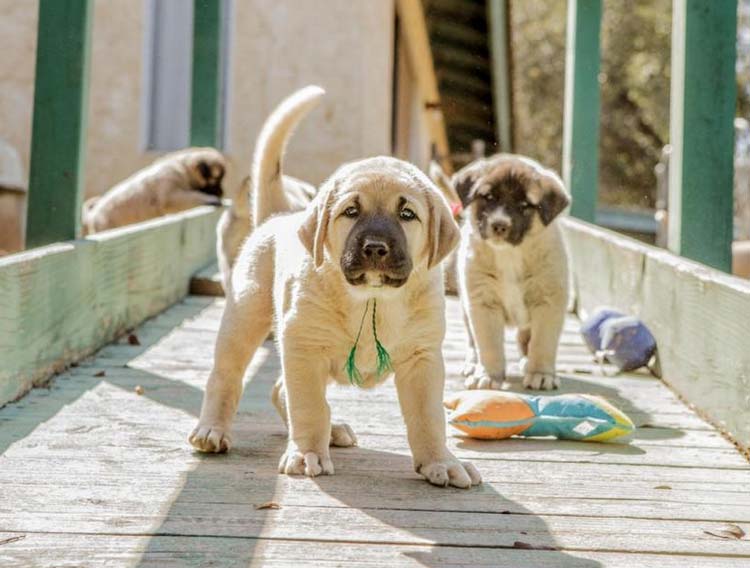
Choosing and pricing an Anatolian Shepherd puppy
As mentioned, the Anatolian Shepherd is a strictly working breed and must undergo appropriate testing. It's not the best choice as a pet, but those who have a job for it might consider getting a puppy.
It's important not to jump at the first litter you see, but to ensure the puppies' parents possess all the necessary qualities. It's helpful for ordinary people to contact a knowledgeable breeder. They can advise you on the breed's qualities and help you choose the puppy that best meets your needs.
Within a single breed, the quality of the population varies greatly. Dogs are divided into classes: working, breeding, and show. Naturally, prices for each category will vary significantly, so it's important to decide what level of dog you need, whether it will be used for breeding, showing, or just working.
A puppy should be adopted no earlier than 8 weeks of age. The puppy should be tested for herding instinct. In a relaxed environment, the puppy is allowed onto the grass with 3-5 ducks or chickens and its actions are observed. If the puppy attempts to lie down, shows interest in the bird, perhaps barks a bit, and then runs up to it and repeats the action several times, it is undoubtedly a promising breed. If the puppy shows interest but then tries to catch or bite the bird, it will require diligent training, preferably in the company of other herding dogs who will set an example. If the dog shows no interest in the birds, it is likely that it will never develop herding instinct. Even at this age, it is clear that the puppy meets the standard. And of course, the puppy should be healthy.
There are few Anatolian Shepherd breeders in Russia. The breed is quite small, but this increases the chances of acquiring a purebred dog with good working qualities. The average price of an Anatolian Shepherd is 25,000 rubles. Some promising puppies can cost significantly more.
Photos
Anatolian Shepherd Dog photo gallery:
Read also:


1 comment
Anna
Something's mixed up here. The Anatolian Shepherd and the Akbash are two different breeds. Akbash (ak - white, bash - head) are white from the tip of the tail to the black nose. And in the photo, you have a Karabash. It even translates as "black head." They're also Kangals, which are Anatolian Shepherds. But the breeds are indeed related. Kangals are descended from Akbash. But Akbash are a more ancient breed of shepherd.
Add a comment