
Anandin for dogs
Anandin is a universal veterinary medication used in dogs as an immunomodulator and adjuvant in the treatment of infectious diseases. This medication has no analogues. The formula was developed by employees of the St. Petersburg company Mediter. Available in several dosage forms, it is successfully used to treat conditions of various origins.
Content
Operating principle
All dosage forms of Anandin contain a substance called glucaminopropylcarbacridone as their active ingredient. This substance has pronounced immunostimulatory properties. It works by stimulating interferon, a protein produced in response to viral invasion. Furthermore, the active substance stimulates antibody synthesis.
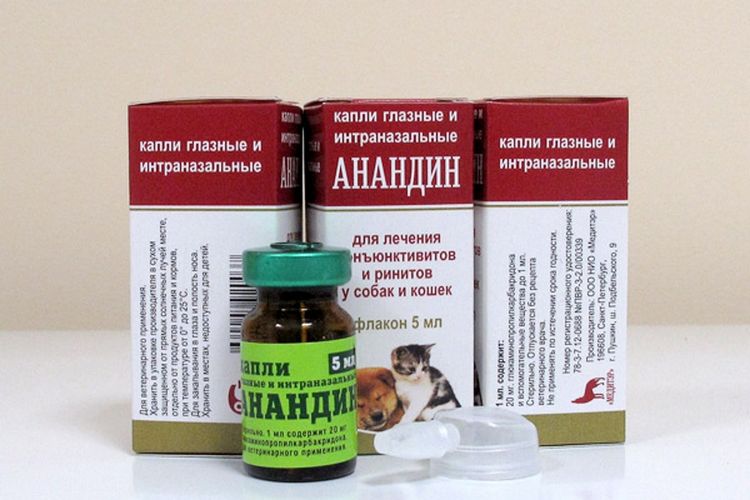
The drug has antiviral and anti-inflammatory properties. It promotes wound healing by stimulating regenerative processes. Its key advantage is its ability to eliminate the underlying cause of the disease and relieve symptoms. When used according to the instructions, Anandin is considered completely safe for dogs, although there are some restrictions on its use.
Injection solution
In addition to glucaminopropylcarbacridone, the composition includes water for injection and methylene blue. The medicinal liquid is green and has a distinctive, but faint, odor. The solution is packaged in dark glass ampoules. Each ampoule contains 2 ml.
When and how to apply
According to the instructions for use, Anandin is prescribed to dogs for infectious diseases:
- during the plague of carnivores;
- with parvovirus enteritis;
- for pathologies caused by coronavirus;
- with viral hepatitis and others.
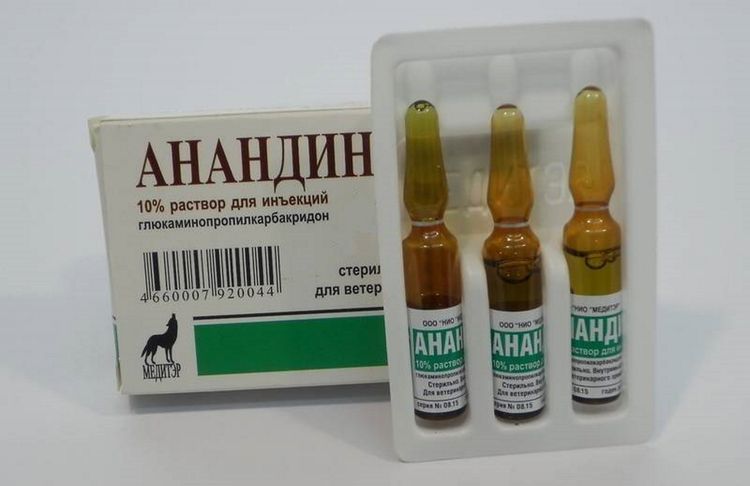
For infections, it is combined with other medications. The drug is also used to treat inflammatory processes caused by bacteria during viral infections. The immunostimulant is often prescribed after surgery or severe injuries to accelerate rehabilitation, wound healing, and restoration of the functionality of individual organs and systems.
Anandin is typically administered in combination with antibiotics, serums, sulfonamides, and hormones. Injections are administered intramuscularly. Regardless of age, the dosage is 0.2 ml per kilogram of the pet's weight. Injections are administered once daily for three days. Treatment is sometimes extended to five or six days if the disease is severe.
Please note! The injection solution should not be used if your pet has kidney failure. The active ingredient in the medication is eliminated from the pet's body via the kidneys, and diseased organs simply cannot cope with this task.
Price
The price of Anandin depends on the form of release:
- injection solution, 3 ampoules of 2 ml – from 170 rubles;
- ear drops, 5 ml – from 80 rubles;
- eye drops, 5 ml – from 80 rubles;
- ointment, 10 g – from 60 rubles.
The medication is sold in veterinary pharmacies and online animal pharmacies.
Eye and intranasal drops
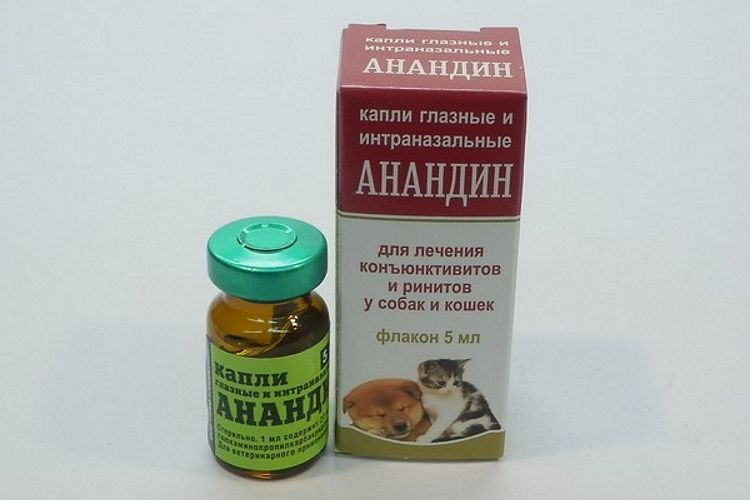
The light-green, clear liquid contains the same active ingredient, as well as water for injection and glycerin, which serves solely as an auxiliary. Anadin eye drops can also be used for nasal administration in dogs. They are packaged in glass ampoules and sealed with rubber stoppers to maintain an airtight seal. The solution must not be contaminated with foreign bacteria. Each vial contains 5 ml of medication. For ease of use, it comes with a dropper attachment that replaces the rubber stopper after opening the cap.
Instructions for use in veterinary medicine
Anandin eye and intranasal drops are used for dogs to treat conjunctivitis and rhinitis caused by various factors (bacteria, viruses, etc.). The medication can also be used for eye injuries sustained in fights, falls, or other situations to accelerate tissue regeneration and prevent inflammation.
For eye problems, apply 2-3 drops behind the lower eyelid twice daily. If the animal has rhinitis, apply 2-4 drops into each nasal passage. Repeat this procedure 2-3 times throughout the day. If purulent discharge is present, remove it with a clean swab soaked in saline solution before applying the drops. Treatment continues until the animal's symptoms completely disappear.
No special conditions are required during treatment. The medication is compatible with various feeds and medications.
Ointment
This dosage form of Anandin is a light yellow, pasty mass with a faint, distinctive odor. The ointment contains a number of auxiliary components:
- Vaseline moisturizes and softens the skin.
- Castor oil stimulates the regeneration of damaged tissues and nourishes them with beneficial substances.
- Potassium salicylate has an analgesic and anti-inflammatory effect.
- Purified water performs only an auxiliary function.
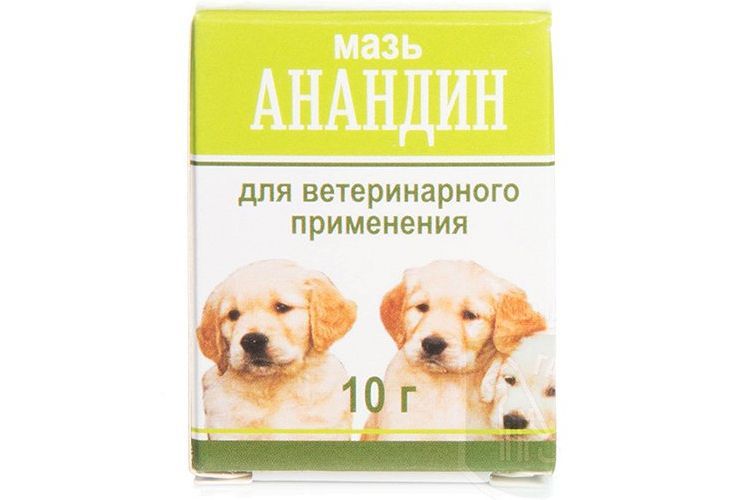
The ointment is packaged in polymer jars with screw-on lids. Each jar contains 10 grams of the medication.
How to use
The ointment is used for dogs in the following cases:
- for wounds, including lacerations;
- for burns;
- for other damage to the skin;
- at eczema;
- for dermatitis of various origins.
Apply a thin layer to the affected area. Be sure to also apply a small area of healthy skin around the edges. There's no need to trim the hair before applying. If the wound is festering or contaminated, rinse it with saline.
Ear drops
Ear drops are available in two versions:
- Anandin is designed for the treatment of inflammation of the external auditory canal, occurring in acute or chronic form;
- Anandin Plus is designed to treat ear mites caused by otodectosis mites.
Their main difference lies in their composition. Regular ear drops, in addition to glucaminopropylcarbacridone, also contain gramicidin C. This substance is an antibiotic. It is effective against staphylococci, streptococci, and other harmful bacteria. Therefore, the drug is successfully used to treat ear infections caused by bacterial flora.
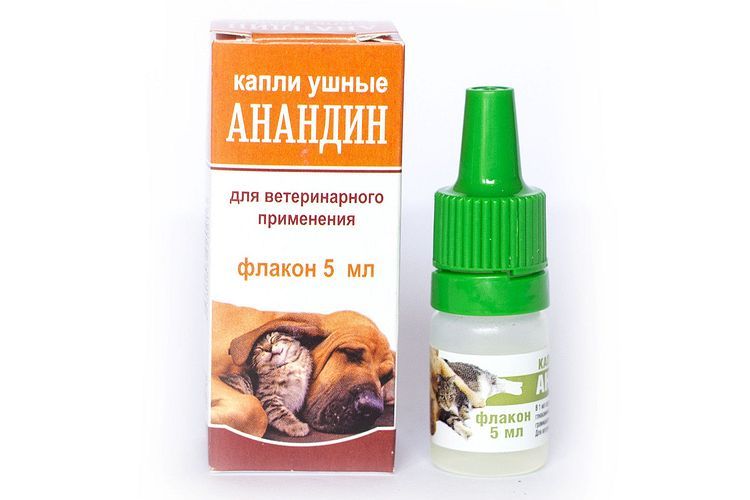
In addition to the listed ingredients, Anandin Plus also contains permethrin. This substance has acaricidal activity, meaning it kills mites, including those that cause ear mites. The drug is effectively used for treatment. otodectosis, as well as bacterial otitis that arise as a result of complications.
Features of application
Anandin should be instilled into each ear canal, 3-5 drops at a time. The number of drops depends on the dog's weight. The medication should be administered once daily for 3-7 days, depending on the severity of the condition and accompanying symptoms. When treating otodectosis, the ear canals should be cleaned of scabs before treatment. A special lotion or saline solution can be used for this purpose.
When instilled, the cold solution may cause discomfort to your pet, so it is recommended to warm it in your hands before use. Do not use this medication if your pet has a perforated eardrum.
Please note! Never put ear drops in your eyes. Choose the right medication for your condition at the pharmacy.
Limitations and possible negative reactions of the body
Do not use this medication if you have any known intolerance to any of its ingredients. There are no other significant contraindications. If your dog has an intolerance, itching, redness, rash, or other allergic reactions may occur. In this case, discontinue use. To counteract any negative reactions, give your dog an antiallergic medication.
Owner reviews
Artem, owner of a Yorkshire Terrier:
"We caught adenovirus at a dog show. We used Anandin injections and nasal drops. The shots were painful. The dog flexed his paw after the injection and whined a lot, but he recovered quickly. The cost was low, but the effectiveness was high. Overall, the result was satisfactory."
Ekaterina, owner of an English bulldog:
"My dog had constant eye problems. Overnight, they would almost completely fill with pus. Every morning, we'd start with rinsing and treatment. For treatment, we used Anandin drops, as recommended by the doctor. They were inconvenient to use, of course, but the main thing was that they worked. We've used them repeatedly, so I'm confident in their effectiveness. The price is another advantage."
Veterinarian Reviews
Marina, a veterinarian with 10 years of experience:
"Anandin is a versatile medication from a domestic manufacturer. It's available in various forms, which is definitely an advantage for veterinarians. It's inexpensive and available in all veterinary pharmacies. Among the drawbacks, it's worth noting that the injections are painful, and the drops often cause allergic reactions. Or maybe I just had sensitive animals."
Vadim, a veterinarian at a Moscow clinic:
"I've been using this medication in my practice for a long time. Due to the pain, I don't prescribe injections; among immunostimulants, I prefer Immunofan. However, I often prescribe ear and eye drops. There are cases where the effectiveness of the medication leaves much to be desired, but overall, the drug is good."
Read also:


Add a comment