
Anandin for cats
When diagnosing otitis, rhinitis, and conjunctivitis in cats, whether infectious or allergic, Anandin is prescribed. This Russian-made medication has immunomodulatory and healing properties, making it suitable for use in post-traumatic conjunctivitis, among other conditions.
Content
Basic information about the drug
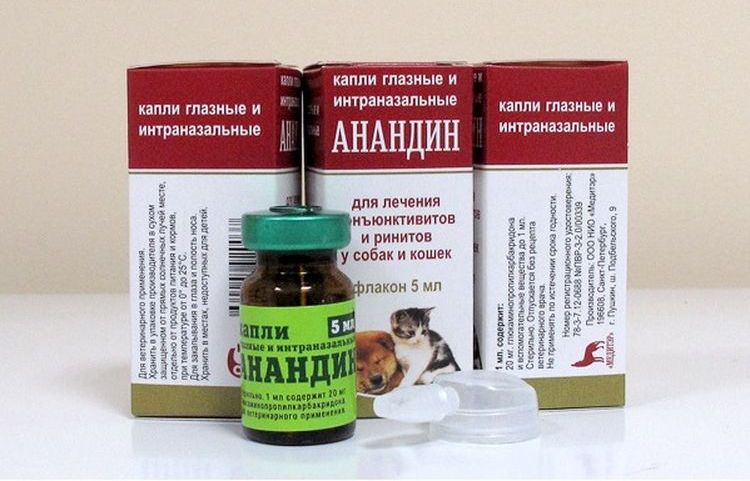
It is available as ear, intranasal, and eye drops. A 5 ml bottle costs 75-80 rubles, and 10 ml costs about 100 rubles. The intranasal and eye drops contain glucaminopropylcarbacridone, which quickly and effectively kills viruses that enter the body, as well as relieves inflammation and accelerates regeneration. Among the main components of Anandin for ears is gramicidin, an antibiotic that acts by destroying the protective walls of pathogenic bacteria.
Please note! Although the drops' compositions differ only slightly, it is prohibited to use the same medication for both ears and eyes. Ear drops are too harsh for the sensitive eye tissue. However, the intranasal form of the medication can be used in cats' eyes.
Indications for use
Otitis, rhinitis and conjunctivitis These symptoms can develop simultaneously if a respiratory infection has entered the body. If the animal suffers from only rhinitis and conjunctivitis, it is likely that an allergic reaction is the cause. Although in most cases the problem can be resolved with eye drops alone, it is best to consult a veterinarian first to determine the exact cause of the illness. The doctor will likely be able to recommend non-drug solutions.
Interesting to know! Cats suffer from ear and eye problems ten times less often than dogs. This is because felines lead a more secluded lifestyle and venture outside less often.
It's important to pay close attention to your cat's health if it's unvaccinated, has been outdoors for a long time, or has been in contact with sick animals. In the early stages of the disease, symptoms of infection may not be obvious, but it's important to begin treatment at this stage. Otherwise, complications such as vision, hearing, and olfactory impairment may develop. In advanced cases, minor inflammation can lead to complete blindness and deafness.
It is recommended to show the animal to a doctor and administer a prophylactic dose of Anandin in the following cases:
- the cat rubs its ears and blinks frequently;
- excessive lacrimation is observed;
- abnormal discharge from the ears, eyes, and nose appears;
- redness on the cornea is clearly visible;
- The animal is breathing heavily.
If you can't see a veterinarian immediately, you should examine your cat yourself if any of the above symptoms appear. If any abnormalities are clearly visible, you can administer a prophylactic dose of Anandin (2 drops in each eye, nasal passage, or ear canal). However, it's important to understand that this treatment is only for symptomatic relief. Only a veterinarian can prescribe a truly effective course of treatment.
Instructions for use of drops
To completely cure the disease, Anandin drops will need to be administered three times a day for a week. However, the treatment duration and dosage may be adjusted by your veterinarian depending on the animal's initial condition.
The application process can be complicated by the cat's temperament. A cat may scratch, struggle, and bite. This significantly increases the risk of instilling drops past the affected area. To treat the nose and ears, sit your pet on your lap and grasp their head between your elbow and forearm. To prevent scratching, it's best to wear a thick sweater and pants. If your cat actively squirms and struggles, swaddle them in a blanket to keep their paws immobile.
If you're treating just an ear infection, simply remove the cap and insert the dropper tip into your pet's ear. For your pet's comfort, the instructions recommend warming the bottle of drops in your hands beforehand.
Please note! Intranasal and eye drops They come in bottles without a tip, so you'll need to prepare a pipette in advance. This slightly complicates the application process.
To administer medication to a cat's eyes and nose, you'll need to draw the medication into the dropper beforehand and then immobilize the animal. Pets will often try to squint or close their eyes completely. Therefore, it's recommended to provide dim lighting in the room (if you can't adjust the brightness, simply cover the lamp with a cloth). If the cat stubbornly refuses to open its eyes, you can open their eyelids manually (after washing your hands first). To administer medication to the nose, simply hold the cat's muzzle firmly in your hand.
Price
Tips for increasing efficiency
Some reviews of Anandin for cats report that treatment with drops lasted for weeks without any improvement. Veterinarians suggest that such prolonged therapy may be due to either using an expired product or violating basic hygiene rules. For example, the product will be completely useless if applied directly to pus. Therefore, the first step is to clean the area being treated. To do this, simply apply regular saline solution to a cotton swab and wipe the eyes or ears. This simple action will allow Anandin's active ingredients to reach the affected mucous membranes directly.
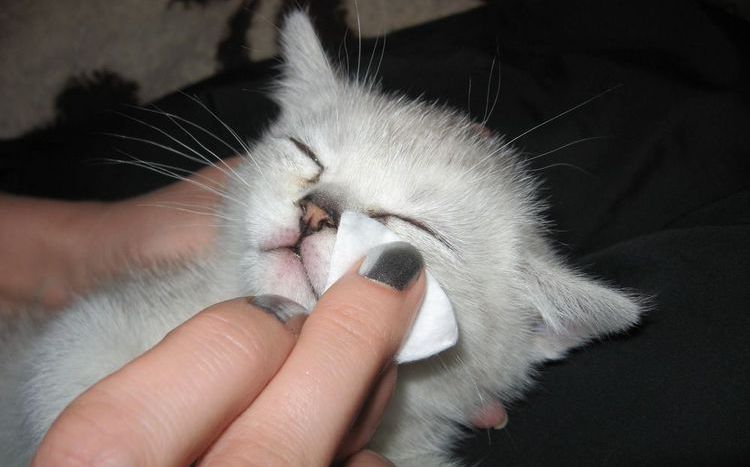
Tip! When administering eye drops, ensure the dropper tip does not scratch the cornea and is positioned at least 1-2 mm above it. It's best to point the dispenser toward the inner corner of the eye. Blinking will distribute the medication across the entire sclera.
Veterinarians also advise paying close attention to the completion of the procedure. Even if the cat sat quietly and allowed the correct amount of medication to be administered, insufficient attention from the owner after the treatment is complete can negate any positive results.
The following rules must be followed:
- Do not let go of your pet for 10-15 minutes after the procedure. Almost all animals given the medication will immediately begin rubbing their ears and nose on the floor or trying to touch their eyes with their paws after being released from their owner's arms. To allow the medication to take effect, it is recommended to hold your pet for at least 10 minutes.
- Avoid massaging the inside of the ears or eyes to "enhance absorption" of the medication. While the animal may enjoy the impromptu massage, it won't affect the medication's effectiveness. However, there's a high risk of spreading any remaining pus.
- Give the cat a treat. To prevent the animal from fearing the next procedure and hiding every time the owner handles the medicine bottle, it's necessary to prepare a treat. Veterinary vitamins with an attractive scent can be used.
Side effects and contraindications
Although the manufacturer states there are no side effects from using Anandin, veterinarians recommend closely monitoring the behavior of treated pets. Frequent blinking and rubbing their muzzle on the floor for fifteen minutes after the procedure is considered normal. However, if this behavior continues for more than an hour, accompanied by skin redness or a rash, consult a veterinarian immediately. It is likely that your pet is developing an allergic reaction. An antihistamine can be administered as first aid.
Reviews of Anandin drops for cats
Angelina, 29 years old:
"I got a British Shorthair kitten. I spent a lot of time researching the breed and was prepared for the fact that my pet would have watery eyes during the first year of life. At first, I treated the kitten with saline, but over time, I noticed that the eyes were not only watery but also had pus. The veterinarian recommended Anandin drops. Since the price was under 100 rubles, I decided to give it a try. After just two treatments, the pus began to clear. About a week later, all the problems disappeared."
Konstantin Viktorovich, veterinarian:
"I prescribe Anandin quite often. It's inexpensive, so pet owners don't try to dilute it or substitute it with anything else. However, for rhinitis, I try to find another remedy, as many of my clients have complained of excessive salivation and even vomiting after using the medication in their pet's nose. These problems don't occur when treating ears and eyes."
Anandin injection solution
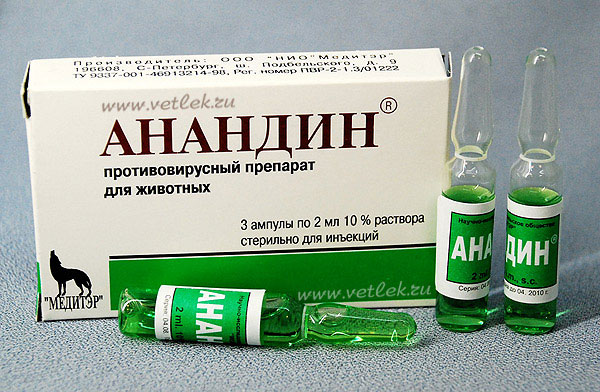
Anandin aqueous solution for injection is produced as a clear green liquid. The main active ingredient, as in the drops, is glucaminopropylcarbacridone. The active ingredient content in the solution is 10%. The composition also includes an excipient called methylene blue, which has antiseptic properties.
The solution has a faint, distinctive odor. It is packaged in hermetically sealed glass ampoules. Each ampoule holds 2 ml. Ampoules are packaged three at a time in cardboard boxes. The price for such packaging ranges from 155 to 170 rubles. Some pharmacies sell ampoules individually (60 to 70 rubles each).
When and how to apply
The drug has immunostimulatory, antiviral, and anti-inflammatory effects. It is usually prescribed to cats as part of a comprehensive treatment for viral infections:
- plague;
- parvovirus enteritis;
- viral hepatitis, etc.
The medication can also be used to treat bacterial complications that arise from previous infectious diseases. Anandin can be used in combination with antibiotics, hormonal agents, serums, and medications aimed at relieving symptoms.
The solution is injected intramuscularly. The dosage is calculated as follows: 0.15-0.2 ml per 1 kg of body weight. If the disease is in its early stages, injections should be administered once daily for 3 days. If the disease is severe, the course of treatment can be extended to 6 days, but the duration of treatment should be determined by a doctor.
Please note! Anandin injections should not be administered to patients with renal failure.
Ointment for external use
The ointment has a light yellow, pasty consistency. It has a slight, distinctive odor. It is packaged in small polymer jars. Each jar contains 10 g of the medication. The glucaminopropylcarbacridone content is negligible—only 2%. The composition also includes the following excipients:
- castor oil;
- petrolatum;
- purified water;
- potassium salicylate.
The price of the medicine is 45-60 rubles per jar.
The drug is classified as a low-hazard substance, but it has a broad spectrum of action:
- improves immunity;
- stimulates tissue regeneration;
- prevents the development of infections;
- relieves symptoms of injuries.
Features of use
The ointment is used to treat injuries and pathologies of the skin of various origins:
- cuts and wounds;
- burns;
- dermatitis;
- eczema, etc.
Apply a thin layer of the ointment to the affected area. Depending on the severity of the condition and the injury, apply the ointment 1-3 times daily. Before reapplying the ointment, rinse the affected area with saline and, if necessary, treat with antiseptics. Treatment can last from 4 to 7 days. The ointment should not be used only in cases of intolerance to any of the ingredients. The medication has no other contraindications.
Owner reviews
Julia, owner of a cat and two dogs:
"I've been using Anandin injections for a long time to treat all types of intestinal infections. Usually, 2-3 injections are enough to completely eliminate the unpleasant symptoms. I've used it on both cats and dogs multiple times, so I can attest to the medication's effectiveness."
Alexandra, owner of a British cat:
"Our cat's purulent wound hadn't healed for almost two months until the vet prescribed Anandin ointment. A five-day course was enough for the wound to completely heal. It's inexpensive, easy to use, and works well. Safe for cats."
Veterinarian Reviews
Arthur, a veterinarian with 7 years of experience:
"One of the best medications on the domestic market. It's not very popular among veterinarians, but that's a shame. It comes in several forms, so you can find the right one for every situation. It's inexpensive, but it always helps."
Read also:


2 comments
Michael
Do nasal drops need to be diluted before infusion?
Nikita
My cat almost died today from Anandin ear drops. Almost immediately after they were administered, he became ill, lost coordination, then lost the use of his paws and defecated on himself. We rushed him to the vet, where they inserted a catheter and an IV. The vet himself said the medication is very strong and many animals don't tolerate it well. They took some blood tests, and I'll look into it.
Add a comment