
Amur forest cat (Far Eastern leopard cat)
Amur forest cat The Amur cat is a close relative of the better-known Bengal cat, which lives slightly further south. Very little is known about these taiga inhabitants. Amur cats are listed in the Red Book as an endangered species. Scientists cannot say how accurate this is. In fact, the animal was only listed because there is no accurate data on its population.
Habitat
The Amur cat is widespread in the Far East. It can be found in the Amur River basin and along the coast of the Sea of Japan. These animals are legal residents of the Lazovsky, Bolshekhekhtsirsky, Khankaisky, and Ussuriysky Nature Reserves, as well as the Kedrovaya Pad Biosphere Reserve. Some "travelers" are known to have even ventured into the Transbaikal Territory. According to preliminary estimates, there are only about 2,000 of these cats, perhaps fewer; no one has bothered to count them.
Video about wild Amur cats:
What does the Amur forest cat look like?
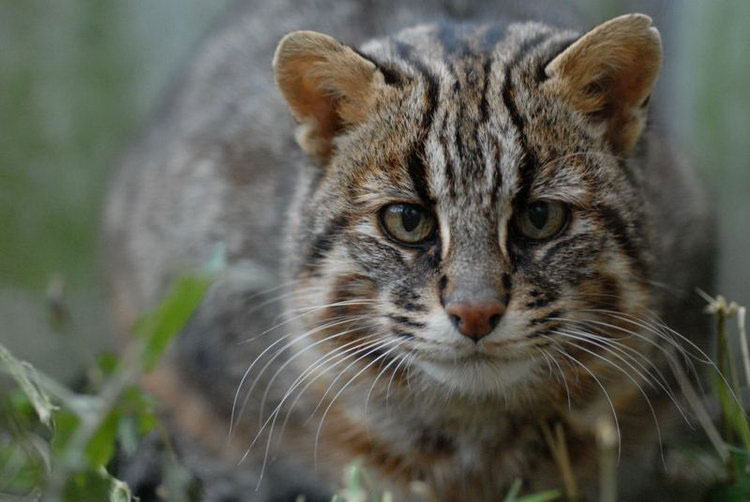
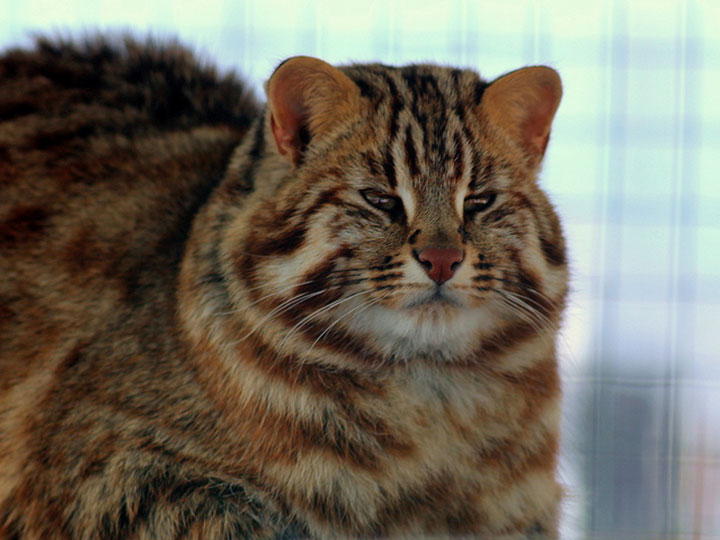
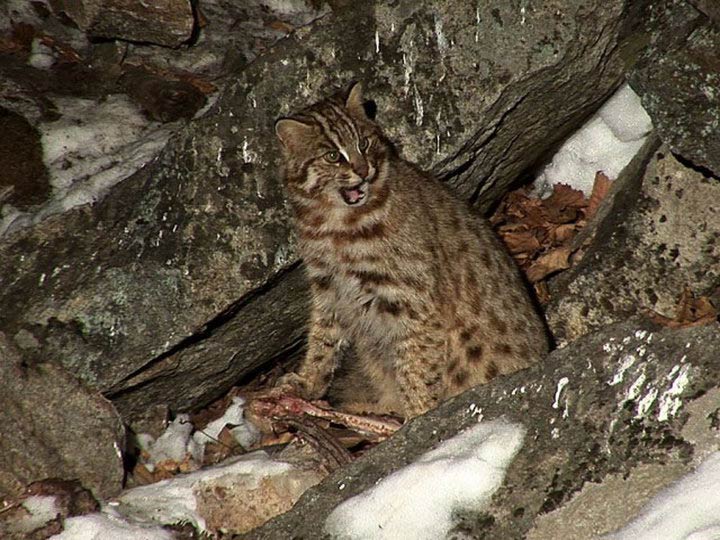
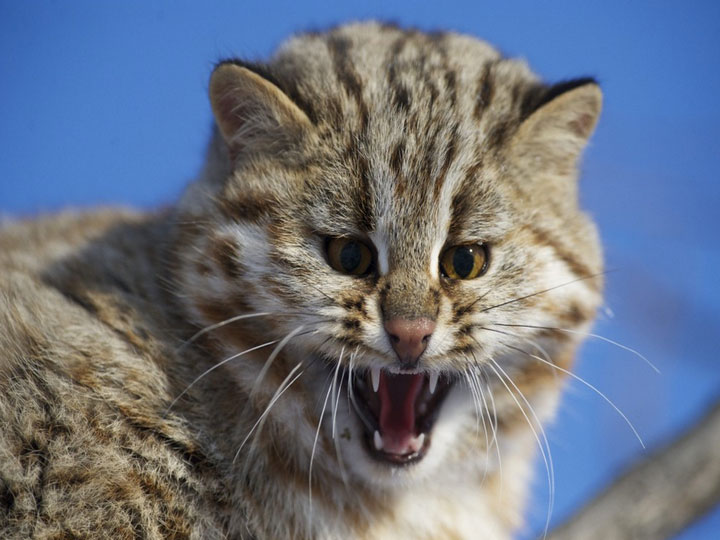
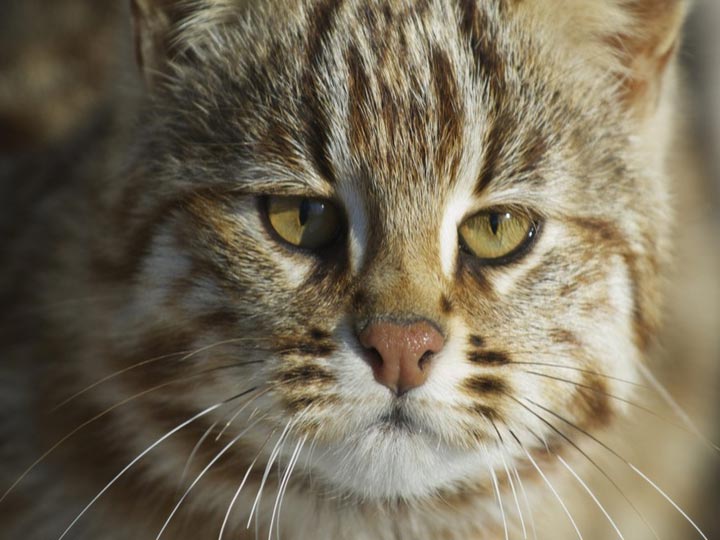
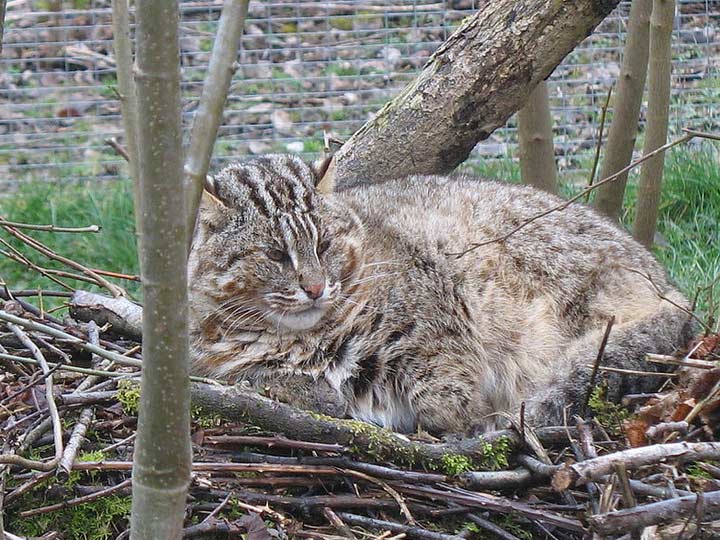
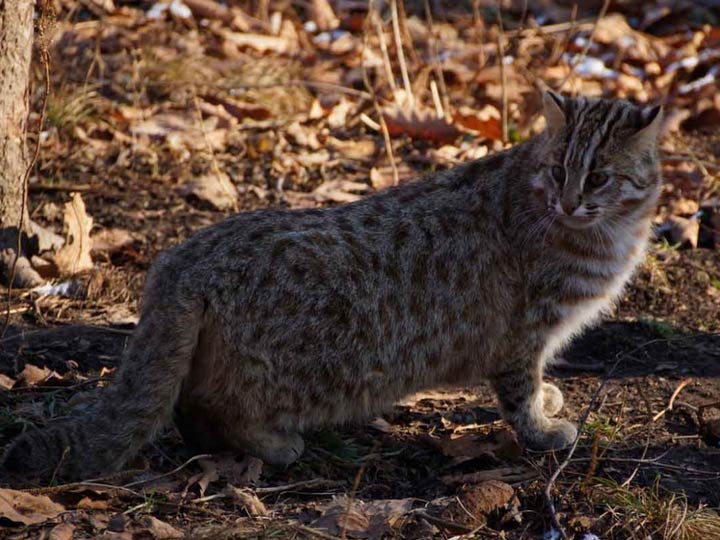
The Amur forest cat is a small animal, weighing between 4-8 kg. Its body length is 60-90 cm, of which about 40 cm is the tail. Males are noticeably larger than females. You can see what an Amur cat looks like in the photo.
The Amur cat's head is rounded, with a high forehead. The ears are set very wide apart, small, and rounded, pointing forward and slightly to the side. The eyes are large and expressive, set slightly obliquely and close together. The nose is wide and straight, with a large, distinctive brown tip. The whisker pads are small and rounded, complemented by a strong chin.
In 2004, the Amur cat was depicted on a silver coin from the Red Book of Russia series with a denomination of 1 ruble.
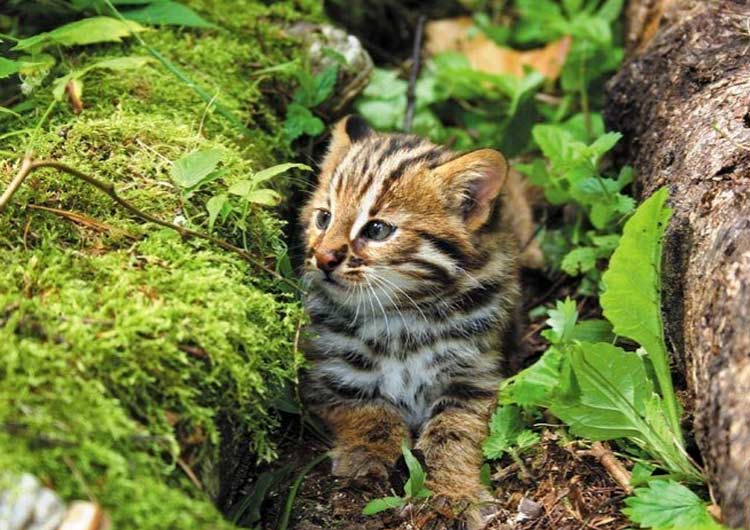
Amur cats are strong, well-built animals with long legs, well-developed muscles, and a thick coat. Their coloring is grayish-yellow on the underparts and grayish-brown on the upper parts. Rounded dark red spots are scattered across their body, and their head and muzzle are adorned with distinct dark stripes.
Lifestyle and habits
Very little is known about the life and habits of Amur cats, apparently because they have always lived in the shade, in the shadow of trees and Amur tigers.
There are reports that Amur cats are monogamous, meaning they choose a mate for life. This is quite unusual for cats and raises doubts. It is known for certain that the male cat helps the female cat raise her offspring. Amur cats reach sexual maturity very early. They are ready to reproduce as early as one year of age. Mating, as is typical for male cats, occurs in March. Gestation lasts 60-70 days. Amur cats rarely have more than four kittens in a litter. Their lifespan is 16-17 years.
Cats hunt most often at dusk. Their diet consists primarily of small animals, rodents, and birds. Generally, Amur cats will hunt anything smaller than themselves. Occasionally, they'll indulge in reptiles, insects, and, on rare occasions, fish. If they're lucky and stumble across the remains of a tiger or leopard's feast, they'll avoid hunting altogether. Cupids are excellent tree climbers, hiding in the treetops from natural enemies.
It's difficult to say how aggressive these cats are; when they encounter people, they tend to retreat and avoid anthropogenic areas. However, hunger is no enemy. In 2010, due to a prolonged cold winter, Far Eastern cats began regularly raiding chicken coops in Primorsky Krai. As soon as the snow began to melt, the cats disappeared.
Amur cats strongly dislike loose snow. During heavy snowfalls, they can remain in their shelters for weeks until a crust forms. They live in burrows abandoned by other animals, and in warmer months, they make nests in reeds and tree roots. A cat typically has several temporary shelters in its yard, and only one, the most comfortable and safest, is used in winter.
A study of the Amur cat by felinologists from the WCS (video):
Captivity
Like other wild cats, the Amur forest cat is very difficult to domesticate. Moreover, its secretive nature makes it difficult to integrate into human society. It's worth noting that no one has really tried to domesticate them. Amur cats are unremarkable and have failed to capture the interest of cat lovers.
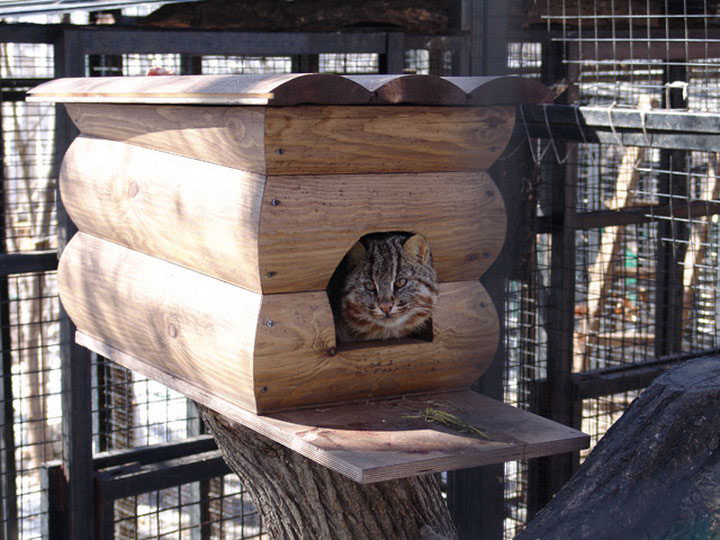
Amur cats are kept in some zoos. They reproduce well in captivity, but remain wary of humans. If you do decide to keep an Amur cat, you'll need to keep it in a fairly spacious enclosure. They can be fed small rodents and birds once a day.
Photos
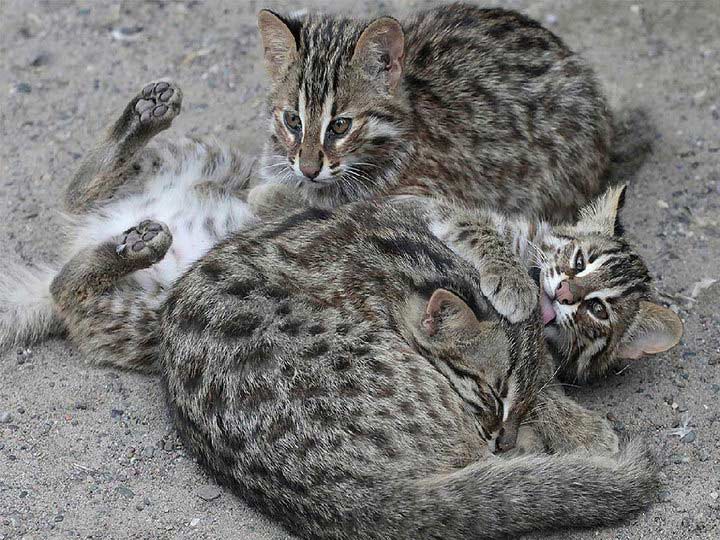
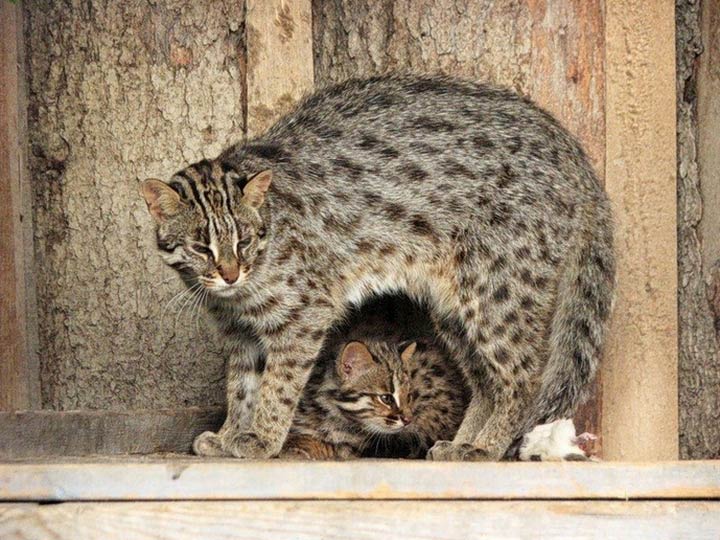
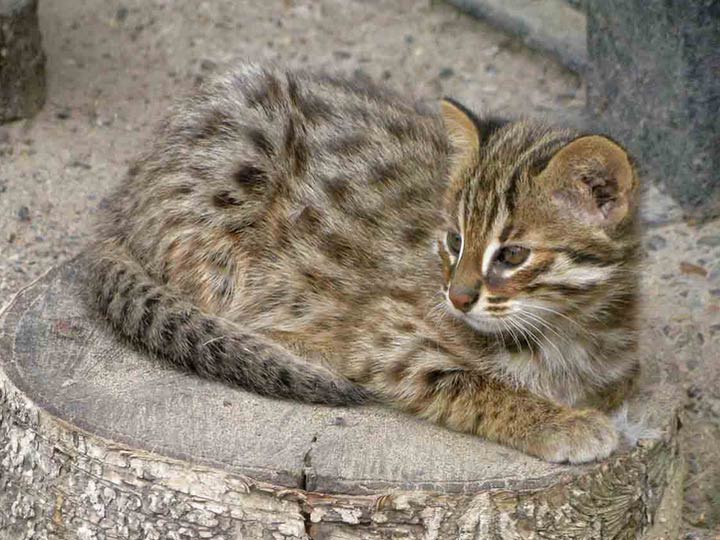
Amur cat in the photo gallery:
Read also:


1 comment
Tatiana
I was born in Primorye and have lived here my whole life. Lately, the villagers have simply gone wild. They're killing these cats. And almost every week there are reports of tiger killings. They're cutting down the taiga, there are fires. The animals' habitat is shrinking. And yet, both the wildcat (there are very few of them) and our tiger are listed as endangered. Poachers, hunters, traps. Customs recently detained a bastard with a box full of bear paws. It's terrible, I feel so sorry for the cats and other forest dwellers.
Add a comment