
Amstaff (American Staffordshire Terrier)
The Amstaff, also known as the American Staffordshire Terrier, is a world-famous dog breed with a controversial reputation. Some consider it a nanny for children, others a vicious fighting dog. In a sense, both sides are right. The Amstaff is versatile and can be trained for almost any skill, but above all, it is an athlete and companion, suited to experienced dog owners with a strong character and a firm hand.
Content
History of origin
The Amstaff descended from the pit bull, which was developed by crossing terriers, old-style bulldogs, and several other breeds. But first things first.
Bulldogs have existed in Britain for a very long time; they were used for hunting, and later for bull-baiting and dog fighting. However, in the 18th century, they were significantly different from today's dogs. They were well-proportioned, agile dogs that stood on straight, medium-length legs. Which specific terriers were involved in the breeding remains a matter of debate. It's likely that different breeds were used in each region of England. In Birmingham, a cross between an English White Terrier and bulldog gave rise to the breed that is widely popular and known as the Bull Terrier. And in Staffordshire, staffordshire bull terrierThe latter were actively exported to the United States and by the end of the 19th century had become widely known overseas as the pit bull terrier or American Pit Bull Terrier.
In 1898, American pit bull breeder Shawncy Bennett founded the United Kennel Club, which began registering first fighting dogs and then hunting dogs. Bennett emphasized working qualities, with gameness and a desire to fight and win being essential. However, over time, more and more owners began to avoid fighting and saw their pets solely as companions. They approached the AKC and requested registration rights. The AKC was willing to open a studbook for the American Pit Bull Terrier, but only on the condition that the breed's name be changed. In 1936, the American Kennel Club recognized pit bulls under the name American Staffordshire Terrier. A breed standard was written. The goal of breeding was now to develop friendly, athletic companion dogs that would conform to the established standard.
Thus the breeds pit bull terrier and the Staffordshire Terrier separated, but this division can only be called conditional, since to this day their lines often intersect with each other, and some dogs have dual registration in one association they are registered as pit bulls, and in another as Amstaffs.
Video review of the American Staffordshire Terrier (Amstaff) breed
What should an Amstaff look like according to the standard?
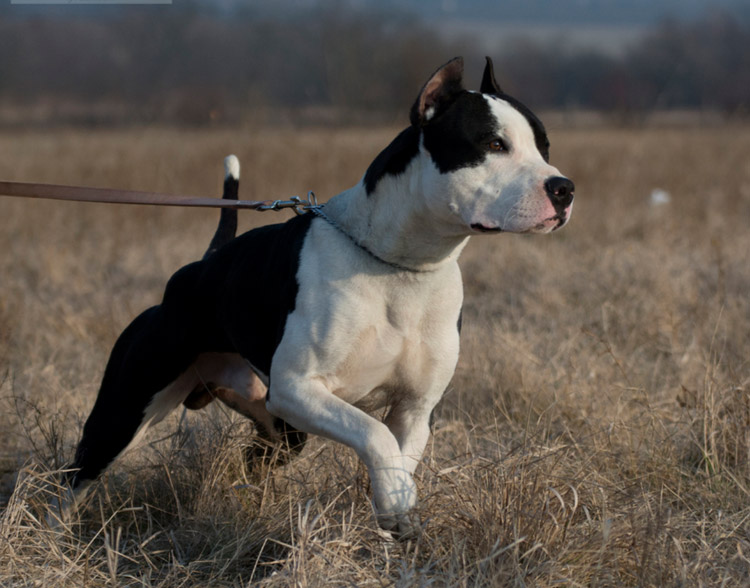
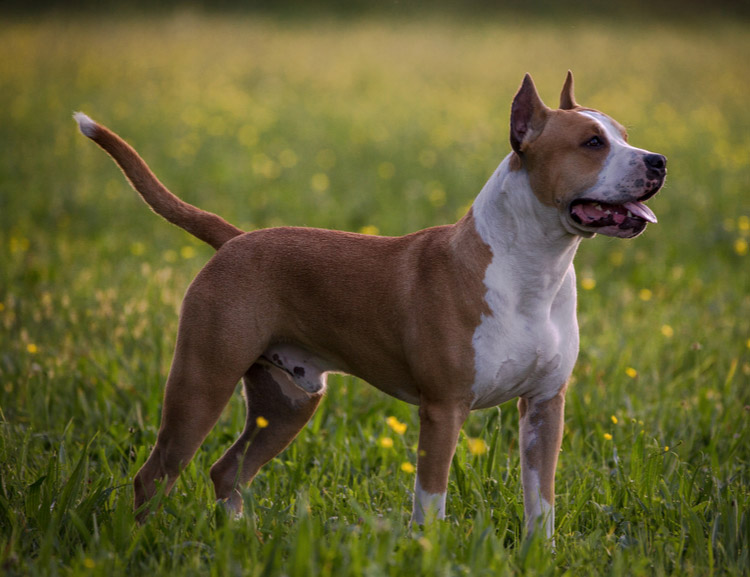
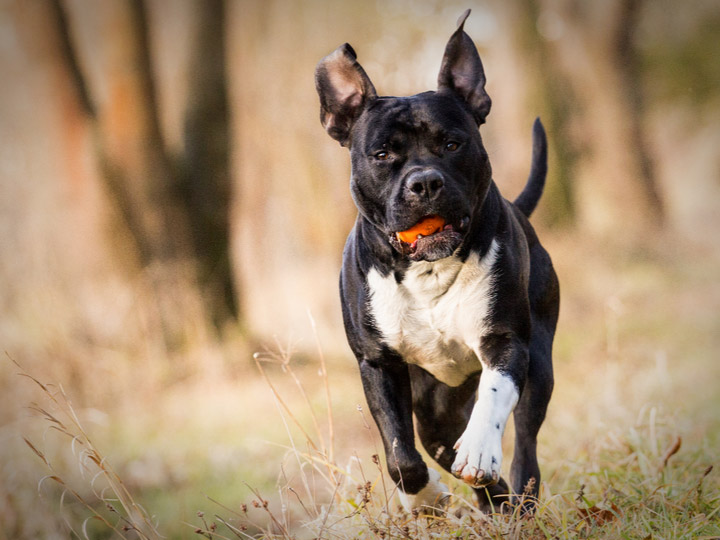
The Amstaff's appearance speaks volumes of strength, confidence, and fortitude: its compact build, direct, alert gaze, and the rippling muscles beneath its dry skin. The dog stands firmly on straight, strong legs, with broad cheekbones, a broad back, and croup, and a massive chest—all of this creates an impression of reliability and solidity. The ideal height is 43-46 cm for females and 46-48 cm for males.
The skull is almost square. The muzzle is of medium length, the stop is sharp, and the bridge of the nose is rounded. The jaws are well defined and very strong. The lips are tight, not drooping. The cheekbones are prominent. The cheeks are well muscled. The nose is black, and the eyes are dark brown. Small, uncropped ears are preferred; they can be rose-shaped or semi-erect. The eyes are small, round, deep-set and wide apart. The eyelids are well pigmented.
Ears may be cropped in countries where this is not prohibited.
In well-built dogs, the length of the body should be approximately equal to the height. The forechest is well developed. It is important to note that an excessively broad chest and correspondingly wide-set legs reduce the dog's agility. The sides of the ribcage are rounded, but not barrel-shaped. The tail is set low, strong, wide at the base, tapering to a tip, and not too long. The belly is moderately tucked up. The neck is voluminous, medium in length, and widens toward the shoulders. The legs are large, strong, and of normal length. The toes are well-knit.
The short, smooth, shiny coat lies close to the skin. There is no undercoat. Colors can vary widely: solid, colored, spotted, and brindle. Unacceptable colors for the Amstaff include black and tan, liver, and white when it covers more than 80% of the body.
Character
The Amstaff is active and bold, possessing determination, strength, and a unique intelligence. Its character is somewhat paradoxical, combining a number of completely opposite qualities: tenderness and strength, tenacity and sensitivity, intransigence and good nature. The Amstaff is fearless, but seeks safety. It is deeply touchy and can be vindictive.
Contrary to popular belief, the Amstaff was not bred for fighting, but it descended from a fighting breed, and this has left its mark on its psyche. A look at the standard reveals the following:
- The Amstaff's temperament is strong, active, and balanced. By nature, the Amstaff should be cheerful, independent, self-sufficient, alert, curious, and highly intelligent.
- Flaws: increased excitability, nervousness, shyness.
- Defects: unbalanced psyche, cowardice, aggression towards people.
The Amstaff forms a strong bond with its owner and other family members. While relatively calm at home, on walks it is an active and inquisitive companion and an excellent athlete. It is insensitive to pain, is not a nervous dog, and is sturdy and even-tempered, always open to communication.
If necessary, this dog will defend the home and family, but deliberately training it to be aggressive is strictly not recommended. The Amstaff is naturally friendly and sociable; it greets guests with a wagging tail and should not snap at strangers. The Amstaff is strong and self-assured, never growling and rarely barking.
The Staffordshire Terrier standard demands such a wonderful character. Unfortunately, not all dog owners and breeders select pairs responsibly and wisely, producing offspring with various faults and even disqualifying defects: aggressiveness, stupidity, and cowardice. These traits can be inherited by offspring that are repeatedly bred "for health" or for financial gain.
Education and training
Raising a good Amstaff requires a lot of effort. Difficulties can arise due to the puppy's stubbornness and hyperactivity, as well as its increased interest in its fellow puppies.
The Amstaff is suitable for young, energetic people who are ready to devote a lot of time to training the dog.
The Amstaff is highly trainable and learns commands fairly quickly, but can be slow to follow them. This dog requires firm discipline, but should never be aggressive or cruel. The Amstaff requires a patient, strong leader who can act as a friend and mentor. A dog that does not recognize its owner as a leader is a problem dog.
Video: Correcting Undesirable Behavior in an Amstaff:
Content Features
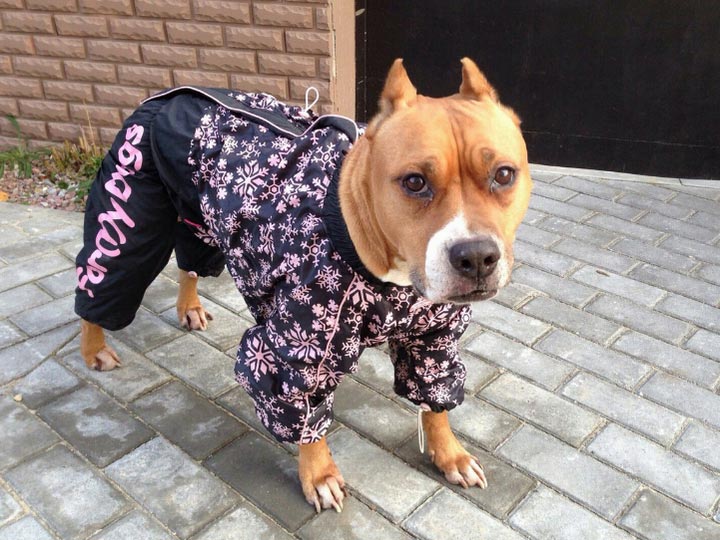
The Amstaff is not suited for outdoor life; moreover, the dog cannot be kept in a closed enclosure or on a leash, as this will affect its psyche and its behavior may become unpredictable in the future. The Amstaff is a companion dog that needs to be in close contact with people at all times. He may not sleep in the owner's bed, but he should be constantly nearby and participate in all family activities. In cold weather, the Amstaff requires insulation. Clothing should be chosen according to the season; it should be high-quality and comfortable. At home, the dog should have a bed, water and food bowls, toys, and equipment. A choke collar or prong collar is recommended for training; for walking an obedient dog, a harness is the best option.
The Amstaff needs a lot of walks to channel all its energy into peaceful channels.
With sufficient exercise, an Am Staff will remain calm at home. If neglected, the dog will begin to destroy things and release pent-up energy in other undesirable ways. Very active puppies are often crated when no one is home, which helps keep valuables safe. Am Staffs are very attached to their toys, but outdoors they prefer to play with larger objects: bricks, tires, and logs. Am Staffs excel in various sports.
Video: Epic Parkour Showcase by an American Staffordshire Terrier
Care
Grooming an Amstaff is simple. Brush the dog periodically with a fine-toothed brush or a mitten specifically designed for short-haired breeds. This is necessary to promote coat renewal and reduce the amount of hair in the home. Bathe no more than once a month. After a walk, if necessary, wipe the coat with a damp towel or rinse in the shower without shampoo. Keep an eye on the eyes and ears, keeping them dry and clean. Nails should be lightly filed as they grow, but with adequate exercise and walks on asphalt, they will wear down on their own. If your dog eats a natural diet, it's advisable to accustom it to having its teeth brushed once or twice a week.
Feeding
Most owners prefer to feed their Amstaff natural foods. This decision is explained by the fact that Good prepared foods can provide a dog with a set of vital nutrients, but they do not contribute to muscle mass gain. A natural diet, based on protein, is a different matter. A dog on a meat-based diet, even one that exercises, looks truly impressive: strong, sturdy, and with clearly defined muscles. A natural diet also includes some grains, vegetables, fruits, and herbs, as well as dairy products, eggs, and fish.
For pets with a moderately active lifestyle, super-premium or holistic ready-to-eat foods are also suitable. Consider diets for active, medium-sized breeds.
An adult dog should be fed twice a day. During periods of intense physical activity, light snacks are allowed, increasing the daily ration by 20-40%. Portions should be eaten all at once.
Health and life expectancy
Amstaffs generally have good health, but years of selective breeding have left their mark on their genetics. A number of hereditary diseases have been identified in the breed:
- Heart diseases (valvular defects, subaortic stenosis, abnormal heart rhythms);
- Hip dysplasia;
- Cataract;
- Gastric bloating and torsion;
- Von Willebrand disease;
- Hypothyroidism;
- Cutaneous histiocytoma and hemangioma. With age, other tumors, including malignant ones, may develop;
- Various types of allergies.
The typical lifespan is 10-12 years. The primary prevention measures include routine vaccinations, treatment for external and internal parasites, and regular medical checkups.
Choosing and pricing a puppy
Once you've decided to buy an Amstaff, start searching for a suitable litter, paying attention not only to the puppies but also to their parents. It's a good idea to observe how at least one of the parents behaves outside, how they obey their owner, and how they interact with other Amstaff puppies. Ask the breeder for documentation confirming their pedigree. Puppies should be dewormed and have had their first vaccinations at three months of age.
You should never choose a dog based solely on a photograph, especially when it comes to such a serious breed.
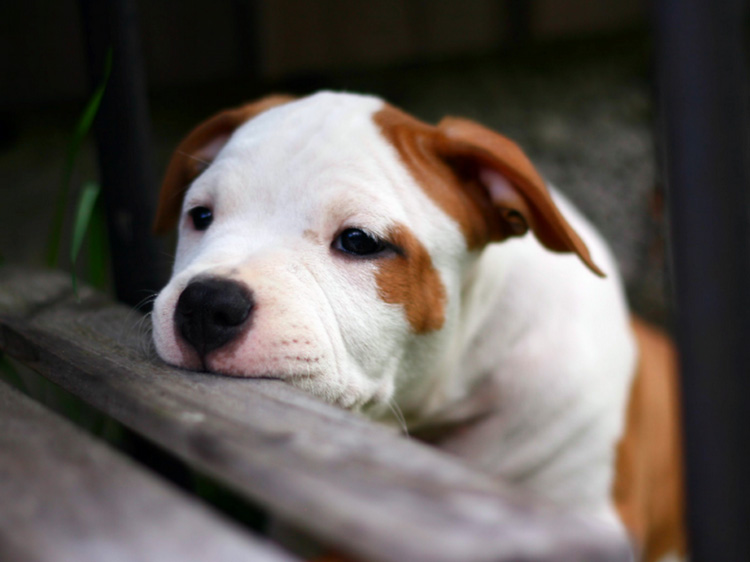
When examining the puppies, pay attention to their appearance. The puppies should be moderately well-fed, active, with a shiny, smooth coat, and no redness or discharge on the mucous membranes. The bite should be correct. The eyelids, nose, and lips should already be pigmented, even in puppies. Pink spots are a fault; such puppies are sold at a lower price and are considered "pet class." They are unlikely to receive high marks at shows and should not be bred. It's recommended to pick up a puppy no earlier than two months of age. In rare cases, breeders release dogs to experienced owners at six weeks, immediately after certification.
The price of Amstaff puppies is surprisingly varied. Prices start at 2,000-3,000 rubles and don't go beyond 30,000 rubles. This range is easily explained. Puppies without papers from random matings or of questionable origin cost no more than 5,000 rubles. Dogs from titled parents but without papers cost 5,000-10,000 rubles. Puppies from kennels that were the result of planned matings with careful selection of stud dogs and have papers of origin cost from 15,000 rubles. Price is largely influenced by geography and demand.
Photos
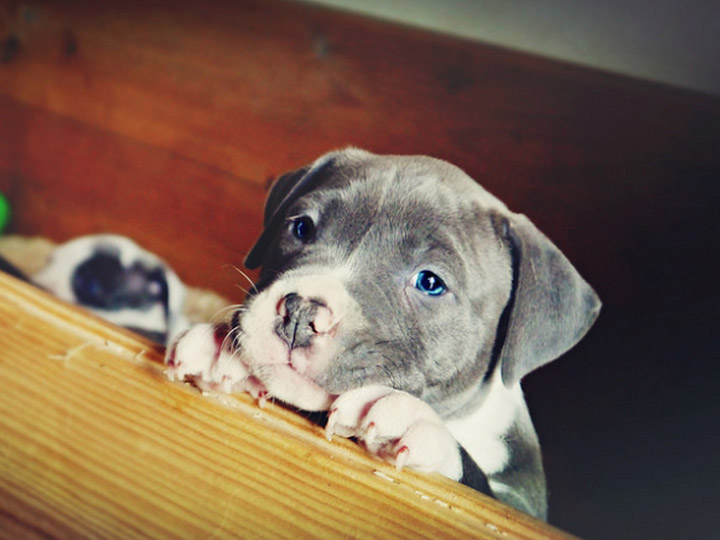
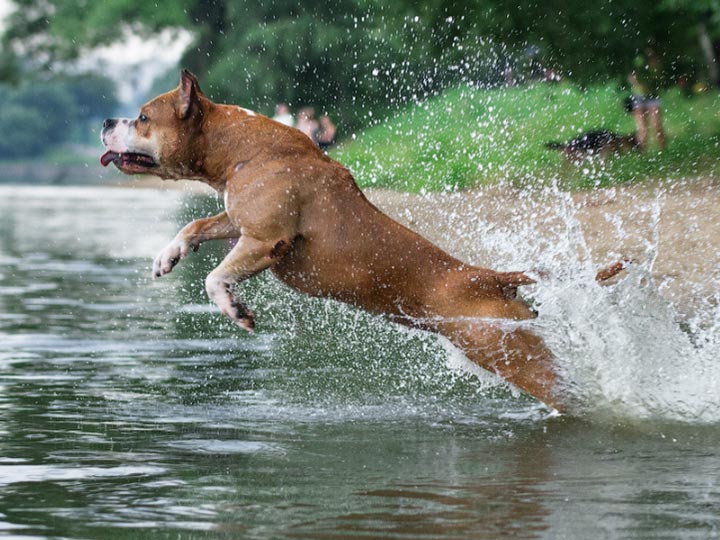
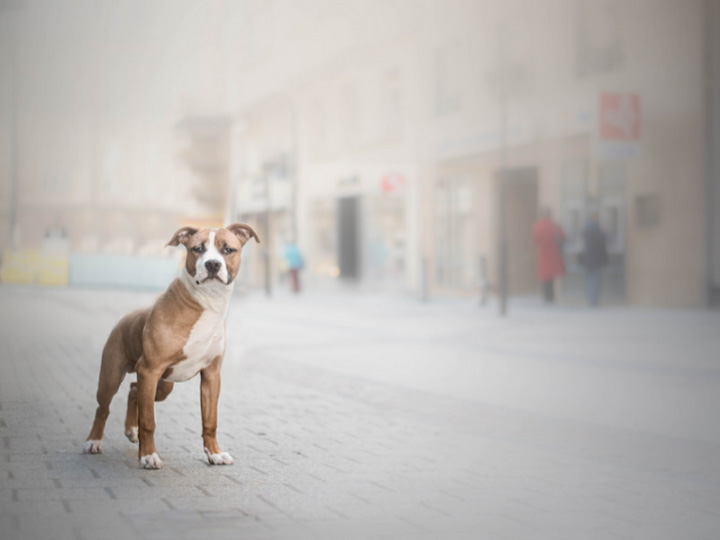
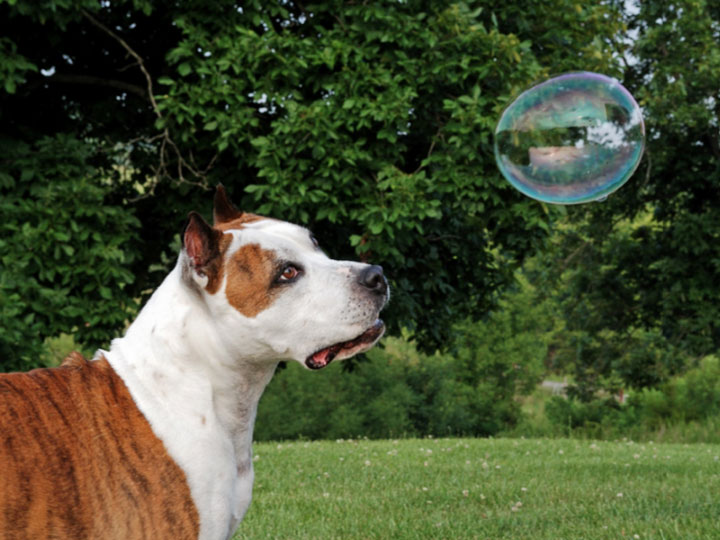
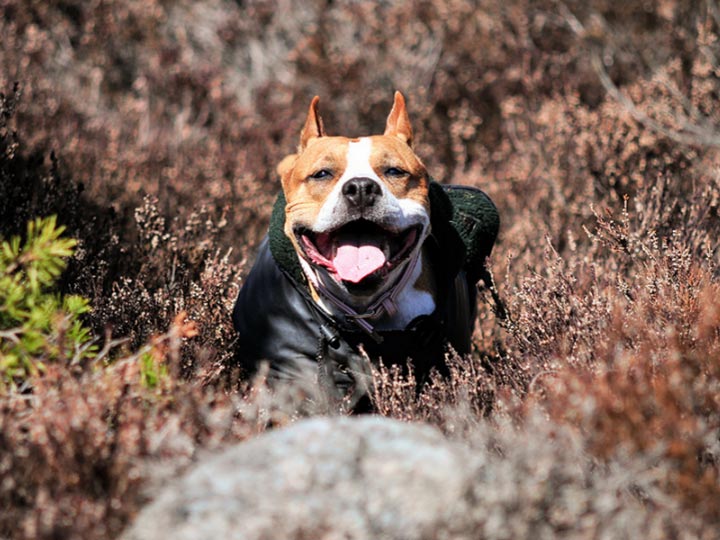
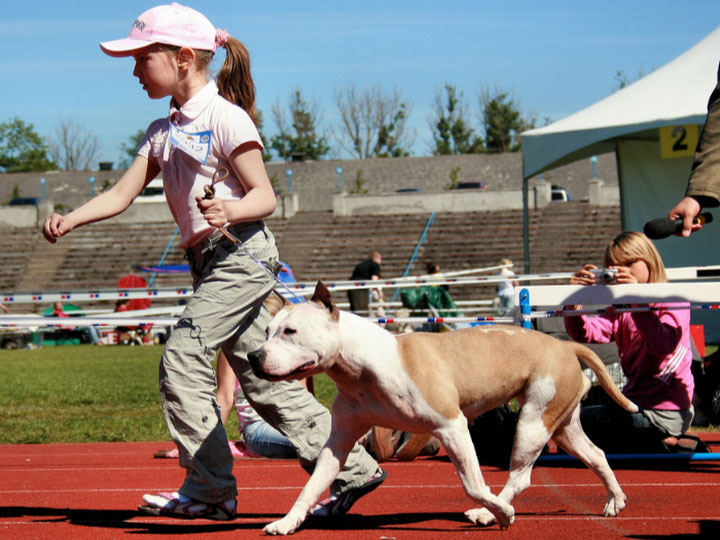
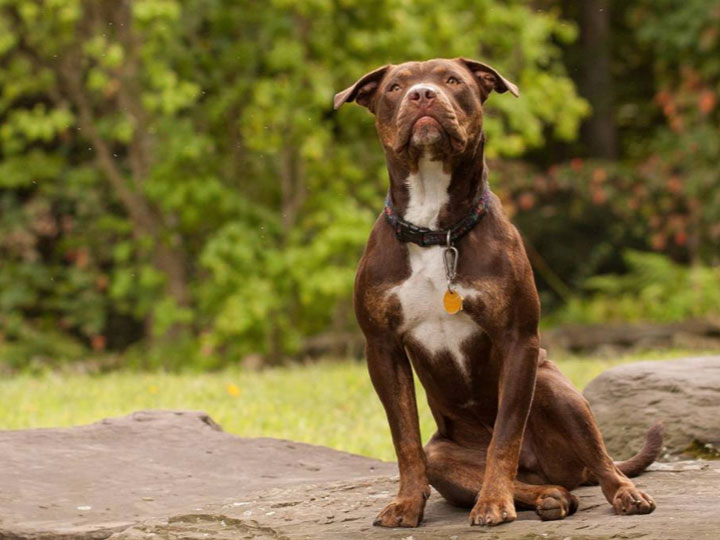
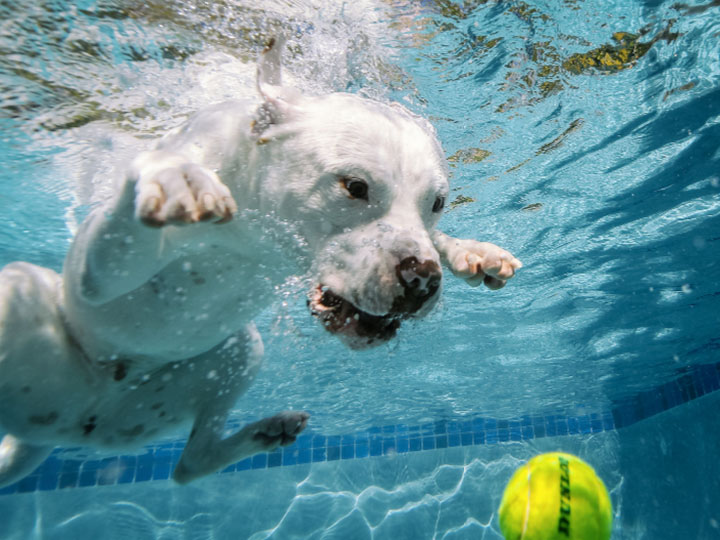
This gallery features photographs of American Staffordshire Terriers. The photos clearly show the diverse breeds of AmStaffs, as well as their appearance as puppies and adult dogs.
Read also:


1 comment
Elizabeth
Which kennels offer Amstaffs?
Add a comment