
Amitrazine for cats
Amitrazine is a veterinary medication used in cats to treat infections caused by sarcoptic mites. The medication has a broad spectrum of action, making it highly effective.
Content
Composition and release form
Amitrazine is available as an oily solution with a distinctive odor. Several Russian pharmaceutical companies manufacture the medication, so it can be found in various packaging options in pharmacies. Typically, it comes in 10 ml polymer bottles (less commonly, larger ones) equipped with droppers for easy administration. Amitrazine is also available in clear glass bottles sealed with rubber stoppers and aluminum caps. In these cases, the medication comes with a plastic dropper, which is attached to the bottle after opening.
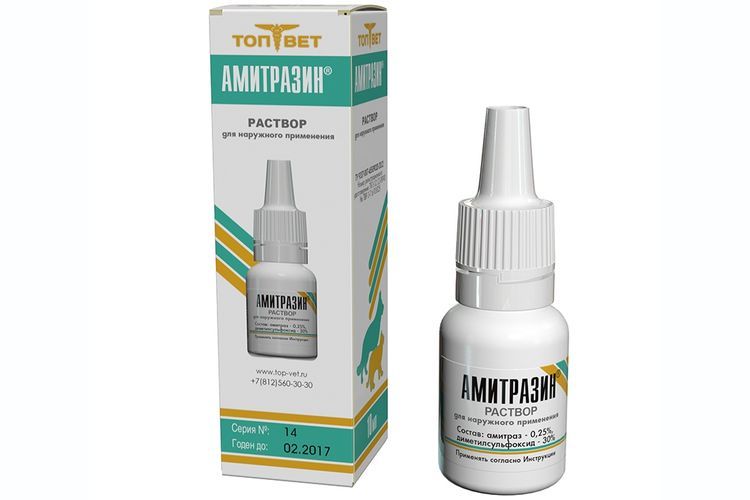
The main ingredient of this medication is amitraz. The solution contains 0.25% of the active ingredient. It also contains rapeseed oil and dimethyl sulfoxide. These ingredients allow the active ingredient to penetrate the skin more quickly and begin killing parasites. Furthermore, the excipients soften the medication's action.
Pharmacological properties
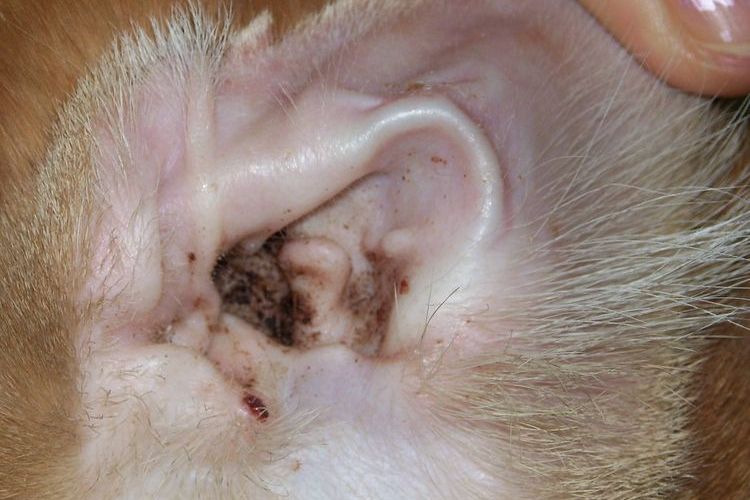
Amitrazine has a pronounced acaricidal effect, that is, it destroys mites, including those that cause the development of ear mites. scabies, sarcoptosis And notoedrosisThe advantage of this medication is that it targets all parasites, regardless of their developmental stage. The active ingredient interferes with the ticks' ability to function properly and blocks their nerve impulses. This action quickly kills the parasites.
Amitraz not only penetrates the skin and bloodstream but also accumulates in tissue, preventing reinfestation for a period of time. The excipient dimethyl sulfoxide additionally provides antimicrobial and analgesic effects, while rapeseed oil initiates regenerative processes. This allows the product not only to kill parasites (the cause of the disease) but also to accelerate the healing of wounds caused by animals scratching affected skin or ears.
Instructions for use
The instructions for use indicate that Amitrazine for cats is used for otodectosis And otitis, caused by mites, as well as notoedric mange. Only a physician can prescribe treatment after conducting the necessary clinical studies and confirming the diagnosis.
For notoedrosis or cat scabies, the medication is used as follows:
- First, the areas of the epidermis infected with parasites are thoroughly cleaned of scabs. A special cleansing lotion for animals can be used for this purpose.
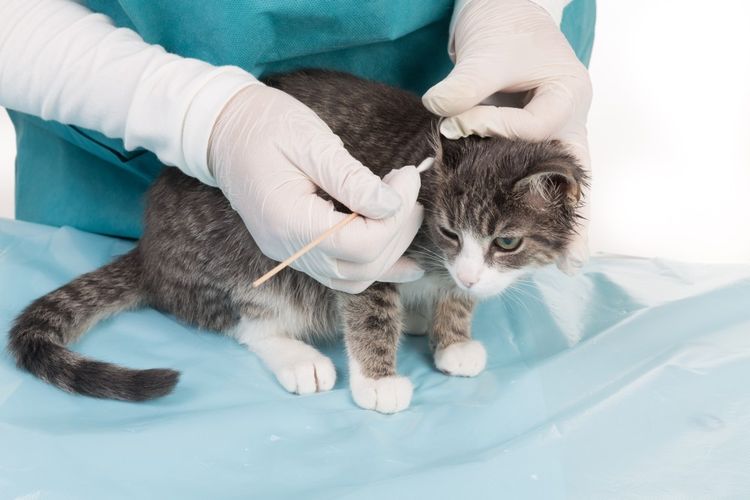
- Using a cotton-gauze swab soaked in the medicinal solution, it is necessary to treat the affected area of the body.
- The area around the pathology must also be treated (1 cm from the edge must be treated).
The procedure is performed 2-5 times, with intervals of 5-7 days. For severe infestations, two applications, one day apart, are permitted. If necessary, the procedure is repeated after 7 days. The duration of treatment is determined individually depending on the severity of the infestation and the pet's overall health. Treatment is discontinued once clinical signs of the disease have disappeared and the absence of mites is confirmed by a scraping.
Please note! For severe infestations, it is recommended to treat the affected areas of the epidermis first on one side, and then later on the other. This approach helps prevent overdose and possible negative consequences of poisoning.
To prevent your pet from licking the medication, use a neck collar. If you don't have one, you can simply wrap your pet in an old towel or sheet and hold them for 15-20 minutes until the medication is absorbed into the skin.
Features of use in otodectosis
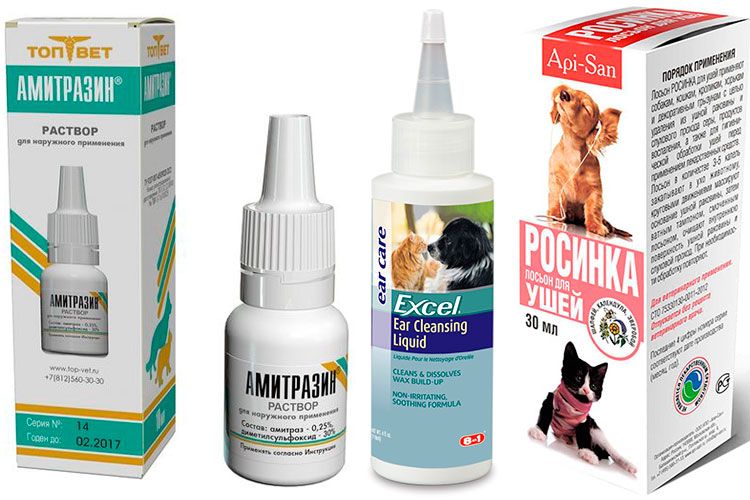
For ear infections, before using Amitrazine, follow the instructions to clean the ears of any scabs or crusts. Failure to clean the ears will reduce the effectiveness of the medication. For cleaning, as with feline scabies, use a special lotion that helps remove dead skin cells and debris without much effort.
Then, place 0.5 ml of the medication in each ear. Gently fold the ear lengthwise and massage gently to distribute the solution evenly throughout the entire auricle. Even if the tick is only present on one side, both ears should be treated. Repeat the procedure after 7 days. Sometimes the interval is shortened to 3-5 days, and in severe infestations, up to 6 treatments may be required.
Contraindications and side effects
Although Amitrazine is considered non-toxic, it has a number of contraindications. It should not be used for treatment in the following cases:
- during pregnancy;
- during lactation;
- for kittens up to 2 months of age;
- in case of severe exhaustion;
- for infectious diseases.
You should also refrain from using it if you have an individual intolerance to the components.
Amitrazine generally does not cause side effects, but allergic reactions may occur in cases of intolerance to the ingredients, manifested by skin lesions or other symptoms. In rare cases, weakness and gastrointestinal disturbances (vomiting or stomach upset) may occur.
Please note: When applying the medication to scratched or wounded areas, a burning sensation may occur, which quickly subsides.
Storage features and safety measures
Amitrazine should be stored away from direct sunlight in a dry place at temperatures between 0 and 30˚C. If frozen, it is recommended to warm the medication to room temperature before use. Keep this medication out of reach of children.
Please note! The solution from an opened bottle is suitable for use within 30 days after opening.
When handling this medication, follow standard safety precautions. If you have a hypersensitivity, it's best to avoid direct contact with the medicinal solution. For protection, wear rubber gloves. If an allergic reaction occurs, consult a doctor.
Advantages and disadvantages
The main advantages of Amitrazine include:
- Highly effective. It has been proven in practice that the drug destroys even parasites resistant to other antiparasitic medications. Furthermore, it works not only on adult parasites but also on larvae.
- Availability. The medication can be purchased at any veterinary pharmacy or pet store. Amitrazine is also easily ordered online.
- Complex action. Destroys parasites and promotes skin restoration.
- Easy to store. Simply place the bottle in a cabinet on the top shelf. No special storage conditions are required.
Another advantage of Amitrazine is its low price. A 10 ml bottle costs 110-140 rubles. It usually lasts for the entire course of treatment.
Disadvantages include the possibility of side effects if used incorrectly. Although the manufacturer's instructions state that the drug is well-tolerated by animals and does not cause adverse reactions, there are numerous stories online of unfortunate experiences with this medication.
Owner reviews
Daria, owner of a Japanese bobtail:
"Our cat started scratching her ears constantly. She noticed dirt was constantly accumulating in them. We cleaned her ear canals regularly, but it didn't help. We went to the clinic, where we were diagnosed with otodecosis and prescribed Amitrazin. After the first treatment, the cat felt better, although the procedure itself wasn't exactly pleasant. It was noticeable that she was experiencing a burning sensation. After two treatments, her ears were clean again. Tests confirmed the mites were gone. It's a good product."
Vera, owner of a 3-month-old kitten:
"We bought Amitrazin to treat our kitten's ear mites. It's not a cure, it's poison! After the first application, Pushok ran all over the house, meowing and shaking his head violently. He was apparently in pain. When we repeated the treatment on the second day, he vomited. He became lethargic and refused to eat. I can't recommend it to other cat owners."
Veterinarian Reviews
Dmitry, a veterinarian with 10 years of experience:
"Amitrazine is an inexpensive and effective medication for treating notoedrosis and ear mites in animals. I've seen some negative reviews about this medication and want to say a few words in its defense. Side effects occur when used in contraindications or when used incorrectly. I speak from personal experience. I once had to save a kitten who was poisoned by this medication, but only because the drops were administered twice a day, while it should be administered every 5-7 days. The medication's negative effects are simply a consequence of its excessive safety precautions."
Lyudmila, veterinarian:
"It's a good product, although I prefer foreign medications. A woman recently contacted me with a kitten who was nauseated and vomiting after using these drops. I know of other similar cases. Side effects usually occur in young kittens whose bodies aren't strong enough to handle strong medications."
Read also:
- Why does a cat scratch its ears and shake its head?
- Subcutaneous mites in cats: symptoms and treatment
- How to treat ticks on a cat?


Add a comment