
American Bulldog
The American Bulldog, or simply the Ambul, is a dog breed with an athletic build, exceptional strength, endurance, and a challenging personality. Ambuls are widely used in a wide variety of settings, serving as service dogs, companions, and family protectors.
Content
History of origin
American Bulldogs belong to the Molossian group, meaning their distant ancestors are ancient Greek fighting dogs. The name "bulldog" translates as "bull dog," and for good reason, as they were bred in England specifically for bullfighting. Bulldogs were first mentioned in 16th-century chronicles, which described a large, dangerous animal that could outshine an armed man. These dogs have always been known for their strong nervous system and conformation, but their fearlessness and tenacity were especially prized.
In the early 18th century, Old English Bulldogs were brought to America by colonists, primarily to the southern state of Georgia. The dogs helped settle in their new surroundings, guarded their homes and property, and protected them from wild animals.
There were no attempts to register the breed with the American Kennel Club, as the English Bulldog was already officially recognized. Furthermore, dogs from the South were long considered quite ordinary and unremarkable. In the 1970s, the breed began to gain popularity, and several cynologists were involved in its breeding and development. They registered litters and kept records, and the number of kennels grew. The American Bulldog was officially recognized in 1999, and a standard was approved at the same time.
Appearance and standards
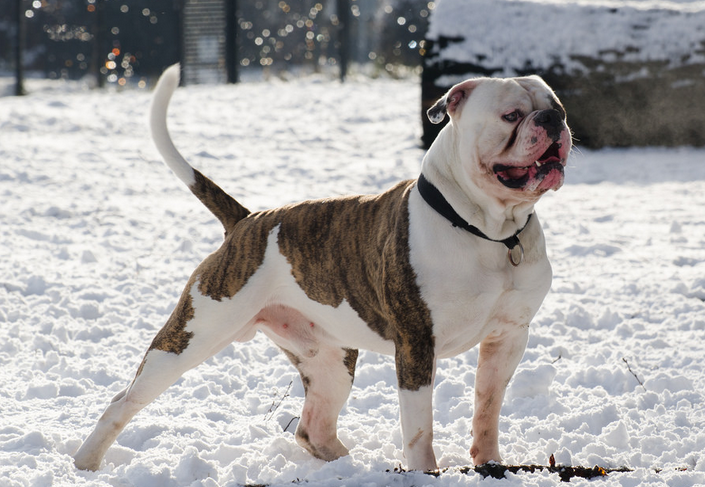
The American Bulldog is a well-proportioned, muscular dog. Males stand 58-67 cm tall, while females are slightly shorter at 53-64 cm. Males weigh 34-52 kg, while females weigh 27-38 kg.
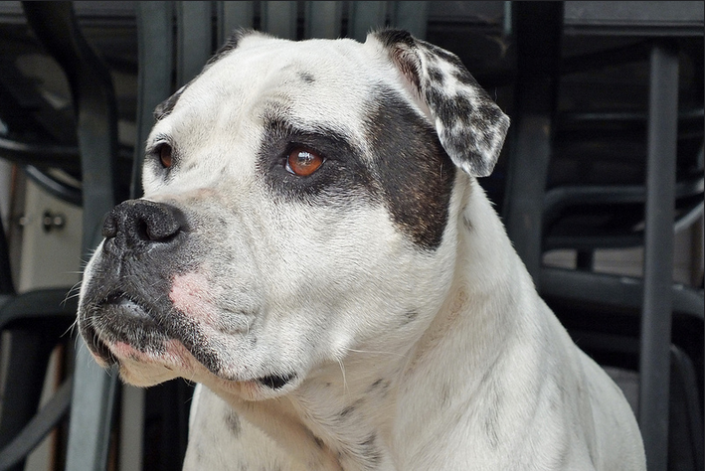
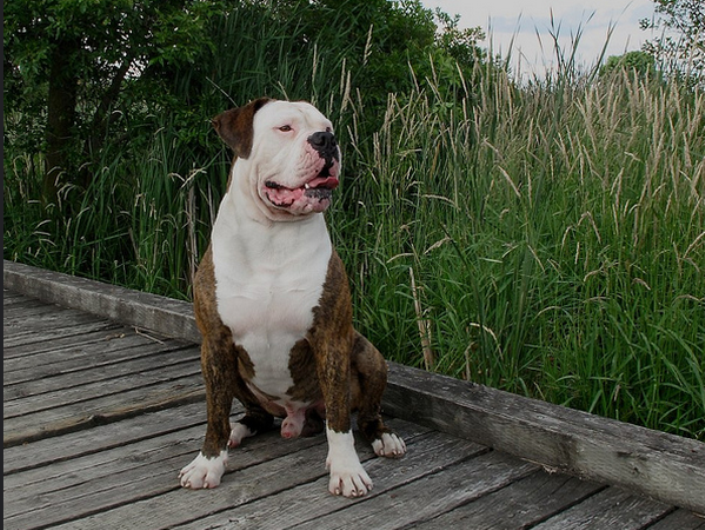
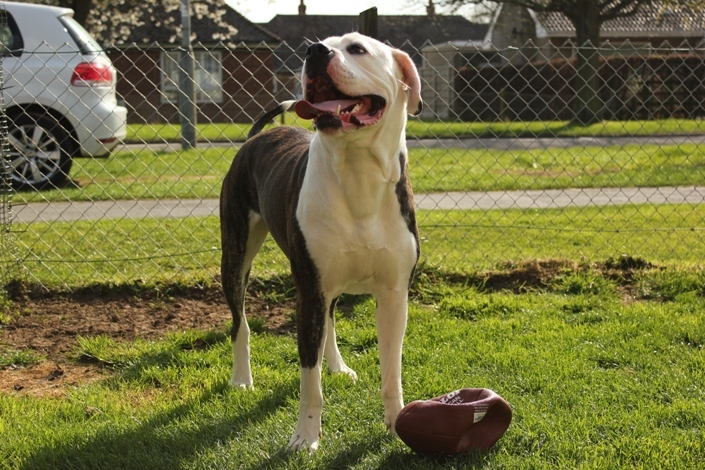
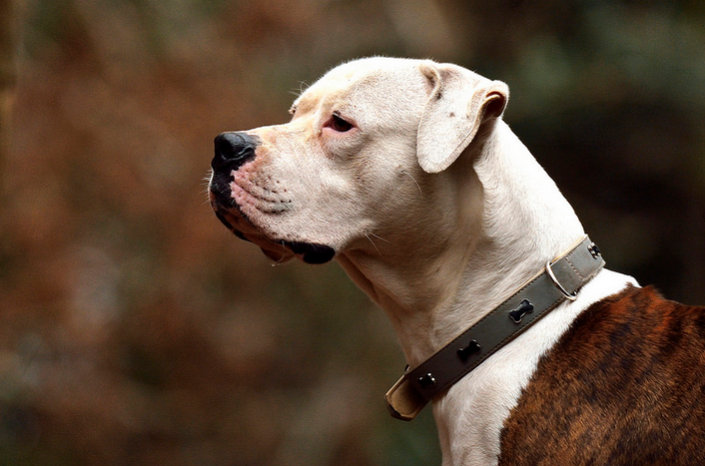
The head is spacious and flat on top. The muzzle is wide and square. The nostrils are wide open, and the tip is dark. The lips are pigmented, but small light patches are allowed. The lower jaw is well defined, and a tight undershot bite is preferred. The fetlocks are well developed and muscular. The ears are set high, medium in size, and hanging. The neck is strong and muscular, widening toward the shoulders. The chest is deep. The back is wide and moderately short. The tail is strong, medium in length, tapering toward the tip, and slightly curved. When excited, it is carried over the back; when relaxed, it is lowered. The legs are strong and proportionate to the body. The front legs are moderately wide apart, the hind legs are slightly closer, parallel. The gait is free, and the movements are well balanced.
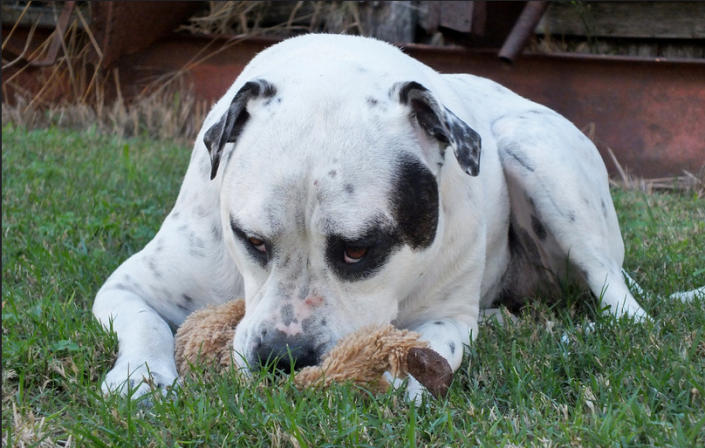
The coat is soft and short. The base color is white, but it can have markings of any color, most commonly:
- black;
- brown;
- ginger;
- pale yellow;
- brindle.
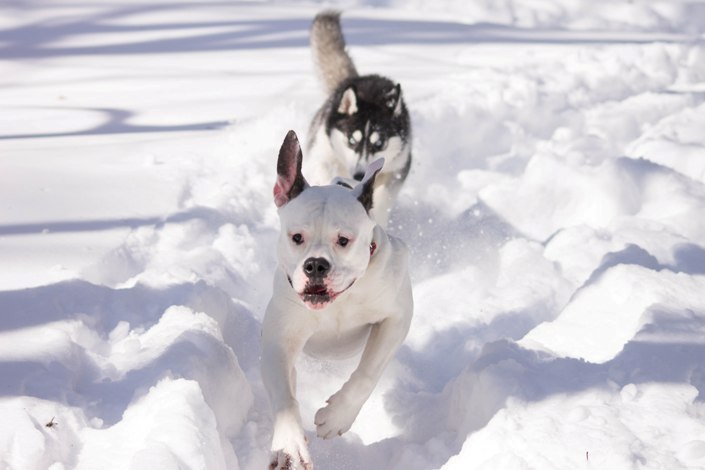
Less common are dogs with a pure white color.
Types of American Bulldog
Originally, the American Bulldog was known as a Southern farm dog that herded flocks and hunted wild boar. It was a square-headed animal with a muscular, athletic body. Two men, Alan Scott and John D. Johnson, transformed the recognized American Bulldog type. These young men appreciated the qualities of this working breed and took on the task of officially recognizing it as a purebred.
They first filed a petition with the American Animal Research Foundation (ARF) in the United States. This was the first step toward establishing the breed. But right from the start, Scott and Johnson encountered their first problem: they lacked the genetic resources for subsequent purebred breeding. The breeders saw a solution in outcrossing. Thus, the Scott-type American Bulldog was created by crossing the dog with an American Pit Bull Terrier. Dogs of the Scott type still share traits with pit bulls:
- compactness;
- muscularity;
- athletic build.
There is also a definite tendency towards a long muzzle.
John used a different strategy. Therefore, the Johnson-type American Bulldog is a cross between mastiffs and English bulldogs. Johnson-type animals still closely resemble English bulldogs. They are considered too large to perform any serious work, although certain standards do exist, and animals can be used for temporary work. Johnson-type American Bulldogs differ from Scott-type dogs in their agility. However, this reputation is largely due to breeders who keep overweight pets.
As the years passed, breeders began to consider restoring the original standard American Bulldog. To achieve this, they began crossing dogs of the Scott and Johnson types. As a result of this crossbreeding, breeders succeeded in recreating the classic American Bulldog—a functional dog with the standard bulldog appearance.
Today, the classic type of American Bulldog is a large, athletic dog with a medium-length jaw, exceptionally hardy and excellent working qualities.
Training
American Bulldogs are easy to train, but can be a bit stubborn, so owners need persistence and determination. Once a dog has mastered a command, you can be sure it will remember it for life. It's important for American Bulldogs to be given opportunities to play and interact with other dogs and other people from puppyhood. This breed has an innate distrustful nature, and if not properly socialized, this can lead to problems later in life.
Ambulis are versatile dogs that easily master any discipline. However, basic training remains essential and essential – it's the key to a dog's smooth social life.
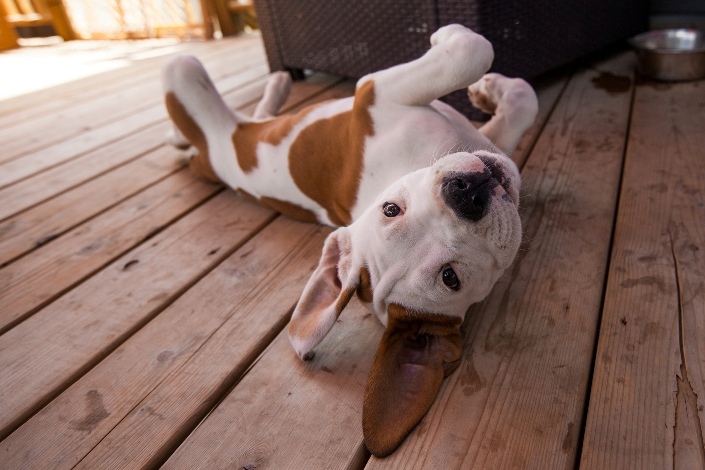
Important points in raising an American Bulldog:
-
- Under any circumstances, at any age, a dog is prohibited from biting its owner or any other person.
- The dog is prohibited from pulling on the leash. Adult Ambulis possess tremendous strength, which may be beyond the control of the owner, so this problem must be eradicated in puppyhood.
- The pet is not allowed to lean on people with its paws, even if it is meant to express greeting or joy. Again, it's all about strength. An adult Ambul is capable of putting down a fairly tall man, and even more so a child or woman.
- They discourage any attempts to fight with other animals. Ambül is not aggressive by nature and will not attack its fellows without reason, but if you cultivate malice and initiate fights, the consequences can be dire.
Physical activity
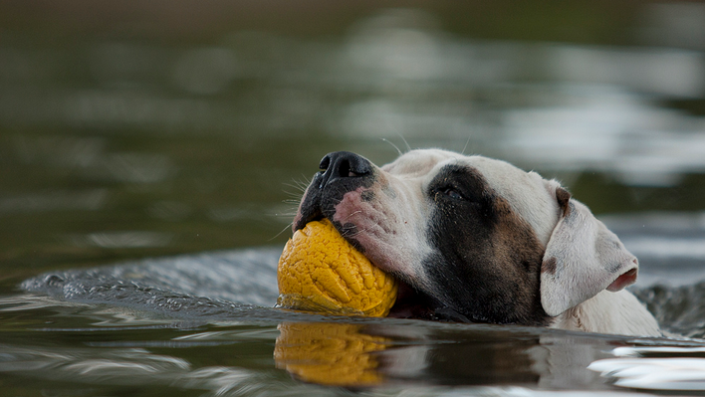
American Bulldogs require a great deal of exercise, and walks are measured in kilometers, not hours. The puppy is gradually acclimated to exercise. At first, half-hour walks three to four times a day are sufficient. Later, walks, games, and training sessions are supplemented with jogging, and they can participate in traction sports. In warmer months, it's best to walk the dog near a body of water; Ambules love to swim.
Character and psychological portrait
The American Bulldog's personality is anything but simple. These dogs are cheerful, friendly, good-natured, sociable, and enjoy their owner's company. However, they are also stubborn, dominant, and can be willful and overly independent. While wary of strangers, they are completely devoted to their family. Compatibility with other animals is unpredictable.If pets have grown up together, they can hopefully become friends. However, if a new person comes into a home with an adult bulldog, it could become a real target. Most bulldogs are very good with children, love to play with them, and are incredibly patient with all their pranks.
Maintenance, care and health
The Ambul is best suited to a private home with a large yard, but is not suited for year-round outdoor living in cold climates. It can also live in a city apartment if provided with the necessary exercise.
American Bulldogs don't require much grooming. Bathe them no more than twice a year. Brush their coat periodically with a special brush for short-haired breeds, and more frequently during shedding season. Clean their eyes and ears as needed, using special cleansing lotions. If their nails don't wear down on their own, trim them with pruning shears.
.png)
American Bulldogs are generally unfussy eaters and can eat either natural or dry food. The key is to ensure their diet is strictly tailored to their age and exercise level. Some owners practice a combination diet: dry food with natural supplements.
American Bulldogs are strong and resilient dogs, but are genetically predisposed to hip and elbow dysplasia, entropion, allergies, and various skin conditions (such as dermatitis and eczema), which can be caused by ectoparasites or immune-mediated. Unilateral or bilateral deafness is common.
Average life expectancy is 13-14 years.
Choosing a puppy and the price of an American Bulldog
Whether the dog is destined for companionship or a show ring star, it must be purebred. Dishonest breeders sometimes sell pit bull-boxer crosses or English bulldog-staff crosses under the guise of American bulldog puppies from "elite" breeders. Therefore, it's best to buy a puppy from a kennel. Documentary proof of the pedigree, the parents' titles, and reliable information about the matings can be obtained from a breed club. Every self-respecting breeder marks their litters. The brand is placed in the ear or groin, but to be on the safe side, it's worth comparing it with the number on the paperwork.
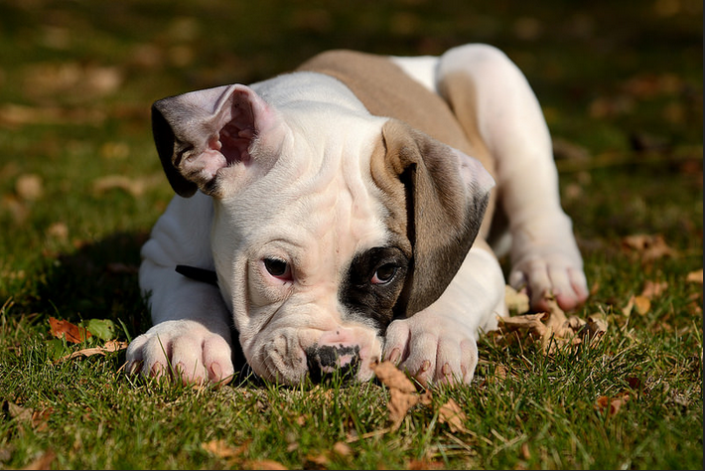
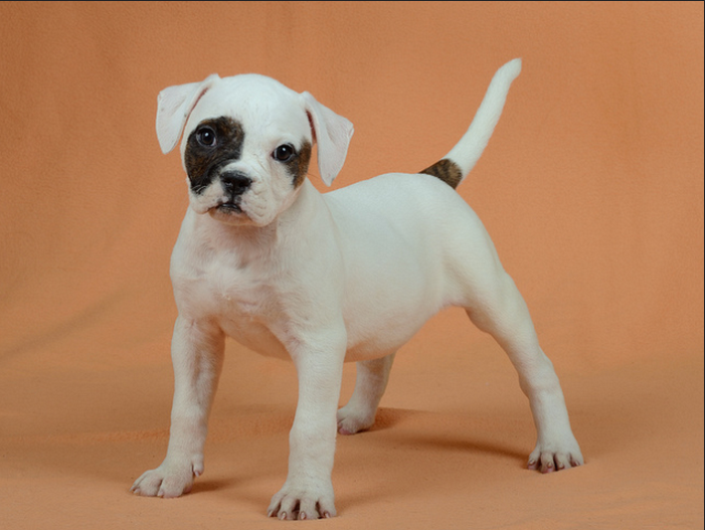
A puppy can be adopted at 1.5 to 2 months of age. At this age, it should weigh 5 to 6 kg. A good puppy has good bone structure, a large head, a broad muzzle, shiny fur, and clear ears and eyes. A characteristic of the breed is that puppies can be sedentary or inactive, but this is usually not a fault and disappears with age.
Before the puppy arrives at its new home, you need to prepare:
- choose a place for him;
- buy bowls, toys;
- think about choosing a nickname for the dog.
An important aspect of choosing a puppy is assessing its mental stability. There are special tests to determine this, so it's best to choose a dog with the help of an experienced dog trainer.
The price of an American Bulldog puppy ranges from $350 to $850. You can buy one privately for less, but no one can guarantee the breed's purity.
American Bulldog: Owner Reviews
Reviews for all kinds of dogs are written, and the American Bulldog is no exception. Reviews of this dog vary, but overall, there's a positive trend in the assessment of its qualities. Let's read a few reviews of the American Bulldog together and see what fans of the dog forums think about this pet:
- I've been raising and training an American Bulldog for six years. I'll say right away that training this breed isn't easy; they have a difficult personality. I personally enrolled him in dog training classes. After that, he was unrecognizable. He became calmer and more confident.
In my opinion, the merits of the American Bulldog are determined by the following qualities:
- strength;
- calmness;
- devotion;
- controllability.
The dog understands who his family is and doesn't care who he protects, should anything happen. Bulldogs are devoted to the point of fanaticism, but they can be stubborn. Before the training, they were downright stubborn. My advice: don't let your dog get carried away; work with them constantly, and only then will you see results.
- An English Bulldog is like a little child in the house. This comical, sweet, and charming creature immediately became our little star.
Devoted, constantly fawning, always hanging around somewhere and snoring.
It’s better to take long walks with him in the evening; quick morning “activities” are not to his liking – they’re not enough.
He loves to eat well and a lot, and he's also a sweet sleeper. He's always grunting, snorting, and purring. He's so charming and yet so helpless. But I'm sure he'll grow up to be a true protector of the house, who'll protect you with his chest if necessary.
These are reviews of American Bulldogs written by dog owners. You'll notice that we've combined reviews from both male and female dogs to give a broader picture. Don't be left behind – leave a review of your Bulldog in the comments, and we'll be sure to publish it!
Photos
American Bulldog Pictures:
Read also:


Add a comment