
American Bobtail: Males and Females
American Bobtail The pride of American felinology, the breed is rare outside of the country. Bobtails are strong, active, and cheerful, constantly on the move, yet completely non-aggressive. They are extremely devoted to their owners, craving affection and love, and always give back the affection they receive.
Content
History of origin
The breed's history spans only a few decades, so there are no mysteries or dark spots. The systematic development of the American Bobtail began in the early 1960s, and its genesis began with the happy story of a homeless kitten.
A young couple, John and Brenda Sanders, were traveling through Arizona when they found a small brindle kitten with a short tail and decided to take the animal home to Iowa. As the kitten grew older, he began grooming a normal domestic cat. The couple eventually had kittens who inherited their father's bobtail. The Sanders believed the short tail was the result of an injury, but after the birth of the unusual kittens, they realized it was a genetic mutation that was inherited. The young couple saw this as an opportunity to develop a new breed. With the support of philinologists, they donated the kittens to people interested in breeding and developing a new breed of cat called the American Bobtail.
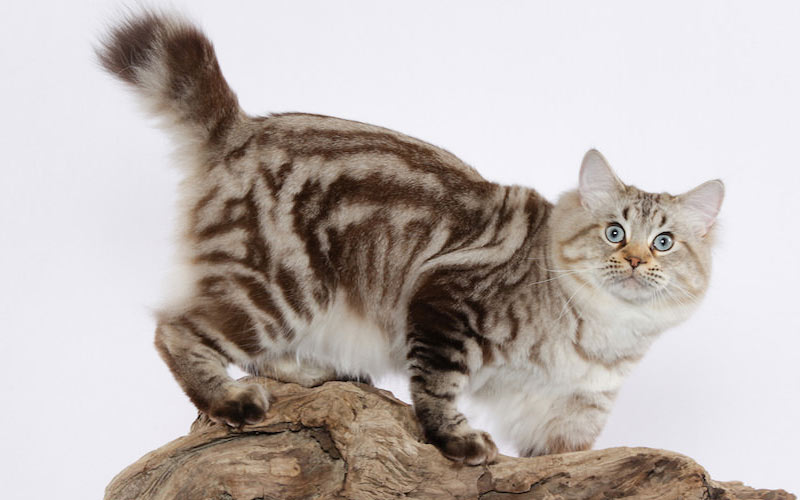
To increase the bobtail population, common domestic cats were introduced into the breeding program, as well as bobtailed cats, which enthusiasts sought throughout the United States. Although very rare, pedigree cats were also introduced.
In 1989, TICA recognized the American Bobtail as a new, naturally occurring cat breed.
Appearance and standards
The American Bobtail is a fairly large and beautifully built cat breed with a short, mobile tail. They have a stocky, moderately long body. They are physically well-developed, with a hunter's gaze and a swaying gait. They have above-average intelligence. They reach sexual maturity at three years of age.
Head and muzzle
The wedge-shaped head, with gently rounded contours, without flatness or noticeable protrusions, is proportionate to the body. The ears are large with rounded tips and wide at the base. The eyes are almond-shaped, large, and set at a slight angle to the ear. The color of the iris is unrelated to the coat and can be any color. The chin is full, its width and depth matching the nose. The muzzle is slightly wider than it is long. In profile, a gently concave curve is noticeable between the forehead and nose. The nose is wide and slightly arched.
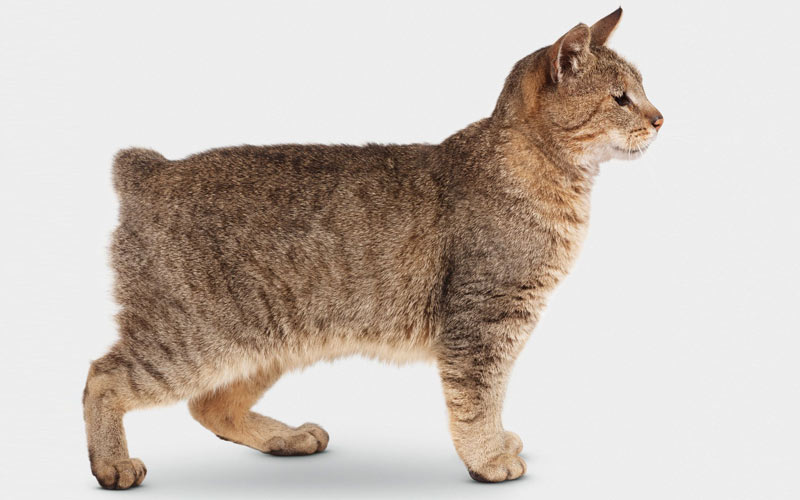
Some breed enthusiasts believe that American Bobtails are related to the wild bobcat found in southern North America, but their genetic relationship has never been proven.
Frame
- the body is moderately long, retains rectangular proportions;
- the chest is full and wide;
- back straight;
- wide hips;
- well developed muscles.
- The paws are large and round.
The American Bobtail's unique tail
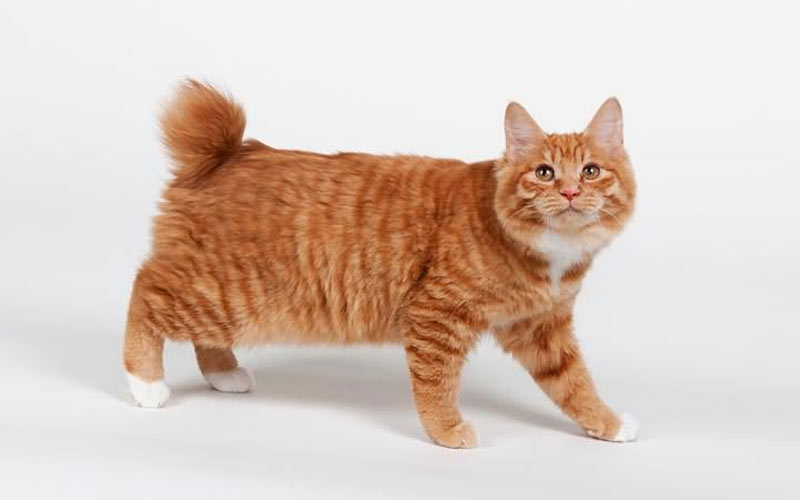
The American Bobtail's tail is short, flexible, and expressive. The gene responsible for the mutation is dominant and uncontrollable, meaning each kitten in a litter will have tails of varying lengths. Straight tails are preferred, but kinked or knotted tails are also possible.
According to the standard, the tail of adult cats should be at least 2.5 cm, but not below the hock joint.
Coat and colors
There are two varieties of American Bobtails:
- short-haired cats have springy short hair and a soft, moderately developed undercoat;
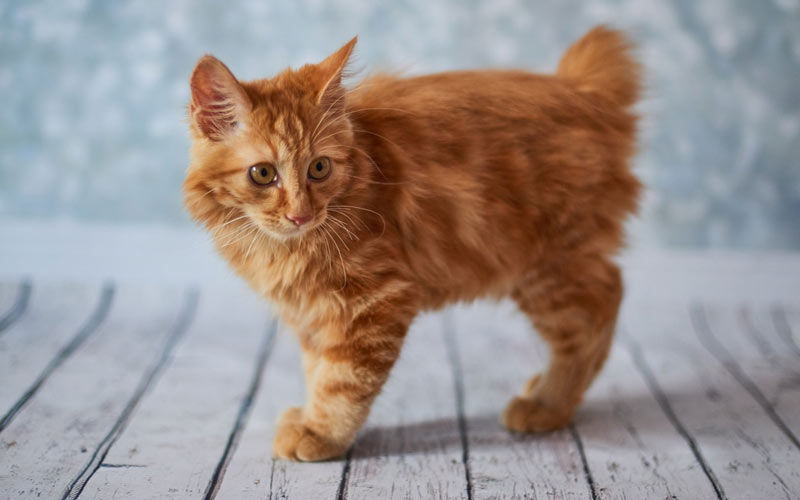
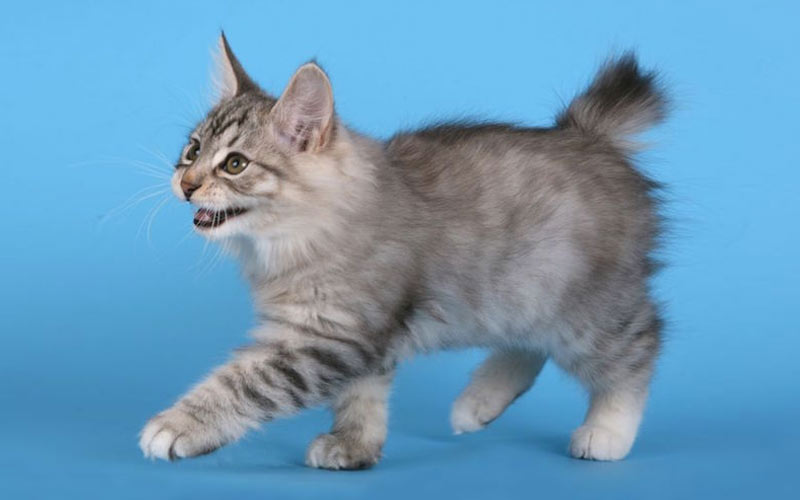
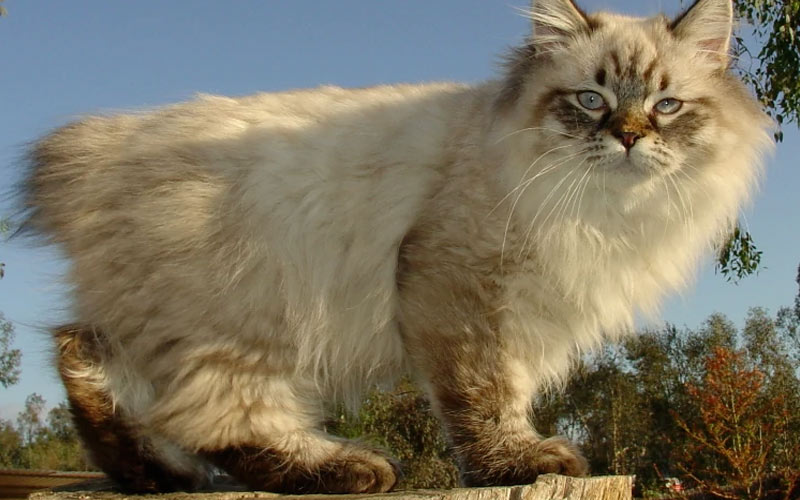
- semi-longhaired bobtails They are distinguished by dense, shaggy fur of medium length and a soft undercoat (while the guard hair is much longer in the neck, chest, hind legs and on the croup).
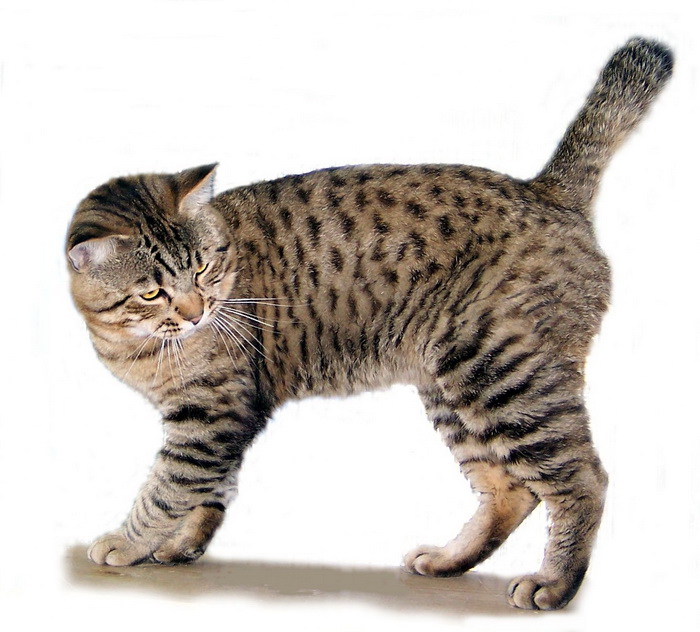
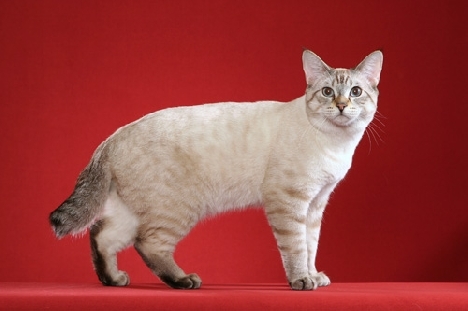
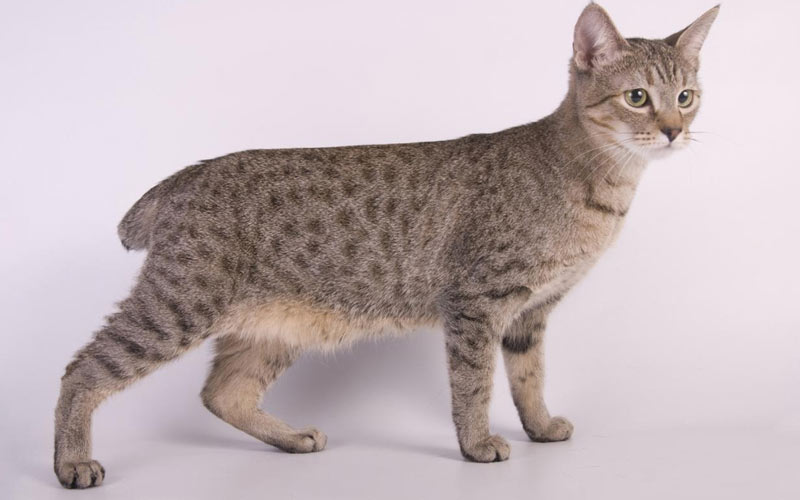
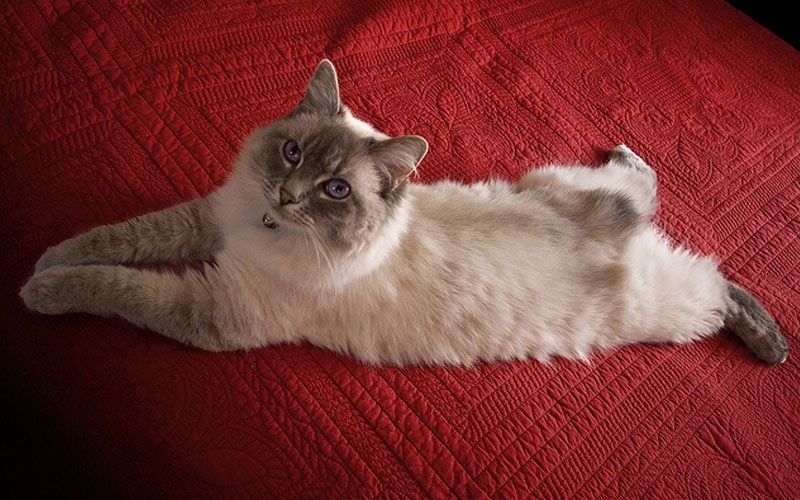
American bobtails can come in absolutely any color, from solid and striped to tricolor.
Character
Bobtails are cats with a gentle, even temperament. They are gentle and sensitive, not at all aggressive, but can be touchy and persistent. They love company. When near their owner, they try to sit on their lap. They love to be petted and caressed. American Bobtails are calm around small children, but only with those who respect their personal space and don't bully them. If a child tries to hurt or upset them, the cat will avoid them.
A special feature of bobtails is that they easily adapt to order and are very trainable.
The American Bobtail is a talkative cat, capable of producing a wide range of sounds, and uses this gift very often.
Reviews of the breed
American Bobtails are, above all, sociable and easygoing. They have a gentle nature, which allows them to get along easily with other pets. Difficulties can arise with animals that spend a lot of time alone, as these cats do not tolerate loneliness well and constantly demand attention. Furthermore, Bobtails are very demanding when it comes to affection. Both male and female cats will throw loud concerts for their owners when their bodies crave the presence of their significant other. However, males are very active in marking their territory and sometimes have habits they are unwilling to give up.
Ariana Sherman's American Bobtail Review
I love my American Bobtail. He has such a personality! He's full of energy and loves to play with anything he can fit in his mouth. He loves to cuddle and demands attention, following us everywhere. He's a skilled athlete with a special knack for jumping. He loves playing with children, and when they're too rough, he simply runs away and lies out of reach. He gets along well with my other cat, but he doesn't realize how big he is when he pounces on her. Unfortunately, he has a sensitive stomach, so we're yet to find food that works for him. As for obedience, he'll sit on command, but he hates closed doors; he'll meow and scratch until you open them (he's cranky).
Another review, oddly enough, also mentions the incredible affection bobtails have for their owners, their tenderness and playfulness.
 Important! Based on breeders' experience, these cats are not suitable for busy people or those who dislike overly affectionate and talkative pets.
Maintenance and care
Active, playful, and cheerful, bobtails love the outdoors. It's worth noting that this breed is easy to leash train, so if you live in the city, you can safely walk your cat in the park.
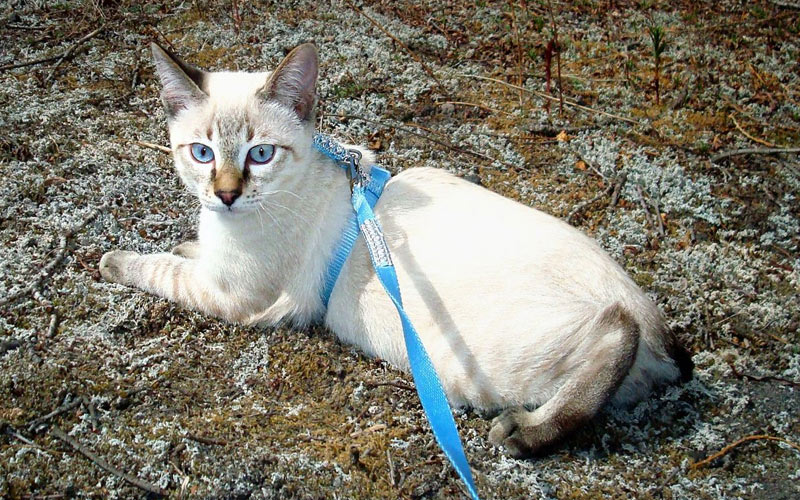
There are no special care requirements for the American Bobtail, and it's no different from caring for other cat breeds. First and foremost, it's important to:
- provide the animal with proper and balanced nutrition;
- regularly examine and clean ears, eyes and teeth;
- Comb the fur regularly and bathe it periodically.
Brushing is necessary once or twice a week. Trimming claws is not recommended, so get your cat used to a scratching post from an early age or consider giving them a piece of furniture they like. Ear, dental, and eye care are equally important. Brush your cat's teeth with a special toothpaste and a brush using sweeping motions.
Health
A distinctive feature of American Bobtails is the absence of tail vertebrae (meaning a shortened spine). This has contributed not only to the breed's popularity but also to its predisposition to musculoskeletal disorders.
The most common diseases of the breed:
- allergic reactions (to food, care products, cosmetics, household chemicals, etc.);
- dermatitis (as a result of an allergic reaction);
- Oral diseases and predisposition to tartar formation.
It happens that bobtails are born without tails at all, which leads to more serious problems with the musculoskeletal system.
Diseases of the musculoskeletal system are difficult to prevent, but allergies, dermatitis and oral diseases are possible to some extent.
To achieve this, the cat's owner must regularly perform hygiene procedures, brush the cat's coat thoroughly, provide proper nutrition, and maintain oral hygiene. With proper care and a balanced diet, these cats live an average of 15 years, but some long-lived cats have lived well beyond that.
Nutritional recommendations
Because it can be difficult for inexperienced breeders to provide a balanced diet for their pets using natural foods, veterinarians consider specialized wet and dry foods the best option. Premium-quality foods are preferred, as these dry and canned foods contain all the vitamins and minerals necessary for the pet's growth, development, and health.
Modern professional cat food is classified according to various criteria:
- breed;
- age;
- floor;
- weight;
- state of health.
Important! Read the manufacturer's recommendations. Each package lists the recommended daily serving.
General recommendations for the number of feedings for a bobtail depending on age:
|
Age |
Number of feedings |
|
up to 6 months |
4 times a day |
|
from 6 months to 1.5 years |
3 times a day |
|
after 1.5 years |
2 times a day |
Choosing a kitten and price
American Bobtails are virtually impossible to find outside the United States. In Russia and the CIS, there are no officially registered catteries breeding them.
The only way to buy a real American Bobtail is to purchase a kitten in the USA or at one of the international exhibitions.
In the United States, the price of a pet-class bobtail kitten is around $600, while show specimens and animals for breeding will cost from $1,000.
Beware of ads offering kittens of this breed for several thousand rubles. Remember, a short tail doesn't necessarily mean it's a bobtail.
In addition to the standard recommendations that apply when choosing any kitten, when buying a small bobtail, it's worth paying attention to the following important points:
- age (kittens are given away no earlier than 12-16 weeks);
- availability of documents: veterinary passport, child's pedigree (metrics);
- availability of all necessary vaccinations (anthelmintic treatment and the first vaccination must be carried out by the breeder at the age of 8-9 weeks).
If you're offered a kitten without vaccinations, this should raise serious concerns. Remember, no reputable breeder neglects vaccinations or issues paperwork for kittens before they find a buyer.
Photos and videos
We invite you to appreciate the variety of colors by looking at photographs of American Bobtail cats:
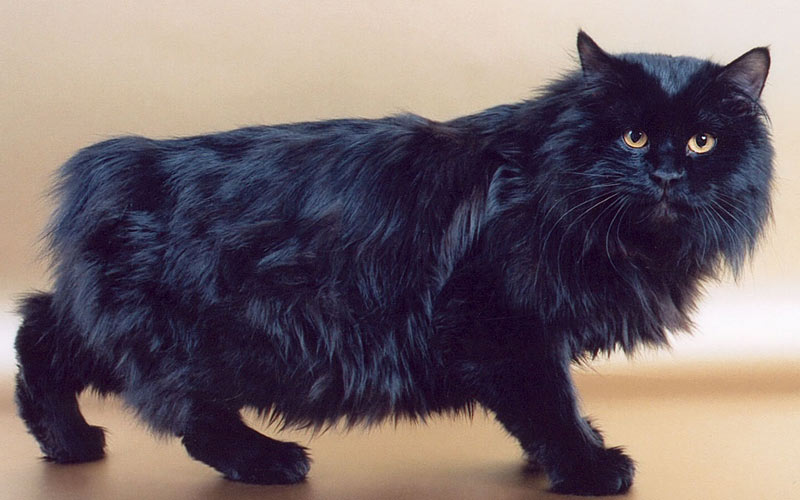
Also watch a video about American Bobtail cats:
Read also:


Add a comment